Category Archives: News

On the nomination of Judge Merrick Garland to the Supreme Court

Lawrence Goldstone writes: With his nomination of Judge Merrick Garland to fill Supreme Court Justice Antonin Scalia’s seat, President Barack Obama has made clear the tone he wishes to strike with the nation. He faced a difficult choice: whether to nominate an eminently qualified liberal or an eminently qualified moderate. In opting for the latter, Obama has eschewed the standard Republican strategy of aiming every policy decision at the party’s most extreme faction, and instead sought to nominate a justice whom large swathes of both parties will see as appropriate to the high bench.

Garland, the chief judge of the U.S. Court of Appeals for the District of Columbia Circuit, is man whose academic, personal, and judicial credentials are such that Senator Orrin Hatch said just last week that the president “could easily name Merrick Garland, who is a fine man” to fill the seat, but “he probably won’t do that because this appointment is about the election, so I’m pretty sure he’ll name someone the [liberal Democratic base] wants.” In what is certain to cause Hatch to shift uncomfortably in his Judiciary Committee seat, Obama did precisely what the senator suggested and nominated an appellate court judge who has been lauded for a measured, non-ideological approach to the law.

Far more interesting, however, than Obama’s opening move is how Republicans will respond. Even before Scalia was buried, Republican Senate leaders announced that they would refuse to consider an Obama nominee. In choosing to strike preemptively, they locked themselves into a strategy that is somewhere between questionable and idiotic, and just may be the coup de grace to their political party, which now seems likely to be led by Donald Trump. [Continue reading…]

Garrett Epps writes: There are two possible interpretations of the president’s Garland strategy. The first is that Obama is playing on Republican fears of whomever a President Hillary Clinton might tap for the role and is trying to lure the Republicans into confirming an older, more moderate nominee. If they are successfully lured, then mission accomplished. If, however, Obama does not lure Republicans into confirming Garland, he will have at least embarrassed them and exposed the nakedly political nature of their tantrum.

The second interpretation — which I incline to — is that the meritocratic Boy Scout in Obama has called this shot. Garland is a terrific nominee and would make a wonderful justice. As Norman Ornstein of the American Enterprise Institute said Wednesday morning, Obama almost certainly made the pick “because he thought this was the best possible choice for the Supreme Court.” Obama might be unwilling to pass up a chance to make such an appointment, and to the extent there is political calculation behind it, the president is banking on the residual idealism of some Republican senators to respond. He may believe there is at least some chance Garland will be confirmed. If so, his belief in that reservoir of public spirit is a testament both to his own generosity and to his persisting naïveté.

Of course, the idea that Garland, at 63, is an older nominee who would serve a shorter time on the Court and pose less danger to the conservative legal agenda assumes facts not in evidence. Almost exactly a century ago, another Democrat named a Jewish nominee in an election year. The nomination was deeply controversial, and the Senate delayed hearings and a vote for four months — still a record for delay. The nominee was Louis D. Brandeis. He was 59 years old. Nearly a quarter-century later, at 82, he retired as perhaps the most influential liberal justice in American history. [Continue reading…]

Jay Michaelson writes: I was one of Judge Garland’s law clerks in his second year on the D.C. Circuit bench, back in 1998. Perhaps it sounds self-serving to say so, but Judge Garland is one of the hardest working, fairest-minded people I’ve ever met. He worked harder than any of us, staying late into the night, sometimes cutting out of the office to make time for his kids before coming back in for the midnight shift. Watching him stand alongside President Obama this morning filled me with respect and pride — in the moments when I could forget the disrespect he is soon to endure.

I also had some firsthand exposure to how he thinks. There was not a single case I worked on with him, from the most mundane Federal Energy Regulation Commission matter to a 20-plus-year-old civil rights case, in which politics played into his considerations. Conscience, sure — Judge Garland often reminded me that there were human beings on both sides of these contentious cases — but never ideology.

Not all judges on the D.C. Circuit were of that persuasion. I was friends with clerks for other judges, and some (whom, of course, I won’t name) would simply tell their clerks how they wanted the case to come out, leaving the clerks to get from point A to point B. That was never my experience with Judge Garland. [Continue reading…]


Facebooktwittermail

Rise of radical nationalism across Europe plays to Putin’s advantage

Bloomberg reports: A growing pro-Kremlin contingent in Europe, likely emboldened by Russia’s decision to withdraw most of its forces from Syria, is tipping popular sentiment further toward President Vladimir Putin.

The most pressing of the issues vital to Putin is European Union sanctions against Russia, introduced in the wake of Moscow’s intervention in Ukraine in 2014. It’s hard to say whether the EU can preserve unity on the subject for much longer, said Petras Vaitekūnas, the former Lithuanian foreign minister, who advises the Ukrainian Security Council.

“I expect big problems with that, and with our ability to repulse Putin’s onslaught,” he said.

Ten days ago, yet another far-right party supporting Russia gained a foothold in an EU country, this time Slovakia. People’s Party, Our Slovakia won 8% of the vote in national elections, joining a burgeoning club including Hungary’s Jobbik, Greece’s Golden Dawn and Marine Le Pen’s National Front in France.

The far-right parties, which often stem from neo-Nazi groups and sport crypto-fascist insignia, are the most visible layer of the pro-Russia camp in Europe. With Europe engulfed in a migrant crisis sparked by the war in Syria, their anti-immigrant and anti-EU rhetoric is in hot demand across the continent, particularly in the east. Party leaders are frequent guests in Moscow, and many of them are closely linked to Russia’s own reactionary networks. Together, they are nudging the political mainstream toward radical nationalism, which these days often comes hand in hand with pro-Russian sentiment. [Continue reading…]

Facebooktwittermail

Putin’s long-term strategy in Syria

Steven Simon writes: Over the past six months, Russian aircrews flew over 10,000 missions, averaging between 60 and 74 sorties per day, a relatively high operational tempo. They did this fairly cheaply, unlike Operation Inherent Resolve, the U.S. military operation against the Islamic State (also known as ISIS), in which attack aircraft need to traverse comparatively long distances from their bases to targets. The Russians have been able to stage strike aircraft literally minutes from their targets. Their cost per sortie has therefore been quite low. According to Jane’s, the estimated daily cost of Russian operations has been in the $4 million range, which is small potatoes in the context of a defense budget of $50 billion. In contrast, the average cost of a single air strike conducted under Inherent Resolve is $2.4 million.

Having dusted off and renovated its old installations at Tartus—and with personnel remaining in place—Russia can redeploy its aircraft on very little notice. Indeed, the Russians will probably do what the United States does in the Persian Gulf, rotating aircraft in and out of bases in Qatar and the United Arab Emirates in a manner that amounts to a permanent presence, but is technically temporary. Their removal back to Russian bases does not therefore represent some kind of closure owing to a presumed difficulty of reestablishing a presence in Syria in the future. It merely represents a tactical pause. [Continue reading…]

AFP reports: The US military said Wednesday it has seen no significant reduction in Russia’s combat power in Syria despite President Putin’s surprise announcement this week of a partial withdrawal of his country’s forces.

Colonel Steve Warren, a US military spokesman in the region, said Russian intentions remain unclear.

“We have not seen a significant reduction, frankly, in their combat power. Particularly the ground combat power remain static, the air combat power has been slightly reduced, but that’s it,” he said. [Continue reading…]

Facebooktwittermail

Is Putin trying to pressure Assad to negotiate?

Commenting on an article by Russia analyst Morteza Makki appearing in an Iranian daily, Arash Karami writes: Makki wrote that despite [Foreign Minister] Zarif’s positive statement on the withdrawal, “this quick and surprising decision by Russia shows that Iran and Russia’s partnership in Syria was not a strategic partnership. The Russians make decisions based on their own calculations and interests, and the partnership was not such that Iran and Syria would be able to push forward with their views and positions by leaning on the Russians.”

Makki continued that it is possible Russia’s decision was made to force President Bashar al-Assad’s government to show flexibility in the Geneva negotiations, saying that in their recent statements, the Syrians have been very optimistic and have presented red lines regarding Assad’s departure. Even conservative media outlets have suggested Russian President Vladimir Putin was angered by Syrian officials’ comments ahead of the negotiations in Geneva.

When it comes to Syria, the Iranian media has typically been keen to conform to the statements of officials. To see an article suggest that the official version presented by authorities is hiding key points is rare indeed. Most Iranian media outlets have parroted official positions on the Russian withdrawal, but they, too, have struggled to explain it. Even Iran Newspaper, which operates under the administration’s direction, called the withdrawal “surprising.” [Continue reading…]

Facebooktwittermail

Kurds hope to establish a federal region in northern Syria

The New York Times reports: Syrian Kurdish parties are working on a plan to declare a federal region across much of northern Syria, several of their representatives said on Wednesday. They said their aim was to formalize the semiautonomous zone they have established during five years of war and to create a model for decentralized government throughout the country.

If they move ahead with the plan, they will be dipping a toe into the roiling waters of debate over two proposals to redraw the Middle East, each with major implications for Syria and its neighbors.

One is the longstanding aspiration of Kurds across the region to a state of their own or, failing that, greater autonomy in the countries where they are concentrated: Turkey, Iraq, Iran and Syria, all of which view such prospects with varying degrees of horror.

The other is the idea of settling the Syrian civil war by carving up the country, whether into rump states or, more likely, into some kind of federal system. The proposal for a federal system has lately been floated by former Obama administration officials and publicly considered by Secretary of State John Kerry, but rejected not only by the Syrian government but by much of the opposition as well. [Continue reading…]

Middle East Eye reports: Syrian Kurds have declared a “Federation of Northern Syria” that unites three Kurdish majority areas into one entity, an announcement swiftly denounced by the Syrian government, opposistion and regional powers.

According to Kurdish Democratic Union Party (PYD) official Idris Nassan, the plan will involve “areas of democratic self-administration” under the federal banner, encompassing all ethnic and religious groups living in the area.

Two officials at talks involving Kurdish, Arab, and other parties in the town of Rmeilan told the AFP news agency that delegates had agreed a “federal system” unifying the three mainly Kurdish cantons in northern Syria.

According to the pro-Kurdish Firat News Agency (ANF), the “Rojava and Northern Syria Unied Democratic System Document Text” was approved after a vote from 200 delegates, which included Arab, Kurdish, Armenian, Turkmen, Chechen, Syriac and other ethnic groups.

The boundaries of the federalised region have yet to be established, according to a delegate to the talks on Twitter. [Continue reading…]

Facebooktwittermail

Kurd turns on Kurd as Turkey and U.S. back new faction in Syria

Middle East Eye reports: Turkey is backing a new Kurdish faction within the Free Syrian Army to take back territory from the Islamic State (IS) group and stop the Kurdish People’s Protection Units (YPG) from seizing further ground along the Turkish border.

The group, known as the Grandsons of Salahadin after the famed 12th-century Muslim Kurdish leader, has already captured several villages in the IS-controlled border region between Jarabulus and Azaz following Turkish artillery attacks and missile strikes. In response, IS hit the Turkish town of Kilis earlier this month, killing two civilians.

But threats to attack the YPG unless it withdraws from territory seized from opposition rebels during an advance by pro-government forces in northern Syria last month have stoked concerns of a possible “Kurdish civil war”.

Mahmoud Abu Hamza, a Grandsons of Salahadin commander based in Turkey, told Middle East Eye that the group was backed by both the US and Turkey and considered itself part of the international coalition fighting IS.

“Turkey doesn’t support us with arms. Our arms are American,” he said. [Continue reading…]

Facebooktwittermail

How the world has changed since Paris climate pact

Earth

Climate Central reports: The relatively good news overall is new data showing that annual rates of emissions of the world’s main greenhouse gas may be stabilizing, though not yet falling. One of the goals of the Paris Agreement is to pursue “rapid reductions” to yearly pollution output following a plateau.

Preliminary International Energy Agency figures published Wednesday showed 35 billion tons of carbon dioxide pollution was released in 2015 — about the same amount that was released in 2014, which was similar to the amount from 2013.

“In the more than 40 years in which the IEA has been providing information on CO2 emissions, there have been only four periods in which emissions stood still or fell compared to the previous year,” the agency said. “Three of those – the early 1980s, 1992 and 2009 – were associated with global economic weakness. But the recent stall in emissions comes amid economic expansion.”

The bad news since December has been record-smashing global temperatures. Not only was 2015 the hottest on record, boosted by greenhouse gas pollution and warm phases in ocean cycles, but the first month of 2016 was the warmest January on record. A month after that, February was the most unusually warm month in 135 years of NASA records. [Continue reading…]

Facebooktwittermail

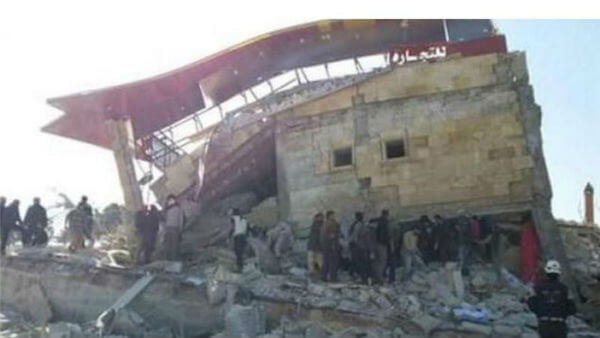
Russian airstrikes in Syria killed 2,000 civilians in six months

msf-hospital

The Guardian reports: Russian airstrikes in Syria have killed about 2,000 civilians in six months of attacks on markets, hospitals, schools and homes, rights groups and observers say, warning that plans for a military drawdown may not mean an end to the deaths.

Moscow has insisted it carried out only surgical strikes on “terrorists”, but victims and fighters say bombers strayed well behind frontlines in areas far from strongholds of Islamic State or al-Qaida fighters.

Jets appear to have intentionally bombed civilian areas, in a campaign to spread fear and clear areas where government ground troops were planning to advance. Coalition airstrikes led by the US have also killed civilians, but have stricter rules of engagement. [Continue reading…]

Facebooktwittermail

Russia’s exit from Syria highlights Assad’s limitations

Hassan Hassan writes: Five years after the uprising in Syria began, a renewed chance to steer the conflict in a less violent trajectory presents itself. Tensions have mounted between moderate rebels and Jabhat al-Nusra in northern Syria, and residents demonstrated in support of the rebels against the al-Qaeda affiliate; the Free Syrian Army has recently launched an offensive against the Islamic State in southern Syria; and Russia has announced that it will start withdrawing its main forces from the country. In the wake of positive sentiments following a semi-successful cessation of hostilities deal, the United States should capitalize on the current environment to de-escalate the conflict and shift its focus toward extremists. The Russian air campaign that began in September, while substantially improving the government’s ability to launch offensives and repulse attacks, has serious limitations and has not been the overwhelming victory that the regime would like to portray. In this context, the U.S. now has a compelling opportunity to act as counterbalance.

In a speech on July 26, 2015, Syrian President Bashar al-Assad made three uncharacteristic remarks that underscored the toll that four years of armed conflict had had on the Syrian Arab Army (SAA) and foreshadowed the dramatic entry of the Russian military into the theater some two months later. The first confession was that the SAA was suffering from “fatigue,” “demoralization,” and a “shortage in manpower.” Secondly, he spoke of the necessity for the army to cede control of certain areas, even if that territory appears significant to the regime’s support base. “In some cases, we have to abandon certain areas to move forces to an area we want to hold.” Finally, Assad highlighted the central role of foreign Shi’a militias in the war. He thanked Hezbollah and other foreign militias fighting on the side of the regime. He said that Hezbollah had the experience and skills needed to battle opposition fighters, and proclaimed, “A homeland is not for those who live in it or hold its passport, but those who defend it and protect it.” [Continue reading…]

Facebooktwittermail

How Iran views the Russian withdrawal from Syria

Arash Karami reports: Iranian officials and analysts are speculating about why Russian President Vladimir Putin suddenly decided to begin withdrawing troops from Syria. Some wonder whether Russia won concessions from the United States and the Syrian opposition, but most seem to think that Russia’s action is a positive sign, or at the least nothing to worry about.

Ali Akbar Velayati, foreign policy adviser to Iranian Supreme Leader Ayatollah Ali Khamenei, spoke to Iranian reporters March 15 after holding a press conference with Syrian Deputy Foreign Minister Faisal Mekdad in Iran. According to the media, Velayati said that during his meeting with Mekdad, they discussed “defending the territorial integrity” of Syria and its April 13 parliamentary elections. When asked if Iranian troops would replace the Russian forces leaving Syria, Velayati said that Russia’s action “will not change the overall cooperation between Iran, Russia, Syria and allied forces such as Hezbollah.”

Velayati noted that Russia still has an air base in Syria and, if necessary, would again up its effort against terrorists. Velayati added that at the moment, the Syrian government has the upper hand given recent gains by its allies, the cease-fires and the Geneva negotiations. In addition to its air base, Russia will also reportedly keep its maritime base in Syria operable, and nearly 1,000 military personnel will remain in the country. [Continue reading…]

Facebooktwittermail

ISIS lost 22% of territory in Iraq and Syria over last 14 months

BBC News reports: A new analysis suggests so-called Islamic State (IS) militants have lost 22% of the territory they held in Syria and Iraq over the past 14 months.

The data was compiled by research company IHS.

It also estimates that IS has lost 40% of its revenue – much of it from oil – after losing control of much of the Turkish-Syrian border.

Security sources have told BBC Newsnight that the flow of UK jihadists going to fight in Syria is also down. [Continue reading…]

Facebooktwittermail

Trump: I consult myself on foreign policy

Politico reports: Donald Trump finally shared the name of someone he consults on foreign policy: himself.

Asked on MSNBC’s “Morning Joe” who he talks with consistently about foreign policy, Trump responded, “I’m speaking with myself, number one, because I have a very good brain and I’ve said a lot of things.”

“I know what I’m doing and I listen to a lot of people, I talk to a lot of people and at the appropriate time I’ll tell you who the people are,” Trump said. “But my primary consultant is myself and I have a good instinct for this stuff.” [Continue reading…]

Facebooktwittermail

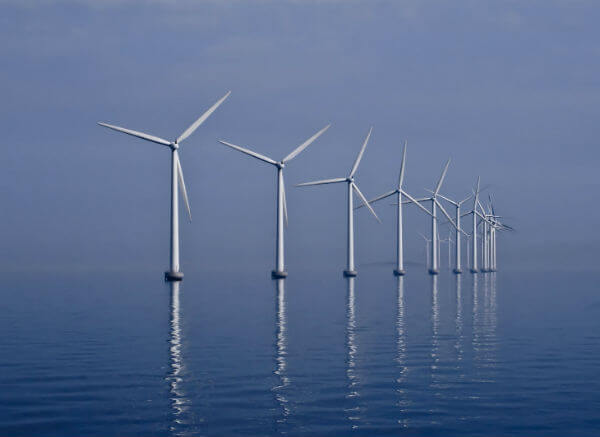
Surge in renewable energy stalls world greenhouse gas emissions

denmark-wind-power

The Guardian reports: Falling coal use in China and the US and a worldwide shift towards renewable energy have kept greenhouse gas emissions level for a second year running, one of the world’s leading energy analysts has said.

Preliminary data from the International Energy Agency (IEA) showed that carbon dioxide emissions from the energy sector have levelled off at 32.1bn tonnes even as the global economy grew over 3% .

Electricity generated by renewable sources played a critical role, having accounted for around 90% of new electricity generation in 2015. Wind power produced more than half of all new electricity generation, said the IEA. [Continue reading…]

Facebooktwittermail

Russian Syria withdrawal: Vladimir Putin is the consummate political gambler

By Scott Lucas, University of Birmingham

Russian president, Vladimir Putin, is not an easy politician to read. He is willing to say one thing while his diplomats and military do another – as the long-running conflict in Ukraine has demonstrated. His statements are at the pinnacle of a Russian state propaganda machine shrouding any “truth” in layers of often deceptive assertions.

And, as the announcement on March 14 of a “withdrawal of most of [Russia’s] military group” from Syria demonstrated, he can spring a surprise on both his allies and his foes.

So, does this represent mission accomplished for Putin – as he maintained on Monday (“the tasks … are generally fulfilled”), or is this a sign of Russian weakness, with the costs of military intervention compounded by a shaky economy, the challenge of sanctions on Moscow, and a sharp fall in oil revenues?

Or is Putin just being deceptive, with his air force ready to resume bombing and his advisers ready to support pro-Assad ground offensives – especially if political talks to resolve Syria’s five-year conflict fail in Geneva?

Continue reading

Facebooktwittermail

What does Russia’s partial withdrawal from Syria signify?

Foreign Policy reports: Joshua Landis, director of the Center for Middle East Studies at the University of Oklahoma, said that until the past week, he had been in touch with officials close to the Assad regime in Damascus who expressed “a constant drumbeat of confidence that they’re going to take back every inch of Syrian soil, and Russia is their partner.” But those communications abruptly fell off earlier this month. “No one was answering the phones in Damascus. That leads me to believe they were thrown for a loop.”

Landis said that Putin’s planned withdrawal from Syria means he’s not going to back Assad “all the way.” But he said the move was also likely aimed at Washington, which has frustrated Moscow by refusing to work with Putin to fight the Islamic State. “This is a shot across America’s bow as well,” Landis said, “with Russia saying, ‘We’ll leave, and you’ll be stuck holding the bag in Syria.’”

The withdrawal announcement, reported by Russian state media, appears to have caught the White House off guard. A senior administration official said Monday that they had seen reports of the Russian move and that “we expect to learn more about this in the coming hours.” A spokesman for the Defense Department declined to comment. [Continue reading…]

BBC News reports: Russia will continue air strikes in Syria despite the withdrawal of most of its forces, a senior official has said.

Deputy Defence Minister Nikolay Pankov said it was too early to speak of defeating terrorism, after a campaign that has bolstered Syria’s government.

Russian defence ministry video showed the first group of aircraft taking off from Hmeimim air base in Syria on Tuesday morning and in flight.

Hours later, Russian TV showed planes arriving in the southern Russian city of Voronezh, where they were greeted on the tarmac by priests and crowds waving balloons.

Su-24 tactical bombers, Su-25 attack fighters, Su-34 strike fighters and helicopters were returning home, the TV said. [Continue reading…]

The Associated Press reports: The head of the defense committee in Russia’s upper house of parliament has estimated that about 1,000 Russian military personnel will remain in Syria at Russia’s two bases.

The head of the parliamentary defense committee, Viktor Ozerov, said Tuesday that he estimated about 1,000 Russian military personnel would remain in Syria at the two bases. That’s according to the Interfax news agency.

Ozerov says Russia would need a minimum of two battalions, a total of 800 troops, to protect the two bases. He says it will continue to conduct air reconnaissance, requiring some of the plane crews to remain, and the military specialists advising the Syrian army also would stay.

The estimate follows President Vladimir Putin’s announcement Monday that some of the Russian aircraft and troops would be withdrawn. Russia has not revealed how many soldiers it has deployed to Syria, where it maintains a naval facility as well as an air base, but U.S. estimates of the number of Russian military personnel varies from 3,000 to 6,000.

Britain’s foreign minister says he is skeptical about Russia’s announced military withdrawal from Syria.

Foreign Secretary Philip Hammond told lawmakers in the House of Commons that Russia had made past pledges to pull its troops out of Ukraine, “which later turned out to be merely routine rotation of forces.”

He says that “because Russia is completely un-transparent about its motives and its plans, we can only speculate.”

Hammond says a genuine de-escalation by Russia “would be welcome,” and urges Moscow to use its influence on President Bashar Assad’s government to seriously engage with the opposition.

Hammond said that “Russia has unique influence to help make these negotiations succeed and we sincerely hope that they will use it.” [Continue reading…]

Laura Rozen spoke to Paul Saunders, a Russia expert at the Center for the National Interest, who said: “It is striking, and many in … and out of the region will take note of the fact that President Putin said that withdrawal is going to take place because the Russian forces have achieved their objective,” Saunders told Al-Monitor March 14. “Because when they went in, it was framed very much in terms of strikes on [IS]. That mission is not really completed.”

“What has actually been accomplished is this rather tentative temporary cessation of hostilities leading to some kind of successful peace process between Assad and the forces of the opposition,” Saunders said.

Putin “is trying to send a message to both sides,” Saunders said. “Certainly for the Assad regime side, it makes very clear to them that they better actually negotiate seriously.”

But the announced partial withdrawal “does not mean Russia is just walking away,” Saunders added. “The pace of the withdrawal … also provides leverage. It can be slowed, it can be accelerated. Moscow has the continuing leverage that it needs.” [Continue reading…]

The New York Times reports: The announcement on Monday surprised people on all sides of the conflict. State Department officials, Syrian antigovernment activists, Mr. Assad’s supporters and Syrian opposition negotiators all reacted with disbelief, not sure whether to lament, celebrate or laugh.

In Idlib Province, held by a combination of insurgents that range from the Nusra Front to American-backed rebels, people fired guns in the air.

“People are distributing sweets and calling ‘God is great’ from the mosques,” said a fighter who gave his name as Ahmed. “There’s optimism, but we don’t know what’s hidden.”

Farther south, in Homs, an antigovernment activist, Firas — who, like Ahmed, asked that only his first name be used for safety reasons — was worried. “The Russians were sponsoring the cease-fire,” he said. “Now the regime will bomb again and the Russians will leave us for the Iranians, a disaster.”

Even in Geneva, the opposition spokesman, Salem al-Muslet, reflected that ambivalence, resenting Russia’s support for Mr. Assad but seeing Mr. Putin as the only figure who could force Mr. Assad to negotiate in earnest.

“Nobody knows what is in Putin’s mind, but the point is, he has no right to be in our country in the first place,” he said at first. “Just go.” Later, he added, “If it’s true, this is a good sign and a good start to a political solution.” [Continue reading…]

Facebooktwittermail

Putin’s profitable intervention in Syria

Michael Weiss writes: The Syria war was as much a mediated weapons and hardware expo as it was a client rescue mission.

In October, Russian warships debuted the new Kalibr cruise missile, firing it across 900 miles of sea and land, across Iranian and Iraqi airspace (some of the missiles crash-landed in Iran, according to the Pentagon). But the display became a marquee event for Kremlin-run television, here acting as a multimedia brochure for Rosoboronexport, the Russian state arms dealer, which last year sold $15 billion in weapons to foreign purchasers.

The 45 or so fixed-wing aircraft deployed to Bassel al-Assad International Airport in Latakia, now a permanent Russian garrison and airbase on the Mediterranean, ranged from souped-up Soviet models to state-of-the-art killing machines. The Russian Air Force’s most modern ground attack jet, the Su-34, was showcased as a source of enormous national pride, with the state-owned outlet Sputnik reveling pornographically in the warplane’s ability to hunt “terrorists.” (The Su-34 was also documented cluster bombing populated areas, such as Hraytan, Aleppo.) Just before the New Year, Sergei Smirnov, the director of the Chkalov aviation factory, gave an interview with Vedomosti in which he said that Algeria, which has sought the purchase of the Su-32 export variant from Russia for the last eight years, recently made an official application to purchase the bombers from Rosoboronexport. Other potential buyers, according to “military expert” Igor Korotchenko, again hyping the Su-34 in Sputnik, are Vietnam, Iraq, Kazakhstan, Turkmenistan, Uzbekistan, Uganda, Nigeria, and Ethiopia.

Another sophisticated toy is the T-90 battle tank, examples of which have been spotted all over the Syrian battle space, at first guarding the Latakia airbase and now being driven by the Syrian army and Iranian-built Shia militias, such as Iraq’s Asaib Ahl al-Haq, or League of the Righteous, which in 2007 killed five U.S. soldiers in Karbala. In late December, Algeria announced that it planned to buy its third tranche of T-90s. Iran now also wants them. [Continue reading…]

Facebooktwittermail