Category Archives: News

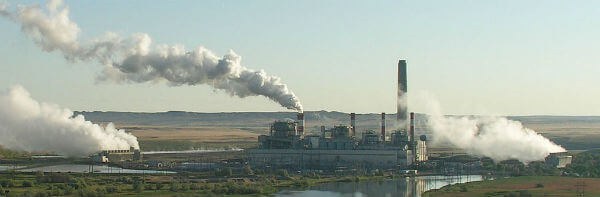
The Supreme Court halted Obama’s climate change plan. This doesn’t bode well

coal-power

Scott Lemieux writes: Hours before New Hampshire’s primary voters made Donald Trump the favorite for the Republican presidential nomination Tuesday night – I can’t really believe this even as I type it – the US supreme court reminded us of why the upcoming presidential election is so important. On a party-line vote, the court temporarily stopped Barack Obama’s clean power plan from going into effect. This decision could well portend a future one that will have devastating consequences – not only for the climate but for the state of our lawmaking process.

The decision also underscores the urgency of the November elections in two ways: it will be a choice between a candidate who supports taking action against climate change and one who believes it should be ignored, and it will present a choice between a president who believes that the federal government has the authority to effectively regulate and one who believes that the supreme court should arbitrarily throw monkey wrenches into the political process. [Continue reading…]


Facebooktwittermail

Exodus and betrayal: How a Syrian Nakba was created

obama-assad

David Hearst writes: US Secretary of State John Kerry came close to revealing his true thoughts when he was accosted by two Syrian aid workers at a reception in London after the collapse of the Geneva talks last week.

The Syrians accused him of doing nothing to protect civilians from the onslaught they are facing in Aleppo. Kerry replied: “Don’t blame me – go and blame your opposition,” laying the fault for the government’s offensive on the opposition walking out of the talks.

Kerry got flustered in the encounter: “What do you want me to do? Go to war with Russia? Is that what you want?” the aid worker said Kerry told her. Kerry then anticipated three months of bombing during which time “the opposition will be decimated”.

Kerry’s off-mic encounter deviated significantly from the official line which was that Russia and Iran had offered Washington a ceasefire. Kerry’s remarks differed also from the State Department mantra that the brutality of Assad against the Syrian people had helped foster the growth of the Islamic State group. Apparently now, Syrians who resisted Assad’s brutality were responsible for the barrel bombs being dropped on them.

After multiple avowals that Assad’s army was on the point of collapse and the ill-fated CIA training programmes, Syrian rebels are being sold down the river by the country that urged them to rise up five years ago.

The Deraa protests started peacefully. To that everyone attests. Four factors turned those protests into an armed uprising: the brutality of the regime’s response, Assad’s decision to release Jihadis from Sednaya Prison, an act which “Islamised” the opposition, the Libyan intervention, and the intervention of foreign powers – Iran and Saudi Arabia.

The scenes today on the Turkish border are a direct consequence of Obama’s “intervention-lite” in Syria – a drip feed of weapons – but only 16 bullets per fighter per month. The Free Syrian Army has reportedly stopped receiving weapons for four months. In Libya, Obama boasted he was leading from behind. In Syria he is now wringing his hands from behind. [Continue reading…]

Facebooktwittermail

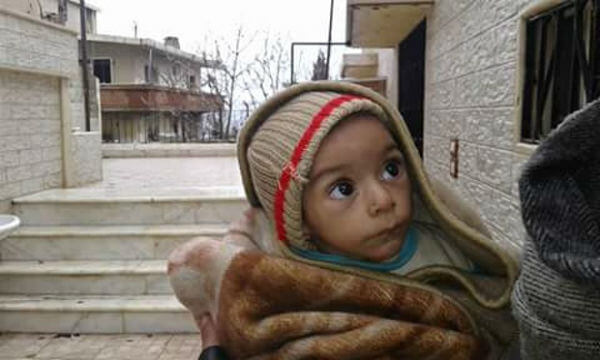
In Madaya residents still face starvation as the only clinic loses its only doctor

starving-child-madaya

Vice News reports: After three years under siege, mass starvation, and relentless airstrikes, the people of Madaya didn’t think it could get much worse. Then their only doctor disappeared in the middle of the night.

In the besieged Syrian town, which made international headlines in January when photos of its starving residents spread around the world, the only medical care facility, slightly euphemistically called the field hospital, is now run by two dentists, an agricultural engineer and a vet. Sources told VICE News that an anaesthesiology nurse known as Doctor Khaled, who ran the clinic until mid-January, had to pay a smuggler thousands of dollars to get out of the town when he heard a hit man had been hired to kill him for talking to the media.

The tiny clinic lies in one room of a basement, moved there after staff were driven out of the main hospital by shelling. Inside there’s an operating table, a stand for IV drips and some basic medication — mainly boxes of glucose solution. For the 90 patients who seek treatment there every day, mostly for malnutrition or influenza, there are few options for treatment. [Continue reading…]

Facebooktwittermail

Anger mounts in Italy over torture and murder of student, seen as victim of Egypt’s ‘death squads’

The Local reports: Italy on Monday warned Egypt it would not allow the fate of Giulio Regeni to be brushed under the carpet as anger mounted over the Cambridge University student’s torture and killing in Cairo.

With the media publishing gruesome details of Regeni’s treatment and pointing the finger at Egyptian security services, Prime Minister Matteo Renzi was under pressure to authorize a state funeral for the slain 28-year-old.

Regeni disappeared on January 25th and was found dead on February 3rd. An Italian autopsy carried out following his corpse’s repatriation at the weekend concluded that he was killed by a violent blow to the base of his skull having already suffered multiple fractures all over his body.

Foreign Minister Paolo Gentiloni said that Egypt appeared to be collaborating with a team of Italian detective and forensic investigators dispatched to Cairo.

But he warned: “We will not settle for alleged truths.”

Gentiloni, in an interview with daily La Repubblica, added: “We want those really responsible identified and punished on the basis of law.”

La Repubblica reported that, as well as being systematically beaten, Regeni had his finger and toe nails pulled out in a pattern of torture which the daily said suggested that his “death squad” killers believed him to be a spy. [Continue reading…]

Facebooktwittermail

Shia village simmers amid Saudi crackdown

Financial Times reports: A month after Saudi Arabia executed firebrand Shia cleric Sheikh Nimr al-Nimr, his home town of Awamiya remains strewn with black flags commemorating his death.

The authorities have dubbed the dilapidated village in the oil-rich eastern province the most dangerous place in the conservative Sunni kingdom, and it bears the scars of confronting the state. Shia slogans are ubiquitous and some buildings are pockmarked with bullet holes. Two armoured personnel carriers stand sentry outside the local security post but the jittery police rarely patrol the streets.

“The people and the government are both waiting, ready to pounce,” said Mohammed al-Nimr, Sheikh Nimr’s brother. “There is only pessimism here now.”

The execution of Sheikh Nimr caused an uproar in Shia Iran and has prompted concerns that unrest within Saudi Arabia’s minority Shia, which claim to be the victim of decades of discrimination by the ruling al-Saud family, could become another front in the worsening regional cold war between Riyadh and Tehran. [Continue reading…]

Facebooktwittermail

Anywhere but home: An Afghan child labourer in Iran dreams of life in Sweden

The Guardian reports: Mohammad, 14, is an Afghan immigrant who recently joined the flow of refugees arriving in the holding centre for unaccompanied minors on the Greek island of Lesvos.

Leaving his parents behind in Iran, he crossed the Aegean Sea on an overcrowded rubber dinghy with 38 other passengers. Mohammad describes the nighttime crossing as the scariest moment in his life. But he would not allow himself to cry. Unlike the other children on the boat, his parents were not there to comfort him. He “needed to be brave” and “be a man,” he says. His family’s decision to send their eldest son on an uncertain journey to Europe was a difficult one – but it was the most promising option compared to returning to his homeland or staying in Iran.

Afghans account for the largest proportion of unaccompanied minors arriving in Lesvos. Over one-third of the 2,248 minors that passed through Lesvos last year hail from Afghanistan, according the Greek NGO Metadrasi.

Most Afghans fleeing war and economic strife in their homeland have spent time in Iran, which has hosted the second-largest population of Afghan refugees for over 30 years. But worsening living conditions in Iran are forcing young migrants like Mohammad to leave even their temporary homeland in search of yet another one.

An estimated 2.3-3 million Afghans now live inside Iran, of whom 800,000 are children. The first wave of Afghan refugees arrived in Iran following the 1979 Soviet invasion of Afghanistan and subsequent civil war. They had access to public education and opportunities to work. Some 97% of Afghans lived outside refugee camps, and were integrated into urban communities.

Since the 2001 US invasion of Afghanistan and the fall of the Taliban, Iran began instituting increasingly restrictive laws on Afghans, including bureaucratic hurdles, limitations on movement, deportation of minors and separation of families, and reduced access to education. [Continue reading…]

Facebooktwittermail

Turkey’s Erdogan reported to have threatened to flood Europe with migrants

Reuters reports: Turkish President Tayyip Erdogan threatened in November to flood Europe with migrants if European Union leaders did not offer him a better deal to help manage the Middle East refugee crisis, a Greek news website said on Monday.

Publishing what it said were minutes of a tense meeting last November, the euro2day.gr financial news website revealed deep mutual irritation and distrust in talks between Erdogan and the EU’s two top officials, Jean-Claude Juncker and Donald Tusk.

The EU officials were trying to enlist Ankara’s help in stemming an influx of Syrian refugees and migrants into Europe. Over a million arrived last year, most crossing the narrow sea gap between Turkey and islands belonging to EU member Greece.

Tusk’s European Council and Juncker’s European Commission declined to confirm or deny the authenticity of the document, and Erdogan’s office in Ankara had no immediate comment.

The account of the meeting, in English, was produced in facsimile on the website. It does not state when or where the meeting took place, but it appears to have been on Nov. 16 in Antalya, Turkey, where the three met after a G20 summit there. [Continue reading…]

Facebooktwittermail

New report shows oil getting dirtier, alternatives cleaner

oil-industry

Union of Concerned Scientists: American motorists are driving more efficient cars than ever, but when they fill up their tanks, the gas they pump into their cars and trucks is 30 percent dirtier to extract and refine than it was just ten years ago, according to an analysis released today by the Union of Concerned Scientists (UCS).

“Even as increased vehicle efficiency has cut global warming tailpipe emissions per mile, the search for tougher-to-extract sources of oil has increased the emissions that come from producing a gallon of gasoline by nearly a third over the past decade,” said Jeremy Martin, senior scientist for the UCS Clean Vehicles Program and lead author of the report.

The UCS report, “Fueling a Clean Transportation Future: Smart Fuel Choices for a Warming World,” is a comprehensive look at the global warming impact of how we fuel our cars and trucks. The report compares oil, biofuels and electricity, and finds a significant and growing gap between oil and other ways to fuel transportation. With more oil coming from depleted wells, tight oil and tar sands the climate impact of oil is rising—emissions from extracting and refining different sources of oil range by a factor of more than five. Electricity and biofuels, in contrast, are already cleaner than oil and have the potential to get even cleaner in years to come. [Continue reading…]

Facebooktwittermail

Kerry ‘blames opposition’ for continued Syria bombing

Middle East Eye reports: US Secretary of State John Kerry told Syrian aid workers, hours after the Geneva peace talks fell apart, that the country should expect another three months of bombing that would “decimate” the opposition.

During a conversation on the sidelines of this week’s Syria donor conference in London, sources say Kerry blamed the Syrian opposition for leaving the talks and paving the way for a joint offensive by the Syrian government and Russia on Aleppo.

“‘He said, ‘Don’t blame me – go and blame your opposition,’” one of the aid workers, who asked to remain anonymous to protect her organisation, told Middle East Eye.

Kerry told reporters on Friday, as tens of thousands fled the Syrian government and Russian bombardment of Aleppo, that both Russia and Iran, another of Syria’s allies, have told him that they are prepared for a ceasefire in Syria.

He said he would know “whether or not these parties are serious” after a meeting of the International Syria Support Group – 17 nations including the US and Russia – scheduled to be held in Munich next week.

But Kerry left the aid workers with the distinct impression that the US is abandoning efforts to support rebel fighters. [Continue reading…]

Facebooktwittermail

Financial despair, addiction and the rise of suicide in white America

The Guardian reports: Kevin Lowney lies awake some nights wondering if he should kill himself.

“I am in such pain every night, suicide has on a regular basis crossed my mind just simply to ease the pain. If I did not have responsibilities, especially for my youngest daughter who has problems,” he said.

The 56-year-old former salesman’s struggle with chronic pain is bound up with an array of other issues – medical debts, impoverishment and the prospect of a bleak retirement – contributing to growing numbers of suicides in the US and helping drive a sharp and unusual increase in the mortality rate for middle-aged white Americans in recent years alongside premature deaths from alcohol and drugs.

A study released late last year by two Princeton academics, Anne Case and Angus Deaton, who won the 2014 Nobel prize for economics, revealed that the death rate for white Americans aged 45 to 54 has risen sharply since 1999 after declining for decades. The increase, by 20% over the 14 years to 2013, represents about half a million lives cut short.

The uptick in the mortality rate is unique to that age and racial group. Death rates for African Americans of a similar age remain notably higher but continue to fall.

Neither was the increase seen in other developed countries. In the UK, the mortality rate for middle-aged people dropped by one third over the same period.

“This change reversed decades of progress in mortality and was unique to the United States; no other rich country saw a similar turnaround,” the study said.

Deaths from poisonings by drugs or alcohol have risen dramatically to push lung cancer into second place as the major killer with a sharp increase in suicides now a close third. [Continue reading…]

Facebooktwittermail

Trump to Syrian refugee children: ‘You can’t come here’

The Hill reports: Donald Trump said he’d be able to look into the eyes of Syrian refugee children to tell them they cannot come to schools in America in light of concerns about safely vetting refugees.

“We don’t know where their parents come from, they have no documentation whatsoever,” Trump said Monday during a town hall in New Hampshire.

“I’ve talked to the greatest legal people, spoken to the greatest security people. There’s absolutely no way of saying where these people come from. They may be from Syria, they may be ISIS, they may be ISIS related.”

During the event, a man who said he was from Connecticut told Trump about plans to relocate Syrian families into the community and let their children come to schools. When asked whether he’d be able to “look at these children” to tell them they couldn’t go to school, Trump said: “I can look in their faces and say, ‘You can’t come here.’”

The crowd applauded his answer. [Continue reading…]

Facebooktwittermail

Russian aggression drives Swedish defense spending

Defense News reports: Sweden’s discomfort over Russia’s long-term political and military ambitions in the Baltic Sea and High North has risen further after a senior military chief stated the Nordic state could find itself under attack “within a few years.”

The warning, made by Swedish Armed Forces’ Maj. Gen. Anders Brännström, came the same week that NATO Secretary General Jens Stoltenberg confirmed, in the organization’s Annual Report, that Russian Tupolev Tu-22M3 bombers accompanied by Sukhoi Su-27 jets conducted a simulated “training” nuclear strike targeting key Swedish defense installations in March 2013.

Brännström stated, in an internal military document forwarded to officers and soldiers attending the armed forces’ Markstrids’ (Land Combat) conference in the sub-Arctic town of Boden, that the changed post-Cold War security landscape will require Sweden to downgrade international missions and prioritize reinforcing national defense readiness and capabilities. [Continue reading…]

Facebooktwittermail

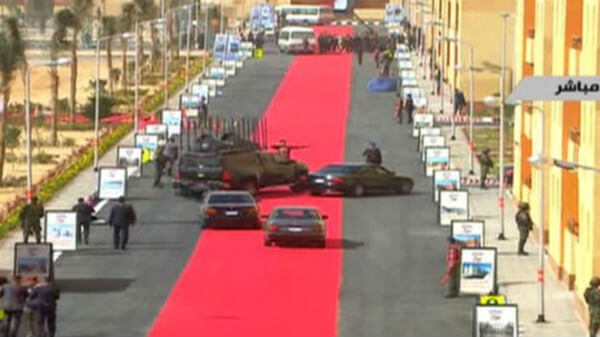
Red carpet for President Sisi’s convoy criticised in Egypt

sisi-red-carpet

BBC News reports: The use of a red carpet for the motorcade of President Abdul Fattah al-Sisi has provoked criticism in Egypt.

Cars carrying Mr Sisi and other officials drove down the red carpet on Saturday as they were visiting projects in 6 October City, a suburb of Cairo.

Several commentators questioned the apparent extravagance, just as the president was making a speech about the need to cut government subsidies.

The military said the carpet was meant to give joy to the Egyptian people. [Continue reading…]

Facebooktwittermail

World’s largest concentrated solar plant switches on in the Sahara

CNN reports: Morocco has switched on what will be the world’s largest concentrated solar power plant.

The new site near the city of Ouarzazate — famous as a filming location for Hollywood blockbusters like “Lawrence of Arabia” and “Gladiator” — could produce enough energy to power over one million homes by 2018 and reduce carbon emissions by an estimated 760,000 tons per year, according to the Climate Investment Funds (CIF) finance group.

As His Majesty Mohammed VI of Morocco pressed a button on 4 February 2016, the first phase of the three-part project was set in motion. [Continue reading…]

Facebooktwittermail

Obama’s disastrous betrayal of the Syrian rebels

Emile Hokayem writes: What a difference a year makes in Syria. And the introduction of massive Russian airpower.

Last February, President Bashar al-Assad’s regime and its Shiite auxiliaries mounted a large-scale attempt to encircle Aleppo, the northern city divided between regime and rebels since 2012 and battered by the dictator’s barrel bombs. Islamist and non-Islamist mainstream rebels — to the surprise of those who have derided their performance, let alone their existence — repelled the offensive at the time. What followed was a string of rebel advances across the country, which weakened Assad so much that they triggered Moscow’s direct intervention in September, in concert with an Iranian surge of forces, to secure his survival.

Fast-forward a year. After a slow start — and despite wishful Western assessments that Moscow could not sustain a meaningful military effort abroad — the Russian campaign is finally delivering results for the Assad regime. This week, Russian airpower allowed Assad and his allied paramilitary forces to finally cut off the narrow, rebel-held “Azaz corridor” that links the Turkish border to the city of Aleppo. The city’s full encirclement is now a distinct possibility, with regime troops and Shiite fighters moving from the south, the west, and the north. Should the rebel-held parts of the city ultimately fall, it will be a dramatic victory for Assad and the greatest setback to the rebellion since the start of the uprising in 2011.

In parallel, Russia has put Syria’s neighbors on notice of the new rules of the game. Jordan was spooked into downgrading its help for the Southern Front, the main non-Islamist alliance in the south of the country, which has so far prevented extremist presence along its border. Turkey’s shooting down of a Russian military aircraft that crossed its airspace in November backfired: Moscow vengefully directed its firepower on Turkey’s rebel friends across Idlib and Aleppo provinces. Moscow also courted Syria’s Kurds, who found a new partner to play off the United States in their complex relations with Washington. And Russia has agreed to a temporary accommodation of Israel’s interests in southern Syria.

Inside Syria, and despite the polite wishes of Secretary of State John Kerry, the overwhelming majority of Russian strikes have hit non-Islamic State (IS) fighters. Indeed, Moscow and the Syrian regime are content to see the United States bear the lion’s share of the effort against the jihadi monster in the east, instead concentrating on mowing through the mainstream rebellion in western Syria. Their ultimate objective is to force the world to make an unconscionable choice between Assad and IS. [Continue reading…]

Facebooktwittermail

Rebel setbacks in Syria have far reaching consequences

Hassan Hassan writes: Is Syrian president Bashar Al Assad finally winning? One can feel a deep sense of grief running through opposition factions whether inside or outside Syria over how events have unfolded over the past two weeks.

Pro-regime forces have made a series of major gains in northern, central and southern Syria over the past week.

More strikingly, they broke a three-year siege imposed by the rebels around the Shia towns of Nubbol and Zahraa, 20 kilometres from Aleppo city, which represents a major setback for the rebels especially as it could disrupt a game of encirclement and counter-encirclement that sustained the rebels’ control of much of Aleppo since 2012.

Five months after the regime’s forces seemed incapable of halting the string of victories achieved by the rebels in northern Syria, which led to the Russian military intervention to prop up their ally, the regime appears to be on the offensive. The offensive is seen n northern Latakia, the western Ghouta near Damascus, Deraa and in the rural areas of Hama, Idlib and Aleppo. The regime appears to have made an impressive comeback.

It is hard to judge how one side is doing through such tactical gains. The rebels were clearly on the winning side just a year ago, while the regime’s army suffered from a shortage in manpower, as admitted by Mr Al Assad himself during his last speech in August.

The breaking of the siege of Nubbol and Zahraa last week, as well as the siege of Kweiris airbase near Raqqa in November and the takeover of Sheikh Maskeen in Deraa last month, were spearheaded by foreign militias beholden to Iran.

The opposition’s real crisis is much deeper, hence the state of grieving widely felt by the rebels. These setbacks come amid profound internal, regional and international challenges that could tip the balance dramatically in favour of the regime. [Continue reading…]

Facebooktwittermail

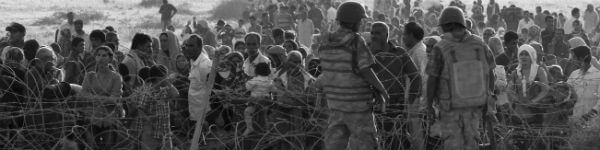
As Syrians flee anew, neighbors’ altruism hardens into resentment

refugee5

The New York Times reports: When the Syrian refugees first started streaming into this bedraggled border town, Gassim al-Moghrebi was their tireless benefactor, distributing donations of food, money and clothes and sheltering as many as possible in two apartments he owned.

“All of Ramtha was just like me,” Mr. Moghrebi said, describing a good will rooted in family ties that spanned the border, and sympathy for the victims of a pitiless war. “One man had 10 apartments. He gave them to the Syrians for free.”

But now, as Syria witnesses a new escalation of violence, including waves of Russian airstrikes, and as Syrians flee for safety again by the tens of thousands, neighboring countries are increasingly overwhelmed and reluctant to let them in. In many places, that early altruism has hardened into resentment — an ominous turn for those fleeing war.

Desperate Syrians are backed up at the borders of Jordan and Turkey, barred from entering or else just allowed to trickle in. Increasingly, they find escape routes closing. [Continue reading…]

Facebooktwittermail

Bombarded Aleppo lives in fear of siege and starvation

The Guardian reports: The bombs are falling so fast in Aleppo now that often rescuers don’t have time to reach victims between blasts. If the deadly explosions that struck on just one day last week had been evenly spaced, they would have struck every other minute around the clock.

“Sometimes there are so many airstrikes, we are just waiting and waiting at our headquarters, and the jets don’t leave the skies,” says Abdulrahman Alhassan, a 29-year-old former bank engineer from the city who coordinates “white helmet” rescue teams in the city.

“When at last we can’t see any more, we have to rush to all the sites to rescue people and evacuate them at once,” he said. On Friday, the group counted 900 airstrikes by government forces and their Russian backers, apparently throwing every weapon they have at the already devastated city.

Aid groups and people still inside the city believe the barrage is preparing the way for a blockade. The main supply line north of Aleppo has already been cut, and it will not take long before shortages bite in a ruined, desperate city.

“The Russian airstrikes are trying to completely destroy the area before they get on the ground and start the siege,” said Saad, a 35-year-old aid worker who chose to stay on and is now trapped inside the city. He says the bombing campaign was hitting both morale and food supplies. [Continue reading…]

Facebooktwittermail