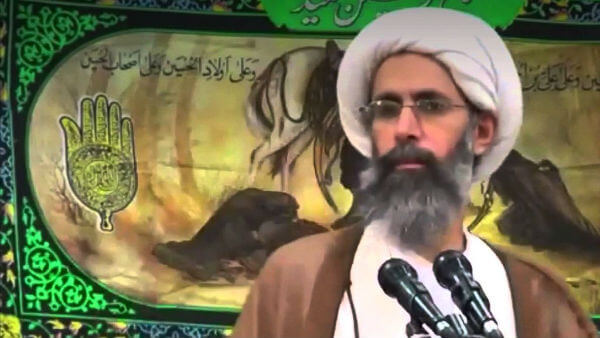
Reuters reports: At least two Sunni Muslim mosques have been attacked in Iraq and two people killed in apparent retaliation for the execution of a senior Shi’ite cleric in Sunni-ruled Saudi Arabia, officials and police said on Monday.Iraqi Shi’ites protesting the Jan. 2 execution of Saudi Shi’ite cleric Nimr al-Nimr separately marched in Baghdad and in southern cities, calling for a boycott of Saudi products and severing ties with the Sunni-ruled kingdom.Iraq’s Interior Ministry confirmed the attacks on Sunni mosques late Sunday in Hilla, around 100 km (60 miles) south of Baghdad. Prime Minister Haider al-Abadi blamed them on “Daesh (Islamic State) and those who are similar to them,” without further explanation.
He ordered provincial authorities “to chase the criminal gangs” who attacked the mosques. [Continue reading…]
Category Archives: News
Russia names United States among threats in new security strategy
Reuters reports: A new appraisal names the United States as one of the threats to Russia’s national security for the first time, a sign of how relations with the west have deteriorated in recent years.
The document, “About the Strategy of National Security of Russian Federation”, was signed by President Vladimir Putin on New Year’s Eve. It replaces a 2009 version, endorsed by then- President Dmitry Medvedev, the current prime minister, which mentioned neither the United States not NATO.
It says Russia has managed to heighten its role in solving global problems and international conflicts. That heightened role has caused a reaction by the West, it says.
“The strengthening of Russia happens against the background of new threats to the national security, which has complex and interrelated nature,” the document says.
Conducting an independent policy, “both international and domestic” has caused “counteraction from the USA and its allies, which are striving to retain their dominance in global affairs.” [Continue reading…]
Suspect in pro-ISIS plot called mentally ill ‘panhandler’ who was ‘manipulated’
The Associated Press reports: An ex-convict arrested in a plot to carry out a pro-Islamic State attack at a bar on New Year’s Eve is a panhandler who had been asked to leave in the past, the bar’s owner said. The man’s family said he had a long history of mental problems.
Federal authorities have said Emanuel Lutchman, 25, sought to prove he was worthy of joining Isis by leading an attack in Rochester with a machete and knives that were provided by an FBI informant.
After authorities announced his arrest on Thursday, Lutchman’s father and mother described a man who had had psychiatric troubles since childhood, had recently stabbed himself in a suicide attempt and, they said, would not have conducted the attack on his own.
“The boy is impressionable,” his father, Omar Lutchman, told NBC News. “First he was a Blood, then he was a Crip, then he became a Muslim. He’s easily manipulated.”
The father and the suspect’s grandmother, Beverley Carridice-Henry, told the network Lutchman is married and has a two-year-old son but had been having marital and money problems. He was frustrated over being unable to find work and care for his family, they said. [Continue reading…]
ISIS signals business as usual, with menacing new ‘frontman’
Martin Chulov writes: His tone was flatter, his physique less muscled, but his intent as menacing as his predecessor. The debut of what appears to be a new British-accented jihadi in an Islamic State propaganda film seemed tailored to signal business as usual for the terror group, two months after its foreboding former face, Mohammed Emwazi, was killed.
A lot has happened since then; the coordinated attacks in Paris, three mass bombings in southern Turkey, apparent near-misses in Munich and Brussels, a downed Russian passenger jet in the Sinai and heightened anxiety from Madrid to Istanbul.
But this latest video was aimed directly at the UK. The message was simple: David Cameron’s decision to bomb Isis targets in Syria had made Britain more of a target. And that whenever one British Isis frontman was killed, another was ready to take his place. [Continue reading…]
Britain acts to stem flow of young doctors recruited by ISIS in Sudan
The Guardian reports: A British delegation, including an imam from London, have visited Sudan to try to dissuade young British doctors from joining Islamic State (Isis), which has been urgently seeking more foreign medics to help at its hospitals in Syria.
The Foreign Office is coordinating efforts to prevent more Britons travelling from Khartoum’s University of Medical Sciences and Technology (UMST). At least 17 British doctors travelled from there to Syria during 2015 to staff Isis’s health ministry.
It has emerged that a second group of UK doctors who left Sudan for Syria have joined up with members of an earlier group who travelled to join Isis in March. According to family sources, the second group of five Britons, including two brothers from Leicester, are understood to have joined up with 20-year-old Rowan Kamal Zine El Abidine, one of a group of nine British medical staff who journeyed from Khartoum months earlier. [Continue reading…]
Jihadists deepen collaboration in North Africa
The New York Times reports: A group of light armored vehicles skated over the moonscape of the Sahara, part of one of the largest detachments the French military has deployed here since colonial times. Its mission is growing ever more urgent: to cut smuggling routes used by jihadists who have turned this inhospitable terrain into a sprawling security challenge for African and international forces alike.
Many of the extremist groups are affiliates of Al Qaeda, which has had roots in North Africa since the 1990s. With the recent introduction of Islamic State franchises, the jihadist push has been marked by increasing, sometimes heated, competition.
But, analysts and military officials say, there is also deepening collaboration among groups using modern communications and a sophisticated system of roving trainers to share military tactics, media strategies and ways of transferring money.
Their threat has grown as Libya — with its ungoverned spaces, oil, ports, and proximity to Europe and the Middle East — becomes a budding hub of operations for both Al Qaeda and the Islamic State to reach deeper into Africa.
And as Africa’s jihadists come under the wing of distant and more powerful patrons, officials fear that they are extending their reach and stitching together their ambitions, turning once-local actors into pan-national threats. [Continue reading…]
Iran warns of ‘divine vengeance’; Saudi Arabia breaks relations

The Washington Post reports: Saudi Arabia severed relations with Iran on Sunday amid the furor that erupted over the execution by the Saudi authorities of a prominent Shiite cleric.
Foreign Minister Adel al-Jubair told reporters in Riyadh that the Iranian ambassador to Saudi Arabia had been given 48 hours to leave the country, citing concerns that Tehran’s Shiite government was undermining the security of the Sunni kingdom.
Saudi Arabian diplomats had already departed Iran after angry mobs trashed and burned the Saudi embassy in Tehran overnight Saturday, in response to the execution of Sheikh Nimr Baqr al-Nimr earlier in the day.
Iran’s Supreme Leader warned on Sunday that there would be divine retribution for Saudi Arabia’s rulers after the execution of a renowned Shiite cleric, sustaining the soaring regional tensions that erupted in the wake of the killing.
The warning came hours after crowds of protesters stormed and torched the Saudi embassy in Tehran to vent their anger at the execution of Nimr Baqr al-Nimr, who was among 47 people put to death in the kingdom on Saturday.
Shiites around the world expressed outrage, potentially complicating a surge of U.S. diplomacy aimed at bringing peace to the region, according to Toby Matthiesen, an expert on Saudi Arabia at the University of Oxford.
“Nimr had become a household name amongst Shiite Muslims around the world. Many had thought his execution would be a red line and would further inflame sectarian tensions,” he said. “So this will complicate a whole range of issues, from the Syrian crisis to Yemen.”
Saudi Arabia and Iran are backing rival sides in Syria’s war, and their enmity risks derailing a diplomatic effort led by the United States and Russia to convene peace talks between the factions in Geneva this month.
The two feuding powers also support opposing sides in the war in Yemen and more broadly find themselves in opposition in the deeply divided politics of the mixed Sunni-Shiite nations of Iraq and Lebanon.
The Obama administration’s hopes that the conclusion last summer of an agreement limiting Iran’s nuclear program would help bridge the sectarian divide between Tehran and the United States’ biggest Arab ally were further diminished by the eruption of fury that followed Nimr’s death. [Continue reading…]
Sheldon Adelson’s purchase of Las Vegas paper seen as a power play
The New York Times reports: Two days after Sheldon Adelson’s lawyers lost in their attempts to have a judge removed from a contentious lawsuit that threatens his gambling empire, a call went out to the publisher of this city’s most prominent newspaper.
Almost immediately, journalists were summoned to a meeting with the publisher and the general counsel and told they must monitor the courtroom actions of the judge and two others in the city. When the journalists protested, they were told that it was an instruction from above and that there was no choice in the matter.
It is unclear whether Mr. Adelson, who was then in talks to buy the newspaper, The Las Vegas Review-Journal, or his associates were behind the directive or even knew about it. But it was an ominous coincidence for many in the city who worry what will become of the paper now that it is owned by Mr. Adelson, a billionaire casino magnate and prominent Republican donor with a history of aggressively pursuing his interests.
Suspicions about his motives for paying a lavish $140 million for the newspaper last month are based on his reputation in Las Vegas as a figure comfortable with using his money in support of his numerous business and political concerns, said more than a dozen of the current and former Review-Journal staffers and local civic figures who have worked closely with him. [Continue reading…]
Marshes can rise to meet flood risks if we don’t disrupt mud flows

Climate Central reports: In the race to keep their verdure heads above rising seas, marshes that protect coastal regions from floods, storms and erosion harbor the botanical equivalents of nitro boosters: rapid growth fueled by climate-changing pollution.
The same greenhouse gas that’s doing most to warm the planet and uplift its seas can also work as a fertilizer. New research suggests that rising levels of heat-trapping carbon dioxide in the atmosphere could help communities of marsh plants grow quickly enough to keep up with changes that would otherwise inundate them.
“The fertilization effect from increased carbon dioxide in the atmosphere definitely enhances marsh-plant biomass functioning,” said Katherine Ratliff, a PhD candidate at Duke University who led modeling-based research published last month in Proceedings of the National Academy of Sciences.
The findings suggest that mud shortages — not growth rates — could be the greatest challenges for marshes as they strive to grow quickly enough to keep up with rising seas. Sea levels have risen 8 inches since the late 1800s, with several more feet expected this century. The fostering of coastal ecosystems is considered a key defense strategy against future flooding. [Continue reading…]
War in Syria: Up to 40,000 civilians are starving in besieged Madaya, say campaigners
The Independent reports: Up to 40,000 civilians are slowly starving to death in the Syrian town of Madaya, activists have warned, after six months under a punishing siege.
Encircled by land mines and forces from the Lebanese militia Hezbollah, hundreds are suffering from malnutrition. With severe shortages of basic foodstuffs, many have resorted to eating wild plants, insects and even cats.
A media activist in the town, who used the pseudonym Nasir Ibrahim to protect his family, said that on New Year’s Eve he had managed to eat 50g of rice. Today, with snow covering the mountain-top town, he expected to go hungry. “The humanitarian situation is very dangerous,” he told The Independent. “Many have died starving and many more will follow them if no immediate aid is allowed in.”
In recent weeks, photographs of emaciated corpses have begun to emerge from the town, which is high in the mountains a few miles from the border with Lebanon. Around 20 men have so far perished from starvation, according to Mr Ibrahim. [Continue reading…]
On perilous refugee trail, women often become prey to sexual abuse
The New York Times reports: One Syrian woman who joined the stream of migrants to Germany was forced to pay down her husband’s debt to smugglers by making herself available for sex along the way. Another was beaten unconscious by a Hungarian prison guard after refusing his advances.
A third, a former makeup artist, dressed as a boy and stopped washing to ward off the men in her group of refugees. Now in an emergency shelter in Berlin, she still sleeps in her clothes and, like several women here, pushes a cupboard in front of her door at night.
“There is no lock or key or anything,” said Esraa al-Horani, the makeup artist and one of the few women here not afraid to give her name. She has been lucky, Ms. Horani said: “I’ve only been beaten and robbed.”
War and violence at home, exploitative smugglers and perilous seas along the way, an uncertain welcome and future on a foreign continent — these are some of the risks faced by tens of thousands of migrants who continue to make their way to Europe from the Middle East and beyond. But at each step of the way, the dangers are amplified for women.
Interviews with dozens of migrants, social workers and psychologists caring for traumatized new arrivals across Germany suggest that the current mass migration has been accompanied by a surge of violence against women. From forced marriages and sex trafficking to domestic abuse, women report violence from fellow refugees, smugglers, male family members and even European police officers. There are no reliable statistics for sexual and other abuse of female refugees. [Continue reading…]
Saudi mass execution driven by fear of Sunni militancy
Angus McDowall writes: The Al Saud ruling family regard the expansion of Shi’ite Iran’s influence in the Middle East as a threat to their security and to their ambition of playing the leading role among Arab states.
Inside the kingdom, however, it is the threat of a rebellion by the majority Sunnis that most alarms a dynasty whose rule is based on conservative support at home and an alliance with the West.
All past threats to the Al Saud, from a 1920s tribal rebellion to riots in the 1960s, a siege at Mecca’s Grand Mosque in 1979 and protests in the 1990s, were caused by conservative Sunni anger at modernisation or ties with the West.
That was why the al Qaeda uprising that began in 2003, and attacked the Al Saud by turning its own conservative Salafi brand of Sunni Islam against it, was such a danger. It is why the jihadist movement’s latest iteration, Islamic State, is also a problem.
While Islamic State seems to lack real support among Saudis, some may sympathise with its broader goals, approving of its rhetoric against Shi’ites and the West and its criticism of corruption among the Al Saud.
By executing al Qaeda ideologues and attackers, Riyadh was showing its determination to crush support for the militant cause. By also killing four Shi’ites, angering Iran in the process, it was telling conservative Sunnis it was still on their side. [Continue reading…]
Saudi execution: Call for West to condemn killing of Shia cleric
Martin Chulov reports: Shia Islamic leaders on Sunday stepped up their condemnation of the Saudi execution of the prominent Shia cleric Sheikh Nimr al-Nimr, urging a robust response from Riyadh’s western backers, who are yet to fully address the issue.
David Gauke, financial secretary to the Treasury, became the most senior UK figure to react to the execution, which has led to clashes in Tehran, and prompted widespread denunciation elsewhere. He said al-Nimr’s death was a “worrying development”. The US State Department had said earlier that the move risked “exacerbating sectarian tensions at a time when they urgently need to be reduced”.
Anger remained palpable on the streets of the Lebanese capital, and in Bahrain and Baghdad, hours after the Saudi embassy in Tehran was torched by protesters angered by the execution of a senior cleric who had been championed by Iranian leaders.
However, in what appeared to be a move to calm tensions, the Iranian president, Hassan Rouhani, said the attack on the embassy was unjustifiable, and urged that the perpetrators be dealt with.
“I have no doubt that the Saudi government has damaged its image, more than before, among the countries in the world – in particular (among) Islamic countries – by this un-Islamic act,” Rouhani said.
Taking a cautionary tone, he added: “We will not allow rogue elements” to use the incident and “carry out illegal actions that damage the dignity of the Islamic republic establishment”.
“I call on the interior minister to identify the perpetrators of this attack with firm determination and introduce them to the judiciary … so that there will be an end to such appalling actions once and for all.”
Iran’s supreme leader, Ayatollah Ali Khamenei, called on Saudi Arabia’s western backers to directly condemn the execution, which came three years after al-Nimr was arrested following his vocal support for anti-government protests in Bahrain and Riyadh.
“This oppressed cleric did not encourage people to join an armed movement, nor did he engage in secret plotting, and he only voiced public criticism … based on religious fervour,” said Khamenei, who criticised “the silence of the supposed backers of freedom, democracy and human rights” over the execution. [Continue reading…]
The New York Times reports: Sheikh Nimr, said to be in his mid-50s, was from Awamiyah, a poor town surrounded by palm groves in eastern Saudi Arabia and known for opposition to the monarchy.
He studied in Iran and Syria, but rose to prominence for fiery sermons after his return in which he criticized the ruling family and called for Shiite empowerment, even suggesting that Shiites could secede from the kingdom.
This gained him a following mostly among young Shiites who felt discriminated against by Persian Gulf governments. When these young people joined Arab Spring protests in Bahrain and eastern Saudi Arabia in 2011, Sheikh Nimr became a leading figure.
During a sermon in 2012, Sheikh Nimr mocked Prince Nayef bin Abdulaziz, who had been the Saudi interior minister and had recently died.
“He will be eaten by worms and suffer the torments of hell in the grave,” Sheikh Nimr said. “The man who made us live in fear and terror; shouldn’t we rejoice at his death?”
Prince Nayef’s son, Mohammed bin Nayef, is now the crown prince and runs the Interior Ministry, which carries out death sentences. [Continue reading…]
Saudi Arabia’s mounting security challenges
Bruce Riedel writes: The kingdom announced its new budget Dec. 28 with a record $87 billion deficit. Revenues are projected at $137 billion and spending at $224 billion.
Riyadh’s immediate priority is the war in Yemen. The war costs an estimated $200 million a day, or $6 billion a month. The Saudi coalition and the Houthi rebels both violated the last United Nations-sponsored cease-fire. The Saudis did gain control of the capital of Jawf province along the Saudi border during the supposed truce. The talks in Biel, Switzerland, did not produce a breakthrough, but are to resume Jan. 14.
The Houthis show no sign of giving up. Their leadership remains hard-line and defiant. The war appears to be a bloody stalemate that has catastrophic humanitarian costs for Yemenis. The outside world pays little if any attention. [Continue reading…]
Saudi execution of Shia cleric poses a direct challenge to Iran
Simon Tisdall writes: The consequences of Saudi Arabia’s mass execution of 47 people will be felt far beyond its Eastern Province, which was home to Nimr al-Nimr, the leading Shia Muslim cleric who was the most prominent figure among those to die.
Unlike many of the Sunni Muslims executed for alleged complicity in al-Qaida terrorism, Nimr was an advocate of non-violent resistance to the unelected Saudi regime. He was arrested in 2012 for criticising the royal family.
His plight reflected the trials and tribulations of Saudi Arabia’s Shia minority, which accounts for 15% of the country’s 29 million people and has suffered, historically, from institutionalised discrimination and periodic security crackdowns.
The al-Qatif governorate of Eastern Province, bordering the Gulf, has been the setting for anti-regime agitation since at least 1979, when Saudi Shias demonstrated in support of Ayatollah Ruhollah Khomeini, whose Islamic revolution in Iran that year toppled the shah. Trouble erupted again in 2011-13, triggered by the Arab Spring uprising of the Shia majority in nearby Bahrain and its subsequent brutal, Saudi-assisted suppression. [Continue reading…]
Mark Townsend adds: In October 2014, Saudi Arabia’s specialised criminal court sentenced Nimr to death for seeking ‘foreign meddling’ in the kingdom along with ‘disobeying’ its rulers and taking up arms against the security forces”. His brother, Mohammad al-Nimr, tweeted information about the death sentence and was promptly arrested on the same day.
As news of the sentence travelled, the head of Iran’s armed forces warned Saudi Arabia that it would “pay dearly” if it dared execute the cleric. Powerful and prominent in life, it is the nature of Nimr’s death that could shape his legacy. [Continue reading…]
Meltdowns, crises and ISIS: A terrible year in the Middle East
By Simon Mabon, Lancaster University
As we approach the fifth anniversary of the Arab Uprisings, it’s hard to remember the days of popular protests, of democratic revolutions and of dreams of a better future that rocked the Middle East in 2011. Nearly five years on, tensions between rulers and the ruled have exploded across the region – and the ensuing struggles for survival have continued to take all manner of ugly forms.
At the centre of things, the Syrian conflict has deepened – and while the brutality of Islamic State (IS) has been responsible for much of the recent chaos and tragedy across Syria, the regime of Bashar al-Assad has been responsible for seven times as many Syrian deaths as IS. Assad’s position was strengthened by continued support from Russia, Iran and Lebanon’s Hezbollah, antagonising powerful states in the West and the Gulf – particularly Saudi Arabia. The Gulf states also faced domestic threats from IS, with the group carrying out a number of attacks on Shia sites and communities across the region.
The Syrian conflict became ever more internationalised in 2015. The number of foreign fighters on the ground – on all sides – continued to grow, while on the diplomatic level, the Vienna talks tried to resolve the seemingly intractable conflict – though they have yet to yield any decisive action.
The task of dealing with IS was further complicated by a batch of new wilayats, groups who declared allegiance to IS. Wilayat Sinai in particular was purportedly responsible for a range of acts, allegedly including a massive bomb attack in Cairo and the downing of a Russian passenger jet over Egypt’s Sinai Peninsula.
U.S. and allies conduct 24 air strikes against ISIS targets in Iraq
Reuters reports: The US and its allies conducted 24 air strikes against Islamic State targets in Iraq on Thursday, the US military said on Friday.
It said in a statement the strikes targeted Isis positions in seven areas. Four strikes near the city of Ramadi, the centre of which fell to Iraqi forces this week, hit a large tactical unit and destroyed a vehicle-borne improvised explosive device facility, five militant fighting positions and two heavy machine guns.
Near Tal Afar, 11 strikes destroyed nine bunkers, five culverts and four bridges used by the militants. Near Mosul, three strikes struck a tactical unit and destroyed two heavy machine guns, six fighting positions, a weapons cache and a trench.
In Ramadi, terrified families waved white flags as they emerged from homes reduced to rubble. Government troops were still battling Isis fighters holed up on Friday, five days after the army recaptured the city centre. [Continue reading…]
Munich on high alert after New Year’s Eve terrorism threat
The New York Times reports: Hundreds of police officers remained on alert in Munich on Friday, after a threat of a suicide bombing attack by the Islamic State led the authorities to evacuate two train stations on New Year’s Eve.
The German authorities said on Friday that five to seven people may have been involved in the terrorist threat. The two stations, in the city center and in the Pasing district, were both reopened.
Officials defended their decision to close the two transit hubs hours before midnight and to flood the city with heavily armed officers — 550 as of Friday morning, including police officers from other parts of the southern state of Bavaria. They said they had received a “very concrete tip” around 7:40 p.m. from intelligence sources in France and the United States indicating that militants from Iraq and Syria were planning to carry out attacks. [Continue reading…]