In his speech to the Central Council of the PLO in Ramallah, Palestinian President Mahmoud Abbas announced his strategy to end the occupation. The President stressed in his speech that he will not retreat from seeking recognition of the Palestinian state from the United Nations. Abbas had been under enormous pressure to withdraw the request for recognition of a Palestinian State on borders of June 1967. He announced that 122 nations are already in favor of the draft submitted to the UN. Concerning US opposition, he referred to the fact that this has not been communicated in a formal manner.
President Abbas surprised many of his listeners when he spoke about another element of his strategy. Perhaps for the first time Abbas highlighted clearly his vision of the Palestinian people’s active participation to achieve the dream of a Palestinian state. He called upon the Palestinian people to go out to the streets and demonstrate in an Arab-style revolution.
I insist on popular resistance, and insist it is an unarmed popular resistance so no one misunderstand us. We follow the example demonstrated in the Arab Awakening, which says, ‘Selmiya, Selmiya’, ‘Peaceful, Peaceful.’
The Arab Awakening in Egypt and Tunisia proved that popular masses in the streets, shoulder-to-shoulder in a coherent, peaceful movement, can accomplish anything. What seemed impossible in the past is possible today.
The challenge is that most of the Palestinian demonstrations until now have focused on fighting the Separation Wall, and on resisting the expansion of the settlements at the expense of Palestinian villages. These protests are still limited in the number of participants, and they do not exceed tens of protestors, or hundreds in the best scenarios. This is not enough to create the political change that is necessary now.
President Abbas did not hide his disappointment about the Palestinian popular resistance movement’s inability to grow to a national level.
We talk about the Resistance, but when we see what is happening in these demonstrations, frankly we don’t find anyone talking about it.
Clearly, he wants to see this grow on a national level, and he wants this reality to become an established fact that will impact the global conversation and debate about the future of Palestine.
The success of the Palestinian Popular Resistance movement has apparently become a key factor in the Palestinian strategy for achieving independence. The diplomatic efforts to gain recognition worldwide are going to be fruitless if they are not coupled with a strong nonviolent movement in the Palestinian territories, which will make the march to independence an irresistible and newsworthy drama of unprecedented proportions.
Largely shielded from the European and American financial crises, the Israeli economy has been growing at an astonishing rate over the past five years: 4.7 per cent in 2010 alone. But the wealth isn’t evenly distributed: most Israelis living inside the 1967 borders struggle to make ends meet because of the high cost of living and relatively high taxes, which are largely spent on security and the occupation of the West Bank and Gaza.
Last month, a group of Tel Aviv residents in their twenties set up camp in the centre of Rothschild Boulevard to protest against housing costs in the city. They didn’t have a serious plan for political change, but the protest tapped into nationwide discontent. Within a few days, hundreds more people had joined them. The momentum spread quickly through the country, with camps appearing everywhere from Eilat on the Red Sea to Kiryat Shmona on the Lebanese border.
On Saturday, 250,000 Israelis marched in Tel Aviv and 10,000 marched to the prime minister’s residence in Jerusalem, demanding ‘social justice’. Netanyahu, the main target of the demonstrators’ placards, was quick to paint the protests as a misdirected reincarnation of the ‘radical left’. But this stale tactic didn’t stop an overwhelming majority of Israelis supporting the protests. According to recent opinion polls, 87 per cent see the demands for economic reform as legitimate.
The protester’s working definition of ‘social justice’, however, is unclear and full of contradictions. Most glaringly, they have yet to address the question of the Occupied Territories. From the start, organisers maintained that their protests were a rare instance of ‘apolitical’ social organising. The Palestinian issue was understood to be too divisive to be included under the umbrella of Israel’s social justice revolution, and there’s no doubt that, had protesters connected their struggle for social justice to the occupation, many fewer Israelis would have joined the protests.
In a discussion, 972 Magazine poses the question: Does social unrest and emerging tent city protest movement signify the dawn of a new political era in Israel?
Avrum Burg, author and former Knesset Speaker, responds:
“It’s not political,” protesters are shouting but they want politics to change their lives. In a few months they won’t be here and it’s the old politics that will remain to clean up the mess on the streets. All that will be left of the protest will be memories and the lists of things accomplished. With time, the following truths will be recognized: that the defamed “Tel Aviv state” is the only one that can move mountains and hills here.
It will also be recognized that it is easier for people to whine over the price of cheese than to change the economic system and the values which drive it. By saying “no politics” one avoids the most fatal of our diseases – the war we have subjected ourselves to in the West Bank, also due to short term economical interests.
Over there – on the hills of Judea and Samaria – the government does build, and subsidize, and give benefits – for Jews. Those who wish to disconnect the tent protests from this war also disconnect their struggle from the real opportunity to change the internal process which has brought us here.
And to the protesters: don’t shy away from politics. Take part in it, take it over. Offer a complete social alternative and not just a struggle over another Shekel in the price of cheese. Don’t run away from the occupation – end it before it swallows us all.
What have thus far been mostly absent [during Israel’s J14 protests] are calls to end the occupation, a silence that speaks eloquently to the composition of Israeli society, in which a call to end the occupation or dismantle the racist juridical structure is perceived as an attack on the state religion: militarist nationalism. Such a call would be “political,” as opposed to the current protests, which are merely “social” in nature.
It is yet early, but two things seem clear. One, this movement will not break the Israeli structure of power. Two, this is an early fracture – a foretaste of later ruptures – within Zionism.
It would be wonderful to be wrong about the first point. One could not predict the fall of the Iranian shah from the Peacock Throne in 1977 before months-long street melees sent him into flight. The rise of Hugo Chavez was not prefigured in the caracazo, the countrywide riots against Venezuelan neoliberal austerity measures, of 1989. Revolutions are inherently unpredictable, as people move out of the gentle ebbs and flows, the quotidian cycles, of their lives, and move to messianic time. At such moments, belief in their own power, a kind of “collective effervescence,” can create opportunities that no one would have predicted or believed possible just weeks before, and radical change becomes a kind of a mirage that one suddenly wills into being real. Such sparks of human creativity and the instinct for freedom kindle flames within structures designed to douse them.
Still, the fractures within those structures are real. The average apartment is unaffordable for 90 percent of the population, what academic and housing researcher Danny Ben Shahar calls a “social time-bomb,” in part the result of housing inflation as a jet-setting Jewish transnational elite flits into Tel Aviv and Jerusalem for the summer, stays at their “ghost apartment,” then returns to Paris and Los Angeles. Inflation is not restricted to the housing market. As Histadrut Labor Federation Chairman Ofer Eini said, “If once I was able to go to the supermarket and make a NIS 700 purchase, today I pay double. And that is not linked to the CPI. If the CPI rises 3 percent, the supermarket prices rise 30 percent. The one benefiting from these rising prices is the government.”
The question of the “government” benefiting from rising prices is dubious. Inflation might be partially pushed by the government, but historically, Israeli inflation has led to a redistribution of economic clout from the bottom and middle of Israeli society to its upper echelons. The upper class, welded solidly into transnational capital circuits, is the real beneficiary, behind the veneer of the state and the politicians it pushes into office. And it frequently does not bother with the veneer: amidst a cartelized economy, prices are pushed higher and higher by the corporations that set prices, while wages do not come close to keeping pace with price increases.
On Thursday, the U.S. State Department announced a $200,000 grant to the Middle East Media Research Institute (MEMRI), a Middle East media watchdog closely aligned with U.S. neoconservatives and Israel’s hawkish security establishment and rightist Likud Party. The grant was awarded “to conduct a project that documents anti-Semitism, Holocaust denial and Holocaust glorification in the Middle East.” The announcement continues:
This grant will enable MEMRI to expand its efforts to monitor the media, translate materials into ten languages, analyze trends in anti-Semitism and Holocaust denial and glorification, and increase distribution of materials through its website and other outlets.
Finding examples of anti-Semitism is already a robust MEMRI project and one wonders why exactly they needed the cash: According to publicly available tax filings, MEMRI had nearly $5 million in revenue in 2007 and more than $4.5 million in revenue in 2008.
What’s more troubling, MEMRI has faced accusations of mistranslating items and cherry-picking incendiary sources to portray regional media and attitudes in an overly-negative fashion. One of the most common issues has been with MEMRI’s mistranslations which appear to show anti-Semitism on thin evidence. In 2007, CNN correspondent Atika Shubert checked MEMRI’s translations of a Palestinian children’s program against those provided by the cable news channel’s own interpreters:
Media watchdog MEMRI translates one caller as saying – quote – ‘We will annihilate the Jews.’ But, according to several Arabic speakers used by CNN, the caller actually says ‘The Jews are killing us.’ MEMRI told us it stood by its translation.
In other instances, MEMRI has been accused of twisting translations to portray criticisms of Israel and its driving ideology, Zionism, as anti-Semitic..
Nearly 20 percent of the constituents of Rep. Jesse Jackson, Jr. (D-IL) live under the poverty line, and nearly 15 percent are unemployed. Jackson’s congressional district, covering parts of the south side of Chicago and its southern suburbs, has been hit harder than many others by the crises plaguing the economy. Many of his constituents are looking at even more cutbacks in social services, higher prices for food and fuel, and ever scarcer jobs.
During this August congressional recess, Rep. Jackson, Jr. should be at home, meeting with constituents and proposing to them how he will help them cope with their difficult circumstances. Instead, the politician is proudly gallivanting around Israel, in one of three separate congressional delegations heading there this month on all-expense-paid junkets organized by the American Israel Education Foundation (AIEF), a so-called charitable affiliate of the American Israel Public Affairs Committee (AIPAC), the most influential of the myriad pro-Israel lobbying outfits.
In total, 81 representatives, nearly one-fifth of the entire House, will participate in these jaunts, which, according to The Washington Post, include “a round-trip flight in business class for lawmakers and their spouses (that alone is worth about $8,000), fine hotels and meals, side trips, and transportation and guides.
Of course, these congressional delegations are not all fun and games. Members of Congress will be expected to sing for their lavish dinners by honoring President Bush’s 2007 pledge to provide the Israeli military with $30 billion of tax-payer-funded weapons between 2009 and 2018. So far, proposed increases in military aid to Israel have been spared from the budgetary chopping block by President Obama and a compliant Congress that treats Israeli militarism as more sacrosanct than medical care for seniors. This despite the fact that Israel misuses the funds, in violation of the Arms Export Control Act, to commit human rights abuses against Palestinians living under its illegal 44-year military occupation of the West Bank, East Jerusalem, and Gaza Strip.
My Fellow American is an online film and social media project that calls upon concerned Americans to pledge and spread a message that Muslims are our fellow Americans. It asks people of other backgrounds to pledge, and share a real life story about a Muslim friend, neighbor, or colleague that they admire. Using the power of social media, My Fellow American seeks to change the narrative – from Muslims as the other, to Muslims as our fellow Americans.
Most Americans have never met an American Muslim. Many only know Muslims through the way they are portrayed in the media. American Muslims are so often vilified as “the other” that it is possible not to recognize that most were born in the U.S. Or that those who immigrated here came seeking the same freedoms and opportunities that have always attracted people to America.
Muslims are our fellow Americans, who today face threats to their civil rights and even their personal safety because of the fearful and often hateful rhetoric that would not be tolerated were it uttered about any other minority group.
Tariq Jahan has been hailed as a voice of reason. Only hours after holding his dead son in his arms, the grief-stricken father has provided hope for a peaceful resolution to a most horrific tragedy. His voice, full of pain, urged his community to stay away from any reprisal attacks for the killing of his son Haroon and two fellow young Muslim men.
If Jahan’s is a voice of reason then his message is of patriotism. Jahan is of my late father’s generation. They belonged to the first generation of Pakistani Muslims who migrated in large numbers during the 60s, 70s and 80s to find economic prosperity in the land of their once masters. For many, the plan had been to seek the riches that they could only dream of in the villages back home and return as made men to a life of bliss.
Of course, it never quite worked out like this. While in Britain, these men saw beyond the short-term gain that a return to village life with relatively vast sums of money would bring them and their expanding families. Britain offered stable jobs, relative prosperity, healthcare and the freedom as a minority to practice their faith openly by allowing the building of mosques and community centres. Their children had a chance to gain education and attend universities – a dream for many village and even city folk in Pakistan.
My father also told me that subconsciously there was also a great appreciation of the law and order that Britain had. It was a far cry from the endemic police corruption and unpredictability that is a hallmark of a Pakistani villager’s life.
Having seen both sides of the proverbial coin these men are fiercely protective of their adopted homeland. They cherish the stability and the peaceful lives they are able to live. It makes them proud to be British. In some instances, more so than their children who are born here. It is noticeable that the actions of some hardline young Muslims who turn to fundamentalist teachings are almost always at odds with the views of their parents, many of whom have seen less fortunate times.
I experienced this personally when as a conflicted teenager I adopted a deeply anti-British stance, much to the disapproval of my father. My dad would often say: “You’ll realise one day how fortunate you are that this is your home.”
After a recent speech, John Brennan, a longtime former CIA officer and currently President Obama’s counter-terrorism advisor, took a question from John Hopkins professor of strategic studies, Elliot Cohen, on the US policy of so-called targeted killing. Brennan responded by highlighting the “surgical” precision that Obama has insisted upon when the US chooses its targets.
If there are terrorists who are in an area where there are women and children or others, we do not take such action that might put those innocent men, women and children in danger. In fact I can say that the types of operations that the US has been involved in — in the counter-terrorism realm — that nearly for the past year there hasn’t been a single collateral death because of the exceptional proficiency, precision, of the capabilities that we have been able to develop.
Brennan might have been repeating what he had been told by the CIA and their reports may have stated that in each drone attack over the said period no civilians were knowingly killed. But ignorance is no defense.
Indeed, the CIA’s lack of interest in the truth is evident in the fact that they have been eager to refute the findings on the latest research on civilian casualties from drone attacks on the tribal areas of Pakistan before such findings had even been published.
One in seven of all US strikes appear to have resulted in child fatalities.
Between 2,292 and 2,863 people have died in the attacks.
Since Obama took office, those attacks have occurred on average once every four days.
Among those killed only 126 militants have been named.
Credible news reports indicate that between 385-775 civilians have been killed, including 164 children.
On May 6, a Central Intelligence Agency drone fired a volley of missiles at a pickup truck carrying nine militants and bomb materials through a desolate stretch of Pakistan near the Afghan border. It killed all the militants — a clean strike with no civilian casualties, extending what is now a yearlong perfect record of avoiding collateral deaths.
Or so goes the United States government’s version of the attack, from an American official briefed on the classified C.I.A. program. Here is another version, from a new report compiled by British and Pakistani journalists: The missiles hit a religious school, an adjoining restaurant and a house, killing 18 people — 12 militants, but also 6 civilians, known locally as Samad, Jamshed, Daraz, Iqbal, Noor Nawaz and Yousaf.
CIA drone strikes have led to far more deaths in Pakistan than previously understood, according to extensive new research published by the Bureau. More than 160 children are among at least 2,292 people reported killed in US attacks since 2004. There are credible reports of at least 385 civilians among the dead.
In a surprise move, a counter-terrorism official has also released US government estimates of the numbers killed. These state that an estimated 2,050 people have been killed in drone strikes – of whom all but an estimated 50 are combatants.
The Bureau’s fundamental reassessment of the covert US campaign involved a complete re-examination of all that is known about each US drone strike.
The study is based on close analysis of credible materials: some 2,000 media reports; witness testimonies; field reports of NGOs and lawyers; secret US government cables; leaked intelligence documents, and relevant accounts by journalists, politicians and former intelligence officers.
The Bureau’s findings are published in a 22,000-word database which covers each individual strike in Pakistan in detail. A powerful search engine, an extensive timeline and searchable maps accompany the data.
The result is the clearest public understanding so far of the CIA’s covert drone war against the militants. Yet US intelligence officials are understood to be briefing against the Bureau’s work, claiming ‘significant problems with its numbers and methodologies.’
Iain Overton, the Bureau’s editor said: ‘It comes as no surprise that the US intelligence services would attack our findings in this way. But to claim our methodology is problematic before we had even published reveals how they really operate. A revelation that is reinforced by the fact that they cannot bring themselves to refer to non-combatants as what they really are: civilians and, all too often, children’.
The Bureau’s data reveals many more CIA attacks on alleged militant targets than previously reported. At least 291 US drone strikes are now known to have taken place since 2004.
The intended targets – militants in the tribal areas – appear to make up the majority of those killed. There are 126 named militants among the dead since 2004, though hundreds are unknown, low-ranking fighters. But as many as 168 children have also been reported killed among at least 385 civilians.
More than 1,100 people are also revealed to have been injured in the US drone attacks – the first time this number has been collated.
In the wake of the Bureau’s findings Amnesty International has called for more CIA transparency.
But transparency is not what intelligence agencies trade in — “transparency” is for them nothing more than another name for public relations.
In the Palestinian refugee camp of Shatila, a corner of Beirut bearing the scars of massacres and an enduring despair, the words of a young barber hinted at an emerging optimism about what the Arab revolts could mean for a central issue of the last half century in the Middle East: the fate of Palestinians.
The barber, Mohammed Assad, was not naïve; life here is too grim for that. But in a region whose politics are being recalculated, he celebrated the rising influence of popular will on governments that long ignored it.
“There is hope,” he said.
In all the tumult of the Arab revolts, one of the most striking manifestations of change is a rejuvenated embrace of the Palestinian cause. The burst in activism in Egypt, Lebanon and even Tunisia has offered a rebuttal to an old bromide of Arab politics, that authoritarian leaders cynically inflamed sentiments over Israel and Palestine to divert attention from their own shortcomings.
But the embrace of the issue also helped confirm its status as a barometer of justice and freedom for many Arabs and Muslims. And now, the demands of an empowered public raise the possibility of a significant change in the region’s foreign policies which, at least tacitly, capitulated to the dictates of the United States and Israel.
“We always said, ‘If you want to liberate Palestine, you need to liberate yourselves,’ ” said Gamal Eid, founder of the Arabic Network for Human Rights Information, in Cairo.
In Tunisia, activists have insisted on an article in the Constitution banning normalization with Israel and making support for Palestinians state policy. Through a vibrant social media network, Lebanese and Palestinian youths have organized marches and sought ways to have a greater say in decisions of the Palestinian leadership. Protesters in Egypt have urged officials to let boats sail from Egyptian ports to break the partial blockade against Gaza; one boat docked in Alexandria last month before the Israeli military boarded and seized it.
“Even if the revolutions fail to achieve full and thorough regime change, there is no Arab government that can ignore its people now,” said Rashid Khalidi, a professor of modern Arab studies at Columbia University. “All the rulers — the kings of Morocco and Jordan, all the dictators and all the autocrats — they’re scared blind of their own people.”
Somewhere in the afternoon of this past Saturday, while hundreds of thousands of Israelis celebrated their renewed civic spirit and sense of national solidarity through their participation in the rapidly escalating protests against high housing prices and social inequality, a car approached the Shavei Shomron checkpoint north of Nablus. Inside were Rami Hwayel and several other cast members of a new production of “Waiting for Godot”. The play, which is being directed by famed Israeli auteur Udi Aloni is in rehearsals in Ramallah, but the cast was heading home to Jenin, to their home base at the Jenin Freedom Theatre.
When they reached the checkpoint, soldiers demanded to see their ID cards, after which, without warning, they pulled Hwayel out of the car, blindfolded him and threw him in an army vehicle to be taken away. As of Sunday no one had been told why he was detained. The military has slapped a gag order on all reporting about his detention inside Israel, and he can be held without charge or even access to a lawyer for up to a month. He is the third member of the Freedom Theatre to be detained in the last few weeks, all without official explanation or due process. According to an Israeli attorney who’s met with them, at least one of the captives has been “treated inhumanely”.
These two events – one “history-making”, the other all too mundane – point to the long journey Israelis will have to traverse before their increasingly massive protests against sky high housing prices and other social injustices becomes the revolution many already believe it to be.
“Mercenary” is a word with lots of ugly connotations — not least for men who’ve been jailed for being mercenaries.
So, Bancroft Global Development, a private company based in Washington DC currently providing “military services” for the US State Department and the UN in Mogadishu, doesn’t like the term “mercenaries.” It describes itself instead as a non-governmental organization dedicated to finding permanent solutions to violent conflict. It also has what might be a unique distinction of operating in the United States as a 501(c)3 not-for-profit charitable organization.
The Obama administration clearly doesn’t feel comfortable employing mercenaries or “mentors,” as Bancroft’s soldiers call themselves, and so they get paid by the governments of Uganda and Burundi who then get reimbursed by the State Department.
Richard Rouget, the French-born South-African Bancroft employee who is the primary source for the New York Times article cited below, let’s the company’s PR mask fall momentarily and reveals a 19th century colonial mentality when he refers to his Somali adversaries as “savages”.
This is how GUD (founded in 1968) and a similar ultra-right group, Unité Radicale, were described in The Guardian:
Both the GUD and UR, founded in 1998, are rabidly racist, anti-semitic and anti-American, declared enemies of “global, cosmopolitan finance”, supportive of the September 11 attacks and believers in la France blanche .
While they profess to be genuine “nationalist revolutionaries” rather than neo-Nazis, the paraphernalia of the Third Reich is never far from their gatherings.
Meanwhile, through its creation of the Somali National Security Agency — an intelligence organization financed largely by the CIA — the Obama administration is backing what one Somali official says is becoming a “government within a government.”
“No one, not even the president, knows what the NSA is doing,” he said. “The Americans are creating a monster.”
Richard Rouget, a gun for hire over two decades of bloody African conflict, is the unlikely face of the American campaign against militants in Somalia.
A husky former French Army officer, Mr. Rouget, 51, commanded a group of foreign fighters during Ivory Coast’s civil war in 2003, was convicted by a South African court of selling his military services and did a stint in the presidential guard of the Comoros Islands, an archipelago plagued by political tumult and coup attempts.
Now Mr. Rouget works for Bancroft Global Development, an American private security company that the State Department has indirectly financed to train African troops who have fought a pitched urban battle in the ruins of this city against the Shabab, the Somali militant group allied with Al Qaeda.
The company plays a vital part in the conflict now raging inside Somalia, a country that has been effectively ungoverned and mired in chaos for years. The fight against the Shabab, a group that United States officials fear could someday carry out strikes against the West, has mostly been outsourced to African soldiers and private companies out of reluctance to send American troops back into a country they hastily exited nearly two decades ago.
“We do not want an American footprint or boot on the ground,” said Johnnie Carson, the Obama administration’s top State Department official for Africa.
A visible United States military presence would be provocative, he said, partly because of Somalia’s history as a graveyard for American missions — including the “Black Hawk Down” episode in 1993, when Somali militiamen killed 18 American service members.
Still, over the past year, the United States has quietly stepped up operations inside Somalia, American officials acknowledge. The Central Intelligence Agency, which largely finances the country’s spy agency, has covertly trained Somali intelligence operatives, helped build a large base at Mogadishu’s airport — Somalis call it “the Pink House” for the reddish hue of its buildings or “Guantánamo” for its ties to the United States — and carried out joint interrogations of suspected terrorists with their counterparts in a ramshackle Somali prison.
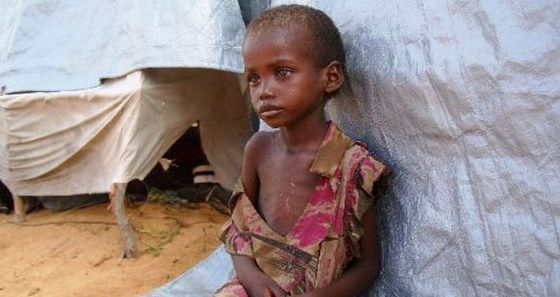
And while Washington continues to look at Somalia through the mind-numbing prism of “global terrorism,” the people of this war-torn nation struggle to survive.
A staggering ten percent of children under five are now dying from starvation every 11 weeks.
Ten per cent of Somali children aged under five are dying every 11 weeks in the country’s devastating famine, which is spreading faster than aid agencies can cope with, UN officials warned on Wednesday.
The UN representative to Somalia also told the UN Security Council that warlords will take control of areas of Mogadishu abandoned by Islamist insurgents last weekend unless the transitional government quickly gets a grip.
The envoy, Augustine Mahiga, said about half the Somali population, about 3.7 million people, are now at risk from famine. The UN estimates that more than 12 million are affected across East Africa.
Across the famine zone, more than 13 children out of every 10,000 aged under five die each day, Mahiga said. ‘This means that 10 per cent of children under five are dying every 11 weeks. These figures are truly heart-wrenching,’ the envoy told the council, appealing for greater international assistance.
The UN has asked for one billion dollars for Somalia, but Catherine Bragg, the deputy UN emergency relief coordinator, said less than half the sum has been raised.
Community leaders in Birmingham are working all-out to calm intense anger in the city’s British Asian community over the deaths of three young men who were rammed by a carload of suspected looters.
West Midlands police arrested a man near the scene and recovered a vehicle, which forensics experts are examining. They later launched a murder inquiry.
Groups of residents in Winson Green, the inner-city area where the men were killed as they tried to protect local businesses in the early hours of Wednesday, openly warned of inter-communal violence if the murder inquiry fails to produce rapid results.
Their anger was passed on by the local Labour MP for Ladywood, Shabana Mahmood, and the Bishop of Aston, Rt Rev Anthony Watson, who joined a meeting at Dudley Road mosque, which locals claimed was on looters’ hitlist of targets where money might be found. The victims, brothers Shazad Ali and Abdul Mussavir, 32 and 30, and Haroon Jahan, 21, were among some 80 young men who turned out after a gang tried to ransack the nearby Jet petrol station on Monday night.
In Eltham, south-east London, around 200 people gathered to protect people and property from rioters on Tuesday evening.
On July 31, The Guardian reported that after Haringey council shut eight of its 13 youth clubs, local teenagers feared boredom would fuel violence between young gang members on the streets of north London.
In February 2007, before becoming Britain’s prime minister, David Cameron said:
Sometimes a piece of research is published which goes straight to the heart of the national debate – it holds up a mirror to the whole of society and makes us see ourselves as we really are.
That happened this week. On Wednesday, Unicef published a report entitled “An overview of child well-being in rich countries”. It brings together comparative research on the material, educational and emotional state of childhood in 21 developed nations.
Britain comes bottom of the list.
Of course we can argue about methodology and the timing of statistics, but to do so is to miss the big point. This report shows that our society is deep trouble.
I am an optimistic person. I love this country. It’s a great place to live, a great time to be alive, and I am enormously positive about the future. But sometimes I simply want to despair – and this is one of those moments.
Ten years after the current Government was elected on the promise to end child poverty and make education its number one priority, Britain comes 18th out of 21 rich countries on material wellbeing, and 19th out of 21 on educational wellbeing. According to the report, British children are among the poorest and least educated in the developed world.
But that is not the worst of it. We come at the very bottom – 21st out of 21 – on three other measures which, to me, are even more important.
First, we come bottom on ‘subjective wellbeing’ – how children themselves rate their lives. Put another way, we have the unhappiest children in the developed world.
In The Guardian, David Lammy, Tottenham’s Labour member of parliament, notes the absence of fathers and other adult men to serve as role models in young men’s lives and asks:
“How do you find your masculinity in the absence of role models? Through hip-hop, through gang culture, through peer groups. It is hugely problematic. Teenagers are in school until 3.30, and then MTV, Facebook, the internet, kicks in with a set of values that comes with it. It is not clear to me that parents are equipped to deal with that. There’s an inability to delay gratification, alcohol, sex, drugs – this is presenting real challenges, and as always it hurts the poorest hardest. Why? Because if you have money you can bring in other things – ballet, football classes.”
Lammy knows the subject of weak parenting is so politically explosive that he was momentarily reluctant to discuss it at such a tense juncture.
The Conservative narrative of a broken Britain, championed by Cameron and the work and pensions minister, Iain Duncan Smith, which identifies poor parenting skills as the root of most social problems, had been broadly rejected by the left, he said. “The right have a lot to say about parenting, but no one on the left wants to talk about this. A void has emerged around it. It’s a profound problem.”
He laments the closure of a number of local youth clubs as a result of funding cuts. “These were some of the people who could talk to these young people, and they’ve lost their jobs.”
Last year, he proposed the introduction of the national civic service, to help instil an ethic of service in young people, but the proposal got little traction. He would like government parenting programmes to move beyond focusing on the first few years of a child’s life. “I’ve opened so many adventure playgrounds for under fives, but what about the teenagers? Sure Start is fine, but you need it to continue until the age of 18.”
As well as maternity leave, he thinks parents of teenagers should be allowed to take chunks of time off to look after their children at difficult moments in their development. “We need to move away from a narrative that is just about the early years.”
“If we’re fighting for a cause, let’s fight for a fucking cause,” shouts a woman in Hackney venting her contempt at kids on the rampage. What do the rioters want? New sneakers?
Prize for the wittiest tweet goes to “Sally Can’t Dance” who wrote facetiously: “Turkish and Asian groups have stood up to & chased off rioters. Bloody immigrants. Coming over here, defending our boroughs & communities.”
Turkish and Kurdish business owners between Hackney’s Stoke Newington High Street and Kingsland Road in London have been fighting to defend their properties from days of rioting across the United Kingdom.
“It was between about 9 or 10 at night,” said Yılmaz Karagöz, sitting in his coffee shop next to a jeweller’s shop that has been shuttered since Sunday when the rioting began and a pharmacy that closed a day after.
“There were a lot of them. We came out of our shops but the police asked us to do nothing. But the police did not do anything, so, as more came, we chased them off ourselves,” Karagöz said.
The staff from a local kebab restaurant ran at the attackers with döner knives in their hands. “I don’t think they will be coming back,” Karagöz said.
In other parts of London, local groups have come together to engage in similar ad hoc community policing.
Months of conjecture will follow these riots. Already, the internet is teeming with racist vitriol and wild speculation. The truth is that very few people know why this is happening. They don’t know, because they were not watching these communities. Nobody has been watching Tottenham since the television cameras drifted away after the Broadwater Farm riots of 1985. Most of the people who will be writing, speaking and pontificating about the disorder this weekend have absolutely no idea what it is like to grow up in a community where there are no jobs, no space to live or move, and the police are on the streets stopping-and-searching you as you come home from school. The people who do will be waking up this week in the sure and certain knowledge that after decades of being ignored and marginalised and harassed by the police, after months of seeing any conceivable hope of a better future confiscated, they are finally on the news. In one NBC report, a young man in Tottenham was asked if rioting really achieved anything:
“Yes,” said the young man. “You wouldn’t be talking to me now if we didn’t riot, would you?”
“Two months ago we marched to Scotland Yard, more than 2,000 of us, all blacks, and it was peaceful and calm and you know what? Not a word in the press. Last night a bit of rioting and looting and look around you.”
Eavesdropping from among the onlookers, I looked around. A dozen TV crews and newspaper reporters interviewing the young men everywhere.
There are communities all over the country that nobody paid attention to unless there had recently been a riot or a murdered child. Well, they’re paying attention now.
Tonight in London, social order and the rule of law have broken down entirely. The city has been brought to a standstill; it is not safe to go out onto the streets, and where I am in Holloway, the violence is coming closer. As I write, the looting and arson attacks have spread to at least fifty different areas across the UK, including dozens in London, and communities are now turning on each other, with the Guardian reporting on rival gangs forming battle lines. It has become clear to the disenfranchised young people of Britain, who feel that they have no stake in society and nothing to lose, that they can do what they like tonight, and the police are utterly unable to stop them. That is what riots are all about.
Riots are about power, and they are about catharsis. They are not about poor parenting, or youth services being cut, or any of the other snap explanations that media pundits have been trotting out: structural inequalities, as a friend of mine remarked today, are not solved by a few pool tables. People riot because it makes them feel powerful, even if only for a night. People riot because they have spent their whole lives being told that they are good for nothing, and they realise that together they can do anything – literally, anything at all. People to whom respect has never been shown riot because they feel they have little reason to show respect themselves, and it spreads like fire on a warm summer night. And now people have lost their homes, and the country is tearing itself apart.
If this is a war, the enemy, on the face of it, are the “lawless”, the defenders are the law-abiding. An absence of morality can easily be found in the rioters and looters. How, we ask, could they attack their own community with such disregard? But the young people would reply “easily”, because they feel they don’t actually belong to the community. Community, they would say, has nothing to offer them. Instead, for years they have experienced themselves cut adrift from civil society’s legitimate structures. Society relies on collaborative behaviour; individuals are held accountable because belonging brings personal benefit. Fear or shame of being alienated keeps most of us pro-social.
Working at street level in London, over a number of years, many of us have been concerned about large groups of young adults creating their own parallel antisocial communities with different rules. The individual is responsible for their own survival because the established community is perceived to provide nothing. Acquisition of goods through violence is justified in neighbourhoods where the notion of dog eat dog pervades and the top dog survives the best. The drug economy facilitates a parallel subculture with the drug dealer producing more fiscally efficient solutions than the social care agencies who are too under-resourced to compete.
The insidious flourishing of anti-establishment attitudes is paradoxically helped by the establishment. It grows when a child is dragged by their mother to social services screaming for help and security guards remove both; or in the shiny academies which, quietly, rid themselves of the most disturbed kids. Walk into the mental hospitals and there is nothing for the patients to do except peel the wallpaper. Go to the youth centre and you will find the staff have locked themselves up in the office because disturbed young men are dominating the space with their violent dogs. Walk on the estate stairwells with your baby in a buggy manoeuvring past the condoms, the needles, into the lift where the best outcome is that you will survive the urine stench and the worst is that you will be raped. The border police arrive at the neighbour’s door to grab an “over-stayer” and his kids are screaming. British children with no legal papers have mothers surviving through prostitution and still there’s not enough food on the table.
It’s not one occasional attack on dignity, it’s a repeated humiliation, being continuously dispossessed in a society rich with possession. Young, intelligent citizens of the ghetto seek an explanation for why they are at the receiving end of bleak Britain, condemned to a darkness where their humanity is not even valued enough to be helped. Savagery is a possibility within us all. Some of us have been lucky enough not to have to call upon it for survival; others, exhausted from failure, can justify resorting to it.
The Guardian attempts to answer what might sound like a simple question: who are the rioters?
Take events in Chalk Farm, north London. First the streets contained people of all backgrounds sprinting off with bicycles looted from Evans Cycles. Three Asian men in their 40s, guarding a newsagent, discussed whether they should also take advantage of the apparent suspension of law.
“If we go for it now, we can get a bike,” said one. “Don’t do it,” said another. Others were not so reticent; a white woman and a man emerged carrying a bike each. A young black teenager, aged about 14, came out smiling, carrying another bike, only for it be snatched from him by an older man.
They were just some of the crowd of about 100 who had gathered on the corner; a mix of the curious and angry, young and old. It was impossible to distinguish between thieves, bystanders and those who simply wanted to cause damage.
A group of about 20 youths were wielding scaffolding poles taken from a nearby building site. They used their makeshift weapons, along with bricks and stolen bottles of wine, to intermittently attack passing motorists or smash bus shelters. A man in a slim suit stood on the corner recording the violence on his mobile phone.
Most of those he was filming had covered their faces. One had a full balaclava with holes cut out only for the eyes and mouth. “Is that you, bruv?” an older man, aged about 30, hands in pockets, asked the man in the balaclava. Recognising his friend, he laughed and added: “Fuck. Don’t stand near me – you’re going to get me arrested.”
Seconds later there was a smash as the minicab office around the corner was broken into. Teenagers swarmed in, shouting: “Bwap, bwap, bwap.”
The arrival of a line of riot police from Camden, where a branch of Sainsbury’s and clothing stores had been looted an hour earlier, signalled it was time for everyone to move on.
But there was no rush; the group knew from experience that police would hold back for the time being. “Keep an eye on the Feds, man,” said one youth.
Overheard snippets of conversation gave an insight into how the disparate groups were deciding where to go.
One man said: “Hampstead, bruv. Let’s go rob Hampstead.” Another, looking at his BlackBerry, said: “Kilburn, it’s happening in Kilburn and Holloway.” A third added: “The whole country is burning, man.”
And as multi-ethnic areas from London to Birmingham, Liverpool and Bristol burned, a myth was being dispelled: that so-called “black youths” are largely behind such violence.
While cappuccino-drinking property owners in Notting Hill suggested it might be time to bring in the army, similar calls were not be made by the residents of riot-torn Hackney.
“I am having a look to make sure we don’t get caught by any rioters tonight,” said Neil Clifford, who is chief executive of the shoe chain Kurt Geiger but, for now, was sipping a cappuccino outside the Joseph store in Notting Hill. “It’s pretty shocking. We look an embarrassment to the world. I think we probably either should have a massive influx of police or the support of the army to deal with this.”
Pat Burn, a retired social worker who has lived in west London for 30 years, said she heard the sirens and feared for her and her elderly husband’s safety.
“I think everybody around here is very worried. It feels as if things are out of control.” She too thought military support might be needed. “The police should get the water cannon out and use the army if they can’t cope.
“I’m not sure how it will all end. This area will be a target because it is wealthy. The problem is that in this country we live in extremes of rich and poor. We need to live in the middle, like they do in Scandinavia.”
No one in Hackney was calling for the army. On Clarence Road, scene of some of the most dramatic and frightening rioting of the night, many said they felt the police had been alarming enough. All along the street, neighbours gathered in threes or fives, some talking discreetly among themselves, some debating noisily the cause of the disturbances. A few teenagers on low BMX bikes wheeled slowly along the street, looking at strangers with suspicion. No one was talking about anything else.
“The police were hanging at the bottom of the road, hundreds of them, waiting for trouble,” said one man in his early 40s, who had stood on his doorstep until 2am to protect his front windows. Like most people on the street he would not give his name.
“Their priority was to protect Mare Street … the banks, the post offices. That’s what their priortity is. Not us. Taxpayers are supposed to serve and protect the community. It’s a joke.”
But the young rioters’ grievances with the police, he and his friends agreed, were much more deep-seated. “When you have police officers jumping out of vans, calling 18-year-olds bitches and niggers; I’m a youth worker, I see it all over.
“That’s what’s happening. They are thinking, who the fuck are you? And so it starts,” he added.
“You have a generation of kids now that don’t respect their parents or the police,” chipped in his friend. “When we were youngsters we were made to have respect for the olders. Now if an older was to slap a youth that kid is going to pick up a hammer.
“I was one of these kids but it’s bloody hard for them. There’s nothing to do at all. University fees have gone up, education costs money. And there’s no jobs. This is them sending out a message.”
The same depressing picture – a mixture of alienation, anger at the police, boredom and mischief – was reiterated by locals across the Pembury estate. “They just want to be heard,” said a young black woman. “This is the only way some people have to communicate.”
Iran’s Mahmoud Ahmadinejad, eager to return criticism at those governments who were two years ago condemning the crushing of the Green Movement, asked: “What kind of country treats its own people like this? The ugliest treatment is the police’s unacceptable attack on the people, who have no weapons in hand.”
If the Iranian leader’s accusations were predictably opportunistic, he did employ one rather persuasive rhetorical device: to suggest that Britain’s economy had already been savaged by looters — not ones dressed in hoodies, but those wearing pin-stripe suits: the bankers.
This website or its third-party tools use cookies, which are necessary to its functioning. By closing this banner, you agree to the use of cookies.




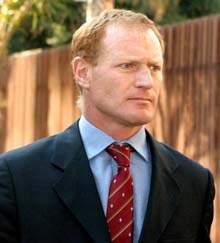 Richard Rouget, the French-born South-African Bancroft employee who is the primary source for the New York Times article cited below, let’s the company’s PR mask fall momentarily and reveals a 19th century colonial mentality when he refers to his Somali adversaries as “savages”.