CAMPAIGN 08 & EDITOR’S COMMENT: Clinton’s promise to “totally obliterate” Iran

Clinton on an Iran attack: ‘obliterate them’

Clinton further displayed tough talk in an interview airing on “Good Morning America” Tuesday. ABC News’ Chris Cuomo asked Clinton what she would do if Iran attacked Israel with nuclear weapons.

“I want the Iranians to know that if I’m the president, we will attack Iran,” Clinton said. “In the next 10 years, during which they might foolishly consider launching an attack on Israel, we would be able to totally obliterate them.” [complete article]

Editor’s Comment — Oy vey! Where to start? Let’s set aside the idea that a promise to incinerate millions of Iranians could be a vote winner in middle America, and let’s instead carefully parse what Clinton said.

Jake Tapper, true to form, cuts the quote off to make it as sensational as possible, so its important to add the sentence that followed:

In the next 10 years, during which they might foolishly consider launching an attack on Israel, we would be able to totally obliterate them. That’s a terrible thing to say, but those people who run Iran need to understand that, because that perhaps will deter them from doing something that would be reckless, foolish and tragic.

Interestingly, Clinton is distinguishing herself from the neocons here because she accepts the idea that the behavior of Iran’s leadership can be influenced by the power of deterrence. Given that she believes this, when the question was posed, “What would you do if Iran launched a nuclear attack on Israel,” she (or anyone else) who wanted to level with the American people should have given the honest answer:

Iran is not going to launch a nuclear attack on Israel, because if it did, it would suffer devastating retaliation from Israel itself. With a nuclear arsenal estimated to be around 200 warheads, Israel is perfectly capable of defending itself from, and deterring, a nuclear attack.

If in his confirmation hearings Robert Gates could be straightforward enough to skip the game of pretending that no one knows Israel is a nuclear state, then maybe it’s time for everyone else to give an honest account of Israel’s strengths and its weaknesses. Israel, as a nuclear state, is the military Goliath of the Middle East.

Facebooktwittermail

CAMPAIGN 08: Down with the plutocracy!

Obama’s touch of class

It is a stereotype you have heard many times before: Besotted with latte-fueled arrogance, the liberal looks down on average people, confident that he is a superior being. He scoffs at religion because he finds it to be a form of false consciousness. He believes in regulation because he thinks he knows better than the market.

“Elitism” is thus a crime not of society’s actual elite, but of its intellectuals. Mr. Obama has “a dash of Harvard disease,” proclaims the Weekly Standard. Mr. Obama reminds columnist George Will of Adlai Stevenson, rolled together with the sinister historian Richard Hofstadter and the diabolical economist J.K. Galbraith, contemptuous eggheads all. Mr. Obama strikes Bill Kristol as some kind of “supercilious” Marxist. Mr. Obama reminds Maureen Dowd of an . . . anthropologist.

Ah, but Hillary Clinton: Here’s a woman who drinks shots of Crown Royal, a luxury brand that at least one confused pundit believes to be another name for Old Prole Rotgut Rye. And when the former first lady talks about her marksmanship as a youth, who cares about the cool hundred million she and her husband have mysteriously piled up since he left office? Or her years of loyal service to Sam Walton, that crusher of small towns and enemy of workers’ organizations? And who really cares about Sam Walton’s own sins, when these are our standards? Didn’t he have a funky Southern accent of some kind? Surely such a mellifluous drawl cancels any possibility of elitism.

It is by this familiar maneuver that the people who have designed and supported the policies that have brought the class divide back to America – the people who have actually, really transformed our society from an egalitarian into an elitist one – perfume themselves with the essence of honest toil, like a cologne distilled from the sweat of laid-off workers. Likewise do their retainers in the wider world – the conservative politicians and the pundits who lovingly curate all this phony authenticity – become jes’ folks, the most populist fellows of them all. [complete article]

Facebooktwittermail

NEWS & EDITOR’S COMMENT: Hamas’s truce offer

Meshal offers 10-year truce for Palestinian state on ’67 borders

Hamas’ political leader Khaled Meshal on Monday said Hamas would accept a Palestinian state in the West Bank and Gaza Strip along Israel’s pre-1967 borders, and would grant Israel a 10-year hudna, or truce, as an implicit proof of recognition if Israel withdraws from those areas.

Meshal’s comments were one of the clearest outlines Hamas has given for what it would do if Israel withdrew from the territories it captured in the 1967 Six Day War. He suggested Hamas would accept Israel’s existence alongside a Palestinian state on the rest of the lands Israel has held since 1948.

However, Meshal told reporters in Damascus that Hamas would not formally recognize Israel.

“We agree to a [Palestinian] state on pre-67 borders, with Jerusalem as its capital with genuine sovereignty without settlements but without recognizing Israel,” Meshaal said.

“We have offered a truce if Israel withdraws to the 1967 borders, a truce of 10 years as a proof of recognition,” he said. He said he made the offer to former U.S. President Jimmy Carter during talks Friday and Saturday in the Syrian capital. [complete article]

Editor’s Comment — It’s not going to happen, but just suppose Israel was to accept Hamas’s offer of a 10-year truce for a Palestinian state in the West Bank and Gaza with East Jerusalem as its capital. Imagine that without the burden of an Israeli occupation or an economic siege that Palestinians could devote their attention to the construction of their own sovereign state. The responsibility of a Palestinian government would then fall squarely on its ability to adequately serve its own people – not its capacity to negotiate with or resist the Israelis. The challenge of that decade would clearly be to improve the lives of ordinary Palestinians. The test of whatever political leadership held power would be its ability to deliver on its promises. To imagine that Hamas would use the peace in order to put together a longterm military plan to later challenge Israel seems fanciful. If they did so they would swiftly marginalize themselves out of existence.

So why should all of this be something we can only imagine? Because the real political challenge is not to persuade Hamas to accept a two-state solution, renounce violence or recognize Israel. The real challenge is for Israel to dismantle the settlements. It’s far easier to perpetually blame the Palestinians than to wrestle with an issue that has been relentlessly expanded towards a point where it could be regarded as irreversible.

Facebooktwittermail

NEWS & EDITOR’S COMMENT: Hamas’ recognition of Israel

Carter: Hamas will accept Israel

Former US President Jimmy Carter has said that Hamas is prepared to accept the right of Israel to “live as a neighbour next door in peace”.

After meeting Hamas leaders last week in Syria, he said it was a problem the US and Israel would not meet the group.

His comments came as the Israeli army launched a formal investigation into the death of a Reuters cameraman killed in the Gaza Strip last week. [complete article]

Editor’s Comment — In an op-ed in the Washington Post last week, Mahmoud al-Zahar, a co-founder of Hamas, wrote: “A ‘peace process’ with Palestinians cannot take even its first tiny step until Israel first withdraws to the borders of 1967; dismantles all settlements; removes all soldiers from Gaza and the West Bank; repudiates its illegal annexation of Jerusalem; releases all prisoners; and ends its blockade of our international borders, our coastline and our airspace permanently.”

The Post’s editorial board, in an effort to disassociate itself from the piece that it had freely chosen to publish, wrote: “On the opposite page today we publish an article by the ‘foreign minister’ of Hamas, Mahmoud al-Zahar, that drips with hatred for Israel, and with praise for former president Jimmy Carter. We believe Mr. Zahar’s words are worth publishing because they provide some clarity about the group he helps to lead, a group that Mr. Carter contends is worthy of being included in the Middle East peace process.”

Is the Post afraid it might suffer the same level of condemnation that Rev Jeremiah Wright’s church has had to suffer for reprinting an op-ed that the Los Angeles Times published of its own free will? I doubt it. On the contrary, this seems like a perverse celebration of freedom of speech among those who are afraid to listen.

What the Post’s editors chose to ignore — and this begs the question: did they actually read Zahar’s piece? — was that Hamas was making a de facto declaration of Israel’s right to exist. What Zahar laid out as preconditions for negotiations would to most observers look like the end point rather than the beginning of a peace process, yet the mere fact that he posits an Israel existing inside its 1967 borders as a viable negotiating partner, challenges the widely-held belief that Hamas has one and only one objective: the destruction of Israel.

Carter meeting sparks new debate over engaging Hamas

MARGARET WARNER: Mark Perry, should Jimmy Carter have met with Khaled Mashal and, if so, to what end?

MARK PERRY, Conflicts Forum: Absolutely he should have met with him, and here’s why. There are three very good reasons.

First, Hamas won an election in January 2006 in the Palestinian Authority, and it wasn’t even close, and it was the most transparent, open and fair elections in Arab world history.

Second, they retain prestige among the Palestinian people. All polls show that they retain their strength.

And, third, most recently, their leaders have been showing real moderation. They want an opening to the United States. This is their opportunity, and Jimmy Carter is capitalizing on that. We should be talking to Hamas. [complete article]

Our reign of terror, by the Israeli army

The older ex-soldier is Yehuda Shaul, who does indeed “know how it is in Hebron”, having served in the city in a combat unit at the peak of the intifada, and is a founder of Shovrim Shtika, or Breaking the Silence, which will publish tomorrow the disturbing testimonies of 39 Israelis – including this young man – who served in the army in Hebron between 2005 and 2007. They cover a range of experiences, from anger and powerlessness in the face of often violent abuse of Arabs by hardline Jewish settlers, through petty harassment by soldiers, to soldiers beating up Palestinian residents without provocation, looting homes and shops, and opening fire on unarmed demonstrators.

The maltreatment of civilians under occupation is common to many armies in the world – including Britain’s, from Northern Ireland to Iraq.

But, paradoxically, few if any countries apart from Israel have an NGO like Breaking the Silence, which seeks – through the experiences of the soldiers themselves – as its website puts it “to force Israeli society to address the reality which it created” in the occupied territories. [complete article]

Facebooktwittermail

NEWS & VIEWS ROUNDUP: April 21

Which came first: memos or torture?

John C. Yoo likes the limelight, but it’s causing him some grief. Of the half a dozen lawyers who played important roles in a Bush administration decision to legalize the use of highly coercive interrogation techniques, only Yoo has emerged as the public face — and target — related to the policy.

In 2002 and 2003, Yoo was second in command at the Justice Department’s Office of Legal Counsel and wrote two memos, one for Alberto R. Gonzales and one for the Pentagon, that provided broad legal authority for the use of extreme measures in the questioning of wartime detainees. In one famous phrase, the memo to Gonzales concluded that only techniques “equivalent in intensity to the pain accompanying serious physical injury, such as organ failure, impairment of bodily function or even death,” could be considered torture. The 81-page Pentagon memo, declassified April 1, contained similar language and added fuel to the fire over torture and the White House. Through it all, Yoo has defended his position in the media.

12 reasons to get out of Iraq

Can there be any question that, since the invasion of 2003, Iraq has been unraveling? And here’s the curious thing: Despite a lack of decent information and analysis on crucial aspects of the Iraqi catastrophe, despite the way much of the Iraq story fell off newspaper front pages and out of the TV news in the last year, despite so many reports on the “success” of the President’s surge strategy, Americans sense this perfectly well. In the latest Washington Post/ABC News poll, 56% of Americans “say the United States should withdraw its military forces to avoid further casualties” and this has, as the Post notes, been a majority position since January 2007, the month that the surge was first announced. Imagine what might happen if the American public knew more about the actual state of affairs in Iraq — and of thinking in Washington. So, here, in an attempt to unravel the situation in ever-unraveling Iraq are twelve answers to questions which should be asked far more often in this country:

Rice, in Iraq, praises moves against militias

Secretary of State Condoleezza Rice, making a surprise stop in Baghdad on Sunday, praised the Iraqi government’s decision to take on Shiite militia members in Basra and in Baghdad and painted an upbeat picture of the Iraqi government’s progress toward unifying the country.

Ms. Rice, who visited the Iraqi capital on her way to a conference in Kuwait of Iraq’s neighbors, said that Prime Minister Nuri Kamal al-Maliki’s government “has made a choice to pursue militias and is willing to bear the consequences.”

Conceding that it had been “a long five years,” Ms. Rice said that Iraq had made “significant progress, remarkable progress,” however fragile, and she quoted the Iraqi president, Jalal Talabani, who said that the country was experiencing “a political spring.”

Iraqi Army takes last Basra areas from Sadr force

Iraqi soldiers took control of the last bastions of the cleric Moktada al-Sadr’s militia in Basra on Saturday, and Iran’s ambassador to Baghdad strongly endorsed the Iraqi government’s monthlong military operation against the fighters.

By Saturday evening, Basra was calm, but only after air and artillery strikes by American and British forces cleared the way for Iraqi troops to move into the Hayaniya district and other remaining Mahdi Army militia strongholds and begin house-to house searches, Iraqi officials said. Iraqi troops were meeting little resistance, said Maj. Gen. Abdul-Karim Khalaf, the spokesman for the Iraqi Interior Ministry in Baghdad.

Despite the apparent concession of Basra, Mr. Sadr issued defiant words on Saturday night. In a long statement read from the loudspeakers of his Sadr City Mosque, he threatened to declare “war until liberation” against the government if fighting against his militia forces continued.

A diplomat’s view on engaging Iran

Former Ambassador Thomas Pickering has had unofficial meetings with Iranian academics and policy advisers for the past several years on everything from the war in Iraq to Iran’s nuclear program. Pickering discusses his diplomatic efforts.

U.S. military seeks to widen Pakistan raids

American commanders in Afghanistan have in recent months urged a widening of the war that could include American attacks on indigenous Pakistani militants in the tribal areas inside Pakistan, according to United States officials.

The requests have been rebuffed for now, the officials said, after deliberations in Washington among senior Bush administration officials who fear that attacking Pakistani radicals may anger Pakistan’s new government, which is negotiating with the militants, and destabilize an already fragile security situation.

American commanders would prefer that Pakistani forces attack the militants, but Pakistani military operations in the tribal areas have slowed recently to avoid upsetting the negotiations.

Perceived slights have left many U.S. Muslims wary of Pope

Pope Benedict XVI has said he would like to reach out to the Muslim community through dialogue, and Muslims were included in the pontiff’s meeting with interfaith leaders in Washington on Thursday night. But many Muslims in America remain wary, saying the pope has created the impression that he is insensitive to their faith.

On Sunday, the pope will visit Ground Zero, perhaps the most poignant symbol of the divide between the West and the more extremist elements of Islam. But interviews in New York and elsewhere indicate that even those Muslims who do not hold such radical views are critical of the pope.

Many still recall the pope’s September 2006 lecture at the University of Regensburg in Germany, in which Benedict quoted a Byzantine Christian emperor saying that the prophet Muhammad brought “things only evil and inhuman, such as his command to spread by the sword the faith he preached.”

Facebooktwittermail

FEATURES & EDITOR’S COMMENT: Torture and propaganda

Behind TV analysts, Pentagon’s hidden hand

In the summer of 2005, the Bush administration confronted a fresh wave of criticism over Guantánamo Bay. The detention center had just been branded “the gulag of our times” by Amnesty International, there were new allegations of abuse from United Nations human rights experts and calls were mounting for its closure.

The administration’s communications experts responded swiftly. Early one Friday morning, they put a group of retired military officers on one of the jets normally used by Vice President Dick Cheney and flew them to Cuba for a carefully orchestrated tour of Guantánamo.

To the public, these men are members of a familiar fraternity, presented tens of thousands of times on television and radio as “military analysts” whose long service has equipped them to give authoritative and unfettered judgments about the most pressing issues of the post-Sept. 11 world.

Hidden behind that appearance of objectivity, though, is a Pentagon information apparatus that has used those analysts in a campaign to generate favorable news coverage of the administration’s wartime performance, an examination by The New York Times has found.

The effort, which began with the buildup to the Iraq war and continues to this day, has sought to exploit ideological and military allegiances, and also a powerful financial dynamic: Most of the analysts have ties to military contractors vested in the very war policies they are asked to assess on air. [complete article]

Editor’s Comment — This article describes a triangle of complicity comprising Pentagon officials, retired military leaders, and television news networks. The New York Times essentially gives the networks a free pass. The final paragraphs of the article summarize the perfunctory answers the paper received in response to questions about conflicts of interest, yet the mere fact that the networks might have been unaware about the Pentagon briefings their analysts were receiving or the way these generals were cashing in on their connections, does not explain away what was always glaringly obvious: the chasm separating war news reporting on the one hand, and the military analysis being presented by the networks’ prize generals on the other hand. The networks had no interest in closing this gap. That fact in and of itself merits another investigative report but that will only happen if mainstream journalism opens itself up to some critical self-examination — and what are the chances of that happening?!

Stress hooding noise nudity dogs

When the Haynes memo reached Guantánamo on December 2 [2002], Detainee 063 was in an isolated, plywood interrogation booth at Camp X-Ray. He was bolted to the floor and secured to a chair, his hands and legs cuffed. He had been held in isolation since August 8, nearly four months earlier. He was dehydrated and in need of regular hook-ups to an intravenous drip. His feet were swollen. He was urinating on himself.

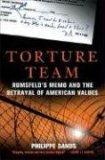
amazon-tortureteam.jpgDuring Detainee 063’s first few months at Guantánamo, the interrogators had followed established practices for military and law enforcement interrogations. Building rapport is the overriding aim of the US Army Field Manual 34-52, the rule book for military interrogators, colloquially referred to as “FM 34-52”. Legality was also essential, which meant operating in accordance with the rules set out in the US military’s Uniform Code of Military Justice and international law, in particular the four Geneva conventions.

At the heart of them lies “Common Article 3”, which expressly prohibits cruel treatment and torture, as well as “outrages upon personal dignity, in particular, humiliating and degrading treatment”. Tactics that had conformed to these principles changed dramatically. The interrogation log describes what happened immediately after Rumsfeld signed the Haynes memo.

The pattern was always the same: 20-hour interrogation sessions, followed by four hours of sleep. Sleep deprivation appears as a central theme, along with stress positions and constant humiliation, including sexual humiliation. These techniques were supplemented by the use of water, regular bouts of dehydration, the use of IV tubes, loud noise (the music of Christina Aguilera was blasted out in the first days of the new regime), nudity, female contact, pin-ups. An interrogator even tied a leash to him, led him around the room and forced him to perform a series of dog tricks. He was forced to wear a woman’s bra and a thong was placed on his head.

Rumsfeld led the charge for war in Iraq; in part he did so because of Saddam Hussein’s contempt for human life. “Torture is systematic in Iraq, and the most senior officials in the regime are involved,” Rumsfeld said, a few months before Saddam was overthrown. “Electric shock, eye gouging, acid baths, lengthy confinement in small metal boxes are only some of the crimes committed by this regime.” He spoke those words one day after secretly signing the Haynes memo and approving his own techniques of aggressive interrogation at Guantánamo.

Ironically, it was the Iraq war – in particular, events at Abu Ghraib prison – that brought the Haynes memo into the open two years later. By the autumn of 2003, Abu Ghraib was being run by the US as a detention facility. On April 28 2004, a CBS television report revealed the nature and scale of abuse being inflicted upon Iraqi prisoners. Photographs taken by US military participants were published, including one, now notorious, showing a prisoner standing on a box with his head covered and wires attached to his fingers. Another showed Private Lynndie England holding a leash tied to the neck of a naked man on the floor.

Was there a connection between the abuses at Abu Ghraib and the Bush administration’s secret interrogation policies at other places, including Guantánamo? In June 2004, President Bush, hosting the G8 summit in Savannah, Georgia, was asked by the media if he had authorised any kind of interrogation techniques necessary to pursue the “war on terror”? No, he said, his authorisation was that anything the US did would conform to US law and be consistent with international treaty obligations. “We’re a nation of law. We adhere to laws. We have laws on the books.”

Four days later, the administration unexpectedly declassified and released a number of documents relating to interrogation in the belief that this would reflect the thorough process of deliberation that, it was claimed, took place, and demonstrate a commitment to the rule of law. At the briefing, conducted by three lawyers from Bush’s inner circle, Alberto Gonzales, the president’s counsel, Jim Haynes from the Defence Department, and his deputy, Dan Dell’Orto, it was made clear that particular documents were crucial: the Haynes memo, and a decision taken a few months previously by the president, on February 7 2002, that none of the detainees at Guantánamo, whether Taliban or al-Qaida, could rely on any of the protections granted by the Geneva conventions, not even Common Article 3.

The second set of documents were legal opinions issued on August 1 2002. One of these, by two senior lawyers at the Justice Department, concluded that physical torture occurred only when the pain was “equivalent in intensity to the pain accompanying serious physical injury, such as organ failure, impairment of bodily functions, or even death”. Mental torture required “lasting psychological harm”. The memo concluded that torture of suspected terrorists under interrogation would not be unlawful if it could be justified on grounds of necessity or self-defence.

On October 11 2002, Guantánamo had request that additional techniques beyond those in FM 34-52 be approved for use against high-value detainees, in particular a Saudi Arabian, Mohammed al-Qahtani – otherwise known as Detainee 063. The underlying message of the briefing was spelled out: Rumsfeld had merely responded to a request from Guantánamo, and in doing so had acted reasonably. By contrast, the abuses at Abu Ghraib were unauthorised and unconnected to actual policies.

Much later, in March 2006, Time magazine published on its website the interrogation log of Detainee 063. Some of the Abu Ghraib images bore a resemblance to what Detainee 063 had been through: humiliation, stress, hooding, nudity, female interrogators, shackles, dogs. Was this just a coincidence? [complete article]

Facebooktwittermail

NEWS & VIEWS ROUNDUP: April 18

The problems with ‘strategic patience’

Michael O’Hanlon’s latest in the Washington Post (with Ann Gildroy) offers a chance to step back and assess the emerging argument for “strategic patience” which I suspect will become central to the upcoming national debate. What strikes me most about these arguments is their refusal to spell out the mechanisms by which they expect to see American military presence translate into a happy ending, to frankly assess the conditions under which an American drawdown would become possible, to specify indicators which would suggest that their approach is not working, and their refusal to think seriously about the strategic incentives created by different American postures. Instead, it’s just a “magic box”: keep the troops in place and hope for the best.

Pentagon institute calls Iraq war ‘a major debacle’ with outcome ‘in doubt’

The war in Iraq has become “a major debacle” and the outcome “is in doubt” despite improvements in security from the buildup in U.S. forces, according to a highly critical study published Thursday by the Pentagon’s premier military educational institute.

The report [PDF] released by the National Defense University raises fresh doubts about President Bush’s projections of a U.S. victory in Iraq just a week after Bush announced that he was suspending U.S. troop reductions.

The report carries considerable weight because it was written by Joseph Collins, a former senior Pentagon official, and was based in part on interviews with other former senior defense and intelligence officials who played roles in prewar preparations.

Poll: Obama pulling away

Despite her campaign’s relentless attacks on Barack Obama’s qualifications and electability, Hillary Clinton has lost a lot of ground with Democratic voters nationwide going into Tuesday’s critical primary in Pennsylvania, a new NEWSWEEK poll shows.

The survey of 1,209 registered voters found that Obama now leads Clinton by nearly 20 points, or 54 percent to 35 percent, among registered Democrats and those who lean Democratic nationwide. The previous Newsweek poll, conducted in March after Clinton’s big primary wins in Ohio and Texas, showed the two Democrats locked in a statistical tie (45 percent for Obama to 44 percent for Clinton). The new poll puts Obama ahead among women as well as men, and voters aged 60 and older as well as younger voters.

Superdelegates unswayed by Clinton’s attacks

Throughout their contentious debate on Wednesday, Senator Hillary Rodham Clinton tried again and again to put Senator Barack Obama on the defensive in a pointed attempt, her advisers say, to raise doubts about his electability among a small but powerful audience: the uncommitted superdelegates who will most likely determine the nomination.

Yet despite giving it her best shot in what might have been their final debate, interviews on Thursday with a cross-section of these superdelegates — members of Congress, elected officials and party leaders — showed that none had been persuaded much by her attacks on Mr. Obama’s strength as a potential Democratic nominee, his recent gaffes and his relationships with his former pastor and with a onetime member of the Weather Underground.

U.S. lacks plan to operate in Pakistani tribal areas, GAO Says

The Bush administration has no comprehensive plan for dealing with the threat posed by Pakistan’s lawless tribal areas, where al-Qaeda leader Osama bin Laden is believed to be hiding, according to a new report released yesterday from the research arm of Congress.

The Government Accountability Office also said “the United States has not met its national security goals to destroy terrorist threats and close the safe haven” provided by the tribal areas, despite having spent more than $10 billion for Pakistani military operations in the mountainous border region.”

GAO staff members interviewed experts inside and outside the government, and “we found broad agreement . . . that al-Qaida had regenerated its ability to attack the United States and had succeeded in establishing a safe haven” in the unpoliced region, the report says.

Facebooktwittermail

NEWS & VIEWS ROUNDUP: April 17

The Democrats play trivial pursuit

In The Audacity of Hope, Barack Obama tells an amusing story about his first tour through downstate Illinois, when he had the audacity to order Dijon mustard on his cheeseburger at a TGI Friday’s. His political aide hastily informed the waitress that Obama didn’t want Dijon at all, and thrust a yellow bottle of ordinary-American heartland-values mustard at him instead. The perplexed waitress informed Obama that she had Dijon if he wanted. He smiled and said thanks. “As the waitress walked away, I leaned over and whispered that I didn’t think there were any photographers around,” Obama recalled.

Obama’s memoir dripped with contempt for modern gotcha politics, for a campaign culture obsessed with substantively irrelevant but supposedly symbolic gaffes like John Kerry ordering Swiss cheese or Al Gore sighing or George H.W. Bush checking his watch or Michael Dukakis looking dorky in a tank. “What’s troubling is the gap between the magnitude of our challenges and the smallness of our politics—the ease with which we are distracted by the petty and trivial,” he wrote.

Last night at the National Constitution Center, at a Democratic debate that was hyped by ABC as a discussion of serious constitutional issues, America got to see exactly what Obama was complaining about. At a time of foreign wars, economic collapse and environmental peril, the cringe-worthy first half of the debate focused on such crucial matters as Senator Obama’s comments about rural bitterness, his former pastor, an obscure sixties radical with whom he was allegedly “friendly,” and the burning constitutional question of why he doesn’t wear an American flag pin on his lapel — with a single detour into Senator Hillary Clinton’s yarn about sniper fire in Tuzla. Apparently, Charlie Gibson and George Stephanopoulos ran out of time before they could ask Obama why he’s such a lousy bowler.

Jimmy Carter, Hamas, and the media

Jimmy Carter is, predictably, being savaged for meeting with officials from Hamas during his current visit to the Middle East. “It’s bad enough that Carter…will be putting a stamp of legitimacy on a gang of cutthroats who’ve never hesitated to include Americans in their growing body count,” said the New York Post in its typically measured style. “The saddest thing about this get-together is that it comes as no real surprise. Indeed, it’s entirely in keeping with Carter’s recent embrace of Palestinian extremism–to the point where, in his latest published anti-Israel screed, he all but gave his blessing to attacks on Israel.”

Carter’s general position on the need for the U.S. to engage Hamas receives little support elsewhere in the media, including the liberal blogosphere. “Since Syria and Hamas will have to be involved in a final peace agreement,” he said yesterday, “they will have to be involved in discussions that lead to final peace.”

No peace without Hamas

Our movement fights on because we cannot allow the foundational crime at the core of the Jewish state — the violent expulsion from our lands and villages that made us refugees — to slip out of world consciousness, forgotten or negotiated away. Judaism — which gave so much to human culture in the contributions of its ancient lawgivers and modern proponents of tikkun olam — has corrupted itself in the detour into Zionism, nationalism and apartheid.

A “peace process” with Palestinians cannot take even its first tiny step until Israel first withdraws to the borders of 1967; dismantles all settlements; removes all soldiers from Gaza and the West Bank; repudiates its illegal annexation of Jerusalem; releases all prisoners; and ends its blockade of our international borders, our coastline and our airspace permanently. This would provide the starting point for just negotiations and would lay the groundwork for the return of millions of refugees. Given what we have lost, it is the only basis by which we can start to be whole again.

Israel’s deputy prime minister to Carter: Tell Meshal that I want to discuss prisoner swap

Deputy Prime Minister Eli Yishai asked former U.S. President Jimmy Carter to tell Hamas leaders, including Khaled Meshal, that he would like to meet in order to expedite a prisoner exchange that would bring home kidnapped soldier Gilad Shalit.

Yishai relayed his message to Carter during a meeting on Monday. The meeting was held at the request of the former president, who wanted to meet with Israeli political leaders from across the political spectrum. The meeting was arranged through the U.S. Embassy in Tel Aviv.

Yishai’s bureau said he did not ask Prime Minister Ehud Olmert for permission to hold the meeting, nor did he tell Olmert what he discussed. Yishai said other Israeli officials erred in boycotting Carter.

My militia is more untouchable than yours

In a make-believe world where the green, green grass of the “surge” is alive with the sound of music, the George W Bush administration and US counterinsurgency ace General David Petraeus – not to mention presidential candidate Senator John McCain – keep assuring American public opinion the “surge” (now reconverted into a “pause”) is working.

But back in real life, an Iraq transfixed by no less than 28 militias is burning – again – all over, even in “invisible” (at least for Western media) places. Couple that with the relentless Bush administration narrative of “blame, blame Iran” and we have American public opinion strangled by a formidable disinformation octopus.

Washington keeps spinning the success of a “war on terror” narrative in northern Iraq against “al-Qaeda”. This is false. The US is basically fighting indigenous Sunni Arab guerrilla groups – some with Islamic overtones, some neo-Ba’athists. These are no terrorists. Their agenda is unmistakable: occupation out.

What will they really do about Iraq?

As they’ve campaigned for president, John McCain, Hillary Clinton and Barack Obama have staked out their positions on the war. But remarkably, even this far into the campaign their plans have largely escaped close scrutiny by the press.

Salon spoke recently with a half dozen national security advisors to presidential candidates from both parties, as well as with independent military experts, about the daunting Iraq issue. In private conversations, all agreed that a political solution among Iraq’s bitterly divided sects was the only road to some version of success in that country. And all agreed that certain outcomes, such as a regional war, would be unacceptable from the standpoint of U.S. interests in the crucial oil-rich area.

But even in off-the-record conversations, it was difficult to nail down what the three candidates consider to be an acceptable, and attainable, end state in Iraq. And there is little evidence that the broader plans and tactics espoused by the candidates would result in such an outcome.

The end of the world as you know it

Oil at $110 a barrel. Gasoline at $3.35 (or more) per gallon. Diesel fuel at $4 per gallon. Independent truckers forced off the road. Home heating oil rising to unconscionable price levels. Jet fuel so expensive that three low-cost airlines stopped flying in the past few weeks. This is just a taste of the latest energy news, signaling a profound change in how all of us, in this country and around the world, are going to live — trends that, so far as anyone can predict, will only become more pronounced as energy supplies dwindle and the global struggle over their allocation intensifies.

Energy of all sorts was once hugely abundant, making possible the worldwide economic expansion of the past six decades. This expansion benefited the United States above all — along with its “First World” allies in Europe and the Pacific. Recently, however, a select group of former “Third World” countries — China and India in particular — have sought to participate in this energy bonanza by industrializing their economies and selling a wide range of goods to international markets. This, in turn, has led to an unprecedented spurt in global energy consumption — a 47% rise in the past 20 years alone, according to the U.S. Department of Energy (DoE).

An increase of this sort would not be a matter of deep anxiety if the world’s primary energy suppliers were capable of producing the needed additional fuels. Instead, we face a frightening reality: a marked slowdown in the expansion of global energy supplies just as demand rises precipitously. These supplies are not exactly disappearing — though that will occur sooner or later — but they are not growing fast enough to satisfy soaring global demand.

Facebooktwittermail

NEWS & VIEWS ROUNDUP: April 15

Jimmy Carter and the art of growing up

You could say Jimmy Carter was tempting fate by meeting with Hamas leader Khaled Meshal — after all, his entirely appropriate evocation of apartheid in reference to the regime Israel has created on the West Bank earned him the label “Holocaust-denier” from the more demented end of the American Zionist spectrum. But Carter, bless him, is sticking to his guns, making the rather straightforward adult argument that has eluded so much of the U.S. political mainstream that the only way to achieve peace is to talk to all of those whose consent it requires.

And I’d say Carter has reason to suspect that despite the pro-forma criticisms of his Meshal meeting from Secretary of State Condi Rice as well as the McCain-Clinton-Obama roadshow, the backlash won’t be anything like the firestorm created by his apartheid book. It was reported today, in fact, that the Bush Administration is regularly briefed on back-channel talks between Iranian officials and a group of former U.S. diplomats led by Papa Bush’s U.N. ambassador, Thomas Pickering. So, far all the posturing and bluster, there’s a back channel. And I’d wager that despite the official sanctimony, Carter will be debriefed on his conversations with Meshal by both Israeli and American officials — because Meshal is a key player, like it or not.

Carter gets reduced protection in Israel

A dispute erupted Monday over the lack of Israeli secret service protection for former President Carter as he visited this border town and called rocket attacks by Palestinian militants “a despicable crime” that he hoped a cease-fire would halt.

Carter’s planned talks with the leader of the militant group Hamas and a book he published in 2006 that called Israeli policy in occupied Palestinian territories “a system of apartheid” have caused official displeasure in Israel. His efforts to meet Prime Minister Ehud Olmert and senior Cabinet ministers were rebuffed.

Israel’s Shin Bet security service, which is overseen by Olmert’s office and normally helps protect visiting dignitaries, has not assisted U.S. Secret Service agents guarding Carter.

Jewish liberals to launch a counterpoint to AIPAC

Organizers said they hope those efforts, coupled with a separate lobbying group that will focus on promoting an Arab-Israeli peace settlement, will fill a void left by the American Israel Public Affairs Committee, or AIPAC, and other Jewish groups that they contend have tilted to the right in recent years.

The lobbying group will be known as J Street and the political action group as JStreetPAC. The executive director for both will be Jeremy Ben-Ami, a former domestic policy adviser in the Clinton White House.

“The definition of what it means to be pro-Israel has come to diverge from pursuing a peace settlement,” said Alan Solomont, a prominent Democratic Party fundraiser involved in the initiative. In recent years, he said, “We have heard the voices of neocons, and right-of-center Jewish leaders and Christian evangelicals, and the mainstream views of the American Jewish community have not been heard.”

Solomont is a top fundraiser for the presidential campaign of Sen. Barack Obama (D-Ill.), but the organizers include supporters and fundraisers for both Obama and Sen. Hillary Rodham Clinton (D-N.Y.). Many prominent figures in the American Jewish left, former lawmakers and U.S. government officials, and several prominent Israeli figures, as well as activists who have raised money for the Democracy Alliance and MoveOn.org, are also involved.

Guns, God and gotchas

Long ago I discovered that the word “frankly” often meant a lie was coming. I learned this from an insurance agent, who preceded every attempt to sell me useless coverage with a “frankly.” This is why I distrust what Hillary Clinton said about Barack Obama and his admittedly klutzy statement about guns, church, immigrants and bitterness — “elitist, out of touch and, frankly, patronizing,” she said. Frankly, I don’t believe her.

And this, frankly or not, is the trouble with Clinton. Obama clearly misspoke. But there are very few moments with him where I feel that he does not believe what he is saying — even when, as with his lame capitulation of leadership regarding the Rev. Jeremiah Wright, I can’t respect it. With Clinton, on the other hand, those moments are frequent. She is forever saying things I either don’t believe or believe that even she doesn’t believe. She is the personification of artifice.

Facebooktwittermail

NEWS & VIEWS ROUNDUP: April 14

Two speeches on race

Two men, two speeches. The men, both lawyers, both from Illinois, were seeking the presidency, despite what seemed their crippling connection with extremists. Each was young by modern standards for a president. Abraham Lincoln had turned fifty-one just five days before delivering his speech. Barack Obama was forty-six when he gave his. Their political experience was mainly provincial, in the Illinois legislature for both of them, and they had received little exposure at the national level—two years in the House of Representatives for Lincoln, four years in the Senate for Obama. Yet each was seeking his party’s nomination against a New York senator of longer standing and greater prior reputation—Lincoln against Senator William Seward, Obama against Senator Hillary Clinton. They were both known for having opposed an initially popular war—Lincoln against President Polk’s Mexican War, raised on the basis of a fictitious provocation; Obama against President Bush’s Iraq War, launched on false claims that Saddam Hussein possessed WMDs and had made an alliance with Osama bin Laden.

Into the lion’s den

In its final year in office and the first year of its Israeli–Palestinian diplomacy, the Bush administration has introduced the latest and in some respects oddest idea for achieving peace, the shelf agreement. Its logic is straightforward. Prime Minister Ehud Olmert and President Mahmoud Abbas should conclude a final peace treaty by the end of 2008. The Israeli and Palestinian people subsequently would ratify it in near-simultaneous referenda or elections. And then, once approved, the treaty ought simply to be put aside (on the aforementioned shelf) until circumstances permit it to be carried out. No agreement can be fully put into effect immediately upon signature. But whereas a phased agreement includes an approved schedule, with starting date and endpoint, implementation of a shelf agreement would depend on an assessment by the parties that specified conditions have been met.

Jimmy Carter: Israel must talk to everyone

Former United States president Jimmy Carter, who arrived in Israel Sunday, rejects the criticism he’s been subjected to over his planned meeting with Hamas leader Khaled Meshal. According to Carter, peace cannot be achieved without talking to all the relevant people, and he will use the meeting to promote efforts to release Gilad Shalit and to uncover the fate of soldiers Eldad Regev and Ehud Goldwasser. Carter told Haaretz Sunday in an exclusive interview that he intends to check Meshal’s willingness to accept the Arab League peace initiative. Carter says that acceptance of this plan by Hamas would be a very positive step.

Carter said ignoring a large segment of the Palestinian people would make it impossible to achieve peace.

Carter also said no one from the U.S. State Department had tried to dissuade him from holding the meetings, and that they were aware of his schedule. “Before I went to Nepal, I put in a call for Condoleeza Rice just to have a personal conversation with her about my plans,” Carter said. “I went over the entire itinerary. She could not take my call because she was traveling in Europe, so she asked David Welch, who is the assistant secretary of state. We had a 20-minute conversation, which was very pleasant, never a single negative word and not a single request that I modify my itinerary.”

Carter said he understood the pressures on the presidential candidates to release statements critical of his meetings with Hamas. “I forgive them all and I understand their motivations,” he said.

Report: Israel uses mental torture

A human rights group accused Israel on Sunday of stepping up its psychological torture of Palestinian suspects, in part by insinuating that their families would be hurt if they don’t cooperate.

The Shin Bet internal security agency, which conducts the interrogations, denied the allegations.

The Public Committee Against Torture in Israel made the accusations in an 86-page report that examined six cases over the past year. It said Israel has put more emphasis on psychological torture since Israel’s Supreme Court restricted the use of physical torture in a 1999 ruling.

In one case, the group said, Israeli agents convinced a suspect his wife had also been arrested and tortured, driving him to attempt suicide. In another, they detained a couple for an extended period, tortured them physically, and withheld information about their two young children to try to break them, the report said.

In Iraq, a quiet philosophical retreat for U.S. military

As last year’s troop buildup was being planned, the Joint Chiefs of Staff began pushing for a more pragmatic — and modest — approach that de-emphasized democracy, according to military officers.

A Joint Campaign Plan for Iraq developed by Petraeus and Crocker also adopted a more realistic approach. That document, setting out U.S. military and diplomatic strategies, emphasizes security over good government, said John R. Martin, a retired colonel who worked on it.

“I hate to say it was pushed off, because democracy is such an important thing. But, in effect, that was what happened,” Martin said. “We said we have got to get security first, and then some of the political progress can occur. So in that sense, it was pushed to a lower priority.”

Facebooktwittermail

NEWS & VIEWS ROUNDUP: April 13

The Iraq wars

At last week’s Iraq hearings on Capitol Hill, amid the talk of progress, withdrawal timetables, and casualty numbers, one crucial question was largely ignored: How much of Iraq can American troops really expect to fix?

American leaders and media tend to focus on the insurgency in Baghdad and its environs, but that’s only a small part of the total picture. When the United States toppled Saddam Hussein’s regime in 2003, it engendered a series of power struggles around the country.

Today Iraq is embroiled in three separate civil wars, only one of which has involved US troops in a significant way. These three conflicts have generated most of the country’s violence, and are intensively reported on in the Iraqi press, which I follow closely.

The next president will inherit these ongoing Iraqi and regional conflicts – and the vexing question of how, and whether, America can address them. Amid the high-level generalizations about the Iraq war, these are the conflicts the candidates – and the country – really need to be considering. [complete article]

Palestinians versus Tibetans – a double standard

Israelis have no moral right to fight the Chinese occupation of Tibet. The president of the Israeli Friends of the Tibetan People, the psychologist Nahi Alon, who was involved in the murder of two Palestinians in Gaza in 1967 – as was revealed in Haaretz Magazine last weekend – chose to make his private “atonement” by fighting to free Tibet, of all places. He is not alone among Israelis calling to stop the occupation – but not ours. No small number of other good Israelis have recently joined the wave of global protest that broke out over the Olympics, set to take place in Beijing this summer. It is easy; it engenders no controversy – who would not be in favor of liberating Tibet? But that is not the fight that Israeli human rights supporters should be waging.

To fight for Tibet, Israel needs no courage, because there is no price to pay. On the contrary, this is part of a fashionable global trend, almost as much as the fight against global warming or the poaching of sea lions.

These fights are just, and must be undertaken. But in Israel they are deluxe fights, which are unthinkable. When one comes to the fight with hands that are collectively, and sometimes individually, so unclean, it is impossible to protest a Chinese occupation. Citizens of a country that maintains a military subjugation in its backyard that is no less cruel than that of the Chinese, and by some parameters even more so, and against which there is practically no more protest here, have no justification in denouncing another occupation. Citizens of a country that is entirely tainted by the occupation – a national, ongoing project that involves all sectors of the population to some extent, directly or indirectly – cannot wash their hands and fight another occupation, when a half-hour from their homes, horrors no less terrible are taking place for which they have much greater responsibility.

Hunger. Strikes. Riots. The food crisis bites

Across the world, a food crisis is now unfolding with frightening speed. Hundreds of millions of men and women who, only a few months ago, were able to provide food for their families have found rocketing prices of wheat, rice and cooking oil have left them facing the imminent prospect of starvation. The spectre of catastrophe now looms over much of the planet.

In less than a year, the price of wheat has risen 130 per cent, soya by 87 per cent and rice by 74 per cent. According to the UN’s Food and Agriculture Organisation, there are only eight to 12 weeks of cereal stocks in the world, while grain supplies are at their lowest since the 1980s.

How to defuse a human bomb

Saudi Arabia is one of the last places on earth one would expect to find an art therapy course for convicted terrorists. The kingdom, after all, is known for an unforgiving approach to criminal justice: thieves risk having their hands amputated, “sexual deviance” is punishable by flogging, and drug dealers are beheaded.

And yet, over the past few years, jailed Saudi jihadis, led by therapists and motivated by the possibility of a shortened sentence, have been putting paint to paper to work their way through – and hopefully leave behind – the thoughts and feelings that drove them to support violent strains of Islam.

Extremist art therapy, it turns out, is only part of a new global movement to “deradicalize” terrorists. The Saudi program, a multipronged effort, is among the biggest and best-funded, but in recent years a growing number of Muslim countries and countries with large Muslim minorities have started similar ones: Indonesia, Malaysia, Yemen, Jordan, Egypt, Singapore, Great Britain, and the Netherlands among them. Last September, the US-led military coalition in Iraq created an ambitious program of its own to handle its more than 24,000 detainees. And psychologists and political scientists are starting to take an interest in the topic.

Target: Bin Laden

Osama bin Laden lives among friends, follows news on satellite television or the Internet and reads books about American foreign policy; this much can be safely inferred from his periodic audio and video statements. His latest topical punditry surfaced just a few weeks ago on jihadi websites when he addressed violence in Gaza and the pope’s travels.

Because of his passable grasp of current events, Bin Laden may well understand what many Americans do not: that he is more likely to be killed or captured during the next year or so than at any time since late 2001, when he escaped U.S. warplanes bombing him in eastern Afghanistan, at Tora Bora.

This welcome change in probabilities has almost nothing to do with the Bush administration’s counter-terrorism strategy, which remains rudderless and starved of resources because of the war in Iraq. It is a consequence, instead, of dramatic political changes in Pakistan, where Bin Laden is believed to be hiding and where Al Qaeda’s local mistakes and the restoration of civilian democracy have combined to make him considerably less safe.

Gaza’s unemployed have handouts or Hamas

Less than a year ago, Abu Hammed worked in a garment factory, sewing pants.

Now he totes a Kalashnikov assault rifle as a Hamas police officer, imposing order in this eerily desolate city on behalf of the armed Islamist movement.

Given a choice, he’d rather be back in the factory.

“If the Israelis opened the crossings again, I would leave the police and become a tailor again,” said Abu Hammed, who would give only his nickname for fear of a Hamas reprisal. “The salary is better in the factory.”

Yet the factory jobs are long gone. Ten months into an Israeli siege that followed the Hamas takeover of Gaza last June, 90 percent of the factories that once existed in this narrow coastal strip have closed, driving tens of thousands of people out of work. Those who lose their jobs face a stark choice: stay at home and survive on international aid, or try to work for the only employer around that’s still hiring — Hamas.

Don’t know much about Tibetan history

For many Tibetans, the case for the historical independence of their land is unequivocal. They assert that Tibet has always been and by rights now ought to be an independent country. China’s assertions are equally unequivocal: Tibet became a part of China during Mongol rule and its status as a part of China has never changed. Both of these assertions are at odds with Tibet’s history.

The Tibetan view holds that Tibet was never subject to foreign rule after it emerged in the mid-seventh century as a dynamic power holding sway over an Inner Asian empire. These Tibetans say the appearance of subjugation to the Mongol rulers of the Yuan Dynasty in the 13th and 14th centuries, and to the Manchu rulers of China’s Qing Dynasty from the 18th century until the 20th century, is due to a modern, largely Western misunderstanding of the personal relations among the Yuan and Qing emperors and the pre-eminent lamas of Tibet. In this view, the lamas simply served as spiritual mentors to the emperors, with no compromise of Tibet’s independent status.

In China’s view, the Western misunderstandings are about the nature of China: Western critics don’t understand that China has a history of thousands of years as a unified multinational state; all of its nationalities are Chinese. The Mongols, who entered China as conquerers, are claimed as Chinese, and their subjugation of Tibet is claimed as a Chinese subjugation.

War at the Pentagon

The most intense arguments over U.S. involvement in Iraq do not flare at this point on Capitol Hill or on the campaign trail. Those rhetorical battles pale in comparison to the high-stakes struggle being waged behind closed doors at the Pentagon.

On one side are the “fight-win guys,” as some describe themselves. They are led by Gen. David Petraeus and other commanders who argue that the counterinsurgency struggle in Iraq must be pursued as the military’s top priority and ultimately resolved on U.S. terms.

In this view, the Middle East is the most likely arena for future conflicts, and Iraq is the prototype of the war that U.S. forces must be trained and equipped to win.

Arrayed against them are the uniformed chiefs of the military services who foresee a “broken army” emerging from an all-out commitment to Iraq that neglects other needs and potential conflicts. It is time to rebuild Army tank battalions, Marine amphibious forces and other traditional instruments of big-nation warfare — while muddling through in Iraq.

The Petraeus-Crocker show gets the hook

The night before last week’s Senate hearings on our “progress” in Iraq, a goodly chunk of New York’s media and cultural establishment assembled in the vast lobby of the Museum of Modern Art. There were cocktails; there were waiters wielding platters of hors d’oeuvres; there was a light sprinkling of paparazzi. Then there was a screening. We trooped like schoolchildren to the auditorium to watch a grueling movie about the torture at Abu Ghraib.

Not just any movie, but “Standard Operating Procedure,” the new investigatory documentary by Errol Morris, one of our most original filmmakers. It asks the audience not just to revisit the crimes in graphic detail but to confront in tight close-up those who both perpetrated and photographed them. Because Mr. Morris has a complex view of human nature, he arouses a certain sympathy for his subjects, much as he did at times for Robert McNamara, the former defense secretary, in his Vietnam film, “Fog of War.”

More sympathy, actually. Only a few bad apples at the bottom of the chain of command took the fall for Abu Ghraib. No one above the level of staff sergeant went to jail, and no one remotely in proximity to a secretary of defense has been held officially accountable. John Yoo, the author of the notorious 2003 Justice Department memo rationalizing torture, has happily returned to his tenured position as a law professor at the University of California, Berkeley. So when Mr. Morris brings you face to face with Lynndie England — now a worn, dead-eyed semblance of the exuberant, almost pixie-ish miscreant in the Abu Ghraib snapshots — you’re torn.

The Army is spending millions to hire ‘experts’ to analyze Iraqi society. If only they could find some

Though he wears Army fatigues and carries a gun, Griffin is a civilian, part of a controversial program known as the Human Terrain System. According to a Pentagon blueprint from 2006, the idea is to recruit academics whose area expertise and language skills can help the military wage a smarter counterinsurgency in Iraq and Afghanistan. These specialists, among other things, are meant to map the population of towns and villages, identify the clans that matter and the fault lines within them, then advise U.S. commanders on the right approach for leveraging local support.

But implementation of the $40 million project, which was handed to British Aerospace Engineering (BAE) without a bidding process, has fallen short, according to more than a dozen people involved in the program and interviewed by NEWSWEEK. Of 19 Human Terrain members operating in five teams in Iraq, fewer than a handful can be described loosely as Middle East experts, and only three speak Arabic. The rest are social scientists or former GIs who, like Griffin, are transposing research skills from their unrelated fields at home.

For their services, the anthropologists get up to $300,000 annually while posted abroad—a salary that is six times higher than the national average for their field. (The teams also include some active-duty service members who are paid their regular military salary.) Most team members admit they are hampered by an inability to conduct real fieldwork in a war zone. Some complain that the four-month training they underwent in the States was often a waste of time. Matt Tompkins, who returned home in January after five months in Iraq, said he thought his team provided helpful input to its brigade, but the contribution was more superficial than planners of the program had conceived. “Without the ability to truly immerse yourself in the population, existing knowledge of the culture … is critical,” he said in an e-mail. “Lacking that, we were basically an open-source research cell.”

Video link plucks Afghan detainees from black hole of isolation

Early this year, a 10-year-old Afghan named Esrarullah got his first chance in months to see his father, who had been held since last May at Bagram Air Base outside Kabul. It was not in person, but in a video conference call, and the boy was so overcome, he clutched the phone to his ear and stared mutely at the screen.

Afghan families like his are traveling from distant provinces and turning up by the hundreds for a similar chance to get a glimpse of loved ones who have been held at the American base for months, sometimes years, without charges or legal redress.

It is a measure of their desperation for any word on the fate of their husbands, fathers and brothers that so many families have come so quickly.

In the three months since the program began, about 500 calls have been made. On a recent morning a dozen families gathered to wait their turn before the video screens provided by the American military and set up in three small booths at the Kabul offices of the International Committee of the Red Cross.

Afghan detainees sent home to face closed-door trials

Afghan detainees held at the U.S. military prison at Guantanamo Bay, Cuba, are being transferred home to face closed-door trials in which they are often denied access to defense attorneys and the U.S. evidence being used against them, according to Afghan officials, lawyers and international rights groups.

Since October 2006, the United States has transferred approximately 50 detainees out of Guantanamo to the custody of the Afghan government, part of a policy aimed at reducing the prison population and ultimately closing the facility. Once home, many of the Afghans have been left in a legal limbo not unlike the one they confronted while in U.S. custody.

“These people have been thrown into a deeply flawed process that convicts people on inadequate evidence and breaks numerous procedural rules of Afghan law and human rights standards,” said Jonathan Horowitz, an investigator at One World Research, a public interest investigation firm that works with attorneys and advocacy groups on human rights cases and has monitored some of the detainees’ trials.

Administration set to use new spy program in U.S.

The Bush administration said yesterday that it plans to start using the nation’s most advanced spy technology for domestic purposes soon, rebuffing challenges by House Democrats over the idea’s legal authority.

Homeland Security Secretary Michael Chertoff said his department will activate his department’s new domestic satellite surveillance office in stages, starting as soon as possible with traditional scientific and homeland security activities — such as tracking hurricane damage, monitoring climate change and creating terrain maps.

Sophisticated overhead sensor data will be used for law enforcement once privacy and civil rights concerns are resolved, he said. The department has previously said the program will not intercept communications.

Facebooktwittermail

FEATURE: Lives lost

What have we learned, if anything?

It is war, not racism or ethnic antagonism or religious fervor, that leads to atrocity. War—total war—has been the crucial antecedent condition for mass criminality in the modern era. The first primitive concentration camps were set up by the British during the Boer War of 1899–1902. Without World War I there would have been no Armenian genocide and it is highly unlikely that either communism or fascism would have seized hold of modern states. Without World War II there would have been no Holocaust. Absent the forcible involvement of Cambodia in the Vietnam War, we would never have heard of Pol Pot. As for the brutalizing effect of war on ordinary soldiers themselves, this of course has been copiously documented.

The United States avoided almost all of that. Americans, perhaps alone in the world, experienced the twentieth century in a far more positive light. The US was not invaded. It did not lose vast numbers of citizens, or huge swathes of territory, as a result of occupation or dismemberment. Although humiliated in distant neocolonial wars (in Vietnam and now in Iraq), the US has never suffered the full consequences of defeat. Despite their ambivalence toward its recent undertakings, most Americans still feel that the wars their country has fought were mostly “good wars.” The US was greatly enriched by its role in the two world wars and by their outcome, in which respect it has nothing in common with Britain, the only other major country to emerge unambiguously victorious from those struggles but at the cost of near bankruptcy and the loss of empire. And compared with other major twentieth-century combatants, the US lost relatively few soldiers in battle and suffered hardly any civilian casualties.

This contrast merits statistical emphasis. In World War I the US suffered slightly fewer than 120,000 combat deaths. For the UK, France, and Germany the figures are respectively 885,000, 1.4 million, and over 2 million. In World War II, when the US lost about 420,000 armed forces in combat, Japan lost 2.1 million, China 3.8 million, Germany 5.5 million, and the Soviet Union an estimated 10.7 million. The Vietnam Veterans Memorial in Washington, D.C., records the deaths of 58,195 Americans over the course of a war lasting fifteen years: but the French army lost double that number in six weeks of fighting in May–June 1940. In the US Army’s costliest engagement of the century—the Ardennes offensive of December 1944–January 1945 (the “Battle of the Bulge”)—19,300 American soldiers were killed. In the first twenty-four hours of the Battle of the Somme (July 1, 1916), the British army lost more than 20,000 dead. At the Battle of Stalingrad, the Red Army lost 750,000 men and the Wehrmacht almost as many.

With the exception of the generation of men who fought in World War II, the United States thus has no modern memory of combat or loss remotely comparable to that of the armed forces of other countries. But it is civilian casualties that leave the most enduring mark on national memory and here the contrast is piquant indeed. In World War II alone the British suffered 67,000 civilian dead. In continental Europe, France lost 270,000 civilians. Yugoslavia recorded over half a million civilian deaths, Germany 1.8 million, Poland 5.5 million, and the Soviet Union an estimated 11.4 million. These aggregate figures include some 5.8 million Jewish dead. Further afield, in China, the death count exceeded 16 million. American civilian losses (excluding the merchant navy) in both world wars amounted to less than 2,000 dead.

As a consequence, the United States today is the only advanced democracy where public figures glorify and exalt the military, a sentiment familiar in Europe before 1945 but quite unknown today. Politicians in the US surround themselves with the symbols and trappings of armed prowess; even in 2008 American commentators excoriate allies that hesitate to engage in armed conflict. I believe it is this contrasting recollection of war and its impact, rather than any structural difference between the US and otherwise comparable countries, which accounts for their dissimilar responses to international challenges today. Indeed, the complacent neoconservative claim that war and conflict are things Americans understand—in contrast to naive Europeans with their pacifistic fantasies —seems to me exactly wrong: it is Europeans (along with Asians and Africans) who understand war all too well. Most Americans have been fortunate enough to live in blissful ignorance of its true significance. [complete article]

Facebooktwittermail

NEWS & VIEWS ROUNDUP: April 12

Elitist my ass

This former Midwest girl is telling you Obama is not being ‘elite’ or ‘out of touch’ -he could NOT be MORE in touch. He’s LISTENING and understanding that many of us who moved away and many of us that stayed are angry, frustrated, disappointed, disillusioned, and UNEMPLOYED.

War-weary Pa. voters question exit strategy

Both candidates promise to end the war, but in a state with a remarkable history of venerating military service, how that end should be achieved weighs heavily with many voters. Polling shows Democratic voters overwhelmingly disapprove of the war. What divides them is a quick withdrawal versus a longer drawdown of troops.

Strategic confusion

In their testimony before Congress this week, Ambassador Ryan C. Crocker and General David Petraeus portrayed recent clashes between competing Iraqi factions as a fight between the Iraqi government and Iranian-supported groups looking to undermine that government. This simplistic “good guys versus bad guys” depiction masks a much more complicated reality in which U.S. policy in Iraq unwittingly strengthens Iran’s overall hand there and around the region.

A cleric, a pol, a warrior

The iraqi government has decided that the moment has come to crush the Mahdi Army and the followers of Muqtada Sadr once and for all. Despite its failure to eliminate his militiamen in Basra at the end of March, the government, with American backing, is determined to try again, according to senior Iraqi officials.

It is a dangerous strategy for both Prime Minister Nouri Maliki and the U.S. Sadr remains one of the most powerful and revered leaders of the Shiite community — and the Shiites make up 60% of Iraq. What’s more, the 34-year-old Sadr is not exactly the mercurial “firebrand” or “renegade” cleric portrayed by journalistic cliche-mongers; rather, he has repeatedly shown himself to be a cautious and experienced political operator.

9 propositions on the U.S. air war for terror

Let’s start with a few simple propositions.

First, the farther away you are from the ground, the clearer things are likely to look, the more god-like you are likely to feel, the less human those you attack are likely to be to you. How much more so, of course, if you, the “pilot,” are actually sitting at a consol at an air base near Las Vegas, identifying a “suspect” thousands of miles away via video monitor, “following” that suspect into a house, and then letting loose a Hellfire missile from a Predator drone cruising somewhere over Iraq, Afghanistan, Somalia, or the tribal areas of Pakistan.

Facebooktwittermail

EDITORIAL: Talking to the enemy

Choosing the right battles

In the world we’ve been forced to inhabit for the last eight years, international relations has become the arena in which buddies congregate to engage in grooming behavior based on fawning, flattery and patronization. Participants then, like dogs pissing against a lamppost, gather for the all-important photo opportunity that says: “We were here. We left our mark.”

In this context, the idea of talking to the enemy has become tantamount to an act of treason. Even so, to his credit, Barak Obama has put this out on the table. Given that he was merely echoing some of the recommendations of the hallowed Iraq Study Group, he might have thought he was already on fairly safe ground. It turns out he put himself out on a limb.

There are those who now argue that since he’s already out there, for the sake of consistency, he should continue moving in the same direction. The logic that someone willing to talk to Iran should also be willing to talk to Hamas, is irrefutable.

That said, there’s a difference between trying to win an election and trying to win an argument. It won’t benefit Obama to come down on the right side on this issue if by doing so he undermines his ability to get elected.

In large measure, the foreign policy community has already accepted the idea that Hamas represents a political trend that cannot be wished away and that must be engaged. But is this an idea that can filter through into the presidential debate. No way! It’s taken a significant number of Americans several years to grasp the idea that Saddam Hussein was not the mastermind for 9/11 — and of course many more have yet to be disabused of the notion.

Supporting Obama’s campaign for change requires a realistic sense of timing about when is the optimum moment to try and drive each specific shift. I do not see an iota of evidence that America at large is ready to work through the laborious process of deconstructing most of the assumptions upon which its view of the Israeli-Palestinian issue is based — least of all during a presidential campaign. What might come after the election is another matter. At that time, the viability of the debate will hinge on the credibility of an administration, not the electability of a candidate. Will President Obama be bolder in taking on the issue then than he is now? I don’t know, but I’d like to find out.

Meanwhile, there’s reason to wonder whether Jimmy Carter is being politically tone deaf right now. If he goes to meet Khalid Meshaal, I think this would be a courageous act, but as I suggested earlier, it’s all important that this event be framed in the right way: it needs to act as a nudge towards a genuine political engagement between Israel and the Palestinian people — not just as campaign fodder for the Israel lobby.

Facebooktwittermail

FEATURE & EDITOR’S COMMENT: Remembering the Nakbah

Healing Israel’s birth scar

With the 60th anniversary of Israel’s birth — and of the Palestinian Nakbah (catastrophe) — which are, of course the same event, almost upon us, I was reminded this week that April 9 was also the 60th anniversary of an event that has long epitomized the connection between the creation of an ethnic-majority Jewish state and the man-made catastrophe suffered by the Palestinian Arabs. That would be the massacre at Deir Yassein, a small village near Jerusalem where fighters of the Irgun, led by Menahem Begin, massacred up to 250 Palestinian civilians — in what later emerged as a calculated campaign of “ethnic cleansing,” using violence and the threat of violence to drive Palestinians to flee their homes and land, which were then summarily appropriated by the new state of Israel, which passed legislation forbidding the Palestinian owners from returning to their property. It was the events of 1948 that created the Palestinian refugee problem, and set the terms of a conflict that continues to define the State of Israel six decades later. No resolution of the conflict is possible without understanding the events of 1948 — something that precious few mainstream U.S. politicians do. The irony is that Israelis are far more likely to be familiar with the uglier side of their victory in 1948 than are their most enthusiastic supporters on these shores. [complete article]

Editor’s Comment — I highly recommend watching the documentary “Deir Yassin Remembered.” The story is told slowly, thoughtfully, and methodically, explaining the significance of the Deir Yassin massacre in the context of the massive program of ethnic cleansing that laid the foundations for the creation of a Zionist state. This 33-minute documentary worth careful attention – especially for anyone not familiar with the story of how the modern state of Israel came into existence. The documentary was produced by Deir Yassin Remembered.


(This video can also be viewed here.)

Facebooktwittermail

NEWS & EDITOR’S COMMENT: Talking to Hamas

Former President Carter to meet with Hamas chief

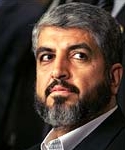
Fkhalidmeshaal.jpgormer president Jimmy Carter plans to meet next week in Damascus with Khaled Meshal, the head of the Palestinian militant group Hamas, in a direct rebuke of the Bush administration’s campaign to isolate it.

The disclosure of Carter’s plans by the Arabic-language newspaper al-Hayat and subsequent confirmation by sources familiar with his itinerary instantly placed the campaigns of Sens. Barack Obama (D-Ill.) and Hillary Rodham Clinton (D-N.Y.) in a political bind.

The campaign of Sen. John McCain (Ariz.), the presumptive Republican nominee, was quick to blast Carter’s plans and called on both Obama and Clinton to condemn the meeting with what the State Department lists as a terrorist group.

Both Clinton and Obama issued statements with milder language, saying they “disagreed” or did “not agree” with Carter’s plans. [complete article]

Editor’s Comment — Simply because he had the supposed audacity to describe Israel as operating a system of apartheid in the Palestinian Occupied Territories, Jimmy Carter is already irredeemable in the eyes of much of Washington. But what will shape the political impact of Carter’s meeting with Khaled Meshal may have as much to do with the make up of the delegation accompanying Carter, as it does with Carter’s own presence.

If, as Al Jazeera reports, Carter is joined by Nelson Mandela and Kofi Annan, this would certainly capture the global media’s attention. But if this meeting is in part intended to challenge the conventional wisdom in America, then perhaps Carter should invite the former head of Mossad, Efraim Halevy.

This is a man, highly respected in Israel — and by no stretch of the imagination “soft on terrorism” — who like the majority of Israeli citizens supports the idea of talking to Hamas. If CNN was to broadcast a joint news conference between Carter, Meshal, and Halevy, perhaps a few more Americans might start to understand that the US government’s policy of shunning Hamas is not only ineffective, but it does not even reflect the will of the Israeli people. How can anyone claim to be loyal to Israel if they don’t pay attention to what Israeli’s themselves are saying?

To learn more about Halevy’s views on Hamas and the Palestinians and understand the thinking of this hard-headed realist, watch this March 19 interview (18 minutes) he did with Al Jazeera:

Facebooktwittermail

NEWS, OPINION & ANALYSIS: Global food crisis

A ‘revolutionary’ moment in Egypt?

The idea of the starving masses driven onto the streets to demand bread, and then being forced by the violent response of the state to seek its overthrow, had seemed impossibly quaint for decades — the stuff of a distant epoch, kept alive in Broadway musicals and Warren Beatty vehicles in a world where the masses were acquiring cell phones. Bread? Who needs bread? Let them eat arugula at globalization’s ever-expanding buffet table.

But a cursory look at the headlines of the past month — a general strike and mass protests in Egypt, the storming of the presidential palace in Haiti, violent protests in Cote D’Ivoire and Cameroon, demonstrations in Uzbekistan, Yemen and Indonesia, among others, suggests that the proverbial “wretched of the Earth” are arising, all over again, this time in response to skyrocketing food prices.

Turns out the Malthusians, and even — gasp! — their Marxist progeny, were not entirely wrong, after all: Spread capitalism to every corner of the globe (a planet already blighted by a century of industrialism with its attendant sometimes catastrophic climate) and the rich do, indeed, get richer, while the poor do get poorer, although not necessarily more numerous. The patterns are uneven, but basic laws of scarcity still prevail. Global food prices have risen 80% over the past three years, and the primary reason may be the success of capitalism in China and India over the past two decades: Their industrialization has spurred demand for energy beyond the capacity of supply, which has pushed oil prices to levels five times what they were in the mid 1990s. That, in turn, has raised pressure on food prices by making agricultural inputs more expensive, and by prompting the substitution of biofuel crops for edible ones on scarce farmland. And, of course, capitalism has indeed raised the living standards of hundreds of millions of people in those countries — they’re eating more, and better, particularly more meat. The fact that it takes some eight calories of grain to produce a single calorie of beef means that the expansion of meat protein in the diet of previously poor Chinese workers also creates a massive increase in global demand for grains. Throw in climate disasters such as the Australian drought, and you have food inflation spiraling so fast that even the U.N. agency created to feed people in emergencies is unable to keep pace. [complete article]

Food price rises threaten global security – UN

Rising food prices could spark worldwide unrest and threaten political stability, the UN’s top humanitarian official warned yesterday after two days of rioting in Egypt over the doubling of prices of basic foods in a year and protests in other parts of the world.

Sir John Holmes, undersecretary general for humanitarian affairs and the UN’s emergency relief coordinator, told a conference in Dubai that escalating prices would trigger protests and riots in vulnerable nations. He said food scarcity and soaring fuel prices would compound the damaging effects of global warming. Prices have risen 40% on average globally since last summer.

“The security implications [of the food crisis] should also not be underestimated as food riots are already being reported across the globe,” Holmes said. “Current food price trends are likely to increase sharply both the incidence and depth of food insecurity.” [complete article]

Food riots grip Haiti

United Nations peacekeepers fired rubber bullets and used tear gas to control mobs rioting over rising food prices in Haiti yesterday.

Angry protesters tried to break into the presidential palace in the capital, Port au Prince, and demanded that President Rene Preval step down.

Preval was inside the palace at the time, aides said. The president has made no public statements since riots broke out on the island last week. Five people have died in a week of protests, Reuters reported. [complete article]

Map of food riots
Where food riots have taken place around the world since January 2007. Map compiled by Allegra Stratton, The Guardian. Click on blue pointers for information on locality. Click on “minus” button for wider view.


View Larger Map

Facebooktwittermail

NEWS & VIEWS ROUNDUP: April 9

Maliki, Hakim, and Iran’s role in the Basra fighting

One week after the upsurge of violence in Basra, questions about the motives and the implications of the fighting still linger. The issue of Iran’s involvement remains especially obscure.

A recurrent explanation suggests that the operations were an attempt by Nuri al-Maliki and Abd al-Aziz al-Hakim to weaken the Sadrists ahead of October’s provincial elections, and perhaps to also further Hakim’s scheme of a single Shiite federal entity, which many Sadrists have resisted. On the surface this seems plausible. This has clearly been a political operation and not a purely security-guided one: Many militia forces in Basra unaffiliated with the Sadrists were left untouched. Also, the Maliki-Hakim axis is the sole remnant of the United Iraqi Alliance; to its backers it would be prudent to stick together and guard against encroachments on their local power bases. As for the United States, as long as it policy remains tied to Hakim’s Islamic Supreme Council of Iraq (ISCI) it can perhaps make sense to give the green light to operations against the Sadrists, even if the timing (on the eve of the Crocker/Petraeus hearings) and the scale of the attack (after one year of trying to differentiate between “moderate” and “hardliner” Sadrists) may not have been of its choosing.

However, the theory of a stable Maliki-Hakim alliance overlooks disagreement between the two on key issues. Crucially, Maliki disagrees with ISCI on federalism, both with regard to the South of Baghdad Region (the proposed nine-governorate Shiite federal entity), and with respect to federalism as a more general principle of government.

The Iran problem

The Iranians have fixed the political game. They are on all sides at once. They have links to Prime Minister Nouri al-Maliki and his Dawa party; they funnel money to the Badr organization of Shiite cleric Abdul Aziz al-Hakim, which is a key recruiting ground for the Iraqi army; they provide weapons, training and command and control for the most extreme factions of the Mahdi Army. Moqtada al-Sadr, the Mahdi Army’s nominal leader, is actually living in the Iranian holy city of Qom, suffering from what intelligence sources believe may be clinical depression. A useful ploy would be to invite him to come home and see if he can be drawn into negotiations.

The Iranians were able to start the recent trouble in Basra and Baghdad through one set of operatives, then negotiate a cease-fire through another. In short, they play the Iraqi lyre on all its strings.

Stonewall Petraeus

Judging from Gen. David Petraeus’ Senate testimony today, our military commitment to Iraq is open-ended and unconditional.

The “pause” in troop withdrawals, after the surge brigades go home this July, will not be “brief”—as some officials have hoped—but indefinite.

The way that Petraeus and Ambassador Ryan Crocker formulated the problem, cutting troops below the current level of 140,000 is not even a conceivable option. They laid out a Catch-22: If things in Iraq get worse, we can’t cut back, lest things get worse still; if things get better, we can’t cut back, lest we risk reversing all our gains.

Finding a way to bring Hamas in

It’s becoming increasingly clearer that reaching an Israeli-Palestinian agreement requires finding a way to bring Hamas into the process. This must be done without compromising Israeli or American interests.

Many respected Israeli security officials, including two former heads of Mossad, Israel’s intelligence agency, arrived at that conclusion some time ago. So have 64 percent of Israelis, who said, according to a Haaretz-Dialog poll taken in February, that they would negotiate directly with Hamas to end the rocket attacks from Gaza, controlled by Hamas since June 2007, and to secure the release of the captive Israeli soldier, Gilad Shalit.

Secretary of State Condoleezza Rice, who returned to Israel last week to prod Israelis and Palestinians to make progress toward an agreement, seems to have recently made this same determination.

Sources: Top Bush advisors approved ‘enhanced interrogation’

In dozens of top-secret talks and meetings in the White House, the most senior Bush administration officials discussed and approved specific details of how high-value al Qaeda suspects would be interrogated by the Central Intelligence Agency, sources tell ABC News.

The so-called Principals who participated in the meetings also approved the use of “combined” interrogation techniques — using different techniques during interrogations, instead of using one method at a time — on terrorist suspects who proved difficult to break, sources said.

Highly placed sources said a handful of top advisers signed off on how the CIA would interrogate top al Qaeda suspects — whether they would be slapped, pushed, deprived of sleep or subjected to simulated drowning, called waterboarding.

Facebooktwittermail