Masha Gessen: The choice we face with Trump

Masha Gessen writes: I grew up knowing that my great-grandfather smuggled guns into the Bialystok ghetto for the resistance, which staged an armed uprising there in August 1943. As an adult, researching a book about collaboration and resistance, using my own family history, I found out why my great-grandfather had been in a position to arm the resistance: he was one of the leaders of the Bialystok Judenrat, the Nazi-appointed Jewish council that ran the ghetto.

My great-grandfather’s story was at once an extreme and a typical example. Criminal regimes function in part by forcing the maximum number of subjects to participate in the atrocities. For nearly a century, individuals in various parts of the Western world have struggled with the question of how, and how much, we should engage politically and personally with governments that we find morally abhorrent.

With the election of Donald Trump — a candidate who has lied his way into power, openly embraced racist discourse and violence, toyed with the idea of jailing his opponents, boasted of his assaults on women and his avoidance of taxes, and denigrated the traditional checks and balances of government — this question has confronted us as urgently as ever. After I wrote a piece about surviving autocracy, a great many people have asked me about one of my proposed rules: “Do not compromise.” What constitutes compromise? How is it possible to avoid it? Why should one not compromise?

When I wrote about my great-grandfather in a book many years ago, I included the requisite discussion of Hannah Arendt’s opinion on the Jewish councils in Nazi-occupied Europe, which she called “undoubtedly the darkest chapter of the whole dark story” of the Holocaust. In her book Eichmann in Jerusalem she asserted that without Jewish cooperation Germany would have been unable to round up and kill as many Jews as it did. I quoted equally from the most comprehensive response to Arendt’s characterization of the Judenrat, Isaiah Trunk’s book Judenrat, in which he described the councils as complicated and contradictory organizations, ones that had functioned differently in different ghettos, and ultimately concluded that they had no effect on the final scope of the catastrophe. [Continue reading…]


Facebooktwittermail

James Mattis’ 33-year grudge against Iran

Mark Perry writes: For many, and even for self-proclaimed progressives, Donald Trump’s pick to be secretary of defense, retired Marine Corps Gen. James Mattis, is a light in the darkness—a kind of oasis in the midst of a vast reactionary desert. And so it seems, all of us can now breathe a sigh of relief: After all these weeks, there’s finally an adult in the room.

What’s not to like? Mattis, as has been reported, is not just a warrior, he’s an intellectual. Entire websites are dedicated to his pithy bon mots (“be polite, be professional, but have a plan to kill everybody you meet”), which, along with his skillful handling of troops in Afghanistan and Iraq, gave him the sobriquet “Mad Dog.” His gruff and outspoken attitude has Pattonesque appeal. But he’s also accumulated a library of thousands. And, as we’re gushingly reminded, he carries a copy of Marcus Aurelius’ Meditations wherever he goes, a sure sign that he’s a smart guy.

But all the ink spilled on Mattis as a snubber of convention, gifted combat commander, sophisticated strategist, ardent bibliophile and reader of dead Romans misses the most important fact about him: Mattis is a Marine. The Marines aren’t just another service, like the Army, Air Force or Navy. They are a tightknit military tribe, with their own beliefs, myths and philosophies. They view themselves as elite, different from the other services. They’re the closest thing our military has to a cult.

The military officials I spoke with say that Mattis is the quintessential Marine; it defines everything he does and believes, from how he treats his soldiers and disciplines his commanders to how he views the world. Most critically, perhaps, for the United States and its future, Mattis has embraced the Marine Corps’ longstanding grievance against Iran, one that goes back to the 1980s.

In fact, Mattis’ anti-Iran animus is so intense that it led President Barack Obama to replace him as Centcom commander. It was a move that roiled Mattis admirers, seeding claims that the president didn’t like “independent-minded generals who speak candidly to their civilian leaders.” But Mattis’ Iran antagonism also concerns many of the Pentagon’s most senior officers, who disagree with his assessment and openly worry whether his Iran views are based on a sober analysis or whether he’s simply reflecting a 30-plus-year-old hatred of the Islamic Republic that is unique to his service. It’s a situation that could lead to disagreement within the Pentagon over the next four years—but also, senior Pentagon officials fear, to war. [Continue reading…]

Facebooktwittermail

U.S. Army Corps of Engineers blocks Dakota Access oil pipeline route

The Associated Press reports: The U.S. Army Corps of Engineers said Sunday that it won’t grant an easement for the Dakota Access oil pipeline in southern North Dakota, handing a victory to the Standing Rock Sioux tribe and its supporters, who argued the project would threaten the tribe’s water source and cultural sites.

North Dakota’s leaders criticized the decision, with Gov. Jack Dalrymple calling it a “serious mistake” that “prolongs the dangerous situation” of having several hundred protesters who are camped out on federal land during cold, wintry weather. U.S. Rep. Kevin Cramer said it’s a “very chilling signal” for the future of infrastructure in the United States.

The four-state, $3.8 billion project is largely complete except for the now-blocked segment underneath Lake Oahe, a Missouri River reservoir. Assistant Secretary for Civil Works Jo-Ellen Darcy said in a news release that her decision was based on the need to “explore alternate routes” for the pipeline’s crossing. Her full decision doesn’t rule out that it could cross under the reservoir or north of Bismarck.

“Although we have had continuing discussion and exchanges of new information with the Standing Rock Sioux and Dakota Access, it’s clear that there’s more work to do,” Darcy said. “The best way to complete that work responsibly and expeditiously is to explore alternate routes for the pipeline crossing.”

The company constructing the pipeline, Dallas-based Energy Transfer Partners, had said it was unwilling to reroute the project. It had no immediate comment Sunday. [Continue reading…]

Facebooktwittermail

How Trump could wage a war on scientific expertise

Ed Yong writes: In September, the U.S. Food and Drug Administration banned 19 common chemicals from common antibacterial washes, because manufacturers hadn’t shown that they were safe in the long run, or any better than plain soap and water. In October, the Environmental Protection Agency (EPA) updated a rule forcing dozens of states to reduce levels of ozone and other air pollutants coming out of power plants — a move that would protect hundreds of millions of Americans from lung diseases. In the same month, the EPA and the United National Highway Traffic Safety Administration enacted a rule that limits the carbon dioxide emissions from heavy-duty vehicles like trucks and tractors.

In a few months, these regulations could vanish, along with over 100 others designed to protect the health, safety, and welfare of Americans.

To an extent, regulations are necessary. Laws like the Clean Air Act, Clean Water Act, Occupational Safety and Health Act, and many others have been instrumental in improving health, saving lives, and protecting the environment. These rules are multiplying. Their opponents argue that they limit businesses, stifle innovation, add red tape, and cost jobs. Their defenders say that they boost efficiency, create employment in new sectors, and are moral imperatives regardless of costs.

It is clear where president-elect Donald Trump stands. “The monstrosity that is the Federal Government with its pages and pages of rules and regulations has been a disaster for the American economy and job growth,” he said during his campaign. Come January, he will have the power to take on that perceived monster. [Continue reading…]

Facebooktwittermail

Even after defeat, ISIS’s influence will remain strong

Hassan Hassan writes: The extent to which communities in Syria and Iraq that have fallen under ISIL’s influence have changed since the group took control might take a generation to fully comprehend. In much of the expanse that ISIL has controlled or still holds, social change was historically slow due to their remoteness from centres of power. Whether under the Ottomans or the Baathists, whether they practised Salafism or Islamism, change in these hinterland areas was mostly limited and scattered.

When ISIL came, it emphasised managing all aspects of people’s lives. It brought with it a radical project to erase and eradicate social bonds and religious norms.

Will Sufism, for example, survive the vicious systematic campaign by ISIL to uproot it?

Historically, Sufi orders prevailed in the region that stretches from Fallujah to the Iraqi and Syrian Kurdish areas all the way to Aleppo. Much of this expanse subscribes to the Naqashbani Sufi order, followed by the Qaderiyah order. Despite the social conservatism prevalent in these areas, attempts over the past century to spread Salafism there largely failed.

For ISIL, which represents the opposite extreme of the spectrum, to have followers in this region – or at least people it has been able to control it with relative ease – should be regarded as damning evidence that the governments that formally ruled these areas have done a bad job.

Sufis have been at the forefront of ISIL’s targets. Sufi imams at mosques were replaced by clerics who preach anti-Sufi messages. Sufi shrines were quickly destroyed in every village or town controlled by ISIL. Some Sufi clerics were punished or killed after the militants accused them of practising sorcery. The majority of Sufis in the region either fled or converted to ISIL’s religious doctrine. [Continue reading…]

Facebooktwittermail

Victory for Van der Bellen and the left is a sigh of relief for Europe

Simon Tisdall writes: The sigh of relief that followed Alexander Van der Bellen’s victory in Austria’s rerun presidential election on Sunday could be heard all over Europe. After the twin traumas of Trump and Brexit, centrist parties, social democrats and liberals of all stripes had feared another triumph for the advancing forces of nativist populism represented by Van der Bellen’s rival, the far-right Freedom party’s Norbert Hofer.

Instead, Europe and its much-battered political incarnation, the European Union, have won a reprieve – although probably temporary. And Austria has escaped the odium of being the first modern-day democracy to pick as its head of state a political extremist whose party traces its ideological roots back to the strident neo-Nazism of its best-known leader, the late Jörg Haider.

Van der Bellen, a left-leaning, pro-Europe moderate backed by Austria’s Greens, was estimated to have won by an unexpectedly large margin of 7%. The initial contest in May gave him a 1% lead or less, an outcome that was challenged by Hofer.

The result will give a boost to likeminded politicians across Europe who also face potent electoral challenges from the far-right next year, notably in France. “What happens here today has relevance for all of Europe,” Van der Bellen said before casting his ballot, pointing to Hofer’s strong anti-EU, anti-immigrant, nationalist stance. [Continue reading…]

Facebooktwittermail

Amid higher global temperatures, sea ice at record lows at both poles

CNN reports: For what appears to be the first time since scientists began keeping track, sea ice in the Arctic and the Antarctic are at record lows this time of year.

“It looks like, since the beginning of October, that for the first time we are seeing both the Arctic and Antarctic sea ice running at record low levels,” said Walt Meier, a research scientist with the Cryospheric Sciences Laboratory at NASA’s Goddard Space Flight Center, who has tracked sea ice data going back to 1979.

While record low sea ice is nothing new in the Arctic, this is a surprising turn of events for the Antarctic. Even as sea ice in the Arctic has seen a rapid and consistent decline over the past decade, its counterpart in the Southern Hemisphere has seen its extent increasing.

In fact, each year from 2012 through 2014 reached a record high for Antarctic sea ice extent. Skeptics have long pointed to ice gain in the Southern Hemisphere as evidence climate change wasn’t occurring, but scientists warned that it was caused by natural variations and circulations in the atmosphere.

While it is too early to know if the recent, rapid decline in Antarctic sea ice is going to be a regular occurrence like in the Arctic, it “certainly puts the kibosh on everyone saying that Antarctica’s ice is just going up and up,” Meier said. [Continue reading…]

Facebooktwittermail

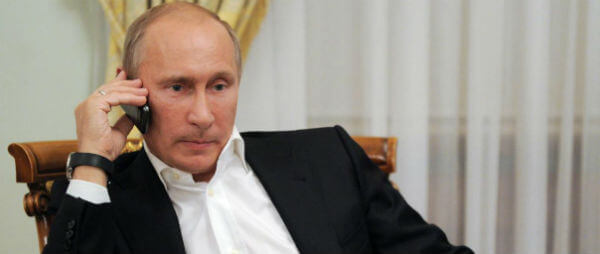
White extremists turn to a leader to protect Western values: Vladimir Putin

putin

The New York Times reports: As the founder of the Traditionalist Worker Party, an American group that aims to preserve the privileged place of whiteness in Western civilization and fight “anti-Christian degeneracy,” Matthew Heimbach knows whom he envisions as the ideal ruler: the Russian president, Vladimir V. Putin.

“Russia is our biggest inspiration,” Mr. Heimbach said. “I see President Putin as the leader of the free world.”

Throughout the presidential campaign, Donald J. Trump mystified many on the left and in the foreign policy establishment with his praise for Mr. Putin and his criticism of the Obama administration’s efforts to isolate and punish Russia for its actions in Crimea and eastern Ukraine. But what seemed inexplicable when Mr. Trump first expressed his admiration for the Russian leader seems, in retrospect, to have been a shrewd dog whistle to a small but highly motivated part of his base.

For Mr. Heimbach is far from alone in his esteem for Mr. Putin. Throughout the collection of white ethnocentrists, nationalists, populists and neo-Nazis that has taken root on both sides of the Atlantic, Mr. Putin is widely revered as a kind of white knight: a symbol of strength, racial purity and traditional Christian values in a world under threat from Islam, immigrants and rootless cosmopolitan elites. [Continue reading…]

Reuters reports: U.S. President-elect Donald Trump is a clever man and will quickly understand his new responsibilities, Russian President Vladimir Putin said in an interview with NTV TV.

Putin has spoken previously of his hope that Trump will help restore U.S.-Russia relations, and analysts said he was unlikely to want to dial up anti-Western rhetoric before Trump’s inauguration in January.

“Trump was an entrepreneur and a businessman. He is already a statesman, he is the head of the United States of America, one of the world’s leading countries,” NTV quoted Putin as saying in the interview on www.ntv.ru on Sunday.

“Because he achieved success in business, it suggests that he is a clever man. And if (he is) a clever man, then he will fully and quite quickly understand another level of responsibility. We assume that he will be acting from these positions,” Putin said. [Continue reading…]

Facebooktwittermail

Congress authorizes Trump to arm Syrian rebels with anti-aircraft missiles

Julian Pecquet writes: The House voted for the first time today to explicitly authorize the incoming Donald Trump administration to arm vetted Syrian rebels with anti-aircraft missiles.

While the language in the annual defense bill also creates restrictions on the provision of the controversial weapons, it represents a win for Senate Armed Services Committee Chairman John McCain, R-Ariz., a fervent advocate of helping the rebels resist President Bashar al-Assad and his Russian and Iranian allies. The Senate is expected to pass the bill next week.

Until now, the transfer of man-portable air-defense systems, or MANPADs, had been implicitly authorized in the absence of an outright ban. Critics, however, view the new provision as tantamount to a policy recommendation for the president-elect. [Continue reading…]

Facebooktwittermail

Fearing abandonment by Trump, CIA-backed rebels in Syria mull alternatives

The Washington Post reports: Three years after the CIA began secretly shipping lethal aid to rebels fighting against Syrian President Bashar al-Assad, battlefield losses and fears that a Donald Trump administration will abandon them have left tens of thousands of opposition fighters weighing their alternatives.

Among the options, say U.S. officials, regional experts and the rebels themselves, are a closer alliance with better-armed al-Qaeda and other extremist groups, receipt of more sophisticated weaponry from Sunni states in the Persian Gulf region opposed to a U.S. pullback, and adoption of more traditional guerrilla tactics, including sniper and other small-scale attacks on both Syrian and Russian targets.

Just over a year ago, the opposition held significant territory inside Syria. Since then, in the absence of effective international pushback, Russian and Syrian airstrikes have relentlessly bombarded their positions and the civilians alongside them. On the ground, Syrian government troops — bolstered by Iran, Lebanon’s Hezbollah, and Shiite militia forces from Iraq — have retaken much of that ground.

From a slow and disorganized start, the opposition “accomplished many of the goals the U.S. hoped for,” including their development into a credible fighting force that showed signs of pressuring Assad into negotiations, had Russia not begun bombing and Iran stepped up its presence on the ground, said one of several U.S. officials who discussed the situation on the condition of anonymity because they were not authorized to speak publicly.

The United States estimates that there are 50,000 or more fighters it calls “moderate opposition,” concentrated in the northwest province of Idlib, in Aleppo and in smaller pockets throughout western and southern Syria, and that they are not likely to give up.

“They’ve been fighting for years, and they’ve managed to survive,” the U.S. official said. “Their opposition to Assad is not going to fade away.” [Continue reading…]

Facebooktwittermail

Philippine proponent of vigilante justice says he has ‘good rapport’ with Trump who supports his war on drugs

The Washington Post reports: Philippine President Rodrigo Duterte’s plan to “kill all” the country’s suspected drug users and dealers has many foreign critics, including the United States, the European Parliament and the International Criminal Court. It now has at least one high-profile supporter: President-elect Donald Trump, at least according to Duterte.

In a statement Saturday, Duterte shared details of a seven-minute conversation that took place Friday. He said that during the call, Trump endorsed his campaign against drug users and dealers — a campaign that has left at least 4,500 Filipinos dead in about five months. Trump told Duterte that he was doing it the “right way,” according to Duterte’s account.

“I could sense a good rapport, an animated President-elect Trump,” he added. “And he was wishing me success in my campaign against the drug problem.” [Continue reading…]

Facebooktwittermail

New forms of fascism are rising east and west as a result of our collective failure in Syria

While addressing the Joint Committee on Foreign Affairs and Trade in the Irish Parliament, Robin Yassin-Kassab said: Liberated Aleppo is falling. The suburbs of Damascus are falling, or have already fallen, and been cleansed of their recalcitrant population. The families of foreign militiamen are moving in. Silence is returning to a devastated and demographically-changed Syria. This presentation is therefore more a lament for the defeated Syrian revolution, and for our failure to help it, than a policy recommendation.

From spring 2011, in the context of the Arab Spring, millions from all backgrounds protested peacefully against torture, crony capitalism, corruption and poverty, and for freedom, dignity, and social justice. They called for the unity of all sects and ethnicities.

The Assad regime responded with extreme repression, shooting protestors dead, torturing many, including children, to death, and prosecuting a mass rape campaign. By summer 2012 it had provoked an armed uprising of military defectors and civilian volunteers grouped under the umbrella term ‘Free Syrian Army’.

The regime deliberately started a war because it knew a serious reform process would end in its demise. It calculated (correctly) that in a war situation it could count on strong foreign allies – unlike its opponents. And it was following the blueprint laid out by Bashaar al-Assad’s father Hafez. In the late 70s he had met a widely-based challenge with severe repression. This provoked a desperate armed uprising by the Muslim Brotherhood in the city of Hama in 1982. The regime responded by razing the city centre, killing tens of thousands. The memory of this destruction kept Syrians silent for the next three decades. [Continue reading…]

Facebooktwittermail

Trump’s security pick, Michael Flynn, brooks no dissent and has vision of global war

The New York Times reports: More problematic [than his criticisms of the U.S. intelligence community] from the military’s perspective was Mr. Flynn’s willingness to share intelligence with other countries. He returned to Washington at the end of 2010, and found himself under investigation for sharing sensitive data with Pakistan about the Haqqani network, arguably the most capable faction of the Taliban, and for providing highly classified intelligence to British and Australian forces fighting in Afghanistan.

His superiors eventually concluded that he was trying to prod Pakistan to crack down on the Haqqanis (they have yet to do so), and the general remains unapologetic about sharing intelligence with British and Australian forces. “They’re our closest allies! I mean, really, we’re fighting together and I can’t share a single piece of paper?” he said in an interview last year.

Around the same time, he was also getting to know Michael A. Ledeen, a controversial writer and former Reagan administration official. The two men connected immediately, sharing a similar worldview and a belief that America was in a world war against Islamist militants allied with Russia, Cuba and North Korea. That worldview is what Mr. Flynn came to be best known for during the presidential campaign, when he argued that the United States faced a singular, overarching threat, and that there was just one accurate way to describe it: “radical Islamic terrorism.”

He has posted on Twitter that fear of Muslims is rational, written that Islamic law is spreading in the United States, and said that Islam itself is more like a political ideology than a religion. The United States, he wrote in “Field of Fight,” a book about radical Islam he co-wrote with Mr. Ledeen, is “in a world war, but very few people recognize it.”

Mr. Flynn saw the Benghazi attack in September 2012 as just one skirmish in this global war. But it was his initial reaction to the event, immediately seeking evidence of an Iranian role, that many saw as emblematic of a conspiratorial bent. Iran, a Shiite nation, has generally eschewed any alliance with Sunni militants like the ones who attacked the American diplomatic compound.

For weeks, he pushed analysts for evidence that the attack might have had a state sponsor — sometimes shouting at them when they didn’t come to the conclusions he wanted. The attack, he told his analysts, was a “black swan” event that required more creative intelligence analysis to decipher. [Continue reading…]

Facebooktwittermail

Eric Trump assures Palestinian American comedian there will be no registry of Muslims

The Guardian reports: Comedian Mo Amer was glad of his upgrade when it pinged on the board. His tiredness – he had only just arrived back from Australia, and was heading from the US to Scotland – slipped away as he thought of the first-class sleep he would get.

But when he got to the front of the jet bridge, there was a strange atmosphere.

“You know when there’s a celebrity on the flight there’s a different energy on the plane,” Amer said. “I walked to my seat and I could see the lady behind me looked perturbed by something.”

He followed her eyes to the seat next to his, where he saw the famous man, unmistakable, wearing a blue sweater emblazoned with his family crest. “I’m like: are you kidding? Eric Trump?”


Amer was born in Kuwait to Palestinian parents, and came to America as an asylum-seeker after the first Gulf War and became a US citizen in 2009. He saw his assignment as a golden opportunity, both as a Muslim, an American and a comedian.

“I put my bags up, I sat down, introduced myself as Mohammed,” Amer told the Guardian. Then he got straight to the point. “I said: ‘I’m a Muslim. I’m not gonna do that Muslim ID thing. That’s not gonna fly.’”

Eric Trump’s response was not exactly on-message with his father’s campaign. “His exact words were: ‘come on, man, don’t believe everything you read, we’re not going to do that’,” Amer said. Representatives for president-elect Trump did not respond to a request for clarification on the policy, or Trump’s past suggestion of a registry of Muslims. [Continue reading…]

Facebooktwittermail

Trump America: Bystanders watch as drunk white men shouting ‘Donald Trump’ attack American Muslim woman on NYC subway

BuzzFeed reports: A Muslim woman was verbally and physically attacked on a New York City subway Thursday night by three drunk white men who repeatedly yelled “Donald Trump” and attempted to remove her hijab, police said.

According to Yasmin Seweid, a business student at Baruch College in Manhattan, nobody else on the train came to her aid during the incident.

The 18-year-old told the New York Daily News that she had just left an event on campus Thursday night when three men approached her on an uptown 6 subway near the 23rd Street stop.

They yelled President-elect Donald Trump’s name over and over, and said to her, “Look, it’s a fucking terrorist,” Seweid said in a Facebook post on Friday.

She said they also yelled, “Get the hell out of the country!” and, “You don’t belong here!”

Seweid was born in Williamsburg, Brooklyn, to Egyptian immigrant parents, she told the Daily News. [Continue reading…]

Facebooktwittermail

Somali refugees are not a threat

Will Oremus writes: We still don’t know exactly what motivated the Ohio State student who wounded 11 people with his car and a knife on Monday, before a campus police officer shot and killed him. We know that the student, Abdul Razak Ali Artan, was a Somali refugee, and that he felt Muslims were subject to unfair scrutiny in his community, and in the United States in general. We know that he posted a rant on Facebook just minutes before the attack, saying he was “willing to kill a billion infidels in retribution for a single DISABLED Muslim.”

We also know that ISIS claimed credit for the attack on Tuesday, but that doesn’t tell us much. One of the group’s shrewdest strategies has been to embrace violent acts by Muslims around the globe, whether or not it played a direct role in them. The tactic makes the group seem more potent and broad-based than it really is. President-elect Donald Trump readily accepted this claim, highlighting the ISIS link along with Artan’s Somali background in a tweet on Tuesday.


The tweet echoed Trump’s past warnings about the threat posed by Somali refugees in the United States, suggesting they will face increased scrutiny under his presidency. It’s also possible that he will follow through on his campaign proposal to ban refugees from the country, despite the ongoing violence there. Somalis in Columbus, and across the country, are on edge: Many have children and other close relatives in Somalia, or in Kenyan refugee camps, who are in the midst of the already arduous application process for a family reunification visa.

To blame Somalis and ISIS for acts of violence like Artan’s, and to respond with a crackdown on the group as a whole, may strike some as an understandable reaction. But in fact, it is a misdiagnosis of the problem — and a deeply misguided solution. That’s not only because it’s unfair to blame the group for the sins of a tiny number of individuals. It’s also because it’s counterproductive and misses the point.

The time I’ve spent with Columbus’ Somali community, working on a master’s thesis about young Somalis and the threat of radicalization in 2010 and 2011, revealed that its troubles stem not from a lack of scrutiny, but a surfeit of it. Many of its members escaped the armed conflict in Somalia only to face new obstacles in the U.S. heartland: poverty, alienation, and a wholly justified sense of persecution. The reaction from Columbus Somalis in the wake of Artan’s attack was one of horror — at the act itself, but also at the likely consequences for their community. This was Somali Americans’ worst nightmare, and something that many of them have been working for years to prevent. [Continue reading…]

Facebooktwittermail

How to spot fake news: Research by Reuters establishes that ‘a tweet that is entirely in capital letters is less likely to be true’

NiemanLab reports: When it comes to automating the process of spotting breaking news, solving one problem can create several more.

Reuters discovered this firsthand over the past two years as it built Reuters News Tracer, a custom tool designed to monitor Twitter for major breaking news events as they emerge. While reporters curate their own lists of sources to get rapid alerts on stories they’re already looking for, the Reuters tool is designed to solve a different problem: detecting breaking news events while early reports are still coming in.

The development of the tool, which Reuters is speaking about publicly today the first time, emerged out of “an existential question for the news agency,” said Reg Chua, Reuters’ executive editor of data and innovation. “A large part of our DNA is built on the notion of being first, so we wanted to figure out how to build systems that would give us an edge on tracking this stuff at speed and at scale. You can throw a million humans at this stuff, but it wouldn’t solve the problem,” he said.

Once the tool identifies what it thinks are emerging stories, it clusters relevant tweets into events, generating information, and metadata about what that story might be about. Tweets that mention “explosions” and “bombs,” for example, would be clustered into a single story about a potential terrorist attack.

But detection is only the first, and probably easiest, problem to solve. Another challenge was figuring out how to identify which events are actually interesting, newsworthy, and not spam. Added to that is the problem of filtering out assertions of opinions (“I think it’s terrible that this event happened”) from assertions of facts (“This event happened”) and automating the processing of verifying whether reports are actually true.

The verification challenge was the most interesting and most valuable problem to solve, Chua said. Pulling from academic research on the verification of social media reports, Reuters designed its algorithm to assign verification scores to tweets based on 40 factors, including whether the report is from a verified account, how many people follow those who reported the news, whether the tweets contain links and images, and, in some cases, the structure of the tweets themselves. “Amazingly enough, a tweet that is entirely in capital letters is less likely to be true,” Chua said. [Continue reading…]

Facebooktwittermail