NASA’s indispensable role in climate research

Adam Frank writes: On April 1, 1960, the newly established National Aeronautics and Space Administration heaved a 270-pound box of electronics into Earth orbit. In those days, getting anything into space was a major achievement. But the real significance of that early satellite, Tiros-1, was not its survival, but its mission: Its sensors were not pointed outward toward deep space, but downward, at the Earth.

Tiros-1 was the first world’s first weather satellite. After its launch, Americans would never again be caught without warning as storms approached.

This small piece of history says a lot about the call by Bob Walker, an adviser to President-elect Donald J. Trump who worked with his campaign on space policy, to defund NASA’s earth science efforts, moving those functions to other agencies and letting it focus on deep-space research. “Earth-centric science is better placed at other agencies where it is their prime mission,” he told The Guardian.

NASA critics have long wanted to shut the agency out of research related to climate change. The problem is, not only is earth science a long-running part of NASA’s “prime mission,” but it is uniquely positioned to do it. Without NASA, climate research worldwide would be hobbled. [Continue reading…]

Facebooktwittermail

Don’t freak out about Trump’s cabinet full of generals

Rosa Brooks writes: Generals, generals, generals! These days, you can’t shake a stick around Chateau Trump without hitting a retired general — and you can’t shake a stick around America’s major media outlets without hitting an op-ed on the perils of appointing retired generals to cabinet positions.

It’s true that Donald Trump seems to have a fetish for retired generals. Trump has named retired Army Lt. Gen. Mike Flynn as his national security advisor and now retired Marine Gen. James Mattis is the president-elect’s top pick for secretary of defense. A gaggle of other retired four-stars are also under consideration for cabinet-level positions in the Trump administration, including Army Gen. David Petraeus, said to be in the running for secretary of state, and Marine Gen. John Kelly, reportedly on the short list for secretary of homeland security.

With the exception of Flynn, whose inflammatory rhetoric on the campaign trail alienated even many of his onetime fans, the retired officers in the running for cabinet spots are widely respected on both sides of the political aisle. Nonetheless, many commentators have expressed concern about the possibility of a cabinet stocked with former four-stars. Writing in the Washington Post, my friends Phil Carter and Loren DeJonge Schulman argue that “if appointed in significant numbers,” retired officers “could undermine … civilian control of an apolitical military.” Op-eds and articles in the New York Times, The Associated Press, and dozens of other publications — including this one — raise similar objections.

Most of these objections have been articulated by people I know and respect, and as the author of a recent book called How Everything Became War and the Military Became Everything, you might expect me to share these objections. For some reason, though, I’m having trouble getting worked up about the number of generals visiting Trump Tower. (Full disclosure: Both Mattis and Petraeus were kind enough to write nice blurbs for my book, which makes me feel quite fond of them.)

I know I’ll probably get an “F” in Civil-Military Relations Theory for saying this, but I don’t much care if Donald Trump appoints one retired general to his cabinet or 10.

In part, this is because I think we have much bigger problems to worry about right now, such as the resurgent white nationalist movement emboldened by Trump’s victory, the possibility of significant reversals on voter rights, climate change, and a host of other issues. And, more broadly, the simple fact that the White House will soon be occupied by a man who devotes the wee hours of each morning to tweeting insults at Broadway performers, former beauty pageant winners, and random journalists.

Against this backdrop, a cabinet stocked with retired military officers is the least of my worries. (And, frankly, anyone who thinks Rudy Giuliani would make a better secretary of state than David Petraeus needs to have their head examined.) But it’s more than that. I also think that the current outpouring of concern over Trump’s flirtations with retired generals confuses form with substance. [Continue reading…]

Facebooktwittermail

China lodges complaint with U.S. over Trump’s Taiwan phone call

The Guardian reports: China has lodged “solemn representations” with the US over a call between the president-elect, Donald Trump, and Taiwan’s leader, Tsai Ing-wen.

Trump looked to have sparked a potentially damaging diplomatic row with Beijing on Friday after speaking to the Taiwanese president on the telephone.

The call, first reported by the Taipei Times and confirmed by the Financial Times, is thought to be the first between the leader of the island and a US president or president-elect since ties between the two countries were severed in 1979, at Beijing’s behest.

The US closed its embassy in Taiwan – a democratically ruled island which Beijing regards as a breakaway province – in the late 1970s after the historic rapprochement between Beijing and Washington that stemmed from Richard Nixon’s 1972 trip to China.

Since then the US has adhered to the “one China” principle, which officially considers the independently governed island to be part of the same single Chinese nation as the mainland.

Geng Shuang, a spokesman for China’s foreign ministry, said in a statement on Saturday: “It must be pointed out that there is only one China in the world and Taiwan is an inseparable part of Chinese territory. The government of the People’s Republic of China is the sole legitimate government representing China.”

Geng added: “This is a fact that is generally recognised by the international community.”

The statement did not describe the details of China’s complaint to the US, or say with whom it had been lodged.

It said China urged “the relevant US side” – implying Trump’s incoming administration – to handle Taiwan-related issues “cautiously and properly” to avoid “unnecessary interference” in the China-US relationship. [Continue reading…]

PTI reports: China on Saturday played down US President-elect Donald Trump’s telephone talk with Taiwanese President Tsai Ing-wen, dismissing it as a “small trick by Taiwan” that cannot change the One-China framework or damage Sino-US ties.

“I do not think it will change the One-China policy that the US government has insisted on applying over the years,” Chinese Foreign Minister Wang Yi said after unprecedented move by US President-elect, Hong Kong-based Phoenix TV reported. [Continue reading…]

Facebooktwittermail

Travelling with James Mattis, Donald Trump’s pick for Secretary of Defense

Steve Coll, after reviewing his notes taken during a trip accompanying General James Mattis on a seven-country tour in 2011, writes: It is common to observe, based on congressional testimony and other public comments he has made, that Mattis has taken a hard line toward Iran, particularly the activities of the Revolutionary Guards and other allied or expeditionary Iranian militant units in Iraq, Syria, Lebanon, and Yemen. During our discussions, Mattis made a few comments along those lines. But mainly he seemed focussed on deepening America’s long-standing military and political alliances with Sunni Arab states — Morocco, Egypt, Jordan, Saudi Arabia, Qatar, and the United Arab Emirates. During his time at Central Command, he spent many hours talking to counterparts in those countries, which tend to view Shia revolutionary Iran as a serious threat. The smaller, militarily weaker Sunni states closest to Iran — such as the U.A.E. — were and remain acutely anxious that the United States might sell out their security in some Nixon-to-China grand bargain with Tehran.

I had the sense that, in Obama’s cabinet, Mattis channelled those Sunni Arab anxieties forcefully, but I never heard him itching for another Middle Eastern war or talking up the benefits of bombing Iran preëmptively. Over all, the Mattis in my notes seemed intently focussed on stability, wary of warfare that sought to promote democracy or idealism, sentimental about the independence of the Baltic states, firmly committed to NATO, and unsentimental about Russia. During our stay in Estonia, he spoke publicly at a think-tank conference and made plain his commitment to the Baltic states’ membership in NATO and the obligation to defend them from Russian aggression. He was particularly emotional about the role Estonian soldiers had played as NATO members in Afghanistan and the sacrifices in lives they had made there.

Mattis made a few remarks about the Pentagon and its role in American foreign policy that it seems fair to quote five years later, given the stakes associated with his nomination by Trump. During our travels, the Arab Spring was already turning toward civil unrest or outright war in Egypt, Syria, Bahrain, and Yemen. Mattis was clearly inclined to reinforce some of the incumbent regimes, for the sake of regional stability.

“It’s a lot easier to stay idealistic if you don’t sign two to five next-of-kin letters every day,” he told me, referring to the condolence letters he sent to the families of American soldiers then dying in Iraq and Afghanistan. “I don’t think the U.S. military is conservative. It’s pragmatic.” At the same time, he said that he had “no problem” telling authoritarian leaders to allow domestic political protest to evolve peacefully. He recalled that he had advised an Egyptian counterpart about the unrest in Cairo, “At Kent State, we shot our own people, and it didn’t work out very well.” [Continue reading…]

Facebooktwittermail

Now is the time to talk about what we are actually talking about

Chimamanda Ngozi Adichie writes: America has always been aspirational to me. Even when I chafed at its hypocrisies, it somehow always seemed sure, a nation that knew what it was doing, refreshingly free of that anything-can-happen existential uncertainty so familiar to developing nations. But no longer. The election of Donald Trump has flattened the poetry in America’s founding philosophy: the country born from an idea of freedom is to be governed by an unstable, stubbornly uninformed, authoritarian demagogue. And in response to this there are people living in visceral fear, people anxiously trying to discern policy from bluster, and people kowtowing as though to a new king. Things that were recently pushed to the corners of America’s political space — overt racism, glaring misogyny, anti-intellectualism — are once again creeping to the center.

Now is the time to resist the slightest extension in the boundaries of what is right and just. Now is the time to speak up and to wear as a badge of honor the opprobrium of bigots. Now is the time to confront the weak core at the heart of America’s addiction to optimism; it allows too little room for resilience, and too much for fragility. Hazy visions of “healing” and “not becoming the hate we hate” sound dangerously like appeasement. The responsibility to forge unity belongs not to the denigrated but to the denigrators. The premise for empathy has to be equal humanity; it is an injustice to demand that the maligned identify with those who question their humanity.

America loves winners, but victory does not absolve. Victory, especially a slender one decided by a few thousand votes in a handful of states, does not guarantee respect. Nobody automatically deserves deference on ascending to the leadership of any country. American journalists know this only too well when reporting on foreign leaders — their default mode with Africans, for instance, is nearly always barely concealed disdain. President Obama endured disrespect from all quarters. By far the most egregious insult directed toward him, the racist movement tamely termed “birtherism,” was championed by Trump. [Continue reading…]

Facebooktwittermail

Why Jews are coming to the defense of mosques in America

Christian Science Monitor reports: When Sheryl Olitzky first broached the subject of a Jewish-Muslim women’s group, Atiya Aftab didn’t buy it.

“Why is someone calling me because I’m Muslim?” Ms. Aftab recalls thinking. “This is creepy.”

But as Ms. Olitzky made her case over lattes at a Starbucks in suburban New Jersey, Aftab found herself drawn in.

“This is a woman extending her hand to me, saying, ‘I want to get to know you. I want to be your protector. I want to have your back because I know what you’re going through, because of what the Jewish community has been through,’ ” says Aftab, a professor at Rutgers University’s Center for Middle Eastern Studies. “That was so compelling, so honest.”

After that meeting in 2010, the two women launched the Sisterhood of Salaam Shalom – then just a casual gathering of local Muslim and Jewish women talking about faith and family, and sharing their experiences as religious minorities in America. Today, the group has chapters in more than 50 cities. [Continue reading…]

Facebooktwittermail

The post-truth world of the Trump administration is scarier than you think

Margaret Sullivan writes: You may think you are prepared for a post-truth world, in which political appeals to emotion count for more than statements of verifiable fact.

But now it’s time to cross another bridge — into a world without facts. Or, more precisely, where facts do not matter a whit.

On live radio Wednesday morning, Scottie Nell Hughes sounded breezy as she drove a stake into the heart of knowable reality:

“There’s no such thing, unfortunately, anymore, of facts,” she declared on “The Diane Rehm Show” on Wednesday.

Hughes, a frequent surrogate for President-elect Donald Trump and a paid commentator for CNN during the campaign, kept on defending that assertion at length, though not with much clarity of expression. Rehm had pressed her about Trump’s recent evidence-free assertion on Twitter that he, not Hillary Clinton, would have won the popular vote if millions of immigrants had not voted illegally. [Continue reading…]

Facebooktwittermail

Eyes in the sky: Cutting NASA Earth observations would be a costly mistake

By David Titley, Pennsylvania State University

Donald Trump’s election is generating much speculation about how his administration may or may not reshape the federal government. On space issues, a senior Trump advisor, former Pennsylvania Rep. Bob Walker, has called for ending NASA earth science research, including work related to climate change. Walker contends that NASA’s proper role is deep-space research and exploration, not “politically correct environmental monitoring.”

This proposal has caused deep concern for many in the climate science community, including people who work directly for NASA and others who rely heavily on NASA-produced data for their research. Elections have consequences, and it is an executive branch prerogative to set priorities and propose budgets for federal agencies. However, President-elect Trump and his team should think very carefully before they recommend canceling or defunding any of NASA’s current Earth-observing missions.

We can measure the Earth as an entire system only from space. It’s not perfect – you often need to look through clouds and the atmosphere – but there is no substitute for monitoring the planet from pole to pole over land and water. These data are vital to maintaining our economy, ensuring our safety both at home and abroad, and quite literally being an “eye in the sky” that gives us early warning of changes to come. To paraphrase Milton Friedman, there’s no free lunch. If NASA is not funded to support these missions, additional dollars will need to flow into NOAA and other agencies to fill the gap.

Continue reading

Facebooktwittermail

The anti-democratic worldview of Steve Bannon and Peter Thiel

Jedediah Purdy writes: What does Donald Trump stand for?

It’s hard to tell. His inflammatory calls during the campaign to build a wall at the Mexican border and ban Muslims from entering the country were balanced by seemingly moderate positions on gay rights and health care. On trade and infrastructure, he can sound a little like a Democratic populist. Some of Trump’s voters see him as a pragmatist who would govern like a businessman (whatever that means).

Now that Trump is president-elect, pending the Electoral College vote on December 19, the question has taken on monumental importance. Trump’s Cabinet secretaries are emerging slowly. But we do know something about the people shaping the transition. Two of Trump’s close advisers have known views on some big-picture issues about the world, and if you read them, there’s a troubling commonality that goes far beyond any specific policy areas: They are our first clear view of Trumpism as an illiberal theory of politics with deep doubts about democracy.

The advisers are Steve Bannon, the right-wing media provocateur who ran Breitbart News, then Trump’s campaign, and has now been named to the influential post of “chief strategist,” a role in which he is expected to have the new president’s ear in the White House. The other is Peter Thiel, the Silicon Valley libertarian who spoke at Trump’s convention, gave more than $1 million in support of his campaign and is now a member of Trump’s transition team. Although Thiel says he doesn’t intend to have a full-time position in Trump’s administration, he reportedly has been feeding the president-elect ideas from a Silicon Valley “brain trust,” and a principal at Thiel’s venture capital fund has been named to Trump’s defense transition team. The speeches and writings of these two political outsiders suggest that beyond policy, there’s something much deeper at work: an impulse to reshape the country, and the world, in a way that would change the meaning of democracy in unsettling ways—and, maybe, ultimately undermine it. [Continue reading…]

Facebooktwittermail

The IP Act: UK’s most extreme surveillance law

Jim Killock writes: The Investigatory Powers Act will come into force at the start of 2017, and will cement ten years of illegal surveillance into law.

It includes state powers to intercept bulk communications and collect vast amounts of communications data and content. The security and law enforcement agencies – including government organisations such as HMRC (Her Majesty’s Revenue and Customs) – can hack into devices of people in the UK.

Under this law, the intelligence agencies can use bulk hacking powers to hack devices and networks outside the UK. They can also access and analyse entire databases, whether they are held by private companies or public organisations – even though they have admitted that most people on them will not be suspected of any crimes.

One of the new and most intrusive powers is that Internet Service Providers (ISPs) can be compelled to collect a record of our web browsing activity and this can be accessed by the police and 48 government departments, including the Food Standards Agency and the HMRC. [Continue reading…]

Facebooktwittermail

Iran says U.S. extension of sanctions act violates nuclear deal

Reuters reports: Iran threatened on Friday to retaliate against the U.S. Senate’s vote to extend the Iran Sanctions Act (ISA) for 10 years, saying it violated last year’s deal with six major powers that curbed its nuclear programme.

The ISA was first adopted in 1996 to punish investments in Iran’s energy industry and deter its pursuit of nuclear weapons. The extension was passed unanimously on Thursday.

U.S. officials said the ISA’s renewal would not infringe on the nuclear agreement, under which Iran agreed to limit its sensitive nuclear work in return for the lifting of financial sanctions that harmed the country’s economy.

But senior Iranian officials took odds with that view.

Iran’s nuclear chief, Ali Akbar Salehi, who played a key role in reaching the nuclear deal, described it as a “clear violation” of the 2015 deal if implemented.

“We are closely monitoring the developments,” state TV quoted Salehi as saying. “If they implement the ISA, Iran will take action accordingly.”

The extension risks deepening hostilities between Iran and the United States ahead of the inauguration of U.S. President-elect Donald Trump, who said during his election campaign that he would abandon the deal. [Continue reading…]

Facebooktwittermail

How Assad staged al Qaeda bombings

Roy Gutman reports: When Syria’s national uprising began in March 2011, Gen. Awad al Ali was in charge of criminal investigations in the Syrian capital. One year later, the country’s top police professional was a marked man.
A string of mystery suicide bombings had targeted major security installations in Damascus and Aleppo, Syria’s biggest city, starting in late December 2011, and al Ali, fearing he’d be next, took the modest precaution of blocking off a street near his office.

The real threat, he later concluded, was not from “terrorists” that the regime said was behind the suicide bombings—but from the regime itself.

The first sign the regime was behind the bombings was when a top military aide to President Bashar al Assad stopped by al Ali’s office to examine his security arrangements. Gen. Salim al Ali, Assad’s special assistant for Damascus affairs and no relation to Awad al Ali, wasn’t there to urge better precautions. Just the opposite. [Continue reading…]

Facebooktwittermail

Trump speaks with Taiwan’s leader, an affront to China

The New York Times reports: President-elect Donald J. Trump spoke by telephone with Taiwan’s president on Friday, a striking break with nearly four decades of diplomatic practice that could precipitate a major rift with China even before Mr. Trump takes office.

Mr. Trump’s office said he spoke with the Taiwanese president, Tsai Ing-wen, “who offered her congratulations.”

He is believed to be the first president or president-elect who has spoken to a Taiwanese leader since 1979, when the United States severed diplomatic ties with Taiwan after its recognition of the People’s Republic of China.

In the statement, Mr. Trump’s office said the two leaders noted that “close economic, political, and security ties” exist between Taiwan and the United States. The statement also said Mr. Trump “congratulated President Tsai on becoming president of Taiwan earlier this year.” [Continue reading…]

Facebooktwittermail

No one can stop President Trump from using nuclear weapons. That’s by design

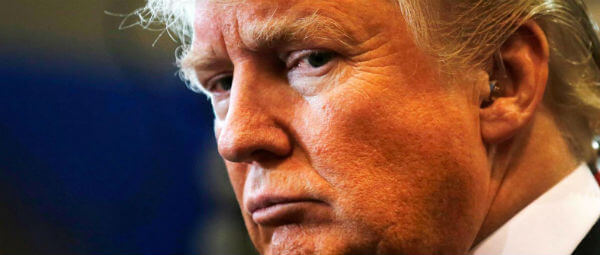
trump-frown

Alex Wellerstein, a historian of nuclear weapons, writes: Sometime in the next few weeks, Donald Trump will be briefed on the procedures for how to activate the U.S. nuclear arsenal, if he hasn’t already learned about them.

All year, the prospect of giving the real estate and reality TV mogul the power to launch attacks that would kill millions of people was one of the main reasons his opponents argued against electing him. “A man you can bait with a tweet is not a man we can trust with nuclear weapons,” Hillary Clinton said in her speech accepting the Democratic presidential nomination. She cut an ad along the same lines. Republicans who didn’t support Trump — and even some who did, such as Sen. Marco Rubio (Fla.) — also said they didn’t think he could be trusted with the launch codes.

Now they’re his. When Trump takes office in January, he will have sole authority over more than 7,000 warheads. There is no failsafe. The whole point of U.S. nuclear weapons control is to make sure that the president — and only the president — can use them whenever he decides to do so. The only sure way to keep President Trump from launching a nuclear attack, under the system we’ve had in place since the early Cold War, would have been to elect someone else. [Continue reading…]

Facebooktwittermail

Trump’s defense secretary pick opposes scrapping Iran nuclear deal

Shortly before Donald Trump’s choice for defense secretary was announced, Jim Lobe wrote: Marine Gen. James “Mad Dog” Mattis is the odds-on favorite for Donald Trump’s choice for secretary of defense. It’s worth exploring his views on Iran particularly in light of the ultra-hawkish positions of both National Security Adviser-designate Gen. Michael Flynn and CIA director-designate Mike Pompeo, both of whom have made no secret of their desire to destroy the Joint Comprehensive Plan of Action (JCPOA). Mattis’s most comprehensive public statement on these subjects came at an hour-long presentation he gave at the Center for Strategic and International Studies (CSIS) last April 22. It was entitled “The Middle East at an Inflection Point,” but it was really all about Iran. With the exception of the Military Times, the media entirely ignored his talk.

Recall that Mattis was essentially let go as chief of the U.S. Central Command, in which capacity he served from August 2010 to March 2013, largely because the Obama administration felt that he was too hawkish toward Iran. That hawkishness certainly comes through in his CSIS presentation. He sees Iran as the “single most enduring threat to stability and peace in the Middle East,” “the single most belligerent actor in the Middle East,” and as “not a nation state. Rather, he argues, it’s a revolutionary cause devoted to mayhem” that has not modified its hostility toward the U.S., Israel, and its Arab neighbors since the revolution. (It would be very hard to imagine Mattis supporting any effort to integrate Iran into a new regional security structure, although he didn’t explicitly address that issue in his talk.)

Nonetheless, unlike Flynn and Pompeo, Mattis makes clear that Washington should abide by the JCPOA, which he sees as an “imperfect arms control agreement,” because any withdrawal, especially in the absence of support from its allies, would put Washington and the region “on a road to perdition.” [Continue reading…]

The Forward reports: Late last month, when it first emerged that Trump was considering Mattis for the job, the Zionist Organization of America said it would oppose the pick, citing a 2013 appearance at the Aspen Security Forum shortly after he retired as chief of the U.S. Central Command.

“I paid a military-security price every day as the commander of CentCom because the Americans were seen as biased in support of Israel,” Mattis said then of his job, which involves interactions with America’s Arab allies.

He also warned that the United States urgently needed to press the Israelis and the Palestinians to advance to a two-state solution.

“Either it ceases to be a Jewish state or you say the Arabs don’t get to vote — apartheid. That didn’t work too well the last time I saw that practiced in a country,” Mattis said. [Continue reading…]

Facebooktwittermail

Stephen Hawking: This is the most dangerous time for our planet

Stephen Hawking writes: As a theoretical physicist based in Cambridge, I have lived my life in an extraordinarily privileged bubble. Cambridge is an unusual town, centred around one of the world’s great universities. Within that town, the scientific community that I became part of in my 20s is even more rarefied.

And within that scientific community, the small group of international theoretical physicists with whom I have spent my working life might sometimes be tempted to regard themselves as the pinnacle. In addition to this, with the celebrity that has come with my books, and the isolation imposed by my illness, I feel as though my ivory tower is getting taller.

So the recent apparent rejection of the elites in both America and Britain is surely aimed at me, as much as anyone. Whatever we might think about the decision by the British electorate to reject membership of the European Union and by the American public to embrace Donald Trump as their next president, there is no doubt in the minds of commentators that this was a cry of anger by people who felt they had been abandoned by their leaders.

It was, everyone seems to agree, the moment when the forgotten spoke, finding their voices to reject the advice and guidance of experts and the elite everywhere.

I am no exception to this rule. I warned before the Brexit vote that it would damage scientific research in Britain, that a vote to leave would be a step backward, and the electorate – or at least a sufficiently significant proportion of it – took no more notice of me than any of the other political leaders, trade unionists, artists, scientists, businessmen and celebrities who all gave the same unheeded advice to the rest of the country.

What matters now, far more than the choices made by these two electorates, is how the elites react. Should we, in turn, reject these votes as outpourings of crude populism that fail to take account of the facts, and attempt to circumvent or circumscribe the choices that they represent? I would argue that this would be a terrible mistake. [Continue reading…]

Facebooktwittermail