Close the NSA’s back doors

An editorial in the New York Times says: In 2006, a federal agency, the National Institute of Standards and Technology, helped build an international encryption system to help countries and industries fend off computer hacking and theft. Unbeknown to the many users of the system, a different government arm, the National Security Agency, secretly inserted a “back door” into the system that allowed federal spies to crack open any data that was encoded using its technology.

Documents leaked by Edward Snowden, the former N.S.A. contractor, make clear that the agency has never met an encryption system that it has not tried to penetrate. And it frequently tries to take the easy way out. Because modern cryptography can be so hard to break, even using the brute force of the agency’s powerful supercomputers, the agency prefers to collaborate with big software companies and cipher authors, getting hidden access built right into their systems.

The New York Times, The Guardian and ProPublica recently reported that the agency now has access to the codes that protect commerce and banking systems, trade secrets and medical records, and everyone’s e-mail and Internet chat messages, including virtual private networks. In some cases, the agency pressured companies to give it access; as The Guardian reported earlier this year, Microsoft provided access to Hotmail, Outlook.com, SkyDrive and Skype. According to some of the Snowden documents given to Der Spiegel, the N.S.A. also has access to the encryption protecting data on iPhones, Android and BlackBerry phones.

These back doors and special access routes are a terrible idea, another example of the intelligence community’s overreach. Companies and individuals are increasingly putting their most confidential data on cloud storage services, and need to rely on assurances their data will be secure. Knowing that encryption has been deliberately weakened will undermine confidence in these systems and interfere with commerce.

The back doors also strip away the expectations of privacy that individuals, businesses and governments have in ordinary communications. If back doors are built into systems by the N.S.A., who is to say that other countries’ spy agencies — or hackers, pirates and terrorists — won’t discover and exploit them?

The government can get a warrant and break into the communications or data of any individual or company suspected of breaking the law. But crippling everyone’s ability to use encryption is going too far, just as the N.S.A. has exceeded its boundaries in collecting everyone’s phone records rather than limiting its focus to actual suspects.

Representative Rush Holt, Democrat of New Jersey, has introduced a bill that would, among other provisions, bar the government from requiring software makers to insert built-in ways to bypass encryption. It deserves full Congressional support. In the meantime, several Internet companies, including Google and Facebook, are building encryption systems that will be much more difficult for the N.S.A. to penetrate, forced to assure their customers that they are not a secret partner with the dark side of their own government.


Facebooktwittermail

Nuclear madness

An obsession that has shaped much of foreign policy formulation in Washington over the last decade has been the drive to prevent a nuclear ‘catastrophe’ — that being the world-destablizing effect of Iran acquiring nuclear weapons.

What makes this obsession farcical, disingenuous, and dangerous is that the individuals at the vanguard of this effort possess large arsenals of nuclear weapons. We are being told that we should worry much more about a nuclear threat than a nuclear reality.

There is a certain parallel with the gun lovers’ argument that guns don’t kill people — people kill people. Similarly, there is a far greater fear of who might control nuclear weapons than the weapons themselves.

One of several indications that we continue to live in the nuclear age with a large measure of comfort is the frequency with which these weapons of massive destruction are referred to as nukes. Like all nicknames, nuke evokes a sense of familiarity; a notion that the danger such weapons pose is so remote that they should provoke little fear — unless, that is, they were to fall into the wrong hands.

There are currently 10,000 nuclear weapons scattered around the globe and of these, around 1,800 are ready to be launched in between 5 to 15 minutes. The fact that none of these have been intentionally or accidentally detonated fosters the illusion that we have little to worry about — that an issue that few people concern themselves with need be of little concern because the people who are in charge of these weapons have created fool-proof systems of command and control, making accidents impossible.

The writer Eric Schlosser points out, however: “The people for whom this is still a threat, the people who are most anti-nuclear, the people who are most afraid about this, are the ones who know most about it.”

Schlosser is author of the newly released Command and Control, whose publication coincides with yesterday’s “exclusive” in The Guardian on a secret document, revealing how close America came to a catastrophic nuclear accident in 1961 when a Mark 39 hydrogen bomb almost exploded in North Carolina on January 23, 1961.

Ed Pilkington writes: When he started on his nuclear researches, Schlosser conceived the book as something contained and compact. It would be the tale of one of the most serious accidents in the nuclear age, when, in September 1980, a Titan II missile, similar to the one he had witnessed taking off from Vandenberg [in 1999], exploded in its silo in Arkansas following routine repair work that turned bad. The missile was carrying a thermonuclear warheadwith a yield 600 times that of “Little Boy”, the bomb dropped over Hiroshima. The warhead was blasted hundreds of meters into a ditch, but failed to detonate.

As he started digging his way down into the rabbit hole, he began stumbling on other examples of mistakes and near-misses. One led to another until he found himself sitting on a mushroom cloud of disturbing nuclear accidents. When he requested under the Freedom of Information Act the release of an official record of all the incidents that had befallen the American nuclear arsenal in the 10 years to 1967, he was astounded to find it extending to 245 pages.

The stories he came across suggest that nothing but a miracle has prevented an accidental Hiroshima or Nagasaki taking place on US soil. In 1958 a Mark 6 atom bomb was accidentally dropped into the backyard of the Gregg family in Mars Bluff, South Carolina. Three years later, two hydrogen bombs, with a combined power of more than 500 Hiroshimas, were accidentally dropped over North Carolina after a B-52 broke up in mid air. Neither bomb detonated when they landed in a meadow, but a later secret investigation concluded that in the case of one of the devices only a single low-voltage switch stood between the US and catastrophe. In 1966 a hydrogen bomb was dropped inadvertently over the coast of Spain, also from a stricken B-52; it took six weeks of intensive searching before it was found and retrieved from the ocean bed.

As the mass of detail piles up, an important lesson emerges from the book. The way Schlosser explains it to me is that “our ability to create dangerous things exceeds our ability to control them. We are talking about hubris – our lack of understanding of our own flaws and lack of humility in the way we approach technology.”

Facebooktwittermail

Mint Press, Dale Gavlak, and alternative narratives around the August 21 chemical weapons attacks

For some people, antipathy for and suspicion of the U.S. government is so visceral that their immediate inclination is to believe the opposite of anything a U.S. official might claim.

Since the U.S. was quick to assert that the Assad regime must have been responsible for the August 21 chemical attacks, a knee-jerk reaction was to counter that the attack must have been carried out by rebels in an effort to trigger Western intervention.

This theory still has life even as it becomes increasingly evident that by happenstance or design, Bashar al Assad has been the preeminent beneficiary of the latest turn of events in Syria.

From the outset, this was a theory desperately in need of supporting facts and thus an August 29 report published by Mint Press News was quickly seized upon, among other reasons because included in the byline was the name Dale Gavlak, who has freelanced for the Associated Press.

A few days after the report appeared, the following note was added at the top of the report:

Dale Gavlak assisted in the research and writing process of this article, but was not on the ground in Syria. Reporter Yahya Ababneh, with whom the report was written in collaboration, was the correspondent on the ground in Ghouta who spoke directly with the rebels, their family members, victims of the chemical weapons attacks and local residents.

Gavlak is a MintPress News Middle East correspondent who has been freelancing for the AP as a Amman, Jordan correspondent for nearly a decade. This report is not an Associated Press article; rather it is exclusive to MintPress News.

She has now made it known that on August 29 when she filed the report she also wrote an email which said: “Pls find the Syria story I mentioned uploaded on Google Docs. This should go under Yahya Ababneh’s byline. I helped him write up his story but he should get all the credit for this.”

She didn’t want the byline but she did believe the report deserved credit.

She has now issued the following statement which appears at Brown Moses Blog:

Mint Press News incorrectly used my byline for an article it published on August 29, 2013 alleging chemical weapons usage by Syrian rebels. Despite my repeated requests, made directly and through legal counsel, they have not been willing to issue a retraction stating that I was not the author. Yahya Ababneh is the sole reporter and author of the Mint Press News piece. To date, Mint Press News has refused to act professionally or honestly in regards to disclosing the actual authorship and sources for this story.

I did not travel to Syria, have any discussions with Syrian rebels, or do any other reporting on which the article is based. The article is not based on my personal observations and should not be given credence based on my journalistic reputation. Also, it is false and misleading to attribute comments made in the story as if they were my own statements.

In a word, Gavlak wants to have nothing to do with the story.

It’s not hard to figure out why she now finds this an embarrassment. What’s harder to explain is why she filed the story in the first place.

Facebooktwittermail

Obama would be crazy not to seize this chance to engage with Iran

Fred Kaplan writes: President Obama would be crazy not to dive deep into diplomacy with Iran, right now. Forget the standard throat-clearing bromides and water-testing toe-dips that mark the resumption of relations with suspect characters. When the world’s leaders meet at the U.N. General Assembly next week, Obama should not only shake hands with Iranian President Hassan Rouhani but also meet with him privately, hand him a list of a dozen issues to discuss (uranium enrichment, sanctions, regional stability, etc.), and even be prepared to announce, if possible, a time and place for negotiations to begin and a roster of the delegates to be invited.

If Rouhani is who he claims to be—an Iranian moderate who has the authority to strike a bargain on nuclear programs and economic sanctions (at least until hardliners lose patience with him)—then this is an opportunity no Western leader can pass up.

If it’s all a ruse, or if the mullahs overrule whatever deal emerges, there’s no harm in trying. In fact, if things go bad and Western leaders feel compelled to respond with tighter sanctions or military action, they could do so with greater legitimacy after having given the high road a chance.

In any case, it does little good to sit around and debate the potential truth of Rouhani’s proclamations or the nature of Iranian politics, about which any outsider’s knowledge is limited. Rouhani has put his statements on the table. No Iranian president, in the entire revolutionary period, has said anything remotely this appealing. He has appointed, in Mohammad Javad Zarif, a foreign minister whose known views are consistent with these statements. Iran’s economy is in such a tailspin that the regime — including the mullahs who are ultimately in charge — may be willing to trade some things of value for an end to the U.S.-imposed sanctions. [Continue reading…]

Facebooktwittermail

Syria’s refugees: the catastrophe

Hugh Eakin and Alisa Roth write: In early June 2011, some three months into the uprising against the regime of Syrian leader Bashar al-Assad, Syrian government forces began preparing for a large-scale assault on Jisr al-Shughour, a rebellious border town sixty-five miles southwest of Aleppo. The events that led to this operation are a matter of some dispute. Residents of the town said that Assad’s security forces shot and killed an unarmed man during a protest after Friday prayers. At his funeral the next day, thousands of mourners marched to a post office where security forces were gathered.

According to eyewitnesses, government snipers on top of the building began shooting at the crowd, while more troops arrived to back them up. But numerous accounts also describe soldiers defecting and joining with the mourners, a number of whom had brought guns, to attack the regime forces; Syrian state media later claimed that 120 soldiers had been massacred by “armed gangs.”

What is certain is that an exceptionally violent confrontation took place. As the regime sent reinforcements to retake control, most of the town’s 44,000 inhabitants and many from the surrounding area fled. “They were burning houses and fields and killing animals. They started shooting. And killed two families,” a woman who called herself Lajia told us when, reporting for a public radio story, we met her in a tiny Turkish village two weeks later. With her six children, then aged six to seventeen, she had escaped from her farm near Jisr al-Shughour across the border to Turkey, where she was staying with relatives. “Villages were increasingly empty from around forty kilometers away,” a United Nations official reported after a fact-finding mission later that month. “Jisr al-Shughour itself was almost deserted.” Like Lajia and her family, much of the population had crossed into Turkey’s Hatay province—the first refugees in a conflict that has since produced more than two million of them.

In more than one way, what happened in Jisr al-Shughour is unusually revealing about the course of Syria’s civil war: it was the first well-documented case of protesters arming themselves and fighting back against Syrian troops. It was also one of the first occasions that large numbers of Syrians were forced to flee to a neighboring country. At the time, the Turkish government had not yet endorsed the Syrian opposition; it had spent the previous decade building economic and political ties with the Assad regime and still hoped for a negotiated solution to the uprising. But Turkey is a Sunni country whose current leadership has Islamist sympathies. Jisr al-Shughour was a Sunni town with a history of Islamist activism and violent repression by Syria’s ruling Baath regime, which is dominated by the Alawite sect. The refugees who left for Turkey soon became the first links in a crucial supply chain for the rebel cause. In July 2011, a few weeks after we met Lajia and other Syrians in the border region of Hatay province, a group of military defectors among them announced the founding of the Free Syrian Army (FSA), dedicated to the armed overthrow of Assad. [Continue reading…]

Facebooktwittermail

How to destroy Syria’s chemical arsenal

BBC News reports: Syria has been given until the middle of 2014 to destroy its chemical weapons stockpile.

But in a country torn apart by civil war, the disposal process is likely to be fraught with difficulties. So how will it work?

Different techniques are used for destroying chemical munitions and chemical agents, but most methods involve either:

  • Incineration at very high temperatures to destroy the toxicity of the chemicals, or
  • Neutralisation of the chemicals by the addition of water and a product like caustic soda.

Destroying chemical weapons, armed with explosives, carries extra risks. One solution is the use of mobile destruction units, which can be moved into place relatively quickly and therefore avoid the dangers of transporting live weapons through a warzone.

Some of these mobile units destroy chemical agents by surrounding them with explosives and placing them in an armour-plated chamber, known as a “bang box”. The explosion destroys the munition and the chemical agent.

The US military has developed a mobile unit, called the Explosive Destruction System (EDS), which uses chemicals to neutralise the toxic agent. It has been used to destroy more than 1,700 items in the US since 2001 and can handle up to six weapons at a time. [Continue reading…]

Facebooktwittermail

Syria meets first test of accord on chemical weapons

The New York Times reports: A senior Obama administration official said Friday that the United States was encouraged by the initial inventory that the Syrian government had submitted of its chemical weapons arsenal.

“We were pleasantly surprised by the completeness of their declaration,” said the official, who declined to be identified because he was not authorized to speak publicly on the matter.

“It was better than expected,” he added.

The Organization for the Prohibition of Chemical Weapons, the watchdog group known as the O.P.C.W. that oversees the international agreement banning poison gas, said on Friday that Syria had provided “an initial declaration” of its chemical weapons program.

The submission met the first deadline for Syrian compliance that was set down by the framework agreement that the United States and Russia concluded in Geneva last weekend.

American, British, Chinese, French and Russian diplomats are debating the terms of a United Nations Security Council resolution that would enforce the agreement. Secretary of State John Kerry said on Thursday that it was essential for the Council to adopt the resolution next week.

“It started coming in yesterday,” Michael Luhan, a spokesman for the O.P.C.W., said of the Syrian declaration. Mr. Luhan, who spoke in a telephone interview from The Hague, said that the organization’s technical experts were studying the declaration but would not give additional details.

The declaration’s completeness is an early test of President Bashar al-Assad’s commitment to relinquish Syria’s chemical weapons arsenal.

The United States and Russia agreed in Geneva that Syria has about 1,000 tons of precursor chemicals and chemical agents, including sulfur mustard and sarin gas.

The fact that Russia, which has been one of the principal supporters of the Assad government, reached a consensus with the United States on the size of the arsenal after receiving an intelligence briefing by American experts suggested that the Syrian government would eventually declare a similar figure. [Continue reading…]

Facebooktwittermail

Why suicide rate among veterans may be more than 22 a day

CNN reports: Every day, 22 veterans take their own lives. That’s a suicide every 65 minutes. As shocking as the number is, it may actually be higher.

The figure, released by the Department of Veterans Affairs in February, is based on the agency’s own data and numbers reported by 21 states from 1999 through 2011. Those states represent about 40% of the U.S. population. The other states, including the two largest (California and Texas) and the fifth-largest (Illinois), did not make data available.

Who wasn’t counted?

People like Levi Derby, who hanged himself in his grandfather’s garage in Illinois on April 5, 2007. He was haunted, says his mother, Judy Caspar, by an Afghan child’s death. He had handed the girl a bottle of water, and when she came forward to take it, she stepped on a land mine.

When Derby returned home, he locked himself in a motel room for days. Caspar saw a vacant stare in her son’s eyes. A while later, Derby was called up for a tour of Iraq. He didn’t want to kill again. He went AWOL and finally agreed to a dishonorable discharge.

Derby was not in the VA system, and Illinois did not send in data on veteran suicides to the VA.

Experts have no doubt that people are being missed in the national counting of veteran suicides. Luana Ritch, the veterans and military families coordinator in Nevada, helped publish an extensive report on that state’s veteran suicides. [Continue reading…]

Facebooktwittermail

Why Iran seeks constructive engagement

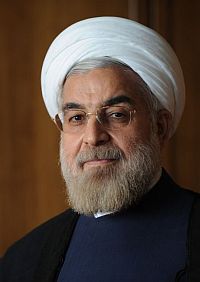
Hassan-RouhaniHassan Rouhani, the president of Iran, writes in the Washington Post: Three months ago, my platform of “prudence and hope” gained a broad, popular mandate. Iranians embraced my approach to domestic and international affairs because they saw it as long overdue. I’m committed to fulfilling my promises to my people, including my pledge to engage in constructive interaction with the world.

The world has changed. International politics is no longer a zero-sum game but a multi-dimensional arena where cooperation and competition often occur simultaneously. Gone is the age of blood feuds. World leaders are expected to lead in turning threats into opportunities.

The international community faces many challenges in this new world — terrorism, extremism, foreign military interference, drug trafficking, cybercrime and cultural encroachment — all within a framework that has emphasized hard power and the use of brute force.

We must pay attention to the complexities of the issues at hand to solve them. Enter my definition of constructive engagement. In a world where global politics is no longer a zero-sum game, it is — or should be — counterintuitive to pursue one’s interests without considering the interests of others. A constructive approach to diplomacy doesn’t mean relinquishing one’s rights. It means engaging with one’s counterparts, on the basis of equal footing and mutual respect, to address shared concerns and achieve shared objectives. In other words, win-win outcomes are not just favorable but also achievable. A zero-sum, Cold War mentality leads to everyone’s loss.

Sadly, unilateralism often continues to overshadow constructive approaches. Security is pursued at the expense of the insecurity of others, with disastrous consequences. More than a decade and two wars after 9/11, al-Qaeda and other militant extremists continue to wreak havoc. Syria, a jewel of civilization, has become the scene of heartbreaking violence, including chemical weapons attacks, which we strongly condemn. In Iraq, 10 years after the American-led invasion, dozens still lose their lives to violence every day. Afghanistan endures similar, endemic bloodshed.

The unilateral approach, which glorifies brute force and breeds violence, is clearly incapable of solving issues we all face, such as terrorism and extremism. I say all because nobody is immune to extremist-fueled violence, even though it might rage thousands of miles away. Americans woke up to this reality 12 years ago.

My approach to foreign policy seeks to resolve these issues by addressing their underlying causes. We must work together to end the unhealthy rivalries and interferences that fuel violence and drive us apart. We must also pay attention to the issue of identity as a key driver of tension in, and beyond, the Middle East.

At their core, the vicious battles in Iraq, Afghanistan and Syria are over the nature of those countries’ identities and their consequent roles in our region and the world. The centrality of identity extends to the case of our peaceful nuclear energy program. To us, mastering the atomic fuel cycle and generating nuclear power is as much about diversifying our energy resources as it is about who Iranians are as a nation, our demand for dignity and respect and our consequent place in the world. Without comprehending the role of identity, many issues we all face will remain unresolved.

I am committed to confronting our common challenges via a two-pronged approach.

First, we must join hands to constructively work toward national dialogue, whether in Syria or Bahrain. We must create an atmosphere where peoples of the region can decide their own fates. As part of this, I announce my government’s readiness to help facilitate dialogue between the Syrian government and the opposition.

Second, we must address the broader, overarching injustices and rivalries that fuel violence and tensions. A key aspect of my commitment to constructive interaction entails a sincere effort to engage with neighbors and other nations to identify and secure win-win solutions.

We and our international counterparts have spent a lot of time — perhaps too much time — discussing what we don’t want rather than what we do want. This is not unique to Iran’s international relations. In a climate where much of foreign policy is a direct function of domestic politics, focusing on what one doesn’t want is an easy way out of difficult conundrums for many world leaders. Expressing what one does want requires more courage.

After 10 years of back-and-forth, what all sides don’t want in relation to our nuclear file is clear. The same dynamic is evident in the rival approaches to Syria.

This approach can be useful for efforts to prevent cold conflicts from turning hot. But to move beyond impasses, whether in relation to Syria, my country’s nuclear program or its relations with the United States, we need to aim higher. Rather than focusing on how to prevent things from getting worse, we need to think — and talk — about how to make things better. To do that, we all need to muster the courage to start conveying what we want — clearly, concisely and sincerely — and to back it up with the political will to take necessary action. This is the essence of my approach to constructive interaction.

As I depart for New York for the opening of the U.N. General Assembly, I urge my counterparts to seize the opportunity presented by Iran’s recent election. I urge them to make the most of the mandate for prudent engagement that my people have given me and to respond genuinely to my government’s efforts to engage in constructive dialogue. Most of all, I urge them to look beyond the pines and be brave enough to tell me what they see — if not for their national interests, then for the sake of their legacies, and our children and future generations.

[Note: I am typically fastidious about including links that appear in the original publication of any article since the choice of links is just as much a matter of authorship as is the choice of words. In this case, however, I have left out the links which all point to other articles in the Washington Post. It’s possible that Rouhani particularly likes the Post’s coverage of the issues, or that he recognizes the need of the struggling paper to capitalize on the traffic his op-ed will be bringing in today. More likely, though, is that the inclusion of these links can be attributed to a bit of opportunistic “initiative” on the part of an online editor.]

Facebooktwittermail

Israel’s efforts to obstruct U.S.-Iranian diplomacy

Reuters reports: Iran is on course to develop a nuclear bomb within six months and time has run out for further negotiations, a senior Israeli minister said.

Strategic Affairs Minister Yuval Steinitz said Iran still believed it had room for maneuver in dealing with world powers, and that unless it faced a credible threat of U.S. military action, it would not stop its nuclear activities.

“There is no more time to hold negotiations,” Steinitz, who is close to Prime Minister Benjamin Netanyahu, said in an interview with the Israel Hayom daily published on Friday. [Continue reading…]

The Jerusalem Post reports: Jerusalem urged the world on Thursday not to be fooled by Iranian President Hassan Rouhani’s smiles and to intensify sanctions against the regime until he takes concrete steps toward dismantling Tehran’s nuclear program.

“One should not be taken in by Rouhani’s deceptive words,” the Prime Minister’s Office said in a statement. “The same Rouhani boasted in the past how he deceived the international community with nuclear talks, even as Iran was continuing with its nuclear program.”

The Prime Minister’s Office comments followed the Iranian president’s two-part interview with NBC on Wednesday and Thursday that aired just before he is to fly to the US and address the UN General Assembly.

Rouhani said Iran was not seeking war, and slammed Israel for bringing “instability” to the Middle East and for questioning his government’s intentions toward nuclear arms.

He called Israel “an occupier, a usurper government that does injustice to the people of the region,” and said it “has brought instability to the region with its war-mongering policies.” [Continue reading…]

Facebooktwittermail

Israel’s spies inside Damascus

The Israeli journalist, Ronen Bergman, who covers military and intelligence affairs for Yedioth Ahronoth, provides an Israeli-sourced history of Israel’s decades long surveillance and sabotage of Syria’s WMD programs.

In the mid-1990s, Syria succeeded in the manufacture of the most toxic chemical agent, VX. This agent is so hazardous that it consists of two separate substances that are kept apart inside a missile warhead and combine only when the warhead hits the ground, creating an extremely lethal neurotoxic agent. Unlike other chemical warfare elements, VX does not disperse in a short time. The know-how for the manufacture of this weapon was supplied by Russian President Boris Yeltsin’s advisor on chemical weapons disarmament, Gen. Anatoly Kuntsevich.

Under the guise of a routine working visit to Syria, and as part of the good military relations that had remained between Syria and Russia (with the Russians still maintaining intelligence bases in the Golan Heights and in northern Syria), Kuntsevich began forming personal links with the heads of the Syrian regime. He received huge amounts of money from them, and in turn, he supplied them with the know-how and some of the equipment, which he acquired in Europe, for the manufacture of VX weapons.

In 1998, the Mossad learned details of some of these transactions. Israeli Prime Minister Ehud Barak tried to warn the heads of the government in Moscow about the general’s doings in meetings he held with them in 1999, but to no avail. It seemed as though Yeltsin could not, or would not, intervene. When the Israelis saw that their pressure was not working, Mossad agents in Europe were assigned to pose as independent researchers working on the background for a documentary film on gas warfare. They repeatedly contacted high-ranking officials in the Kremlin and the Russian army and said that according to their information, Kuntsevich was selling chemical warfare agents to Syria. The goal was to scare Moscow into believing that the information was about to be made public. Unfortunately, this didn’t work either, and apart from a stern warning, nothing was done to curb the general.

On April 3, 2002, Kuntsevich died mysteriously while on a flight from Damascus to Moscow. Also mysterious is the inscription on his headstone in Moscow, which states his death date as March 29. Syrian intelligence is convinced that the Mossad was behind his demise. Israeli officials have not commented on such allegations.

Historically, Israel has devoted many resources to keeping a watch on the Scientific Studies and Research Center, the main Syrian agency in charge of the effort to produce chemical and biological weapons. The SSRC was identified by U.S. intelligence as the front organization for the Syrian defense establishment, and the U.S. Treasury Department consequently imposed financial sanctions.

With over 10,000 personnel, the SSRC is responsible for operating the main facilities in Syria where chemical weapons are manufactured and stored, according to Israeli military intelligence estimates. The main site is at al-Safir, in northern Syria, where the chemical weapons are assembled and stored and some of the Scud missiles and launchers are kept.

Al-Safir was one of the prime targets for the possible American attack proposed in late August. Now that such an attack has been called off, it will be a site of enormous interest to international weapons inspectors. Al-Safir is an enormous facility, covering dozens of square kilometers and comprising several sections, surrounded by patrol roads and high double fences.

On July 25, 2007, at al-Safir, a horrendous breakdown occurred in the production line of VX warhead components, a line that was constructed by the Syrians and North Koreans. One of the pipes feeding substances to the assembly line burst, and within seconds the entire line became a blazing inferno. The blast was so powerful that doors were blown off the building and the noxious gases escaped and spread across the entire al-Safir facility. The initial explosion killed 15 Syrians and, according to reports reaching the Mossad, 10 Iranian engineers at the site. An unknown number of people were seriously wounded, and some 200 are believed to have been affected. The rescue and first-aid forces permanently stationed at al-Safir were unable to handle all the casualties, and the authorities had to call in outside firefighting and rescue services, violating their goal of maintaining maximum secrecy at the site.

Investigations carried out after the incident by a special team appointed by the Syrian president reached the unequivocal conclusion that this was an intentional act of sabotage, though to this day footprints leading to the perpetrators have not been traced. A senior Israeli cabinet minister speaking with me under terms of not identifying him would not refer directly to the al-Safir explosion, but would only say with a wink and a nod that it was “a marvelous mishap.” [Continue reading…]

Facebooktwittermail

The challenge of chemical weapons disarmament in Syria

Amy Smithson writes: On September 14, 2013, the Chemical Weapons Convention, which bans the development, production, storage, and use of poison gas, welcomed its 190th member. The milestone shows just how far the world has come on chemical weapons.

To appreciate the change, it is worth remembering that, throughout the 1980–88 Iran-Iraq War, Saddam Hussein’s regime used poison gas repeatedly, including to slaughter thousands of civilians in an attack on the Kurdish town of Halabja in March 1988. Beyond a few rhetorical complaints, the world turned a blind eye. This time around, within a month of poison-tipped rockets falling on a Damascus suburb and killing 1,400 civilians, U.S. Secretary of State John Kerry and Russian Foreign Minister Sergey Lavrov announced a joint framework for chemical disarmament in Syria and Damascus acceded to the Chemical Weapons Convention. In short, the outcry and action after the August 21 attacks indicate that 2013 is not 1988.

The U.S.-Russian agreement is an important first step, but many make-or-break moments remain. As Kerry introduced the deal, he announced that the United States and Russia had agreed that Syria’s chemical stockpile comprises roughly 1,000 metric tons of the blister agent mustard gas, the nerve agent sarin, and the precursor chemicals used to make other agents. He voiced Washington’s belief that the chemicals weapons program involves 45 sites, indicating a large array of deployment locations and to several research, development, production, and storage sites. (The Russian delegation was silent on this particular matter.) Compared with the massive 32,000-metric-ton and 40,000-metric-ton arsenals that the United States and the Soviet Union produced during the Cold War, Syria’s is rather small. Still, its dispersal across a country embroiled in conflict will make disarmament tremendously challenging.

The U.S.-Russian framework is premised on a highly compressed version of the Chemical Weapons Convention’s timelines for the declaration and destruction of weapons, as well as on an adjusted version of the treaty’s inspection procedures for declared sites. The convention’s inspectorate in The Hague, called the Organization for the Prohibition of Chemical Weapons (OPCW), will carry out the bulk of the work. A close examination of where this effort will break with precedent shows just how challenging carrying out this plan will be.

First, when it comes to chemical weapons nonproliferation, things usually move at a snail’s pace. The convention itself took 24 years to negotiate, and decisions often languish in the convention’s governing body, the OPCW’s executive council. Destruction plans have historically taken many months to draft and approve, and destruction facilities take years to construct, given the need to build in safeguards against accidents during the process, which often mates explosives and propellants with deadly chemical warfare agents. The U.S.-Russian framework stipulates complete destruction of Syria’s chemical weapons by mid-2014 — a tall order indeed. [Continue reading…]

Facebooktwittermail

Another of Assad’s useful idiots: Cynthia McKinney praises Syria’s ‘free health care’

The Lede: Writing on Facebook from Damascus, Cynthia McKinney, a former Democratic Congresswoman from Georgia, praised Syria for its “free health care.”

Ms. McKinney, a liberal activist who traveled to the Syrian capital as part of a delegation led by former Attorney General Ramsey Clark, posted the update late Wednesday, after meeting with President Bashar al-Assad. In addition to Assadcare, she noted, Syrians living under the Baathist dynasty also “enjoy free education.”

She concluded her brief report with kind words for Ogarit Dandash, a young Assad supporter who had offered herself as a human shield to defend Syrian government military installations from American air strikes. As Ms. McKinney explained, Ms. Dandash “founded ‘Over Our Dead Bodies,’ a group of young people who climbed atop Mount Qasioun and dared U.S. bombs to target them. They are still there in defiant resistance to any war against Syria. Mount Qasioun should be the site of a peace party, not bombing strikes.”

Facebooktwittermail

Edward Snowden has started a global debate. So why the silence in Britain?

Simon Jenkins writes: The Brazilian president cancels a state visit to Washington. The German justice minister talks of “a Hollywood nightmare“. His chancellor, Angela Merkel, ponders offering Edward Snowden asylum. The EU may even end the “safe harbour” directive which would force US-based computer servers to relocate to European regulation. Russians and Chinese, so often accused of cyber-espionage, hop with glee.

In response, an embarrassed Barack Obama pleads for debate and a review of the Patriot Acts. Al Gore refers to the Snowden revelations as “obscenely outrageous“. The rightwing John McCain declares a review “entirely appropriate“. The Senate holds public hearings and summons security chiefs, who squirm like mafia bosses on the run. America’s once dominant internet giants, with 80% of the globe under their sway, now face “Balkanised” regulation round the world as nation states seek to repatriate digital sovereignty.

And in Britain? Nothing. From parliament, the courts, and most of the media, nothing. Snowden, the most significant whistleblower of modern times, briefly amused London when he turned scarlet pimpernel in the summer; then the capital was intrigued when David Miranda was seized by Heathrow police on bogus “terrorism” charges. But the British establishment cannot get excited. It hates whistleblowers, regarding them as not proper chaps. [Continue reading…]

Facebooktwittermail

Iran’s leaders signal effort at new thaw

The New York Times reports: A series of good-will gestures and hints of new diplomatic flexibility from Iran’s ruling establishment was capped on Wednesday by the highest-level statement yet that the country’s new leaders are pushing for a compromise in negotiations over their disputed nuclear program.

In a near staccato burst of pronouncements, statements and speeches by the new president, Hassan Rouhani; his foreign minister, Mohammad Javad Zarif; and even the supreme leader, Ayatollah Ali Khamenei, the leadership has sent Rosh Hashana greetings to Jews worldwide via Twitter, released political prisoners, exchanged letters with President Obama, praised “flexibility” in negotiations and transferred responsibility for nuclear negotiations from the conservatives in the military to the Foreign Ministry.

“They’re putting stuff out faster than the naysayers can keep up,” said Gary Sick, an Iran expert with Columbia University. “They dominate the airwaves.”

Mr. Rouhani, preparing for a trip to New York next week for the annual gathering of the United Nations, kept up the dizzying pace on Wednesday in an interview with NBC News in which he declared that Iran would never “seek weapons of mass destruction, including nuclear weapons” and that he had “full power and complete authority” to make a nuclear deal with the West.

There is plenty of skepticism in the West over the new tone emanating from Tehran, and Iran veterans have seen previous thaws in the diplomatic climate disappear seemingly overnight. Mr. Obama has spoken of testing Mr. Rouhani’s seriousness.

But Iran experts, citing the apparent end to Iran’s ideological taboo against direct talks with the United States as well as the apparent concurrence of the supreme leader, say that this new moderation seems different. [Continue reading…]

Facebooktwittermail

Let’s be honest about Israel’s nukes

Victor Gilinsky and Henry D. Sokolski write: The recent agreement between the United States and Russia on Syria’s chemical weapons made clear what should have been obvious long ago: President Obama’s effort to uphold international norms against weapons of mass destruction in the Middle East will entangle the United States in a diplomatic and strategic maze that is about much more than Syria’s chemical arsenal.

President Bashar al-Assad of Syria insists that the purpose of his chemical arsenal was always to deter Israel’s nuclear weapons. If Syria actually disarms, what about Egypt and Israel? Egypt (about whose chemical weapons the United States has been strangely silent) points to Israel. And Israel of course has its own chemical weapons to deter Syria’s and Egypt’s, and it is not about to give them up. A headline in the Israeli daily Haaretz a few days ago stated: “Israel adamant it won’t ratify chemical arms treaty before hostile neighbors.”

These three countries have not adhered to the Biological Weapons Convention either. And Israel is not a member of the Nuclear Nonproliferation Treaty, despite having developed a formidable nuclear arsenal of its own, which will soon become the central fact in this drama, whether the United States likes it or not.

An obstacle of America’s own making has long prevented comprehensive negotiations over weapons of mass destruction in the Middle East. While the world endlessly discusses Iran’s nuclear capabilities and the likelihood that it will succeed in developing an atomic arsenal, hardly anyone in the United States ever mentions Israel’s nuclear weapons.

Mr. Obama, like his predecessors, pretends that he doesn’t know anything about them. This taboo impedes discussions within Washington and internationally. It has kept America from pressing Egypt and Syria to ratify the chemical and biological weapons conventions. Doing so would have brought immediate objections about American acceptance of Israel’s nuclear weapons. [Continue reading…]

Facebooktwittermail