
Daily Archives: September 21, 2009

Iranians favor diplomatic relations with US but have little trust in Obama

Iranians favor diplomatic relations with US but have little trust in Obama

A new WorldPublicOpinion.org poll of Iranians finds that six in 10 favor restoration of diplomatic relations between their country and the United States, a stance that is directly at odds with the position the Iranian government has held for three decades. A similar number favor direct talks.
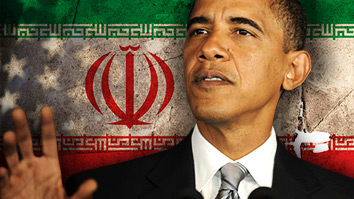
However, Iranians do not appear to share the international infatuation with Barack Obama. Only 16 percent say that have confidence in him to do the right thing in world affairs. This is lower than any of the 20 countries polled by WPO on this question in the spring. Despite his recent speech in Cairo, where Obama stressed that he respects Islam, only a quarter of Iranians are convinced he does. And three in four (77%) continue to have an unfavorable view of the United States government.

“While the majority of Iranian people are ready to do business with Obama, they show little trust in him,” says Steven Kull, director of WPO. [continued…]

Editor’s Comment — Some of the other poll numbers are striking and indicate how little progress Obama has made in his efforts at public diplomacy aimed at the Middle East.

75% of the Iranians polled believe that the US definitely or probably has the goal of imposing American culture on Muslim society.

81% believe that the US definitely or probably has the goal of weakening and dividing the Islamic world.

85% believe that in the way the US behaves towards the Iranian government it abuses its great power to make Iran do what the US wants.

That last number is one that the US and its allies should keep clearly in mind when they sit down for talks with Iran’s leaders in Istanbul on October 1. The Iranians cannot afford to look like they are getting pushed around and this no doubt explains the source of much of what the West perceives as belligerence.

IAF chief: We must stop S-300 delivery

Israel needs to make every effort to stop the S-300 missile defense system from reaching countries where the air force may need to fly, IAF commander Maj.-Gen. Ido Nehushtan has told The Jerusalem Post in an exclusive interview.

“The S-300 is a Russian-made surface-to-air missile system that is very advanced, with long ranges and many capabilities,” Nehushtan told the Post in the interview, which appears in our Friday Magazine.

“We need to make every effort to stop this system from getting to places where the IAF needs to operate or may need to operate in the future,” he said.

The S-300 is one of the most advanced multi-target antiaircraft missile systems in the world and has a reported ability to track up to 100 targets simultaneously while engaging up to 12 at the same time. It has a range of about 200 km. and can hit targets at altitudes of 90,000 feet.

While Russia and Iran signed a deal for the sale of the system several years ago, according to latest assessments in Israel, it has yet to be delivered. [continued…]

The Grand Ayatollah unleashes his wrath

Small, frail and in his 80s, he looks no match for Iran’s tough regime. But Grand Ayatollah Hossein Ali Montazeri is made of steel. He wields considerable moral authority as the country’s highest-ranking and most fearless dissident cleric, representing a potent challenge to hardline authorities who have tried and failed to silence him for two decades.

He was once Ayatollah Khomeini’s designated successor but was unceremoniously cast aside by the founder of the Islamic Republic, just months before his death in 1989, because the Grand Ayatollah had criticised human rights abuses by the regime. Since then, despite official harassment of his aides and a six-year period of house arrest, Grand Ayatollah Montazeri has remained the outspoken conscience of Iran’s religious community, an advocate of democratic pluralism and foreign policy moderation.

“Montazeri has refused to go away and is today more vocal and explicit in his criticism than ever,” said Anoush Ehteshami, an Iran expert and professor of international relations at Durham University in England. “If anything, his claim that he stands for freedoms and justice are even more important today,” Prof Ehteshami said in an interview. [continued…]

Iran’s Ayatollah Khamenei says opposition protests failed

Supreme leader Ayatollah Ali Khamenei attempted to unify Iranians on Sunday by blaming foreign media for “poisoning the atmosphere” and urged his nation to resist the “killer cancer” of an Israel backed by Western powers.

Delivering a sermon at Tehran University before a crowd that included President Mahmoud Ahmadinejad and opposition cleric Ayatollah Ali Akbar Hashemi Rafsanjani, Khamenei said the West had failed in its attempts to undermine the government with large opposition protests during countrywide anti-Israel rallies Friday.

“It showed that their [Western politicians’] tricks, spending money and political evilness do not influence the Iranian nation,” said Khamenei, who was greeted with chants of “Leader, we offer our blood to you.” [continued…]


Facebooktwittermail

McChrystal: more forces or ‘mission failure’

McChrystal: more forces or ‘mission failure’

The top U.S. and NATO commander in Afghanistan warns in an urgent, confidential assessment of the war that he needs more forces within the next year and bluntly states that without them, the eight-year conflict “will likely result in failure,” according to a copy of the 66-page document obtained by The Washington Post.

Gen. Stanley A. McChrystal says emphatically: “Failure to gain the initiative and reverse insurgent momentum in the near-term (next 12 months) — while Afghan security capacity matures — risks an outcome where defeating the insurgency is no longer possible.”

His assessment was sent to Defense Secretary Robert M. Gates on Aug. 30 and is now being reviewed by President Obama and his national security team.

McChrystal concludes the document’s five-page Commander’s Summary on a note of muted optimism: “While the situation is serious, success is still achievable.”

But he repeatedly warns that without more forces and the rapid implementation of a genuine counterinsurgency strategy, defeat is likely. McChrystal describes an Afghan government riddled with corruption and an international force undermined by tactics that alienate civilians. [continued…]

Changes have Obama rethinking war strategy

From his headquarters in Kabul, Gen. Stanley A. McChrystal sees one clear path to achieve President Obama’s core goal of preventing al-Qaeda from reestablishing havens in Afghanistan: “Success,” he writes in his assessment, “demands a comprehensive counterinsurgency campaign.”

Inside the White House, the way forward in Afghanistan is no longer so clear.

Although Obama endorsed a strategy document in March that called for “executing and resourcing an integrated civilian-military counterinsurgency strategy,” there have been significant changes in Afghanistan and Washington since then. A disputed presidential election, an erosion in support for the war effort among Democrats in Congress and the American public, and a sharp increase in U.S. casualties have prompted the president and his top advisers to reexamine their assumptions about the U.S. role in defeating the Taliban insurgency.

Instead of debating whether to give McChrystal, the top U.S. commander in Afghanistan, more troops, the discussion in the White House is now focused on whether, after eight years of war, the United States should vastly expand counterinsurgency efforts along the lines he has proposed — which involve an intensive program to improve security and governance in key population centers — or whether it should begin shifting its approach away from such initiatives and simply target leaders of terrorist groups who try to return to Afghanistan. [continued…]

Meet the Afghan Army

The big Afghanistan debate in Washington is not over whether more troops are needed, but just who they should be: Americans or Afghans — Us or Them. Having just spent time in Afghanistan seeing how things stand, I wouldn’t bet on Them.

Frankly, I wouldn’t bet on Us either. In eight years, American troops have worn out their welcome. Their very presence now incites opposition, but that’s another story. It’s Them — the Afghans — I want to talk about.

Afghans are Afghans. They have their own history, their own culture, their own habitual ways of thinking and behaving, all complicated by a modern experience of decades of war, displacement, abject poverty, and incessant meddling by foreign governments near and far — of which the United States has been the most powerful and persistent. Afghans do not think or act like Americans. Yet Americans in power refuse to grasp that inconvenient point. [continued…]

Afghan election woes raise Taliban’s stock

The big winner in the fraud-ridden, never-ending Afghanistan elections is turning out to be a party not even on the ballot: the Taliban.

A stream of revelations about systematic cheating during last month’s vote has given the Taliban fresh ammunition in their propaganda campaign to portray President Hamid Karzai’s administration as hopelessly corrupt. Infighting among U.S., U.N. and European diplomats over whether to accept the results with Karzai the winner or force a new round of voting has also fed the Taliban line that the government in Kabul is merely a puppet of foreign powers.

Mohammad Omar, the Taliban’s reclusive leader, broke his silence Saturday to denounce “the so-called elections which were fraught with fraud and lies and which were categorically rejected by the people.”

In a statement released on the Internet to mark the end of Ramadan, Omar also railed against what he called “the rampant corruption in the surrogate Kabul administration, the embezzlement, drug trafficking, the existence of mafia networks, the tyranny and high-handedness of the warlords,” according to a translation by the NEFA Foundation, a terrorism research group. [continued…]

Facebooktwittermail

War crimes and denial

War crimes and denial

Is there no limit to the wiles of those dastardly anti-Semites?

Now they have decided to slander the Jews with another blood libel. Not the old accusation of slaughtering Christian children to use their blood for baking Passover matzoth, as in the past, but of the mass slaughter of women and children in Gaza.

And who did they put at the head of the commission which was charged with this task? Neither a British Holocaust-denier nor a German neo-Nazi, nor even an Iranian fanatic, but of all people a Jewish judge who bears the very Jewish name of Goldstone (originally Goldstein, of course). And not just a Jew with a Jewish name, but a Zionist, whose daughter, Nicole, is an enthusiastic Zionist who once “made Aliyah” and speaks fluent Hebrew. And not just a Jewish Zionist, but a South African who opposed apartheid and was appointed to the country’s Constitutional Court when that system was abolished.

All this in order to defame the most moral army in the world, fresh from waging the most just war in history! [continued…]

Facebooktwittermail

Europeans say U.S. lacks will on climate

Europeans say U.S. lacks will on climate

As world leaders gather in New York for the highest-level conference yet on climate change, European leaders are expressing growing unease about the United States’ stance in international talks aimed at reaching a global agreement in Copenhagen in December.

Officials of several European countries have cited what they see as a lack of political will on the part of the United States to adequately address climate change. The American reluctance to accept any agreement that would require legally binding and internationally enforceable targets for reductions in greenhouse gas emissions could doom the Copenhagen session, they said.

Ahead of this week’s climate talks at the United Nations, the Europeans also expressed little hope that the United States Senate would act on a climate bill before the Copenhagen talks begin. They said the lack of domestic consensus sows doubt about whether the United States can keep any pledges it makes at Copenhagen, either on the level of reductions in global warming emissions or on financial commitments to help developing nations adapt to a changing climate. [continued…]

Facebooktwittermail