Daily Archives: November 17, 2009

Imagine living in the West Bank…

Imagine living in the West Bank…

For most Israelis, the occupied West Bank — now mostly concealed behind a barrier far more imposing than the Berlin Wall — could be a million miles away. Even so, thousands really do know what it’s like. They have firsthand experience of the conditions imposed on ordinary Palestinians — they know because during their military service they had a direct role in imposing those conditions.

For the rest of us, beyond hearing testimony, seeing photographs and film, it is really only through an act of imagination that we can transport ourselves there and attempt to understand what it means to be living under military occupation.

The following film was created as a tool to help those of us who take freedom of movement for granted, to have a sense of what it means when that freedom is taken away.

Facebooktwittermail

Obama’s Afghan dilemma: missing security forces

Obama’s Afghan dilemma: missing security forces

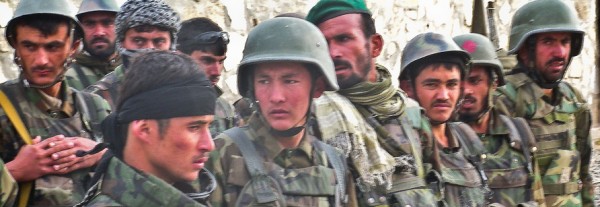
The simple answer to the Administration’s dilemma, in the minds of many in Washington, is to train and equip Afghans to do the job themselves. Obama reportedly rejected all four options offered by his national-security staff on Nov. 11 — ranging from a relatively light increase of some 10,000 troops, mostly for training purposes, to the 40,000 reinforcements requested by McChrystal to wage a counterinsurgency fight — because they failed to make clear how and when responsibility for the war would be transferred to Afghan forces. By doing so, Obama may have pointed to the elephant in the room. On present indications, the Afghan forces are unlikely anytime in the near future to be ready and willing to take over the fight against the Taliban.

The Afghan National Army (ANA) comprises some 94,000 troops, although even by the official numbers, only half of those are combat-ready. The reality of the recent U.S. and British operations in Helmand province, however, suggests that a lot fewer may be capable of being deployed to fight effectively alongside NATO forces, much less on their own. The desertion rate of troops trained in the ANA stands at 20% — and is reportedly even higher among forces deployed in combat. Afghan field officers are in short supply, and the top echelon of the officer corps is dominated by ethnic Tajiks who are often viewed with suspicion by Pashtuns, the country’s largest ethnic group and the one in which the Taliban is based. And the recent killing of five British soldiers by an Afghan policeman they had been mentoring, who then ran off to join the Taliban, highlights the risk of infiltration in efforts to expand the Afghan security forces.

The Karzai government’s poor standing among the Afghan people is generally acknowledged as a problem in that not many Afghans are going to be willing to risk their lives to defend it. [continued…]

Anatomy of an Afghan culture of corruption

Every morning, dozens of trucks laden with diesel from Turkmenistan lumber out of the northern Afghan border town of Hairaton on a two-day trek across the Hindu Kush down to Afghanistan’s capital, Kabul. Among the dozens of businesses dispatching these trucks are two extremely well connected companies — Ghazanfar and Zahid Walid — that helped to swell the election coffers of President Hamid Karzai as well as the family business of his running mate, the country’s new vice president, warlord Mohammed Qasim Fahim.

Some of the trucks are on their way to two power stations in the northern part of the capital: a recently refurbished, if inefficient, plant that has served Kabul for a little more than a quarter of a century, and a brand new facility scheduled for completion next year and built with money from the U.S. Agency for International Development (USAID).

Afghan political analysts observe that Ghazanfar and Zahid Walid are striking examples of the multimillion-dollar business conglomerates, financed by American as well as Afghan tax dollars and connected to powerful political figures, that have, since the fall of the Taliban in 2001, emerged as part of a pervasive culture of corruption here. Nasrullah Stanikzai, a professor of law and political science at Kabul University, says of the companies in the pocket of the vice-president: “Everybody knows who is Ghazanfar. Everybody knows who is Zahid Walid. The [government elite] directly or indirectly have companies, licenses, and sign contracts. But corruption is not confined just to the Afghans. The international community bears a share of this blame.” [continued…]

Taliban make gains in Afghanistan’s forgotten north

The insurgents’ tactics are familiar. Night letters warn village elders to cooperate or face death. Religious “taxes” must be paid, and fiery sermons in mosques attack the Karzai government and international forces.

The locale is startling, however: Afghanistan’s northern Balkh province, which in the years after the fall of the Taliban emerged as one of the most stable – and in its urban hub of Mazar-i-Sharif – most prosperous places in Afghanistan. [continued…]

The big impact of small footprint

A growing number of people, led by Vice President Joe Biden, are advocating a so-called “small footprint” approach to the U.S. military mission in Afghanistan. They propose a significantly reduced military presence that focuses more on destroying al Qaeda than on building Afghanistan, and relies more on airstrikes and special forces than on conventional tactics. America will get about as much security as before, the argument goes, but at a much lower price. A return of the Taliban to power is not necessarily a problem, small footprint proponents argue, because the regime can be deterred from hosting al Qaeda by the threat of U.S. airstrikes or another invasion.

One of the many assumptions behind this tempting argument is that there is a certain level of proportionality between the amount of force we use and the level of resistance we encounter. If we stop occupying Afghanistan and limit violence to the really bad guys, al Qaeda will be unable, and other radicalized Muslims unwilling, to attack the United States.

This may be true for local insurgencies such as the Taliban, but not for small transnational movements such as al Qaeda. In fact, a significantly smaller U.S. presence in Afghanistan may paradoxically generate more anti-Americanism outside Afghanistan and ultimately more anti-Western terrorism than a more conventional military approach. This is because jihadi propaganda today relies on visually powerful symbols to mobilize people, and intermittent “surgical” strikes, and the casualties they cause, may create more such symbols than continuous conventional warfare. [continued…]

Editor’s Comment — Among the administration’s many considerations in revising its Afghan strategy, the one that has nothing to do with the internal logic of “success” or “failure” is the one the ultimately probably concerns Americans more than any other: how much this war is costing.

Upon learning that 25% of American children are now struggling to get enough to eat, President Obama is reported to have found that number “unsettling”. But knowing that the US government is spending a million dollars a year for every single soldier it sends to Afghanistan, Obama should be more than unsettled by the spectacle of poverty in this country. He should realize that his administration currently has its priorities upside down.

Facebooktwittermail

Renouncing Islamism: To the brink and back again

Renouncing Islamism: To the brink and back again

As the summer arrives and London begins to swelter, I sit with most of the “out” ex-jihadis in a slew of Starbucks across the city. We sip iced lattes and discuss how, not long ago, they tried to destroy Western civilisation.

They have different backgrounds: one is a Yorkshire girl with Hindu parents, another is a Northern boy whose father was a Conservative ultra-Thatcherite. Yet they are startlingly similar: they have all retained the humourless intensity of their pasts. And when they describe their Islamist former selves, they are distant and cold, as if describing a rather unpleasant acquaintance they did not entirely understand.

They wreath their stories in clouds of pointless detail: they talk for hours about the intricacies of seventh-century Meccan society, or the fine distinctions in the hierarchy of HT, willing you to understand it. It’s a way of avoiding answering the hardest question – why? But from their scattered stories, I can trace something that seems genuinely new: an ex-jihadi way of looking at the world, that carries lessons about how to stop Western Muslims sinking into jihadism.

As children and teenagers, the ex-jihadis felt Britain was a valueless vacuum, where they were floating free of any identity.

Ed Husain, a former leader of HT, says: “On a basic level, we didn’t know who we were. People need a sense of feeling part of a group – but who was our group?” They were lost in liberalism, beached between two unreachable identities – their parents’, and their country’s. They knew nothing of Pakistan or Saudi Arabia or the other places they were constantly told to “go home” to by racists.

Yet they felt equally shut out of British or democratic identity. From the right, there was the brutal nativist cry of “Go back where you came from!” But from the left, there was its mirror-image: a gooey multicultural sense that immigrants didn’t want liberal democratic values and should be exempted from them. Again and again, they described how at school they were treated as “the funny foreign child”, and told to “explain their customs” to the class. It patronised them into alienation.

“Nobody ever said – you’re equal to us, you’re one of us, and we’ll hold you to the same standards,” says Husain. “Nobody had the courage to stand up for liberal democracy without qualms. When people like us at [Newham] College were holding events against women and against gay people, where were our college principals and teachers, challenging us?”

Without an identity, they created their own. It was fierce and pure and violent, and it admitted no doubt.

To my surprise, the ex-jihadis said their rage about Western foreign policy – which was real, and burning – emerged only after their identity crises, and as a result of it. They identified with the story of oppressed Muslims abroad because it seemed to mirror the oppressive disorientation they felt in their own minds. Usman Raja, a bluff, buff boxer who begged to become a suicide bomber in the mid-1990s, tells me: “Your inner life is chaotic and you feel under threat the whole time. And then you’re told by Islamists that life for Muslims everywhere is chaotic and under threat. It becomes bigger than you. It’s about the world – and that’s an amazing relief. The answer isn’t inside your confused self. It’s out there in the world.”

But once they had made that leap to identify with the Umma – the global Muslim community – they got angrier the more abusive our foreign policy came. Every one of them said the Bush administration’s response to 9/11 – from Guantanamo to Iraq – made jihadism seem more like an accurate description of the world. Hadiya Masieh, a tiny female former HT organiser, tells me: “You’d see Bush on the television building torture camps and bombing Muslims and you think – anything is justified to stop this. What are we meant to do, just stand still and let him cut our throats?”

But the converse was – they stressed – also true. When they saw ordinary Westerners trying to uphold human rights, their jihadism began to stutter. Almost all of them said that they doubted their Islamism when they saw a million non-Muslims march in London to oppose the Iraq War: “How could we demonise people who obviously opposed aggression against Muslims?” asks Hadiya.

Britain’s foreign policy also helped tug them towards Islamism in another way. Once these teenagers decided to go looking for a harder, tougher Islamist identity, they found a well-oiled state machine waiting to feed it. Usman Raja says: “Saudi literature is everywhere in Britain, and it’s free. When I started exploring my Muslim identity, when I was looking for something more, all the books were Saudi. In the bookshops, in the libraries. All of them. Back when I was fighting, I could go and get a car, open the boot up, and get it filled up with free literature from the Saudis, saying exactly what I believed. Who can compete with that?”

He says the Saudi message is particularly comforting to disorientated young Muslims in the West. “It tells you – you’re in this state of sin. But the sin doesn’t belong to you, it’s not your fault – it’s Western society’s fault. It isn’t your fault that you’re sinning, because the girl had the miniskirt on. It wasn’t you. It’s not your fault that you’re drug dealing. The music, your peers, the people around you – it’s their fault.”

Just as their journeys into the jihad were strikingly similar, so were their journeys out. All of them said doubt began to seep in because they couldn’t shake certain basic realities from their minds. The first and plainest was that ordinary Westerners were not the evil, Muslim-hating cardboard kaffir presented by the Wahabis. Usman, for one, finally stopped wanting to be a suicide bomber because of the kindness of an old white man.

Usman’s mother had moved in next door to an elderly man called Tony, who was known in the neighbourhood as a spiteful, nasty grump. One day, Usman was teaching his little brother to box in the garden when he noticed the old man watching him from across the fence. “I used to box when I was in the Navy,” he said. He started to give them tips and before long, he was building a boxing ring in their shed.

Tony died not long before 9/11, and Usman was sent to help clear out his belongings. In Tony’s closet, he found a present wrapped and ready for his little brother’s birthday: a pair of boxing gloves. “And I thought – that is humanity right there. That’s an aspect of the divine that’s in every human being. How can I want to kill people like him? How can I call him kaffir?”

Many of the ex-Islamists discovered they couldn’t ignore the fact that whenever Islamists won a military victory, they didn’t build a paradise, but hell.

At the same time, they began to balk at the mechanistic nature of Wahabism. Usman says he had become a “papier-mâché Muslim”, defining his faith entirely by his actions, while being empty inside. “Wahabis are great at painting themselves [an Islamic] green on the outside, but when it comes to that internal aspect, it’s not there. You pray five times a day, but why? Because God’s told you to pray five times a day. You pay your charity – why? Because God’s told you to pay your charity. This God of yours is telling you a lot. And why does he tell you to do that? Because if you don’t do it, you’ll end up in a fire. It’s all based on being frightened. There’s nothing to nourish you.”

They had to go looking for other Islams – and often they found it in the more mystical school of the Sufis. “Wahabi Islam is totally sensory: eye for an eye, tooth for a tooth,” Usman says. “It lays out a strict set of rules to be followed here on earth, every moment of the day. Sufi Islam teaches instead that the realm of Allah is wholly separate and spiritual and nothing to do with the shadow-play of mere mortals. It is accessible only through a sense of mystery and transcendence.” In this new Sufi Islam, Usman found something he had never known before: a sense of calm.

Ed Husain insists: “There are a lot of Muslims who agree with us. A lot. But they’re frightened. They see what’s happened to us – the hassle, the slander, the death threats – and they think: it’s not worth it. But you know what? When I first spoke out, I was alone. I had no idea that, a year on, there would be this number of people speaking out, and many more who are just offering resources and support. Once a truth is spoken, it takes on its own life.” [continued…]

Post-jihadism and the inevitability of democratization

Major ‘Abbud al-Zumur, the former military intelligence officer who served on the governing bodies of both the Jihad organization and al-Gama‘a al-Islammiyya (Islamic Group – IG) in Egypt, published a book entitled The Third Alternative: Between Authoritarianism and Surrender in August 2009. In the book, which analyzes the causes of violent radicalism and prescribes ways of ending political violence within Arab- and Muslim-majority states, al-Zumur strongly argues for the necessity of electoral participation as well as for alliances with the ideological “other.”

The book is the latest development in what can be called a second wave of modern Islamist de-radicalization. The leadership of the Muslim Brotherhood began the first wave by authoring Preachers not Judges in 1969, during an attempt to dismantle the Brotherhood’s armed wing and de-legitimize takfiri ideology (which can legitimize violence against nonbelievers, including Muslims who are deemed apostates). The IG began the second wave in July 1997, and in recent years has produced some 25 books to de-legitimate violence against the state. Those ideological revisions were followed by similar ones from various organizations including al-Jihad, the Libyan Islamic Fighting Group (LIFG), and several other Islamist leading figures in the Arab-majority countries. [continued…]

Facebooktwittermail

Officials: Major Hasan sought ‘war crimes’ prosecution of U.S. soldiers

Officials: Major Hasan sought ‘war crimes’ prosecution of U.S. soldiers

Major Nidal Malik Hasan’s military superiors repeatedly ignored or rebuffed his efforts to open criminal prosecutions of soldiers he claimed had confessed to “war crimes” during psychiatric counseling, according to investigative reports circulated among federal law enforcement officials.

On Nov. 4, the day after his last attempt to raise the issue, he took extra target practice at Stan’s shooting range in nearby Florence, Texas and then closed a safe deposit box he had at a Bank of America branch in Killeen, according to the reports. A bank employee told investigators Hasan appeared nervous and said, “You’ll never see me again.”

Diane Wagner, Bank of America’s senior vice president of media relations, said that her company does not “comment or discuss customer relationships” but is “cooperating fully with law enforcement officials.”

Investigators believe Hasan’s frustration over the failure of the Army to pursue what he regarded as criminal acts by U.S. soldiers in Iraq and Afghanistan may have helped to trigger the shootings. [continued…]

Editor’s Comment — At this point, were it not for one fact, the verdict in the court of public opinion would already be in: Hasan snapped. Had he been a non-Muslim psychiatrist and expressed the same concerns, the assumption that would now widely be made would be that under the stress of feeling like his concerns were being ignored, he became unhinged. But instead, the single most important fact in this case remains in many people’s minds, the fact that Hasan was a Muslim.

Camp Lejeune whistle-blower fired

Last April, two Marines at Camp Lejeune predicted to a psychiatrist that some Marine back from war was going to “lose it.” Concerned, the psychiatrist asked what that meant. One of the Marines responded, “One of these guys is liable to come back with a loaded weapon and open fire.”

They weren’t talking about Marines suffering from a tangle of mental and religious angst, like news reports suggest haunted the alleged Fort Hood shooter, Maj. Nidal Malik Hasan. The risk they reported at Camp Lejeune was broader and systemic. Upon returning home, troops suffering mental health problems were getting dumped into an overwhelmed healthcare system that responded ineptly to their crises, the men reported, and they also faced harassment from Marine Corps superiors ignorant of the severity of their problems and disdainful of those who sought psychiatric help.

As Dr. Kernan Manion investigated the two Marines’ claims about conditions at the North Carolina military base, the largest Marine base on the East Coast, he found they were true. Manion, a psychiatrist hired last January to treat Marines coming home from war with acute mental problems, warned his superiors of looming trouble at Camp Lejeune in a series of increasingly urgent memos.

But instead of being praised for preventing what might have been another Fort Hood massacre, Manion was fired by the contractor that hired him, NiteLines Kuhana LLC. A spokeswoman for the firm says it let Manion go at the Navy’s behest. The Navy declined to comment on this story. [continued…]

Facebooktwittermail

Nuclear agency warns of more Iran plants

Nuclear agency warns of more Iran plants

The United Nations atomic watchdog said Iran could be constructing a number of covert nuclear installations in addition to a secret uranium-enrichment facility the Obama administration disclosed in late September.

The International Atomic Energy Agency also said in a quarterly report released Monday that Iranian officials have told the U.N. that Tehran plans to begin operating the previously unknown nuclear-fuel facility outside the holy city of Qom by 2011.

The IAEA report is the last to be released under departing Director General Mohamed ElBaradei. U.S. officials have long criticized the Egyptian for deflecting Washington’s criticism of Iran in official reports. Diplomats said Monday that the latest report was notable for its sharp tone. [continued…]

Facebooktwittermail

Palestinians call for EU to back independence

Palestinians call for EU to back independence

Palestinians have formally asked the European Union to urge the UN security council to recognise a fully independent state in the West Bank and Gaza Strip in response to the current impasse in peace negotiations with Israel.

Saeb Erakat, the chief Palestinian negotiator, confirmed that the request to the EU was made on Monday as Israeli ministers repeated warnings that any unilateral moves would trigger counter-measures that could include the annexation of more of the occupied West Bank.

Erakat, speaking in Ramallah, said Israel had for 18 years continued to “impose facts on the ground by stealing Palestinian lands and building settlements and barriers aiming to finish off the two-state project”. He added: “We will seek the support of all members of the international community.” [continued…]

‘The Palestinian Water Authority wouldn’t last a day on its own’

While Palestinian officials continued to threaten Sunday to unilaterally declare independence, one senior Israeli defense official summed up the growing assessment in the defense establishment by saying, “Just let them try.”

Behind the dare is a belief in the IDF and Defense Ministry that even though the past year has seen an unprecedented improvement in the performance of Palestinian security forces and civilian institutions – largely due to increased cooperation with Israel – the Palestinian Authority is still far from being able to hold it together on its own.

One official gave the water situation in the West Bank as an example. While Israel has recently come under growing international criticism for allegedly denying Palestinians adequate access to water, according to Israeli officials the situation would be far worse without Israeli assistance.

“The Palestinian Water Authority wouldn’t last a day on its own,” an IDF source said. “We allocated them a piece of land on the coast to build a desalination plant and they have decided not to build it.”

Another example focuses on security cooperation, which has significantly increased over the past two years, since Hamas violently took control of the Gaza Strip. Next month, the fifth Palestinian battalion trained by US Lt.-Gen. Keith Dayton in Jordan will return to the West Bank for deployment. Another one will then depart for four months of training in Jordan.

Despite the deployment of these forces – which IDF officers openly admit are doing a good job cracking down on Hamas infrastructure in the West Bank – whenever PA President Mahmoud Abbas travels outside of Ramallah to another Palestinian city, the IDF, Shin Bet and Civil Administration are all involved to coordinate and ensure his safety.

“When Abbas travels it is like a military operation,” one officer explained. “Everyone is involved since the PA forces cannot yet completely ensure his security.” [continued…]

Editor’s Comment — This has to be the definition adding insult to injury: Mahmoud Abbas cannot travel safely around the West Bank without Israeli protection.

Where is Hamas in the West Bank?

A question one hears frequently among Palestinians these days is why the Islamic Resistance Movement (Hamas), a group some view with suspicion and others with sympathy, has become nearly invisible in the West Bank. Certainly Hamas has suffered a series of security blows in the last few years. Israel arrested roughly one thousand of Hamas members, included elected delegates of the Palestinian Legislative Council (PLC), following the capture of Israeli soldier Gilad Shalit in June 2006. And since Hamas took control of Gaza in June 2007 following a bloody conflict with Fatah, Palestinian security forces have carried out campaigns against the group in the West Bank. Hamas claims to have suffered 30,000 incidents of questioning, arrest, closure of organizations, or confiscation of financial assets. As of now, 600 of its members are detained in Palestinian Authority (PA) prisons and 150 of its affiliated organizations are closed.
Hamas, however, is more than simply a militant organization or a social welfare service provider. It is a broad network of members and followers, which garnered 444,000 votes in the 2006 legislative elections, with an ideological and political agenda. It has a large popular following, especially among Palestinians opposed to the Oslo agreement and disenchanted with corruption in the Palestinian Liberation Organization (PLO). So where have Hamas and its supporters in the West Bank gone?

Sources inside Hamas say that the movement has frozen its activities, in line with a 1989 strategy delineating how the movement should handle crises. Hamas followed this course in 1992, for example, when Israel exiled 416 activists from Hamas and Islamic Jihad to southern Lebanon following the kidnapping and murder of Israeli border patrol soldier Nassim Tolidano. Hamas is not ready, according to one of its leaders, to mobilize supporters behind a coherent course of action for fear of exposing them to arrest by the PA or Israel. Hamas also is reluctant to cause its followers to lose their jobs, given that 1200 of them have already been laid off from government jobs in the West Bank. [continued…]

Facebooktwittermail

Was the Iraq war worth it? A divided city tries to answer

Was the Iraq war worth it? A divided city tries to answer

The Shiite pilgrims arrive in crowded buses and are dropped off just outside the shrine’s gate. They walk down a narrow path patrolled by security guards and lined with tall cement walls to pray at the al-Askari mosque, the resting place of two of the most revered figures in Shiite Islam.

The mosque, which once had a golden dome that sparkled in this city of gray, looks like a construction site, with piles of debris and scaffolding — remnants of the February 2006 bombing that unleashed a brutal civil war between Sunnis and Shiites.

The thousands of visitors who come each week, mostly Iranians and Iraqis from southern provinces, don’t venture from the tear-shaped exclusion zone. Just outside, stores and hotels that once thrived on tourism make up a battle-scarred ghost town. City leaders, merchants and residents have grown deeply resentful at being cut off from the economic heart of the city. “We feel like we’re living in a big prison,” said merchant Ghazan Hamid, whose shop lies just beyond the wall protecting the mosque.

Samarra, where the U.S. military closed a key base this fall, in many ways embodies the Iraq that American forces are leaving behind as the troop drawdown begins in earnest. The fighting here, as in much of the country, has ebbed. Iraqi troops are indisputably in charge. Sectarian and ethnic divisions remain deep, but political feuds and fights for power are, by and large, not being waged on the street. [continued…]

Rebuilding its economy, Iraq shuns U.S. businesses

Iraq’s Baghdad Trade Fair ended Tuesday, six years and a trillion dollars after the American invasion that toppled Saddam Hussein, and one country was conspicuously absent.

That would be the country that spent a trillion dollars — on the invasion and occupation, but also on training and equipping Iraqi security forces, and on ambitious reconstruction projects in every province aimed at rebuilding the country and restarting the economy.

Yet when the post-Saddam Iraqi government swept out its old commercial fairgrounds and invited companies from around the world, the United States was not much in evidence among the 32 nations represented. Of the 396 companies that exhibited their wares, “there are two or three American participants, but I can’t remember their names,” said Hashem Mohammed Haten, director general of Iraq’s state fair company. A pair of missiles atop a ceremonial gateway to the fairgrounds recalled an era when Saddam Hussein had pretensions, if not weapons, of mass destruction.

The trade fair is a telling indication of an uncomfortable truth: America’s war in Iraq has been good for business in Iraq — but not necessarily for American business. [continued…]

Facebooktwittermail

Manhattan transfer

Manhattan transfer

Opposition to the Obama administration’s plan to try alleged 9/11 mastermind Khalid Sheikh Mohammed and his confederates in a federal court in New York City is hardening into two camps. One is concerned that we may be unwittingly playing into the terrorists’ hands. The other is incensed that we already have. What both camps share, besides a kind of unhinged logic and complete disregard for the legal process, is an obsessive fascination with the accused. The result is a broad willingness to sacrifice our commitment to legal principles in favor of the symbolic satisfaction of crushing the hopes and dreams of a motley group of criminals.

Former New York Mayor Rudy Giuliani, firmly in the first camp, is hopping mad that we are poised to make all the suspect’s dreams come true. As he said on ABC’s This Week: “Khalid Sheikh Mohammed, when he was first arrested, asked to be brought to New York. I didn’t think we were in the business of granting the requests of terrorists.”

Funny, that. I didn’t think we were in the business of caring one way or another what the terrorists want from us. The criminal justice system is as uninterested in advancing the goals of the accused as it is in frustrating them. The most vocal critics seem to forget that our legal system exists not to grant requests or dash hopes but to bring people to justice. [continued…]

Facebooktwittermail