Yearly Archives: 2010

In Iran ‘a big anticlimax’ for Green movement

From Tehran Bureau on protests that were anticipated to coincide with today’s anniversary of the revolution in Iran:

Everyone we have spoken to so far this morning has said about the same thing — in a word or two: “A big anticlimax,” “defeat,” “An overwhelming presence from the other side. People were terrified.”

In fact, it appears that the regime was so confident, it did not feel the need to disrupt cellphone or messaging services, or even the internet for that matter.

One Tehran Bureau correspondent relayed the following:

Today has been a bust. Lots of people left town, left the country. There was extra security. I was down at Azadi Square, and they [regime] couldn’t even get the huge crowd they wanted. It didn’t matter though, because the Greens either didn’t show up or authorities were successful in keeping them out.

The square was crowded, but not super crazy. There were definitely a lot of people, but compared to the way it’s been filled by Greens a couple of times, it was much less than that. One could move around and it wasn’t the crush of people you sometimes see (except in the front). I think they used all their resources to get people there, but the fact is this was a five-day weekend this year and many people (even from their side) just decided to get out of town. They also blocked all of the entryways into the area, so it was hard to get in without permission.

In terms of actual numbers, it’s hard to say… Of course tens of thousands (from the non-Green side), but I have seen bigger crowds here from both sides.

Yesterday, the New York Times reported:

In recent weeks, security officials have unleashed an epidemic of arrests across Iran in an effort to neutralize the political opposition, silence critical voices and head off widespread protests when the nation observes the anniversary of the revolution on Thursday, Iran analysts inside and outside the country said.

Though the government has refrained from arresting the principal leaders of the opposition, the category of people it has pursued has grown broader over time.

While a number of well-known reformists were detained shortly after the contested presidential election last June, the ranks of those imprisoned now include artists, photographers, children’s rights advocates, women’s rights activists, students and scores of journalists. Iran now has more journalists in prison than any other country in the world, with at least 65 in custody, according to Reporters Without Borders.


Facebooktwittermail

The transformation of ‘anti-Semitism’

In recent years, right-wing Israeli political leaders and their supporters have warned of the rise of a “new anti-Semitism”, rife across Europe and in left-wing political circles. The new anti-Semites are critics of Israel. They don’t target Jews; they target the Jewish state. (I say “they” but of course I should say “we” because I too would surely be branded as being among the ranks of this hateful group.)

Still, this term “new anti-Semitism” hasn’t really caught on. Instead, something much more significant has happened: the term “anti-Semitic” has taken on new meaning not because it actually has a new meaning but because what it signals has become more important than what it targets.

Glenn Greenwald warns that those who so freely scream “anti-Semite” are “cheapening and trivializing ‘anti-semitism’ to the point of irrelevance.”

Joe Klein has called on his friend Leon Wieseltier to apologize to Andrew Sullivan for suggesting that the latter had shown “venomous hostility toward Israel and Jews.” Wieseltier didn’t use the word anti-Semite, but the insinuation was transparent.

A shift has indeed taken place and it is not merely that the charge of anti-Semitism has become so overused that it is losing its meaning, it is this:

The new anti-Semitism does not identify expanding ranks of Jew-haters; it signals a new class of hysterical and hateful Jews.

Anti-Semitism no longer points at its intended target; it points at itself.

Facebooktwittermail

White House ‘deeply disappointed’ after British court upholds the law. Judge says MI5 operates ‘culture of suppression’

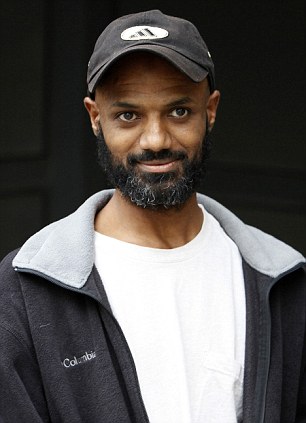
The story of Binyam Mohamed is probably one of the most under-reported stories of the war on terrorism — it has still only partially been told. If, as the former Guantanamo prisoner alleges, he had his genitals sliced with a scalpel after being captured by the US, then the defenders of so-called “harsh interrogation techniques” should finally be rendered mute and duly shamed.

The Daily Mail said:

By any measure, the treatment meted out to Binyam Mohamed was medieval in its barbarity.

Shackled in total blackness in the CIA’s ‘dark prison’ in Kabul, he was forced to listen to ear-splitting music 24 hours a day for a month.

In Morocco he was hung from walls and ceilings and repeatedly beaten, his penis and chest were sliced with a scalpel and hot, stinging liquid poured into the open wounds.

‘They cut all over my private parts,’ he wrote in his diary. ‘One of them said it would be better just to cut it off, as I would only breed terrorists.’

The Obama administration, which has consistently acted like putty in the hands of the intelligence services, regards the exposure of criminal actions by those services as a national security threat. In truth it is the US-sanctioned use of torture that poses a much more serious threat to this nation.

As The Guardian noted, the ruling by three of Britain’s most senior judges, “shattered the age-old ­convention that the courts cannot ­question claims by the government relating to national security, whatever is done in its name, in an unprecedented ruling that is likely to cause deep anxiety among the security and intelligence agencies.”

This is how democracy is supposed to work. Both in Britain and the US, all too often the phrase “national security” really means protection of the power-holders. A judiciary that is truly independent cannot allow any government to protect its own interests at the expense of the nation it serves.

Afua Hirsch describes in greater legal detail how the British government disregarded 400 years of legal precedence in its effort to suppress revelations about the use of torture.

The Guardian reported:

MI5 faced an unprecedented and damaging crisis tonight after one of the country’s most senior judges found that the Security Service had failed to respect human rights, deliberately misled parliament, and had a “culture of suppression” that undermined government assurances about its conduct.

The condemnation, by Lord Neuberger, the master of the rolls, was drafted shortly before the foreign secretary, David Miliband, lost his long legal battle to suppress a seven-paragraph court document showing that MI5 officers were involved in the ill-treatment of a British resident, Binyam Mohamed.

Amid mounting calls for an independent inquiry into the affair, three of the country’s most senior judges – Lord Judge, the lord chief justice, Sir Anthony May, president of the Queen’s Bench Division, and Lord Neuberger – disclosed evidence of MI5’s complicity in Mohamed’s torture and unlawful interrogation by the US.

So severe were Neuberger’s criticisms of MI5 that the government’s leading lawyer in the case, Jonathan Sumption QC, privately wrote to the court asking him to reconsider his draft judgment before it was handed down.

The judges agreed but Sumption’s letter, which refers to Neuberger’s original comments, was made public after lawyers for Mohamed and media organisations, including the Guardian, intervened.

They argued that Neuberger had privately agreed with Sumption to remove his fierce criticisms without giving then the chance to contest the move.

At The Atlantic, Marc Ambinder said:

The White House hinted today that it may have to alter long-standing intelligence sharing arrangements with the United Kingdom after the release of information provided to the Brits about the confinement and interrogation of one of its citizens, Binyam Mohamed.

“The United States government made its strongly held views known throughout this process. We appreciate that the UK Government stood by the principle of protecting foreign government intelligence in its court filings,” said Ben LaBolt, a White House spokesperson. “We’re deeply disappointed with the court’s judgment today, because we shared this information in confidence and with certain expectations.”

LaBolt’s statement hinted that the US might reevaluate the type of information it shares with British counterterrorism and intelligence agencies.

“As we warned, the court’s judgment will complicate the confidentiality of our intelligence-sharing relationship with the UK, and it will have to factor into our decision-making going forward. This just means that we need to redouble our efforts to work through this challenge, because the UK remains a key partner in our collective efforts to suppress terrorism and other threats to our national security.”

With respect to LaBolt, I think this is a bluff. The US shares more raw data and polished intel product with Britain on a daily basis than any other country in the world, and that’s not going to change. Perhaps the US will be more careful in certain documents that might find their way into the UK court system — but it’s hard to imagine that intelligence cooperation between the two countries will really be damaged by today’s revelation.

Facebooktwittermail

Iran plans to get one small step away from producing weapons-grade nuclear fuel

Iran’s formal notification on Monday to the IAEA that it is going to start producing 20 percent enriched uranium in order to supply its research reactor that produces medical isotopes, means that it will be taking a major stride towards producing weapons-grade fuel.

The Washington Post reports:

…enriching uranium under the guise of medical needs will get Tehran much closer to possessing weapons-grade material. Iran insists it has no interest in nuclear weapons. But Albright said 70 percent of the work toward reaching weapons-grade uranium took place when Iran enriched uranium gas to 3.5 percent. Enriching it further to the 19.75 percent needed for the reactor is an additional “15 to 20 percent of the way there.”

Once the uranium is enriched above 20 percent, it is considered highly enriched uranium. The uranium would need to be enriched further, to 60 percent and then to 90 percent, before it could be used for a weapon. “The last two steps are not that big a deal,” Albright said. They could be accomplished, he said, at a relatively small facility within months.

Jeffrey Lewis provides a more detailed explanation of why 20 percent HEU is much closer to 90 percent than 3.5 percent LEU is to 20 percent.

Facebooktwittermail

Why the Rahm administration betrayed the Obama campaign

Zack Exley on why the Rahm administration betrayed the Obama campaign:

Policy and political strategy in American politics have been completely divorced from one another. The political strategists who ran Obama’s campaign allowed him — or maybe it was just that kid Jon Favreau? — to run on a big, clear, inspiring mission: “A nation healed. A world repaired. An America that believes again.” Note: I didn’t say detailed, just big and inspiring! But after the victory, like Garibaldi they took their applause and walked into the sunset (or OFA). In fact, they had to: because, according to the caste system of American politics they knew about the romance of campaigning, but not the realpolitik of governing.

The American people, like people everywhere, are hopeful. They gave Obama a chance to make good on such big words as “hope” and “change” in office. But then the policy wonks took over. Big, clear policies worth fighting for were unthinkable for these particular people, because they see industry and Wall Street as more important than the American people. To be fair, most of them are just trying to be realistic, not malicious: they would prefer to stand up for the American people, but industry and Wall Street are simply more powerful and must be appeased.

Therefore, neither “Medicare for Everyone,” nor a direct bailout for tens of millions of Americans who were victimized by Wall Street were ever a possibility. But in ruling out those kinds of pro-people policies, the administration deactivated the American people. The massive grassroots organization that propelled Obama to victory seemed to evaporate into thin air in the months after the election.

Facebooktwittermail

The anti-Semitism card is turning worthless

Glenn Greenwald writes:

What’s most striking about this attack [by literary editor of The New Republic, Leon Wieseltier, against Andrew Sullivan] is how inconsequential it is. It was once the case, not all that long ago, that an accusation of “anti-semitism” was the nuclear weapon of political debates, rendering most politicians and pundits (especially non-Jewish ones) petrified of being so accused. A 4,300-word prosecution brief published by The New Republic, accusing a major political writer of being a Jew-hater, would have been taken quite seriously, generated all sorts of drama, introspection and debate, and seriously tarnished the reputation of the accused.

No longer. Neoconservatives have so abused and cynically exploited the “anti-semitism” charge for rank political gain — to bully those who would dare criticize Israeli actions or question U.S. policy towards Israel — that it has lost its impact. Ironically, nobody has done more to trivialize and cheapen anti-semitism accusations than those who anointed themselves its guardians and arbiters.

Facebooktwittermail

Daylight robbery

Bloomberg:

President Barack Obama said he doesn’t “begrudge” the $17 million bonus awarded to JPMorgan Chase & Co. Chief Executive Officer Jamie Dimon or the $9 million issued to Goldman Sachs Group Inc. CEO Lloyd Blankfein, noting that some athletes take home more pay.

The president, speaking in an interview, said in response to a question that while $17 million is “an extraordinary amount of money” for Main Street, “there are some baseball players who are making more than that and don’t get to the World Series either, so I’m shocked by that as well.”

“I know both those guys; they are very savvy businessmen,” Obama said in the interview yesterday in the Oval Office with Bloomberg BusinessWeek, which will appear on newsstands Friday. “I, like most of the American people, don’t begrudge people success or wealth. That is part of the free- market system.”

Simon Johnson comments:

Does the president truly not understand that Dimon and Blankfein run banks that are regarded by policymakers and hence by credit markets as “too big to fail”?

This is the antithesis of a free-market system.

True. But there’s a crucial cultural dimension to what Obama is saying.

The love of money and the celebration of the accumulation of personal wealth are core American values. To criticize the wealthy is to take a stance that is widely seen as un-American. Indeed, the widely-held assumption is that the only plausible motive anyone might have for denouncing the rich is envy. And to be tarred with the slur “envious” is to be cast into a social margin occupied by that most pathetic type of American: the loser.

So, if you want to stay on the side of the winners, you say: Mr Blankfein, you just snatched a cool $9 million. Good for you!

Meanwhile, those of us who are not burdened with the vanity of the president or the fear of being called un-American, can name Blankfein’s reward what it is: theft.

And just in case anyone might be in any doubt whether Goldman Sachs is run by crooks, consider the fact that the current debt crisis in Greece — which has sent shock-waves through the global economy — was brought about in large part because Goldman Sachs created a mechanism through which the Greek government has for most of the last decade been able to conceal its debt.

Der Spiegel reports:

Goldman Sachs helped the Greek government to mask the true extent of its deficit with the help of a derivatives deal that legally circumvented the EU Maastricht deficit rules. At some point the so-called cross currency swaps will mature, and swell the country’s already bloated deficit.

Greeks aren’t very welcome in the Rue Alphones Weicker in Luxembourg. It’s home to Eurostat, the European Union’s statistical office. The number crunchers there are deeply annoyed with Athens. Investigative reports state that important data “cannot be confirmed” or has been requested but “not received.”

Creative accounting took priority when it came to totting up government debt.Since 1999, the Maastricht rules threaten to slap hefty fines on euro member countries that exceed the budget deficit limit of three percent of gross domestic product. Total government debt mustn’t exceed 60 percent.

The Greeks have never managed to stick to the 60 percent debt limit, and they only adhered to the three percent deficit ceiling with the help of blatant balance sheet cosmetics. One time, gigantic military expenditures were left out, and another time billions in hospital debt. After recalculating the figures, the experts at Eurostat consistently came up with the same results: In truth, the deficit each year has been far greater than the three percent limit. In 2009, it exploded to over 12 percent.

Now, though, it looks like the Greek figure jugglers have been even more brazen than was previously thought. “Around 2002 in particular, various investment banks offered complex financial products with which governments could push part of their liabilities into the future,” one insider recalled, adding that Mediterranean countries had snapped up such products.

Greece’s debt managers agreed a huge deal with the savvy bankers of US investment bank Goldman Sachs at the start of 2002. The deal involved so-called cross-currency swaps in which government debt issued in dollars and yen was swapped for euro debt for a certain period — to be exchanged back into the original currencies at a later date.

Facebooktwittermail

Real Zionists live in Israel

Israel’s Prime Minister Benjamin Netanyahu plans to submit a bill in the Knesset, Israel’s parliament, that would allow Israeli citizens to vote from outside the country. The Media Line reports:

Currently only Israeli envoys and diplomats can vote from overseas. Israel’s Absorption Ministry estimates that around 750,000 Israeli citizens live outside the country, and in a country with just over five million eligible voters such an influx of voters would have a noticeable impact.

The push for the voting rights of Israelis living abroad is one of the clauses in an agreement signed between Netanyahu’s center-right Likud party and now-Foreign Minister Avigdor Lieberman’s right Yisrael Beiteinu party upon their post-election formation of a governing coalition last year. The coalition agreement calls for a bill allowing Israelis abroad to vote to be brought before the Knesset within a year of the government’s establishment.

“There are many things in the coalition agreement that we plan to implement,” Lieberman said at a Knesset press conference. “The law allowing Israelis abroad to vote will be voted on… I promise to keep 100% of the promises we made to our voters.”

Opposition leaders immediately slammed the proposal and Israel’s center-left Labor party, ultra orthodox Shas party and centrist Kadima party were all expected to oppose the bill.

“The right to determine Israel’s fate must lie in the hands of those who live in Israel and are willing to bear the brunt of their decisions,” opposition and Kadima leader Tzipi Livni said in a statement. “During his first year in office and also today, Netanyahu has proved that he is prepared to sell the country’s future out to his political partners.”

Livni, said Israelis abroad “should be encouraged to cultivate ties to [Israel] and to return to it.”

If Israel was simply the territorial embodiment of an ideology, then Israeli citizens who choose to live overseas should indeed be entitled to vote. Indeed, why not let any committed Zionist vote in an Israeli election?

In reality, though, Israel is a nation that bears the fundamental characteristics of any other: the people whose lives are most deeply impacted by its political structures are its inhabitants. (Oh, and just in case anyone forgot, 25% of Israeli citizens are not Jewish.)

Anyone who feels passionately about Israel retaining its identity as a Jewish state and who by virtue of being Jewish also has the “right” to live there should either put their Zionism into practice and move to Israel, or have the decency to acknowledge that they are not a Zionist but rather a pro-Zionist.

To be a Jewish pro-Zionist is to say: I celebrate the fact that there are millions of Jews who are willing to practice Zionism on my behalf. Maybe some day I’ll join them, but in the meantime I prefer to cheer from afar and visit occasionally.

If more non-Israeli Jews who call themselves Zionists had the humility to acknowledge that they are not real Zionists, perhaps they’d have a less paternalistic relationship with a country they choose not to make their home. (And perhaps Israeli political parties who cannot drum up enough support at home would stop trying to inflate their power by getting support from overseas.)

Facebooktwittermail

Iran and the bomb — faster, please!

Considering the fact that the New York Times is in its Middle East outlook a predictably liberal Zionist newspaper, it’s often refreshing to see what kind of surprises occasionally pop up on the op-ed page.

I dare say quite a few of the paper’s readers had heart palpitations on Monday morning after stumbling upon Adam B. Lowther’s piece on why a nuclear-armed Iran would be good for the United States.

“Believe it or not, there are some potential benefits to the United States should Iran build a bomb,” Lowther writes, while underlining that he is speaking for himself and not the US Air Force Research Institute where he works as a defense analyst.

None of Lowther’s arguments is particularly persuasive. He pictures the US providing the region with a nuclear umbrella and then being able to apply leverage on the major oil producing countries to bring about everything the US might wish for — lower oil prices; “economic, political and social reforms in the autocratic Arab regimes responsible for breeding the discontent that led to the attacks of Sept. 11, 2001”; a much needed shot in the arm for the American defense industry — even a resolution to the Israeli-Palestinian conflict.

That’s a big payoff from Iran becoming a nuclear power!

Lowther’s thinking seems to be at its fuzziest here:

Israel has made clear that it feels threatened by Iran’s nuclear program. The Palestinians also have a reason for concern, because a nuclear strike against Israel would devastate them as well. This shared danger might serve as a catalyst for reconciliation between the two parties, leading to the peace agreement that has eluded the last five presidents. Paradoxically, any final agreement between Israelis and Palestinians would go a long way to undercutting Tehran’s animosity toward Israel, and would ease longstanding tensions in the region.

Pointing out that the Palestinian population in the West Bank and Gaza would be at as great a risk from nuclear fallout as would Israel’s own population in the event of an Iranian nuclear strike is actually one of the most compelling reasons why an Iranian nuclear arsenal could only serve the Islamic Republic as a nuclear deterrent.

As cynical as the use of the Palestinian issue by Iran’s leaders might be, it’s really hard to see how killing tens of thousands of Palestinians would serve Iran’s strategic needs. In other words, in the event that Iran becomes a nuclear power, Israel should probably start viewing its Palestinian neighbors as part of its own insurance policy (along side its own large nuclear arsenal).

Of course, proponents of the mad mullah theory argue that the Iranian regime is driven by its own death wish, in which case the Palestinians would be out of luck. (Mind you, the equally mad bomb-Iran crowd seems to be subject to its own variety of death wish — war with Iran would surely push a teetering global economy over the edge.)

So, to return to Lowther’s original assertion — that a nuclear Iran would benefit the United States — I’m inclined to agree, but for utterly different reasons.

Ayatollah Ali Khamenei said on Monday: “The Iranian nation, with its unity and God’s grace, will punch the arrogance (Western powers) on the 22nd of Bahman (February 11) in a way that will leave them stunned.”

Is Iran about to conduct a nuclear test?

I, like just about everyone else, would indeed be stunned if that happened, but let’s suppose it does — and even if it doesn’t happen on Thursday, let’s just picture it some day down the road in the coming months.

What then?

Well, at that point I would expect an invective-filled global shrug. There would be a few days of hyperventilation as international leaders tried to outdo each other in expressing their shock and outrage, and then…

And then we’d be able to get on with the rest of our lives. We would — just as former CENTCOM commander John Abizaid predicted almost three years ago — “learn to live with a nuclear Iran.” Indeed, we might at that point be willing to admit what is already true: that the nuclear weapons that should cause the greatest global concern are further east, in Pakistan.

Facebooktwittermail

Jews can report on Palestinians, but the other way ’round?

Ali Abunimah reflects on the controversy surrounding Ethan Bronner, the New York Times‘ Jerusalem bureau chief whose son recently enrolled in the Israeli army:

While Jews/Americans may report on Palestinians, the converse is not true. Why is this? It must be — I assume — because there is an inherent, perhaps unacknowledged assumption that an Arab/Palestinian is or will be automatically biased against Israelis/Jews. Whereas, we are supposed to accept that in no case is a Jewish reporter who identifies with Israel biased even when his son has joined an occupation army that is raiding Palestinian refugee camps and communities dozens of times per week. Seriously?

To what can we attribute this double-standard? I am afraid it smacks of racism.

I also have a long memory — Back in 1995, NPR fired Maureen Meehan because it was claimed she had not adequately disclosed that her husband had worked as an adviser to the Palestinian Authority. Of course we did not have blogs in those days, but I still do not remember an outpouring in her defense from the mainstream media. Hmmm. I wonder why?

Alison Weir has this suggestion:

New York Times Editor Bill Keller, in defending his decision to retain Bronner as their bureau chief despite Bronner’s conflict of interest and profoundly flawed track record, writes that he feels Bronner’s intimate family ties with Israel “supply a measure of sophistication about Israel and its adversaries.”

If the Times actually does want full, unbiased reporting on this region (there is little to indicate this, but let’s imagine it is so), it is essential that the Times also have bureaus in the Palestinian Territories; ideally, one in the West Bank and one in Gaza, headed by people with equal “sophistication” about Palestine and its adversaries.

Fortunately for the Times, a journalist with an excellent track record for journalism in the area and, no doubt, considerable “sophistication,” is now available. Jared Malsin, a Jewish-American 2007 Yale graduate, was until recently the chief English editor at Ma’an News, the largest independent news organization in the West Bank and an excellent source of news.

Facebooktwittermail

U.S.: Easing Gaza siege would help counter Goldstone

Think of Gaza as a hospital patient whose lips have been stitched closed. Israeli doctors point to an IV drip and say: “Look. We are taking great care to make sure the patient stays alive.” American consultants suggest that it would really be better to remove a couple of stitches so that a tube can be inserted in the patient’s mouth. It would look much more humane. Right.

Haaretz reports:

The United States has suggested to Israel that easing the Gaza blockade would help counter the fallout from the Goldstone report on alleged war crimes during Operation Cast Lead a year ago.

Friday, United Nations Secretary General Ban Ki-moon is expected to present a report to the General Assembly on the implementation of the report’s recommendations by Israel and the Palestinian Authority.

The U.S. message on the blockade was relayed last week when a Foreign Ministry delegation met in Washington with senior officials from the State Department and the White House. Much of the meeting dealt with steps that Israel could take to help the United States and others block the Goldstone report and prevent it from reaching the International Criminal Court in The Hague.

Heading the Israeli delegation was the Foreign Ministry’s deputy director for international organizations, Eviatar Manor. The delegation met with officials including the U.S. assistant secretary of state for democracy, human rights and labor, Michael Posner, and President Barack Obama’s adviser on human rights, Samantha Power.

Facebooktwittermail

Israel’s campaign against pro-Palestinian foreigners

How long will it be before Israeli immigration officers start asking every visitor whether they support Zionism?

Australia’s ABC News reports on the latest arrests in an expanding campaign against foreign activists:

The lawyer for an Australian woman arrested in the West Bank says her detention is part of a campaign by the Israeli government to silence pro-Palestinian foreigners.

Israeli soldiers arrested Bridgette Chappell, 22, in a pre-dawn raid and was held in an immigration jail in Israel. A court has since agreed to release her on bail provided she does not return to the West Bank.

The Israeli government says Ms Chappell, who was studying Arabic and politics at Birzeit University in the West Bank, was arrested for overstaying her visa.

But she was also active in the International Solidarity Movement (ISM) – a pro-Palestinian organisation committed to resisting Israel’s occupation of the West Bank.

Ms Chappell was sharing an ISM apartment with two other activists – a Spanish woman and an American man, Ryan Olander.

Mr Olander says about 12 soldiers broke down the door during the night and burst in with M16 rifles.

Facebooktwittermail

Globalization is killing the globe: return to local economies

Thom Hartmann on how globalization has resulted in a new form of feudalism:

Globalization is killing Europe, just as it’s already wiped out much of the American middle class.

Spain and Greece are facing immediate crises that many other European nations see on the near horizon: aging boomer workers are retiring with healthy benefit packages, but the younger workers who are paying for those benefits aren’t making anything close to the income (or, therefore, paying the taxes) that their parents did.

Globalists/corporatists/conservative “free market” and “flat earth” advocates say this is a great opportunity to cut benefits for the old folks (and for the young folks in the future), thus bringing the countries budgets back into balance, and this story is the main corporate media storyline.

But it overlooks the real issue (and the real solution): how globalization is killing these nations’ economies and what can be done about it.

The Observer reports on Greece’s parasitic elite who are taking their money and running:

A staggering €8bn-€10bn (£7bn-£8.7bn) may have been taken out of Greece by private investors since it became engulfed by economic turmoil in November.

Under pressure from the European Union and international markets to rein in the nation’s €300bn debt, socialist prime minister, George Papandreou, announced last week that he would have to enforce tough deficit-cutting measures. But the coming austerity package is leading panicked wealthy Greeks to divert their savings out of the country.

Facebooktwittermail

The world capital of killing

Nicholas Kristof writes from Congo:

It’s easy to wonder how world leaders, journalists, religious figures and ordinary citizens looked the other way while six million Jews were killed in the Holocaust. And it’s even easier to assume that we’d do better.

But so far the brutal war here in eastern Congo has not only lasted longer than the Holocaust but also appears to have claimed more lives. A peer- reviewed study put the Congo war’s death toll at 5.4 million as of April 2007 and rising at 45,000 a month. That would leave the total today, after a dozen years, at 6.9 million.

What those numbers don’t capture is the way Congo has become the world capital of rape, torture and mutilation, in ways that sear survivors like Jeanne Mukuninwa, a beautiful, cheerful young woman of 19 who somehow musters the courage to giggle.

Facebooktwittermail

What would Erik Prince advise?

The New York Times reports:

An Iraqi militant group said it had abducted an American contractor, a day after the United States military reported that a contractor had been missing since Jan. 23. It would be the first reported kidnapping of an American in a year in Iraq.

The militant group posted a video to back up its claim, although the man in the video does not give his name.

The Department of Defense identified the missing man as Issa T. Salomi, 60, of El Cajon, Calif. In a statement on Friday, the military said he worked as a contractor for American forces and was last seen on Jan. 23 in Baghdad. Search efforts were under way, the statement said.

There was no way to immediately confirm the authenticity of the video or that the man pictured was Mr. Salomi.

The reports of an abduction raise fresh fears that despite an improvement in security in Baghdad and other parts of Iraq, foreigners working here are still vulnerable to kidnapping.

In the video, the captured man, wearing what appeared to be an American military uniform, identified the abductors as the League of Righteous, a Shiite Muslim militant group, and said they were treating him “kindly.” He said his kidnappers were demanding the release of other militants from jail and the prosecution of former Blackwater security guards accused in a shooting that left 17 Iraqis dead in 2007.

“The second demand is to bring the proper justice and the proper punishment to those members of Blackwater company that have committed unjustifiable crimes against innocent Iraqi civilians,” the man said in a transcript of the video posted on a Web site used by Iraqi insurgent groups. The man in the video said his captors were demanding “proper compensation to the families that have been involved in great suffering because of this incident.”

If the Obama administration has any interest in really dealing with the Blackwater legacy in a significant way, it’s time that it develops a case for the criminal prosecution of Erik Prince. Otherwise, in Iraq, Afghanistan and Pakistan, groups like the League of Righteous will continue to have all the political ammunition they need to justify kidnapping Americans.

But the chances are, Prince still doesn’t need to fear arrest. Instead, most likely, another secret deal will be cut resulting in another prisoner exchange.

Facebooktwittermail

How the CIA became dumb and dangerous

Melvin A Goodman and Philip Giraldi — former CIA officers with decades of experience — both agree that the agency’s focus on paramilitary operations has undermined its core intelligence mission.

Giraldi writes:

It has been observed that no countries on the earth but the United States and Israel claim extraterritoriality, i.e. the right to seize or attack anyone anywhere and at any time based on evidence that is secret. The foul-up at Base Chapman [in which seven CIA officers were killed in a suicide attack] is reflective of the transformation of CIA into a Washington-sanctioned retribution machine, something not unlike the terrorist groups that it claims to oppose rather than an intelligence agency. It is telling that after the slaughter at Base Chapman senior Agency officers immediately announced that they would get revenge and the pace of drone attacks has dramatically increased, killing few or no actual terrorists but many civilians and further destabilizing an already tottering Pakistan. The broader problems that the Agency is experiencing are revealed in CIA’s eight years of largely unrewarding effort against “international terrorism,” a symptom of a systemic failure to understand much less identify and penetrate groups that are, ironically, constantly looking for volunteers to fill their ranks. CIA’s traditional strength in recruiting agents and collecting intelligence has all but disappeared, subsumed into a paramilitary mission to launch hellfire missile firing drones, which is also almost certainly a reflection of the White House’s perception of what needs to be done. If that is so, the tactic is ultimately self defeating in that it produces more enemies that it is able to eliminate, making failure in Afghanistan an absolute certainty.

Likewise, Goodman says:

In a democracy, where laws are derived from broad principles of right and wrong and where those principles are protected by agreed procedures, it is not in the interest of the state to flout those procedures at home, or to permit extra-legal activities abroad, which have complicated the task of maintaining credible relations with our allies in the battle against terrorism.

The CIA’s most important mission remains the preparation of independent analysis of international issues for senior decision makers; therefore, it is essential to protect the integrity of objective and balanced intelligence. The CIA gives far too much attention to support for the Pentagon and to current intelligence. In the past, CIA analysis served to contradict or at least temper the worst-case analysis of the Pentagon, but this is no longer the case.

President Harry Truman created the CIA to produce strategic intelligence that was not beholden to policy and political interests; President Obama must restore this mission.

Facebooktwittermail

Can Obama take charge?

Paul Krugman describes the current crisis in Washington and its parallels with the collapse of Poland at the end of the eighteenth century:

…given the state of American politics, the way the Senate works is no longer consistent with a functioning government. Senators themselves should recognize this fact and push through changes in those rules, including eliminating or at least limiting the filibuster. This is something they could and should do, by majority vote, on the first day of the next Senate session.

Don’t hold your breath. As it is, Democrats don’t even seem able to score political points by highlighting their opponents’ obstructionism.

It should be a simple message (and it should have been the central message in Massachusetts): a vote for a Republican, no matter what you think of him as a person, is a vote for paralysis. But by now, we know how the Obama administration deals with those who would destroy it: it goes straight for the capillaries. Sure enough, Robert Gibbs, the White House press secretary, accused Mr. Shelby of “silliness.” Yep, that will really resonate with voters.

After the dissolution of Poland, a Polish officer serving under Napoleon penned a song that eventually — after the country’s post-World War I resurrection — became the country’s national anthem. It begins, “Poland is not yet lost.”

Well, America is not yet lost. But the Senate is working on it.

The problem with locating the root of the problem in what has become a dysfunctional Senate, is that it turns the administration into a victim. Krugman might bemoan the White House’s ineffectual defense mechanisms but he’s essentially sidelining the heart of the problem: a weak president.

Facebooktwittermail

‘When Guantanamo walked in the door, Rahm walked out’

In her New Yorker piece on Attorney General Eric Holder and the Khalid Sheikh Mohammed trial, Jane Mayer describes White House Chief of Staff, Rahm Emanuel’s role in blocking the investigation of torture by the CIA:

Emanuel viewed many of the legal problems that [Greg] Craig [Obama’s first White House counsel] and Holder were immersed in as distractions. “When Guantánamo walked in the door, Rahm walked out,” the informed source said. Holder and Emanuel had been collegial since their Clinton Administration days. Holder’s wife, Sharon Malone, an obstetrician, had delivered one of Emanuel’s children. But Emanuel adamantly opposed a number of Holder’s decisions, including one that widened the scope of a special counsel who had begun investigating the C.I.A.’s interrogation program. Bush had appointed the special counsel, John Durham, to assess whether the C.I.A. had obstructed justice when it destroyed videotapes documenting waterboarding sessions. Holder authorized Durham to determine whether the agency’s abuse of detainees had itself violated laws. Emanuel worried that such investigations would alienate the intelligence community. But Holder, who had studied law at Columbia with Telford Taylor, the chief American prosecutor in the Nuremberg trials, was profoundly upset after seeing classified documents explicitly describing C.I.A. prisoner abuse. The United Nations Convention Against Torture requires the U.S. to investigate credible torture allegations. Holder felt that, as the top law-enforcement officer in the U.S., he had to do something.

Emanuel couldn’t complain directly to Holder without violating strictures against political interference in prosecutorial decisions. But he conveyed his unhappiness to Holder indirectly, two sources said. Emanuel demanded, “Didn’t he get the memo that we’re not re-litigating the past?”

Facebooktwittermail