Author Archives: News Sources

Afghanistan has poetry in its soul

Reza Mohammadi writes: When the Taliban’s poetry book was published in the UK this month, many found it very strange indeed, but someone who understands the culture and lifestyle of Afghans knows how important poetry is to Afghans. On a visit to Jalalabad during the orange flower blossom celebration, I have felt the power of poetry within the people. As each word was recited by poets, people would rise up, cheer, and then sit down. This is how Afghans live and breathe poetry and drown in an illusion and dream.

The Taliban are like other Afghans, humbled by poetry, and their connection to poetry is older than their connection to radical Islam, the Kalashnikov and grenades.

The history of poetry in Afghanistan dates back millennia. It flourished during the reign of Sultan Mahmud of Ghazni, who ruled from 998 to 1030, and was a man of literature and poetry, with more than 700 poets living in his palace. But 100 years before the Sultan of Ghazni, Persian literature was born in the court of the first Persian king, Yaqub, in Nimruz, a western province of Afghanistan. It is said that one day a poem was recited in Arabic to praise him, but as Yaqub didn’t understand Arabic he ordered that no poem should be recited in a language he did not know. So the literary men of the court were forced to compose poems in Farsi, the language of the king. And the rest is history.

Poetry is everything to Afghans, we hear and recite poetry from cradle to grave. Regardless of our ethnicity, whether we are Tajik, Hazara, Pashtun, Uzbek, Turkmen, Nuristani, Baluch, or any other of the hundreds of sub-ethnic groups, Afghans are threaded together by poetry.

Facebooktwittermail

Obama has made killing easy

White House counterterror chief John Brennan and his team have implemented a new process through which they decide who they want to kill.

In describing Brennan’s arrangement to the Associated Press, the officials provided the first detailed description of the military’s previous review process that set a schedule for killing or capturing terror leaders around the Arab world and beyond. They spoke on condition of anonymity because U.S. officials are not allowed to publicly describe the classified targeting program.

One senior administration official argues that Brennan’s move adds another layer of review that augments rather than detracts from the Pentagon’s role. The official says that in fact there will be more people at the table making the decisions, including representatives from every agency involved in counterterrorism, before they are reviewed by senior officials and ultimately the president.

The CIA’s process remains unchanged, but never included the large number of interagency players the Pentagon brought to the table for its debates.

And the move gives Brennan greater input earlier in the process, before senior officials make the final recommendation to President Barack Obama. Officials outside the White House expressed concern that drawing more of the decision-making process to Brennan’s office could turn it into a pseudo military headquarters, entrusting the fate of al-Qaida targets to a small number of senior officials.

Previously, targets were first discussed in meetings run by the chairman of the Joint Chiefs of Staff, Adm. Mike Mullen at the time, with Brennan being just one of the voices in the debate.

The new Joint Chiefs chairman, Gen. Martin Dempsey, has been more focused on shrinking the U.S. military as the Afghan war winds down and less on the covert wars overseas.

With Dempsey less involved, Brennan believed there was an even greater need to draw together different agencies’ viewpoints, showing the American public that al-Qaida targets are chosen only after painstaking and exhaustive debate, the senior administration official said.

But some of the officials carrying out the policy are equally leery of “how easy it has become to kill someone,” one said. The U.S. is targeting al-Qaida operatives for reasons such as being heard in an intercepted conversation plotting to attack a U.S. ambassador overseas, the official said. Stateside, that conversation could trigger an investigation by the Secret Service or FBI.

Facebooktwittermail

How America’s death penalty murders innocents

David A Love writes: The US criminal justice system is a broken machine that wrongfully convicts innocent people, sentencing thousands of people to prison or to death for the crimes of others, as a new study reveals. The University of Michigan law school and Northwestern University have compiled a new National Registry of Exonerations – a database of over 2,000 prisoners exonerated between 1989 and the present day, when DNA evidence has been widely used to clear the names of innocent people convicted of rape and murder. Of these, 885 have profiles developed for the registry’s website, exonerationregistry.org.

The details are shocking. Death row inmates were exonerated nine times more frequently than others convicted of murder. One-fourth of those exonerated of murder had received a death sentence, while half of those who had been wrongfully convicted of rape or murder faced death or a life behind bars. Ten of the inmates went to their grave before their names were cleared.

The leading causes of wrongful convictions include perjury, flawed eyewitness identification and prosecutorial misconduct. For those who have placed unequivocal faith in the US criminal justice system and believe that all condemned prisoners are guilty of the crime of which they were convicted, the data must make for a rude awakening.

“The most important thing we know about false convictions is that they happen and on a regular basis … Most false convictions never see the light of the day,” said University of Michigan law professors Samuel Gross and Michael Shaffer, who wrote the study.

Facebooktwittermail

U.S. war veterans tossing medals back at NATO was a heroic act

Bernard Harcourt writes: “No amount of medals, ribbons, or flags can cover the amount of human suffering caused by this war.”

“I have only one word, and it is shame.”

“This is for the people of Iraq and Afghanistan.”

“Mostly, I’m sorry. I’m sorry to all of you. I am sorry…”

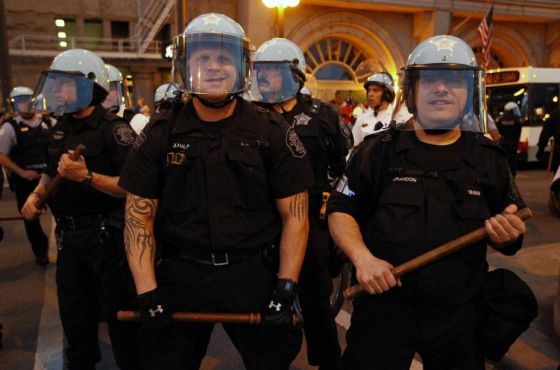
In the shadow of the Nato summit, under the watchful eyes of a phalanx of full-black-clad riot police, dozens of former servicemen and women in uniform, veterans of the Iraq and Afghanistan wars, threw away their medals, with apologies. It was one of the most moving experiences many of us had witnessed in our lives. It is hard to describe in words. I couldn’t get the lump out of my throat. Out of the corner of my eye, I caught a woman next to me crying. Their words, their voices, crackling under the emotion of their courageous act, breaking under the weight of the pain, the trauma, their anger, sadness, and hope – theirs was a heroic and beautiful act, a moving ceremony. It was a privilege to be there with these women and men who served in our wars.

Operation Iraqi Freedom medal. Tossed. Global War on Terror medal. Thrown. National Defense medal. Pitched. Marine Corps Good Conduct medal. Flung. Navy and Marine Corps medal. Chucked.

Most of the reporting of the demonstrations that met the summit will focus on the minor violence, on the few clashes between protesters and police, on the blood, on everything that happened after the peaceful march was over. In our sad world of spectacle, the pushing and shoving will be all that gets our attention. It is a pity.

Because what was truly remarkable today was the American servicewomen and men tossing their medals back at Nato. In a mixture of sadness, shame, anger, and pride, of trauma, sorrow, and pain, some looking back at their time in Iraq and Afghanistan, some healing from PTSD, others chanting Occupy slogans, these men and women showed a type of courage that the Nato leaders should have been forced to watch. Tragically, our leaders were busy posing for photo ops. They should have been forced to listen to these courageous men and women, to their veterans. It is their loss, ultimately. [Continue reading…]

Facebooktwittermail

NATO talks security and peace, Chicago has neither

Gary Younge writes: On Friday morning in Brighton Park, a neighbourhood in southwest Chicago, around half a dozen Latina volunteers in luminous bibs patrolled the streets around Davis Elementary school. The school sits in the crossfire of three gangs; the Kings, the 2/6s and the SDs (Satan’s Disciples). The trees and walls nearby are peppered with “tags” denoting territory and mourning fallen gang members. There is a shooting in the area every couple of weeks, explains Mariela Estrada of the Brighton Park Neighbourhood Council, which facilitates the volunteers.

That same evening, just a couple of blocks away, a 14-year-old, Alejandro Jaime, was shot dead while out riding his bike with his 11-year-old friend. According to witnesses, a car knocked them both off their bikes. They picked themselves up and ran. A man got out of the car and shot Alejandro in the back. “Although it’s the city’s job to provide public safety, we had to respond since our children are in danger and continue to face threats of gang violence,” said Nancy Barraza, a Parent Patrol volunteer.

The next morning world leaders started arriving in Chicago for the Nato summit where, just 20 minutes from Brighton Park, they would discuss how to maintain international security. The dissonance between the global pretensions of the summit this weekend and the local realities of Chicago could not be more striking. Nato claims its purpose is to secure peace through security; in much of Chicago neither exists.

When the city mayor Rahm Emanuel brought the summit to Chicago he boasted: “From a city perspective this will be an opportunity to showcase what is great about the greatest city in the greatest country.” The alternative “99% tour” of the city, organised by the Grassroots Collaborative that came to Brighton Park, revealed how utterly those who claim to export peace and prosperity abroad have failed to provide it at home.

The murder rate in Chicago in the first three months of this year increased by more than 50% compared with the same period last year, giving it almost twice the murder rate of New York. And the manner in which the city is policed gives many as great a reason to fear those charged with protecting them as the criminals. By the end of July last year police were shooting people at the rate of six a month and killing one person a fortnight. [Continue reading…]

Facebooktwittermail

In Yemen, as drones track targets, Twitter tracks drones

The Bureau of Investigative Journalism reports: Though the hour was late, Yemen’s social media was still very much awake.

A US drone’s missiles had just slammed into a convoy of vehicles in a remote part of Yemen, killing three alleged militants.

The attack – like all other US drone strikes outside warzones – was supposed to be clandestine. Yet within minutes Sanaa-based lawyer Haykal Bafana was reporting the strike in almost-realtime. Just after 1am on May 17 he posted the following on Twitter:


As Bafana later explained to the Bureau, his relatives live in Shibam, a town of 30,000. ‘When the drone struck, the town – which was then experiencing a power cut – had completely lit up. My relatives got straight on the phone to tell me about the attack.’

The day prior to the strike Bafana had already tweeted that drones were behaving suspiciously in the area. Hadhramaut province, a sparsely-populated former sultanate, is far from Yemen’s troubled south, where most of the fighting and US drone strikes are currently taking place.

There has been militant activity there for some years, report locals, and surveillance drones have been active at night since 2010. But until now there had never been a drone strike. ‘But suddenly four or five days ago, my relatives were reporting drones over them in daylight, all the time, which was rare. Militants were also being seen moving about in the area, maybe preparing the way for an evacuation from the fighting in the south. Everyone was expecting something to happen’, Bafana recalls. He tweeted the news to his followers.

When the deadly attack finally came in the early hours of Thursday morning, the target itself was hardly a secret.

Earlier, Arabic-language online media in the provincial capital of al-Mukalla had reported that a convoy of alleged al Qaeda rebels was heading north. That news was also swiftly tweeted.

Others were clearly also charting the convoy’s progress. As the vehicles approached Shibam at around 1am local time, at least one car, a Toyota Hilax, was destroyed by missiles from above. Yemen’s own air force has neither the know-how nor the equipment to launch a precision strike on moving vehicles in the dark.

News agencies would later report the attack as a drone strike, naming two of the dead as Zeid bin Taleb and Mutii Bilalafi, both described as local al Qaeda leaders. Like the dozens of US drone strikes in Yemen that preceded it, Thursday’s attack was supposed to be secret. Yet Twitter and other social media were tracking in near-real time the events surrounding the operation. [Continue reading…]

Facebooktwittermail

Lebanon boils after sheikh killing

The Daily Star reports: Fears grew over the stability of north Lebanon Sunday after soldiers shot dead a prominent anti-Assad Muslim preacher and a companion at a Lebanese Army checkpoint in Akkar, triggering a wave of anger in several parts of the country.

The gravity of the incident, which quickly led to the Army withdrawing from the Akkar region and opening an investigation, prompted leaders on both sides of the political divide to call for calm and restraint to prevent the country from sliding into sectarian strife as a result of a spillover of the 15-month-old uprising in neighboring Syria.

Sheikh Ahmad Abdul-Wahed and his companion, Sheikh Mohammad Hussein al-Mereb, were killed at an Army checkpoint in Kwaikhat while on their way to attend a rally organized by Future MP Khaled Daher in the village of Halba to commemorate the movement’s victims during the 2008 clashes between pro- and anti-government supporters.

The Lebanese Army took responsibility for the incident, saying it had immediately formed a committee to investigate the deaths. The Army said in a statement that Abdul-Wahed and Mereb died of “fatal gunshot wounds in a regrettable incident near an Army checkpoint in the village of Kwaikhat.”

Facebooktwittermail

Welcome, NATO, to Chicago’s police state

Bernard Harcourt writes: With Nato delegates arriving Saturday night, the City of Chicago has been turned into a police state. Courtesy of Mayor Rahm Emanuel, who several months ago began implementing new draconian anti-protest measures, Chicago has gone on security lockdown. Starting early Friday night, 18 May 2012, the Chicago Police Department began shutting down – prohibiting cars, bikes, and pedestrians – miles and miles of highways and roads in the heart of Chicago to create a security perimeter around downtown and McCormick Place (where the Nato summit is being held).

Eight-foot tall, anti-scale security fencing went up all over that perimeter and downtown, including Grant Park; and the Chicago police – as well as myriad other federal, state, and local law enforcement agencies, such as the FBI and the US secret service – were out in force on riot-geared horses, bikes, and patrols – batons at the ready. Philadelphia Police Department is sending over reinforcements to help out; Chicago has also asked for recruits from police departments in Milwaukee and Charlotte-Mecklenburg, NC. Meanwhile, F-16 warplanes “screamed through the skies as part of a pre-summit defense exercise” and helicopters hovered incessantly.

The Chicago Police Department has spent $1m in “riot-control equipment” in anticipation of the Nato summit. According to the Guardian, “The city of Chicago’s procurement services website shows that in March [2012] $757,657 was spent on 8,513 ‘retro-fit kits’ to be fitted to police helmets. In February [2012] 673 of the same kits, which include a face shield and ear and neck protectors, were purchased for $56,632.” Plus, the Chicago Police Department will be deploying its two, new, expensive long-range acoustic device (LRAD) sound cannons – which it bought at $20,000 a pop. These are the type of devices that were used by the Pittsburgh police to deliver high-pitched alarm tones during the G20 summit meeting there in 2009. [Continue reading…]

Facebooktwittermail

Divided America

In The New Geography of Jobs, Enrico Moretti writes: Menlo Park is a lively community in the heart of Silicon Valley, just minutes from Stanford University’s manicured campus and many of the Valley’s most dynamic high-tech companies. Surrounded by some of the wealthiest zip codes in California, its streets are lined with an eclectic mix of midcentury ranch houses side by side with newly built mini-mansions and low-rise apartment buildings. In 1969, David Breedlove was a young engineer with a beautiful wife and a house in Menlo Park. They were expecting their first child. Breedlove liked his job and had even turned down an offer from Hewlett-Packard, the iconic high-tech giant in the Valley. Nevertheless, he was considering leaving Menlo Park to move to a medium-sized town called Visalia. About a three-hour drive from Menlo Park, Visalia sits on a flat, dry plain in the heart of the agricultural San Joaquin Valley. Its residential neighborhoods have the typical feel of many Southern California communities, with wide streets lined with one-story houses, lawns with shrubs and palm trees, and the occasional backyard pool. It’s hot in the summer, with a typical maximum temperature in July of ninety-four degrees, and cold in the winter.

Breedlove liked the idea of moving to a more rural community with less pollution, a shorter commute, and safer schools. Menlo Park, like many urban areas at the time, did not seem to be heading in the right direction. In the end, Breedlove quit his job, sold the Silicon Valley house, packed, and moved the family to Visalia. He was not the only one. Many well-educated professionals at the time were leaving cities and moving to smaller communities because they thought those communities were better places to raise families. But things did not turn out exactly as they expected.

In 1969, both Menlo Park and Visalia had a mix of residents with a wide range of income levels. Visalia was predominantly a farming community with a large population of laborers but also a sizable number of professional, middle-class families. Menlo Park had a largely middle-class population but also a significant number of working-class and low-income households. The two cities were not identical—the typical resident of Menlo Park was somewhat better educated than the typical resident of Visalia and earned a slightly higher salary—but the differences were relatively small. In the late 1960s, the two cities had schools of comparable quality and similar crime rates, although Menlo Park had a slightly higher incidence of violent crime, especially aggravated assault. The natural surroundings in both places were attractive. While Menlo Park was close to the Pacific Ocean beaches, Visalia was near the Sierra Nevada range and Sequoia and Kings Canyon National Parks.

Today the two places could not be more different, but not in the way David Breedlove envisioned. The Silicon Valley region has grown into the most important innovation hub in the world. Jobs abound, and the average salary of its residents is the second highest in America. Its crime rate is low, its school districts are among the best in the state, and the air quality is excellent. Fully half of its residents have a college degree, and many have a PhD, making it the fifth best educated urban area in the nation. Menlo Park keeps attracting small and large high-tech employers, including most recently the new Facebook headquarters.

By contrast, Visalia has the second lowest percentage of college-educated workers in the country, almost no residents with a postgraduate degree, and one of the lowest average salaries in America. It is the only major city in the Central Valley that does not have a four-year college. Its crime rate is high, and its schools, structurally unable to cope with the vast number of non-English-speaking students, are among the worst in California. Visalia also consistently ranks among American cities with the worst pollution, especially in the summer, when the heat, traffic, and fumes from farm machines create the third highest level of ozone in the nation.

Not only are the two communities different, but they are growing more and more different every year. For the past thirty years, Silicon Valley has been a magnet for good jobs and skilled workers from all over the world. The percentage of college graduates has increased by two-thirds, the second largest gain among American metropolitan areas. By contrast, few high-paying jobs have been created in Visalia, and the percentage of local workers with a college degree has barely changed in thirty years—one of the worst performances in the country.

For someone like David Breedlove, a highly educated professional with solid career options, choosing Visalia over Menlo Park was a perfectly reasonable decision in 1969. Today it would be almost unthinkable. Although only 200 miles separate these two cities, they might as well be on two different planets. [Continue reading…]

Facebooktwittermail

Congressmen seek to lift propaganda ban

Michael Hastings reports: An amendment that would legalize the use of propaganda on American audiences is being inserted into the latest defense authorization bill, BuzzFeed has learned.

The amendment would “strike the current ban on domestic dissemination” of propaganda material produced by the State Department and the Pentagon, according to the summary of the law at the House Rules Committee’s official website.

The tweak to the bill would essentially neutralize two previous acts—the Smith-Mundt Act of 1948 and Foreign Relations Authorization Act in 1987—that had been passed to protect U.S. audiences from our own government’s misinformation campaigns.

The bi-partisan amendment is sponsored by Rep. Mac Thornberry from Texas and Rep. Adam Smith from Washington State.

In a little noticed press release earlier in the week — buried beneath the other high-profile issues in the $642 billion defense bill, including indefinite detention and a prohibition on gay marriage at military installations — Thornberry warned that in the Internet age, the current law “ties the hands of America’s diplomatic officials, military, and others by inhibiting our ability to effectively communicate in a credible way.”

The bill’s supporters say the informational material used overseas to influence foreign audiences is too good to not use at home, and that new techniques are needed to help fight Al-Qaeda, a borderless enemy whose own propaganda reaches Americans online.

Critics of the bill say there are ways to keep America safe without turning the massive information operations apparatus within the federal government against American citizens. [Continue reading…]

Facebooktwittermail

Lunch with the FT: Cornel West

The Financial Times‘ Anna Fifield has lunch with Cornell West:

West says he lost faith in Obama when the president brought people with close ties to Wall Street and the financial crisis into his administration. West names the president’s former economic adviser Larry Summers, his current Treasury secretary Tim Geithner, and his budget chief, now chief of staff, Jack Lew.

The Obama administration has concentrated the power of both government and the financial sector, West says, in ways that have been good for banks and bad for common people. “I’m a Main Street brother and I’m very critical of all forms of concentrated power, be it in government or be it in the private sector,” he says, seeing little difference between the political parties.

Though conceding that liberals by far prefer Obama to the presumptive Republican nominee Mitt Romney, West describes the president’s neo­liberalism – citing the deregulation of markets, social services cuts and the slashing of wages of government workers – as “morally bankrupt”.

“You’ve got some decent people there who know that the greed is running amok,” West says, referring to Gregory Smith, a former Goldman Sachs executive who wrote a highly critical opinion piece about the bank in the New York Times in March. “My brother Gregory Smith is a decent brother who says, ‘Look, this culture of greed and avarice is getting out of control. I can’t take it, my moral conscience is violated.’ We’re going to see many more people like Gregory Smith, even inside of the big banks, saying we’ve gone much too far in terms of spiritual emptiness and moral constipation.”

He believes that last year’s Occupy movement came up with a language for discussing these issues – one that will endure regardless of whether or not people are camping in public squares. “We have to come up with a democratic way of talking about it because it’s not a matter of hating oligarchs or taking revenge on the moneyed class, it’s a matter of hating injustice. That’s the [Martin Luther] King legacy.”

Facebooktwittermail

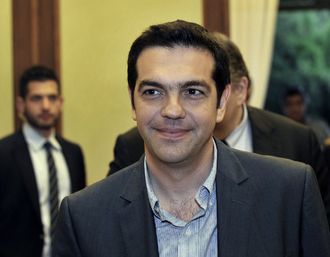
Greek leftist leader Alexis Tsipras: ‘It’s a war between people and capitalism’

The Guardian reports: “I don’t believe in heroes or saviours,” says Alexis Tsipras, “but I do believe in fighting for rights … no one has the right to reduce a proud people to such a state of wretchedness and indignity.”

The man who holds the fate of the euro in his hands – as the leader of the Greek party willing to tear up the country’s €130bn (£100bn) bailout agreement – says Greece is on the frontline of a war that is engulfing Europe.

A long bombardment of “neo-liberal shock” – draconian tax rises and remorseless spending cuts – has left immense collateral damage. “We have never been in such a bad place,” he says, sleeves rolled up, staring hard into the middle distance, from behind the desk that he shares in his small parliamentary office. “After two and a half years of catastrophe, Greeks are on their knees. The social state has collapsed, one in two youngsters is out of work, there are people leaving en masse, the climate psychologically is one of pessimism, depression, mass suicides.”

But while exhausted and battle weary, the nation at the forefront of Europe’s escalating debt crisis and teetering on the edge of bankruptcy is also hardened. And, increasingly, they are looking towards Tsipras to lead their fight.

“Defeat is the battle that isn’t waged,” says the young politician who almost overnight has seen his radical left coalition party, Syriza, jump from representing fewer than 5% of Greeks to enjoying ratings of more than 25% in polls.

Facebooktwittermail

Worse than Keystone

Alyssa Battistoni writes: Coal is without question our dirtiest fuel source: When burned, it dumps toxins like mercury and nitrogen oxides into the air and packs an outsize punch when it comes to carbon emissions. Since America has a lot of it, though, we’ve tended to use a lot: Historically, around half our electricity has been generated by coal combustion plants. But as a result of sustained anti-coal activism, low prices for natural gas, and new EPA regulations on power plant emissions, Americans are using a lot less coal than we used to, and the future of the sooty stuff in this country is looking dim. So the U.S. coal industry is pinning its hopes on China. While historically most of our exported coal has gone to Europe, U.S. exports to China increased 176 percent between 2009 and 2010, and that number is likely to keep rising as the Asian market for coal continues to expand. The prospect of shipping coal across the Pacific is even more appealing considering that Western states like Wyoming and Montana have vast coal reserves in the Powder River Basin, one of the largest coal deposits in the world.

But while the incentives to drastically scale up Western-mined, Asia-bound coal exports exist, the infrastructure to do so does not — at least, not yet. Coal mining companies are hoping to change that by building up to six coal export terminals in the Pacific Northwest — three apiece in Washington and Oregon — with the combined capacity to ship around 150 million short tons of coal to Asia each year. These new plans would more than double 107 million short tons of coal the U.S. exported in 2011.

But good news for the coal industry is bad news for the climate, and whether Powder Basin coal is burned here or abroad, it’ll add the same amount of greenhouse gas emissions to an already-warming atmosphere. [Continue reading…]

Facebooktwittermail