Author Archives: News Sources

A new world order is born in Syria

Rami Khouri writes: In the past three months, a variety of countries – Arab and foreign, big and small, friends and foes of Syria – have all performed an ever-evolving diplomatic dance that last week generated a United Nations Security Council statement on Syria that is important for three reasons: It is unanimously supported by all council members, including Russia and China, who had vetoed earlier resolutions critical of Syria’s leadership; it waters down the earlier Arab League that explicitly called for President Bashar Assad to step aside; it seeks instead to halt the violence and open the way for an unspecified process of dialogue and reform leading to a democratic transition that may one day result in a new regime in Syria.

The two previous possible templates for addressing the Syrian situation – the Libyan intervention and war by NATO, and the unilateral Arab and Western demands that Assad step aside and make way for a democratic transition in the country – have both proved undesirable or unfeasible for certain key actors, primarily Russia. The past month has shown that if Russia and China decide to oppose the American-led camp, the situation will remain diplomatically frozen.

The Security Council statement fully supported the peacemaking efforts of U.N.-Arab League special envoy Kofi Annan, and called on the Syrian government and the opposition “to work in good faith with the envoy towards a peaceful settlement of the Syrian crisis,” and to fully implement his six-point proposal. This proposal calls for a “daily 2-hour humanitarian pause” in fighting, allowing humanitarian aid agencies access to all areas in need, and committing to working with “an inclusive Syrian-led political process to address the legitimate aspirations and concerns of the Syrian people.”

The Security Council also calls on the Syrian government to “immediately cease troop movements towards, and end the use of heavy weapons in, population centers, and begin pullback of military concentrations in and around population centers.” It also calls for the release of all detainees, and for allowing foreign journalists to report freely inside the country.

The chance of this package being accepted or implemented by the Syrian government is virtually zero, because it knows very well that if it pulls back its military and stops attacking its own civilians in urban centers, hundreds of thousands of people will take to the streets in peaceful demonstrations against the regime. The important point is that the key global actors have agreed on this approach, to open the door to a peaceful process of political transformation by which Syrians nonviolently and democratically change their regime and install a more democratic system of governance.

A key element in this approach is that President Bashar Assad and his family who run the country will remain in power for now, and are the key party with whom the opposition negotiates. This is understandably distasteful to the opposition, given the extreme cruelty and near barbarism that the regime’s military forces have used against unarmed Syrian civilians for the most part.

Yet if the continued economic and other pressures on Syria make the situation unbearable for the regime (including cutting off travel links and indicting officials in international courts), the Annan plan approach, supported by Russia, may be the only option the regime has. Assad and his family may soon discover that their only two options are the fate of the murdered Moammar Gadhafi of Libya or the retired and perhaps exiled Ali Abdullah Saleh of Yemen.


Facebooktwittermail

Syrian rebels running out of ammunition as government presses offensive

The Washington Post reports: Syrian rebels battling the regime led by President Bashar al-Assad are running out of ammunition as black market supplies dry up, neighboring countries tighten their borders and international promises of help fail to materialize, according to rebel commanders and defected soldiers who have crossed into this Turkish border town in recent days in a quest for money to buy arms.

They describe what appear to be desperate conditions for the already lightly armed and loosely organized rebel force, made up of defected soldiers and civilians who in recent months have banded together in the name of the Free Syrian Army, transforming what had been an overwhelmingly peaceful uprising into an armed revolt.

The rebels have long been appealing to the outside world for military intervention and weapons to help their struggle. But they are acknowledging for the first time that the rebellion, at least the armed portion of it, might be faltering in the face of a concerted government offensive aimed at definitively crushing the year-old revolt.

“Day after day, the Free Syrian Army keeps fighting and fighting, but day after day, we are running out of ammunition, and, eventually, we just have to leave our area,” said Abu Yazen, 26, a defected soldier who joined the rebels in the summer but fled to Turkey this month with five comrades after they ran out of bullets in the northern province of Idlib.

He is living at one of the civilian refugee camps set up by the Turkish government, among scores of dejected fighters who have been showing up on a daily basis in and around the frontier town of Antakya as their ammunition runs out and hope fades that the international community will come to their rescue.

Facebooktwittermail

CFR interviews Joshua Landis on Syria

Joshua Landis: The opposition is in a state of chaos right now. The SNC, which has been the dominant external leadership and umbrella group for the opposition, and is led by Burhan Ghalyun, a French professor at the Sorbonne, is facing a crisis. It has been extremely successful in getting the international community organized to isolate the Assad regime and to turn against it. Ausama Monajed, as a right-hand man of Ghalyun’s, was largely responsible for getting both Europe and the United States to sanction Syria within an inch of its life. But what we’ve discovered in the last few weeks is that they failed to get a Western invasion of Syria, which would have capped their success and brought down the regime.

Did this diplomatic failure cause a major problem for the opposition?

This created a big shift in the balance of power within the opposition community because it has become increasingly obvious to opposition members, particularly the opposition members on the ground in Syria who are fighting the regime, that they have to get a military option. The opposition on the ground has suffered a major defeat with the crushing of Homs and the reoccupation of Homs, and more recently, the shelling of Idlib.

The Syrian military, since the Russian-Chinese veto, has pursued a classic campaign of capture and hold. It is taking a page right out of the U.S. playbook, and it is taking back territory from the insurgency and it’s holding it. The opposition had made the mistake, out of a sort of naïve enthusiasm, of believing that Syria’s campaign against the regime would be much like those in Tunisia and Egypt: that they didn’t have to be organized; they didn’t have to have a military option; and that the regime would collapse within months. They showed their faces, they videotaped themselves, they didn’t have secrecy, and now the regime is killing them and hunting them down.

Facebooktwittermail

Zionism: The problem of privilege

Shira Robinson writes: “To believe in a democratic Jewish state today is to be caught between the jaws of a pincer,” writes Peter Beinart in his widely circulated and hotly debated op-ed. Indeed — but it was ever thus.

Today the pincer is not, as Beinart would have it, the incongruity of the “democratic Israel” inside the Green Line and the “undemocratic Israel” outside it. It is the discrepancy between the notions that Israel — whether a Greater Israel encompassing West Bank settlements or the pre-1967 Israel for which Beinart pines — is both “democratic” and a “Jewish state.”

This discrepancy is nearly as old as the Palestine conflict itself. In the aftermath of World War I, the patent contradiction between Jewish colonization and the Wilsonian principle of democratic self-rule loomed large in the minds of Zionist luminaries. Quite simply, they understood that there was no way to reconcile the two. As David Ben Gurion told his colleagues in 1918, “There is no solution…. There’s a national question here. We want the country to be ours. Arabs want the country to be theirs.” He and his colleagues thus set out to convince the great powers that Palestine should not be democratic until it was considerably more Jewish.

Zionist leaders had good reason to believe their efforts would pay off. Less than one year earlier, the Balfour Declaration had promised British backing for “the establishment in Palestine of a national home for the Jewish people” while undertaking not to “prejudice the civil and religious rights” of the country’s “non-Jewish communities.” The Arabs of Palestine, who at the time comprised some 95 percent of the indigenous population, understood correctly that the text’s express delineation between Jewish “national” rights and Arab “civil and religious” rights was incompatible with the principle of national self-determination. In July 1919, the American King-Crane Commission traveled throughout the eastern Mediterranean to survey the political wishes of its inhabitants. Apart from the Zionists themselves, an overwhelming majority reiterated the demand for unified independence under democratic rule and an end to Jewish settlement. If immediate sovereignty was off the table, the only mandatory power they would accept was the United States, which (at the time) lacked the stain of imperial interference in the region.

The prospect of US rule was terrifying to Zionist boosters, who lobbied aggressively at the Allied peace talks in Paris to block it. Their fear derived from a simple numerical formula. Despite the near doubling of their demographic ratio since the 1880s, Jews still comprised less than 10 percent of Palestine’s population. As the Zionist Organization in London explained at the time, the possibility that the Americans might help to create a local democratic republic any time soon would make “the task of…developing a great Jewish Palestine…infinitely more difficult.” [Continue reading…]

Facebooktwittermail

Israel ‘turning blind eye’ to West Bank settlers’ attacks on Palestinians

The Guardian reports: Jewish settlers in the West Bank are conducting a systematic and expanding campaign of violence against Palestinian farmers, families and children with the Israeli authorities turning a blind eye, according to confidential reports from senior European Union officials.

In two reports to Brussels from EU heads of mission in Jerusalem and Ramallah, obtained by the Guardian, the officials found that settler violence against Palestinians has more than tripled in three years to total hundreds of incidents.

“Acts of settler violence are becoming a serious concern for the Israeli state which has so far failed to effectively protect the Palestinian population,” says the report sent to EU ambassadors in Brussels last month.

The report notes 411 attacks by settlers last year resulting in Palestinian casualties and damage to property, against 132 attacks in 2009.

The campaign of intimidation is especially targeted at Palestinian farmers and their livelihood, the reports found, noting that settlers damaged or destroyed Palestinian olive groves en masse.

Around 10,000 trees were destroyed last year. But last autumn’s olive harvest season was quieter than previous years.

The Israeli authorities are accused of structuring their security operations to minimise the cost to the settlers of the campaign of harassment, intimidation and violence.

Facebooktwittermail

Loner, loser, killer

Olivier Roy writes: The murderous attack on a Jewish school, and before that on French soldiers, has brought a strong emotional reaction in France. Once again, the specter of disenfranchised and radicalized young French Muslims hovers over the destitute neighborhoods of France’s cities. Fifty years after the end of the war in Algeria, a new kind of civil war seems to be raging.

A closer look, however, shows that the picture is rather different.

First, the 23-year-old perpetrator of these acts of terror, Mohammed Merah, was a loner and a loser. Far from embodying a growing radicalization among the youth, he stood at the margins not only of French society but also of the Muslim community.

Merah was not known for his piety: He did not belong to any religious congregation; he did not belong to any radical group or even to a local Islamic movement. A petty delinquent, psychologically fragile, he tried to enlist in the French Foreign Legion and then left for Afghanistan and Pakistan.

Merah found in Al Qaeda a narrative of solitary heroism and a way, after months of watching videos on the Internet, to achieve short-term notoriety and find a place in the real world. In this sense, he was far closer to Anders Behring Breivik, who went on a killing spree in Norway last July in the name of a hatred of Muslims. People like these are difficult to spot precisely because they do not belong to a network of militant cells.

Yet the crimes of such men are often misconstrued as symbolizing different problems. Whereas non-Muslim lone terrorists like Breivik tend to be called mentally ill, Muslim lone terrorists like Merah are seen as embodying “Muslim wrath.” This is to miss an essential point.

Consider Merah’s attack on the French soldiers. If his killings at the Jewish school in Toulouse were a terrible reflection of the kind of anti-Semitism typically promoted by Al Qaeda, his attack on French soldiers — specifically Muslim ones — was novel and revealing of something else. He saw the soldiers as traitors: French Muslims fighting the Taliban in Afghanistan. The gap he perceived between himself and them reveals the gap between the few Muslims who become so marginalized as to murder and the many more who find ways to integrate. [Continue reading…]

Facebooktwittermail

Sgt. Bales burned one child alive, father says

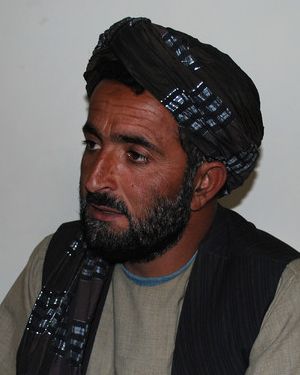
Mohammed Wazir

The Wall Street Journal reports: Mohammed Wazir says he was having breakfast with his brother in the town of Spin Boldak when he received the phone call from his village three hours away. “All your family members are martyred,” a neighbor told him.

When Mr. Wazir, a 33-year-old farmer with a sun-creased face and graying beard, reached his small mud home in the Panjway district of Kandahar province, he says he discovered that 11 relatives had been killed and set on fire, victims of a predawn rampage allegedly perpetrated by U.S. Army Staff Sgt. Robert Bales.

Mr. Wazir and other villagers shared with The Wall Street Journal in Kandahar their accounts of the March 11 tragedy that has inflamed anti-American sentiment here and poisoned U.S.-Afghan relations, possibly affecting the course of the war.

Panjway and the neighboring districts have been a battlefield between the Taliban and U.S.-led coalition forces for years. Many houses in the area remain in ruins and explosion craters dot the fields.

The U.S. special-operations forces base where Sgt. Bales served was set up under a strategy to protect the local population. Instead, the arrival of U.S. troops provoked Taliban attacks—and prompted more villagers to flee the already sparsely populated area.

“The only people who have remained are those who couldn’t afford the expense of moving their families to the city,” says Mullah Baran, a 38-year-old whose brother, Mohammad Dawood, was the first victim of the March 11 rampage, according to witnesses to the shooting, and other villagers. “The Americans said they came here to bring peace and security, but the opposite happened. Now, this village is a nest of ghosts.”

Mr. Baran, who says he had to scrape his brother’s brain and pieces of skull from the floor of their home, lost only one relative. His brother’s wife started screaming at the intruder, he says, and the gunman spared her and her six children.

In the Wazirs’ mud compound a few hundred yards away—a dwelling so poor that a piece of cloth served as a front door—no one was spared.

Mr. Wazir—judging by bloodstains, the layout of his home, and his knowledge of where his family sleeps—says his 60-year-old mother, Shah Tarina, was shot first as she greeted the intruder. In his bare bedroom, his wife Bibi Zohra was shot together with their daughters, 4-year-old Nabiya, 6-year-old Farida and 9-year-old Masooma.

In another room, Mr. Wazir’s sons Faizullah, 12, and Ismatullah, 13, were shot dead in their beds. Then, in a third room, Mr. Wazir’s brother, Akhtar Mohammed, 20, his brother’s new bride, 18-year-old Bibi Nazia, and a nephew, Essa Mohammed, 15, were killed.

All of the bodies were found afterward, after being dragged into the front room, blankets and clothes piled on top, and then torched, Mr. Wazir and other witnesses say.

Mr. Wazir says the corpse of his 2-year-old daughter Palwasha was amid the charred bodies. He believes she was burned alive. “I checked her body, and there were no bullet marks.”

The intruder faced no resistance because the locals were used to U.S. night raids. There was one in the same cluster of houses just five days earlier, Mr. Wazir says, after a roadside bomb hit a U.S. armored vehicle nearby.

He says U.S. troops threatened village elders after the bombing, warning them the village will pay a price if such attacks occur again.

A U.S.-led coalition spokesman in Kabul, U.S. Army Col. Gary Kolb, said the military “won’t speak to any specifics of what some of the villagers are saying.” He said he had no information about the bombing described by Mr. Wazir because not every such incident is reported to Kabul.

Like other villagers — and Afghan President Hamid Karzai — Messrs. Wazir and Baran say they believe more than one shooter was involved, if only because of the effort needed to move and burn 11 bodies. U.S. officials say they believe there was a single assailant.

Mr. Wazir says he is haunted by guilt. “It hurts me a lot when I remember occasions when I shouted at my sons because I asked them to do something and they ignored it,” he says. “I feel so very sorry now.” [Continue reading…]

CNN spoke to Bales’ lawyer, John Henry Browne: Browne predicted the case — whenever it comes to trial — is going to be “extremely difficult” for the prosecution.

“They have no murder scene, no forensics,” the lawyer said Thursday night from outside his Seattle office. “I’m going to make them prove every claim.”

U.S. officials have alleged that Bales carried out the killings alone in two neighboring villages in the Panjwai district of Kandahar province, in southern Afghanistan. Bales was flown out of Afghanistan last week and is being held at Fort Leavenworth, Kansas.

Afghans are insisting that the suspect be returned to Afghanistan to face trial, with villagers and lawmakers questioning the U.S. military’s account of what happened. But a military official said in Afghanistan on Sunday that Bales will be tried in the United States.

The rampage has strained already tense U.S.-Afghan relations and intensified a debate about whether to pull American troops ahead of their planned 2014 withdrawal. Afghan President Hamid Karzai has demanded that troops withdraw from villages in his nation and return to their bases, saying relations between the two countries were “at the end of their rope.”

On Wednesday, Afghanistan’s foreign minister called for a “swift and transparent investigation” into the killings of 16 men, women and children. But CNN legal contributor and defense attorney Paul Callan told CNN’s “Erin Burnett OutFront” that the case against the lone suspect in their deaths, Bales, may be largely circumstantial.

“There were admissions allegedly made by Sgt. Bales to some of his fellow soldiers, in which he claimed at least that he wasn’t shooting women and children, (and rather) was shooting men of military age,” Callan said. “Now, that would be an admission by him that would link him to the crime scene. If they then link his gun to the specific victims, then they easily make a connection and they can prove their case.”

Callan said he believed prosecutors would seek the death penalty against Bales,”because this is one of the biggest alleged massacres in memory.”

“You have the diplomatic and political problems that are being caused by this crime,” Callan said. “Afghan citizens will be looking, saying, ‘Is the U.S. seeking justice in this case?’ “

Facebooktwittermail

U.S. to keep intelligence data on Americans with no terror ties

The Associated Press reports: The U.S. intelligence community will now be able to store information about Americans with no ties to terrorism for up to five years under new Obama administration guidelines.

Until now, the National Counterterrorism Center had to immediately destroy information about Americans that was already stored in other government databases when there were no clear ties to terrorism.

Giving the NCTC expanded record-retention authority had been called for by members of Congress who said the intelligence community did not connect strands of intelligence held by multiple agencies leading up to the failed bombing attempt on a Detroit-bound airliner on Christmas 2009.

“Following the failed terrorist attack in December 2009, representatives of the counterterrorism community concluded it is vital for NCTC to be provided with a variety of datasets from various agencies that contain terrorism information,” Director of National Intelligence James Clapper said in a statement late Thursday. “The ability to search against these datasets for up to five years on a continuing basis as these updated guidelines permit will enable NCTC to accomplish its mission more practically and effectively.”

The new rules replace guidelines issued in 2008 and have privacy advocates concerned about the potential for data-mining information on innocent Americans.

“It is a vast expansion of the government’s surveillance authority,” Marc Rotenberg, executive director of the Electronic Privacy Information Center, said of the five-year retention period.

The government put in strong safeguards at the NCTC for the data that would be collected on U.S. citizens for intelligence purposes, Rotenberg said. These new guidelines undercut the Federal Privacy Act, he said.

“The fact that this data can be retained for five years on U.S. citizens for whom there’s no evidence of criminal conduct is very disturbing,” Rotenberg said.

“Total Information Awareness appears to be reconstructing itself,” Rotenberg said, referring to the Defense Department’s post-9/11 data-mining research program that was killed in 2003 because of privacy concerns.

Facebooktwittermail

NSA chief denies domestic spying but whistleblowers say otherwise

James Bamford writes: In a rare break from the NSA’s tradition of listening but not speaking, NSA chief General Keith Alexander was grilled Tuesday on the topic of eavesdropping on Americans in front of a House subcommittee.

The questioning from Rep. Hank Johnson (D-Georgia) was prompted by Wired’s cover story this month on the NSA’s growing reach and capabilities, but leaves Americans with as many questions about the reach of spy agency’s powers as they had before Alexander spoke.

Alexander denied, in carefully parsed words, that the NSA has the power to monitor Americans’ communications without getting a court warrant.

But Alexander’s comments fly in the face of people who actually helped create the agency’s eavesdropping and data mining infrastructure. Few people know that system as well as William Binney, who served as the technical director for the agency’s M Group, which stood for World Geopolitical Military Analysis and Reporting, the giant 6,000-person organization responsible for eavesdropping on most of the world.

He was also the founder and co-director of the agency’s Signals Intelligence Automation Research Center, which helped automate that eavesdropping network. Binney decided to leave after a long career rather than be involved in the agency warrantless eavesdropping program, a program he said involves secret monitoring facilities in ten to twenty large telecom switches around the country, such as the one discovered in San Francisco’s AT&T installation a few years ago.

Historically, the NSA’s initial response has always been to either deny or evade when confronted with issues involving eavesdropping on Americans. For decades the agency secretly hid from Congress the fact that it was copying, without a warrant, virtually every telegram traveling through the United States, a program known as Project Shamrock. Then it hid from Congress the fact that it was illegally targeting the phone calls of anti-war protesters during the Vietnam War, known as Project Minaret.

More recently, President Bush said falsely that no American had been wiretapped without a warrant at the same time the agency was eavesdropping on thousands of Americans without a warrant as part of the later revealed Operation Stellar Wind. The Congress then passed a bill granting immunity from prosecution and law suits to the telecom companies involved in the illegal program.

Also, in the same way that General Alexander carefully parsed his words, the agency has always maintained its own secret definition of words in a document known as United States Signals Intelligence Directive 18, a document classified above top secret.

For example, NSA can intercept millions of domestic communications and store them in a data center like Bluffdale and still be able to say it has not “intercepted” any domestic communications. This is because of its definition of the word. “Intercept,” in NSA’s lexicon, only takes place when the communications are “processed” “into an intelligible form intended for human inspection,” not as they pass through NSA listening posts and transferred to data warehouses. [Continue reading…]

Facebooktwittermail

Syria’s refugees remind us of the price of revolution

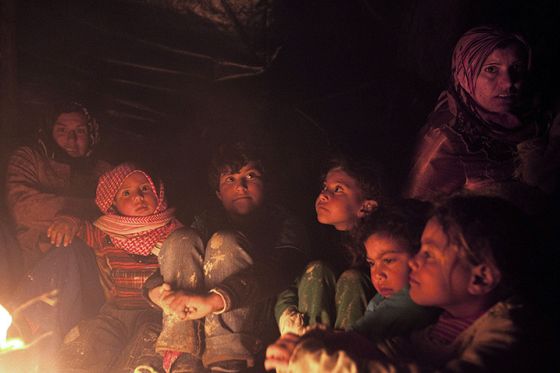
A Syrian refugee family wait for rebels to help them across the Turkish border. Photograph: Giorgos Moutafis/AFP/Getty Images

Jonathan Jones writes: Here is the truth about revolution, war, dictatorship and resistance. It is a simple truth and it is crushing: people suffer. In this powerful picture by Greek photojournalist Giorgos Moutafis a refugee family in Janoudia in north-western Syria wait for rebels to help them across the border into Turkey. In the bold rhetoric of our time, this might be described as a picture of defeat, an indictment of Bashar al-Assad’s crackdown on opposition to his rule, a call to arms for western democracies that are so much less eager to help in Syria now than they were in Libya a year ago. Perhaps it is all those things, and anything else politics wants it to be. But first, it is a human document.

Five children sit in a pool of light amid the dark, their faces patient and resilient, their confusion and fear obvious. Each has a different expression but none are smiling. One child gazes downward while the youngest-looking boy stares at the camera. The adults in the picture, knowing more, look back at the photographer as they gather close to the children. Everyone’s eyes seem to be searching, puzzling. The glow that warms their faces reveals a moment of contemplation before the next arduous stage of a journey.

Painters have known for centuries how to use nocturnal light to intensify our recognition of vulnerability. In his painting The Nativity at Night, which dates from about 1490, Geertgen tot Sint Jans shows the Madonna and child by candlelight against the dark. In this photograph, the shiny wall of the tent or canopy behind them creates a starless black night. Against this eeriness, Moutafis is able to give this family a profound dignity as the human instinct for light in the shadowed hours heightens their meditative companionship.

Facebooktwittermail

Democrats press Obama over U.S. complicity with Honduras’ dirty war

Mark Weisbrot writes: Hondurans are still suffering from the effects of the June 2009 military coup that overthrew the democratically elected government of President Manuel Zelaya. The coup has unleashed a wave of violence against political opposition, journalists, small farmers and others, with impunity for the security forces that have been implicated in these killings. This is exactly what those who opposed the coup regime – and its consolidation of power with marred “elections” in November 2009 – feared would happen.

On the wrong side of this fight was the Obama administration, which – after some hesitation – made some statements against the coup but went on do quite a bit to help the coup government succeed. Nearly three years and hundreds of political murders later, it seems that this administration is still on the side of repression and denial of Hondurans’ basic human rights.

Nothing has made this clearer than the attempts of Democratic members of the US Congress to pressure the administration to change course. On 9 March, 94 members of the US House of Representatives sent a letter to Secretary of State Hillary Clinton asking her “to suspend US assistance to the Honduran military and police given the credible allegations of widespread, serious violations of human rights attributed to the security forces”.

The members of Congress note a “pattern of human rights violations in which human rights defenders, journalists, community leaders and opposition activists are the subject of death threats, attacks, and extrajudicial executions”. They call particular attention to the situation in the Bajo Aguan region, about 350 miles north-east of the capital, where “45 people associated with peasant organizations have been killed.” This violence, which is committed by landowners’ gunmen and security forces against peasants struggling for land rights, is a direct result of the coup; under the Zelaya administration, there were negotiations taking place to resolve the disputes peacefully.

The letter from members of Congress is politically striking because it is signed by close to half of all the Democrats in the House, including some in leadership positions. This is an election year, and these people are not eager to fight with their president over an issue that is not likely to be a key concern in their districts. So they must have been quite convinced that these are outrageous violations of human rights – on which our government has a responsibility to act.

But the major media in the US did not seem to notice this letter or its political significance. And there were no reports at all on a similar letter to Secretary Clinton four days earlier, from a number of US senators who expressed their concern over “credible reports of killings and violent attacks that allegedly involve police and military agents”, and “the failure of [Honduran] state authorities to prosecute violators and protect the rights of victims and their families”.

These omissions are even more striking as Vice-President Biden travelled to Honduras on 6 March, putting the country in the news cycle. The major media serve as enabler in this circumstance by not reporting this congressional action by so many members of President Obama’s own party. The administration looks to the press and, seeing nothing, reasons that if nobody heard this big tree falling in the forest, then it didn’t happen. [Continue reading…]

Facebooktwittermail

Occupy and the Arab spring will continue to revitalise political protest

Simon Critchley writes: The Arab spring, notably in Egypt and Syria, seems to be running out of steam. The vivacious drive of the Occupy movement has faltered and it is not clear what new life will appear. Can popular protest regain its energy and inspiration, or is that it?

Rather than retreating into the comfort of despair or cynicism, perhaps this is a moment in which we can try and gain a broader view of matters.

Power is the ability to get things done. Politics is the means to get those things done. Democracy is the name for regimes that believe that power and politics coincide and that power lies with the people. The problem, as Zygmunt Bauman has reminded us, is that power and politics have become divorced. What we call democracy has become a sham. Power has evaporated into the supra-national spaces of finance, trade and information platforms, but also the spaces of drug trafficking, human trafficking and immigration – the many boats that cross the Mediterranean and other seas.

But the space of politics has remained the same as it has for centuries, localised in the nation state with its prosaic variations of representative, liberal democracy. Politics still feels local – we might feel British or Greek or whatever – but it isn’t. Normal state politics simply serves the interests of supra-national power. Sovereignty has been outsourced.

The premise of western representative democracy is the following: citizens exercise political power through voting; representatives are elected; governments are formed and these governments have power to get things done, a power identical to the will of the people.

The belief that many of us had (or perhaps still have) is that if we work for a certain party, then we can win an election, form a government, and have the power to change things. But every day this is proven to be wrong. [Continue reading…]

Facebooktwittermail