Discussion featuring Eyal Press’ new book, Beautiful Souls: Saying No, Breaking Ranks, and Heeding The Voice Of Conscience In Dark Times.




Discussion featuring Eyal Press’ new book, Beautiful Souls: Saying No, Breaking Ranks, and Heeding The Voice Of Conscience In Dark Times.
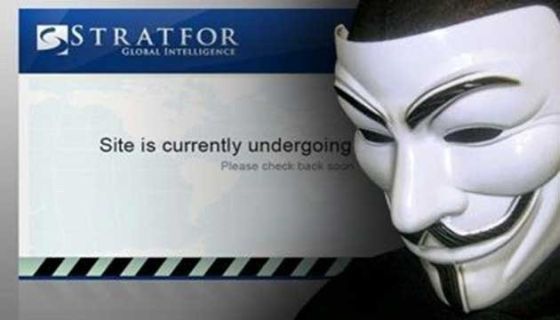
Wikileaks: Today, Monday 27 February, WikiLeaks began publishing The Global Intelligence Files – more than five million emails from the Texas-headquartered “global intelligence” company Stratfor. The emails date from between July 2004 and late December 2011. They reveal the inner workings of a company that fronts as an intelligence publisher, but provides confidential intelligence services to large corporations, such as Bhopal’s Dow Chemical Co., Lockheed Martin, Northrop Grumman, Raytheon and government agencies, including the US Department of Homeland Security, the US Marines and the US Defense Intelligence Agency. The emails show Stratfor’s web of informers, pay-off structure, payment-laundering techniques and psychological methods, for example :
“[Y]ou have to take control of him. Control means financial, sexual or psychological control… This is intended to start our conversation on your next phase” – CEO George Friedman to Stratfor analyst Reva Bhalla on 6 December 2011, on how to exploit an Israeli intelligence informant providing information on the medical condition of the President of Venezuala, Hugo Chavez.
The material contains privileged information about the US government’s attacks against Julian Assange and WikiLeaks and Stratfor’s own attempts to subvert WikiLeaks. There are more than 4,000 emails mentioning WikiLeaks or Julian Assange. The emails also expose the revolving door that operates in private intelligence companies in the United States. Government and diplomatic sources from around the world give Stratfor advance knowledge of global politics and events in exchange for money. The Global Intelligence Files exposes how Stratfor has recruited a global network of informants who are paid via Swiss banks accounts and pre-paid credit cards. Stratfor has a mix of covert and overt informants, which includes government employees, embassy staff and journalists around the world.
The material shows how a private intelligence agency works, and how they target individuals for their corporate and government clients. For example, Stratfor monitored and analysed the online activities of Bhopal activists, including the “Yes Men”, for the US chemical giant Dow Chemical. The activists seek redress for the 1984 Dow Chemical/Union Carbide gas disaster in Bhopal, India. The disaster led to thousands of deaths, injuries in more than half a million people, and lasting environmental damage.
Stratfor has realised that its routine use of secret cash bribes to get information from insiders is risky. In August 2011, Stratfor CEO George Friedman confidentially told his employees : “We are retaining a law firm to create a policy for Stratfor on the Foreign Corrupt Practices Act. I don’t plan to do the perp walk and I don’t want anyone here doing it either.”
Stratfor’s use of insiders for intelligence soon turned into a money-making scheme of questionable legality. The emails show that in 2009 then-Goldman Sachs Managing Director Shea Morenz and Stratfor CEO George Friedman hatched an idea to “utilise the intelligence” it was pulling in from its insider network to start up a captive strategic investment fund. CEO George Friedman explained in a confidential August 2011 document, marked DO NOT SHARE OR DISCUSS : “What StratCap will do is use our Stratfor’s intelligence and analysis to trade in a range of geopolitical instruments, particularly government bonds, currencies and the like”. The emails show that in 2011 Goldman Sach’s Morenz invested “substantially” more than $4million and joined Stratfor’s board of directors. Throughout 2011, a complex offshore share structure extending as far as South Africa was erected, designed to make StratCap appear to be legally independent. But, confidentially, Friedman told StratFor staff : “Do not think of StratCap as an outside organisation. It will be integral… It will be useful to you if, for the sake of convenience, you think of it as another aspect of Stratfor and Shea as another executive in Stratfor… we are already working on mock portfolios and trades”. StratCap is due to launch in 2012.
The Stratfor emails reveal a company that cultivates close ties with US government agencies and employs former US government staff. It is preparing the 3-year Forecast for the Commandant of the US Marine Corps, and it trains US marines and “other government intelligence agencies” in “becoming government Stratfors”. Stratfor’s Vice-President for Intelligence, Fred Burton, was formerly a special agent with the US State Department’s Diplomatic Security Service and was their Deputy Chief of the counterterrorism division. Despite the governmental ties, Stratfor and similar companies operate in complete secrecy with no political oversight or accountability. Stratfor claims that it operates “without ideology, agenda or national bias”, yet the emails reveal private intelligence staff who align themselves closely with US government policies and channel tips to the Mossad – including through an information mule in the Israeli newspaper Haaretz, Yossi Melman, who conspired with Guardian journalist David Leigh to secretly, and in violation of WikiLeaks’ contract with the Guardian, move WikiLeaks US diplomatic cables to Israel.
Ironically, considering the present circumstances, Stratfor was trying to get into what it called the leak-focused “gravy train” that sprung up after WikiLeaks’ Afghanistan disclosures :
“[Is it] possible for us to get some of that ‘leak-focused’ gravy train ? This is an obvious fear sale, so that’s a good thing. And we have something to offer that the IT security companies don’t, mainly our focus on counter-intelligence and surveillance that Fred and Stick know better than anyone on the planet… Could we develop some ideas and procedures on the idea of ‘leak-focused’ network security that focuses on preventing one’s own employees from leaking sensitive information… In fact, I’m not so sure this is an IT problem that requires an IT solution.”
Like WikiLeaks’ diplomatic cables, much of the significance of the emails will be revealed over the coming weeks, as our coalition and the public search through them and discover connections. Readers will find that whereas large numbers of Stratfor’s subscribers and clients work in the US military and intelligence agencies, Stratfor gave a complimentary membership to the controversial Pakistan general Hamid Gul, former head of Pakistan’s ISI intelligence service, who, according to US diplomatic cables, planned an IED attack on international forces in Afghanistan in 2006. Readers will discover Stratfor’s internal email classification system that codes correspondence according to categories such as ‘alpha’, ‘tactical’ and ‘secure’. The correspondence also contains code names for people of particular interest such as ‘Hizzies’ (members of Hezbollah), or ‘Adogg’ (Mahmoud Ahmedinejad).
Stratfor did secret deals with dozens of media organisations and journalists – from Reuters to the Kiev Post. The list of Stratfor’s “Confederation Partners”, whom Stratfor internally referred to as its “Confed Fuck House” are included in the release. While it is acceptable for journalists to swap information or be paid by other media organisations, because Stratfor is a private intelligence organisation that services governments and private clients these relationships are corrupt or corrupting.
WikiLeaks has also obtained Stratfor’s list of informants and, in many cases, records of its payoffs, including $1,200 a month paid to the informant “Geronimo” , handled by Stratfor’s Former State Department agent Fred Burton.
WikiLeaks has built an investigative partnership with more than 25 media organisations and activists to inform the public about this huge body of documents. The organisations were provided access to a sophisticated investigative database developed by WikiLeaks and together with WikiLeaks are conducting journalistic evaluations of these emails. Important revelations discovered using this system will appear in the media in the coming weeks, together with the gradual release of the source documents.

Most American media accounts and commentary about the ongoing violent anti-American protests in Afghanistan depict their principal cause as anger over the burning of Korans (it’s just a book: why would people get violent over it?) — except that Afghans themselves keep saying things like this:
Protesters in Kabul interviewed on the road and in front of Parliament said that this was not the first time that Americans had violated Afghan cultural and religious traditions and that an apology was not enough.
“This is not just about dishonoring the Koran, it is about disrespecting our dead and killing our children,” said Maruf Hotak, 60, a man who joined the crowd on the outskirts of Kabul, referring to an episode in Helmand Province when American Marines urinated on the dead bodies of men they described as insurgents and to a recent erroneous airstrike on civilians in Kapisa Province that killed eight young Afghans.
“They always admit their mistakes,” he said. “They burn our Koran and then they apologize. You can’t just disrespect our holy book and kill our innocent children and make a small apology.”
And:
Members of Parliament called on Afghans to take up arms against the American military, and Western officials said they feared that conservative mullahs might incite more violence at the weekly Friday Prayer, when a large number of people worship at mosques.
“Americans are invaders, and jihad against Americans is an obligation,” said Abdul Sattar Khawasi, a member of Parliament from the Ghorband district in Parwan Province, where at least four demonstrators were killed in confrontations with the police on Wednesday.
The U.S. has violently occupied their country for more than a decade. It has, as Gen. Stanley McChrystal himself explained, killed what he called an “amazing number” of innocent Afghans in checkpoint shootings. It has repeatedly — as in, over and over — killed young Afghan children in air strikes. It continues to imprison their citizens for years at Bagram and other American bases without charges of any kind and with credible reports of torture and other serious abuses. Soldiers deliberately shot Afghan civilians for fun and urinated on their corpses and displayed them as trophies. [Continue reading…]
The Associated Press reports: Israeli defense officials on Sunday confirmed $1.6 billion in deals to sell drones as well as anti-aircraft and missile defense systems to Azerbaijan, bringing sophisticated Israeli technology to the doorstep of archenemy Iran.
The sales by state-run Israel Aerospace Industries come at a delicate time. Israel has been laboring hard to form diplomatic alliances in a region that seems to be growing increasingly hostile to the Jewish state.
[…]
It was not clear whether the arms deal with Azerbaijan was connected to any potential Israeli planes to strike Iran. The Israeli defense officials spoke on condition of anonymity because they were not at liberty to discuss defense deals.Danny Yatom, a former head of Israel’s Mossad spy agency, said the timing of the deal was likely coincidental. “Such a deal … takes a long period of time to become ripe,” he told The Associated Press.
He said Israel would continue to sell arms to its friends. “If it will help us in challenging Iran, it is for the better,” he said.
Israel’s ties with Azerbaijan have grown as its once-strong strategic relationship with another Iranian neighbor, Turkey, has deteriorated, most sharply over Israel’s killing of nine Turks aboard a ship that sought to breach Israel’s blockade of the Gaza Strip in 2010.
For Israeli intelligence, there is also a possible added benefit from Azerbaijan: Its significant cross-border contacts and trade with Iran’s large ethnic Azeri community.
For that same reason, as Iran’s nuclear showdown with the West deepens, the Islamic Republic sees the Azeri frontier as a weak point.
Earlier this month, Iran’s foreign ministry accused Azerbaijan of allowing the Israeli spy agency Mossad to operate on its territory and providing a corridor for “terrorists” to kill members of Iranian nuclear scientists.
Brian Whitaker writes: From Monday no one will be tortured in Syria. The state will guarantee personal freedom for its citizens and preserve their dignity and security. People’s homes will be inviolable. Everyone will have the right to express opinions freely and openly, and the state will guarantee the freedom and independence of the press.
At least, that is what is supposed to happen if President Assad gets a yes vote today in his referendum on the new constitution. It’s meant to show Syrians – and the rest of the world – that Assad, in the midst of turmoil, is steadily and calmly pressing ahead with “reforms”.
Hardly anyone is convinced, though. The contrast with what is happening on the ground – and internationally – lends an air of unreality to the new constitution and its accompanying referendum. As the multinational Friends of Syria group gathered in Tunis on Friday to discuss ways of toppling the regime, the regime itself was blithely preparing to announce that for the convenience of voters the number of polling stations in Syria would be increased from 13,835 to 14,185.
But if Assad is whistling into the wind, so too are the Friends of Syria. They are divided over what to do – mainly because there is no course of action, apart from further isolation of the Assad regime, that doesn’t carry a serious risk of making matters worse.
At the meeting in Tunis on Friday, the US secretary of state, Hillary Clinton had little to offer beyond $10m in humanitarian aid for Syrians and the words: “We cannot let them down.” She also predicted an internal coup. That would conveniently relieve the Americans of their what-to-do-about-Assad dilemma – though, as we have seen in Egypt, it wouldn’t necessarily bring deliverance to Syrians.
For Britain, the foreign secretary, William Hague, has vowed to keep “tightening the diplomatic and economic stranglehold on the regime” while more or less ruling out military action. It may not seem much – especially to those under rocket fire in Homs – but it might do a bit of good and, more important, it’s unlikely to do much harm.
What we should fear most is not western military intervention, since it isn’t in prospect, but eastern intervention. There is something surreal about a group of “friends” promoting change in Syria that includes so many autocrats and, as one of its leading lights, the country most notorious for resisting progress: Saudi Arabia. [Continue reading…]
Justin Elliott at ProPublica reports: The Associated Press published a story last week detailing how, in 2007, undercover New York Police Department officers investigated the Muslim community in Newark, N.J., producing a secret report profiling mosques, Islamic schools and Muslim-owned businesses and restaurants.
The story, based on a copy of the 60-page report obtained by AP, concludes that the surveillance project was undertaken despite “no evidence of terrorism or criminal behavior. It was a guide to Newark’s Muslims.”
Besides being significant on its own, that conclusion contradicts claims by New York Mayor Michael Bloomberg last year about how the NYPD operates.
In August, after AP published the first story in its series documenting the NYPD’s extensive surveillance and investigation of Muslims, Bloomberg denied that the NYPD launched investigations based on religion in the absence of suspicion of a crime.
“If there are threats or leads to follow, then the NYPD’s job is to do it. The law is pretty clear about what’s the requirement, and I think they follow the law,” Bloomberg said at an Aug. 25 news conference, the local news site DNAInfo noted at the time. “We don’t stop to think about the religion. We stop to think about the threats and focus our efforts there.”
In October, New York City Police Commissioner Ray Kelly made similar comments under questioning from the city council.
“We simply follow leads,” Kelly said. “Now, those leads may take us into religious institutions; it may be people in a particular religion. But we’re going to follow those leads wherever they take us. We’re not going to be deterred, but we’re certainly not singling out any particular group.”
AP’s previous stories showed the NYPD scrutinized Muslim communities in part based on ethnicity. Today’s story, as well as others earlier this month, showed the NYPD focusing solely on religion.
The secret dossier on Newark published by AP shows the NYPD both thinking about religion and singling out a particular group in the apparent absence of any leads.
The report mapped so-called Locations of Concern in Newark, which were defined to include “Localized center[s] of activity for a particular ethnic group.” The only ethnic groups that are highlighted in the report are those that include Muslims. The report noted that the city’s “largest immigrant communities … are from Portugal and Brazil” but that “No Muslim component within these communities was identified.”
Bloomberg’s press office did not respond to our request for comment about the mayor’s August remarks and the new AP report. The NYPD also did not respond to our request for comment; nor did it comment on the AP’s story.
The report includes multiple maps marking mosques and Islamic schools in Newark like this one:
It also includes a one-page guide to each Muslim institution, with a picture and basic information such as name, address, phone number — and two categories for “sect” and “imam.” A section of the report that includes a similar guide to Muslim businesses includes comments like “location has a donation box inside for unknown Masjid” (the Arabic term for a mosque) and “location is a small restaurant that serves Halal food.”
This week, Bloomberg echoed his August remarks following another AP report on the NYPD’s surveillance of Muslim Student Associations at colleges around the Northeast despite the absence of suspicions of criminal activity.
“The police department goes where there are allegations. And they look to see whether those allegations are true,” Bloomberg said. “That’s what you’d expect them to do. That’s what you’d want them to do. Remind yourself when you turn out the light tonight.”
New Jersey Gov. Chris Christie, a Republican, called AP’s report “disturbing” and said the state attorney general is investigating.
Joshua Landis writes: The Asads stand atop the last minoritarian regime in the Levant and thus seem destined to fall in this age of popular revolt. When they do, the postcolonial era will draw to a final close. Following World War II, minorities took control in every Levant state, thanks to colonial divide-and-rule tactics and the fragmented national community that bedeviled the states of the region. It is estimated that, due to their over-recruitment by the French Mandate authorities, Alawis already by the mid-1950s constituted some 65 percent of all noncommissioned officers in the Syrian military. Within a decade, they took control of the military leadership and, with it, Syria itself.
Unique among the Levant states was Palestine, where the Jewish minority was able to transform itself into the majority at the expense of Palestine’s Muslims. Neither the Christians of Lebanon nor the Sunnis of Iraq were so lucky or ambitious. Nevertheless, both clung to power at the price of dragging their countries into lengthy civil wars. The Lebanese war lasted 15 years; the Iraqi struggle between Shiites and Sunnis, while shorter, has yet to be entirely resolved. The Alawis of Syria seem determined to repeat this violent plunge to the bottom. It is hard to determine whether this is due to the rapaciousness of a corrupt elite, to the bleak prospects that the Alawi community faces in a post-Asad Syria, or to the weak faith that many in the region place in democracy and power-sharing formulas. Whatever the reason, Syria’s transition away from minority rule is likely to be lengthy and violent. Even though the Alawis make up a mere 12 percent of the total population, the regime continues to count on support from other minorities who fear Islamists coming to power and from important segments of the Sunni population who fear civil war.
The Asads have been planning for this day of popular insurrection all their lives. Hafiz al-Asad did not make the mistake of Hosni Mubarak, allowing his sons to go into private business, while leaving the military in the hands of others, who ultimately turned against him. The Asads were less trusting, and for good reason. Syria’s urban Sunnis looked at the Alawis as interloping aliens when they first took power — muwafidiin, as they were called. It was not long before the Muslim Brotherhood took up arms against them, labeling them as non-Muslim and non-Arab (shuubiyun) — only to be crushed brutally after the notorious Hama uprising in 1982. The use of excessive force was then a clear sign of the regime’s determination and sectarian nature; the forces sent to retake Hama were largely Alawi.
The Asads tutored their children in the arts of war so they could take command of the military and police their population. They marshaled in-laws, cousins and coreligionists into the upper ranks of the security forces. Despite the rhetoric of Arab nationalism, the Asads were keenly aware that only the traditional loyalties of family, clan and sect could cement their rule. In essence, they upheld the notion that it takes a village to rule Syria, a formula that successfully brought an end to political instability. For over two decades following independence, Syria had been known as the banana republic of the Middle East because of its frequent coups and changes of government. Under the Asads, loyalty quickly became the ultimate qualification for advancement into the upper ranks of the security forces. They packed sensitive posts with loyal Alawis and Baathists. Some analysts estimated that as many 80 percent of Syria’s officer corps is Alawi. This is undoubtedly an exaggeration, but it underscores the sectarian safety measures the regime has taken. The main strike forces, such as the Republican Guard led by Bashar’s brother, are overwhelmingly Alawi. Many of the divisions made up of enlisted Sunnis have not been deployed to quell the uprising. Instead, the regime has built up special forces and irregulars, often called shabiha, which are heavily Alawi or Sunnis of known loyalty. Policing loyalty in order to coup-proof the regime has been a paramount concern. Alawis were placed in strategic ministries other than defense. The foreign ministry is a case in point. Recently a Syrian ambassador who has sought refuge in Turkey told Hurriyet, “There are 360 diplomats within the Syrian Foreign Ministry. Of these, 60 percent are Nusayri [Alawi].” He added, “The number of Sunni diplomats does not exceed 10 percent.” Even if these numbers are an exaggeration, there is little doubt that the regime has been careful to staff the upper ranks of important ministries with loyalists and coreligionists. This attention to staffing is a key reason that major defections have not occurred in the top ranks of government and why we have yet to see a repeat of the Libya example, where whole sections of the country fell out of central control and turned to the rebel cause within weeks of the uprising’s debut. Ironically, the minoritarian character of the regime makes it more durable than its republican counterparts in North Africa, where the population is largely homogeneous.
The sectarian nature of the regime may protect it from major desertions when economic difficulties make paying for the far-flung patronage networks impossible. Patronage serves as essential glue, binding the interests of disparate social groups to the regime. Just as important, patronage frustrates the emergence of corporate groups that might compete with the government.The regime has skillfully doled out jobs and benefits to fragment the opposition and buy off opponents.
For this reason, opposition leaders hope that sanctions will promote the collapse of the regime. They reason that, once government money runs out, widespread defections will take place, a coup by top-ranking Alawi officers may occur, or a Tahrir Square moment will overwhelm security forces in the major cities. Such hopes have not been fulfilled in 10 months of growing violence and protest. There is little reason to think they will be in the coming months. Despite increasing defections among the military’s rank and file, the elite units, special forces and intelligence agencies may have little choice but to rally around the Asad regime, given their bleak prospects in a post-Asad Syria. Heavily Alawite elite units with sizable numbers of loyal Sunnis will likely see no alternative.
The broader Alawi community is also likely to remain loyal to the regime, even as the economy deteriorates. Almost all Alawi families have a least one member in the security forces as well as additional members working in civilian ministries, such as education or agriculture. Most fear collective punishment for the sins of the Baathist era. Not only do they assume that they will suffer from wide-scale purges once the opposition wins; many also suspect that they will face prison or worse. Opposition leaders have tried to calm Alawi anxieties provoked by hotheaded sheikhs. The most notorious is Adnan Arur, who threatened, “We shall mince [the Alawis] in meat grinders and feed them to the dogs.” The head of the Muslim Brotherhood has assured ordinary Alawis that they will be protected. Those guilty of crimes will face proper courts and be tried according to the law. Such assurances only go so far in calming Alawi anxieties. Many do not expect an orderly transition of power, just as many remain convinced that a spirit of revenge may guide the opposition, which has been so badly abused.
In short, because the Syrian military remains able and willing to stand by the president, whether out of loyalty, self-interest or fear, the regime is likely to endure for some time. [Continue reading…]
Syrian citizen journalist Danny Abdul Dayem explains to the Daily Telegraph the reasons why he felt compelled to begin posting reports about what was happening in his hometown of Homs.
Reuters reports: The Syrian military took its bombardment of the rebel-held Baba Amro district of Homs into a fourth week on Saturday as the Red Cross tried to evacuate more distressed civilians from the city.
At least 28 people were killed in Syria on Saturday, including nine in Homs, Syria’s third city, according to the Syrian Observatory for Human Rights.
The state news agency SANA reported the funerals of 18 members of the security forces killed by “armed terrorist groups” in Homs, Deraa, Idlib and the Damascus countryside.
Deploring the outcome of an international “Friends of Syria” conference, opposition activists said the world had abandoned them to be killed by forces loyal to President Bashar al-Assad.
“They (foreign leaders) are still giving opportunities to this man who is killing us and has already killed thousands of people,” said Nadir Husseini, an activist in Baba Amro.
The Los Angeles Times reports: As U.S. and Israeli officials talk publicly about the prospect of a military strike against Iran’s nuclear program, one fact is often overlooked: U.S. intelligence agencies don’t believe Iran is actively trying to build an atomic bomb.
A highly classified U.S. intelligence assessment circulated to policymakers early last year largely affirms that view, originally made in 2007. Both reports, known as national intelligence estimates, conclude that Tehran halted efforts to develop and build a nuclear warhead in 2003.
The most recent report, which represents the consensus of 16 U.S. intelligence agencies, indicates that Iran is pursuing research that could put it in a position to build a weapon, but that it has not sought to do so.
Although Iran continues to enrich uranium at low levels, U.S. officials say they have not seen evidence that has caused them to significantly revise that judgment. Senior U.S. officials say Israel does not dispute the basic intelligence or analysis.
Reuters reports: Leaders of the Palestinian Islamist movement Hamas turned publicly against their long-time ally President Bashar al-Assad of Syria on Friday, endorsing the revolt aimed at overthrowing his dynastic rule.
The policy shift deprives Assad of one of his few remaining Sunni Muslim supporters in the Arab world and deepens his international isolation. It was announced in Hamas speeches at Friday prayers in Cairo and a rally in the Gaza Strip.
Hamas went public after nearly a year of equivocating as Assad’s army, largely led by fellow members of the president’s Alawite sect, has crushed mainly Sunni protesters and rebels.
In a Middle East split along sectarian lines between Shi’ite and Sunni Islam, the public abandonment of Assad casts immediate questions over Hamas’s future ties with its principal backer Iran, which has stuck by its ally Assad, as well as with Iran’s fellow Shi’ite allies in Lebanon’s Hezbollah movement.
“I salute all the nations of the Arab Spring and I salute the heroic people of Syria who are striving for freedom, democracy and reform,” Hamas leader Ismail Haniyeh, visiting Egypt from the Gaza Strip, told thousands of Friday worshippers at Cairo’s al-Azhar mosque.
“We are marching towards Syria, with millions of martyrs,” chanted worshippers at al-Azhar, home to one of the Sunni world’s highest seats of learning. “No Hezbollah and no Iran.
“The Syrian revolution is an Arab revolution.”
In the last installment of his interview with Al Jazeera, Nir Rosen says: The regime can survive for a long time, even if it steadily loses control of territory within the country. It is very unlikely that there will be any large-scale international military intervention. In Washington, there is a great deal of frustration. Zionists and advocates of the muscular use of US power, including several Republicans, are calling for Obama to arm the opposition. Even the neoconservatives are climbing out from under their rocks to call for a US military intervention. Fox News has seized on this cause too.
Contrary to conspiracy theories, until now the Obama administration has not made the policy decision to aid the opposition on the ground, as far as I know, let alone provide it with weapons. US and European officials who would like to intervene in Syria complain that there is no “silver bullet” or easy option for them. They don’t even know who to support inside Syria. The exiled opposition, such as the Syrian National Council, are too busy fighting among themselves and too disconnected from events on the ground, so the outside powers do not even have a convenient local collaborator or proxy to deal with. They also complain that the SNC has completely failed to reach out to minorities, especially Alawites. They agree that opponents of the regime will have to pry Alawite community from the administration. The Alawite pillar must be removed, they say. The United States, like the United Kingdom, reportedly has envoys among the Syrian opposition. It is only a question of time, in my opinion, before the SNC is officially recognised by them as the main interlocutor, but they are pressuring the SNC to get its act together first.
One more factor militating against US support for a hasty collapse of the regime is the fear over Syria’s vast chemical weapons arsenal as well as its tens of thousands of portable anti-aircraft missiles and anti-armour missiles. The US will as always be sensitive to Israeli concerns on this proliferation issue as well. It’s always better to have a postal address where to retaliate if you want deterrence to work. While foreign intervention of one kind or another is probably inevitable (regardless of whether it is desirable), those countries who would be most likely to intervene are ill-prepared.
Turkey has certainly become more influential in the region, but the United States foreign service probably has more Arabists in its embassy in Cairo than in the entire Turkish foreign policy establishment. The Turks are not yet prepared for their new role in the region, lacking experts and Arabic speakers, which limits their ability to intervene. On their own, Jordan or Turkey cannot give enough support to the opposition to make a difference, and an international coalition appears difficult to cobble together without the opposition being strengthened.
Israeli intelligence does not deserve the reputation it has. Its academia and foreign policy establishment lack real experts, given their Zionist bias, an inability to conduct field work and a tendency to view the Arab world through Orientalist or military prisms. The days when the Israelis could field Arab Jews who were fluent in the language and could pass as locals are long over. Israeli intelligence has suffered a string of humiliations in Lebanon in recent years. Likewise, US intelligence has recently been humiliated in Lebanon – and given its poor performance in Iraq and Afghanistan, it should not intimidate the Syrian regime. So, for the various countries who will want to play a role, there is no easy entry point. [Continue reading…]
See also, the earlier segments of Rosen’s interview: “Daily life in Syria,” “Syrian sectarianism,” “Syria’s protest movement,” and “Syria’s armed opposition.”
Andrew Bacevich writes: As someone who teaches both history and international relations, I have one foot in each camp. I’m interested in what has already happened. And I’m interested in what will happen next. In my teaching and my writing, I try to locate connecting tissue that links past to present. Among the devices I’ve employed to do that is the concept of an “American Century.”
That evocative phrase entered the American lexicon back in February 1941, the title of an essay appearing in Life magazine under the byline of the publishing mogul Henry Luce. In advancing the case for U.S. entry into World War II, the essay made quite a splash, as Luce intended. Yet the rush of events soon transformed “American Century” into much more than a bit of journalistic ephemera. It became a summons, an aspiration, a claim, a calling, and ultimately the shorthand identifier attached to an entire era. By the time World War II ended in 1945, the United States had indeed ascended — as Luce had forecast and perhaps as fate had intended all along—to a position of global primacy. Here was the American Century made manifest.
I love Luce’s essay. I love its preposterous grandiosity. I delight in Luce’s utter certainty that what we have is what they want, need, and, by gum, are going to get. “What can we say and foresee about an American Century?” he asks. “It must be a sharing with all peoples of our Bill of Rights, our Declaration of Independence, our Constitution, our magnificent industrial products, our technical skills.” I love, too, the way Luce guilelessly conjoins politics and religion, the son of Protestant missionaries depicting the United States as the Redeemer Nation. “We must undertake now to be the Good Samaritan of the entire world.” How to do that? To Luce it was quite simple. He pronounced it America’s duty “as the most powerful and vital nation in the world … to exert upon the world the full impact of our influence, for such purposes as we see fit and by such means as we see fit.” Would God or Providence have it any other way?
Luce’s essay manages to be utterly ludicrous and yet deeply moving. Above all, this canonical assertion of singularity — identifying God’s new Chosen People — is profoundly American. (Of course, I love Life in general. Everyone has a vice. Mine is collecting old copies of Luce’s most imaginative and influential creation—and, yes, my collection includes the issue of February 17, 1941.)
Alas, the bracing future that Luce confidently foresaw back in 1941 has in our own day slipped into the past. If an American Century ever did exist, it’s now ended. History is moving on—although thus far most Americans appear loath to concede that fact. [Continue reading…]
Tariq Ali’s emphatic assertion that the Assad family must be pushed out of power — and that the pushing should come from Russia and China — probably didn’t sit too well with the operators of Russia Today. This interview appears to have never been uploaded to their YouTube channel. (Just in case it also disappears from their website, here’s a copy of the interview someone else put on YouTube.)
Haaretz reports: [Israel’s] Defense Minister Ehud Barak strongly criticized President Shimon Peres yesterday, after a Haaretz report revealed that Peres is expected to tell U.S. President Barack Obama that he does not believe Israel should attack Iran in the near future.
The two presidents are due to meet in Washington, D.C., on Sunday March 4.
“With all due respect to various officeholders from the past and present, the rumor that there is [only] one government in Israel has also reached the United States,” Barak said sarcastically in private conversations, adding: “In the end, there is an elected [Israeli] government that makes the decisions and that is its responsibility.”
During Barak’s criticism of the Israeli president, he made reference to Peres’ conduct in the early 1980s when Israel attacked the Iraqi nuclear reactor at Osirak, when Menachem Begin was prime minister.
“It’s the same Shimon Peres who in 1981 opposed the bombing of the reactor in Iraq,” the defense minister said.
“Peres argued then that Begin was leading us to a holocaust, and there are those who claim that, to this day, Peres thinks the attack on the reactor was a mistake. Imagine what would have happened if the Americans and their allies had attempted to get [Iraqi dictator] Saddam Hussein out of Kuwait if he had three atomic bombs. The Americans said in retrospect that Begin was farsighted,” Barak reportedly said.
Barak’s harsh criticism of Peres is unusual in that over the past three years, the defense minister has carefully accorded respect to Peres, even meeting with him every Sunday before cabinet meetings.
Nonetheless, tension between the two has been simmering for over a year on the Iranian issue, as far back as the tenure of former Israel Defense Forces Chief of Staff Gabi Ashkenazi.
In Barak’s office, Ashkenazi – who opposed an assault on Iran – was thought to have enlisted Peres as a supporter of his stance during his dispute on the issue with Barak.
Yesterday’s Haaretz report about Peres raised eyebrows in both the Prime Minister’s Office and in Barak’s bureau. Sources close to Prime Minister Benjamin Netanyahu said the premier was surprised to read Peres’ comments in the newspaper. They called the comments very disturbing, and added that although the president has the right to express an opinion, ultimately there is only one prime minister in Israel, and he’s the one who is responsible for making decisions.