Author Archives: News Sources

Prosecutors aim new weapon at Occupy activists: lynching allegation

MSNBC reports: Sergio Ballesteros, 30, has been involved in Occupy LA since the movement had its California launch in October. But this week, his activism took an abrupt turn when he was arrested on a felony charge — lynching.

Under the California penal code, lynching is “taking by means of a riot of any person from the lawful custody of any peace officer,” where “riot” is defined as two or more people threatening violence or disturbing the peace. The original purpose of the legal code section 405a was to protect defendants in police custody from vigilante mobs — especially black defendants from racist groups.

Whether its use in this case will be upheld by California’s courts is uncertain. But the felony charge — which carries a potential four-year prison sentence — is the kind of accusation that can change the landscape for would-be demonstrators.

“Felonies really heighten the stakes for the protesters,” said Baher Azmy, legal director at Center for Constitutional Rights in New York. “I think in situations where there are mass demonstrations and a confrontation between protesters and police, one always has to be on the lookout for exaggerated interpretations of legal rules that attempt to punish or squelch the protesters.”

Facebooktwittermail

Electoral reform in Lebanon

Elias Muhanna writes: Lebanon’s peculiar brand of democracy, dysfunctional and widely unpopular, is a perennial source of national vexation, debated over Sunday lunches and in the press.

Since the Taif agreement of 1989, which helped end the civil war, half of Parliament has been reserved for Christians, the other half for Muslims, with each half distributed among 11 of Lebanon’s 18 officially recognized sects (Maronite, Greek Orthodox, Protestant, Sunni, Shiite, Druze, Alawite, etc). Each of Parliament’s (pdf) 128 seats is sect-specific: only members of that sect can run for it. (Voters, however, can cast their ballot for every seat in their district regardless of their own religious affiliation.) The president must be a Maronite, the prime minister a Sunni and the speaker of Parliament a Shiite. Hundreds of bureaucratic appointments are also subject to sectarian apportionment under the Constitution.

The imposition of religious representativeness in politics is a scourge. In the best of circumstances, it is vulnerable to the demagoguery of religious leaders; in the worst, it breeds civil violence and paralyzes the government. But others fear that a more open system would not provide the guarantees of power-sharing among religious minorities that the current model entails.

In recent months, the focus of these long-standing divergences has centered on the intricacies of Lebanon’s electoral law. The next parliamentary elections are less than a year and a half away, and a loose coalition of civil society groups, independent politicians and Lebanon’s president – the former army general Michel Suleiman — has recently proposed implementing a system of proportional representation to replace the current majoritarian, or “winner-take-all,” model.

Facebooktwittermail

Israel’s ‘national suicide’

Mark LeVine writes: Say what you will about Israel’s High Court of Justice, it knows how to name a decision.

In titling last Wednesday’s legal decision, upholding the controversial Citizenship Law that prevents Palestinian spouses of Israeli citizens from living in Israel “Human rights are not a prescription for national suicide”, the court’s majority well summed up the existential predicament Israel faces today – indeed, has always faced – as it attempts to be both Jewish and democratic.

“National suicide” is, of course, an incredibly loaded term in the Israeli context. In the historical shadow of the Holocaust, Chief Justice Asher Grunis’s appellation immediately raised the spectre of an existential threat to the Jewish people, or nation (Am Yisrael), being posed by the mere possibility of Palestinian Arabs joining Israeli society through marriage.

Right-wing lawmakers such as National Union chairman Ya’acov Katz have declared that the law would protect Israel from “the threat of being flooded with two-to-three million Arabs from outside its borders”. But such claims are utterly nonsensical. The true number, as Grunis and the five other Justices who joined the 6-5 majority surely know, would be in the low thousands.

So why would they argue that allowing Palestinian spouses to become Israeli, which as the decision’s title clearly admits is a basic human right, constitutes an act of “national suicide” for Israeli Jews?

To answer this question, we need to consider other possible meanings of the national suicide claim. We could imagine that the justices believe that recognising such marriages would accelerate the already “dangerous” trend towards demographic equality between Jewish and Palestinian citizens, based on higher fertility rates among Palestinians.

The only problem with this oft-repeated claim is that it’s false; the growth rate among the Palestinian population of Israel has actually slowed in the past decade, while those of religious Jews has exploded.

Simply put, the threat of a Palestinian “demographic bomb”, as Prime Minister Netanyahu has called it, is little more than a contrivance to justify the further exclusion of Palestinians from full citizenship rights within Israel.

But accurate or not, the average Jewish Israeli is likely not spending much time parsing the logic or statistical foundations of the High Court’s decision – because they understand the deeper meaning of the argument underlying the decision’s title: to extend full human rights to Palestinians will lead inevitably to the “national” – that is, political – suicide of Israel as a Jewish state.

Why?

Because to recognise that Jews and Palestinians can become one in the most intimate way possible – through love, sex and children – is to open Israeli Jews to the possibility that there is nothing essential that separates them from Palestinians, that as human beings with deep roots in this land, Palestinians have the same human rights as Israeli (or diaspora) Jews.

Once people accept this reality, Zionism – which, at its core, is based on the exclusive Jewish claim of rights to and sovereignty over the Land of Israel – loses whatever remains of its moral and political legitimacy.

Such a recognition, then, would spell the death knell, not of Israeli Jews as people, but of Zionism as a viable political ideology.

Facebooktwittermail

UK deputy PM: Israel is vandalizing the peace process

The Daily Telegraph reports: Nick Clegg tilted Britain’s Middle East policy sharply towards the Palestinians on Monday with an attack on Israel’s settlement policies in the West Bank.

The Deputy Prime Minister drew a hostile reaction from Israel by saying the government’s continued construction on internationally recognised Palestinian land was “an act of deliberate vandalism” that undermined the basis of the Middle East peace process.

In some of the most critical language ever used by a senior European politician in government, Mr Clegg accused Israel of making the likelihood of a negotiated settlement to the conflict impossible to deliver.

“It is an act of deliberate vandalism to the basic premise on which negotiations have taken place for years and years and years,” Mr Clegg said.

AFP reports: The number of Israeli settlers living in the West Bank at the end of 2011 rose by 4.3 percent compared with the previous year to 342,414, an Israeli lawmaker said in a statement on Sunday.

Citing official data obtained from the interior ministry, Yaakov Katz of the far-right National Union party said the number of settlers in the West Bank had increased despite a 2010 partial settlement freeze, which he claimed continued to slow Jewish construction in the West Bank in 2011.

Katz said there were now more than 700,000 Israelis living in areas occupied by Israel in 1967, including east Jerusalem and the Golan Heights.

He said some 300,000 Jews now live in east Jerusalem, along with another 20,000 in the Golan Heights, both beyond the so-called Green Line, the armistice line agreed after the 1948 Arab-Israeli war.

The figures given by Katz for overall settlement population and the number of settlers in east Jerusalem far exceed those usually cited by watchdog groups.

Israeli anti-settlement group Peace Now put the number of settlers in east Jerusalem in 2010 at 200,000, with another 18,000 in the Golan Heights, and 311,000 in the West Bank.

Katz said another 60,000 Jewish Israelis were studying at institutions in West Bank settlements in 2011, meaning there are “currently 720,000 Jews residing beyond the Green Line.”

Facebooktwittermail

Iranian Revolutionary Guard/Quds Force could be planning attack in Turkey

Today’s Zaman reports: Intelligence units have warned that the Quds Force, a special unit of Iran’s Revolutionary Guard, plans to send a group to Turkey to carry out a series of demonstrations that may include a bomb attack on the Embassy or Consulate General of the United States.

The Turkish Security General Directorate (EGM) has warned police departments in all 81 Turkish provinces that they must be vigilant and remain alert to the existence of such a threat. The intelligence pertaining to the possibility of such an attack was delivered in a secret letter to the information department at Turkey’s General Directorate of Security. The written statement indicates that a team linked to Iran’s Revolutionary Guard will be sent to Turkey and that it may be planning to bomb the US embassy or consulate general in the country. The Quds Force is infamous for its role in attempting to export Iran’s revolution to other countries through the instigation of chaos and by acting as the overseas branch of the Iranian Revolutionary Guard Corp.

However, facts about the force are well-guarded and scarce. The statement further details that the team intends to stay in five-star hotels in the city where the plan is to be carried out and that as a result, caution should be exercised when dealing with non-Turkish individuals staying at such lodgings. The statement also noted that groups linked to the Lebanon-based Hezbollah may also take part in the plotted demonstrations or attacks.

Intelligence data regarding the plan have been assessed by Turkish security forces to be an effort by Iran to stir to action illegal Turkish political groups following Turkey’s decision to host a NATO early-warning radar system and recent developments in Syria that have seen the establishment of a training camp for the Kurdistan Workers’ Party (PKK), a step interpreted as a response to Turkey’s criticism of the Syrian regime for its brutal crackdown on anti-regime protests.

Facebooktwittermail

Turkey slams Perry for ‘terrorist leaders’ remarks

Today’s Zaman reports: The Turkish Foreign Ministry on Tuesday slammed US presidential hopeful Rick Perry for his remarks in which he questioned Turkey’s NATO membership and called Turkish leaders “Islamic terrorists,” saying the statements are groundless and inappropriate.

The ministry said in a statement released on Tuesday that Turkey strongly condemns Perry’s remarks and said those who run as candidates for a position like the US presidency, which requires the utmost responsibility, are expected to have “more information about the world” and be more careful in their statements.

Perry, the governor of Texas, said in a debate with other Republican contenders in Myrtle Beach, South Carolina, on Monday that Turkey was a US ally in the past, but not anymore. “Obviously when you have a country that is being ruled by what many would perceive to be Islamic terrorists, when you start seeing that type of activity against their own citizens, then, yes, not only is it time for us to have a conversation about whether or not they belong to be in NATO but it’s time for the United States, when we look at their foreign aid, to go to zero with it,” Perry claimed.

“Turkey became a NATO member when Mr. Governor was two years old,” the statement said in reference to Turkey’s becoming a NATO member in 1952. “It is one of the countries that has contributed much to the transatlantic alliance and will continue to be so. Turkey is among the countries that are on the front line in fighting terrorism. It holds the co-chairmanship of the Global Counterterrorism Forum [GCTF] with the US,” the statement further said in response to Perry.

In response to Perry’s accusations against Turkish leaders, the Foreign Ministry added that Turkish leaders are well-respected not only in the US, but in Turkey’s region and the world. Noting that Perry’s “unfortunate” opinions are not backed by Republican Party grassroots, which was revealed by weak support for him in recent polls, the statement said this shows the “common sense of the US voters.”

Facebooktwittermail

Preventing a nuclear Iran, peacefully

Shibley Telhami and Steven Kull write: The debate over how to handle Iran’s nuclear program is notable for its gloom and doom. Many people assume that Israel must choose between letting Iran develop nuclear weapons or attacking before it gets the bomb. But this is a false choice. There is a third option: working toward a nuclear weapons-free zone in the Middle East. And it is more feasible than most assume.

Attacking Iran might set its nuclear program back a few years, but it will most likely encourage Iran to aggressively seek — and probably develop — nuclear weapons. Slowing Iran down has some value, but the costs are high and the risks even greater. Iran would almost certainly retaliate, leading to all-out war at a time when Israel is still at odds with various Arab countries, and its relations with Turkey are tense.

Many hawks who argue for war believe that Iran poses an “existential threat” to Israel. They assume Iran is insensitive to the logic of nuclear deterrence and would be prepared to use nuclear weapons without fear of the consequences (which could include killing millions of Palestinians and the loss of millions of Iranian civilians from an inevitable Israeli retaliation). And even if Israel strikes, Iran is still likely to acquire nuclear weapons eventually and would then be even more inclined to use them.

Despite all the talk of an “existential threat,” less than half of Israelis support a strike on Iran. According to our November poll, carried out in cooperation with the Dahaf Institute in Israel, only 43 percent of Israeli Jews support a military strike on Iran — even though 90 percent of them think that Iran will eventually acquire nuclear weapons.

Most important, when asked whether it would be better for both Israel and Iran to have the bomb, or for neither to have it, 65 percent of Israeli Jews said neither. And a remarkable 64 percent favored the idea of a nuclear-free zone, even when it was explained that this would mean Israel giving up its nuclear weapons.

The Israeli public also seems willing to move away from a secretive nuclear policy toward greater openness about Israel’s nuclear facilities. Sixty percent of respondents favored “a system of full international inspections” of all nuclear facilities, including Israel’s and Iran’s, as a step toward regional disarmament.

If Israel’s nuclear program were to become part of the equation, it would be a game-changer. Iran has until now effectively accused the West of employing a double standard because it does not demand Israeli disarmament, earning it many fans across the Arab world.

And a nuclear-free zone may be hard for Iran to refuse. Iranian diplomats have said they would be open to an intrusive role for the United Nations if it accepted Iran’s right to enrich uranium for energy production — not to the higher levels necessary for weapons. And a 2007 poll by the Program on International Policy Attitudes found that the Iranian people would favor such a deal.

We cannot take what Iranian officials say at face value, but an international push for a nuclear-free Middle East would publicly test them. And most Arab leaders would rather not start down the nuclear path — a real risk if Iran gets the bomb — and have therefore welcomed the proposal of a nuclear-free zone.

Facebooktwittermail

Fighting a forbidden battle: How I stopped covering up for a hidden wrong

Jesse Lieberfeld is one of the winners of Carnegie Mellon University’s 2012 Martin Luther King Jr. Day Writing Awards. The 17-year-old Jewish high school student writes:

I once belonged to a wonderful religion. I belonged to a religion that allows those of us who believe in it to feel that we are the greatest people in the world—and feel sorry for ourselves at the same time. Once, I thought that I truly belonged in this world of security, self-pity, self-proclaimed intelligence, and perfect moral aesthetic. I thought myself to be somewhat privileged early on. It was soon revealed to me, however, that my fellow believers and I were not part of anything so flattering.

Although I was fortunate enough to have parents who did not try to force me into any one set of beliefs, being Jewish was in no way possible to escape growing up. It was constantly reinforced at every holiday, every service, and every encounter with the rest of my relatives. I was forever reminded how intelligent my family was, how important it was to remember where we had come from, and to be proud of all the suffering our people had overcome in order to finally achieve their dream in the perfect society of Israel.

This last mandatory belief was one which I never fully understood, but I always kept the doubts I had about Israel’s spotless reputation to the back of my mind. “Our people” were fighting a war, one I did not fully comprehend, but I naturally assumed that it must be justified. We would never be so amoral as to fight an unjust war. Yet as I came to learn more about our so-called “conflict” with the Palestinians, I grew more concerned. I routinely heard about unexplained mass killings, attacks on medical bases, and other alarmingly violent actions for which I could see no possible reason. “Genocide” almost seemed the more appropriate term, yet no one I knew would have ever dreamed of portraying the war in that manner; they always described the situation in shockingly neutral terms. Whenever I brought up the subject, I was always given the answer that there were faults on both sides, that no one was really to blame, or simply that it was a “difficult situation.” It was not until eighth grade that I fully understood what I was on the side of. One afternoon, after a fresh round of killings was announced on our bus ride home, I asked two of my friends who actively supported Israel what they thought. “We need to defend our race,” they told me. “It’s our right.”

“We need to defend our race.”

Where had I heard that before? Wasn’t it the same excuse our own country had used to justify its abuses of African-Americans sixty years ago? In that moment, I realized how similar the two struggles were—like the white radicals of that era, we controlled the lives of another people whom we abused daily, and no one could speak out against us. It was too politically incorrect to do so. We had suffered too much, endured too many hardships, and overcome too many losses to be criticized. I realized then that I was in no way part of a “conflict”—the term “Israeli/Palestinian Conflict” was no more accurate than calling the Civil Rights Movement the “Caucasian/ African-American Conflict.” In both cases, the expression was a blatant euphemism: it gave the impression that this was a dispute among equals and that both held an equal share of the blame. However, in both, there was clearly an oppressor and an oppressed, and I felt horrified at the realization that I was by nature on the side of the oppressors. I was grouped with the racial supremacists. I was part of a group that killed while praising its own intelligence and reason. I was part of a delusion. [Continue reading…]

Facebooktwittermail

Israel hit by cyber-attacks on stock exchange, airline and banks

The Guardian reports: Hackers disrupted online access to the Tel Aviv stock exchange, El Al airlines and three banks on Monday, in what the government described as a cyber-offensive against Israel.

The attacks came just days after an unidentified hacker, proclaiming Palestinian sympathies, posted the details of thousands of Israeli credit card holders and other personal information on the internet in a mass theft.

Stock trading and El Al flights operated normally despite the disruption, which occurred as Israeli media reported that pro-Palestinian hackers had threatened at the weekend to shut down the Tase stock exchange and airline websites.

While apparently confined to areas causing only limited inconvenience, the attacks have caused particular alarm in a country that depends on high-tech systems for much of its defence against hostile neighbours. Officials insist, however, that they pose no immediate security threat.

Facebooktwittermail

Taliban make formal declaration of victory

The New York Times reports: Mullah Muhammad Omar, the Taliban’s one-eyed leader, seems to have taken a page from George W. Bush’s playbook.

Just as the former president declared “mission accomplished” in Iraq years before the war there ended, the Taliban made their own victory declaration this weekend, even though roughly 130,000 coalition troops were still fighting in Afghanistan — and keeping the Afghan government firmly in power.

No matter, suggested the Taliban, which calls itself the Islamic Emirate of Afghanistan, in a statement bluntly titled: “Formal Proclamation of Islamic Emirate’s Victory.” The American push to open talks is proof that the insurgents are winning, the Taliban reasoned.

“It is but sheer determination, religious and ideological adherence and unequalled sacrifices displayed by true Afghan Mujahid nation for the last decade that today regional and world powers are after to reach mutual understanding about the country,” the statement said in the Taliban’s typically fractured English.

The coalition declined to comment on the Taliban’s statement.

Most American and Afghan officials would surely dispute the Taliban’s logic. But taken as a statement of intent, the Taliban’s declaration offers an instructive glimpse into their thinking. For them, a seat across the table from the Americans – and, if a settlement is reached, a formal role in the Afghan government — may be the victory they’ve been fighting for.

Facebooktwittermail

Syria: beyond the wall of fear, a state in slow-motion collapse

Ian Black reports: Sipping tea in a smoky Damascus cafe, Adnan and his wife, Rima, look ordinary enough: an unobtrusive, thirtysomething couple winding down at the end of the working day in one of the tensest cities in the world.

But like much else in the Syrian capital, they are not what they first seem: normally, he is a software engineer and she a lawyer; now, they are underground activists helping organise the uprising against President Bashar al-Assad.

It is dangerous work. Over the past 10 months, thousands of Syrians have been killed – perhaps twice the 5,000 figure given by the UN – as Assad has pursued a ruthless crackdown that shows no sign of ending. But his opponents are equally determined to carry on.

Adnan and Rima are unable to work or contact their families. They have false identities. Adnan changes his appearance regularly. He has just shaved off his beard. It clearly works: a friend at a nearby table fails to recognise him.

Most of their friends are on the run from the mukhabarat secret police. “It used to be scary but we’ve got used to it,” said Adnan. The revolution destroyed the wall of fear. At school, we were taught to love the president – Hafez – first. And it didn’t get any better when Bashar took over. Now, everything has changed. Assad’s picture is defaced everywhere and we are certain that at some point we will topple the regime.”

On the face of it, Damascus is calm. The bloodiest frontlines of the revolution may be in Homs, Hama, Idlib and Deraa, but the appearance of normality in the capital is deceptive. Intrigue, fear and anger are just below the surface.

Facebooktwittermail

Geert Wilders has something against Islam

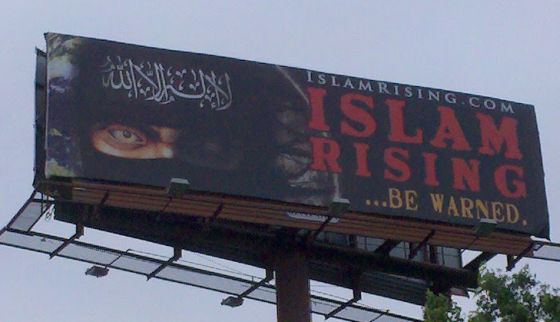
Christopher Dickey writes: A couple of years ago, a billboard appeared outside Columbia, S.C., looming above Interstate 26. Beady eyes stared out from a black balaclava emblazoned with an inscription from the Quran—clearly the eyes were meant to be those of a terrorist—and next to them were these words: “ISLAM RISING … BE WARNED.”

Erected by the Virginia-based Christian Action Network, the sign advertised the group’s documentary about a charismatic Dutch politician with dyed-blond hair, a mysterious past, and a platform of paranoid hate. South Carolina seemed to offer a ready audience for Geert Wilders’s dire warnings against the Muslim religion. Today, with the Republican road show encamped in the state for the Jan. 21 presidential primary, the 48-year-old Dutchman is more than ever a man who needs to be watched and listened to carefully. At home in the Netherlands, his explosive theme of unrelenting hostility to Islam has built his xenophobic Party for Freedom, founded in 2005, into the country’s third-largest political party; across the Atlantic his message packs serious resonance in an American heartland still shaken by the 9/11 attacks. Wilders’s name and message have been invoked repeatedly in South Carolina and at least a dozen other state legislatures as they debate measures to ban an imagined threat: Islamic law.

So does he worry about the violence his rants could inspire? Wilders is a master at capitalizing on real fears and conjuring false ones—and then dodging responsibility if people’s lives are ruined or lost. “I am responsible for my own actions and for nobody else’s actions,” he says. In a wide-ranging interview at the offices of the Dutch Parliament in The Hague, Wilders complained to Newsweek that the “naive” Obama administration wasn’t doing nearly enough to combat what Wilders regards as the Islamic threat. Expanding on his claims that the Quran should be banned, just as Mein Kampf has been in some countries, he said the United States should be “getting rid of Islamic symbols—no more mosques—and closing down Islamic schools.”

There’s no such thing as moderate Islam, Wilders insists, and he’s tired of hearing that radical Islam is something different from the mainstream faith. It means nothing to him that among Muslim believers there are many different sects and currents. “He makes no distinctions whatsoever,” says Robert Leiken, author of the just-published study Europe’s Angry Muslims. “He wants to throw out the whole Quran because of some things that are objectionable—but you could say the same thing about the Book of Joshua.” Wilders refuses to concede the point. In his view, those who follow the Quran are deluded or worse. “Totalitarian fascist ideology,” he calls it. “I have nothing against the people,” he says. “I have something against Islam.”

Facebooktwittermail

Israelis in Tehran?

The Sunday Times has a report whose details the paper cannot verify, claiming that a team of Israeli agents conducted last week’s attack in which an Iranian nuclear scientist, Mustafa Ahmadi Roshan, was blown up by a car bomb in Tehran. The report seems to have several functions:

  • To burnish Mossad’s reputation as a daring and deadly intelligence service;
  • to imply that Israelis are willing to risk their lives where Americans would not be willing to take similar risks, given that the U.S. has emphatically denied playing any role in any of the recent assassination operations;
  • and to amplify the provocation to the Iranian government by bragging that Israeli agents can kill Iranians with impunity on the streets of their own capital.

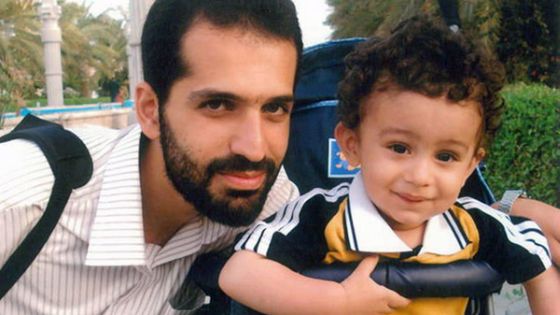
Mostafa Ahmadi Roshan with his son. Roshan is the fifth Iranian nuclear scientist whose murder is being linked to Israel.

As Roshan, 32, prepared to leave home [last Wednesday], he was monitored from a makeshift control room in a safe house nearby. Israeli agents were also watching the entrance to Iranian intelligence headquarters in the city centre. Suddenly they noticed a number of cars and people running; then they saw police rushing into the nearby streets. Another agent monitoring radio traffic between the Tehran police and security forces confirmed unusual activity. Had the operation been exposed?

In 1997 two agents of Caesarea, Mossad’s top hit squad, had bungled an attempt to kill a Palestinian leader in Jordan and were arrested before they could flee, triggering a diplomatic crisis. Jordan is relatively friendly to Israel. Iran is its bitterest enemy. There was no point in hesitation. If the agents had been rumbled, they would never escape anyway. The mission commander decided to go ahead.

Just before 8am on Wednesday, Reza Qashqai, Roshan’s bodyguard and driver, arrived. Qashqai knew the risks. He checked under the silver Peugeot 405, a state-issue car, and looked beneath the bonnet before slipping into the driver’s seat to wait for the scientist.

The house was in the Cheezar neighbourhood of northern Tehran, a village overtaken by the sprawl of the capital but still home to quiet traditional families who support the regime.

Roshan got into the car, ready for a long day as deputy head of the Natanz uranium enrichment site.
[…]
As the clock ticked towards 8am, an Israeli spotter reported via a secure text that Roshan was being driven from his home. Qashqai was at the wheel, a crucial detail because the bodyguard would be slower to respond if he was driving.

The assassins’ commander took the final decision. “Go,” he told agents who were standing by with a motorcycle in a hidden garage. They left immediately, weaving through the gridlocked streets of rush-hour Tehran.

In the five attacks on nuclear scientists, the hit squad has used a motorbike every time. The motorcyclist is ubiquitous in the capital’s traffic jams, often wearing a surgical mask for protection against the heavy pollution and able to move close to the target between the lines of stationary cars without attracting attention.

They speeded up to reach Gol Nabi Street, which Roshan always passed on his way to work.

At 8.20am they spotted the Peugeot. The masked figure on the pillion seat made a quick check that Roshan was the passenger, then attached a magnetic bomb to the car. The motorbike sped away. The plastic explosive had been shaped to deliver its full force at the passenger. Nine seconds later it exploded. The scientist was killed instantly. Qashqai, badly injured, died in hospital.

Facebooktwittermail

China walks the tightrope in the Persian Gulf

The Hindu reports: Without undermining its ties with Iran despite growing military tensions in the region, China, is seeking a deeper engagement in the oil and gas sector with Saudi Arabia and other Arab Gulf states, as part of a developing contingency plan, in order to ensure stable energy supplies.

Chinese Prime Minister Wen Jiabao has just concluded a visit to Saudi Arabia and has arrived on Monday in the United Arab Emirates (UAE), as part of a regional tour, which will also take him to Qatar, a leading international natural gas exporter.

The visit takes place shortly after Timothy Geithner, the Treasury Secretary of the United States, journeyed to Beijing to implore the Chinese leadership to scale down its energy dependence on Iran, China’s third largest supplier of oil. Washington is trying to throttle Iran’s oil exports, apparently, to dissuade Tehran to acquire nuclear weapon capability—a move that Iran has countered by threatening to close the Strait of Hormuz through which 20 per cent of the world’s oil supplies pass.

China, as was evident during Mr. Geithner’s visit has rejected acceptance of a linkage between oil exports by Iran, and its atomic programme. Nevertheless, Beijing appears to have adopted a double track approach-of keeping Iran engaged while expanding energy ties with Tehran’s Arab foes, chiefly Saudi Arabia.

“Wen’s visit shows that China is seeking to reinforce its energy security in the region, but it does not necessarily mean that Beijing no longer regards Iran as a major oil supplier,” said Han Xiaoping, chief information officer of the China Energy consultancy. Speaking to the Chinese daily Global Times, Mr. Han acknowledged that if “the Strait of Hormuz is blocked, 40 percent of China’s total oil imports will be affected, and the country would face a major energy crisis”.

Meanwhile, Bloomberg reports: China stands to be the biggest beneficiary of U.S. and European plans for sanctions on Iran’s oil sales in an effort to pressure the regime to abandon its nuclear program.

As European Union members negotiate an Iranian oil embargo and the U.S. begins work on imposing sanctions to complicate global payments for Iranian oil, Chinese refiners already may be taking advantage of the mounting pressure. China is demanding discounts and better terms on Iranian crude, oil analysts and sanctions advocates said in interviews.

“The sanctions against Iran strengthen the Chinese hand at the negotiating table,” Michael Wittner, head of oil-market research for Societe Generale SA in New York, said in a phone interview. While there are no confirmed numbers, Chinese refiners are likely to win discounts on Iranian crude contracts as buyers from other nations halt or reduce their purchases of Iranian oil to avoid being penalized under U.S. and European sanctions, he said.

Facebooktwittermail

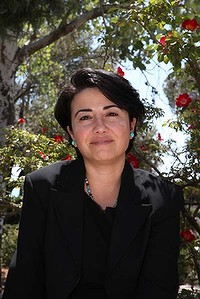
Interview with Haneen Zoabi

The Israeli Occupation Archive interviews Haneen Zoabi, a Palestinian member of Israel’s parliament who became known around the world after her participation in the Gaza Flotilla aboard the MV Mavi Marmara.

During the past year, a series of ethnocentric and other legislative initiatives were introduced in the Knesset, designed to define loyalty to the state as Jewish; severely penalize participation in non-violent BDS actions against the occupation; enable discrimination in housing and access to land via “Admission Committees” that can bar Palestinian Israelis from residing in hundreds of communities to keep them exclusively Jewish; punish NGOs that protect the civil rights of citizens by limiting or taxing international funding sources they depend on; limit the press; influence the Supreme Court; and more.

How do these efforts affect the million and a half Palestinian citizens of Israel, and how do you see future relations between Arab and Jewish citizens of Israel unfolding over the next few years?

HZ: First of all, the situation of the Palestinians in Israel is not new. I don’t agree with the [Israeli] left’s description that we are moving from a democratic to a fascist state. It is a gradual continuation of long-standing policies that confiscated my land; that discriminate against me; and that refuse to recognize me as an equal citizen and as one of the owners of this homeland.

The problem is not simply the terms of citizenship: We want to be equal to the Jews, but also, as the indigenous people, this homeland belongs to us. I want to be equal not because I immigrated or because I’m a citizen. Primarily I want to be equal because it is my homeland and nobody has the right to take it away. And when I ask for this kind of equality, not as an immigrant but as a member of the indigenous people, as the owner of this land, then I am already making a compromise, making a huge compromise. In this context, just asking for equality with the Jews is a compromise.

But there is also something new, something that really changed in the nature of the racism and discrimination. Earlier, the racism and discrimination were inherent in policies that were part of Israel’s liberal and democratic discourse.

The state really believed it could be Jewish and democratic, and defended Israel as though there was no contradiction between the values of Jewishness and democracy. When many years ago my party [the National Democratic Assembly] started pointing out that there was a contradiction between the two, its arguments seemed to many to be dangerous. We found ourselves defined as a “strategic threat.” Israelis and the world would say: What’s the contradiction? Others – the Shin Bet, the domestic intelligence service, and mainstream politicians – would say that this undermines Israel as a “Jewish and democratic state.”

Now, even Israeli policy-makers understand the problem. These [anti-democratic] laws have forced some of the Knesset members to say, “If there’s a contradiction between Jewish values and democratic values, we prefer the Jewish values.” Now it’s not even a question of which value they prefer, it’s clear they prefer to be Jewish over being democratic.

Now, this is a new reality, not just a continuation of the [old] policies of racism and Judaization. Israeli Jews don’t hesitate now to say “We prefer the Jewish values,” and they are willing to use these values to justify discrimination, racism and treating Palestinian citizens as a strategic threat.

Because, if Jewish values are at the core of policy – and this obsession with the Jewishness of the state is part of a new political culture – and we are not Jewish, and we will not give up our rights, then obviously we present not just an alternative view, but something that contradicts the state’s very legitimacy: not the religious aspects, but the political aspects, meaning Zionism. Because Jewishness here means Zionism, not Judaism. It is misleading to talk about a Jewish and democratic state; it is a Zionist state. Because we are challenging these policies, it has become natural to say that our struggle, our very existence, is threatening the state. This is new.

Facebooktwittermail

Pakistan PM faces disqualification over contempt of court action

The Guardian reports: Pakistan’s prime minister, Yousaf Raza Gilani, has been threatened with jail for contempt of court and ordered to appear before the supreme court in person, raising the possibility that he could be disqualified from office.

In the ongoing clash between the government and the courts, the judges again went on the offensive on Monday, issuing a “show cause” notice for contempt of court to Gilani. He will have to appear on Thursday to explain himself.

There was feverish speculation that the prime minister could resign before the court hearing, with the possibility discussed at an emergency meeting of the coalition.

The case hinges on the legal immunity of President Asif Ali Zardari, which Gilani is trying desperately to protect. The court had previously ordered the government to write to the Swiss authorities, asking them to reopen old corruption cases against Zardari for money laundering. The government insists, however, that the president enjoys constitutional immunity from any criminal charges.

Gilani has repeatedly refused court orders to write to the Swiss government, raising the risk that he could be found in contempt of court.

The judges were incensed with the government’s lack of response on Monday to the issue of sending the letter, saying “therefore we have no choice” but to start contempt proceedings against Gilani.

Facebooktwittermail

Joint U.S.-Israel drill postponed to ‘defuse Iran tensions’

It sounds like the 2012 Netanyahu-led anti-Obama campaign got ahead of the administration when framing this story. Obama wants to defuse tensions with Iran and the Pentagon is hamstrung by budget cuts — the GOP candidates are going to love this one.

Ynet reports: A major joint Israel-US military drill, which was set to take place in a few weeks time with the participation of thousands of IDF and US army soldiers, has been postponed by at least six months, Ynet reported Sunday

The decision was made by Defense Ministry officials in coordination with the Pentagon.

A number of global media outlets said the exercise will likely take place in the summer – at the earliest.

Israeli officials said the Americans asked to delay the drill so as not to heighten tensions with Iran over its nuclear program and avoid draw any additional attention from the Arab countries during such a turbulent period.

Security establishment officials said the decision was also related, in part, to budgetary concerns.

The decision to postpone the drill comes after the US condemned last week’s assassination of a nuclear scientist in Tehran and after US President Barack Obama and Prime Minister Benjamin Netanyahu discussed the recent developments in the Islamic Republic.

Ron Ben-Yishai, Ynet’s military analyst, said Washington is looking to defuse tensions in the region following Iran’s military exercise in the Strait of Hormuz and the raid by Iranian protesters on the British Embassy in Tehran.

The Americans also hope the economic and diplomatic pressure on Iran will force it to engage in talks over its nuclear program, he said.

According to Ben-Yishai, the decision to delay the drill is also related to financial concerns. Washington has cut its defense budget for 2012 by $450 billion dollars – a move which is aimed at helping the US tackle its national debt, which has affected the country’s credit rating.

During the drill, which just a few days ago was dubbed as the largest drill joint US-Israel exercise ever, the countries were set to test air-defense capabilities, as well as test-fire new missiles.

Facebooktwittermail