Author Archives: News Sources

Rebelling against the globalization of corruption

The New York Times reports:

Hundreds of thousands of disillusioned Indians cheer a rural activist on a hunger strike. Israel reels before the largest street demonstrations in its history. Enraged young people in Spain and Greece take over public squares across their countries.

Their complaints range from corruption to lack of affordable housing and joblessness, common grievances the world over. But from South Asia to the heartland of Europe and now even to Wall Street, these protesters share something else: wariness, even contempt, toward traditional politicians and the democratic political process they preside over.

They are taking to the streets, in part, because they have little faith in the ballot box.

“Our parents are grateful because they’re voting,” said Marta Solanas, 27, referring to older Spaniards’ decades spent under the Franco dictatorship. “We’re the first generation to say that voting is worthless.”

Economics have been one driving force, with growing income inequality, high unemployment and recession-driven cuts in social spending breeding widespread malaise. Alienation runs especially deep in Europe, with boycotts and strikes that, in London and Athens, erupted into violence.

But even in India and Israel, where growth remains robust, protesters say they so distrust their country’s political class and its pandering to established interest groups that they feel only an assault on the system itself can bring about real change.

Young Israeli organizers repeatedly turned out gigantic crowds insisting that their political leaders, regardless of party, had been so thoroughly captured by security concerns, ultra-Orthodox groups and other special interests that they could no longer respond to the country’s middle class.

In the world’s largest democracy, Anna Hazare, an activist, starved himself publicly for 12 days until the Indian Parliament capitulated to some of his central demands on a proposed anticorruption measure to hold public officials accountable. “We elect the people’s representatives so they can solve our problems,” said Sarita Singh, 25, among the thousands who gathered each day at Ramlila Maidan, where monsoon rains turned the grounds to mud but protesters waved Indian flags and sang patriotic songs.

“But that is not actually happening. Corruption is ruling our country.”

Increasingly, citizens of all ages, but particularly the young, are rejecting conventional structures like parties and trade unions in favor of a less hierarchical, more participatory system modeled in many ways on the culture of the Web.

In that sense, the protest movements in democracies are not altogether unlike those that have rocked authoritarian governments this year, toppling longtime leaders in Tunisia, Egypt and Libya.

Facebooktwittermail

America faces a jobs depression

Robert Reich writes:

The Reverend Al Sharpton and various labor unions announced Wednesday a March for Jobs. But I’m afraid we’ll need more than marches to get jobs back.

Since the start of the Great Recession at the end of 2007, the potential labor force of the United States – that is, working-age people who want jobs – has grown by over 7 million. But since then, the number of Americans who actually have jobs has shrunk by more than 300,000.

In other words, we’re in a deep hole – and the hole is deepening. In August, the United States created no jobs at all. Zero.

America’s ongoing jobs depression – which is what it deserves to be called – is the worst economic calamity to hit this nation since the Great Depression. It’s also terrible news for President Obama, whose chances for re-election now depend almost entirely on the Republican party putting up someone so vacuous and extremist that the nation rallies to Obama regardless.

Facebooktwittermail

Discrimination against Palestinian citizens of Israel

The Institute for Middle East Understanding lists the forms of institutionalized discrimination that target non-Jewish citizens of Israel.

  • There are more than 30 laws that discriminate against Palestinian citizens of Israel. directly or indirectly, based solely on their ethnicity, rendering them second or third class citizens in their own homeland.
  • 93% of the land in Israel is owned either by the state or by quasi-governmental agencies, such as the Jewish National Fund, that discriminate against non-Jews. Palestinian citizens of Israel face significant legal obstacles in gaining access to this land for agriculture, residence, or commercial development.
  • More than seventy Palestinian villages and communities in Israel, some of which pre-date the establishment of the state, are unrecognized by the government, receive no services, and are not even listed on official maps. Many other towns with a majority Palestinian population lack basic services and receive significantly less government funding than do majority-Jewish towns.
  • Since Israel’s founding in 1948, more than 600 Jewish municipalities have been established, while not a single new Arab town or community has been recognized by the state.
  • Israeli government resources are disproportionately directed to Jews and not to Arabs, one factor in causing the Palestinians of Israel to suffer the lowest living standards in Israeli society by all socio-economic indicators.
  • Government funding for Arab schools is far below that of Jewish schools. According to data published in 2004, the government provides three times as much funding to Jewish students than it does to Arab students.
  • According to the 2009 US State Department International Religious Freedom Report, “Many of the national and municipal policies in Jerusalem were designed to limit or diminish the non-Jewish population of Jerusalem.”
  • The Nationality and Entry into Israel Law prevents Palestinians from the occupied territories who are married to Palestinian citizens of Israel from gaining residency or citizenship status. The law forces thousands of Palestinian citizens of Israel to either leave Israel or live apart from their families.
  • In October 2010, the Knesset approved a bill allowing smaller Israeli towns to reject residents who do not suit "the community’s fundamental outlook", based on sex, religion, and socioeconomic status. Critics slammed the move as an attempt to allow Jewish towns to keep Arabs and other non-Jews out.
  • The so-called "Nakba Bill" bans state funding for groups that commemorate the tragedy that befell Palestinians during Israel’s creation in 1948, when approx. 725,000 Palestinian Arabs were ethnically cleansed to make way for a Jewish majority state.
  • The British Mandate-era Land (Acquisition for Public Purposes) Ordinance law allows the Finance Minster to confiscate land for "public purposes.” The state has used this law extensively, in conjunction with other laws such as the Land Acquisition Law and the Absentees’ Property Law, to confiscate Palestinian land in Israel. A new amendment, which was adopted in February 2010, confirms state ownership of land confiscated under this law, even where it has not been used to serve the original confiscation purpose. The amendment was designed to prevent Arab citizens from submitting lawsuits to reclaim confiscated land.
  • Over the entirety of its 63-year existence, there has been a period of only about one year (1966-1967) that Israel did not rule over large numbers of Palestinians to whom it granted no political rights.
  • Former Israeli prime ministers Ehud Barak and Ehud Olmert have both warned that a continuation of the occupation will lead to Israel becoming an "apartheid" state. Barak stated: "As long as in this territory west of the Jordan river there is only one political entity called Israel it is going to be either non-Jewish, or non-democratic… If this bloc of millions of Palestinians cannot vote, that will be an apartheid state."
  • Archbishop Desmond Tutu and Nelson Mandela, heroes of the struggle against apartheid in South Africa, have both compared Israel’s treatment of Palestinians to apartheid.
  • Today, there is a virtual caste system within the territories that Israel controls between the Jordan River and Mediterranean Sea, with Israeli Jews at the top and Muslim and Christian Palestinians in the occupied territories at the bottom. In between are Palestinians with Israeli citizenship and Palestinian residents of occupied East Jerusalem.
Facebooktwittermail

Why fewer young American Jews share their parents’ view of Israel

Dana Goldstein writes:

“I’m trembling,” my mother says, when I tell her I’m working on an article about how younger and older American Jews are reacting differently to the Palestinians’ bid for statehood at the United Nations. I understand the frustrations of the Palestinians dealing with ongoing settlements construction and sympathize with their decision to approach the U.N., but my mom supports President Obama’s promise to wield the U.S. veto, sharing his view that a two-state solution can be achieved only through negotiations with Israel.

“This is so emotional,” she says as we cautiously discuss our difference of opinion. “It makes me feel absolutely terrible when you stridently voice criticisms of Israel.”

A lump of guilt and sadness rises in my throat. I’ve written harshly of Israel’s invasion of Lebanon in 2006 and its assault on Gaza in 2009, and on civil rights issues in Israel. But speaking my mind on these topics — a very Jewish thing to do — has never been easy. During my childhood in the New York suburbs, support for Israel was as fundamental a family tradition as voting Democratic or lighting the Shabbos candles on Friday night.

My mom has a masters degree in Jewish history and is the program director of a large synagogue. Her youthful Israel experiences, volunteering on a kibbutz and meeting descendants of great-grandmother’s siblings, were part of my own mythology. Raised within the Conservative movement, I learned at Hebrew school that Israel was the “land of milk and honey” where Holocaust survivors had irrigated the deserts and made flowers bloom.

What I didn’t hear much about was the lives of Palestinians. It was only after I went to college, met Muslim friends, and enrolled in a Middle Eastern history and politics course that I was challenged to reconcile my liberal, humanist worldview with the fact that the Jewish state of which I was so proud was occupying the land of 4.4 million stateless Palestinians, many of them refugees displaced by Israel’s creation.

Facebooktwittermail

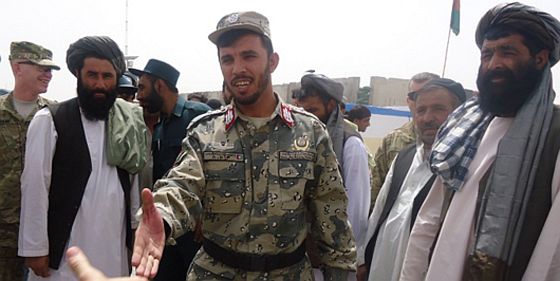
Our man in Kandahar

Afghan General Abdul Raziq

Matthieu Aikins writes:

Shyly, at times smiling with weak adolescent bravado, the two young men recounted to me how they were beaten and tortured. It was July, and we were sitting at a table in the cavernous restaurant where they both work, in the stupefying summer heat. They slouched forward with their arms on their knees, frequently glancing down toward their open sandals, at toes where livid burns from the electrical wires were still visible.

I will call them Najib and Ahmad, though their names, like others in this article, have been changed to protect their safety. Both 23 years old, they looked like gangly young men who should be playing basketball on the street outside their house, or perhaps video games inside. But here in Kandahar City, the linchpin of the U.S. military’s campaign against the Taliban in southern Afghanistan, they had found themselves the victims of America’s Afghan allies.

One afternoon in June, two younger boys who worked at the restaurant, ages 12 and 14, had been stopped by the Afghan National Police while carrying home leftovers from an afternoon wedding. The boys, who were each paid about $60 a month, explained that they always took home leftover meals for their families. But this time they were arrested and accused of bringing food to insurgent fighters hiding outside the city.

Around 11 o’clock that night, police showed up at the restaurant and arrested Najib and Ahmad as well, accusing them of having sent the younger boys out to feed the Taliban. They were taken to police headquarters, where they were handed over to men wearing the mottled gray-green uniforms of the Border Police.

“They said, ‘We are going to beat you,’” Ahmad recalled.

The Border Police were a new sight in the city: rough-looking types with wraparound shades and bandoliers of grenades, who could be seen lounging at checkpoints throughout the city and guarding installations such as the governor’s palace. Though restricted by Afghan law to operate only in international airports or within 50 kilometers of the border, they’d entered the city on May 29 when their boss, Brigadier General Abdul Raziq, was appointed acting chief of police in Kandahar province, following the assassination of his predecessor. Raziq was well known as a warlord and suspected drug trafficker who had waged a brutal campaign against the Taliban. He was also a close ally of both President Hamid Karzai and the U.S. military.

Inside the station, the policemen tied a scarf to Najib’s handcuffs and hung him from the ceiling until he felt as if his arms were being pulled from their sockets. Then two men—one in uniform and holding a black metal baton, the other in plain clothes and wielding a length of cable—began beating him across his hips and thighs. A third man, also in plain clothes, questioned Najib: “What was the name of the commander you were bringing food to? How often do you bring food to the enemy?” Sobbing, Najib pleaded his innocence. In a nearby room, Ahmad could hear his friend’s screams, though he was spared for the time being.

When the beating was over, Najib and Ahmad were taken outside and thrown into the back of an armored Humvee, where they lay all night with their wrists still tightly cuffed, suffocating in the stiflingly hot, enclosed interior.

Early the next morning, they were taken to the governor’s palace, a long, low white compound fronted by a series of arches, jointly guarded by American soldiers and Border Police, where U.S. and Afghan officials meet on a daily basis. The police brought them around the back, to a filthy room that smelled of human waste, where they were shackled to the wall next to two other prisoners. Then, one at a time, they were taken to a second room, empty except for a gas-powered generator.

Najib went first. He was forced to lie on his back, and wires leading to the generator were attached to toes on both his feet. A group of Border Police crowded around him, jeering and spitting snuff on his face. “Tell us the truth,” they commanded. Then they switched on the power. “It felt,” Najib told me, “like my whole body was filled with moving knives.”

After he passed out from the pain, it was Ahmad’s turn to be tortured. When the two awoke from the ordeal, they were placed in separate rooms. In the evening, they were taken to police headquarters to see Abdul Raziq himself.

Raziq is just 33 years old, slender and boyish-looking, with a square jaw and a widow’s peak that tufts up beneath the embroidered pillbox cap he favors when he’s not in uniform. Uneducated but clever and charismatic, he is, despite his youth, one of the most powerful warlords in southern Afghanistan. He controls a militia of several thousand men, as well as the lucrative drug-smuggling routes that pass through his territory, which includes a key trading town called Spin Boldak, near the border with Pakistan.

That June evening, Najib and Ahmad were seated facing Raziq, who asked them to explain why they had been arrested. They told him about the younger boys who would take leftover food home to their families, and whether it was because they had not confessed, or because their stories had checked out, Raziq ordered them released.

Najib and Ahmad complained to me of suffering nerve damage in their wrists from being cuffed for two days, and both said they’d had problems with their kidneys since the electrocutions: Ahmad, who had the more-severe burns, urinated blood for three days afterward. I examined the wounds on Ahmad’s and Najib’s toes—distinct circular burn marks that were still raw and unhealed—and I spoke with a number of their co-workers, who corroborated their claims. I was also given photos of their injuries taken immediately after they were released, and was told their story independently by a source inside the Kandahar police department unhappy with the abuses taking place under Raziq. “That’s what happened to them, when they were innocent,” this official said. “Think of what they do to the guilty.”

What happened to Ahmad and Najib is not an isolated incident, but part of a larger pattern of abuse that has occurred wherever Raziq has been in power, first in his outpost of Spin Boldak and now in Kandahar City. Raziq has long been publicly suspected of drug trafficking and corruption; allegations that he and his men have been involved in extrajudicial killings, torture, and illegal imprisonment have been trickling out for years. Raziq categorically denies all such charges, telling The Atlantic, “When someone works well, then he finds a lot of enemies who try to ruin his name.”

Last fall, Raziq and his militia were given a starring role in the U.S.-led military offensive into Taliban-controlled areas west of Kandahar City, a campaign that boosted his prestige immensely. Mentored by an American Special Forces team, Raziq’s fighters won public praise from U.S. officers for their combat prowess. After the offensive, Raziq was promoted to brigadier general—a rank requiring a direct order from President Karzai—in a January ceremony at the governor’s mansion. As Ben Moeling, who was until July the State Department’s senior official in Kandahar province, explained to me at the time, the promotion was “an explicit recognition of his importance.”

Facebooktwittermail

In Pakistan media a frenzy of hostility towards the U.S.

The New York Times reports:

The United States might still be weighing its options about how to deal with Pakistan, but many politicians, retired army generals and popular television talk show hosts here have already made up their minds that America is on the warpath with their country.

Such is the media frenzy and warmongering that popular talk show hosts have even begun discussing possible scenarios of how Pakistan should react if the United States attacks the country. One television news channel has even aired a war anthem.

Prime Minister Yusuf Raza Gilani has called on a conference of opposition political parties and government’s allies for Thursday to discuss the crisis. The government is also enlisting allies.

Islamabad, the capital, has seen a flurry of diplomatic activity with the visits of Chinese and Saudi officials. The American ambassador, Cameron Munter, has also met with President Asif Ali Zardari and Foreign Secretary Salman Bashir.

After meeting with Vice Premier Meng Jianzhu of China on Tuesday, Mr. Gilani said that “China categorically supports Pakistan’s efforts to uphold its sovereignty, independence and territorial integrity,” an oblique reference aimed at the United States.

Reuters reports:

Pakistan warned the United States on Tuesday to stop accusing it of playing a double game with Islamist militants and heaped praise on “all-weather friend” China.

Prime Minister Yusuf Raza Gilani, speaking exclusively to Reuters, said any unilateral military action by the United States to hunt down militants of the Haqqani network inside Pakistan would be a violation of his country’s sovereignty.

However, he side-stepped questions on the tense relations with the United States and offered no indications of any steps Pakistan might take to soothe the fury in Washington.

Facebooktwittermail

A royal decree allowing women the right to vote can’t hide the decay in the House of Saud

Outside Saudi Arabia, most people would regard an end to the prohibition on women driving to be a small but essential sign of progress. King Abdullah, on the other hand, seems to imagine that he can signal a turn in the right direction by an even more miniscule step: he has “overturned a court ruling sentencing a Saudi woman to be lashed 10 times for defying the kingdom’s ban on female drivers.”

Simon Henderson writes:

Articles enumerating the advances in women’s rights in Saudi Arabia have, until now, tended to be rather short. There simply hasn’t been much to write about: Saudi women haven’t had many rights, at least not in terms Westerners usually understand — the right to vote, the right to drive, or the right to travel without a male guardian. But with King Abdullah’s royal decree on Sunday, Sept. 25, granting women the right to vote in municipal elections, there has now been a river of commentary placing this reform in the context of the upheaval elsewhere in the Arab world. This news, however, does not justify the tediously high word counts that the commentariat will undoubtedly reach over the next few days.

King Abdullah’s edict is certainly a change. It might even be progress. But some caution is necessary. Women will not actually be allowed to vote until municipal elections in 2015 — when they will also be allowed to stand as candidates. In Saudi Arabia’s nascent parliament, the appointed consultative council, change will come earlier: Women will be allowed to serve in the next session, which will begin in 2012.

The delay might matter. King Abdullah is 88 years old and has a variety of ailments. He might not be around this time next year. His nominated successor, Crown Prince Sultan, 87, is even less likely to be alive then; he currently resides in a New York City hospital and is believed to be terminally ill. The apparent next in line, the conservative Prince Nayef, likely has a different attitude toward women’s rights. In the past he has spoken out against the nascent campaign to allow women to drive.

Facebooktwittermail

SCAF’s assault on Egypt’s civil society

Stephen McInerney writes:

Civil society is an essential component of any democracy and it will be a key factor in determining the success of the democratic transitions now underway in the Middle East and North Africa. In his May 19 speech, President Barak Obama identified “a vibrant civil society” as one of four areas in which Egypt and Tunisia should set a strong example for the region. Speaking to a global forum in Sweden last month, Secretary Hillary Clinton described civil society as “a force for progress around the world,” while noting that “in too many places, governments are treating civil society activists as adversaries, rather than partners.” Sadly, nowhere is that now more true than in Egypt, where the ruling Supreme Council of the Armed Forces (SCAF) has steadily escalated a campaign against this community which is even more repressive than during the Mubarak era.

Unlike neighboring Libya and Tunisia, in which civil society was almost nonexistent prior to the revolutions of this year, Egypt has thousands of longstanding civil society organizations. Under Mubarak, the vast majority of these groups avoided any political issues, human rights concerns, or criticism of the Mubarak regime, instead focusing on issues such as health, education, and family welfare. The small subset of these groups that dared to work on political issues or human rights abuses were often the target of government harassment, interference, and intimidation. In the weeks following Mubarak’s fall, Egyptian NGOs were eager to play a broader role and to help guide the political processes during Egypt’s transition. Unfortunately, frustration set in quickly as the SCAF appeared to entirely ignore the views of civil society in its decision-making process. Tensions grew throughout the spring as the SCAF continued to ignore the demands and recommendations of civil society actors and increasingly sought to undermine their reputation with the Egyptian public, primarily through stories in the state-run media implying that Egyptian NGOs are working on behalf of foreign agendas.

In recent months, the SCAF has dramatically escalated these attacks on civil society. On July 12, Minister of International Cooperation Faiza Abul-Naga announced that the government would establish a commission of inquiry to investigate the funding of civil society organizations. Only two weeks later, state-owned October magazine ran a cover story — illustrated with a crude depiction of U.S. Ambassador to Egypt Anne Patterson burning Tahrir Square with flaming U.S. dollars — that accused the United States of undermining Egypt’s revolution by funding civil society organizations.

Facebooktwittermail

Armed defenders of Syria’s revolution

AJ Editor’s note: Al Jazeera special correspondent Nir Rosen spent seven weeks travelling throughout Syria with unique access to all sides. He visited Daraa, Damascus, Homs, Hama, Latakia and Aleppo to explore the uprising and growing internal conflict. In the second article of his series he meets with leaders of the armed opposition in Homs. Names of some of the indivduals quoted have been changed to protect their identities.

While outsiders debate when or if the Syrian opposition will turn to arms, on the ground it is clear that elements of the opposition have used violence against the security forces from early in the uprising in response to the regime’s harsh crackdown.

Over a period of seven weeks, from July to September, I spent time among the many factions in the strugle for Syria. It is a conflict fought on the streets and in the media. For the most part, unarmed opposition activists seeking the overthrow of the regime have used demonstrations as their guerrilla tactic. The regime has succeeded in containing or suppressing the opposition, limiting the times and places they can demonstrate. The opposition has failed to expand its constituency outside the Sunni majority or even to win over the Sunni bourgeois of Damascus and Aleppo. Sectarian hatred grows on both sides, leading to early signs of communal violence. At the same time, a more professional and organised armed opposition movement has emerged.

Spend enough time in Homs and you will be confronted with the battles between security forces and their armed opponents. On July 21 Syrian security forces clashed with opposition fighters in the city’s Bab Assiba neighbourhood.

The following day I met several members of state security. They were saddened by the loss of a captain in the Ministry of Interior’s SWAT unit – he had been shot in the neck just above his vest. I was told that the day before, opposition fighters had used a rocket propelled grenade in Ashiri on the outskirts of Homs. One State security man called Shaaban complained that Bab Assiba had become its own state. The day before, he had taken part in heavy fighting there and helped transport 35 wounded soldiers out. “It was like a wedding,” he laughed as he described the shooting.

Some attacks resemble a nascent insurgency. The next day, a train from Aleppo was derailed nearby in Qizhi. Official reports said the conductor was killed, and his assistant along with many of the 480 passengers were injured. I drove west out of the city and then along a canal to the site of the train crash. The tracks on a small bridge had clearly been removed and the train had been knocked off the tracks with some of the carriages turned over on their side, and the conductor’s carriage partially burned. It seemed real enough, though it was odd that only the conductor had been killed. Several days later, an oil-pipeline was blown up outside Homs.

See also, Syria: The revolution will be weaponised, the first article in this series.

Facebooktwittermail

British ambassador to Syria talks to Al Jazeera

On his blog, Simon Collis, Britain’s Ambassador to Syria, writes:

The Syrian regime doesn’t want you to know that its security forces and the gangs that support them are killing, arresting and abusing mostly peaceful protesters: The UN says over 2,700 people have died in the last six months, some of them under torture in prison. It doesn’t want you to know that it is preventing many from meeting peacefully to discuss reform. It wants you to hear only one version of the truth – its own. And to see only one way out – the return to authoritarian rule where fear surpasses a desire for freedom. This is a regime that remains determined to control every significant aspect of political life in Syria. It is used to power. And it will do anything to keep it.

People say that in today’s world it’s no longer possible to hide the truth. A lot’s been said about the power of Twitter and Facebook, the inability for information to be censored in Tunisia and Egypt. The cruel reality in Syria is that they are doing all they can to pull the shutters down.

Foreign journalists are refused entry. Any non-Syrian local correspondents are kicked out – sometimes after a beating. Syrian correspondents, bloggers and citizen journalists are systematically tracked down and imprisoned. It’s a criminal offence to have a satellite phone. Mobile phone and internet networks are heavily monitored, or connection reduced to a crawl especially on Fridays. They are cut entirely anywhere the security forces mount mass arrest campaigns or send heavy armour into cities. Websites and satellite TV channels are blocked, with help from Iran. Before the start of this crisis Reporters Without Borders already ranked Syria as the fifth worst place in the world for media freedom. Over the last six months it’s got worse. A lot worse. The regime wants to create its own truth. We should not let it.

Facebooktwittermail

Netanyahu’s messianism could launch attack on Iran

Sefi Rachlevsky writes:

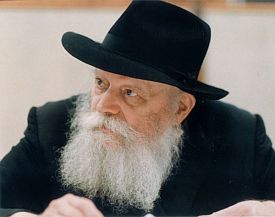
Benjamin Netanyahu promised to tell the truth at the United Nations, and the truth was indeed revealed. The prime minister chose in this speech to quote reverently from his meetings with one person only: the Lubavitcher Rebbe, who viewed himself as the messiah.

Neither the source nor the inflammatory quotation was coincidental. Netanyahu was intimately acquainted with the Rabbi King Messiah, and also with the views he expressed from on high. The rebbe’s followers stood behind Netanyahu’s victorious campaign in the 1996 election, which following the incitement-filled demonstrations and Yitzhak Rabin’s assassination, with the slogan “Netanyahu is good for the Jews.” And on Sunday, the prime minister’s entourage was sent to genuflect at the rebbe’s court.

The Lubavitcher Rebbe was famous for his vehement opposition to even the tiniest withdrawal from any territory ever held by the Israel Defense Forces, even in the framework of full peace. He even opposed withdrawing from territory on the other side of the Suez Canal. In his view, not one inch of the Holy Land could be given to the Arabs. He based this opposition on both security concerns – that missiles would be deployed on any vacated territory – and religious-historical arguments. Netanyahu reiterated both claims in his speech to the United Nations.

The most prominent emissaries of the Lubavitcher Rebbe – the great rabbi, as Netanyahu termed him at the United Nations – included Baruch Goldstein, perpetrator of the 1994 Hebron massacre, and Yitzhak Ginsburg, the rabbi of Yitzhar, he of the radical books “Baruch the Man” (which celebrates the massacre ) and “The King’s Torah: The Laws of Killing Gentiles.” Nor was this by chance. The Lubavitcher Rebbe inculcated his followers with the doctrine of “your people are the land’s only nation”: In the land of the messiah, there is no room for Arabs. Thus racism entered Netanyahu’s speech at the United Nations – not “merely” against Islam, but also against Arabs: They, he said, are not like your neighbors in New York.

Relying on the Lubavitcher Rebbe and his teachings in a speech that was ostensibly in favor of a Palestinian state is like relying on a racist who fervently supports slavery in a speech that is ostensibly in favor of abolition, while also making abolition contingent upon conditions that will never be met. And thus, in a speech that warned about the danger of radical Islam, Netanyahu relied upon the most radically messianic Jewish theologian of our generation.

But Netanyahu, whose speech was steeped in religious extremism, surpasses even his rabbi. For all his hatred of Arabs, the Lubavitcher Rebbe never incited against Jews. Netanyahu – from the demonstrators chanting “with blood and fire we’ll expel Rabin” through the whispers that “the left has forgotten what it is to be Jewish” to his links with the radical Im Tirtzu organization – has also engaged in domestic incitement.

The Quartet’s plea that Netanyahu, of all people, should bring about a full withdrawal from the occupied territories and Arab East Jerusalem within a year is thus pathetic. It is like wishing that Michele Bachmann would turn America into a welfare state or that Eli Yishai, leader of the ultra-Orthodox Shas party, would separate religion and state.

Bill Clinton, someone with vast experience of Netanyahu, had it right: The man is not interested in peace and compromise. Netanyahu opposed peace with Egypt and the first Oslo accord. He led a campaign of incitement against the Oslo-2 agreement and then refused to implement it. Ariel Sharon, Rafael Eitan and then-Israel Defense Forces Chief of Staff Amnon Lipkin-Shahak were stunned by what they interpreted as his willingness to consider arming doomsday weapons in the face of Saddam Hussein’s threats, and they worked to dissuade him. Netanyahu opposed the pullouts from Lebanon and Gaza, and not because he thought they should have been done by agreement. Nor did he respond to Mahmoud Abbas’ moderation by taking advantage of the opportunity: Instead, he waged a campaign of incitement to preempt any chance of a deal and a withdrawal.

After all, he is the emissary of the Chabad messiah, the man who taught that this is the Jews’ land exclusively. He returned from the United States with the feeling that the American government is a rag to wipe his feet on, with no power to stop his most extremist plans.

This is the background to what must become a global understanding of the issue that is now most important of all, which will also be the main topic of U.S. Defense Secretary Leon Panetta’s visit. Netanyahu is completely serious in his desire, and also in his preparations to circumvent the warnings of the entire defense establishment in order to implement this desire, which many of those in his inner circle have defined as messianic: to attack Iran before winter. Before the clouds come, anyone who can stop him must do so.

Facebooktwittermail

Why the U.S. should support Palestinian statehood at the U.N.

John Judis writes:

The United Nations was founded to make good on the ideal of national self-determination. It’s in Article One of the UN Charter. It has done so at its very beginning with Indonesia and Jewish Palestine, as well as more recently in Southern Sudan. Why not Arab Palestine? And why should the United States block such an effort? I have heard some arguments for why the United States should not favor UN membership for Palestine, but they sound very much like arguments for why the United States should not favor a Palestinian state at all. Moreover, they are the sorts of arguments that easily could have been used in 1947 against UN support for a Jewish majority state.

The United States, it is said, should not assist Palestinians in gaining membership at the UN because some Palestinians still don’t recognize the right of Israel to exist. But guess what? In 1947, there were Zionists identified with the Revisionist movement (parts of which later came together to create Likud) who denied the right of Palestinians to a state. They wanted all of Palestine and even Jordan for a Jewish state; and some of them were willing to use terror and assassination to achieve their ends. And there are still many Israelis who deny the right of Palestinians to a state. That didn’t preclude our helping Palestine’s Jews achieve statehood through the UN, and it shouldn’t impede our helping the Palestinians.

Facebooktwittermail

Wall Street protests reveal slice of America’s barely tamed brutality

Ed Pilkington writes:

One of the hardships of life as a reporter in New York City is that you so rarely get credited with the kind of heroism shown by colleagues in Helmand, say, or Baghdad. The assumption is that you’re spending time drinking gin martinis on the roof of Soho House (I prefer vodka) or dining at the Grand Central oyster bar (try the Rhode Island Cuttyhunks, they’re sumptuous), rather than dodging bullets in Tripoli.

I’d like to think that over the past few days perception of my job as a soft landing has started to change, and that its true nature as a tough, dangerous and – yes – heroic posting has begun to emerge. Take the events over the weekend in Wall Street. Admittedly, I wasn’t there, but that’s not the point. I could have been.

The protests were a lament for a nation in which, despite the 2008 meltdown, the financial system remains largely unregulated, where 46 million Americans live below the official poverty line, and where inequality is greater now than at any time since 1929. That’s hardly the stuff of revolutions: you can read Paul Krugman make a similar point every week in the New York Times. And in the land of the first amendment you’d think it was OK to shout it out in the street, even if that street is Wall Street.

Not according to the two white-shirted senior NYPD officers captured on video. The film shows a small group of women protesters, who are doing nothing menacing at all, having been kettled by police. As they stand there fenced in and defenceless, the two white shirts walk up to them, hold out a pepper-spray canister and zap them straight in the face.

It’s the officers’ insouciance that is most shocking. They engage the pepper spray as calmly as if they were handing out parking tickets, then turn and just as calmly walk away.

The video reminded me of another recent event at which I was present: last week’s execution in Georgia of Troy Davis. The case drew international attention because there was no forensic evidence and seven out of nine key witnesses had recanted their testimony.

But it was the incidental details outside the prison that caught my eye. An impassioned but entirely peaceful crowd of protesters had gathered to make the pretty reasonable argument that states should not go around killing innocent people. Georgia’s response was to line up a Swat team in black riot gear like extras in a Batman movie and fly police helicopters with spotlights overhead. Add to that the balmy night and the loud buzzing of the crickets and it was like stepping back in time into a pastiche of the old Deep South.

It would be tempting to blame the extraordinary cruelty of that night on residual southern racism. But the most gruesome element of the proceedings had nothing to do with Georgia. Rather it came from the highest court in the land, the bastion of American justice, the US supreme court in Washington. It was the supreme court that kept Davis waiting for four full hours, not knowing whether he was about to live or die, and then announced the execution could go ahead. Calmly, insouciantly, just like those New York cops.

The combination of pepper spray, Swat teams and judicial torture – for that is what it was – underlined for me a strain of American life that is forever present but rarely makes itself so boldly visible as it has this week. You find it nostalgically glamorised in westerns and Coen brothers films – rough justice, primordial morality, the cold hard logic of the gun. It’s a barely tamed brutality that sits oddly with America’s claim to be the standard-bearer of civilisation in the world.

Facebooktwittermail

Behind the scenes of #OccupyWallStreet

Danny Schechter writes:

Back in the 1960s, a gang of Yippies, a politicised arm of the hippies led by the late Abbie Hoffman, wormed their way into the tour of the New York Stock Exchange. While up on the visitors’ gallery, looking down on the trading floors, they threw US legal tender – coins and bills – at the men below who, when they realised what it was, began diving for dollars.

That colourful assault on the money culture took place 40 years ago on August 24, 1967. CNN recently remembered the moment, noting: “Some of the brokers, clerks and stock runners below laughed and waved; others jeered angrily and shook their fists.”

The bills barely had time to land on the ground before guards began removing the group from the building, but news photos had been taken and the Stock Exchange “happening” quickly slid into iconic status.

Once outside, the activists formed a circle, holding hands and chanting “Free! Free!” At one point, Hoffman – an old friend of mine – stood in the centre of the circle and lit the edge of a $5 bill while grinning madly, but an NYSE runner grabbed it from him, stamped on it, and said: “You’re disgusting.”

What disgusts some, inspires others, and that event is now firmly embedded in the legacy of the US left, which may have changed its character, but not its dislike of America’s Mecca of money and symbol of greed.

In the 1920s, the “Street” was bombed by anarchists, but a new non-violent breed today, holding on to the hatred of the wheeling and dealing that drives US capitalism – and perhaps global capitalism – have for the last week staged an encampment a few blocks north of the Exchange as a part of what they call #OccupyWallStreet.

Facebooktwittermail

Even those cleared of crimes can stay on FBI’s watch list

The New York Times reports:

The Federal Bureau of Investigation is permitted to include people on the government’s terrorist watch list even if they have been acquitted of terrorism-related offenses or the charges are dropped, according to newly released documents.

The files, released by the F.B.I. under the Freedom of Information Act, disclose how the police are instructed to react if they encounter a person on the list. They lay out, for the first time in public view, the legal standard that national security officials must meet in order to add a name to the list. And they shed new light on how names are vetted for possible removal from the list.

Inclusion on the watch list can keep terrorism suspects off planes, block noncitizens from entering the country and subject people to delays and greater scrutiny at airports, border crossings and traffic stops.

The database now has about 420,000 names, including about 8,000 Americans, according to the statistics released in connection with the 10th anniversary of the Sept. 11 attacks. About 16,000 people, including about 500 Americans, are barred from flying.

Timothy J. Healy, the director of the F.B.I.’s Terrorist Screening Center, which vets requests to add or remove names from the list, said the documents showed that the government was balancing civil liberties with a careful, multilayered process for vetting who goes on it — and for making sure that names that no longer need to be on it came off.

“There has been a lot of criticism about the watch list,” claiming that it is “haphazard,” he said. “But what this illustrates is that there is a very detailed process that the F.B.I. follows in terms of nominations of watch-listed people.”

Still, some of the procedures drew fire from civil liberties advocates, including the Electronic Privacy Information Center, which made the original request and provided the documents to The New York Times.

Facebooktwittermail