Author Archives: News Sources

Why Norway terror accused Breivik says he loves Israel

Tony Karon writes:

There was a time when a blond, blue-eyed nationalist looking to violently rid Europe of its “alien” immigrant population could be reliably assumed to hate Jews. It’s no longer quite that simple.

Anders Behring Breivik insists, in his rambling 1,500-page manifesto released on the day of his confessed rampage that killed 76 Norwegians, that he’s no Nazi, despite expressing some sympathy for what Hitler had been trying to achieve. Instead he styles himself a latter-day warrior of the Knights Templar, vanguard force of the medieaval Christian Crusades that briefly claimed the Holy Land for Christendom and made Jerusalem’s streets run ankle deep with the blood of those they saw as usurpers. Even then, it’s worth remembering that the blood spilled by the Crusaders was both Muslim and Jewish.

Despite the Crusader lineage to which he aspires, however, Breivik has no intention of driving Jews from Europe, much less from the Holy Land. On the contrary, his manifesto hails Zionist Jews as a crucial ally in his battle between Christendom and Islam, proclaiming Israel as the frontline citadel in that war. Breivik’s Crusade would have Jews on board for an existential fight against Islam; the mirror image of the “Crusader-Jewish” alliance that Osama bin Laden vowed to drive out of what he defined as Muslim lands.

Facebooktwittermail

The role of the border in the Israeli-Palestinian conflict

Daniel Levy writes:

In March of this year, the Saban Center for Middle East Policy at the Brookings Institution hosted a crisis simulation exercise on the Israeli-Palestinian issue. The participants, myself included, assumed the roles of key players from the US, Israeli, and Palestinian sides and were presented with a scenario in which the protagonists were two weeks into the implementation of a US-brokered agreement on borders and security.

The March simulation exercise envisaged a Palestinian state alongside Israel with a border that was based on the 1967 lines, including a one-to-one land swap allowing for the majority of settlers to be annexed to Israel’s newly agreed and recognized boundaries with the remainder being evacuated by Israel according to an agreed timetable of implementation. Outstanding issues – final arrangements for Jerusalem’s old city, the claims of the Palestinian refugees, and an end of conflict – were left to be negotiated on a state-to-state basis between Israel and Palestine.

The implicit assumption of the simulation was that an Israeli-Palestinian border agreement is the key to unlocking and ultimately resolving the long-standing Israeli-Palestinian conflict. It is an idea that has gained considerable currency in decision-making and policy circles.

This would seem to suggest that the Israel-Palestine issue is itself a border dispute. That proposition would strike many as strange. Israel-Palestine is clearly not a classic territorial dispute in the sense of there being a state ‘A,’ existing on territory ‘X’ and a state ‘B’ existing on territory ‘Y’ with a territorial area ‘Z’ which is in dispute between states ‘A’ and ‘B.’ If this is about territory, then perhaps it is easier to consider the conflict as being about all of the territory.

That too may sound counterintuitive given the tendency, especially since the Oslo Accords beginning in 1993, to emphasize the territorial division of 1967 as the starting point for negotiations and potential solutions. Yet neither nationalism has remained static and addressing all of the territory probably better approximates the points that the respective nationalisms have reached today. From a religious Zionist perspective, for instance, Shchem/Nablus or Rachel’s Tomb on the outskirts of Bethlehem (both of which are beyond the 1967 line in the Occupied Palestinian Territories or OPTs) are of symbolic significance, unlike Tel Aviv, Rishon Lezion, Modi’in, or any number of modern Israeli towns and cities. From a historical perspective, there was Zionist settlement in Hebron and the Etzion bloc (both in the OPTs) before the 1949 Armistice Lines were drawn.

Facebooktwittermail

Libya: Britain cuts last ties with Gaddafi regime

The Guardian reports:

Britain is to open negotiations at the UN to unfreeze assets running into hundreds of millions of pounds to be funnelled to the Libyan rebel council that was recognised by the UK on Wednesday as the “sole governmental authority” in the country.

As the foreign secretary, William Hague, announced the expulsion of the Libyan chargé d’affaires and the eight remaining Libyan embassy staff in London, British diplomats in New York were drawing up plans to unfreeze assets covered by UN sanctions.

Britain has frozen £12bn of Libyan assets since the conflict began in February this year, the vast bulk of which will remain frozen until the regime of Muammar Gaddafi loses power. But a proportion of the assets can be released if Britain can prove that they will only be used by the Benghazi-based National Transitional Council (NTC).

The push by the UK, which has temporarily closed its embassy in Tripoli, will raise questions about whether the funds will be used to buy arms. Foreign Office sources said assets would remain frozen if there is any evidence or suspicion that they were being used to pay for arms, even for the Libyan rebels. Arms sales of any description to any quarter in Libya are banned by UN sanctions.

But a source close to the NTC said funds may be used to buy weapons. “We can’t,” a source close to the NTC told the Guardian when asked how it would make sure funds are not used to buy weapons.

The source added: “We are militarily engaged in removing Gaddafi. Therefore it would be a bit strange to say that we are happy for you to have the no-fly zone, but rather that you didn’t buy arms.

“They [the NTC] haven’t been able to meet their payroll, which is their biggest problem to keep going. They also desperately need money to buy arms, particularly in the western mountains where there is often one weapon between two fighters, who go into battle hoping to get one from the enemy or a fallen comrade.”

Facebooktwittermail

Poll: Anti-Muslim sentiment grew after bin Laden death

The Christian Century reports:

Many Muslim Americans had hoped that the death of Osama bin Laden would improve their image among other Americans, but according to a new survey, just the opposite has happened.

Rather than being mollified, anti-Muslim sentiment has intensified since Navy Seals killed the al-Qaida leader in a May 1 raid in Pakistan, according to a new report by researchers from the Ohio State University School of Communication, Cornell University’s Survey Research Institute, and the University of New Hampshire Survey Center.

In the weeks before bin Laden’s death, nearly half of respondents described Muslim Americans as “trustworthy” and “peaceful,” researchers said. After bin Laden’s death, that figure dropped to one-third of respondents.

For Muslims, perhaps the most troublesome finding was that these negative shifts had occurred among political liberals and moderates, a constituency that had been seen as the most sympathetic to Muslims after the 9/11 terrorist attacks.

Facebooktwittermail

Somalia: victim of war, famine and a pestilence of policy

Carne Ross writes:

The news from Somalia is grim. Last week, the UN declared a famine in two southern areas, calling the food crisis Africa’s worst since 1991-92 (which was also in Somalia). The UN estimates that a staggering 3.2 million people need urgent assistance.

The immediate cause of the crisis was the recurrent failure of seasonal rains across the Horn of Africa. But it will be exacerbated by the continuing instability in Somalia, where the internationally recognised (and appointed) government controls but a few blocks of the capital, Mogadishu. The rest of the country is under the sway of various other groups, including the al-Shabaab militia. For most Somalis, the famine represents a deeper trough of an already existing and perpetual misery of abject poverty and instability.

International policy to stabilise Somalia has been a total failure. Yet, the same policies persist. In 2000, the “international community” set up what it thought was a legitimate government in Somalia, in an attempt to create a political consensus where none existed. Today, the so-called Transitional Federal Government (TFG) is neither transitional nor federal, nor even really a government, in that it offers no prospect of a transition to a more durable alternative, does not represent the rest of Somalia in a meaningful way, and, as a government, provides no services to its people, who did not elect it, in any case. The TFG is, in the words of a recent International Crisis Group report, “incompetent, corrupt and hobbled by weak leadership” and should be given a deadline to shape up, or be removed. Very few observers expect it to shape up: the current system pays the cabal who control it far too well.

Given the total absence of effective central authority, it cannot be a surprise that Somalia is fracturing into different statelets, some of which have existed as separate – and peaceful – entities for some time. In the north, Somaliland (which, for full disclosure, Independent Diplomat advises) declared its independence at the end of the civil war in 1991. Since then, it has built its own democratic institutions, held respectable elections and is governed peacefully by a new government that is widely respected. To Somaliland’s east, Puntland appears to be establishing itself as a separate state. And in the more lawless south, smaller self-governing enclaves are springing up, in Galmudug, and in Jubaland, along the Kenyan border.

Facebooktwittermail

Norwegians still see the occupation as reason for attacks on Israel

In the Hebrew daily, Ma’ariv, Norway’s ambassador to Israel, Svein Sevje, was interviewed on Tuesday and asked whether the attacks in Oslo and Utøya carried out by Anders Behring Breivik, will alter Norwegians’ perception of Palestinian attacks on Israel.

Q: Has this caused you to undertake some soul-searching? Has it changed Norway’s and its citizens’ opinion as to what the international community calls the battle against the Israeli occupation of the West Bank?

Probably not. We Norwegians consider the occupation to be the cause of the terror against Israel. Many Norwegians still consider the occupation to be the reason for the attacks on Israel. Those who believe this will not change their mind because of the attack in Oslo.

Q: In general, the perception in Israel is that you are against us. Why?

You have to explain to me why Israelis perceive us to be against you. I don’t think that Norway is anti-Israel, but rather criticism of the occupation and what we consider a violation of international law and support for the Palestinians’ right to have a state. We have supported Israel since its establishment. And then 1967 came along and the occupation and the settlements—and Norway’s attitude toward Israel changed. The Palestinians are the weak side, and Norway tends to support the weak side. Incidentally, Israelis may be surprised to learn the depth of the connection between Israel and Norway. For example, the Norwegian pension fund invested a billion dollars in Israeli companies. This is despite the fact that there are Israeli companies in which we don’t invest because they violate international law and are building the separation fence.

Q: Some Israelis would say that the terror attack in Norway is an “eye for an eye” for your positions against Israel.

Then I say that they are mistaken. The Norwegians will not change their position because of what happened. It will not change our understanding of international law and justice.

Q: Will this terrible terror attack have ramifications for the Muslim community in your country?

I will quote from Sholem Aleichem’s play Tevye the Milkman, in which I played the small role of Rabbi Nahum the butcher in 1968. When they were persecuted, one of the Jews said they should restore “an eye for an eye and a tooth for a tooth” to the pogroms. Tevye said: “and we’ll do this until the world no longer has any teeth or eyes?” In other words, the answer is no. As our prime minister said: we will respond with more openness, transparency and democracy.

Q: Why are you, out of all the important Europe states, the only one to say in a clear voice that you will support recognition of Palestinian state in the UN?

Norway has said that it prefers an arrangement reached through negotiations, but we think that it is legitimate for the Palestinian side to go to the UN.

Q: If you were the world policeman today, what would your parameters be for resuming the talks?

In general, resuming the negotiations would be based on the 1967 borders with a land swap on a scale of 1:1, dividing Jerusalem as the capital of the two states, a symbolic solution to the refugee problem and compensation by means of a fund to the refugees.

Q: Are you in favor of a political dialogue with Hamas?

We have no political dialogue with Hamas, but we do have connections on the level of senior officials and we meet with them. Can Israel and the Palestinians solve the problems without Hamas? I don’t think so.

Facebooktwittermail

Europeans against multiculturalism

At Boston Review, John R. Bowen writes:

One of the many signs of the rightward creep of Western European politics is the recent unison of voices denouncing multiculturalism. German Chancellor Angela Merkel led off last October by claiming that multiculturalism “has failed and failed utterly.” She was echoed in February by French President Nicolas Sarkozy and British Prime Minister David Cameron. All three were late to the game, though: for years, the Dutch far right has been bashing supposedly multicultural policies.

Despite the shared rhetoric, it is difficult to discern a common target for these criticisms. Cameron aimed at an overly tolerant attitude toward extremist Islam, Merkel at the slow pace of Turkish integration, and Sarkozy at Muslims who pray in the street.

But while it is hard to know what exactly the politicians of Europe mean when they talk about multiculturalism, one thing we do know is that the issues they raise—real or imagined—have complex historical roots that have little to do with ideologies of cultural difference. Blaming multiculturalism may be politically useful because of its populist appeal, but it is also politically dangerous because it attacks “an enemy within”: Islam and Muslims. Moreover, it misreads history. An intellectual corrective may help to diminish its malign impact.

Political criticisms of multiculturalism confuse three objects. One is the changing cultural and religious landscape of Europe. Postwar France and Britain encouraged immigration of willing workers from former colonies; Germany drew on its longstanding ties with Turkey for the same purpose; somewhat later, new African and Asian immigrants, many of them Muslims, traveled throughout Western Europe to seek jobs or political refuge. As a result, one sees mosques where there once were only churches and hears Arabic and Turkish where once there were only dialects of German, Dutch, or Italian. The first object then is the social fact of cultural and religious diversity, of multicultural and multi-religious everyday life: the emergence in Western Europe of the kind of social diversity that has long been a matter of pride in the United States.

The second object—suggested by Cameron’s phrase “state multiculturalism”—concerns the policies each of these countries have used to handle new residents. By the 1970s, Western European governments realized that the new workers and their families were there to stay, so the host countries tried out a number of strategies to integrate the immigrants into the host society. Policymakers all realized that they would need to find what later came to be called “reasonable accommodations” with the needs of the new communities: for mosques and schools, job training, instruction in the host-country language. These were pragmatic efforts; they did not aim at assimilation, nor did they aim to preserve spatial or cultural separation. Some of these policies eventually were termed “multicultural” because they involved recognizing ethnic community structures or allowing the use of Arabic or Turkish in schools. But these measures were all designed to encourage integration: to bring new groups in while acknowledging the obvious facts of linguistic, social, cultural, and religious difference.

The third object that multiculturalism’s critics confuse is a set of normative theories of multiculturalism, each of which attempts to mark out a way to take account of cultural and religious diversity from a particular philosophical point of view. Although ideas of multiculturalism do shape public debates in Britain (as they do in North America), they do so much less in continental Europe, and even in Britain it would be difficult to find direct policy effects of these normative theories.

Politicians err when they claim that normative ideas of multiculturalism shape the social fact of cultural and religious diversity: such diversity would be present with or without a theory to cope with it. Nor are state policies shaped by those ideas, which tend to be recent in origin. Quite to the contrary, each European country has followed well-traveled pathways for dealing with diversity. Methods designed to accommodate sub-national religious blocs are now being adapted and applied to Muslim immigrants. Far from newfangled, misguided policies of multiculturalism, these distinct strategies represent the continuation of long-standing, nation-specific ways of recognizing and managing diversity.

Facebooktwittermail

Hardships in Tripoli buoy rebels

The Wall Street Journal reports:

Motorists in Libya’s capital can wait days for fuel, and when they get it they have to spend about $12 a gallon—when they used to pay 60 cents. Bank withdrawals are limited to 1,000 Libyan dinars (about $625) a month. The prices of bread and other food staples have doubled.

People who recently left Tripoli tell of a city whose struggle to carry on with life as normal masks a pervasive fear. They speak of near daily house raids by the Public Guards, Col. Moammar Gadhafi’s security force dedicated to stamping out any hint of dissent. But they also describe signs that the regime’s control may be weakening, as young loyalists are shipped to a front line that is creeping ever closer to the capital, and frustration mounts with growing shortages and rising prices.

Such reports hearten rebel leaders who hope a weakened security apparatus and frustrated populace will hasten the regime’s collapse.

Rebel commanders say they are counting on armed cells to lead an uprising of Tripoli residents when rebel fighters close in on the city. The mood of residents, the degree of security forces’ control, and the ability of rebels in the city to get weapons and organize will help determine the strength of that potential uprising.

Obtaining a clear picture of what is happening in Tripoli, where Western journalists are shadowed by minders and limited in their movements, is difficult.

Interviews with five people who left the city in recent days—and support the rebels—offer a picture of life in Tripoli as a growing struggle. Blackouts expand by the day, knocking air conditioners out of service as the summer hits full gear. Sanctions and rebel sabotage of an oil pipeline have resulted in fuel shortages.

In a report released Monday, a United Nations team that just completed a weeklong fact-finding mission to Tripoli reported threefold price increases for food and transportation, and shortages of cash, fuel and electricity.

In general, however, basic food supplies can still be found in shops and markets, said Laurence Hart, acting U.N. humanitarian coordinator for Libya, who was on the mission.

“The issue is how sustainable the situation can be,” he said. “The main reason the food stocks are up is because the supply chain between Tunis and Tripoli is under the control of the government. If that should fall under the antigovernment forces, that would cause a serious problem in Tripoli.”

He said medical supplies, cash and fuel supplies were running low. A fuel consumption quota is in place, and Libyan oil experts have warned fuel could run out in two weeks, he said.

Facebooktwittermail

CNN’s Piers Morgan ‘told interviewer stories were published based on phone tapping’

The Daily Telegraph reports:

Piers Morgan, the CNN broadcaster, has said that newspaper articles based on the findings of people paid to tap phones and rake through bins were published during his time as a tabloid newspaper editor, it can be disclosed.

Mr Morgan, a former News of the World and Daily Mirror editor who is now a high-profile television presenter in the US, has spent the past week categorically denying ever printing material derived from phone hacking.

He spoke out after being accused by a Conservative MP and political bloggers of being involved in the phone hacking scandal that has engulfed Rupert Murdoch’s media empire, for which he used to work.

“For the record, in my time at the News of the World and the Mirror, I have never hacked a phone, told anyone to hack a phone, or published any stories based on the hacking of a phone,” he said last week on CNN, where he now hosts a talk-show.

But it has emerged that Mr Morgan gave a notably different response when asked during an interview with the BBC about his potential involvement in covert “gutter” journalistic practices during his time as a tabloid editor between 1994 and 2004.

“What about this nice middle-class boy, who would have to be dealing with, I mean essentially people who rake through bins for a living, people who tap people’s phones, people who take secret photographs, who do all that nasty down-in-the-gutter stuff,” he was asked on BBC’s Desert Island Discs in June 2009. “How did you feel about that?”

Mr Morgan replied: “To be honest, let’s put that in perspective as well. Not a lot of that went on. A lot of it was done by third parties rather than the staff themselves. That’s not to defend it, because obviously you were running the results of their work.

“I’m quite happy to be parked in the corner of tabloid beast and to have to sit here defending all these things I used to get up to, and I make no pretence about the stuff we used to do,” he told the programme’s host, Kirsty Young.

“I simply say the net of people doing it was very wide, and certainly encompassed the high and low end of the supposed newspaper market.”

Meanwhile, The Guardian reports:

Sir Hugh Orde, the president of the Association of Chief Police Officers, has lambasted Rupert Murdoch, saying the chairman of News Corporation had shown a complete denial of responsibility for what had gone on in his company.

He contrasted Murdoch’s behaviour with the leadership shown by Sir Paul Stephenson, the Metropolitan police commissioner who quit last week over his indirect links with former News of the World editors.

Orde is tipped as a possible replacement for Stephenson, and it is the second time in a few days that he has attacked the irresponsibility of News Corps.

Speaking on the BBC’s Andrew Marr programme, Orde said “You saw the chief officer of the police service of this country, Sir Paul Stephenson, saying, ‘Look this happened on my watch. I am responsible. I am therefore … It’s on my watch. I am resigning.’ Compare that to Rupert Murdoch – complete denial of any responsibility of his organisation.”

Facebooktwittermail

Suicide bomber kills Kandahar mayor

The New York Times reports:

In a further strike against the authorities in war-torn southern Afghanistan, the mayor of Kandahar was killed in his office on Wednesday when a suicide bomber detonated explosives hidden in his turban, officials said.

The killing heightened concerns that the tenuous security gains in the violent south are unraveling despite months of intensified fighting by NATO and Afghan forces.

The mayor, Ghulam Haider Hamidi, was killed in his office in central Kandahar, and one other person was injured, according to Zalmay Ayoubi, an official spokesman. The Taliban took responsibility for the attack, news agencies reported.

He was the second senior official killed this month after the leader of the Kandahar provincial council, Ahmed Wali Karzai, a half brother of President Hamid Karzai, was assassinated in his compound by a close associate on July 12. Mr. Hamidi, the mayor, had been mentioned as a possible successor to Mr. Karzai as factions jostle to replace him, news reports said.

Mr. Hamidi was close to Ahmed Wali, but many Kandahar residents described him as distant because he had spent many years in the United States.

Mr. Hamidi had launched a contentious campaign to destroy illegal homes in northern Kandahar city. The campaign was strongly resisted by the people who lived there, many of whom had been there for years. A day earlier, there had been a protest and the mayor agreed to meet with the protesters on Wednesday.

The bomber entered the mayor’ s compound with the protesters’ delegation, said Mr. Ayoubi, a spokesman for the Kandahar provincial governor, Toorylai Wesa.

Facebooktwittermail

Palestinian teens arrested by Israelis for playing soccer?

Mairav Zonszein reports:

While Israelis are busy pitching tents across the country, in the East Jerusalem neighborhood of Silwan, life under occupation goes on as usual, far away from the media’s eyes. In the shocking footage below, taken with a surveillance camera last Friday, July 22, Palestinian teens playing soccer in the street are suddenly abducted by Israeli soldiers in an undercover vehicle and hauled away. Whether guilty of stone throwing or not, this is not the way to go about conducting justice in a country’s capital.

As Sloveninan philosopher Slavoj Zizek has expressed many times, when there are no big headlines in the news about confrontations between Israelis and Palestinians, one should assume the mundane atrocities of daily occupation are taking place, in what is a very asymmetrical conflict.

Facebooktwittermail

Iranian scientist likely killed by CIA or Mossad

Reuters reports:

Western security agencies were most likely behind the killing of an Iranian scientist in an operation that underlines the myriad complications in the conflict over Iran’s nuclear program, analysts say.

Darioush Rezaie, 35, a university lecturer, was shot dead by gunmen in eastern Tehran Saturday, the third murder of a scientist since 2009. One was killed in a car bomb, the second by a device detonated remotely.

The Iranian government’s responses to past such incidents have appeared confused but the Rezaie case has surpassed previous levels, with the authorities speaking in strikingly different voices from the outset.

“Assassinations will continue to be a tool used in this covert war. While it’s impossible to tell with certainty whether Rezaie was an active nuclear scientist, his death appears to be another episode in that war,” said London-based analyst Ghanem Nuseibeh, founder of Cornerstone Global Associates.

“The Iranian narrative has been confused about Rezaie’s work and this adds credence to the speculation that he has been involved in the nuclear program.”

When news of the shooting first came out, semi-official news agency Mehr published information on Rezaie’s background which indicated involvement in Iranian nuclear activities that have brought international sanctions on the Tehran government.

But the report was then immediately withdrawn by Mehr and Iran’s intelligence minister Heydar Moslehi and other officials denied Rezaie had any links to the nuclear energy program.

The New York Times reported last week:

Eight months after he narrowly survived an assassination attempt on the streets of Tehran, Fereydoon Abbasi, the nuclear physicist whom Iran’s mullahs have put in charge of the country’s Atomic Energy Organization, is presiding over what intelligence officials in several countries describe as an unexpected quickening of Iran’s production of nuclear material.

The selection of Dr. Abbasi earlier this year was itself a clear message to the West. As a university scientist, he was barred from traveling outside Iran by the United Nations Security Council because of evidence that his main focus was on how to build nuclear weapons, rather than power plants. But in recent weeks he has publicly declared that his country is preparing to triple its production of a type of nuclear fuel that moves it far closer to the ability to produce bomb-grade material in a hurry.

Filtering out the hyperbole surrounding recent proclamations about Iran’s tangible progress is always difficult, especially at a time when the country is determined to show that neither the Stuxnet computer worm, which crippled part of its nuclear infrastructure last year, nor Western sanctions have proved to be more than modest setbacks. Dr. Abbasi himself is rarely seen or heard outside of Iran.

But international nuclear inspectors and American officials say that all the evidence points to the imminent installation of centrifuges at an underground nuclear plant on a military base near the city of Qum. Iran revealed the existence of the plant in 2009, after learning that the United States and European powers were about to announce that they had discovered the complex, deep inside the Iranian base.

Facebooktwittermail

Norway gunman a frightening reminder of radical right terrorist threat in the US

At the Southern Poverty Law Center, Heidi Beirich writes about the ideological trends in the United States that parallel those articulated by Anders Behring Breivik, who rails against cultural Marxism in his manifesto.

Fears of “cultural Marxism” have a long pedigree in this country. It’s a conspiratorial kind of “political correctness” on steroids — a covert assault on the American way of life that allegedly has been developed by the left over the course of the last 70 years. Those who use the term posit that a small group of German philosophers, all Jews who fled Germany and went to Columbia University in the 1930s to found the Frankfurt School, devised a cultural form of “Marxism” aimed at subverting Western civilization. The method involves manipulating the culture into supporting homosexuality, sex education, egalitarianism, and the like, to the point that traditional institutions and culture are ultimately wrecked.

A number of hate groups, including the racist Council of Conservative Citizens (CCC), have raised the spectre of cultural Marxism as a way to explain contemporary events (click here to watch the CCC’s DVD on the theory). Some prominent conservatives also adopted the conspiratorial theory (culturalmarxism.org features MSNBC contributor Pat Buchanan and Texas Congressman Ron Paul). In 2002, William Lind of the Free Congress Foundation, a far-right outfit long headed by the now deceased Paul Weyrich (one of the founders of the Moral Majority), gave a speech about the theory to a Holocaust denial conference. Saying he was “not among those who question whether the Holocaust occurred,” Lind went on to lay blame for “political correctness” and other evils on so-called “cultural Marxists,” who, he said, “were all Jewish” (Lind is mentioned in passing in Breivik’s manifesto).

Breivik shares more than fears of cultural Marxism with America’s radical right. A recent SPLC report documented an increasingly reckless campaign to vilify American Muslims, driven in some cases by mainstream poltical figures. If irresponsible ideologues or public figures use the upcoming ten-year anniversary of the 9/11 terrorist attacks to further demonize American Muslims, this population may be great danger (in the past year, there have been serious attacks on mosques and other Islamic institutions. For more, read here and here).

Tensions are arising here for very much the same reasons as they are in Europe: societies on both sides of the pond are becoming more demographically diverse. In Europe, the targets of radical-right extremists are typically Muslims, because they make up a large share of European immigrants. In the U.S., until recently, ire has mostly been directed at Latinos and Latino immigrants. This growing population is blamed by racist ideologues for the impending end of a white majority, which will come midcentury according to the Census.

That racial fears could drive someone to kill on a massive scale should come as no surprise. Timothy McVeigh killed 168 people in 1995, taking his blueprint for the Oklahoma City bombing from the gruesome race-war novel, The Turner Diaries, written by neo-Nazi leader William Pierce. Between McVeigh’s April 19, 1995 bombing and early 2011, the SPLC has documented some 100 domestic terror plots by right-wing extremists. In recent years, these attacks have been propelled by additional factors such as the election of the nation’s first black president and the troubled economy.

The obvious danger from radical-right domestic terrorism makes it all the more galling that the Department of Homeland Security (DHS) has largely given up its efforts to monitor such threats. In April 2009, the department released a report, “Right-wing Extremism: Current Economic and Political Climate Fueling Resurgence in Radicalization and Recruitment,” warning of possible violence from racists, radical antigovernment types and others. The report was prescient; within a few month of its release two major domestic terrorist attacks took place. But that didn’t stop conservative analysts from savaging the report after it was leaked shortly after its release.

It was one thing for the right-wing media to savage the report; what was truly shocking was DHS’s reaction. The department ended up gutting its non-Islamic domestic extremism intelligence unit, which had been led since its inception by veteran intelligence analyst Daryl Johnson. Johnson recently talked to the SPLC about how the DHS bowed to the political pressure and basically abandoned its role in protecting the country from radical-right threats (The Washington Post provided further evidence here).

“[M]y greatest fear is that domestic extremists in this country will somehow become emboldened to the point of carrying out a mass-casualty attack, because they perceive that no one is being vigilant about the threat from within,” Johnson told SPLC referring to the fact that DHS is out of the non-Islamic domestic terrorism business. “That is what keeps me up at night.”

The SPLC’s CEO J. Richard Cohen recently asked DHS Secretary Janet Napolitano to reconsider the department’s actions. The Oslo attacks are a reminder of why this is so critically important.

Facebooktwittermail

Norway killer had extensive links to English Defence League

The Daily Telegraph reports:

Anders Behring Breivik had extensive links to the far-Right English Defence League, senior members of the group have admitted.

Breivik was understood to have met leaders of the EDL in March last year when he came to London for the visit of Geert Wilders, the Dutch Right-wing politician. Daryl Hobson, who organises EDL demonstrations, said Breivik, who told police there were “two more cells” ready to follow him, had met members of the group.

Another senior member of the EDL said Breivik had been in regular contact with its members via Facebook, and had a “hypnotic” effect on them.

Scotland Yard was investigating Breivik’s claims that he began his deadly “crusade” after being recruited to a secret society in London, and that he was guided by an English “mentor”. David Cameron, who was being kept updated on developments, said Breivik’s claims were being taken “extremely seriously”.

Breivik wrote of having strong links with the EDL, saying he had met its leaders and had 600 EDL members as Facebook friends.

Mr Hobson said in an online posting that: “He had about 150 EDL on his list … bar one or two doubt the rest of us ever met him, altho [sic] he did come over for one of our demo [sic] in 2010 … but what he did was wrong. RIP to all who died as a result of his actions.”

Another senior member of the EDL, who spoke to The Daily Telegraph on condition of anonymity, said he understood Breivik had met EDL leaders when he came to Britain to hear Wilders speak in London last year.

“I spoke to him a few times on Facebook and he is extremely intelligent and articulate and very affable,” said the source. “He is someone who can project himself very well and I presume there would be those within the EDL who would be quite taken by that. It’s like Hitler, people said he was hypnotic. This guy had the same sort of effect.”

Facebooktwittermail

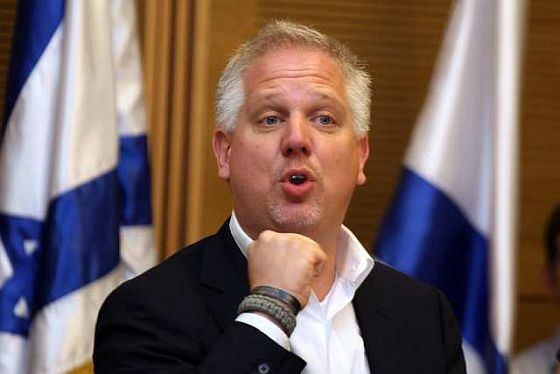
Glenn Beck compares Norway victims to Hitler Youth

The Los Angeles Times reports:

Glenn Beck, who in June aired his final cable tv show on Fox News, is still on the radio and has found a new way to get his name into the headlines around the globe.

Instead of calling the president of the United States a racist, Beck focused on the scores of young people gunned down at a camp in Norway. Beck said the camp reminded him of Adolf Hitler’s infamous Hitler Youth.

“There was a shooting at a political camp, which sounds a little like, you know, the Hitler youth. I mean, who does a camp for kids that’s all about politics? Disturbing,” Beck stated in the first minute of his syndicated radio show Monday.

Torbjørn Eriksen, the former press secretary to Norway’s prime minister, was not amused.

“Young political activists have gathered at Utoya for over 60 years to learn about and be part of democracy, the very opposite of what the Hitler Youth was about,” Eriksen told The Daily Telegraph. “Glenn Beck’s comments are ignorant, incorrect and extremely hurtful,” he added.

Facebooktwittermail

Anders Behring Breivik: Tunnel vision in an online world

Thomas Hylland Eriksen writes:

Anders Behring Breivik’s world view seems to have been shaped by online fantasy games and the anti-Islamist blogosphere – a recipe for national fragmentation.

There is a reason why the Norwegian police have not been overly concerned with rightwing extremism in recent years. It is plainly not very visible. An estimated 40 Norwegians currently belong to self-proclaimed extreme rightwing groups.

However, anyone familiar with the darker waters of the blogosphere would for years have been aware of the existence of a vibrant cyberscene characterised by unmitigated hatred of the new Europe, aggressive denunciations of the “corrupted, multiculturalist power elites” and pejorative generalisations about immigrants, targeting Muslims in particular.

Contributors to these websites, blogs and chat groups cannot merely be labelled “rightwing”. One member of the Norwegian “Forum Against Islamisation” was also a member of the Socialist Left party. Others see themselves as the true heirs of social democratic values, or as the last carriers of the torch of the Enlightenment. Many talk about gender equality, some about social injustices and class. Others hold more conventional rightwing views, ranging from downright racism to paranoid conspiracy theories about Muslims plotting to take political control of western Europe. Some are online daily; others drop in once a month. They constitute loose networks and cannot easily be counted.

What the denizens of this blogosphere have in common is, first and foremost, a resentment of the defenders of diversity. These “elite” are often described as “traitors”, “sellouts” or just “naive multiculturalists”. They also share the conviction that Islam is incompatible with the democratic values of the west. This view is problematic in a country where the Muslim population is over 150,000 and growing. Nobody knows how widespread such views are, but they can no longer be written off as harmless.

The fact that Breivik was Made in Norway, a homegrown terrorist with a hairdo and an appearance suggesting the west end of Oslo, and not a bearded foreign import, should lead not only to a closer examination of these networks, but also to a calm, but critical reflection over the Norwegian self-identity itself. It would come as a relief to many if the leadership of the country were to state unequivocally that religion and skin colour were irrelevant to membership in the Norwegian nation. King Haakon VII, who reigned from 1905 to 1957, famously said that he was “the king of the communists, too”. King Harald V could hardly do better, in the current situation, than pointing out that he is “the king of Norwegian Muslims, Sikhs, Jews and Hindus, too”. Perhaps it goes without saying, yet a statement of this kind would cleanse the air in a situation where extreme xenophobia and religious prejudice have been the source of inspiration for unspeakably atrocious acts.

Every country needs some degree of cohesion. Just how much is a legitimate matter of dispute. Some believe that cultural pluralism is a recipe for fragmentation and the loss of trust. This may be the case, but not necessarily. So long as common institutions function impartially – education, housing, work etc – a society can live well with considerable diversity. However, the moment we cease to speak to each other, something serious is under way. This is exactly what happened with Breivik and many of his co-believers: they developed a parallel reality on the internet.

Facebooktwittermail