Michael Weiss writes: In the late summer of 2011, President Barack Obama declared the reign of Bashar al-Assad “illegitimate” and told him the time had come to “step aside.” In the early fall of 2015, U.S. officials laughingly dismissed Vladimir Putin’s unexpected direct military intervention into Syria as an accident waiting to happen at Russia’s expense.
Today, Secretary of State John Kerry formally legitimized Assad’s military by way of delimiting its zone of combat; and he welcomed the Russian Air Force as a prospective U.S. partner prosecuting an increasingly complex and muddled war against the so-called Islamic State and al-Qaeda, two separate and competitive terrorist organizations in Syria. Significantly, the latter group often intermingles with U.S.-backed insurgents.
In a tardy press conference in Geneva that most reporters were so sure would never happen they began ordering champagne and pizza, Kerry mapped out this fingers-crossed bilateral plan of action. His remarks were leavened with repeated qualifications and conditional tenses as he described an agreement that must perforce be founded on trust between the United States and Russia would not in fact be based on anything of the sort.
“If, and again I want to emphasize the if –” Kerry began his presser tonight, “If the plan is implemented in good faith, if the stakeholders do the things that are available to them to do and are being called on them to do, this can be a moment where the multilateral efforts at the diplomatic table… could take hold and you could really provide the people of Syria with a transition.”
Except that nobody really believes that. [Continue reading…]
Author Archives: News Sources
The imperfect world of the new deal on Syria
Bassam Barabandi, Hassan Hassan, and Faysal Itani write: The new US-Russian deal to reduce violence and combat extremists in Syria has been met with a great deal of scepticism among Syria watchers. Scepticism is both unsurprising and understandable, given the poor track record of ceasefires in the country. Indeed, senior American officials have indicated the deal is not going to produce calm any time soon, but they hope it will lead to a reduction in violence.
The deal, agreed between Washington and Moscow on Friday, should nonetheless be judged by its details and in the broader context of the war. We were privy to contents of the agreement yet to be publicly released. Also, conversations with senior American officials and rebel leaders offer insights into what the US seeks to achieve from the agreement and how the plan can strengthen the moderate elements within the opposition.
In many ways, the agreement looks good on paper and can in principle strengthen the opposition by constraining violence and bringing relief to civilian populations in rebel-held areas. The danger to the rebels emanates not from the agreement’s terms but from unanswered questions about the role of pro-government militias and the lack of an enforcement mechanism. [Continue reading…]
U.S.-Russian Syria ceasefire deal explained
Al Jazeera reports: A nationwide ceasefire by Assad’s forces and the US-backed opposition is set to begin across Syria at sundown on Monday.
That sets off a seven-day period that will allow for humanitarian aid and civilian traffic into Aleppo, Syria’s largest city, which has faced a recent onslaught.
Fighting forces are to also pull back from the Castello Road, a key thoroughfare and access route into Aleppo, and create a “demilitarised zone” around it.
Also on Monday, the US and Russia will begin preparations for the creation of a Joint Implementation Centre that will involve information sharing needed to define areas controlled by the Jabhat Fateh al-Sham group (formerly known as al-Nusra Front) and opposition groups in areas “of active hostilities”.
The centre is expected to be established a week later, and is to launch a broader effort towards delineating other territories in control of various groups.
As part of the arrangement, Russia is expected to keep Syrian air force planes from bombing areas controlled by the opposition. The US has committed to help weaken Jabhat Fateh al-Sham, an al-Qaeda affiliate in Syria that has intermingled with the US-backed opposition in several places.
A resumption of political dialogue between the government and opposition under UN mediation, which was halted amid an upsurge in fighting in April, will be sought over the longer term. [Continue reading…]
Stopping the killing in Syria is not a question of feasibility; it’s a question of political will
Muhamed Sacirbey writes: Syria’s largest city is on the brink of starvation. Bombed from the skies and besieged on the ground, Aleppo’s 2 million residents may soon be exterminated. A little more than two decades ago, my country’s capital confronted a similar catastrophe. In the spring of 1992, regular and paramilitary units, snipers, artillery and tanks surrounded Sarajevo, Bosnia, inflicting what would become the longest siege of a capital city in the history of modern warfare.
Like in Aleppo, the situation inside Sarajevo was dire. Extremists (ostensibly seeking to deliver a “Greater Serbia”) sought to pummel, choke and starve a cosmopolitan city with a long tradition of diversity. Major access roads were cut. Utilities including water, electricity and heat were shut off. Snipers made daily life a living hell. But Sarajevo’s 400,000 residents escaped many of the horrors now awaiting Aleppo’s residents. They survived, not because then-President Slobodan Milosevic’s forces were any more humane than Bashar al-Assad’s or because Yugoslav air forces were any less capable, but because NATO opted (albeit belatedly and, too often, inadequately) to uphold its responsibility to protect Bosnian civilians.
Calls for military intervention — even for the most noble of reasons — have developed a bad reputation in the decades since NATO’s intervention in Bosnia. The catastrophe of Iraq and the disastrous post-intervention rebuilding of Libya have caused many to doubt whether military intervention could ever work. While the West’s military intervention in Bosnia didn’t solve all our problems, it was decisive in moving Bosnia and the region from war to peace — a process that still continues, albeit highly imperfectly. There is every reason to believe that similar action and determination, centered on stopping aerial bombardment of civilians, would provide similar benefits to Syria and the world. [Continue reading…]
Here’s why Turkey’s Syria intervention is a huge gamble
Borzou Daragahi reports: Abu Mostafa was elated. Backed by Turkey’s armed forces, his Free Syrian Army unit racked up a series of rare victories against ISIS fighters in northern Syria this week, retaking five villages from the jihadi group on Tuesday.
Turkey’s intervention in Syria is meant to push ISIS and Kurdish militants away from a narrow strip of the northern Aleppo province along its southern borders. But Abu Mostafa, a nom de guerre, and the fighters from his Abu Bakir al-Sadeeq brigade already harbor grander ambitions.
“We are aiming for more than those areas, hopefully even the liberation of all of Syria and not only Aleppo,” he told BuzzFeed News this week over a spotty internet connection. “The Turks do not command us.”
A few weeks after a surprise ground incursion, dubbed Operation Euphrates Shield, Turkish armed forces and allied Syrian rebel groups managed to carve out a long-sought buffer zone along Syrian territory to prevent cross-border infiltrations by jihadi and Kurdish militant organizations, while designating a potential safe zone for civilians fleeing the conflict. The Turks launched a ground operation, backed by Turkish and US air support, after reassuring Russia and Iran that their aims were solely to roll back the territories under the control of ISIS fighters and Kurdish-led fighting groups with separatist agendas.
But Turkey’s calibrated strategy depends in part on both limiting its own involvement and reining in the ambitions of its FSA partners, whose battles against ISIS and Kurdish-led militias in northern Syria are secondary to their goal of bringing down the regime of Bashar al-Assad. [Continue reading…]
Command under attack: What we’ve learned since 9/11 about managing crises
By Herman B. “Dutch” Leonard, Harvard University; Arnold M. Howitt, Harvard University; Christine Cole, Harvard University, and Joseph W. Pfeifer, Harvard University
The attack on the World Trade Center and the Pentagon on Sept. 11, 2001 was the largest coordinated, multi-site international act of terror ever carried out on U.S. soil. Almost 3,000 people died, many others were injured and property damage ran into tens of billions of dollars.
Many people acted heroically at both attack sites. In New York, firefighters climbed staircases inside the World Trade Center towers even as damage from fires on upper floors threatened the integrity of the buildings and eventually caused them to collapse. At the Pentagon, military personnel, civilian employees and first responders entered the still-burning impact area to help people who had been injured.
Unfortunately, these efforts were not as coordinated or effective as they could have been.
At the Harvard Kennedy School’s Program on Crisis Leadership, we work to help societies prepare for and respond to catastrophes, from accidents and natural disasters to terrorist attacks. Since 9/11, government agencies have developed new tools for organizing collaborative responses to novel large-scale emergencies. We believe that these new techniques are making a difference, and that many more agencies – especially at the state and local levels – should be using them.
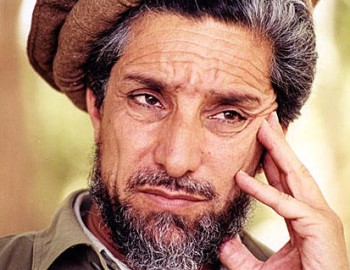
What defined Ahmad Shah Massoud
Frud Bezhan writes: Resistance fighter and anti-Taliban leader Ahmad Shah Masud was killed by Al-Qaeda assassins on September 9, 2001, ushering in a chain of events that would place Afghanistan at the center of the global war on terrorism.
Two days after his death, Al-Qaeda operatives would carry out the 9/11 terrorist attacks on U.S. soil. Within a month, the United States military was leading a bombing campaign and invasion of Afghanistan with the intention of overthrowing the Taliban and capturing Al-Qaeda leader and 9/11 orchestrator Osama Bin Laden.
In life and as in death, the military strategist who had made his name as a commander of anti-Taliban forces would have a significant impact on life in Afghanistan. Here are some stories behind the man whose battlefield exploits earned him the moniker “The Lion of Panjshir.” [Continue reading…]
Sorry folks, veterans are not necessarily experts on foreign policy
Rosa Brooks writes: Politicians have always sought to associate themselves with military glory, with mixed results. (Think Michael Dukakis and the tank, or George W. Bush’s flight suit and “Mission accomplished.”) Barack Obama’s no exception: Virtually all his major national security speeches have been made in military settings, from West Point to the National Defense University. The military is, far and away, the most trusted public institution in the United States, so it’s no surprise that politicians like to associate themselves with it. If political candidates could wear live service members as lapel pins, I’m sure they’d do so.
But the “Commander in Chief Forum” brought the ickiness to a new level. Sponsored by NBC and the Iraq and Afghanistan Veterans of America, the event invited each presidential candidate to make the case that she or he is “better qualified to serve as America’s next commander in chief” before an audience of veterans and military personnel. The tenor of the publicity made it sound like an audition: “Vets size up Clinton, Trump,” proclaimed NBC.
Why even hold an election? Why not just let NBC’s specially selected audience of veterans pick the next president?
Trump clearly saw the event as something between an audition and a popularity contest. “Eighty-eight generals and admirals endorsed me today,” he proudly informed NBC host Matt Lauer, several times, even going so far as to take the list out of his suit-jacket pocket. Clinton’s campaign quickly counterattacked, proffering its own list of 95 generals endorsing the Democratic candidate.
As my FP colleagues Kori Schake and Peter Feaver have written recently, such partisan endorsements by former military officials are growing more frequent and risk turning the military into even more of a political football than it already is. “Such political endorsements contribute to toxic civil-military relations,” writes Feaver. They “damage … the norm of a nonpartisan military that has served our country well.”
But I find it hard to blame veterans and retired military leaders for becoming more partisan. To my mind, the problem isn’t that former military personnel sometimes take very public and very partisan positions (they are still citizens, after all, and entitled to speak and vote their conscience) — the problem is that the media and the public actively encourage this partisanship by treating military personnel as political sages. They’re not. [Continue reading…]
North Korea will have the skills to make a nuclear warhead by 2020, experts say
The New York Times reports: North Korea’s fifth nuclear test is ominous not only because the country is slowly mastering atomic weaponry, but because it is making headway in developing missiles that could hurl nuclear warheads halfway around the globe, threatening Washington and New York City.
The reclusive, hostile nation has been rushing to perfect missiles that are small, fast, light and surprisingly advanced, according to analysts and military officials. This spring and summer, Pyongyang successfully tested some of these missiles, while earlier efforts had fizzled or failed.
“They’ve greatly increased the tempo of their testing — in a way, showing off their capabilities, showing us images of ground tests they could have kept hidden,” John Schilling, an aerospace engineer and expert on North Korea’s missile program, said in an interview on Friday. “This isn’t something that can be ignored anymore. It’s going to be a high priority for the next president.”
Military experts say that by 2020, Pyongyang will most likely have the skills to make a reliable intercontinental ballistic missile topped by a nuclear warhead. They also expect that by then North Korea may have accumulated enough nuclear material to build up to 100 warheads. [Continue reading…]
A reminder of the permanent wars: Dozens of U.S. airstrikes in six countries
The Washington Post reports: While Americans savored the last moments of summer this Labor Day weekend, the U.S. military was busy overseas as warplanes conducted strikes in six countries in a flurry of attacks. The bombing runs across Asia, Africa and the Middle East spotlighted the diffuse terrorist threats that have persisted into the final days of the Obama presidency — conflicts that the next president is now certain to inherit.
In Iraq and Syria, between Saturday and Monday, the United States conducted about 45 strikes against Islamic State targets. On the other side of the Mediterranean, in the Libyan city of Sirte, U.S. forces also hit fighters with the militant group. On Sunday in Yemen, a U.S. drone strike killed six suspected members of al-Qaeda in the Arabian Peninsula. The following day, just across the Gulf of Aden in Somalia, the Pentagon targeted al-Shabab, another group aligned with al-Qaeda. The military also conducted several counterterrorism strikes over the weekend in Afghanistan, where the Taliban and the Islamic State are on the offensive.
Militants in each of those countries have been attacked before, but the convergence of so many strikes on so many fronts in such a short period served as a reminder of the endurance and geographic spread of al-Qaeda and its mutations.
“This administration really wanted to end these wars,” said Paul Scharre, a former Army Ranger and Pentagon official now at the Center for a New American Security. “Now, we’ve got U.S. combat operations on multiple fronts and we’re dropping bombs in six countries. That’s just the unfortunate reality of the terrorism threat today.”
In meeting those threats, Obama has sought to limit the large-scale deployments of the past, instead relying on air power, including drones; isolated Special Operations raids; and support for foreign forces.
But militant groups have defied eight years of these sustained counterterrorism efforts.
Nowhere are the unexpected turns of Obama’s foreign-policy record more visible than in Iraq, where thousands of U.S. troops returned after the 2011 withdrawal to support local forces’ battle against the Islamic State. [Continue reading…]
Americans are more worried about terrorism than they were after 9/11
The Atlantic reports: In 2002, with the footage of collapsing World Trade Centers still fresh in American minds, the pollsters at Pew Research posed a question. “Do you think the ability of terrorists to launch another major attack on the U.S.,” they asked, “is greater, the same, or less than it was at the time of the September 11th terrorist attacks?”
A slim plurality of respondents, 39 percent, said nothing had changed in the past year. A third allowed that things had gotten better. The rest — 22 percent — said America was actually less safe, despite the billions spent on a military incursion into Afghanistan and the creation of an entire new cabinet-level department devoted to homeland security.
It turns out 2002 was a relatively optimistic year. According to Pew’s latest figures, 40 percent of Americans now believe the country is more vulnerable to terrorism than it was in 2001, the highest ever. Republicans lead that charge: More than half think terrorists have grown stronger, while only a third of Democrats agree. And if the GOP is scared, Donald Trump is there to help — or rile things up. “If we don’t get tough, and if we don’t get smart, and fast, we’re not going to have our country anymore,” he said in June, following the mass shooting at a nightclub in Orlando. “There will be nothing — absolutely nothing –left.” [Continue reading…]
Why Kim Jong Un tested a nuclear warhead now
Gordon G Change writes: North Korea is hailing a “successful” fifth nuclear test, which it carried out Friday morning local time.
The device tested, which created a 5.3-magnitude tremor at its Punggye-ri test site, was reportedly in the 20- to 30-kiloton range, much more powerful than the North’s previous detonations. The last test, in January, yielded only about seven to nine kilotons.
The North Koreans have been ready to test this device since May. So why did they wait until now? Some are suggesting the detonation celebrated North Korea’s Foundation Day, marking the 68th anniversary of the establishment of the Democratic People’s Republic of Korea. But from all indications, the Kim regime tested at this time because it realized China would not impose costs for the detonation.
The test took place three days after Pyongyang’s nuclear envoy traveled to Beijing. Choe Son Hui, deputy director general of the Foreign Ministry’s U.S. affairs bureau, arrived in the Chinese capital on Tuesday.
We don’t know what Choe — who was deputy chief envoy to the six-party denuclearization talks, which have been dormant since 2008 — and her interlocutors said this week. Nonetheless, it was evident that the North Koreans were confident of the Chinese reaction.
At the moment, Beijing is far more upset with Seoul than Pyongyang.
In July, South Korea and the United States announced they would deploy the American-made Terminal High Altitude Area Defense system on South Korean soil. Beijing is worried that THAAD’s high-powered radars will reach into China and could help the U.S. shoot down Chinese missiles. Washington denies that is the case and has been willing to share technical information, but Beijing has not been mollified. [Continue reading…]
Fear of a female president
Peter Beinart writes: Except for her gender, Hillary Clinton is a highly conventional presidential candidate. She’s been in public life for decades. Her rhetoric is carefully calibrated. She tailors her views to reflect the mainstream within her party.
The reaction to her candidacy, however, has been unconventional. The percentage of Americans who hold a “strongly unfavorable” view of her substantially exceeds the percentage for any other Democratic nominee since 1980, when pollsters began asking the question. Antipathy to her among white men is even more unprecedented. According to the Public Religion Research Institute, 52 percent of white men hold a “very unfavorable” view of Clinton. That’s a whopping 20 points higher than the percentage who viewed Barack Obama very unfavorably in 2012, 32 points higher than the percentage who viewed Obama very unfavorably in 2008, and 28 points higher than the percentage who viewed John Kerry very unfavorably in 2004.
At the Republican National Convention, this fervent hostility was hard to miss. Inside the hall, delegates repeatedly broke into chants of “Lock her up.” Outside the hall, vendors sold campaign paraphernalia. As I walked around, I recorded the merchandise on display. Here’s a sampling:
Black pin reading DON’T BE A PUSSY. VOTE FOR TRUMP. Black-and-red pin reading TRUMP 2016: FINALLY SOMEONE WITH BALLS. White T-shirt reading TRUMP THAT BITCH. White T‑shirt reading HILLARY SUCKS BUT NOT LIKE MONICA. Red pin reading LIFE’S A BITCH. DON’T VOTE FOR ONE. White pin depicting a boy urinating on the word HILLARY. Black T-shirt depicting Trump as a biker and Clinton falling off the motorcycle’s back alongside the words IF YOU CAN READ THIS, THE BITCH FELL OFF. Black T-shirt depicting Trump as a boxer having just knocked Clinton to the floor of the ring, where she lies faceup in a clingy tank top. White pin advertising KFC HILLARY SPECIAL. 2 FAT THIGHS. 2 SMALL BREASTS … LEFT WING.
Standard commentary about Clinton’s candidacy — which focuses on her email server, the Benghazi attack, her oratorical deficiencies, her struggles with “authenticity” — doesn’t explain the intensity of this opposition. But the academic literature about how men respond to women who assume traditionally male roles does. And it is highly disturbing. [Continue reading…]
How Jill Stein and Donald Trump became allies of Vladimir Putin
Casey Michel writes: Last December, at a gala honoring the 10th anniversary of the Russian propaganda channel RT, Russian President Vladimir Putin nestled himself between a pair of visitors at the head table. To the president’s right: A former head of the US’s Defense Intelligence Agency, known best for his hard-right views on Islam, which he would later compare to “cancer.” And to Putin’s left: The soon-to-be Green Party nominee for the White House, whose presidential debate would be carried on, of all things, RT.
The two – Lt. Gen. Michael Flynn, an adviser to Republican nominee Donald Trump, and Jill Stein, the presidential nominee from the Green Party – chummed with Putin throughout the evening, later joined at the table by RT (formerly Russia Today) head Margarita Simonyan and then-Chief of Staff Sergei Ivanov. Soon, Putin took the dais, running through rote commentary on RT’s accomplishments. When he finished, applause rang. Stein shook his hand. Flynn offered a standing ovation.
Within that gala, leading figures of America’s far-left, in Stein, and hard-right, in Trump’s surrogate, found common cause. The bookends of the American political spectrum had gathered in Moscow, glad-handing with Kremlin officials. The two camps, aligned in post-fact views on American foreign policy, discovered themselves aligned in celebration of the Kremlin’s foremost foreign propaganda vehicle.
Unsurprisingly, the policy prescriptions of Stein and Flynn don’t align on much else. As it pertains to Moscow, though, it’s clear that the distance between the Stein and the Trump campaigns have effectively disappeared. [Continue reading…]
Philip Bump notes: Russia scored an 83 out of 100 in the annual press freedom scores compiled by the watchdog organization Freedom Press. (100 is the worst possible score.) By contrast, the United States scored a 21. What’s more, in January, Politifact determined that since 2000, when Putin was first elected to the presidency, 34 journalists have been murdered in Russia.
When Trump was confronted with Putin’s track record on journalists on MSNBC’s “Morning Joe” earlier this year, he was unfazed.
“He’s running his country, and at least he’s a leader, unlike what we have in this country,” Trump said, when presented with some critiques of Putin.
“But, again: He kills journalists that don’t agree with him,” host Joe Scarborough replied.
“Well,” Trump said, “I think that our country does plenty of killing, too, Joe.”
Trump has consistently berated the media for what he views as unfair coverage of his campaign. For an extended period, he barred media outlets (including The Post) from attending his events, a ban that was recently lifted. He has talked about somehow changing libel laws so that it would be easier to sue media outlets for coverage that he didn’t like.
So the through-line here is this: Trump thinks Putin should be emulated because he is viewed positively in his country. He is viewed positively in part because he crushes dissenting media opinions, something that Trump has also either praised or tacitly accepted. It’s part of being a “leader,” it seems. [Continue reading…]
Mark Zuckerberg accused of abusing power after Facebook deletes Vietnam War ‘napalm girl’ post
The Guardian reports: Norway’s largest newspaper has published a front-page open letter to Facebook CEO Mark Zuckerberg, lambasting the company’s decision to censor a historic photograph of the Vietnam war and calling on Zuckerberg to recognize and live up to his role as “the world’s most powerful editor”.
Espen Egil Hansen, the editor-in-chief and CEO of Aftenposten, accused Zuckerberg of thoughtlessly “abusing your power” over the social media site that has become a lynchpin of the distribution of news and information around the world, writing, “I am upset, disappointed – well, in fact even afraid – of what you are about to do to a mainstay of our democratic society.”
“I am worried that the world’s most important medium is limiting freedom instead of trying to extend it, and that this occasionally happens in an authoritarian way,” he added.
The controversy stems from Facebook’s decision to delete a post by Norwegian writer Tom Egeland that featured The Terror of War, a Pulitzer prize-winning photograph by Nick Ut that showed children – including the naked 9-year-old Kim Phúc – running away from a napalm attack during the Vietnam war. Egeland’s post discussed “seven photographs that changed the history of warfare” – a group to which the “napalm girl” image certainly belongs.
Egeland was subsequently suspended from Facebook. When Aftenposten reported on the suspension – using the same photograph in its article, which was then shared on the publication’s Facebook page – the newspaper received a message from Facebook asking it to “either remove or pixelize” the photograph. [Continue reading…]
Aid groups suspend cooperation with UN in Syria because of Assad ‘influence’
The Guardian reports: More than 70 aid groups have suspended cooperation with the UN in Syria and have demanded an immediate and transparent investigation into its operations in the country because of concerns the Syrian president, Bashar al-Assad, has gained “significant and substantial” influence over the relief effort.
The coalition, which includes some of Syria’s most widely known aid organisations, told the UN it intends to withdraw from the UN’s information-sharing programme in protest at the way some of its agencies are functioning within the country.
In a letter to the UN (pdf), the 73 groups made clear they could no longer tolerate the “manipulation of humanitarian relief efforts by the political interests of the Syrian government that deprives other Syrians in besieged areas from the services of those programmes”.
The groups include the Syrian American Medical Society (Sams) and the Syrian Civil Defence, or “White Helmets”, which help 6 million Syrians.
Their ultimatum is the culmination of months of frustration about the delivery of aid to besieged areas of the country, and mounting concern over the UN’s strategy – criticism the UN maintains is unfair. [Continue reading…]
U.S. gets ready to assist offensive with additional troops to retake Mosul from ISIS
The Wall Street Journal reports: The U.S. is gearing up to assist in an offensive to reclaim the Iraqi city of Mosul from Islamic State, and has sent 400 additional troops to the country in anticipation Iraqi forces will begin the long-delayed battle in October, officials said.
The troops have been sent into Iraq to assist Iraqi forces consolidating south of Mosul in what is known as the launchpad for the allied operation in the city of Qayyarah, defense officials said on Thursday. There now are more than 5,000 U.S. military personnel in the country.
Despite rising optimism over chances for success in Mosul, the new commander of the U.S.-led coalition fighting Islamic State, Lt. Gen. Stephen Townsend, said he thinks the battle to retake the jihadist group’s last major Iraqi stronghold will be a difficult and dangerous operation.
“We’re preparing for a hard fight, a long, difficult fight” in Mosul, Gen. Townsend told The Wall Street Journal late Wednesday here at his office at the coalition’s base in Baghdad. “Really, it’s a siege I’m talking about here.” [Continue reading…]
Documents show U.S. military expands reach of special operations programs
Nick Turse reports: The United States is spending more money on more missions to send more elite U.S. forces to train alongside more foreign counterparts in more countries around the world, according to documents obtained by The Intercept via the Freedom of Information Act.
Under the Joint Combined Exchange Training program, which is designed to train America’s special operators in a variety of missions — from “foreign internal defense” to “unconventional warfare” — U.S. troops carried out approximately one mission every two days in 2014, the latest year covered by the recently released documents.
At a price tag of more than $56 million, the U.S. sent its most elite operators — Navy SEALs, Army Green Berets, and others — on 176 individual JCETs, a 13 percent increase from 2013. The number of countries involved jumped even further, from 63 to 87, a 38 percent spike.
The JCET program is a key facet of a global strategy involving America’s most secretive and least scrutinized troops. Since 9/11, special operations forces (SOF) have expanded in almost every conceivable way — from budget to personnel to overseas missions. On any given day, 10,000 special operators are deployed or “forward stationed,” conducting missions that vary “from behind-the-scenes information-gathering and partner-building to high-end dynamic strike operations,” then-chief of U.S. Special Operations Command, Gen. Joseph Votel, told the Senate Armed Services Committee earlier this year. [Continue reading…]