
Author Archives: News Sources

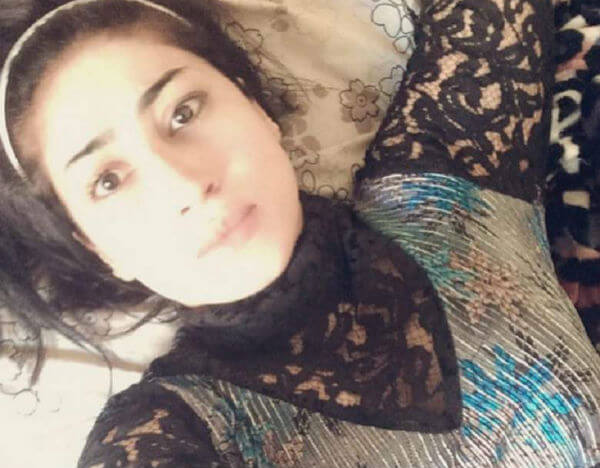
Qandeel Baloch demanded to be seen and heard

Qandeel-Baloch

Qandeel Baloch, the Pakistani social media celebrity, was murdered by her own brother on Saturday. Imaan Sheikh writes: I noticed Qandeel Baloch for the first time in 2013 on an episode of Pakistan Idol, where she came to audition, and threw a baby fit when she didn’t qualify. The whole thing was over-the-top, and seemed staged to build hype. Some were annoyed, others entertained. Either way, it was one of the most memorable auditions in the programme’s history.

Then, last year, I saw a lot of people sharing parody videos featuring a girl with heavily kohled eyes and a spoilt, slow, bad gal accent. I looked into who was being mocked and found a familiar face. Qandeel Baloch was taking Facebook by storm with phone-shot dramatic videos talking about her daily life. Singing, being brazen and conceited, occasionally proposing to Pakistani cricketers.

Most people cringe-shared Qandeel’s videos. But rest assured, everyone watched them.

Earlier in her career, she had slut-shamed another artist on live TV, which was why I side-eyed her for a long time. But the fact of the matter was: I’d never seen another woman be so bold on the Pakistani internet, without a man running her page or managing her. She was being sexy and sassy of her own volition, cell phone recording the whole thing, and uploading it for millions to see.

In a part of the world where girls are taught to be neither heard nor seen, here she was, demanding she be both.

Many described her videos as “shameless”. She was called an “attention whore”. And even the people who loved her didn’t love her all the time.

But in a country where womanhood has long been defined by varying versions and degrees of enforced shame, her lack of it looked like a revolution.

In a world where family matters are supposed to be whispered about behind closed doors, Qandeel talked openly about how she was forcibly married at 17, and was tortured by her husband who even threatened to burn her face with acid. She escaped with her baby son, whose custody she lost, and took refuge at a welfare centre.

Even her horrifying domestic violence case was called “drama” and laughed at by hundreds of Pakistanis, some of whom I expected to know better.

She was already called a blemish on Pakistan’s sparkling image, a national shame, a shame for the Muslim ummat, but after the recent release of a music video she starred in, the entitled and the self-righteous made it a mission to bring her down. [Continue reading…]


Facebooktwittermail

Moqtada al-Sadr tells followers to target U.S. troops fighting ISIS

Reuters reports: Powerful Shi’ite Muslim cleric Moqtada al-Sadr instructed his followers on Sunday to target U.S. troops deploying to Iraq as part of the military campaign against Islamic State.

U.S. Defense Secretary Ash Carter said on Monday the Pentagon would dispatch 560 additional troops to help Iraqi forces retake the northern city of Mosul in an offensive planned for later this year.

Sadr, who rose to prominence when his Mahdi Army battled U.S. troops after the 2003 invasion, posted the comments on his official website after a follower asked for his response to the announcement.

“They are a target for us,” Sadr said, without offering details. [Continue reading…]

Facebooktwittermail

Ireland could see ‘reunification referendum’ says opposition leader

Press Association reports: The leader of Ireland’s main opposition party said he hopes Brexit will move Ireland closer to reunification.

Micheál Martin said a reunification referendum should be called if it becomes clear a majority want to see an end to Irish partition over the UK decision to leave the EU.

The Fianna Fáil leader added that Northern Ireland’s 56% majority vote to remain within the bloc could be a defining moment for the region. He made his remarks delivering the annual John Hume lecture at the MacGill Summer School in Glenties, Co Donegal.

“It may very well be that the decision of Northern Ireland to oppose the English-driven anti-EU UK majority is a defining moment in Northern politics,” he said.

“The remain vote may show people the need to rethink current arrangements. I hope it moves us towards majority support for unification, and if it does we should trigger a reunification referendum.

“However, at this moment the only evidence we have is that the majority of people in Northern Ireland want to maintain open borders and a single market with this jurisdiction, and beyond that with the rest of Europe.” [Continue reading…]

Facebooktwittermail

Erdoğan’s Pyrrhic victory

Hugh Pope and Nigar Göksel write: Paradoxes have always abounded in the relationship between the Turkish military and the country’s politicians. Turkey’s armed forces — or factions within them — have justified their repeated interventions in politics with claims that they are saving the state from corrupt, populist politicians. The political class, for its part, frustrated as its leaders turn rotten, blames its degradation on over-dominant army interventions that keep wrecking the country’s democratic progress.

The recent attempted coup in Turkey was no exception. On Friday night, an email from a Turkish Armed Forces address said, in effect, that the military was breaking the law in order to restore the rule of law. In response, President Recep Tayyip Erdoğan called on the Turkish people to take to the street in defense of the democracy he has done so much to undermine with attacks on the media and assaults on constitutional checks and balances.

And indeed, the people rushed to secure key points for the government. While some social media postings showed anti-government passers-by cheering on the tanks, a broad social and political alignment emerged against the attempted coup, including rare unison among all the country’s main political parties and media voices. More than 160 people were killed and 1,440 injured in clashes between soldiers sent out to seize power and the pro-government police force and loyalist army factions.

In the end, Erdoğan and his supporters won the day, quickly reconsolidating control. And perhaps this is unsurprising. Election after election — scrupulously democratic in form, but dominated by authoritarian political party leaders in practice — have shown that about half the electorate still supports the president’s Justice and Development Party (AKP).

But nobody in Turkey has won in the long-term. The damage to the army — more important than ever, given the turmoil in Turkey’s neighborhood — will be severe. Internationally, Turkey’s already battered reputation has slipped down several more notches.

There are no specific links between the attempted coup and Turkey’s deepening secularist-Islamist divide. The government alleges that it is the work of a rival Islamist group loyal to Pennsylvania-based Fethullah Gülen.

But stark divisions remain nonetheless. The half of the country that does not support Erdoğan remains deeply unsettled by his party’s increasingly overt Islamism and his creeping takeover of all arms of the state and economy. The country’s unsolved Kurdish problem is feeding a harsh insurgency, and regional problems abound. [Continue reading…]

Facebooktwittermail

Turkey has had lots of coups. Here’s why this one failed

Steven A Cook writes: Turkey has changed since coups seemed a routine feature of the country’s politics. In previous eras, the military could easily intimidate opponents into upholding the secularizing and repressive principles of modern Turkey’s founder, Mustafa Kemal Ataturk. Yet as Turkey has become a more complex society and the AKP has sought to integrate the country globally, the conformity of Kemalism no longer works. In 1997, many Turks welcomed the military’s intervention to undermine Turkey’s first experiment with Islamist-led government. A decade later when the military sought to prevent one of the AKP’s founders, Abdullah Gul, from becoming president — opposing, among other things, the fact that Gul’s wife wore a headscarf — Turks protested, declaring that they neither wanted Islamic law nor military rule.

There had been moments before when Turks defied the military, but the 2007 protests that put the military on the defensive and helped pave the way for Gul’s presidency were a rather unambiguous indication that Turks would no longer submit to the military, no matter how often they were told it was in their interests.

Second, previous coups succeeded because they had significant civilian support. When the tanks rolled up to the Grand National Assembly and prime ministry on September 12, 1980, Turks breathed a sigh of relief because the military promised to bring an end to the violence between rightist and leftist forces that had taken thousands of lives in the previous four years.

The 1997 intervention, sometimes called the “blank” coup or “post-modern” coup because the military did not actually deploy, was the culmination of the military’s efforts to cooperate with women’s organizations, academics, cosmopolitan elites, the media and big business to destabilize and delegitimize a coalition government under the leadership of an Islamist party from which the AKP descends.

In contrast, on Friday night, the faction that sought to overturn the government had little popular support. When Prime Minister Binali Yildirim and then Erdogan himself called on Turks to defy what they called an “uprising,” and when both their supporters, and some detractors, responded, it was only a matter of time before the government regained the upper hand: Military intervention in politics has become an affront to whom Turks believe themselves to be.

Finally, the coup was bound to fail because of who Erdogan is, what he represents for his constituents, and what he has done since coming to power. The Turkish president is a politician of uncanny talents who has captured the imagination of roughly half the electorate that has voted for him in such large numbers since 2007.

Around the world, only former president Bill Clinton edges Erdogan in terms of political skill and charisma. To his devoted followers, Erdogan has corrected historic wrongs and injustices by overcoming an insular and undemocratic secular elite, given life to a new political and business class, and established Turkey as a regional, even global, power.

Yet it is not just how Turks respond to Erdogan on an emotional level that has made him the most important Turkish leader since Ataturk, but also the very fact that he has delivered. Since the AKP came to power, the Turkish public has enjoyed greater access to health care, better infrastructure, more transportation options, more money in their wallets and the opportunity to explore their Muslim identities in ways that were unacceptable in the past.

It is true that over the past several years, Turkey has ramped up repression of journalists, the AKP has sought to remake the judiciary, checks and balances on the executive’s power have been greatly weakened, and corrupt government ministers are beyond the reach of the law. Yet this authoritarian approach didn’t sway the president’s voters to back his overthrow. And the coup plotters wrongly calculated that their show of force would intimidate Erdogan’s supporters. [Continue reading…]

Facebooktwittermail

At height of Turkish coup bid, rebel jets had Erdogan’s plane in their sights

Reuters reports: At the height of the attempt to overthrow Turkish President Tayyip Erdogan, the rebel pilots of two F-16 fighter jets had Erdogan’s plane in their sights. And yet he was able to fly on.

The Turkish leader was returning to Istanbul from a holiday near the coastal resort of Marmaris after a faction in the military launched the coup attempt on Friday night, sealing off a bridge across the Bosphorus, trying to capture Istanbul’s main airport and sending tanks to parliament in Ankara.

“At least two F-16s harassed Erdogan’s plane while it was in the air and en route to Istanbul. They locked their radars on his plane and on two other F-16s protecting him,” a former military officer with knowledge of the events told Reuters.

“Why they didn’t fire is a mystery,” he said.

A successful overthrow of Erdogan, who has ruled the country of about 80 million people since 2003, could have sent Turkey spiraling into conflict and marked another seismic shift in the Middle East, five years after the Arab uprisings erupted and plunged its southern neighbor Syria into civil war.

A senior Turkish official confirmed to Reuters that Erdogan’s business jet had been harassed while flying from the airport that serves Marmaris by two F-16s commandeered by the coup plotters but that he had managed to reach Istanbul safely. [Continue reading…]

Facebooktwittermail

Turkey detains 6,000 in failed coup, including Turkish commander at airbase used by U.S.

The Washington Post reports: A sweeping campaign to arrest renegade military officers, soldiers and other suspects linked to a failed coup plot in Turkey showed signs on Sunday of turning into a nationwide crackdown against opponents of President Recep Tayyip Erdogan’s government.

The country’s justice minister confirmed that as many as 6,000 people, ranging from commanders to civil servants, have been detained over the incident.

Among those arrested was the commander of a Turkish airbase used by U.S. forces to launch raids on jihadists in Iraq and Syria, a senior Turkish official said. Gen. Bekir Ercan Van, 10th Base Commander at Incirlik Air Base, was detained along with 10 other soldiers on Sunday. The facility in southern Turkey is a major NATO military installation hosting U.S. forces that control one of the largest stockpiles of nuclear weapons in Europe.

Earlier in the day, the state-run news outlet identified Maj. Gen. Ozhan Ozbakir, commander of a large garrison in southwestern Turkey, as one of the officers detained in the latest and ongoing campaign of arrests. [Continue reading…]

Facebooktwittermail

Syrian opposition official: ‘Assad is no longer at risk… he has won’

Martin Chulov reports: Just over a month into Syria’s uprising in 2011, the leader of Lebanon’s Druze sect, Walid Jumblatt, travelled to Damascus to visit Syria’s then security tsar, Mohammed Nasif. As well as being the Assad family’s most trusted senior official, he was also the linchpin of Syria’s close ties with Iran and Hezbollah, a man bound more than most to the fate of the regime.

“He said to me at the time, it’s either us, meaning the Alawites, or them, meaning the Sunnis,” Jumblatt recalled. “I knew which way this was going then. He added, ‘even if it cost us a million dead’.”

More than five years later, the toll in the now raging war is well past a quarter of that estimate – international monitors stopped counting last August. The sectarian dimension to the fighting foreshadowed by Nasif is a reality. So is the destruction of much of the country, including the ancient city of Aleppo, which after years of being viewed as the key to Syria’s fate last week slipped from the grasp of the opposition and into the hands of the Syrian regime’s allies, led by Hezbollah.

The encirclement of Aleppo is a significant moment in a war that has led to more unrestrained savagery, international repercussions and unlikely alliances than most others in modern times. Another emerged last week, as Hezbollah and Syrian troops were beating back the al-Qaida-aligned Jabhat al-Nusra from farmlands to the north of the city. As that battle raged, the US was drafting a deal with Russia that would create a joint operations centre to coordinate attacks on al-Nusra and Islamic State.

The move has created despair among the ranks of the Syrian opposition, which insists that a pact between Moscow and Washington will entrench the Syrian leader, whom Russia and Iran have saved from defeat over the past 12 months. Adding to the alarm of the now diminished rebel ranks is a detente, also signed during the week, between Moscow and Ankara, after a seven-month standoff, as well as the Turkish prime minister’s remarks that Ankara was interested in peace with Damascus.

“This all means that Assad is no longer at risk,” said a senior official in the western-backed Syrian opposition. “This means that he has won.” [Continue reading…]

Facebooktwittermail

Syria must explain chemical warfare agents, says watchdog

AFP reports: The world’s chemical weapons watchdog is pressing Syria to explain why it has four undeclared warfare agents, its head said Wednesday, after a U.S. official accused Damascus of continuing to hoard a toxic stockpile.

Organization for the Prohibition of Chemical Weapons chief Ahmet Uzumcu said despite previous declarations by Syria, OPCW teams have found indications of five additional chemical agents.

After recent consultations with The Hague-based OPCW’s secretariat, Syria “declared research and development of one more chemical agent,” Uzumcu said in a report released last week, of which AFP was given a copy on Wednesday.

But “at present, Syria has not yet adequately explained the presence of indicators of four chemical warfare agents,” Uzumcu said.

The OPCW chief added that “new information” offered by Damascus has failed to resolve outstanding issues on Syria’s chemical warfare program. [Continue reading…]

Facebooktwittermail

How should we live in a diverse society?

Kenan Malik writes: Debates about immigration are… rarely about numbers as such. They are much more about who the migrants are, and about underlying anxieties of nation, community, identity and values. ‘We should not forget’, claimed Hungarian prime minister Viktor Orbán, as Hungary put up new border fences, and introduced draconian new anti-immigration laws, ‘that the people who are coming here grew up in a different religion and represent a completely different culture. Most are not Christian, but Muslim.’ ‘Is it not worrying’, he asked, ‘that Europe’s Christian culture is already barely able to maintain its own set of Christian values?’

Many thinkers, Christian and non-Christian, religious and non-religious, echo this fear of Muslim immigration undermining the cultural and moral foundation of Western civilization. The late Oriana Fallaci, the Italian writer who perhaps more than most promoted the notion of Eurabia – the belief that Europe is being Islamicised – described herself as a ‘Christian atheist’, insisting that only Christianity provided Europe with a cultural and intellectual bulwark against Islam. The British historian Niall Ferguson calls himself ‘an incurable atheist’ and yet is alarmed by the decline of Christianity which undermines ‘any religious resistance’ to radical Islam. Melanie Phillips, a non-believing Jew, argues in her book The World Turned Upside Down that ‘Christianity is under direct and unremitting cultural assault from those who want to destroy the bedrock values of Western civilization.’

To look upon migration in this fashion is, I want to suggest, a misunderstanding of both Europe’s past and Europe’s present. To understand why, I want first to explore two fundamental questions, the answers to which must frame any discussion on inclusion and morality. What we mean by a diverse society? And why should we value it, or indeed, fear it?

When we think about diversity today in Europe, the picture we see is that of societies that in the past were homogenous, but have now become plural because of immigration. But in what way were European societies homogenous in the past? And in what ways are they diverse today?

Certainly, if you had asked a Frenchman or an Englishman or a Spaniard in the nineteenth or the fifteenth or the twelfth centuries, they would certainly not have described their societies as homogenous. And were they to be transported to contemporary Europe, it is likely that they would see it as far less diverse than we do.

Our view of the Europe of the past is distorted by historical amnesia; and our view of the Europe of the present is distorted by a highly restricted notion of diversity. When we talk of European societies as historically homogenous, what we mean is that they used to be ethnically, or perhaps culturally, homogenous. But the world is diverse in many ways. Societies are cut through by differences, not only of ethnicity, but also of class, gender, faith, politics, and much else. [Continue reading…]

Facebooktwittermail

Police and academics search Nice attacker’s history for a motive

Jason Burke writes: Lahouaiej-Bouhlel certainly matches the classic profile of French violent Islamic extremist in many ways – though he is a relatively recent arrival rather than born in the country of immigrant parents, as is more usually the case. He was a young, male petty criminal. He was also not devout, all witnesses so far agree. He did not fast during Ramadan, ate pork, drank, and was never seen at any local mosque.

This lack of piety among militants may seem confusing. It is, however, the rule rather than the exception. It was true of the dozen or so French and Belgian young men involved in bombings and shootings earlier this year, and of Mohammed Merah, who committed the first major attack in France in 2012. Other examples beyond France include that of Omar Mateen, who killed 49 in a Florida nightclub last month.

This apparent paradox has prompted a keen debate among experts. The argument has major policy implications. In France, it has been bitter. Olivier Roy, a well-known French scholar currently at the University of Europe in Florence, suggests those drawn into violent activism are already “in nihilist, generational revolt”. This is why so many are criminals, or marginal. Extremist Islam gives them a cause and frames anger and alienation in the way extremist leftwing ideologies did for some in the 1960s and 1970s. The new militants are thus not victims of “brainwashing” by cynical and fanatical recruiters. This is the Islamisation of radicalism, Roy says, not the radicalisation of Islam.

Many disagree. Some say Roy naively ignores the impact of intolerant and reactionary doctrines on Muslim communities in the west. Others suggest he underestimates the historical impact of western colonialism as well as that of more recent western policies in the Middle East. [Continue reading…]

Facebooktwittermail

Nice attacker was radicalised within months and sent £84,000 to his Tunisian family days before attack

The Telegraph reports: he terrorist behind the Bastille Day atrocity was radicalised within months and sent his Tunisian family £84,000 just days before the massacre, it was claimed on Saturday.

Mohamed Lahouaiej Bouhlel’s brother in Tunisia described receiving the fortune in cash as police swooped to arrest five suspected associates across the city of Nice

The French interior minister, Bernard Cazeneuve, said the attacker “appears to have become radicalised very quickly” as one neighbour of his estranged wife added: “Mohamed only started visiting a mosque in April.”

Investigators examining Bouhlel’s phone records found evidence that he was in contact with known Islamic radicals.

However, an intelligence source cautioned: “That could just be a coincidence, given the neighbourhood where he lived. Everyone knows everyone there. He seems to have known people who knew Omar Diaby (a known local Islamist believed to be linked with the Al Nusra group close to Al Qaeda).”

Relatives have reportedly claimed Bouhlel, in the days before the attack, persuaded friends to smuggle the bundles of cash back to his family in their hometown of Msaken, Tunisia.

His brother Jaber also said he had not seen his brother for several years and the money had come as a complete surprise. [Continue reading…]

The Guardian reports: The Tunisian delivery driver who killed 84 people on Thursday when he drove a truck at high-speed into a crowd watching Bastille Day fireworks in Nice sent a text message just before the attack about his supply of weapons.

Mohamed Lahouaiej-Bouhlel, 31, wrote of his “satisfaction at having obtained a 7.65mm pistol” and discussed “the supply of other weapons,” a police source confirmed to AFP. Two replica assault rifles and a dummy grenade were also found in the truck.

It also emerged that Lahouaiej-Bouhlel took pictures of himself at the wheel of the truck before the fatal attack, and shared them by text message. Over 200 investigators are working on identifying the recipients of the messages. [Continue reading…]

Facebooktwittermail

How ISIS is getting beaten at home — and taking terror abroad

Mark Perry writes: Just 24 hours after a Tunisian-born French citizen killed more than 80 people in Nice, President Obama is coming under fire from critics for “fiddling around” against the Islamic State, as former CIA Director James Woolsey said on Thursday night on MSNBC. While it isn’t yet clear whether the Nice attack was ISIS-ordered or inspired, Woolsey questioned Obama’s commitment to destroying the jihadist group, saying “we haven’t taken the gloves off.”

In fact, according to several senior serving and retired military officers, Woolsey has it wrong. “ISIS is reeling and their fighters are fleeing the battlefield,” a senior officer of the U.S. Central Command (Centcom), told me last week. “We don’t have a victory yet, but we’re winning and it’s not even close. The campaign is absolutely relentless, very violent. We’re killing a lot of their people. That’s a fact, and it’s undeniable.” In recent weeks Iraqi forces have taken back the city of Fallujah and regained control of key positions near the city of Mosul.

Unfortunately, this same officer says, the success of the anti-ISIS, U.S.-led air campaign is having some unintended, but predictable, consequences. One of them is the increasing vulnerability of European countries, particularly those (like France) that are participants in the air campaign. [Continue reading…]

Facebooktwittermail

Donald Trump: The making of a narcissist

David Smith writes: Randal Pinkett strode into the salmon-coloured marble atrium of Trump Tower on Fifth Avenue, stepped into a lift that glided up to the 26th floor and entered an office that, along with a vista of wintry Manhattan, was lined with signed memorabilia and magazine covers bearing the face of Donald John Trump. The first and only African American winner of the reality TV show The Apprentice had arrived for his first day at work.

But when he walked in, Pinkett recalls, Trump was methodically working through a foot-high stack of magazines and newspapers on his desk. Each item in the stack had a Post-it note; and Trump took an item off the top of the stack, put it on his desk and opened it at the Post-it note. He read the relevant article then put it to the side. Disconcertingly, this ritual continued throughout their half-hour meeting in early 2006.

“So I’m wondering,” Pinkett says, “is this guy reading current trends in real estate, is he reading stock market coverage, is he reading about global business? I lean over as we’re talking and I realise everything he’s looking at is an article about himself. In fact at several points in the conversation Donald got so excited about what he was reading about himself that he would pick up the magazine and hold it up to me and say, ‘Look Randal, do you see that The Apprentice was number one in the ratings last week, isn’t that great?’

“Apparently somebody’s job responsibility is to find all this stuff and to organise it for him to read. I can only conclude that Donald loves reading about Donald.”

Donald loves reading about Donald. He has, according to many who know him, study him or write about him, made Donald his life’s work. Now he is seeking to perfect his masterpiece. His Jovian self-belief helped him sweep aside 16 rivals, including governors and senators, to become the first non-politician in decades to win a major party’s nomination for president. Barring a spectacular rebellion, the billionaire tycoon’s coronation will take place next week at the Republican convention in Cleveland ahead of what could be the ugliest election fight ever against Hillary Clinton. [Continue reading…]

Scary as this is to contemplate, I’ve started wondering how Trump would feel about living in the White House — indeed, whether he would actually be able to live there.

To have to move down from his penthouse in Trump Tower to such a lowly dwelling in a town I assume he despises, would be very disturbing for a man so long used to occupying his own imperial throne. The transition from the grotesque opulence he prefers to the near monastic conditions of the White House would require a kind of self-abnegation that could be intolerable for a man so used to living in a world that by design reflects his greatness. On top of that, he’d be going from the position of a home-owner to that of a tenant (be that a tenancy that comes with lots of perks).

Maybe he wouldn’t actually move in — he could just use the White House as his office and commute from New York.

Facebooktwittermail

For Turkey’s sake, Erdoğan should resist desire for revenge

Simon Tisdall writes: Recep Tayyip Erdoğan is a man of choleric disposition. The Turkish president has a track record of ruthlessness in dealing with opponents and critics and, thus, his response to Friday’s attempted coup by sections of the Turkish military can be expected to be fierce and brutal..

Erdogan’s combative outlook is the result, at least in part, of his experiences as a poor child growing up in a working-class Istanbul neighbourhood, and of the tough treatment handed out to him when, as mayor of the city and a rising opposition star prior to 2003, he was hounded, persecuted and sentenced to jail along with many of his supporters.

But his tough-guy stance is also the result of his determination to have his own way; his paternalistic conviction that he knows what’s best for Turkey.

Since becoming prime minister and now president, Erdoğan has frequently claimed to be the target and victim of murky conspiracies designed to depose him and destroy his neo-Islamist ruling party, the Justice and Development party (AKP). Usually, in his mind, these supposed plots are directed by hidden enemies based abroad. His particular bête noir is Fethullah Gülen, a former ally now exiled in the US. [Continue reading…]

Facebooktwittermail

A lesson for Newt Gingrich: What Shariah is (and isn’t)

Noah Feldman writes: Fortunately, no one is going to follow Newt Gingrich’s unconstitutional and un-American plan for an inquisition to “test every person here who is of a Muslim background” and deport the ones who “believe in Shariah.” Even Mr. Gingrich himself, a day after suggesting this policy in the wake of the terrorist attack in Nice, France, conceded that such a plan was impossible. But his proposal is a reminder of a persistent and inexcusable misunderstanding of what Shariah is, both in theory and in practice.

Put simply, for believing Muslims, Shariah is the ideal realization of divine justice — a higher law reflecting God’s will.

Muslims have a wide range of different beliefs about what Shariah requires in practice. And all agree that humans are imperfect interpreters of God’s will. But to ask a faithful Muslim if he or she “believes in” Shariah is essentially to ask if he or she accepts God’s word. In effect, Mr. Gingrich was proposing to deport all Muslims who consider themselves religious believers.

Start with a crucial distinction. Shariah doesn’t simply or exactly mean Islamic law. Properly speaking, Shariah refers to God’s blueprint for human life. It is divine and unchanging, reflecting God’s unity and perfection. It can be found in God’s revealed word in the Quran and in the divinely guided actions of the Prophet Muhammad.

In contrast, another Arabic word, “fiqh,” refers to the interpretation and application of Shariah in the real world. Fiqh is Islamic law as practiced by people. Because it’s a product of human reasoning used to understand God’s word, Islamic law is subject to debate and imperfection. [Continue reading…]

Facebooktwittermail

Donald Trump just turned a key moment into a complete mess (once again)

Philip Bump writes: Just as the Indianapolis Star reported on Thursday afternoon, Donald Trump has selected Gov. Mike Pence (R-Ind.) as his running mate. But between the Star’s report and Trump’s confirmation of it, Trump managed to do just about everything possible to draw attention away from the assets that Pence provides to his campaign and, instead, to make his campaign look like a mess.

It is always the case that the vice-presidential pick is made at the discretion of the person at the top of the ticket. Usually, though, that pick is a function of a coordinated effort by the upper-echelon campaign staff, the party backing that candidate and a team of people assigned with screening and assessing the various possibilities. The announcement of a vice-presidential choice is a guaranteed moment of media attention, and so campaigns do their best to manage how the announcement is made. Location and timing are set, the program itself is carefully planned. To the best of its ability, the campaign tries to keep the pick quiet until they’re ready to release it, since that’s the news. If it leaks early, fewer people will tune in to hear the announcement — and fewer people will hear the speeches arguing for why the ticket is preferable to the alternative.

That’s not how the Trump process went. On Thursday morning, the Pence story broke and the campaign denied that a decision had been made, which isn’t uncommon. But for once, it seems as though a decision maybe hadn’t been made — or, worse, that it had been made and then Trump pulled back. Newt Gingrich, one of the two other primary contenders for the position, hadn’t been contacted by the campaign by the time the Star was running its story; it’s not clear when or if Trump contacted him at all. (Update: Apparently he didn’t get a call before Trump’s tweet.) NBC reports that Trump called Gov. Chris Christie — the other contender — Thursday afternoon, but didn’t tell him yes or no. Was Trump keeping his options open? He said last night that he hadn’t made a “final, final decision” — but Pence had already set off for his hotel in New York for the campaign kickoff. [Continue reading…]

Facebooktwittermail