Author Archives: News Sources

U.S. launches quiet diplomacy to ease South China Sea tensions

Reuters reports: The United States is using quiet diplomacy to persuade the Philippines, Indonesia, Vietnam and other Asian nations not to move aggressively to capitalize on an international court ruling that denied China’s claims to the South China Sea, several U.S. administration officials said on Wednesday.

“What we want is to quiet things down so these issues can be addressed rationally instead of emotionally,” said one official, who spoke on the condition of anonymity to describe private diplomatic messages.

Some were sent through U.S. embassies abroad and foreign missions in Washington, while others were conveyed directly to top officials by Defense Secretary Ash Carter, Secretary of State John Kerry and other senior officials, the sources said.

“This is a blanket call for quiet, not some attempt to rally the region against China, which would play into a false narrative that the U.S. is leading a coalition to contain China,” the official added. [Continue reading…]

Facebooktwittermail

Biodiversity is below safe levels across more than half of world’s land, say scientists

wheat

The Guardian reports: The variety of animals and plants has fallen to dangerous levels across more than half of the world’s landmass due to humanity destroying habitats to use as farmland, scientists have estimated.

The unchecked loss of biodiversity is akin to playing ecological roulette and will set back efforts to bring people out of poverty in the long term, they warned.

Analysing 1.8m records from 39,123 sites across Earth, the international study found that a measure of the intactness of biodiversity at sites has fallen below a safety limit across 58.1% of the world’s land.

Under a proposal put forward by experts last year, a site losing more than 10% of its biodiversity is considered to have passed a precautionary threshold, beyond which the ecosystem’s ability to function could be compromised.

“It’s worrying that land use has already pushed biodiversity below the level proposed as a safe limit,” said Prof Andy Purvis, of the Natural History Museum, and one of the authors. “Until and unless we can bring biodiversity back up, we’re playing ecological roulette.” [Continue reading…]

Facebooktwittermail

Theresa May promises ‘union of all citizens’ in first speech as prime minister

The Guardian reports: Theresa May promised to fight “burning injustice” in British society, govern for the poor and marginalised, and create a union “between all of our citizens” in her first remarks as the UK’s prime minister.

Standing outside No 10 Downing Street after visiting the Queen in Buckingham Palace to “kiss hands” and be formally anointed as Britain’s second female prime minister, May made a bold grab for the political centre ground.

The former home secretary looked directly into the waiting television cameras, and said she would make decisions based on the interests of struggling families, not the rich.

“If you’re one of those families, if you’re just managing, I want to address you directly. I know you’re working around the clock. I know you’re doing your best. I know that sometimes life can be a struggle.

“The government I lead will be driven not by the interests of the privileged few, but by yours. We will do everything we can to give you more control over your lives,” she said.

“When we take the big calls, we’ll think not of the powerful, but you. When we pass new laws we’ll listen not to the mighty, but to you. When it comes to taxes we’ll prioritise not the wealthy but you.

“When it comes to opportunity we won’t entrench the advantages of the fortunate few. We will do everything we can to help anybody, whatever your background, to go as far as your talents will take you.”

May said she would follow in David Cameron’s footsteps as a “one nation” prime minister, but her emphasis on social injustice suggested a shift of tone. [Continue reading…]

Facebooktwittermail

Theresa May calls for radical changes in British economic and business policy

Martin Kettle writes: Theresa May is sometimes described as remote. Yet few incoming prime ministers have flagged up their policy priorities more clearly than May did this week. Her contest of ideas with the Thatcherite Tory leadership candidate Andrea Leadsom lasted barely an hour – from the moment May stood up to deliver her keynote speech in Birmingham on Monday morning to Leadsom’s resignation announcement at noon.

But an hour was time enough for May to reveal a hugely ambitious agenda that she very deliberately described as “a different kind of Conservatism” and “a break with the past”. And the past from which the new prime minister proposes to break is not the distant past but the recent past, when David Cameron and George Osborne set the country’s course in ways of which May revealed herself this week to be a substantial critic, in a speech whose theme was pointedly “an economy that works for everyone”.

May’s Birmingham speech was supposed to be the first of several. Now it will have to stand alone as the principal signpost to what a May government intends to do. Brexit is naturally front and centre of that. But the meat of the speech was about economic and business policy. And it set the bar for radical change extremely high, drawing on ideas more associated with Ed Miliband than George Osborne, and owing more to German business models than British ones.

Her proposals were full of echoes from the pre-Thatcher era of the 1960s and 1970s, when May herself was growing up: industrial strategy, government action to defend important UK sectors such as pharmaceuticals, and a regional strategy involving all regions not just some. But the most important test that May set herself was in business strategy, where she pointed her guns at laissez faire corporate governance and business culture in a way that no Thatcherite like Leadsom would do in 100 years.

May spelled out a succession of targets: bosses who are “drawn from the same narrow social and professional circles” as one another; a pay gap between the executive elite and the workforce that is “irrational, unhealthy and growing”; and cartels in highly consolidated markets such as energy.

Her solutions ranged from consumer and employee representation on company boards, to encouragement of mutuals in the public services, to binding shareholder votes on executive pay, and full transparency on bonus targets and pay multiples. There was also a more familiar injunction, very well expressed, on the moral case for taxation – “a duty to put something back … a debt to your fellow citizens … a responsibility to pay your taxes.”

The standout proposal here is employee representation on boards. May sounded genuinely serious. “If we are going to have an economy that works for everyone, we are going to need to give people more control of their lives. And that means cutting out all the political platitudes about ‘stakeholder societies’ and doing something radical.” [Continue reading…]

Facebooktwittermail

For U.S. leaders, confronting China is a dangerous game

Tonio Andrade writes: China is increasingly asserting itself as a great power, and nowhere is its rise more likely to lead to war than in the South China Sea. This vital seaway not only is filled with shipping lanes, but also contains rich fishing grounds and oil and gas deposits, and China claims vast swaths of it. Neighboring countries have reacted angrily to its assertions, and China has responded by ratcheting up air and naval patrols and building artificial islands with airstrips and barracks.

These tensions are likely only to increase in the wake of the Permanent Court of Arbitration’s ruling Tuesday undermining China’s claims and bolstering those of the Philippines, one of the closest U.S. allies in the region. China has rejected the ruling; its state-controlled media outlets call the court a “law-abusing tribunal.” The United States, for its part, is determined to enforce the ruling and has stepped up naval patrols in the region in anticipation of China’s negative reaction.

This is a dangerous game. China is more prepared for a confrontation than Western experts may expect. We are, quite literally, in perilous waters. U.S. leaders would do well to understand China’s military past, a history far more warlike and bellicose than has long been assumed. [Continue reading…]

Facebooktwittermail

Turkey hopes to normalize relations with Syria

The Guardian reports: Turkey has signalled a normalisation of relations with Syria, in an apparent policy shift after five years of a civil war that has increasingly threatened Turkish borders and worn down an anti-government rebellion heavily backed by Ankara.

Such a move, which has been rumoured for weeks in media outlets in Lebanon close to the Bashar al-Assad regime, would represent a tectonic shift in the region’s dynamics, realigning protagonists in the war and potentially spelling an end to the rebellion against Assad’s rule.

It would also indicate that Turkey sees the threat of Kurdish expansionism in northern Syria as a greater priority than the removal of Assad, who in 2011 spurned demands by Recep Tayyip Erdoğan, then prime minister and now president, that he recognise rather than crush popular opposition to his rule.

On Wednesday the prime minister, Binali Yıldırım, said in a television address that restoring relations with Syria was needed both in the context of a counter-terrorism campaign and an overall reset of relations with regional powers.

“I am sure that we will return [our] ties with Syria to normal,” he said. “We need it. We normalised our relations with Israel and Russia. I’m sure we will go back to normal relations with Syria as well. We need this [because] in order for counterterrorism efforts to succeed there has to be stability in Syria and Iraq and [they] need to adopt a system of government that represents all our brothers and sisters [in Syria and Iraq]. This is inevitable.”

Turkish officials played down suggestions that Yıldırım’s remarks represented a policy reversal, insisting there was no intention of seeking reconciliation with Assad’s government, only with whichever government replaces him.

“There is a distinction between Syria and Bashar al-Assad,” a senior Turkish official said. “We hope, at some point, relations between Turkey and Syria will get back to normal. That’s what it is. That’s all it is.” [Continue reading…]

Facebooktwittermail

Inside ISIS: Quietly preparing for the loss of the ‘caliphate’

The Washington Post reports: Even as it launches waves of terrorist attacks around the globe, the Islamic State is quietly preparing its followers for the eventual collapse of the caliphate it proclaimed with great fanfare two years ago.

In public messages and in recent actions in Syria, the group’s leaders are acknowledging the terrorist organization’s declining fortunes on the battlefield while bracing for the possibility that its remaining strongholds could fall.

At the same time, the group is vowing to press on with its recent campaign of violence, even if the terrorists themselves are driven underground. U.S. counterterrorism experts believe the mass-­casualty attacks in Istanbul and Baghdad in the past month were largely a response to military reversals in Iraq and Syria. [Continue reading…]

Facebooktwittermail

Saudi backing of Iranian exile group inflames Mideast conflicts

Barbara Slavin writes: Iran and Saudi Arabia are experts at infuriating each other, with dismal consequences for the region they co-inhabit.

Facing off in proxy conflicts from Yemen to Syria, they are also practitioners in a propaganda war that now extends to open Saudi support for an Iranian exile group that seeks the overthrow of the Iranian regime.

Prince Turki al-Faisal, a respected former Saudi ambassador to Britain and the United States, startled many observers when he turned up Saturday at a conference in Paris of the Mujaheddin-e Khalq or MEK.

Turki, who also served as Saudi director of intelligence and who presumably got prior government approval for his Paris speech, responded to cries from the crowd to overthrow the Iranian government, “I, too, want the downfall of the regime.”

If that is indeed the case, the Saudi ex-official has picked an unlikely vehicle for regime change, but one that is sure to deepen the chasm between two of the most important countries in the Muslim world. [Continue reading…]

Facebooktwittermail

Hundreds ‘disappeared’ by security forces in Egypt, says Amnesty

The Guardian reports: Hundreds of Egyptians have been forcibly disappeared and tortured in a “sinister” campaign to wipe out peaceful dissent in the most populous country in the Arab world, Amnesty International says in a new report.

Children as young as 14 as well as students, political activists and protesters have vanished without trace after security forces raided their homes. Many have been held for months at a time and kept blindfolded and handcuffed. At least 34,000 people are behind bars, the government admits.

Most of those who have “disappeared” are supporters of Mohamed Morsi, the democratically elected Muslim Brotherhood president who was deposed in July 2013 and eventually replaced by president Abdel-Fatah al-Sisi.

Amnesty’s report also mentions the case of the Italian Giulio Regeni, the Cambridge graduate student who was found dead, with his body bearing signs of torture, in Cairo in February.

“The terrible injuries sustained by Giulio Regeni are similar to those suffered by numerous people interrogated by the Egyptian security forces – his case is just the tip of the iceberg,” said Amnesty’s Felix Jakens. [Continue reading…]

Facebooktwittermail

Half of all food produce in the U.S. is thrown away, new research suggests

The Guardian reports: Food waste is often described as a “farm-to-fork” problem. Produce is lost in fields, warehouses, packaging, distribution, supermarkets, restaurants and fridges.

By one government tally, about 60m tonnes of produce worth about $160bn (£119bn), is wasted by retailers and consumers every year – one third of all foodstuffs.

But that is just a “downstream” measure. In more than two dozen interviews, farmers, packers, wholesalers, truckers, food academics and campaigners described the waste that occurs “upstream”: scarred vegetables regularly abandoned in the field to save the expense and labour involved in harvest. Or left to rot in a warehouse because of minor blemishes that do not necessarily affect freshness or quality.

When added to the retail waste, it takes the amount of food lost close to half of all produce grown, experts say. [Continue reading…]

Facebooktwittermail

Welcome to the era of post-truth politics and journalism

shadow7

Katharine Viner writes: One Monday morning last September, Britain woke to a depraved news story. The prime minister, David Cameron, had committed an “obscene act with a dead pig’s head”, according to the Daily Mail. “A distinguished Oxford contemporary claims Cameron once took part in an outrageous initiation ceremony at a Piers Gaveston event, involving a dead pig,” the paper reported. Piers Gaveston is the name of a riotous Oxford university dining society; the authors of the story claimed their source was an MP, who said he had seen photographic evidence: “His extraordinary suggestion is that the future PM inserted a private part of his anatomy into the animal.”

The story, extracted from a new biography of Cameron, sparked an immediate furore. It was gross, it was a great opportunity to humiliate an elitist prime minister, and many felt it rang true for a former member of the notorious Bullingdon Club. Within minutes, #Piggate and #Hameron were trending on Twitter, and even senior politicians joined the fun: Nicola Sturgeon said the allegations had “entertained the whole country”, while Paddy Ashdown joked that Cameron was “hogging the headlines”. At first, the BBC refused to mention the allegations, and 10 Downing Street said it would not “dignify” the story with a response – but soon it was forced to issue a denial. And so a powerful man was sexually shamed, in a way that had nothing to do with his divisive politics, and in a way he could never really respond to. But who cares? He could take it.

Then, after a full day of online merriment, something shocking happened. Isabel Oakeshott, the Daily Mail journalist who had co-written the biography with Lord Ashcroft, a billionaire businessman, went on TV and admitted that she did not know whether her huge, scandalous scoop was even true. Pressed to provide evidence for the sensational claim, Oakeshott admitted she had none.

“We couldn’t get to the bottom of that source’s allegations,” she said on Channel 4 News. “So we merely reported the account that the source gave us … We don’t say whether we believe it to be true.” In other words, there was no evidence that the prime minister of the United Kingdom had once “inserted a private part of his anatomy” into the mouth of a dead pig – a story reported in dozens of newspapers and repeated in millions of tweets and Facebook updates, which many people presumably still believe to be true today.

Oakeshott went even further to absolve herself of any journalistic responsibility: “It’s up to other people to decide whether they give it any credibility or not,” she concluded. This was not, of course, the first time that outlandish claims were published on the basis of flimsy evidence, but this was an unusually brazen defence. It seemed that journalists were no longer required to believe their own stories to be true, nor, apparently, did they need to provide evidence. Instead it was up to the reader – who does not even know the identity of the source – to make up their own mind. But based on what? Gut instinct, intuition, mood?

Does the truth matter any more?

Nine months after Britain woke up giggling at Cameron’s hypothetical porcine intimacies, the country arose on the morning of 24 June to the very real sight of the prime minister standing outside Downing Street at 8am, announcing his own resignation.

“The British people have voted to leave the European Union and their will must be respected,” Cameron declared. “It was not a decision that was taken lightly, not least because so many things were said by so many different organisations about the significance of this decision. So there can be no doubt about the result.”

But what soon became clear was that almost everything was still in doubt. At the end of a campaign that dominated the news for months, it was suddenly obvious that the winning side had no plan for how or when the UK would leave the EU – while the deceptive claims that carried the leave campaign to victory suddenly crumbled. At 6.31am on Friday 24 June, just over an hour after the result of the EU referendum had become clear, Ukip leader Nigel Farage conceded that a post-Brexit UK would not in fact have £350m a week spare to spend on the NHS – a key claim of Brexiteers that was even emblazoned on the Vote Leave campaign bus. A few hours later, the Tory MEP Daniel Hannan stated that immigration was not likely to be reduced – another key claim.

It was hardly the first time that politicians had failed to deliver what they promised, but it might have been the first time they admitted on the morning after victory that the promises had been false all along. This was the first major vote in the era of post-truth politics: the listless remain campaign attempted to fight fantasy with facts, but quickly found that the currency of fact had been badly debased. [Continue reading…]

Facebooktwittermail

Racism and xenophobia are resurgent in the UK, and the centre-left is partly to blame

David Wearing writes: “I’m not a racist, but…..”; “I haven’t got a racist bone in my body”; “it’s not racist to have concerns about immigration”. We’re all familiar with Britain’s broad repertoire of phrases for denying or downplaying prejudice. But with a fivefold increase in reported hate crimes since the Brexit vote, it is no longer tenable to sweep this issue under the carpet. We have to be honest. This country has a problem.

It is frequently said that, because a majority voted for Brexit, racism and xenophobia cannot be a significant part of the picture. This is consistent with the popular misconception that these forms of prejudice are restricted to the margins: a few far-right boot-boys, 1950s throwbacks and a handful of the socially maladjusted. It is a profoundly naïve assumption.

The proportion of people admitting racist views to pollsters is 29%, and given the social taboo around racism, the true number is likely to be higher (recall, for example, the UKIP councillor who said she had a problem with “negroes” because there was “something about their faces”, while simultaneously insisting that she was “not a racist”). A quarter of Britons say immigrants, including any British-born children, should be “encouraged” to leave the country – echoing the standard ‘send them back’ demand of the far right. A further 30% of those polled could not say that they definitely disagreed with that position. These figures are dismaying, but will only shock those who have never experienced racism, and the widespread complacency about it, for themselves. [Continue reading…]

Facebooktwittermail

Saudi talk of ‘regime change’ takes hostility to Iran to new level

Ian Black writes: Turki al-Faisal is a remarkably modest man for a senior Saudi prince, always insisting that he speaks for no-one but himself and certainly not the ruling family. But the kingdom’s former intelligence chief and ambassador to Washington has a habit of making waves when he appears in public.

Last weekend, he was one of several VIPs who attended a conference of the Iranian opposition movement, the National Council of Resistance Iran (NCRI), near Paris. Turki accused the Islamic Republic of destabilising the Middle East and “spreading chaos”. He even said that he hoped to see the fall of the regime – in the familiar phrase of the Arab spring uprisings.

On a positive note, Turki did point to the long friendship and cooperation between Arabs and Persians, praising cultural achievements and religious commonalities and arguing that current tensions were an exception. But he also attacked what he called the “Khomeini cancer” – strong words for such an exquisitely polite man to use about the architect of the 1979 revolution, who is still officially revered in Iran. [Continue reading…]

Facebooktwittermail

Tens of thousands of people trapped in hell of Aleppo

CNN reports: Tens of thousands of civilians face an increasingly dire situation in the besieged Syrian city of Aleppo after a major supply artery was cut off by regime bombing.

The rebel-held Castello Road, the only route in to the east of the city, has been under constant bombardment from forces loyal to President Bashar al-Assad’s government, the Syrian Observatory for Human Rights (SOHR) told CNN.

The UK-based monitoring group estimates that between 200-250,000 people are now prevented from receiving vital supplies of water, food and diesel from outside the city. [Continue reading…]

Facebooktwittermail

ISIS defectors hold key to countering group’s recruitment

ISIS-instructor-bw

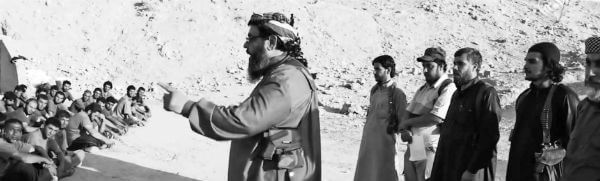
The Intercept reports: While the Islamic State continues to lose territory on the ground in Iraq and Syria, the appeal of its apocalyptic ideas has proven more enduring. Since 2014, the group, also known as ISIS, has managed to attract as many as 30,000 recruits from around the world, including several thousand men and women from Europe and North America.

A significant number of these individuals are believed to have been recruited online using social media.

A new project focused on interviews with individuals who joined and later defected from ISIS might offer a way of stifling the appeal of the group. The ISIS Defectors Interview Project, conducted by the International Center for the Study of Violent Extremism, compiles video and written testimony from former members of the group. Between September 2015 and May 2016, Anne Speckhard, a research psychologist at Georgetown University, and Ahmet Yayla, a former counterterrorism head of the Turkish National Police, met with 32 former ISIS members who escaped the group and have since fled to Turkey.[Continue reading…]

Facebooktwittermail

U.S. will deploy 560 more troops to Iraq to help retake Mosul from ISIS

The New York Times reports: President Obama will send 560 more troops to Iraq to help retake Mosul, the largest city still controlled by the Islamic State, a deployment intended to capitalize on recent battlefield gains that also illustrates the obstacles that Mr. Obama has faced in trying to wind down America’s wars.

The additional troops, announced here on Monday by Defense Secretary Ashton B. Carter, are the latest escalation of the American military role in Iraq by Mr. Obama, who withdrew the last American soldiers from Iraq at the end of 2011.

He began sending them back three years later after Islamic State fighters swept into the country from Syria.

Many of the newly deployed troops will be based at an airfield 40 miles south of Mosul that was reclaimed by Iraqi soldiers on Saturday. Administration officials said the airfield would be critical to a successful military operation because the United States could use it as a staging area to provide logistical support to Iraqi forces as they try to retake Mosul. [Continue reading…]

Facebooktwittermail

South China Sea ruling was aimed at easing tension – but may just stoke conflict

Simon Tisdall writes: By taking its case to the UN’s arbitration court in The Hague, the Philippines government hoped to find a peaceful, internationally acceptable solution to its long-running maritime dispute with China, its vastly more powerful neighbour. But Tuesday’s ruling, largely backing Manila and rejecting Beijing’s claims to exclusive control of large parts of the South China Sea, may do the exact opposite, stoking regional tensions, drawing in the US and Japan, and increasing the risk of armed confrontation.

The possible trigger for such an escalation is China’s refusal to accept the authority and jurisdiction of the UN court, and its instant rejection of its findings, despite the fact Beijing is a signatory of the UN’s convention on the law of the sea, which the court oversees, and is a permanent member of the UN security council. This attempt by Beijing to cherry-pick which treaties and rules it follows poses a significant challenge to the supremacy of international law and the UN system, of which it, in theory, is a key guardian. Its supporters will argue it is only following the US example.

That Chinese officials and state media pre-empted the court ruling over a period of months before the verdict, disparaging the court and proclaiming its proceedings null and void, suggests a disturbing new doctrine of Chinese exceptionalism may be emerging under the muscular tutelage of Xi Jinping, China’s authoritarian president. The irony should not be lost on the US, which justified its 20th-century global expansion in terms of exceptionalism and now finds itself on the receiving end. [Continue reading…]

Facebooktwittermail

Will young reformers of Islam please stand up?

Tania Rashid writes: I recently completed a short documentary about Islamophobia in America’s heartland, Texas. I got to know members of a gun-toting anti-Muslim group called the Bureau on American-Islamic Relations, or B.A.I.R.

I recall standing in the middle of them preparing for an “Arab rising.” Each practice shot they let out had me thinking that I could be an apparent target. One of them yelled “don’t mess with white people,” and proceeded to show me how he would complete a mass killing if he saw a group of Muslims.


I thought of my father, the most secular Muslim I know, who was wrongly accused of being a terrorist and interrogated for hours before a flight to Arizona. Could these men shoot me or other innocent people in my family?

But as much as I was repulsed by the group and their violent response to Muslims, it made me wonder: Were they all that wrong to feel so scared? [Continue reading…]

Facebooktwittermail