Author Archives: News Sources

A beleaguered Britain takes comfort in nostalgia for empire

british-empire

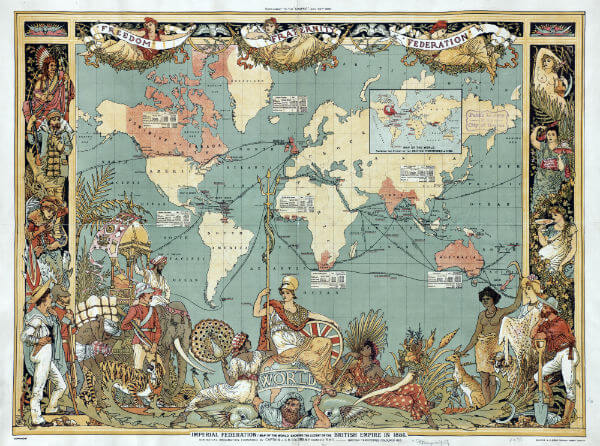
Paul Harris writes: The British empire never lacked contradictions. A global juggernaut standing with its military boot on millions of necks, practising commercial coercion and diplomatic cynicism, it nonetheless routinely thought of itself as a plucky underdog. Its heroes were the handful of redcoats at Rorke’s Drift fighting off the Zulu masses, or General Charles Gordon of Khartoum, going down against the odds in a last stand against religious zealots in the Sudan.

British soldiers, diplomats and traders pictured themselves as almost accidental conquerors, vanquishing a quarter of the planet’s landmass in between tea, tiffin and cricket matches. They maintained a detached stiff upper lip and publicly ignored the unpleasant reality of the Maxim gun – a luxury not afforded to the locals on its business end.

Britain preferred to see its dominance of a fifth of the world’s population as some sort of benevolent, God-given mission to bring law, order and free trade to benighted corners of the world. As George Bernard Shaw complained: ‘The ordinary Britisher imagines that God is an Englishman.’

It was a powerful notion and it has not gone away. Even though the Empire is reduced to a scattering of tiny islands with names few Britons would recognise, the imperial past remains implausibly popular. Early this year, a poll showed that a full 44 per cent of Britons were proud of colonialism, far outnumbering the mere 21 per cent who regretted their country’s imperial past. The survey was not an outlier. A 2014 report showed a mere 15 per cent of Britons thought the colonised might just have been left worse off by the experience. [Continue reading…]

Facebooktwittermail

Exxon investors aim to force reckoning with impact of climate change policies

oil-industry

The Guardian reports: ExxonMobil will face a revolt from some of its biggest and most influential shareholders on Wednesday as they fight to force the world’s largest oil company to open up about the effect of climate change on its future profits.

Investors managing more than $10tn (£6.9tn) of assets will vote in favour of a resolution calling on Exxon to “publish an annual assessment of long term portfolio impacts of public climate change policies” following the Paris Agreement to limit the global temperature rise to less than 2C (3.6F).

The resolution up for discussion at Exxon’s annual meeting in Dallas has been proposed by the New York state comptroller, a trustee of the New York State Common Retirement Fund, the third largest US pension fund, and the Church of England.

More than 30 of Exxon’s largest shareholders, including the pension funds of the governments of Norway, Canada and California, Legal & General Investment Management and Schroder’s, have said they will also vote in favour of the motion. Other supporters of the motion include the pension funds of local authority workers in Greater Manchester and Tyne & Wear. [Continue reading…]

Facebooktwittermail

Syria’s doctors on the frontline

Borzou Daragahi reports: Just a few more days, the pediatrician assured his friend, and he would come back. Doctor Hatem, as he is known in the tight-knit community of Syria war physicians, had an important exam to take in Istanbul, a half-hearted attempt at career development in the midst of the chaos that had engulfed his homeland. Hatem asked his fellow pediatrician and friend, Muhammad Waseem Moaz, to delay his own long-planned break a little while longer so he could sit for the test.

“You stay, and I will change places with you later,” he promised his friend.

The last couple weeks of April had been a particularly stressful stretch of the war. A shaky cessation of hostilities between pro- and anti-Syrian regime forces was crumbling in Aleppo, Syria’s commercial capital and largest city. Casualties were mounting again as helicopters and planes pounded the city with barrel bombs. One day a missile landed in the city, barely missing the Children’s Hospital, where Hatem is the senior doctor.

Then there was the daily battle to stock up on essential supplies. Transit routes to opposition-held territory in eastern Aleppo had closed as rebels lost control to fighters from the regime of Bashar al-Assad, to ISIS, or to Kurdish militias. Only the dangerous Castello Road leading to the northwest, through Idlib province, remained open. Doctors had stocked up on six months of supplies, but the regime appeared to be targeting their warehouses. “We used to get supplies through Kilis, but now everything is affected by the siege,” Hatem said. [Continue reading…]

Facebooktwittermail

Not just Russia: The Iranian surge in Syria

Aron Lund writes: When the Russian Air Force intervened in Syria on September 30, 2015, it changed the tide of battle. After a year of painful defeats in places such as Idlib, Jisr al-Shughour, Palmyra, and the Hawran region, Syrian President Bashar al-Assad’s government managed to regain its balance. By the end of the year, Assad’s forces were again moving forward in the northern Latakia region, east of Aleppo, and on several other fronts. In February 2016, his army cut a key rebel supply route between Aleppo and the Turkish border, and, in late March, Assad’s Russian-backed troops retook Palmyra from the self-proclaimed Islamic State. They are now moving on the Ghouta enclave east of Damascus, exploiting weeks of disastrous infighting among the local rebels.

Assad’s advances have slowed down recently, partly due to a brittle cessation of hostilities agreement monitored by the United States and Russia. The government even lost some ground in the Aleppo, Latakia, and eastern Homs regions. More significantly, the Syrian economy is in disastrous shape, and this might undermine Assad’s military progress. But there is no question that Assad’s position has greatly improved due to the Russian intervention, or that Moscow’s influence over the conduct of the war in Syria has grown significantly.

That is the conventional narrative, at least. However, it is missing something.

What happened in autumn 2015 was not just that Russia began operating in Syrian airspace. The reason the Russian intervention was so successful was that it was also accompanied by Iranian intervention on the ground. Let’s take a closer look at how that happened. [Continue reading…]

Facebooktwittermail

ISIS ‘destroys Syria airbase’ used by Russia

BBC News reports: A strategically significant Syrian airbase, used by Russia, appears to have been almost completely destroyed – according to new satellite imagery exclusively seen by the BBC.

The Tiyas facility – near the recently re-captured city of Palmyra in Syria – was repeatedly hit – with the so-called Islamic State presumed to be behind the attack. [Continue reading…]

Facebooktwittermail

Mecca fast becoming a Las Vegas for pilgrims as world’s largest hotel soon opens

The Guardian reports: Four helipads will cluster around one of the largest domes in the world, like sideplates awaiting the unveiling of a momentous main course, which will be jacked up 45 storeys into the sky above the deserts of Mecca. It is the crowning feature of the holy city’s crowning glory, the superlative summit of what will be the world’s largest hotel when it opens in 2017.

With 10,000 bedrooms and 70 restaurants, plus five floors for the sole use of the Saudi royal family, the £2.3bn Abraj Kudai is an entire city of five-star luxury, catering to the increasingly high expectations of well-heeled pilgrims from the Gulf.

Modelled on a “traditional desert fortress”, seemingly filtered through the eyes of a Disneyland imagineer with classical pretensions, the steroidal scheme comprises 12 towers teetering on top of a 10-storey podium, which houses a bus station, shopping mall, food courts, conference centre and a lavishly appointed ballroom.

Located in the Manafia district, just over a mile south of the Grand Mosque, the complex is funded by the Saudi Ministry of Finance and designed by the Dar Al-Handasah group, a 7,000-strong global construction conglomerate that turns its hand to everything from designing cities in Kazakhstan to airports in Dubai. For the Abraj Kudai, it has followed the wedding-cake pastiche style of the city’s recent hotel boom: cornice is piled upon cornice, with fluted pink pilasters framing blue-mirrored windows, some arched with a vaguely Ottoman air. The towers seem to be packed so closely together that guests will be able to enjoy views into each other’s rooms.

“The city is turning into Mecca-hattan,” says Irfan Al-Alawi, director of the UK-based Islamic Heritage Research Foundation, which campaigns to try to save what little heritage is left in Saudi Arabia’s holy cities. “Everything has been swept away to make way for the incessant march of luxury hotels, which are destroying the sanctity of the place and pricing normal pilgrims out.”

The Grand Mosque is now loomed over by the second tallest building in the world, the Abraj al-Bait clocktower, home to thousands more luxury hotel rooms, where rates can reach £4,000 a night for suites with the best views of the Kaaba – the black cube at the centre of the mosque around which Muslims must walk. The hotel rises 600m (2,000ft) into the air, projecting a dazzling green laser-show by night, on a site where an Ottoman fortress once stood – razed for development, along with the hill on which it sat.

The list of heritage crimes goes on, driven by state-endorsed Wahhabism, the hardline interpretation of Islam that perceives historical sites as encouraging sinful idolatry – which spawned the ideology that is now driving Isis’s reign of destruction in Syria and Iraq. [Continue reading…]

The construction of towering luxury hotels in Mecca seems to conflict with what can be described as the leveling effect for pilgrims performing the annual Hajj.

A 2008 Harvard study which compared attitudes of 800 successful Hajj lottery applicants from Pakistan, to an equal number of unsuccessful ones, found:

Hajjis have more positive views about people from other Muslim countries and are more likely to believe that different Pakistani ethnic and Islamic sectarian groups are equal and that they can live in harmony. Despite non-Muslims not being part of the hajj experience, these views also extend to adherents of other religions: Pilgrims are 22 percent more likely to declare that people of different religions are equal and 11 percent more likely to state that different religions can live in harmony by compromising over their disagreements.

Paralleling the findings on tolerance, hajjis report more positive views on women’s abilities, greater concern for their quality of life, and are also more likely to favor educating girls and women participating in the workforce.

Hajjis are also less likely to support the use of violence and show no evidence of any increased hostility toward the West. They are more than twice as likely to declare that the goals of Osama bin Laden are incorrect, more likely to express a preference for peace between Pakistan and India, and more likely to declare that it is incorrect to physically punish someone if they have dishonored the family. Hajjis also become more sensitive to crimes against women.

It thus seems that in many respects, the value of Hajj has less to do with the quality of accommodation available to pilgrims than it does with the avenues of access.

“These are the last days of Mecca,” Alawi tells The Guardian. “The pilgrimage is supposed to be a spartan, simple rite of passage, but it has turned into an experience closer to Las Vegas, which most pilgrims simply can’t afford.”

Facebooktwittermail

China’s scary lesson to the world: Censoring the Internet works

The Washington Post reports: First there was the Berlin Wall. Now there is the Great Firewall of China, not a physical barrier preventing people from leaving, but a virtual one, preventing information harmful to the Communist Party from entering the country.

Just as one fell, so will the other be eventually dismantled, because information, like people, cannot be held back forever.

Or so the argument goes.

But try telling that to Beijing. Far from knocking down the world’s largest system of censorship, China in fact is moving ever more confidently in the opposite direction, strengthening the wall’s legal foundations, closing breaches and reinforcing its control of the Web behind the wall.

Defensive no more about its censorship record, China is trumpeting its vision of “Internet sovereignty” as a model for the world and is moving to make it a legal reality at home. At the same time — confounding Western skeptics — the Internet is nonetheless thriving in China, with nearly 700 million users, putting almost 1 in 4 of the world’s online population behind the Great Firewall.

China is the world’s leader in e-commerce, with digital retail sales volume double that of the United States and accounting for a staggering 40 percent of the global total, according to digital business research company eMarketer. Last year, it also boasted four of the top 10 Internet companies in the world ranked by market capitalization, according to the data website Statista, including e-commerce giant Alibaba, social-media and gaming company Tencent and search specialists Baidu. [Continue reading…]

Facebooktwittermail

The humanitarian system: ‘A mammoth machinery losing track of what it is for’

Heba Aly writes: The number of people affected by humanitarian crises has more than doubled over the past decade. The frequency, scale, and severity of humanitarian crises are set to continue rising. Yet time and again, the traditional international humanitarian relief apparatus has been unable to respond adequately. Syria is only the latest example of this.

The aid sector is aware of deficiencies, but often frames the challenges it faces in terms that downplay its own responsibility. Needs are rising quickly, its leaders argue, and the scale of financing to respond to them is lagging behind. In reality, the problems facing the sector are much more fundamental. It has become a mammoth machinery that has, in many ways, lost track of what it stands for.

Irin reported in 2015 on focus groups conducted as part of the World Humanitarian Summit (WHS) process with refugees and other people affected by crises in the Middle East. [Continue reading…]

Facebooktwittermail

Why pro-Israel Democrats Bernie Sanders and Hillary Clinton could have a fight about Israel

The Washington Post reports: The only Jewish candidate in the 2016 presidential race, who calls himself “100 percent pro-Israel,” and one of Israel’s strongest U.S. defenders are nearing a fight over what being a pro-Israel Democrat means.

Sen. Bernie Sanders of Vermont plans to push for revisions in the Democratic Party position about relations with Israel, with a focus on elevating Palestinian rights as a U.S. priority, people involved in discussions over potential changes to the Democratic Party’s platform said.

Sanders wants revisions in wording about U.S. relations with Israel and commitment to seeking peace between the U.S. ally and the Palestinians while preserving the commitment to Israel’s security, those people said. They requested anonymity to discuss ideas for the platform that are still being developed. The platform is drafted by a Democratic National Committee panel and presented at the party convention in July.

The proposed new language on Israel is expected to seek what Sanders has elsewhere called a more even-handed U.S. approach to Israeli occupation of land Palestinians claim for a future state. [Continue reading…]

Facebooktwittermail

Shake-up in Israeli politics prompts ‘seeds of fascism’ warning

Reuters reports: A military affairs commentator interrupts his broadcast to deliver a monologue: I’m alarmed by what’s happening in Israel, he says, I think my children should leave.

Former Prime Minister Ehud Barak warns of “the seeds of fascism”. Moshe Arens, who served as defense minister three times, sees it as a turning point in Israeli politics and expects it to cause a “political earthquake”.

The past five days have produced tumult in Israeli politics, since conservative Prime Minister Benjamin Netanyahu unexpectedly turned his back on a deal to bring the center-left into his coalition and instead joined hands with far-right nationalist Avigdor Lieberman, one of his most virulent critics.

Lieberman, a West Bank settler, wants to be defense minister. So on Friday, Netanyahu’s former ally and confidant, Defence Minister Moshe Yaalon, resigned and quit Netanyahu’s Likud party in disgust.

After a weekend to digest the developments, which are expected to be finalised in an agreement between Netanyahu and Lieberman on Monday to form the most right-wing government in Israel’s 68-year-old history, commentators have tried to put it in perspective and found themselves alarmed. [Continue reading…]

Facebooktwittermail

In Syria, rebuilding bombed hospitals is an act of resistance

Charles Davis writes: The horror of the conflict in Syria, which began in March 2011, can be measured with statistics: over 400,000 people dead; half the population displaced; the life expectancy of a newborn child dropping from 76 years in 2011 to under 56 years in 2016. But the grotesque absurdity of this revolution turned civil war is perhaps best captured by the fact that today Syrians are forced to crowdsource money online to rebuild and fortify bombed hospitals.

“Now, thanks to this war, we are 10,000 years back and we dig hospitals in the mountains and in the ground,” Zaidoun al-Zoabi, head of the Union of Syrian Medical Relief Organizations (UOSSM), told me. “In our worst dreams — in our worst nightmares — we never thought we would have to fortify hospitals,” he said. “It’s not humane. It’s impossible to comprehend.”

Zoabi, a 42-year-old father of three daughters, spoke to me from Berlin, where he fled two years ago. Originally from Daraa, where the initially peaceful uprising against the government of Bashar al-Assad began, he fled when he “couldn’t stand anymore the brutality of the regime. Two times in jail was enough for me.” Now, like 4.8 million other Syrians, he witnesses the brutality from abroad.

Today, Syria lacks many things, including the democracy Zoabi and thousands of others were arrested and tortured for demanding, but there is no shortage of atrocities. [Continue reading…]

Interview with Dr. Zaher Sahloul, founder of the American Relief Coalition for Syria, senior advisor to and former president of the Syrian American Medical Society (SAMS), Associate Clinical Professor of Medicine at the University of Illinois at Chicago (UIC) and a practicing physician in pulmonary and critical care medicine (recorded on April 26, 2016 in the Center for Middle East Studies at the University of Denver).

Facebooktwittermail

Syria regime relentless on siege of ‘thorn in side’ Daraya

AFP reports: Under international pressure, Syria’s government has agreed to partial aid access for thousands of civilians living under regime siege but one town near Damascus remains a “thorn in its side”: Daraya.

The town was one of the first to erupt in demonstrations against the government — and one of the first to be placed under a strict regime siege in late 2012.

Despite appeals from its residents, the United Nations and rights groups, Syria’s government has steadfastly refused to allow aid convoys into the town, most recently in a dramatic 11th-hour rejection earlier this month.

Since a partial truce began in February, aid groups have made modest strides in reaching some besieged areas with assistance.

But Daraya remains without a drop of aid.

“The regime is using its ‘submit or starve’ policy to try and take back the town,” said Bissan Fakih, spokeswoman for The Syria Campaign, an advocacy group focused on the conflict.

“Daraya is on the capital’s doorstep, so the regime won’t give it up.”

The town lies a mere 15-minute drive southwest of central Damascus and is even closer to the regime’s prized Mazzeh air base, which hosts the feared air force intelligence services and their notorious prison.

A source close to the government said: “Daraya has a special place in the government’s mind.

“The state wants to take Daraya — it doesn’t want a truce there. The location is too strategic.”

Clashes on the town’s edges have intensified as pro-government news website Al-Masdar said the army would “kick off a major military operation” to capture Daraya in the coming days.

Daraya was once known for its sprawling grape vines and factories producing delicate embroidered tablecloths sold throughout the capital.

When Syria’s uprising began in 2011, the town’s protesters became renowned for handing out flowers and water to government soldiers.

But daily death tolls grew as sniper fire turned to shelling and residents began to take up arms against the regime. [Continue reading…]

Facebooktwittermail

Iraq begins assault on ISIS in Fallujah

The Wall Street Journal reports: Iraqi forces have begun their assault on Islamic State in Fallujah, Prime Minister Haider al-Abadi said late Sunday, an operation that aims to evict the extremists from one of their last major territorial holdings in Iraq.

“The moment of real victory has come, and Daesh has no option but to flee,” Mr. Abadi told state TV, using an Arabic acronym for the Sunni extremist group.

The operation follows months of planning and preparation in coordination with a U.S.-led military coalition that is backing Iraqi forces with airstrikes.

Iraqi forces have long had the city surrounded, but a major buildup of forces became evident in recent days as Shiite militias working alongside the Iraqi army moved military equipment to the area and officials suggested an operation was imminent.

Before the start of operations Sunday, the Iraqi government appealed to residents of Fallujah to prepare to leave, even urging them to raise white flags at their houses if they couldn’t.

The military’s Joint Operations Command said that civilian families would be allowed to leave the city through designated safe passages, though it didn’t specify how departures from the city would be arranged.

The Iraqi army, counterterrorism forces, police, tribal fighters and Shiite militias were taking part in the operation, according to the military.

Eissa al-Issawi, the exiled mayor of Fallujah, said Islamic State militants were retreating from the outskirts to the center of the city Sunday as the operation drew nearer.

Civilians inside were eager for any relief from isolation, 74-year-old resident Mohessen Hossam said. Many people have died of starvation in the city since Iraqi forces imposed a blockade last year, residents have said, although the precise toll is impossible to measure.

“There’s no food, no fuel and no services, so what is left for us to live for?” Mr. Hossam said, adding that he could hear warplanes flying overhead on Sunday. “We want someone to help us — anyone.” [Continue reading…]

Facebooktwittermail

Death of Mullah Mansoor highlights Taliban’s links with Iran

The Guardian reports: The killing of the Taliban chief on the main highway leading from the Iranian border shines new light on the movement’s complicated relationship with Tehran.

Although it is Pakistan that has traditionally been condemned for secretly supporting Afghan insurgents, analysts say Iran also provides weapons, cash and sanctuary to the Taliban. Despite the deep ideological antipathy between a hardline Sunni group and cleric-run Shia state the two sides have proved themselves quite willing to cooperate where necessary against mutual enemies and in the pursuit of shared interests.

Mullah Mansoor first entered Iran almost two months ago, according to immigration stamps in a Pakistani passport found in a bag near the wreckage of the taxi he was travelling in when he was killed by a US drone strike.

The passport, in the name of Wali Muhammad, also showed he had only just returned to Pakistan from the border crossing of Taftan, some 280 miles (450km) away from the site where he was killed, an area called Ahmed Wal, where he had stopped for lunch. [Continue reading…]

Facebooktwittermail

Afghan government secretly fosters Taliban splinter groups

The Wall Street Journal reports: The Afghan government is giving financial and military support to a breakaway Taliban faction, according to some Afghan and U.S. coalition officials, in an effort to sow rifts within the insurgency and nudge some of its leaders toward peace talks.

The effort comes as the U.S. military conducted an airstrike inside Pakistan that American officials said likely killed Taliban leader Mullah Akhtar Mansour, potentially setting the stage for another leadership struggle that could fragment the group further in the coming days. The Taliban, which usually respond promptly to requests for comment, hadn’t issued a statement by late Sunday.

Senior Afghan and U.S. diplomatic, military and intelligence officials, including several who had roles in creating the program, described its details and said that resources provided by the U.S. were used to support it.

The Afghan intelligence agency is leading the drive to recruit new Taliban assets, Afghan and U.S. officials said. The agency relies on the U.S. for most of its funding and is still mentored by the Central Intelligence Agency. The CIA declined to comment for this article.

Despite billions invested in reconstruction, Afghanistan still relies on aid for most of its funding and the U.S. pays more than $4 billion a year for its security forces.

The program’s goal, Afghan and U.S. officials said, is to exploit divisions that emerged after the Taliban’s longtime leader, Mullah Mohammad Omar, was revealed last July to have been dead for years, a disclosure that stunned local Taliban leaders and threw the group into disarray.

It targets southern Zabul, Helmand, eastern Paktika and western Farah and Herat provinces, where groups of insurgents and their commanders, unhappy with the Taliban’s leadership, have defected to a commander named Mullah Mohammad Rasool.

Afghan and U.S. officials said Mullah Rasool’s faction and other fractious Taliban groups have been receiving cash, ammunition and weapons from the Afghan government. [Continue reading…]

Facebooktwittermail

U.S. takes war back to Pakistan with drone strike aimed at Taliban leader

The Washington Post reports: The U.S. drone strike that killed Taliban chief Akhtar ­Mo­hammad Mansour represents another escalation of U.S. involvement in the war in Afghanistan by trying to cripple an insurgent group that has for years found refuge on Pakistani soil.

The strike early Saturday marks the most aggressive U.S. military action in Pakistan since the 2011 raid that killed Osama bin Laden. It is also thought to be the first time that the U.S. military has directly targeted the top leader of the Afghan Taliban, a potentially destabilizing action that could leave the group violently lashing out as it seeks to find a new leader.

President Obama called Mansour’s death “an important milestone.”

“We have a high-profile leader who has been consistently part of operations and plans to potentially harm U.S. personnel and has been resistant to the kinds of peace talks and reconciliation that could ultimately bring an end to decades of war in Afghanistan,” he said during a visit to Vietnam.

While Obama denied that the attack represented a shift in the U.S. approach, analysts see it as an escalation.

“This is an unprecedented move to decapitate the Taliban leadership in its safe haven of Pakistan,” said Bruce Riedel, a South Asia expert at the Brookings Institution. “It exposes Pakistan’s role in promoting and protecting the Taliban, and will provoke a crisis in U.S.-Pakistan relations.”

But unlike the bin Laden raid, which prompted outrage in Pakistan, the reported strike on Mansour drew a fairly muted reaction Sunday from Pakistani government and military leaders, even as Afghan officials cheered and described the attack as proof of the Afghan Taliban’s deep presence in Pakistan. [Continue reading…]

The Guardian reports: The killing of Mansoor represents a remarkable expansion of the programme because it happened well outside the tribal agencies of North and South Waziristan where nearly all known strikes have taken place, usually focusing on al-Qaida and allied groups.

US officials said the attack took place near Ahmad Wal, suggesting it was the first ever known strike in the vast southern province of Balochistan, where the insurgency’s “Quetta Shura” leadership council is thought to be based, and one of very few to target a senior member of the Afghan Taliban.

The drones were described as having been piloted by US special forces – suggesting it was not a CIA operation, as is usually the case with attacks inside Pakistan. [Continue reading…]

Facebooktwittermail

Peace talks in Kuwait: Will they solve Yemen’s crisis?

Helen Lackner writes: Thirteen months into the full scale war which has encompassed the country, negotiations started in Kuwait on 21 April between the Saleh-Huthi alliance who control the Yemeni northern highlands and the capital Sana’a and the internationally recognised government of president Hadi who was elected in 2012, and has been in exile in Riyadh for most of the last year.

A month into the talks, their main achievement is that they have not definitively broken down. Insofar as any negotiations are taking place, it is thanks to the systematic interventions from the Shaikh of Kuwait or other senior figures from different countries to bring one or the other side back to the table after their routine almost daily walk outs. Ismail Ould Cheikh Ahmed, the UN special adviser and his team do their best and this time, at least, have real support from the international community.

While naïve observers might think that the ongoing and worsening suffering of 25 million Yemenis might have brought the warring parties to their senses to seek a solution without imposing further starvation, thirst, destitution and death, it would seem they consider this irrelevant.

Ensconced in their luxury hotels in Riyadh or their protected environments in Sana’a, living conditions of the population appear to be the least of their concerns. Instead, their petty rivalries, long-standing feuds and greed for power and control determine their tactics. Any planning they may be doing for the future may well focus more on how they will appropriate future external humanitarian and development funding.

So, why are these negotiations taking place? Answering this question may also help to understand their likely outcome. In addition to the military stalemate, and the collapsed economy, the role of external actors is as relevant today as it was to reach the Gulf Cooperation Council Agreement of 2011 and the transitional regime which followed it. [Continue reading…]

Facebooktwittermail

New political earthquake in Brazil: Is it now time for media outlets to call this a ‘coup’?

The Intercept reports: Brazil today awoke to stunning news of secret, genuinely shocking conversations involving a key minister in Brazil’s newly installed government, which shine a bright light on the actual motives and participants driving the impeachment of the country’s democratically elected president, Dilma Rousseff. The transcripts were published by the country’s largest newspaper, Folha de São Paulo, and reveal secret conversations that took place in March, just weeks before the impeachment vote in the lower house took place. They show explicit plotting between the new planning minister (then-senator), Romero Jucá, and former oil executive Sergio Machado — both of whom are formal targets of the “Car Wash” corruption investigation — as they agree that removing Dilma is the only means for ending the corruption investigation. The conversations also include discussions of the important role played in Dilma’s removal by the most powerful national institutions, including — most importantly — Brazil’s military leaders.

The transcripts are filled with profoundly incriminating statements about the real goals of impeachment and who was behind it. The crux of this plot is what Jucá calls “a national pact” — involving all of Brazil’s most powerful institutions — to leave Michel Temer in place as president (notwithstanding his multiple corruption scandals) and to kill the corruption investigation once Dilma is removed. In the words of Folha, Jucá made clear that impeachment will “end the pressure from the media and other sectors to continue the Car Wash investigation.” It is unclear who is responsible for recording and leaking the 75-minute conversation, but Folha reports that the files are currently in the hand of the prosecutor general. The next few hours and days will likely see new revelations that will shed additional light on the implications and meaning of these transcripts.

The transcripts contain two extraordinary revelations that should lead all media outlets to seriously consider whether they should call what took place in Brazil a “coup”: a term Dilma and her supporters have used for months. When discussing the plot to remove Dilma as a means of ending the Car Wash investigation, Jucá said the Brazilian military is supporting the plot: “I am talking to the generals, the military commanders. They are fine with this, they said they will guarantee it.” He also said the military is “monitoring the Landless Workers Movement” (Movimento dos Trabalhadores Rurais Sem Terra, or MST), the social movement of rural workers that supports PT’s efforts of land reform and inequality reduction and has led the protests against impeachment. [Continue reading…]

Facebooktwittermail