Author Archives: News Sources

Obama’s disdain for Europe’s ‘free riders’ makes this an awkward transatlantic trip

By Scott Lucas, University of Birmingham

Barack Obama’s visit to Britain, brings with it plenty of chatter about the so-called “special relationship” between the US and the UK. Coming as Britain prepares for a referendum on European Union membership, the visit has already kicked off a political bunfight about the Americans “ordering” Britons how to vote on June 23, with Obama to weigh in explicitly on why a Brexit would be a seriously bad idea.

But this neurosis about being bossed around by Washington misses the bigger point about how Obama sees Britain and its neighbours. Whenever he swings through Europe, he makes a public show of friendship and unity – but he clearly thinks the US is being exploited by a troublesome continent that relies on American power to shore itself up.

This is a misdiagnosis on his part. The issue here is not European fecklessness, but Obama’s imperative to gloss over his own foreign policy failings.

While he can rightly claim credit for achievements such as the rapprochement with Cuba, a steady, pragmatic relationship with China, and a step back from the confrontation, aggression and abuse of the George W. Bush years. The problem is that he wants the catastrophes that unfolded on his watch dismissed as beyond his control.

Continue reading

Facebooktwittermail

2016 U.S. election critical to success of Paris climate pact

Climate Central reports: The 2016 presidential election is likely to be enormously consequential to the success of the Paris climate agreement, due to be signed Friday at the United Nations, and the ability of the United States to lead the world in reducing greenhouse gas emissions to keep global warming to “well below” 2°C (3.6°F).

Climate Central asked more than a dozen climate and political scientists and other experts how the outcome of that election will affect the climate pact.

The consensus was clear: If a Republican administration is elected in November, the Paris agreement would be severely undermined and any efforts to cut greenhouse gas emissions on a global scale will be cast into doubt. If a Democratic administration is elected, the Paris agreement will remain intact. [Continue reading…]

Facebooktwittermail

How the Paris Agreement is driving climate action

Climate Nexus reports: This past December, representatives from 195 nations gathered in Paris to negotiate an historic agreement to combat climate change and accelerate the transition to a sustainable, low-carbon future. After two weeks of negotiations, the nations unanimously agreed to adopt the international climate pact. On April 22, 2016, nations will again gather, this time at the United Nations headquarters in New York, to formally sign the Paris Agreement.

The world has already seen a significant shift towards stronger climate action, in the ensuing months since the adoption of the Agreement.

The adoption of the Paris negotiations delivered a signal to governments, businesses and the global public: All parties, from national governments to small businesses, must do their part to minimize the risks and impacts of climate change.

This signal has mobilized actions by public and private sector institutions to move away from fossil fuels, which drive climate change, and towards an economy powered by renewable energy. [Continue reading…]

Facebooktwittermail

Instead of honoring leader of Syria’s ‘White Helmets,’ U.S. refused his entry

The New York Times reports: The leader of a Western-backed rescue organization that searches for survivors of bombings in Syria was denied entry into the United States this week, where he was to receive an award recognizing his contributions to humanitarian relief.

Raed Saleh, the head of the Syria Civil Defense, was to accept the award from InterAction, an alliance of aid agencies, at its gala dinner Tuesday night in Washington. The dinner’s keynote speaker was Gayle Smith, the administrator of the United States Agency for International Development.

But when Mr. Saleh, who works in Syria and Turkey, arrived Monday at Washington’s Dulles International Airport on a flight from Istanbul, the authorities said he could not enter the United States. He was told his visa had been canceled.

It was unclear whether Mr. Saleh’s name might have shown up on a database, fed by a variety of intelligence and security agencies and intended to guard against the prospect of terrorism suspects slipping into the country.

The State Department declined to give specifics, but a spokesman, John Kirby, said that “the U.S. government’s system of continual vetting means that traveler records are screened against available information in real time.”

“While we can’t confirm any possible specific actions in this case, we do have the ability to immediately coordinate with our interagency partners when new information becomes available,” he added.

Mr. Saleh was put on the next flight back to Istanbul. In a telephone interview from Istanbul on Wednesday, Mr. Saleh sought to turn the focus to the experience of millions of Syrians who find the world’s borders closed to them.

“In any airport, the treatment we get as Syrians is different,” he said. “The way they look at us, we are suspected.” In his case, he pointed out, he had no intention of staying longer than 16 hours.

His group is widely known as the White Helmets for the headgear its members wear as they rush to bomb sites to rescue survivors and dig out the dead from the rubble. Government supporters have criticized the group for working in some areas held by the Nusra Front, a terrorist organization linked to Al Qaeda. But like many internal aid groups, it says it is neutral and seeks to help civilians no matter whose territory they live in.

Joshua Landis, a Syria expert at the University of Oklahoma at Norman, called the denial of entry “a scandal.”

“The White Helmets are one of the few organizations in Syria that have been above reproach,” he said. “They have tried to observe strict neutrality in order to facilitate their humanitarian work and save lives. To do this they have worked along side all sorts of militias in order to get to victims of the fighting.”

At the dinner on Tuesday night, InterAction staff members wore white helmets in solidarity — and posted a photo on Twitter.

“I really was moved by this moment,” Mr. Saleh said. “It was a stance of the unity of humanity — and I don’t mean the international community, I mean humanity.” [Continue reading…]

In February, Saleh spoke at the Conference Supporting Syria and the Region, co-hosted in London by the UN and the Governments of the United Kingdom, Kuwait, Germany and Norway.

Facebooktwittermail

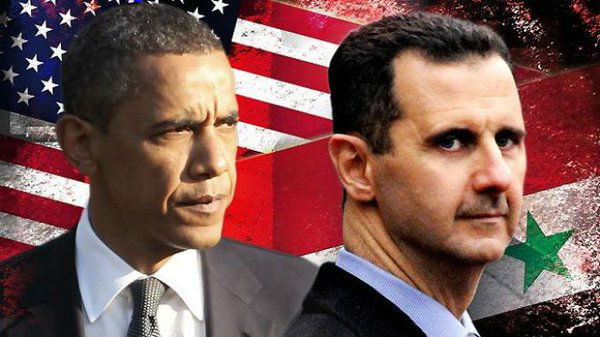
Obama’s former Middle East adviser: We should have bombed Assad

obama-assad

Jeffrey Goldberg writes: A couple of weeks ago, I was talking with Philip Gordon, who held the Middle East portfolio at the National Security Council from 2013 to 2015 (and before that, served as assistant secretary of state for European affairs) about my Atlantic article, “The Obama Doctrine.” The piece tried to explain how the president understands the world, and America’s role in it. (This week, the president is on a tour of the some of the countries he discussed in the article.)

Gordon, a loyal Obama man, is, like his ex-boss, somewhat-to-very fatalistic about the ability of the U.S. to direct the course of events in the Middle East (“realistic,” rather than “fatalistic,” is the term the president prefers). Gordon is known for, among other things, a pithy and concise formula he developed to explain why President Obama, and many of his advisers, are so hesitant to engage fully in the various catastrophes of the Middle East. In Iraq, the Gordon dictum goes, Obama learned that full-scale invasions leading to regime change don’t work; in Libya, he learned that partial interventions leading to regime collapse don’t work; and in Syria he learned that non-intervention also doesn’t work. An unspoken but obvious lesson: Once a president reaches this set of conclusions, can you blame him for wanting to pivot to Asia?

So I was a bit surprised to hear Gordon tell me that he believes, in retrospect, that President Obama should have attacked Syria in retaliation for its use of chemical weapons in 2013. A year earlier, the president drew a “red line” for the Syrian dictator, Bashar al-Assad regarding the potential use of such weapons; a year later, when Assad deployed sarin gas in the town of Ghouta, killing as many as 1,300 people, Obama set in motion a strike, but stood down at the last minute, putting the matter in the hands of Congress. In one of the interviews that informed “The Obama Doctrine,” the president told me that this moment was a source of pride for him; he resisted the pressure — and the temptation — to carry out an operation preordained by the “Washington playbook.” The “playbook,” in Obama’s mind, is in part a set of received understandings about what a president should do in the event of a rogue-state provocation. Obama argued to me that the Washington playbook is overmilitarized, and is overused.

As we know, the decision to stand down was not a popular one with America’s allies, who believed that Obama had squandered U.S. credibility. When a superpower sets a red line, the thinking goes, it must enforce the red line.

It was noteworthy that Gordon disagreed with Obama’s decision, and agreed with the criticism of U.S. allies, because he is known, in national-security circles, for being extremely wary of the consequences of deeper U.S. involvement in Syria (in this, he resembles his successor, Robert Malley, who is now Obama’s coordinator for anti-ISIS activities). I asked Gordon if he would speak to me on the record about these events, and he agreed. A full transcript of our conversation appears below, but here are some highlights: [Continue reading…]

Facebooktwittermail

How Hillary Clinton became a hawk

Mark Landler writes: As Hillary Clinton makes another run for president, it can be tempting to view her hard-edged rhetoric about the world less as deeply felt core principle than as calculated political maneuver. But Clinton’s foreign-policy instincts are bred in the bone — grounded in cold realism about human nature and what one aide calls “a textbook view of American exceptionalism.” It set her apart from her rival-turned-boss, Barack Obama, who avoided military entanglements and tried to reconcile Americans to a world in which the United States was no longer the undisputed hegemon. And it will likely set her apart from the Republican candidate she meets in the general election. For all their bluster about bombing the Islamic State into oblivion, neither Donald J. Trump nor Senator Ted Cruz of Texas have demonstrated anywhere near the appetite for military engagement abroad that Clinton has.

“Hillary is very much a member of the traditional American foreign-policy establishment,” says Vali Nasr, a foreign-policy strategist who advised her on Pakistan and Afghanistan at the State Department. “She believes, like presidents going back to the Reagan or Kennedy years, in the importance of the military — in solving terrorism, in asserting American influence. The shift with Obama is that he went from reliance on the military to the intelligence agencies. Their position was, ‘All you need to deal with terrorism is N.S.A. and C.I.A., drones and special ops.’ So the C.I.A. gave Obama an angle, if you will, to be simultaneously hawkish and shun using the military.”

Unlike other recent presidents — Obama, George W. Bush or her husband, Bill Clinton — Hillary Clinton would assume the office with a long record on national security. There are many ways to examine that record, but one of the most revealing is to explore her decades-long cultivation of the military — not just civilian leaders like Gates, but also its high-ranking commanders, the men with the medals. Her affinity for the armed forces is rooted in a lifelong belief that the calculated use of military power is vital to defending national interests, that American intervention does more good than harm and that the writ of the United States properly reaches, as Bush once put it, into “any dark corner of the world.” Unexpectedly, in the bombastic, testosterone-fueled presidential election of 2016, Hillary Clinton is the last true hawk left in the race. [Continue reading…]

Facebooktwittermail

Hillary Clinton will consider picking another woman for VP. Could it be Elizabeth Warren?

James Hohmann reports: Working in Warren’s favor:

  • Clinton would never choose Sanders as her running mate, but Warren might be able to activate many of his core supporters. If the former Secretary of State remains soft with liberals come summer, she might look leftward.
  • Democrats do not have a deep bench of senior women who are plausible as HRC’s VP. There are only three Democratic women who hold governorships and 14 in the Senate, including Warren.
  • Privately, Warren appears to covet the job. She’s picked her spots, carefully choosing which issues she weighs in on. But she’s signaled recently that she would embrace with gusto the attack dog role typically played by a VP candidate. Earlier this week, she ripped into Ted Cruz for saying that seeking the presidency requires significant sacrifice. She spent another recent day going after Donald Trump.

[Continue reading…]

Facebooktwittermail

Hillary Clinton’s quiet supporters

Michelle Goldberg writes: Until Tuesday night, I had assumed that my neighborhood, Cobble Hill, Brooklyn, was overwhelmingly supporting Bernie Sanders. Sanders bumper stickers and T-shirts outnumbered those for Hillary Clinton by what seemed like 20 to 1. A couple of times, I thought about putting my baby daughter in a Clinton onesie — whatever my hesitations about Clinton’s candidacy, I love the idea of my girl’s first image of an American president being female. But I always hesitated, not wanting to invite playground harangues from local dads about Goldman Sachs and the Fed.

When I looked up Cobble Hill on the nifty New York Times tool providing neighborhood-by-neighborhood results, however, it turned out that Clinton won the immediate area around my apartment by 59.4 percent. A block over, she won by 72.5 percent. She won all around me. A lot of Clinton supporters, evidently, have been keeping quiet about their allegiances.

There are a couple of explanations for this. Sanders fans seem to be more enthusiastic, though it takes a certain amount of enthusiasm to vote in a primary at all. Registered independents couldn’t vote in New York’s closed primary, particularly given the absurd, undemocratic October deadline for switching parties. But I think there might be something else at work as well: an optical illusion that the candidate with the most white male support had the most support, period. I had let myself mistake the loudest people for The People.

I’m not trying to deny that the Sanders coalition is diverse or to erase the many passionate women and men of color who supported him. But the fact remains that according to exit polls, Clinton won every racial and gender demographic except white men. And somehow, I’d become convinced that, in my own backyard, their preferences were far more widespread than they really are. [Continue reading…]

Facebooktwittermail

Africa and the drama of migration

Tidiane Kassé writes: Migration is as old as Africa itself. People have always moved in search of a better life. The economic crisis in Africa fueled by development policies imposed on the continent by the World Bank, IMF and other donors is one of the factors forcing some Africans to undertake dangerous journeys to Europe in an attempt to improve their lot.

In some African cultures, travel is an initiatory act. One becomes a man when he leaves his family to go far to discover other people and other cultures, to confront the real world realities. This means going away from the comfort and care of a mother, far from the protection of a father. Going away is getting more experiences; coming back is enriching one’s group with what was learned in the other world. This culture brands the Soninkés – a crossborder community living between Senegal, Mali and Mauritania. In this area, the villages are empty. The houses resonate essentially with the laughter of women and children screaming. The men left. They migrated elsewhere. Soninkés are one of the most mobile people in Africa. Their mobility has lasted since the empire of Ghana (8th – 11th century).

In Diawara, a Soninké village located 800 kilometers from Dakar, more than 50 per cent of the population are French nationals. Almost all of them are returning migrants, who came back to resettle in their land of origin once their European or African courses ended. Those who have not returned yet left their wives and their offspring in luxurious residences. The houses that grow in Diawara breathe an unsuspected comfort. TV, refrigerator, air conditioner, etc., are behind the walls. So far from Dakar, in a rural area where poverty affects 70 per cent of the population, one cannot imagine this state of affairs.

Each month, from France, Germany, Italy or elsewhere, migrants send money for the monthly expense. Medical expenses, tuition, everything goes to ensure the family is taken care of. In Soninkés community, success in emigration is measured by the ease in which the family is left in the village. Remittances are considerable. In 2015, the World Bank estimated money transfers from emigration to $601 billion, including $441 billion to developing countries. In Senegal, around $2 billion has fueled this circuit. This represents more than the Official Development Assistance (ODA).

The money sent is not just for families. It also contributes to community development. Since the implementation of financial recovery plans imposed by the International Monetary Fund (IMF) and the World Bank in the 1980s African states have turned their back on social development investments, building neither hospitals nor health centers, schools, etc., but privatizing and firing hundreds and hundreds workers instead. These policies have began to change today. Africa is a continent where, for ten years, the growth rate turned at around 5 per cent, but the damage of the past is immeasurable. Reconstruction is difficult. [Continue reading…]

Facebooktwittermail

‘America treats us worse than animals’ — victims of Obama’s secret drone war speak out

The Guardian reports: Because US drone strikes are cloaked in secrecy, occur in remote or dangerous locales and target people presumed to be terrorists, Americans rarely hear from survivors or their relatives. But a theme emerges in interviews the Guardian has conducted with more than half a dozen drone survivors: the pain from the strike never ends, as the apparatus of secrecy renders closure unobtainable.

According to six people in Pakistan and Yemen who have lost their brothers, sons and grandparents to drone strikes, the strike lasts a moment and the consequences last a lifetime. Most of them have never told their stories to an American reporter. Some of them have theories about whom the US was targeting, while others are left guessing. The interviews were facilitated by the human rights group Reprieve and the Foundation for Fundamental Rights and conducted in translation.

The people are left impoverished, anguished and infuriated. Justice, let alone apologies, never arrive, even as a modest amount of blood money flows from the local governments. The United States, which styles itself a force for justice in the world, is to them the remote force that introduced death into their lives and treats them like they are subhuman, fit only to be targeted. At any moment, they fear, another drone could come for them.

The White House has said it will soon release of a tally of drone deaths. Relatives of the dead and survivors of the attacks expect little of it to include the truth, and doubt it will lead to the public apologies they desire – particularly since a senior aide to Barack Obama recently told the Atlantic that the president “has not had a second thought about drones”.

The CIA would not comment for this piece. An Obama administration official said: “It is certainly not the case that lives of a certain nationality are more valuable to us than those of any other. What is true, however, is that the president has said … that the American people need information to hold their government accountable. That is in part why we have been especially transparent when it comes to the deaths of US citizens.”

Nabila’s father, and Mamana’s son, Rafiq ur-Rehman, took a different view. “If America kills any westerner, one of their own, white people, they apologize and compensate. But if it’s Pakistanis like us, they don’t care. In my opinion, America treats us worse than animals.” [Continue reading…]

Facebooktwittermail

What the people of Nagorno-Karabakh think about the future of their homeland

By Kristin M. Bakke, UCL and Lee J. M. Seymour, Université de Montréal

The disputed territory of Nagorno-Karabakah has been caught in a tug-of-war between Armenia and Azerbaijan for decades. Internationally recognised as part of Azerbaijan, it’s home to an estimated 120,000 people, primarily ethnic Armenians, who want to separate from Azerbaijan. It’s been a de facto independent state since a fragile ceasefire was brokered in 1994, and low-level violence has flared up every spring ever since.

But while much remains unclear about the alarming fighting that began on April 2 this year, the scale of what’s happened is without precedent.

This year’s warfare has involved advanced weapons systems such as drones, helicopters, tanks, and artillery, including indiscriminate Grad rockets. Territory appears to have changed hands for the first time since the ceasefire. While combat has subsided, a full-scale war, with the potential for a wider conflict involving Russia and Turkey, remains a serious risk.

Continue reading

Facebooktwittermail

Hamas linked to Jerusalem bus bombing

The Times of Israel reports: One mystery is solved. The identity of a man severely wounded in Tuesday’s terrorist attack in Jerusalem — suspected of having planted the bomb that exploded on the Number 12 bus — was discovered last night, shortly after the hospital announced he had succumbed to his wounds.

But the Hamas announcement that Abdel al-Hamid Abu Srour, 19, from the al-Ayda refugee camp in the Bethlehem area, was “one of ours” fell short of a full claim of responsibility for the attack, which injured 20 other people.

The Gaza-based terror group released a photo of Abu Srour wearing a Hamas scarf, and another photo that was decorated with emblems of the Second Intifada. But the announcement on the organization’s official website opened with a quote from a “Zionist” Facebook page providing the initial information that it was Abu Srour who had carried out the attack. [Continue reading…]

Facebooktwittermail

UN says up to 500 migrants may have drowned on their way to Italy

The Washington Post reports: As many as 500 migrants seeking a better future in Europe may have drowned last week in the Mediterranean Sea between Libya and Italy, U.N. refugee officials said Wednesday.

If true, the toll would make the incident one of the worst tragedies involving refugees and migrants over the last year.

On Tuesday, a team from the United Nations High Commissioner for Refugees (UNHCR) spoke with some of the 41 survivors of the alleged accident who had arrived at Kalamata, a Greek town on the Peloponnese Peninsula, the U.N. agency said in a statement.

“If confirmed, as many as 500 people may have lost their lives when a large ship went down in the Mediterranean Sea at an unknown location between Libya and Italy,” said the agency.

The survivors included 37 men, three women and a 3-year-old child. They were from Somalia, Ethiopia, Egypt and Sudan. All were rescued by a merchant ship that then brought them to Greece. [Continue reading…]

Facebooktwittermail

Syria cease-fire crumbles as bombings kill dozens

The New York Times reports: For 38 straight days, the streets of the northwestern Syrian town of Maarat al-Noaman had been the scene of protests against the government and the Islamic extremists of the Nusra Front. On Tuesday, they became a scene of carnage, as government warplanes attacked the town’s marketplace, killing dozens of people, according to residents and rescue workers.

The attack confirmed the apparent unraveling of a fragile cease-fire agreement between Syrian government forces and some armed opposition groups. The attack in Maarat al-Noaman, and a similar one in the nearby town of Kafr Nabl, came several days after the start of a new insurgent offensive in a neighboring province, and a day after the main Syrian opposition group said it would no longer participate in diplomatic discussions in Geneva.

The opposition has accused the government of repeatedly violating the partial cease-fire, and Tuesday’s attacks were seen as a violent end to the relative respite from airstrikes that had lasted nearly two months.

Some residents in Maarat al-Noaman, 68 miles north of Homs, and in other towns in Syria that had been afforded a modicum of free space, had resumed the street protests that began the uprising against President Bashar al-Assad more than five years ago. The recent protests have signaled residents’ opposition to the government that has been bombing them and their distaste for extremists fighting among the rebel groups.

As Syrians at home have again raised their voices in protest, insurgent groups have been pressing representatives of the opposition to take a harder line in talks in Geneva, which have produced little progress. The bombings Tuesday were, for many in Syria, the last straw. [Continue reading…]

Facebooktwittermail

Russia moves artillery to northern Syria, U.S. officials say

The Wall Street Journal reports: Russia has been moving artillery units to areas of northern Syria where Assad government forces have been massing, raising U.S. concern that the two allies may be preparing for a return to full-scale fighting after a nearly two-month cease-fire with the main opposition, U.S. officials say.

The recent Russian redeployments within Syria have been accompanied by the return of some Iranian army forces to government-controlled areas close to the front lines, according to officials briefed on the intelligence. Russia, Iran and the Lebanese movement Hezbollah have been President Bashar al-Assad’s main supporters in the conflict.

U.S. concerns about the Russian buildup in northern Syria, and the negative impact it could have on the cease-fire and political negotiations in Geneva, prompted President Barack Obama’s call to Russian President Vladimir Putin on Monday, officials said.

Josh Earnest, the White House press secretary, used unusually harsh language in describing the exchange between the two leaders, calling it an “intense conversation.”

Russian officials have voiced support for the partial cease-fire and the United Nations-mediated negotiations in Geneva, both in public and in private settings, according to U.S. officials.

But both are on the verge of complete collapse. Citing widening attacks by government forces, representatives of the main opposition broke off the latest round of indirect talks on Monday. Government forces have stepped up attacks in some areas in northern and central Syria in recent days, and one opposition negotiator on Tuesday described the truce as over. [Continue reading…]

Facebooktwittermail

Syria’s humanitarian ‘White Helmets’ chief denied entry to U.S.

Devex reports: Raed Al Saleh was scheduled to receive InterAction’s 2016 Humanitarian Award in a hotel ballroom in Washington, D.C., on Tuesday evening. Instead, he’ll likely be back on the Syria-Turkey border when he’ll be delivered the award on an undetermined future date.

Saleh, a 33-year-old Syrian national and head of the Syrian Civil Defense, was denied entry to the United States upon arriving at Dulles International Airport on the evening of April 18. Saleh had come prepared with a letter from the U.S. Agency for International Development to facilitate his entry with U.S. customs and immigration, but was told by U.S. officials that his visa had been cancelled. Saleh’s visa is valid until September 2016, and he had not received any notification alerting him it had expired, according to a statement from his colleague and translator Zouheir Albounni.

The electrical supplies salesman turned humanitarian had been scheduled for months to attend InterAction’s Forum, an annual gathering of humanitarian, development and sustainability professionals, where he was being recognized for his work leading more than 2,800 intrepid volunteers as the leader of the Syrian Civil Defense.

The group of unarmed and neutral civilians, also known as the “White Helmets” due to their protective hard hats, work as firefighters, paramedics and search-and-rescue teams. They have saved more than 40,000 lives in Syria on both sides of the fight, according to Saleh. [Continue reading…]

Facebooktwittermail

Obama’s November surprise?

Philip Weiss writes: The organized liberal Jewish community has a new vision: that President Obama will use the lame duck period of his presidency to make a major initiative on the Israel/Palestine conflict and introduce resolutions at the United Nations Security Council to condemn settlements and/or set out the parameters of a two-state solution.

Thus Obama will establish a more assertive U.S. policy in favor of Palestinian human rights and self-determination that the next president will live by.

Hillary Clinton won’t let him go forward with such a resolution now because it would capsize her campaign. But when he does it in November or December– after she is elected president, according to the scenario– then she will say, There is only one US president at a time, and Obama’s policy is my inherited policy.

The dream was alive at J Street’s gala dinner the other night. Both Joe Biden and John Kerry were coming! That was a huge score for the liberal Zionist organization. President Obama invited members of J Street’s youth chapter into the White House last Friday! Mort Halperin the chairman of the J Street board (and the father of political talking head Mark Halperin) said the organization is counting on the Obama administration to set out the parameters of a final deal between Israel and Palestine.

Then Biden and Kerry spoke, and the wealthy elderly legion at J Street derived hope from the following statements. Biden:

Despite our overwhelming frustration with the Israeli government, we have an obligation to push them as hard as we can… at the same time being a guarantor, an absolute guarantor of their security.

Kerry:

I can tell you that for these next nine months we will not stop working to find a way…

[N]o matter how many times we hear people tell us the goal is unattainable, they can’t do it, they’re not ready, I remember the words of Mandela: “Nothing is impossible until it is done.”

The J Street people think that Obama still has a trick up his sleeve and he owes it to them because they helped him get the Iran deal. The theme of the evening was: Obama wouldn’t have gotten the Iran deal if we had not taken on AIPAC inside the official Jewish community. But J Street took on AIPAC and cracked the monolith and signaled to politicians around the country, they could support the deal and still get Jewish backing. J Street is justly proud of this. And by the way, Trita Parsi of the National Iranian American Council and Joe Cirincione of Ploughshares were in the hall that night; they also delivered the Iran deal. As did Jewish Voice for Peace, Code Pink and a lot of grassroots groups.

Do I actually believe that Obama will come up with a November surprise? Yes, I think he will do something. But will it mean anything or have any effect; that is the real question. [Continue reading…]

Facebooktwittermail

Saudi-led air strikes with U.S. support responsible for two thirds of civilian deaths in Yemen conflict

yemen-bombing

Reuters reports: U.N. investigators say that air strikes by the Saudi-led coalition are responsible for two thirds of the 3,200 civilians who have died in Yemen, or approximately 2,000 deaths. They said that Saudi forces have killed twice as many civilians as other forces in Yemen.

On the ground, Saudi-led forces have often struggled to achieve their goals, making slow headway in areas where support for Iran-allied Houthi rebels runs strong.

And along the Saudi border, the Houthis and allied forces loyal to former Yemeni president Ali Abdullah Saleh have attacked almost daily since July, killing hundreds of Saudi troops.

Instead of being the centrepiece of a more assertive Saudi regional strategy, the Yemen intervention has called into question Riyadh’s military influence, said one former senior Obama administration official. “There’s a long way to go. Efforts to create an effective pan-Arab military force have been disappointing.”

Behind the scenes, the West has been enmeshed in the conflict. Between 50 and 60 U.S. military personnel have provided coordination and support to the Saudi-led coalition, a U.S. official told Reuters. And six to 10 Americans have worked directly inside the Saudi air operations centre in Riyadh. Britain and France, Riyadh’s other main defence suppliers, have also provided military assistance.

Last year, the Obama administration had the U.S. military send precision-guided munitions from its own stocks to replenish dwindling Saudi-led coalition supplies, a source close to the Saudi government said. Administration officials argued that even more Yemeni civilians would die if the Saudis had to use bombs with less precise guidance systems. [Continue reading…]

William D Hartung writes: When President Obama visits Saudi Arabia this week for a meeting with representatives from the Gulf Cooperation Council countries, he should avoid doing what he did at Camp David last May, the last time he met with them: promise more arms sales. Since Mr. Obama hosted that meeting, the United States has offered over $33 billion in weaponry to its Persian Gulf allies, with the bulk of it going to Saudi Arabia. The results have been deadly.

The Saudi-American arms deals are a continuation of a booming business that has developed between Washington and Riyadh during the Obama years. In the first six years of the Obama administration, the United States entered into agreements to transfer nearly $50 billion in weaponry to Saudi Arabia, with tens of billions of dollars of additional offers in the pipeline.

The Pentagon claims that these arms transfers to Saudi Arabia “improve the security of an important partner which has been and continues to be an important force for political stability and economic progress in the Middle East.” Recent Saudi actions suggest otherwise. [Continue reading…]

Facebooktwittermail