Author Archives: News Sources

Senator says he may back bill exposing Saudis to 9/11 lawsuits

The New York Times reports: A bill opposed by the Obama administration that would expose Saudi Arabia to legal jeopardy for any role in the Sept. 11 attacks appeared to gain momentum on Tuesday when the senator holding it up said he would be open to supporting it.

Senator Lindsey Graham, Republican of South Carolina, said in an interview on Tuesday that he would drop his opposition to the bill — predicting it could pass the Senate next week — if the sponsors of the legislation agreed to changes that he believed were important to protect American interests abroad. He did not specify what changes he was requesting.

“The goal is to bring people to justice who have been involved in terrorism,” Mr. Graham said. But he added, “I don’t want Americans to be held liable because of one bad actor in some embassy somewhere.” [Continue reading…]

The Daily Beast reports: There’s a major push in Congress right now for a bill that could hold the government of Saudi Arabia legally responsible for the 9/11 attacks. U.S. military and counterterrorism officials now leading the fights against al Qaeda and ISIS think that bill is a terrible idea.

“We don’t need this debate right now,” one defense official said, like others speaking on condition of anonymity because they’re not authorized publicly to criticize the bill, known as the Justice Against Sponsors of Terrorism Act. Saudi officials have lobbied hard against the bill, telling members of the Obama administration, lawmakers, and journalists that the Saudi government has been a stalwart ally with the U.S. and was fighting al Qaeda years before it ever attacked American soil.

That message is resonating inside the Pentagon and in U.S. national security circles. Two former officials, who likewise declined to comment on the record about the bill, said it represented a troubling insertion of politics at a key point in the war against ISIS and would distract from a shared goal of combatting Islamic extremism. [Continue reading…]

Facebooktwittermail

Kabul car bomb reminds us this bloody conflict is no nearer an ending

The Guardian reports: The complex attack by the Taliban on an elite military unit at the heart of the Afghan capital on Tuesday morning was a bloody reminder of how the war there is spiralling to new levels of violence, and spilling into urban areas that were once deemed relatively safe.

For years Afghans fled to the capital, and other major cities, to escape the daily brutality of a war fought mostly in their rural home districts. But as the conflict has intensified nationwide, following the departure of western forces, both fear and bloodshed has spilled over into urban areas.

The promise of the government and its western backers that their authority would stand firm in towns and cities, even if insurgents took the countryside, are ringing increasingly hollow.

Kabul’s streets are now deemed so dangerous that the US embassy ferries its staff from airport to bunkered embassy by helicopter, to avoid a five-minute drive down a broad, straight road. [Continue reading…]

Facebooktwittermail

FBI says it needs hackers to keep up with tech companies

The New York Times reports: The F.B.I. defended its hiring of a third party to break into an iPhone used by a gunman in last year’s San Bernardino, Calif., mass shooting, telling some skeptical lawmakers on Tuesday that it needed to join with partners in the rarefied world of for-profit hackers as technology companies increasingly resist their demands for consumer information.

Amy Hess, the Federal Bureau of Investigation’s executive assistant director for science and technology, made the comments at a hearing by members of Congress who are debating potential legislation on encryption. The lawmakers gathered law enforcement authorities and Silicon Valley company executives to discuss the issue, which has divided technology companies and officials in recent months and spurred a debate over privacy and security.

The hearing follows a recent standoff between the F.B.I. and Apple over a court order to force the company to help unlock an iPhone used by one of the San Bernardino attackers. Apple opposed the order, citing harm to the privacy of its users. The F.B.I. later dropped its demand for Apple’s help when it found a third-party alternative to hack the device. [Continue reading…]

Facebooktwittermail

What the European Union can learn from CERN about international co-operation

By Roger Barlow, University of Huddersfield

Can Europe work? This is the real question being asked of British people on June 23. Behind the details of subsidies, regulations and eurozones lies a more fundamental puzzle: can different nationalities retain their own identities and work together, without merging into some bland United States of Europe?

I would like to suggest that there may be an example to follow in the history of CERN, the international research organisation based in Switzerland, and home to the world-famous particle accelerators used recently by teams of thousands of scientists from many nations to confirm the existence of the Higgs boson.

There are many similarities between CERN and the EU. The former was founded in 1954 and the latter in 1957, when the Treaty of Rome was signed (although it was then called the European Economic Community). Both CERN and the EU have grown over the years. The EU started with six countries and now brings together 28. CERN has grown from an initial 12 members, including the UK, to 21.

Both also emerged as a response to a post-war world in which the two superpowers dominated, not only militarily but also economically and scientifically. The US and the USSR were supreme on either side of the iron curtain, and with their great resources they pushed ahead with prestige research: space travel, electronics, and nuclear physics.

The European nations were impoverished by the financial and human cost of the war. Many of its greatest (often Jewish) scientists had fled to the US and were slow to come back. None had the people or the capacity to compete on their own.

Continue reading

Facebooktwittermail

Anders Behring Breivik’s inexplicable crime

shadow13bw

Karl Ove Knausgaard writes: Norway is a small country. It is also relatively homogeneous and egalitarian. This means that the distance from top to bottom is short, and that great disasters affect the entire populace. For example, every Norwegian knows someone who knows someone who died when the Alexander Kielland drilling rig capsized, in 1980 — I recall that my brother had a schoolmate whose father died in the disaster — or when, a decade later, a ferry, the Scandinavian Star, burned and a hundred and fifty-eight of the passengers died. There is also something deeply sincere, almost innocent, about Norwegian culture. Practically every time something about Norway or one of its people appears in the foreign press, the Norwegian media mention this with pride. And every May 17th, National Constitution Day, people don their nicest clothes, whether these be bunads, suits, or dresses, retrieve their flags and ribbons with Norwegian colors, and spill onto the streets to watch children sing songs about Norway, while everyone shouts hurrah and waves flags in a show of patriotism that encompasses every layer of society and plays out in every part of the country. The celebration takes place without irony and is essentially unpolitical — both the left and the right are united in this sea of flags and children. This says something about the country’s egotism, but also about its harmlessness.

It was out of this world that the thirty-two-year-old Anders Behring Breivik stepped when, on the afternoon of July 22, 2011, he set out from his mother’s flat in Oslo’s West End, changed into a police uniform, parked a van containing a bomb, which he had spent the spring and summer making, outside Regjeringskvartalet, lit the fuse, and left the scene. While the catastrophic images of the attack, which killed eight people, were being broadcast across the world, Breivik headed to Utøya. That was where the Workers’ Youth League had its annual summer camp. There Breivik shot and killed sixty-nine people, in a massacre that lasted for more than an hour, right until the police arrived, when he immediately surrendered.

He wanted to save Norway. Just a few hours before detonating the bomb, Breivik e-mailed a fifteen-hundred-page manifesto to a thousand recipients, in which he said that we were at war with Muslims and multiculturalism and that the slaughter of the campers was meant to be a wake-up call. He also uploaded to YouTube a twelve-minute video that revealed, with propagandistic simplicity, what was about to happen in Europe: the Muslim invasion.

The shock in Norway was total. After the Second World War, the most serious political assault in the country had been the so-called Hadeland Murders, in 1981. Two young men, members of a small neo-Nazi underground movement, Norges Germanske Armé, were killed. Breivik’s crime was radically different. The television broadcasts of the scene were chaotic; the journalists and anchorpeople were just as affected by the events as the people they were interviewing; one read in their eyes and their body language incredulity, shock, confusion. The usual detachment with which news is delivered had collapsed. Indeed, at that moment it seemed as if the world stood open. [Continue reading…]

The New York Times reports: Anders Behring Breivik, the Norwegian extremist who killed 77 people in a bomb and gun rampage in 2011, lives in conditions that would seem luxurious by American incarceration standards: a three-room suite with windows that includes a treadmill, a fridge, a television with DVD player and even a Sony PlayStation.

But on Wednesday, a Norwegian court found that the government had violated his human rights, concluding that his long-term solitary confinement posed a threat to his mental health. Mr. Breivik has virtually no contact with other inmates and is subjected to frequent strip searches and searches of his cell. At a trial in March, he argued that his isolation amounted to torture.

Judge Helen Andenaes Sekulic of the Oslo District Court, who oversaw the trial, which was held at the prison for security reasons, found on Wednesday that prison officials had violated an article of the European Convention of Human Rights that prohibits “inhuman or degrading treatment or punishment.” She directed the government to reduce the extent of Mr. Breivik’s isolation — though she did not specify how — and ordered the government to pay Mr. Breivik’s legal fees of 331,000 kroner, or about $40,600. [Continue reading…]

Facebooktwittermail

On the front line against ISIS

ISIS-catwalk-bw

Scott Atran and ARTIS Research report: According to discussions with U.S. military commanders in Iraq, plans to retake Mosul call for eight to 12 combat brigades (up to 50,000 soldiers or so). These troops would outnumber the estimated ISIS force in Mosul by more than 5 to 1. But unless there is fighting spirit and coordination in the Iraqi Army from the squad level on up, the troops won’t be enough.

It may be wishful thinking to believe that U.S. advisors will make the “massive difference” that some “Iraq experts” suggest. As retired army Lt. Col. Daniel Davis writes in The National Interest: “It is clear that the problems with the Iraqi Army’s disintegration in 2014 when confronted with ISIS, and the conditions affecting the future battle for Mosul, go far deeper than anything a handful of U.S. military advisors are going to solve.”

From the road connecting Makhmour to Aliawa we can see the camp for the Iraqi Army’s 15th Division being set up for the advance on Mosul. Currently designed for 4,500 soldiers, it will likely grow.

ISIS targets the camp frequently. At dawn on March 15, ISIS took advantage of fog and rain to launch a suicide attack. Three ISIS inghamasi rushed the gate; two were killed before reaching it; a third blew himself up at the gate, wounding four soldiers.

At dawn on March 21, five inghamasi died on their way to the camp along with two Iraqi soldiers. General Najat Ali, the Peshmerga commander of the Makhmour front, said that he had warned about the camp’s unsafe location and vulnerability to ISIS attacks. And they keep coming without apparent regard for risk or cost. “They are brave and they fight without calculation,” said one Kurdish communist fighter who fought alongside Peshmerga at Kudilah, but who is usually with the PKK.

He told us that he often hears Shia songs at the camp. “That’s not a good sign of things to come,” he said, because there would be conflict between Shia and Sunni Arabs who some suspect of giving inside information to ISIS, although the few Shia and Sunni Arab soldiers our research team interviewed from the camp deny this is so. The PKK fighter also reminded us that the Sunni Arabs in Mosul initially supported al Qaeda against the Americans, and welcomed ISIS with open arms as a way of taking power back from the Shia, whose installation in power they still blame on the U.S. [Continue reading…]

Facebooktwittermail

U.S. feels ‘overwhelming frustration’ with Israeli government, says Biden

Reuters reports: U.S. Vice President Joe Biden on Monday acknowledged “overwhelming frustration” with the Israeli government and said the systemic expansion of Jewish settlements was moving Israel toward a dangerous “one-state reality” and in the wrong direction.

Addressing the J Street lobby group in Washington, Biden said despite disagreements with Israel over settlements or the Iran nuclear deal, the United States had an obligation to push Israel toward a two-state solution to end the conflict between Israelis and Palestinians.

“We have an overwhelming obligation, notwithstanding our sometimes overwhelming frustration with the Israeli government, to push them as hard as we can toward what they know in their gut is the only ultimate solution, a two-state solution, while at the same time be an absolute guarantor of their security,” Biden said. [Continue reading…]

The Times of Israel reports: The United States on Monday objected to Prime Minister Benjamin Netanyahu’s assertion that the Golan Heights will forever remain under Israeli control, reiterating that it does not recognize the Jewish state’s claims to the strategic plateau.

US State Department spokesman John Kirby said that the Obama administration does not consider the Golan Heights to be part of Israel.

“The US position on the issue is unchanged,” Kirby said at a daily media briefing at the State Department in Washington. “This position was maintained by both Democratic and Republican administrations. Those territories are not part of Israel and the status of those territories should be determined through negotiations.” [Continue reading…]

Facebooktwittermail

Israeli convicted of Palestinian murder that helped trigger 2014 war

AFP reports: The Israeli ringleader in the beating and burning alive of a Palestinian teenager in 2014 has been convicted of his murder.

Yosef Haim Ben David, 31, was found in November to have led the assault, but a verdict was delayed after his lawyers submitted last-minute documents saying he suffered from mental illness.

The court ruling on Tuesday said that Ben David “was not psychotic, fully understood the facts, was responsible for his actions, had no difficulty in understanding reality and had the capacity to prevent the crime”.

A sentencing hearing has been set for 3 May.

The family of the teenager, Mohammed Abu Khdeir, welcomed the decision but said they hoped judges followed through with a life sentence for Ben David.

At the hearing Mohammed’s mother wore a heart-shaped pendant containing an image of her son wearing a baseball cap, and his father said the decision “should have been made a long time ago”.

“We knew that he wasn’t mad,” Hussein Abu Khdeir told Agence France-Presse. “It was all a big lie to get off from the crime which he carried out. Even if they sentence him for life, this will never bring Mohammed back again. Our hearts are wounded from what happened.”

In February, a court sentenced Ben David’s two young Israeli accomplices to life and 21 years in prison for the killing, which was part of a spiral of violence in the run-up to the 2014 Gaza war. [Continue reading…]

Facebooktwittermail

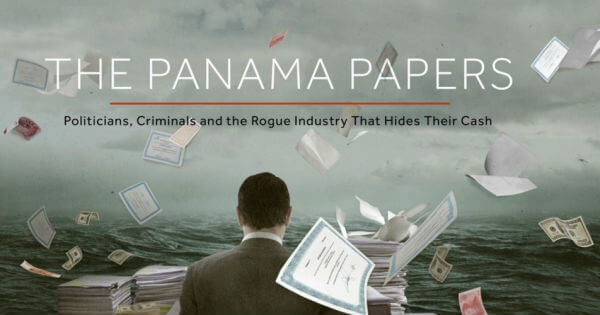
Palestinians pop up in Panama Papers

panama-papers

Adnan Abu Amer writes: Ever since the inception of the Palestinian Authority (PA) in 1994, local and international organizations have repeatedly issued reports on the rampant corruption plaguing its ministries and departments. The problem is not limited to administrative and financial excesses committed by irresponsible individuals for personal motives, but rather is seems entrenched in the PA’s structure.

The most recent corruption case was revealed by the so-called “Panama Papers,” which were published April 4. The Panama Papers exposed the involvement of international figures in tax evasion and money laundering.

Tareq Abbas, the son of Palestinian President Mahmoud Abbas, was among the Palestinian names contained in the papers. According to these documents, Abbas secretly owns, in partnership with the PA, a holding company worth more than $1 million in the British Virgin Islands. [Continue reading…]

Facebooktwittermail

Offshore in central London — the curious case of 29 Harley Street

The Guardian reports: On 10 November, 2003, Gerry Florent, and Ralph Abercia, plus his son, Ralph Jr, left the Bellagio Hotel in Las Vegas, and drove to the Stirling Club, a high-end private venue just off the Strip. They were to attend separate meetings with Sir Richard Benson, but had met each other that morning, when they were collectively coached on the etiquette expected of them: speak only when spoken to, stand when he comes in. They were happy to comply. This was a man who had bailed out the Queen, after all.

Both Florent and the Abercias wanted the same thing from Sir Richard: money, of which he had plenty. Sir Richard, who was portly, balding and elderly, explained to them that he owned a company named Sherwin & Noble, which was worth billions and was prepared to finance their business projects. At their meetings, the prospective investors received a glossy spiral-bound summary of S&N’s balance sheet, which showed it to be a financial firm of significant size.

Florent wanted $55m to buy land on which to build a hotel in Florida; the Abercias needed $105m for an “aquarium/entertainment complex” in Houston. In return for the money, all Sir Richard asked was that they pay advance fees (two payments of $412,250 each from Florent, and two payments of $787,500 each from the Abercias) to signal their commitment to the projects. If S&N decided not to go ahead with the loans, the fees would be repaid.

The investors left Las Vegas, instructed their lawyers to wire the first tranche of the fees over, and settled down to wait for their money. They waited. And they waited. When they rang or faxed the S&N office in London, they were reassured that there was nothing to be concerned about. But, over the next few months, Florent and his business associates became suspicious. They held off wiring the second half of the fee, and brought in a private investigator, who discovered that S&N, far from being worth billions, was an empty shell company. The glossy booklet detailing its assets had been copied from the banking company HBOS, with the names changed.

Thus, the fraud fell apart. The Abercias, who had wired the whole fee asked of them, were devastated. “That was a lot of money,” Ralph Sr told a local journalist. “We’re still paying the damgum thing back.”

The whole saga had been scripted by a conman named Lal Bhatia. Sir Richard Benson was an actor. He had never rescued Buckingham Palace from foreclosure. The billions and the knighthood were fictitious. S&N had no assets, beyond a registered presence at a house in London – 29 Harley Street. [Continue reading…]

Facebooktwittermail

Syrian opposition postpones participation in peace talks

The Guardian reports: UN-sponsored Syrian peace talks are facing a new crisis after opposition negotiators decided to delay their participation in the formal process until officials representing President Bashar al-Assad start to discuss the creation of a transitional government in Damascus – which they have so far refused to do.

Riyad Hijab, head of the opposition higher negotiations committee (HNC), was due to announce next steps after a meeting with the UN envoy, Staffan de Mistura, which followed tense consultations in a divided rebel camp. But a scheduled evening press conference with Hijab was postponed until Tuesday.

De Mistura, clearly seeking to play down the significance of the decision, said the opposition negotiators would remain in Geneva and the talks would continue, though possibly informally and outside the UN headquarters at the Palais des Nations. But key opposition officials, sceptical about the prospects for the future, were already planning to leave town. [Continue reading…]

Facebooktwittermail

Taliban starts spring offensive with Kabul truck bomb

The Wall Street Journal reports: The Taliban claimed responsibility for a bombing outside a Kabul government building that Afghan officials said killed at least 28 people and wounded more than 300 others, the deadliest attack in the capital in months.

The Islamist militant group said it had detonated a truck laden with explosives, though the report couldn’t be immediately confirmed by Afghan officials. It announced the start of its annual spring offensive last week and has since intensified attacks across the country.

Tuesday’s bombing targeted a compound used by Afghanistan’s Secret Service, flattening part of its perimeter wall. Taliban gunmen disguised in military uniform stormed it shortly after the explosion and continued to battle Afghan security forces for a few hours. The fighting ended in the early afternoon when Afghan government officials said two gunmen had been shot dead. [Continue reading…]

Facebooktwittermail

UN-backed government moves to secure control in Libya

The Wall Street Journal reports: Libya’s United Nations-backed unity government moved Wednesday to consolidate political control of the country, hours after a rival administration dissolved itself after years of factional power struggles.

A newly established advisory council for the country’s prime minister elected Adbulrahman Swehli as chairman, as the unity government sought to bolster its authority following the announcement late Tuesday by Tripoli’s self-declared administration that it was stepping down.

The decision by the Tripoli administration to disband is a major step forward in attempts by the U.N. and the U.S. and other foreign powers to restore a semblance of stability in Libya and blunt the growth of Islamic State, which has exploited the chaos in the North African nation and gained a foothold along its Mediterranean coast, a stone’s throw from Europe.

Libya has been split by rival legislatures since 2014, with an Islamist-leaning parliament in the capital Tripoli, known as the General National Congress, and an internationally-recognized parliament in the eastern city of Tobruk called the House of Representatives.

In a statement late Tuesday, Khalifa al-Ghwell, head of the General National Congress, said his administration was ceasing its activities to “preserve the higher interests of the country and prevent bloodshed and divisions.” [Continue reading…]

Facebooktwittermail

German spies imply Snowden leaked files for Russia

The Local reports: NSA whistleblower Edward Snowden could have been acting under the influence of the Russian government, the heads of Germany’s foreign and domestic intelligence agencies said on Friday.

“It’s very remarkable that he exclusively published files about the work of the NSA with the BND [Germany’s foreign intelligence service] or the British secret service GCHQ,” BND head Gerhard Schindler told Focus magazine.

“Leaking the secret service files is an attempt to drive a wedge between western Europe and the USA – the biggest since the Second World War,” Hans-Georg Maaßen, head of Germany’s domestic intelligence agency (Verfassungsschutz), told Focus in the double interview. [Continue reading…]

Facebooktwittermail

Obama to visit a Saudi Arabia deep in turmoil

The New York Times reports: The images of the past year have been deeply unsettling for the people of Saudi Arabia, long accustomed to oil-fueled prosperity and regional clout: militants firing at communities along the country’s southern border; protesters storming the Saudi Embassy in Tehran; civil wars raging in three nearby states.

The view from Riyadh has become increasingly bleak as stubbornly low oil prices constrain the government’s ability to respond to crises and as the kingdom’s regional rival, Iran, moves aggressively to expand its influence at Saudi Arabia’s expense.

Under huge stress, the Saudis have responded in unpredictable ways, often at odds with Washington’s interests. They have launched a costly military offensive in neighboring Yemen that has failed to defeat the Houthi rebels and has empowered the Qaeda affiliate there. They have executed dozens of men on terrorism charges, including a prominent dissident Shiite cleric. And they have largely walked away from Lebanon, suspending billions of dollars in promised aid as Iranian influence there grows. [Continue reading…]

Facebooktwittermail

Egypt’s hollowed-out society

Gamal Eid writes: On Wednesday, three judges in Cairo will decide whether to allow prosecutors to pursue their case against me and my co-defendant, the journalist and human rights advocate Hossam Bahgat, in the government’s continuing attack on nongovernmental organizations in Egypt. The case against me has centered on my role in founding the Arabic Network for Human Rights Information, which aims to educate the Egyptian public about their civil and human rights.

As for Mr. Bahgat, it is widely known that his investigative reporting has rattled the government. But the case against him has focused on the activities of the organization he founded, the Egyptian Initiative for Personal Rights.

We have been targeted because our groups provide critical resources to those facing human rights abuses in Egypt. We have represented victims of torture from across the spectrum: Muslim Brotherhood members, liberals, leftists, victims of arbitrary arrest and even government supporters. We have stood for the ideas that human rights belong to all, no matter their ideology, and that civil rights belong to all citizens, no matter their wealth or power. [Continue reading…]

Facebooktwittermail

Prisoner’s letters document tragedy and hope inside Guantánamo

The Intercept reports: On April 16, the Department of Defense issued a short press release announcing that Mohammed al-Hamiri, a Yemeni citizen held at Guantánamo Bay, had been transferred for release. Hamiri had been incarcerated at Guantánamo since 2002, when he was detained by American forces. First taken into custody at the age of 19, Hamiri spent more than a third of his life at the prison. During that time, he was never charged with any crime.

Writing was one of Hamiri’s greatest comforts during the 13 long years he spent at Guantánamo. Hamiri’s letters and other personal writings were cleared for release earlier this year through the work of lawyers at the Center for Constitutional Rights. The letters reflect an enduring sense of hope, love for family and friends, and a remarkably poetic imagination.

Hamiri’s release this week represents the start of a new chapter in his life, one he has spent years waiting for with both hope and trepidation. His writings from Guantánamo offer a glimpse into what the prospect of freedom meant to him during his long imprisonment. “I do not know why I am writing these words, and I do not know if my letters and my words are going to be read by eyes that know the meaning of justice,” he reflected recently, writing that prison had given him “no voice other than this pen with which to write a painful memory from the pages of my life.” [Continue reading…]

Facebooktwittermail

Europe tried to rein in Google. It backfired

The New York Times reports: Google is a top target for European regulators and privacy watchdogs, who openly fear and distrust its dominance. The American tech giant’s search engine alone gobbles up roughly 90 percent of the European market.

But a landmark court ruling intended to rein in Google has instead put it at the forefront of Europe’s enforcement of Internet privacy. That has upended conventional wisdom about the company and raised questions about the role of commercial interests in protecting people’s privacy, often with little or no transparency.

In the almost two years since Europeans gained the “right to be forgotten” on the Internet, Google has passed judgment in over 418,000 cases — roughly 572 a day — from people wanting links of certain search results to be removed, according to the company’s records. It has approved fewer than half of those requests, all behind closed doors.

Google’s total number of privacy-related judgments is double those of most of Europe’s biggest individual national authorities over the same period, even though these public agencies address a wider range of data protection complaints.

Despite a history of animosity toward the company, national regulators have handed over the review powers to Google with few complaints, saying they are merely following Europe’s complex data protection rules. Other search companies, including Microsoft, have been given the same authority, though their number of judgments pales by comparison.

Some consumer groups and privacy experts are not satisfied with that arrangement. They have sounded alarm bells over a for-profit company — one that relies on tapping into people’s digital lives to make billions of dollars and that is the subject of multiple privacy and antitrust investigations — playing such a central role in protecting individuals’ data, and doing so in such a secretive manner. [Continue reading…]

Facebooktwittermail