Author Archives: News Sources

Why Vladimir Putin will hardly flinch at Panama paper cut

By Anastasia Nesvetailova, City University London

The world remains gripped by the revelations made in the papers leaked from Panamanian law firm Mossack Fonseca. But Moscow has greeted the coverage with what might be characterised as calm indifference.

Aware that president Vladimir Putin would be linked to offshore schemes, the people around him began their PR manoeuvres ahead of time. The week before the papers were released, the Kremlin was forewarning the public about an imminent “information attack aimed at destabilising Russia in light of its success in Syria”.

The reaction of the Russian individuals mentioned in the Panama Papers – at least those who have gone on record so far – has also been calm. Some have denied knowledge of ownership of any offshore accounts. Considering the way offshore structures operate and set up, is not an implausible proposition.

Others queried the authenticity of the documents (which is easy, as not all of the original documents have been presented). Some have admitted an earlier relationship with an offshore business but have said the company in question had been sold or shut down. Again, that’s not an odd claim considering that many offshore shells survive as empty, or fossil corporations after their corporate parents have no further use for them and don’t want to go to the expense of shutting them down.


Continue reading

Facebooktwittermail

Mossack Fonseca serviced Rami Makhlouf, Assad’s cousin and ‘poster boy for corruption’

The Guardian reports: The firm at the centre of the Panama Papers leak serviced a string of companies for a top financier in Bashar al-Assad’s government in the face of international concern about corruption within the Syrian regime.

Documents show Mossack Fonseca’s links to Rami Makhlouf, a cousin of the Syrian president, who was described in US diplomatic cables as the country’s “poster boy for corruption”.

Washington imposed sanctions on Makhlouf in February 2008, saying he was a regime insider who “improperly benefits from and aids the public corruption of Syrian regime officials”. It blacklisted his brother Hafez Makhlouf in 2007.

The documents show, however, that the Panamanian firm continued to work with the Makhloufs, and in January 2011 it rejected the advice of its own compliance team to cut ties with the family as the crisis in Syria began to unfold.

Documents show a Mossack Fonseca compliance officer wrote: “I believe if an individual is found on a sanction list then this is a serious red flag and we should make every effort to disassociate ourselves from them.” [Continue reading…]

Facebooktwittermail

Iceland PM calls to dissolve parliament after tax scandal

Reuters reports: Iceland’s prime minister asked the president on Tuesday to dissolve parliament in the face of a looming no-confidence vote and protests, after leaked files showed his wife owned an offshore firm with big claims on the country’s collapsed banks.

After a meeting with Prime Minister Sigmundur Gunnlaugsson, President Olafur Ragnar Grimsson said he had asked for talks with the main parties before making a decision. Dissolving parliament would almost certainly lead to a new election.

“I was not ready to agree to that request (for dissolving parliament) until I had a discussions with the leaders of other parties on their stand,” Grimsson told reporters.

“I do not think it is normal that the prime minister alone … should be given the authority to dissolve the parliament without the majority of the parliament being satisfied with that decision.”

Earlier on Tuesday, Gunnlaugsson said on his Facebook page: “I would dissolve parliament and call for new elections as soon as possible” if he lost support among his ruling coalition members.

On Monday, the opposition filed a motion of no-confidence and thousands of Icelanders gathered in front of parliament, hurling eggs and bananas and demanding the departure of the leader of the centre-right coalition government, in power since 2013.

Gunnlaugsson would be the first casualty of the “Panama Papers” a leaked collection of documents revealing the financial arrangements of politicians and public figures from around the world. [Continue reading…]

Facebooktwittermail

Hundreds of Israelis exposed in Panama Papers financial scandal

Haaretz reports: Some 600 Israeli companies and 850 Israeli shareholders are listed in the leaked documents of Panamanian law firm Mossack Fonseca, a leader in creating shell companies that often serve to conceal ownership of assets.

The leaked files, which were obtained by the German newspaper Süddeutsche Zeitung and shared by the International Consortium of Investigative Journalists with Haaretz and other media organizations, provide a glimpse of the economy that until now had been hidden from the Israeli public.

There is a number of prominent names among the shareholders. It is important to note that as long as holdings in the companies and their revenues — if any — are reported as required to Israeli tax authorities, owning the company is not against the law.

Mossack Fonseca’s branch in Israel is headed by attorney Amir Maor. Callers to the branch are informed by a voicemail message that they have reached the offices of “The Company for Establishing Companies.”

Reached by telephone, Maor stated that Mossack Fonseca informed its Israeli branch last week that files had been stolen after its computer systems were breached. “Any information you use [from these files] is like using stolen data,” he said, refusing to give further comment.

The leaked files mention Sapir Holdings, a company registered in 2002 in the Virgin Islands. The owner and its only director was top-ranking lawyer Jacob Weinroth. He was indicted for money laundering in late 2009 and acquitted two years later of all charges against him. During the trial, it emerged that the company had received 30 million shekels ($7.95 million) for services rendered from Uzbek-Israeli entrepreneur Michael Cherney and Russian-Israeli businessman Arcady Gaydamak.

The fraudulent real estate deal of 2002 with the Greek Orthodox Patriarchate was also brought up in the trail. The failed deal, in which expensive lands in Jerusalem were offered to the State of Israel for a 999-year lease, was intended to be carried out by Christian Lands of Israel, a company created by Mossack Fonseca, which Weinroth represented. Company documents, like those requesting power of attorney for Weinroth, are among those found in the leaked files. [Continue reading…]

Facebooktwittermail

Islamist rebel groups press offensive in northern Syria

The Wall Street Journal reports: A tenuous cease-fire in Syria unraveled further over the past few days, with rebel groups that signed on joining the al Qaeda-linked Nusra Front in a new offensive against regime forces near the northern city of Aleppo.

Amid the offensive in its fourth day on Monday, Nusra supporters were mourning a top figure in the group and nearly two dozen of his associates killed in airstrikes in northwestern Idlib province on Sunday.

Nusra supporters blamed the airstrike on the U.S., which has previously targeted the group’s fighters in Idlib, its stronghold.

A spokesman for the American-led coalition that is mainly battling Islamic State wouldn’t immediately confirm nor deny the allegation. Russia and the Syrian regime also conduct airstrikes on opponents in the area.

The truce has been imperiled by an escalation of regime airstrikes on rebel-held suburbs of the capital Damascus over the past week. Despite a rapidly rising toll of alleged violations, both sides appear reluctant to call off the agreement which has reduced violence and deaths after all.

“The cessation of hostilities agreement is about to take its last breath and effectively be declared finished,” Riad Hijab, an opposition leader, warned in a letter to United Nations Secretary General Ban Ki-moon on Friday. Mr. Hijab heads the main opposition delegation to the Geneva peace talks.

Continuing regime restrictions on humanitarian assistance to several besieged rebel-held areas around Damascus are further straining the shaky truce. Residents of one such town, Madaya, said a sick teenager died Monday because of lack of medical care.

Regime airstrikes on a rebel-held community near Damascus on Thursday killed 33 people, almost half of them children, according to a tally by local emergency responders. [Continue reading…]

Facebooktwittermail

Does ISIS even have a European strategy?

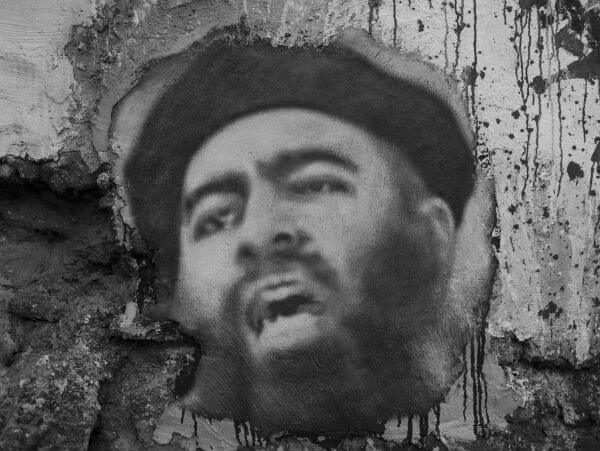
Baghdadi-bw

Benjamin H. Friedman writes: With the bombers dead and investigations just a week old, the motives behind last week’s bombings in Brussels’ airport and metro will remain murky for some time. Of course, reporters and terrorism analysts have offered lots of speculation, much of it focused on how the attacks serve the agenda of ISIS’s leaders. That approach, I believe, overstates ISIS’s coherence and wisdom. If “ISIS” means the would-be state in Syria in Iraq, plus affiliated groups and clandestine networks of sympathizers, then it doesn’t have a strategy; it has strategies, often foolish ones.

Statements claiming responsibility for the attack, attributed to ISIS’s leadership in Syria, blame Belgium for joining in the war in Syria and Iraq and threaten coalition members with similar treatment. The attack, in other words, was meant to coerce foreign powers to quit making war on ISIS.

Those statements are indications that ISIS’s leaders didn’t know the particulars of the attack in advance, let alone direct it. Like some prior ISIS’s claims of reasonability for attacks, the statements seem to crib from media reports; they arrived hours after attacks without any detail unavailable in public. By claiming that the airport attackers “opened fire” with “automatic rifles,” the statements even repeat errors in initial reporting. [Continue reading…]

Facebooktwittermail

In Nagorno-Karabakh, a bloody new war with Putin on both sides

The Daily Beast reports: Nagorno-Karabakh, an enclave in Azerbaijan that became breakaway republic backed by Armenia in all spheres of life, has been living in a not-quite-frozen state of war since 1994. Every schoolboy in the mountainous little republic has grown up knowing that after graduation he will put on a uniform and join the military to police the unstable cease-fire. The republic’s 150,000 people, mostly ethnic Armenians, remember rockets destroying apartment buildings in the fighting more than 20 years ago, and have long feared that their worst nightmare of full-scale war would return.

Now it looks like it has.

The war woke up on Saturday night with both sides of the front using armored vehicles, battle tanks, and aviation, launching multiple rockets, and shooting artillery at each other. Over 30 people were killed and dozens wounded in the worst combat in the last two decades.

The regional implications are hard to miss. Armenia is one of Russia’s closest allies and Turkey immediately backed up Azerbaijan at a time when relations between Moscow and Ankara are bitter and vindictive. Given the war in Syria, where Russia and Turkey back opposing sides, and Turkey shot down a Russian warplane in November, the current eruption between Armenia and Azerbaijan is even more geopolitically dangerous than two decades ago. [Continue reading…]

Facebooktwittermail

Giulio Regeni murder: Egypt postpones Italy meeting as criticism mounts

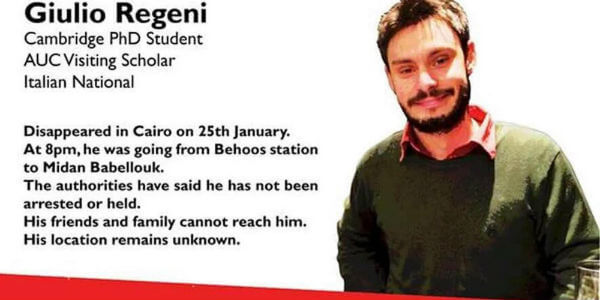
GIULIO-REGENI

The Guardian reports: Egypt has postponed a meeting in Rome at which a Cairo delegation was due to hand over evidence relating to the torture and murder of the Italian researcher Giulio Regeni.

The highly anticipated meeting was scheduled for Tuesday but is now expected later this week. There is a growing perception in Italy that cracks are beginning to emerge in Egypt over how the government of President Abdel Fatah al-Sisi has handled the murder investigation.

Italy’s foreign minister, Paolo Gentiloni, will outline the government’s position on the case in a parliamentary statement on Tuesday, his ministry said.

Regeni’s body was found in a ditch off a desert road on 3 February, more than a week after the 28-year-old – a Cambridge PhD student researching labour unions in Egypt – disappeared. [Continue reading…]

Facebooktwittermail

Afghan spy agency arms villagers to hold off ISIS

The Wall Street Journal reports: n Afghan spy agency is recruiting villagers for militias to hold back Islamic State fighters seeking to expand their foothold in this opium heartland in eastern Afghanistan.

The program, which one top official says the government hopes to roll out across the country and may later use against the Taliban, is President Ashraf Ghani ’s riskiest attempt to defend rural villages—and also a part of his much larger counterinsurgency strategy.

The government has closely guarded the program, and news of it essentially hasn’t been reported since its establishment in August 2015. Details of the program came from Afghan government officials, local village leaders and Western officials who have been monitoring its progress.

The militia groups that are part of the pilot project, known as the People’s Uprising Program, are being called on to hold territory the army has recaptured from Islamic State in three districts.

More than a thousand men, mostly village farmers who turned against the extremist group’s harsh rule in areas it seized in the past year, are on the payroll of the spy agency, the National Directorate of Security, which receives funding from the U.S. Central Intelligence Agency. So far, the militias in Kot, with the backing of the army and police, have repelled six Islamic State attacks. [Continue reading…]

Facebooktwittermail

How did we end up here?

Adam Shatz writes: In No Name in the Street, James Baldwin describes how, not long after he settled in France in 1948, he ‘had watched the police, one sunny afternoon, beat an old, one-armed Arab peanut vendor senseless in the streets, and I had watched the unconcerned faces of the French on the café terraces, and the congested faces of the Arabs.’ With a ‘generous smile’, Baldwin’s friends reassured him that he was different from the Arabs: ‘Le noir américain est très évolué, voyons!’ He found the response perplexing, given what he knew of French views about the United States, so he asked a ‘very cunning question’:

If so crude a nation as the United States could produce so gloriously civilised a creature as myself, how was it that the French, armed with centuries of civilised grace, had been unable to civilise the Arab?

The response was breathtakingly simple: ‘The Arabs did not wish to be civilised.’ They, the Arabs, had their own traditions, and ‘the Arab was always hiding something; you couldn’t guess what he was thinking and couldn’t trust what he was saying. And they had a different attitude toward women, they were very brutal with them, in a word they were rapists, and they stole, and they carried knives.’

Aside from ageing veterans of the French-Algerian war, no one in France talks about ‘the Arabs’ any longer. Instead they speak of ‘the Muslims’. But France’s Muslims are the descendants of that Arab peanut vendor – and, all too often, targets of the same racist intolerance. Like the racism Baldwin encountered among his Parisian friends, it often wears an ennobling mask: anti-terrorist, secular, feminist. [Continue reading…]

Facebooktwittermail

New threats rose as U.S. apathy became policy

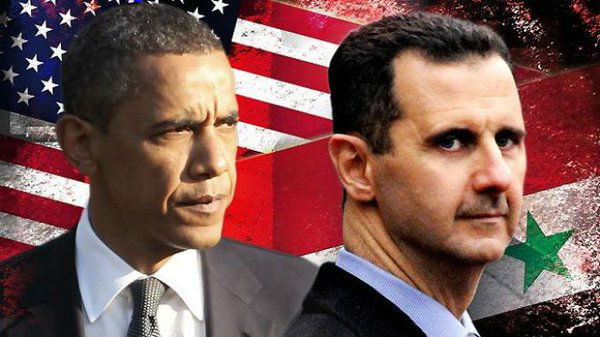
obama-assad

Garry Kasparov writes: The 21st century has been marked by two complementary trends in global security: the rise of new and unexpected threats and the return of old ones. Terrorist organizations have adapted modern technology to deadly purpose and paired it with global ambition. Nineteen well-trained individuals killed more Americans on 9/11 than the entire Japanese fleet killed in Pearl Harbor. Our ubiquitous smartphones and social networks turned out to be agnostic tools, serving both good and evil. They are boons for economic empowerment and cultural exchange, but also allow terror movements to recruit internationally, creating a homegrown terror threat that no border wall or refugee ban will prevent.

The old menaces of the 20th century have reappeared in updated forms. Communism as a political ideology is as bankrupt as ever, but the aggressive despotism that enforced it for decades before the fall of the Iron Curtain and the Soviet Union has returned to the world stage, due largely to Russian President Vladimir Putin. The United States, a global hegemon alternately over-eager or reluctant, has reacted in dramatically inconsistent ways to the new threats while mostly ignoring the resurgence of the old ones.

The checks and balances that frustrate every president domestically do little to prevent the commander-in-chief from wielding the power of life and death all over the world. The overwhelming military might of the United States is inherently agnostic as well. It can be used to attack or to defend, to protect innocent lives or to take them, to remove dictatorships or to support them.

The use of this fearsome power is guided by the American constitution and the founding American values of democracy and freedom. But it is up to the occupant of the White House to follow the Constitution and to live up to those values. The executive has found countless ways to evade checks on his authority, from signing “agreements” instead of treaties, to escalating foreign “police actions” instead of declaring war. American values have been applied selectively as well, as decades of relative unity in containing the Communist threat has given way to a neo-isolationist trend in both major American political parties. Instead of debating how the U.S. should act on the world stage, today’s presidential candidates are arguing about whether or not the U.S. should act at all. The specter of the 2003 Iraq War looms over every potential American action.

Such reflection is commendable, but in the seven years of the Obama administration we have seen that inaction can also have the gravest consequences. Inaction can fracture alliances. Inaction can empower dictators and provoke terrorists and enflame regional conflicts. Inaction can slaughter innocent people and create millions of refugees. We have the horrific proof in Syria, where Barack Obama’s infamous “red line” has been painted over in blood. [Continue reading…]

Facebooktwittermail

China wants to power the world through a global grid

Earth

Adam Minter writes: China’s State Grid Corporation, the world’s biggest power company, is on an impressive buying binge. As Bloomberg News reports, the company is “actively in bidding” for power assets in Australia, hoping to add them to a portfolio of Italian, Brazilian, and Filipino companies. The goal isn’t simply to invest, however. State Grid’s Chairman Liu Zhenya has a plan that he believes will stall global warming, put millions of people to work and bring about world peace by 2050.

The idea is to connect these and other power grids to a global grid that will draw electricity from windmills at the North Pole and vast solar arrays in Africa’s deserts, and then distribute the power to all corners of the world. Among other benefits, according to Liu, the system will produce “a community of common destiny for all mankind with blue skies and green land.”

It’s a crazy idea, of course. And if this so-called Global Energy Interconnection had been proposed by anyone other than the chairman of the world’s wealthiest power company, it wouldn’t deserve much consideration. But the $50 billion in cash generated by State Grid last year gives the company the deep pockets and political standing to put its priorities on the international energy agenda.

Last September, no less than Chinese President Xi Jinping publicly called for talks on establishing a global grid, while leading research organizations — including the Argonne National Laboratory and the Edison Electrical Institute — have participated in conferences looking at what would be needed to establish one. And whether or not it’s ever built, the technologies that underlie Liu’s big idea are already changing how power will be generated and transmitted in coming decades. [Continue reading…]

Facebooktwittermail

Climate change will blow a $2.5tn hole in global financial assets, study warns

The Guardian reports: Climate change could cut the value of the world’s financial assets by $2.5tn (£1.7tn), according to the first estimate from economic modelling.

In the worst case scenarios, often used by regulators to check the financial health of companies and economies, the losses could soar to $24tn, or 17% of the world’s entire assets, and wreck the global economy.

However, the research also showed the financial sense in taking action to keep climate change under the 2C danger limit agreed by the world’s nations. In this scenario, the value of financial assets would fall by $315bn less, even when the costs of cutting emissions are included.

“Our work suggests to long-term investors that we would be better off in a low-carbon world,” said Prof Simon Dietz, at the London School of Economics, the lead author of the study. “Pension funds should be getting on top of this issue, and many of them are.” But he said awareness in the financial sector was low.

Mark Campanale, at the thinktank Carbon Tracker Initiative, said the actual financial losses from unchecked global warming could be higher than estimated by the financial model behind the new study: “It could be a lot worse. The loss of financial capital can be a lot higher and faster than the GDP losses [used to model the costs of climate change in the study]. Just look at value of coal giant Peabody Energy: it was worth billions just a few years ago and now it is worth nothing.” [Continue reading…]

Facebooktwittermail

‘If we don’t get our country back ourselves, no one will do it for us’

Growing Home ينبتون وطنا : Samer, a displaced Syrian barber, has taken refuge along with his young family in the Zaatari Refugee Camp in Jordan. Despite filling his time with meaningful work, caring for his family and improving his living conditions, the daily distractions cannot diminish his desire to return home.

Subtitles available in English, French and Spanish – turn on CC and select language in Settings

Facebooktwittermail

Europe begins sending people back across the sea, defying human rights outcry

The Washington Post reports: The European Union began offloading its refugee crisis onto its Turkish neighbors Monday, sending back more than 200 migrants in the first stage of a plan to deport thousands that has drawn condemnation from human rights groups.

The returns — carried out at dawn and under heavy security — were intended to send a powerful message to others considering the journey from Turkey to Greece via a smuggler’s rubber raft: Don’t even bother.

Authorities braced for demonstrations or other forms of resistance from those being sent back only days after crossing the Aegean and arriving on European soil in search of a new life — part of a massive migrant wave that has tested Europe’s resources and highlighted the desperation to the east in war zones such as Syria.

But the expulsions were carried out smoothly and quietly; two ferries packed with migrants and E.U. escorts slipped away from the island of Lesbos and charted an eastbound course toward the rising sun along the blue mountains of the Turkish coast.

A third ferry left the island of Chios, bringing the total sent back to 202 by late Monday — nearly all from Pakistan or Afghanistan. Both islands are popular landing spots for refugee rafts.

Under a deal struck with Turkey last month, all refugees and migrants who arrive on Greek shores aboard smugglers’ rafts from March 20 onward will be sent back.

In return, the European Union has said it will accept one Syrian refugee from Turkey for every Syrian who is returned. Germany said Monday that it had accepted its first several dozen Syrians flown from Turkey under the new program. [Continue reading…]

Facebooktwittermail

Endgame for the IMF-EU feud over Greece’s debt

Yanis Varoufakis writes: The feud between the International Monetary Fund (IMF) and the European side of Greece’s troika of creditors is old news. However, Wikileaks’ publication of a dialogue between key IMF players suggests that we are approaching something of a hazardous endgame.

Ever since the first Greek ‘bailout’ program was signed, in May 2010, the IMF has been violating its own “primary directive”: the obligation not to fund insolvent governments. As a result, the IMF’s leadership has been facing a revolt from its staff members who demand an exit strategy arguing that, if the EU continues to obstruct the debt relief necessary to restore the solvency of the Greek government, the IMF should leave the Greek program.
Five years on, this IMF-EU impasse continues, causing a one-third collapse of Greek GDP and fuelling hopelessness to a degree that has made real reform harder than ever.

Back in February 2015, when I first met Poul Thomsen (the IMF’s European chief) in a Paris hotel, a fortnight after assuming Greece’s finance ministry, he appeared even keener than I was to press for a debt write off: “At a minimum”, he told me “€54 billion of Greece’s debt left over from the first ‘bailout’ should be written off immediately in exchange for serious reforms.”

This was music to my ears, and made me keen to discuss what he meant by “serious reforms”. It was a discussion that never got formally off the ground as Germany’s finance minister vetoed all discussion on debt relief, debt swaps (which were my compromise proposal), indeed any significant change to the failed program.

What new light does the leaked dialogue between Thomsen and Delia Velculescu (the IMF’s Greek mission chief) throw on this saga? [Continue reading…]

Facebooktwittermail

Fund run by David Cameron’s father avoided paying tax in Britain

The Guardian reports: David Cameron’s father ran an offshore fund that avoided ever having to pay tax in Britain by hiring a small army of Bahamas residents – including a part-time bishop – to sign its paperwork.

Ian Cameron was a director of Blairmore Holdings Inc, an investment fund run from the Bahamas but named after the family’s ancestral home in Aberdeenshire, which managed tens of millions of pounds on behalf of wealthy families.

Clients included Isidore Kerman, an adviser to Robert Maxwell who once owned the West End restaurants Scott’s and J Sheekey, and Leopold Joseph, a private bank used by the Rolling Stones.

The fund was founded in the early 1980s with help from the prime minister’s late father and still exists today. The Guardian has confirmed that in 30 years Blairmore has never paid a penny of tax in the UK on its profits. [Continue reading…]

BBC News reports: China appears to be censoring social media posts on the Panama Papers document leak which has named several members of China’s elite, including President Xi Jinping’s brother-in-law.

Hundreds of posts on networks such as Sina Weibo and Wechat on the topic have been deleted since Monday morning. [Continue reading…]

Find out more about the Panama Papers.

Facebooktwittermail

Travelling inside ISIS-controlled Syria and Iraq

Jürgen Todenhöfer writes: Abu Qatadah, a German-born Muslim convert, who has brokered our visit to the Islamic State, is almost as wide as he is tall, with a thick, reddish-brown beard. My photographer son Frederic and I load our bags into the bed of the white pickup Qatadah and his driver arrived in. The driver’s head and face are so thoroughly wrapped with a large grey shawl that only his eyes and the contours of his nose are visible. He murmurs a greeting in English in a strikingly rhythmic accent. For security reasons, we can’t use the main roads. The drive to Raqqa takes more than three hours.

Qatadah claims business is booming in Isis. Almost all the shops are open and lots of goods are being sold, above all at the markets. We notice the new construction. “In places that are not being bombed, life goes on as normal,” Qatadah tells us. Then he gives us a short lecture on Isis’s version of sharia.

Christians have to pay jizya, a protection tax. It comes to about $300 (£210) a year for poor people and $600 (£420) for the rich. But then that is the only tax. Christians are among the more prosperous inhabitants of the country. All they have to do is sell a couple of sheep to raise the money to cover the tax. [Continue reading…]

The Daily Beast reports: Two senior intelligence analysts at U.S. Central Command say the military has forced them out of their jobs because of their skeptical reporting on U.S.-backed rebel groups in Syria, three sources with knowledge of their claim told The Daily Beast. It’s the first known instance of possible reprisals against CENTCOM personnel after analysts accused their bosses of manipulating intelligence reports about the U.S.-led campaign against ISIS in order to paint a rosier picture of progress in the war.

One of the analysts alleging reprisals is the top analyst in charge of Syria issues at CENTCOM. He and a colleague doubted rebels’ capabilities and their commitment to U.S. objectives in the region. The analysts have been effectively sidelined from their positions and will no longer be working at CENTCOM, according to two individuals familiar with the dispute, and who spoke on condition of anonymity. [Continue reading…]

Facebooktwittermail