Author Archives: News Sources

Libya’s Tripoli authority rejects UN-backed government

Al Jazeera reports: Libya’s new unity government has been thrown into chaos, as the head of its rival Tripoli-based authority apparently refused to cede power.

Contradicting an earlier announcement that his National Salvation Government was ready to step aside, Tripoli’s unrecognised Prime Minister Khalifa Ghweil urged his ministers not to stand down in a statement on Wednesday.

“Given the requirements of public interest… you are requested to continue your mission in accordance with the law,” he said, threatening to prosecute anyone working with the new government. [Continue reading…]

Facebooktwittermail

Obama’s expanding ground war in Iraq

The Daily Beast reports: The U.S. military is planning to expand the number of so-called “fire bases” in northern Iraq to prepare for an assault on Mosul, ISIS’s Iraqi capital. The bases will be there to support local Iraqi forces. But they’ll also put U.S. troops near the frontlines of what will likely be the biggest battle of the war with the self-proclaimed Islamic State.

Troops at up to three temporary bases, on the north-south route from central Iraq to the northern city of Mosul, would advise Iraqi security forces, provide logistical support so Iraqi troops can move toward Mosul and even ground base support fire, defense officials told The Daily Beast.

The movement of U.S. troops within miles of the ISIS’s Iraqi capital would be yet another indication that the American military is increasingly conducting offensive operations even though President Obama has never publicly acknowledged the U.S. is back at war in Iraq.

On Wednesday, the Pentagon began sending out signals that the U.S. role in Iraq could change, one day after the president led a meeting with his top national security advisers about the war. [Continue reading…]

Facebooktwittermail

Yemen: U.S. bombs used in deadliest market strike

Human Rights Watch: Saudi Arabia-led coalition airstrikes using United States-supplied bombs killed at least 97 civilians, including 25 children, in northwestern Yemen on March 15, 2016, Human Rights Watch said today. The two strikes, on a crowded market in the village of Mastaba that may have also killed about 10 Houthi fighters, caused indiscriminate or foreseeably disproportionate loss of civilian life, in violation of the laws of war. Such unlawful attacks when carried out deliberately or recklessly are war crimes.

Human Rights Watch conducted on-site investigations on March 28, and found remnants at the market of a GBU-31 satellite-guided bomb, which consists of a US-supplied MK-84 2,000-pound bomb mated with a JDAM satellite guidance kit, also US-supplied. A team of journalists from ITV, a British news channel, visited the site on March 26, and found remnants of an MK-84 bomb paired with a Paveway laser guidance kit. Human Rights Watch reviewed the journalists’ photographs and footage of these fragments.

“One of the deadliest strikes against civilians in Yemen’s year-long war involved US-supplied weapons, illustrating tragically why countries should stop selling arms to Saudi Arabia,” said Priyanka Motaparthy, emergencies researcher at Human Rights Watch. “The US and other coalition allies should send a clear message to Saudi Arabia that they want no part in unlawful killings of civilians.” [Continue reading…]

Facebooktwittermail

With demolitions, Israel tightens squeeze on West Bank Palestinians

Reuters reports: In the past three months, the Israeli military has more than tripled its demolitions of Palestinian structures in the occupied West Bank, United Nations’ figures show, raising alarm among diplomats and human rights groups over what they regard as a sustained violation of international law.

Figures collated by the U.N.’s office for the coordination of humanitarian affairs (OCHA), which operates in Gaza, the West Bank and East Jerusalem, show that from an average of 50 demolitions a month in 2012-2015, the average has risen to 165 a month since January, with 235 demolitions in February alone.

The Israeli military, which has occupied the West Bank since the 1967 Middle East war, says it carries out the demolitions because the structures are illegal: they were either built without a permit, in a closed military area or firing zone, or violate other planning and zoning restrictions.

The U.N. and rights groups point out that permits are almost impossible for Palestinians to acquire, that firing zones are often declared but seldom used, and that many planning restrictions date from the British Mandate in the 1930s.

“It is a very marked and worrying increase,” said Catherine Cook, an OCHA official based in Jerusalem who closely monitors the demolitions, describing the situation as the worst since the U.N. body started collecting figures in 2009.

“The hardest hit are Bedouin and Palestinian farming communities who are at risk of forcible transfer, which is a clear violation of international law.” [Continue reading…]

Facebooktwittermail

Before Zionism: The shared life of Jews and Palestinians

Noam Rotem writes: Menachem Klein’s book, Lives in Common: Arabs and Jews in Jerusalem, Jaffa and Hebron, is a depressing one. Originally released in English, the book — which is being published in Hebrew — paints a picture of a shared life between Palestinians and Jews at the end of the 19th and the beginning of the 20th centuries, bringing us face to face with daily life, commerce, education, celebrations, and sadness. It shows that us this kind existence, despite everything we were taught by the Israeli education system, is possible. And then Klein goes on and destroys this delicate balance, burning everything left of it today.

As the Ottoman Empire, which ruled Palestine at the time, began losing its power toward the end of the 19th century, a new, local identity began developing out of the lived experiences of Jews and Arabs. This identity, which took precedence over religion, was shared by Muslims, Jews, and Christians.

Israel’s education minister wants to reduce Jewish history to pogroms By Gil Gertel | March 12, 2016
Following the collapse of the Ottoman Empire during the First World War, both the Zionist movement and the Palestinian national movement began trying to take control of that identity and define the people of the land as either Jewish Zionists or Palestinian Arabs. There were those who called for unity, such as Jerusalem Mayor Raghib al-Nashashibi, who wanted not to speak of Arabs and Jews, but of Palestinians. Klein debunks the myth according to which the residents of the country before the advent Zionism or the Arab national movement lacked all identity. Instead, he describes a lively and vivacious community with its own traditions and customs, bringing testimonies from Jews, Muslims and foreigners as proof. [Continue reading…]

Facebooktwittermail

An American interrogator’s memories of Abu Ghraib

In his newly released book, Consequence: A Memoir, Eric Fair writes: I take the time to ask the general about his life and learn what I can about Iraq. I do this with most prisoners, whether they have intelligence value or not. When I write the report, I’m supposed to call this the approach phase. I’m supposed to be building rapport. Some interrogators talk about how good they are at this, how they develop relationships with prisoners and come to some sort of understanding, opening lines of communication that will eventually produce good intelligence.

It’s all bullshit. This is Abu Ghraib prison. The Iraqis hate all of us.

As I talk to the general about the village where he grew up, his service in the Iran-Iraq War, and how much he loves his sons, I ignore the memories from the previous night, when I interrogated a young man in one of the uncomfortable interrogation booths. I made him stand with his arms in the air until he dropped them in exhaustion. He lied to me, said he didn’t know anything about the men he was captured with or the bomb that had been buried in the road. So I hurt him. Now I’m in a decent room serving decent tea and acting like a decent man. The comfortable interrogation booth is all I need to convince myself that the general and I are enjoying this conversation. I’ve fallen for my own stupid trick. When I pour the tea and turn up the heater, I complete the illusion.

As we drink our tea, the translator starts a conversation with the general about what it was like growing up as a Christian in Iraq and how her Muslim neighbors always took good care of her. I was an Arabic linguist in the Army, and while my language skills have faded,

I understand enough to allow the translator to steer the conversation for a bit. The general says he was never very religious, but as he gets older he attends Friday prayers more often. The translator seems to like him. I do, too. I pretend the general feels the same way about me.

I talk about growing up in Pennsylvania and attending a Presbyterian church as a boy and how hearing the call to prayer from the mosques of Baghdad reminds me that I should be praying to my god more often. “No, no,” the general says in English. “Not a different god. Same god. Same god.” He points at both the translator and me.

“We are same god.” [Continue reading…]

The Daily Beast interviewed Fair: Your upbringing as a devout Presbyterian plays a large role in the pages of Consequence, and you very openly explore the role that faith has had on your life, before, during and after Iraq. Why was that important to you?

It’s a foundational part of who I am and how I view my place in my world. And it has been my entire life, just how I was raised and how I’m raising my son now. It’s been a lifelong upbringing. I remember a youth pastor teaching me as child that faith was not this mystical experience, or not just it. Faith takes a lot of work and it takes a lot reading and care. Having that foundation helped me prepare for when things went totally wrong, which will happen one way or another to just about everybody.

Since Iraq, I will say that I’m far more cautious to suggest that my faith gives me any sort of right or privilege to tell anyone else what they’re doing is right or wrong. Approaching my faith with this type of humility is something I learned to do more of over time.

“I want him to be comfortable in the quiet.” This is my favorite line in a book full of beautiful writing. It’s about your son and his own developing faith, but what does Being Comfortable in the Quiet mean to you now, as a person, father and author?

Growing up in the Bethlehem community, the Presbyterian Church had this beautiful choir, a very well known choir, at least in our area. Bethlehem Steel had purchased this beautiful pipe organ for the church many years before … anyhow, every Sunday, they’d put on this incredible, incredible performance. Afterwards, though, there’d be nothing but silence. You were not to applaud or express outward admiration. And if you did, you were looked upon as someone who didn’t quite know what they were doing. The idea was that you modeled everything in your life after this approach—you don’t do things for show, or with expectations of affirmation. You simply just had to be comfortable in the quiet, and had to be willing to listen, and listen in a way that meant actually hearing what others were saying, rather than just waiting for your turn to speak.

The theological side of that quiet is when a person can experience God, or the Holy Spirit, or something spiritual, or what have you. Those moments of quiet are when we all chart our course of life, whatever it may be. And that’s what I want for my son.

“War stories aren’t for me.” We’ve talked before about hearing that from friends and readers alike. What’s your response to that sort of mindset, especially in regards to Consequence?

Well, certainly a reader can make their own decision, but I’m of the thought that war stories are, unfortunately, for everyone. That’s particularly the case in a country such as ours, a democracy, a republic. On some level there’s an obligation to be engaged with some war stories … that doesn’t mean that people have to read mine, but I think that if someone wants to self-identify as well informed, and well-read, and as a good citizen of the country, you need to interact and encounter this stuff. Literature is just one way to do that. [Continue reading…]

Facebooktwittermail

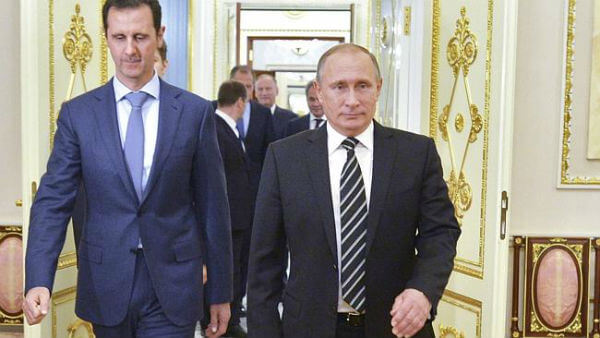
Distract, deceive, destroy: Putin at war in Syria

assad-putin

Atlantic Council: A new Atlantic Council report uses open-source data to debunk Russian claims that its military mostly struck Islamic State of Iraq and al-Sham (ISIS) targets, and links Russia to attacks on civilian facilities and the use of cluster bombs in Syria. So why haven’t Western governments that have more sophisticated intelligence capabilities employed similar technologies and techniques to counter Russian propaganda?

“Just as we saw an abuse of intelligence under the [George W.] Bush administration to make a case for specific action [in Iraq], I think you are seeing not as large an abuse but not proper use of intelligence right now because if they were to put this stuff out this would push their policy in a direction in which I don’t think they want to go,” said John E. Herbst, Director of the Atlantic Council’s Dinu Patriciu Eurasia Center.

Eliot Higgins, a Nonresident Senior Fellow at the Council’s Future Europe Initiative, said he didn’t think that the US government is using open-source data as much as one would assume. “In any bureaucratic establishment, it is going to take a long time for the wheels to turn and for this to be actually something that they do on a regular basis,” he said.

Herbst and Higgins are co-authors of the Atlantic Council report “Distract, Deceive, Destroy: Putin at War in Syria,” which was launched in Washington on April 5. [Continue reading…]

Facebooktwittermail

The politics of backlash

Roger Cohen writes: There is a global backlash against rising inequality, stagnant middle-class incomes, politicians for sale, social exclusion, offshoring of jobs, free trade, mass immigration, tax systems skewed for giant corporations and their bosses, and what Pope Francis has lambasted as the “unfettered pursuit of money.”

The backlash takes various forms. In the United States it has produced an angry election campaign. The success of both Donald Trump on the right and Bernie Sanders on the left owes a lot to the thirst for radical candidates who break the mold. Trump is unserious and incoherent; Sanders is neither of those things. But they both draw support from constituencies that feel stuck, reject politics as usual, and perceive a system rigged against them.

Hillary Clinton’s chief predicament, apart from the trust issue, is that she represents the past in a world where the post-cold-war optimism that accompanied her husband’s arrival in the White House almost a quarter-century ago has vanished. To embody continuity these days is political suicide.

In an interesting essay in the journal STIR, Jonna Ivin writes: “People want to be heard. They want to believe their voices matter. A January 2016 survey by the Rand Corporation reported that Republican primary voters are 86.5 percent more likely to favor Donald Trump if they ‘somewhat agree or ‘strongly agree’ with the statement, ‘People like me don’t have any say about what the government does.”’ [Continue reading…]

Facebooktwittermail

What is a dirty bomb and how dangerous is it?

By Robert J Downes, King’s College London

The worrying news that individuals affiliated with the so-called Islamic State have undertaken hostile surveillance at a Belgian nuclear research facility has created growing speculation about the group’s nuclear ambitions.

Nuclear weapons and dirty bombs are frequently mentioned in the same breath. However, they are two distinct technologies. Understanding the differences between these weapons and the damage they can cause can ground speculation in reality – and help us work out the most likely route a terrorist organisation such as Islamic State may take in the future.

There are two types of actual nuclear weapon – fission and thermonuclear devices. Fission bombs are fuelled with fissile material such as uranium and plutonium. When detonated, the atoms in the weapon’s core split and release huge amounts of energy – producing a nuclear explosion. Thermonuclear weapons use a fission bomb to ignite special fuel, consisting of light hydrogen isotopes. These nuclei are forced together – undergoing nuclear fusion – releasing an even larger explosion.

There are no indications that a terrorist group has obtained any fissile material to date. If they could it would be possible for them to build a fission device, although this does pose a huge technical challenge. While highly engineered weapons need only a few kilograms of fissile material, a crude terrorist-built design would require far more. Thermonuclear weapons, on the other hand, are too complex for terrorist groups to develop.

An easier option for a terrorist group would be to build a dirty bomb or, technically, a radiological dispersal device. These do not rely on complex nuclear reactions. Instead, conventional explosives are used to disperse radioactive material, contaminating an area with elements such as radioactive isotopes of cobalt, caesium or americium.

Continue reading

Facebooktwittermail

Panama Papers firm linked to over 1,000 U.S. companies mostly in Nevada and Wyoming

USA Today reports: The law firm at the hub of a global financial scandal has links to more than 1,000 U.S. companies, formed mostly in Nevada and Wyoming since 2001, but appears to have largely escaped the scrutiny of U.S. financial regulators — at least in public.

The leak this week of more than 11 million records from the Panamanian firm, Mossack Fonseca, has led to a global uproar that prompted Iceland’s prime minister to step aside Tuesday. An international consortium of journalists has reported the documents tie the firm, which specializes in shell companies that can be used to conceal assets, to Russian oligarchs, former heads of state and world soccer’s scandal-plagued governing body.

Yet despite those apparent dealings and its operations in the United States, the firm has appeared in only a scattering of court cases and regulatory filings. Most involve government attempts to track money the authorities believed had been concealed behind overseas shell companies the firm helped establish.

The Justice Department is “reviewing the reports” published by international journalists, the head of its Criminal Division, Leslie Caldwell, said Tuesday, but declined to elaborate.

The firestorm around Mossack Fonseca has been tied mostly to its work for foreign customers. But state incorporation records show the firm helped set up nearly 1,100 business entities in the United States since 2001.

The majority of U.S.-based companies linked to Mossack Fonseca were formed in Nevada by M.F. Corporate Services (Nevada) Limited, a one-employee company based out of a low-slung tile-roofed office building 20 miles from the Las Vegas strip. MF Nevada has served as the registered agent for 1,026 business entities since 2001, according to USA TODAY’s review of Nevada business documents. [Continue reading…]

Facebooktwittermail

Panama Papers law firm, Mossack Fonseca, says data hack was external, files complaint

Reuters reports: The Panamanian lawyer at the centre of a data leak scandal that has embarrassed a clutch of world leaders said on Tuesday his firm was a victim of a hack from outside the company, and has filed a complaint with state prosecutors.

Founding partner Ramon Fonseca said the firm, Mossack Fonseca, which specializes in setting up offshore companies, had broken no laws and that all its operations were legal. Nor had it ever destroyed any documents or helped anyone evade taxes or launder money, he added in an interview with Reuters.

Company emails, extracts of which were published in an investigation by the U.S.-based International Consortium of Investigative Journalists and other media organizations, were “taken out of context” and misinterpreted, he added.

“We rule out an inside job. This is not a leak. This is a hack,” Fonseca, 63, said at the company’s headquarters in Panama City’s business district. “We have a theory and we are following it,” he added, without elaborating. [Continue reading…]

Facebooktwittermail

Taliban leader, trying to end infighting, appoints critics to senior posts

The New York Times reports: In a compromise bid to unite the ranks after months of infighting, the Taliban’s new leader has appointed the brother and son of Mullah Muhammad Omar, the movement’s deceased founder, to senior leadership posts, a spokesman for the insurgent group said on Tuesday.

The appointments are the latest move by the supreme Taliban leader, Mullah Akhtar Muhammad Mansour, to publicly consolidate his authority after a leadership struggle last summer.

Facing criticism or outright rebellion from field commanders who distrusted his ties to Pakistan and his handling of the succession, Mullah Mansour brutally quashed breakaway groups and sought to buy the support of other skeptical commanders, all while maintaining a publicity campaign that has portrayed the Taliban as united under his command, according to interviews with Taliban members. They spoke on condition of anonymity to avoid angering Mullah Mansour.

Now, the announcement that he had formally brought two of the most influential skeptics back into the fold — Mullah Abdul Manan, the brother of Mullah Omar; and Mullah Muhammad Yaqoub, the founder’s son — was expected to help bring other dissenters into line right as the Taliban’s annual offensive is expected to pick up momentum in Afghanistan. [Continue reading…]

Facebooktwittermail

Italian official warns Egypt over inquiry into Giulio Regeni’s death

The New York Times reports: The foreign minister of Italy said Tuesday that his government would take “immediate and proportional” measures against Egypt if it failed to help uncover the truth behind the death of an Italian graduate student in Cairo two months ago.

“We will stop only when we will find the truth, the real one,” Foreign Minister Paolo Gentiloni told Parliament, adding that he would not accept any “fabrication.”

The threat by Mr. Gentiloni came the day before a team of Egyptian investigators was scheduled to land in Rome for meetings on the case of the student, Giulio Regeni, 28, a doctoral candidate, whose brutalized body was discovered on a roadside in February in Cairo. [Continue reading…]

Facebooktwittermail

Saudi Arabia passes Russia as world’s third biggest military spender

The Washington Post reports: Global military spending reached almost $1.7 trillion in 2015, marking a year-on-year increase for the first time since 2011, according to the Stockholm International Peace Research Institute, which tracks arms expenditure around the world.

The United States remained far and away the top spender, which despite a dip from 2014, accounted for more than a third of total global spending. It was followed by China and then, perhaps surprisingly, Saudi Arabia, which supplanted Russia in third place. [Continue reading…]

Facebooktwittermail

One of Libya’s rival governments steps down as new UN-brokered unity government is installed

The Associated Press reports: One of Libya’s rival governments has resigned, a step that helps efforts by a new, UN-brokered unity government to assert itself in the capital Tripoli despite opposition from some local militias.

In a statement, the Tripoli-based National Salvation government said it would “cease duties” as executive authority, and therefore absolve itself of responsibility for the country’s fate.

“We put the interests of the nation above anything else, and stress that the bloodshed stop and the nation be saved from division and fragmentation,” the statement read.

Western nations view the new unity government as the best hope for ending Libya’s chaos and uniting all factions against an increasingly powerful Islamic State affiliate, which has seized the central city of Sirte. Another government, based in the eastern city of Tobruk, still opposes the UN-backed body. [Continue reading…]

The Washington Post reports: The United States and European allies, including Italy, France and Britain, have made the unity government’s establishment a key precondition for launching twin missions to begin an international stabilization effort and help combat a growing Islamic State affiliate there.

Each of those tasks will be strained by tensions among militia factions that Western nations hope will form a unified front against terrorist groups and by strong reluctance among European nations to wade into Libya’s chaos — even among those countries most threatened by the Islamic State’s growth across the Mediterranean.

The tentative political progress comes as the United States moves forward with plans to launch intensified attacks against the Islamic State’s Libyan branch, which has up to 8,000 fighters and is the group’s strongest affiliate outside Iraq and Syria. [Continue reading…]

Facebooktwittermail

Unlike the secrets exposed by the Panama Papers, big U.S. tax dodging is done in full public view

Quartz reports: Unlike in emerging markets and in Europe, the main US tax avoidance problem isn’t about individuals. Data on financial assets such as stocks and bonds, instruments in which affluent people tend to park their wealth, show a relatively small share of US money is kept offshore.

No, in the US, tax avoidance has more to do with corporations. And much of that dodging has increasingly been done in the clear, bright light of public view.

In his terrific recent book on what he calls the “scourge of tax havens,” Gabriel Zucman, an economist at the University of California, Berkeley, estimates that the artificial shifting of profits to low-tax locales such as Ireland, Switzerland, and the Bahamas reduces US corporate tax liabilities by $130 billion per year.

But the US Treasury Department is taking steps to address this. On April 4, it imposed new limits on so-called tax inversions, a type of deal in which a US company merges with a smaller firm in a foreign country where taxes are lower, adopts the foreign address, and takes advantage of the discrepancy in tax rates.

Such deals have been one of the most popular type of M&A transaction in recent years. The $160 billion deal between US drug giant Pfizer and Ireland-based Allergan is perhaps the most eye-popping example of this. [Continue reading…]

Facebooktwittermail

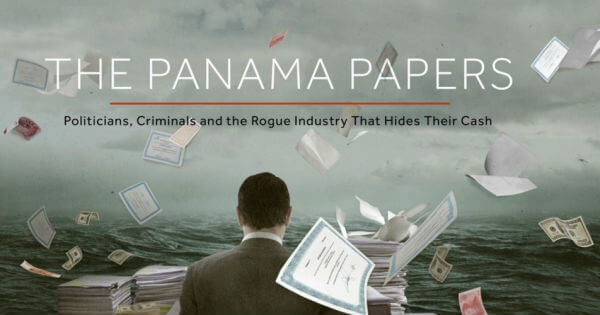
Panama Papers reveal a global web of corruption and tax avoidance

panama-papers

Matthew Yglesias writes: Even as the world’s wealthiest and most powerful nations have engaged in increasingly complex and intensive efforts at international cooperation to smooth the wheels of global commerce, they have willfully chosen to allow the wealthiest members of Western society to shield their financial assets from taxation (and in many cases divorce or bankruptcy settlement) by taking advantage of shell companies and tax havens.

If Panama or the Cayman Islands were acting to undermine the integrity of the global pharmaceutical patent system, the United States would stop them. But the political elite of powerful Western nations have not acted to stop relatively puny Caribbean nations from undermining the integrity of the global tax system — largely because Western economic elites don’t want them to. [Continue reading…]

Facebooktwittermail

The Panama Papers: Where are the Americans?

Politico reports: The Panama Papers sent ripples across the globe Monday after revealing that 140 politicians from more than 50 countries, including Russian President Vladimir Putin and Iceland President Sigmundur David Gunnlaugsson, were linked to offshore accounts set up by the Panamanian law firm Mossack Fonseca.

Despite its breadth, the scandal so far has barely touched American individuals and companies. There were no mass protests, as occurred in Iceland where protesters demanded the resignation of Gunnlaugsson; no U.S. leaders were forced to deny accusations of tax evasion as Putin did.

How have Americans so far escaped the biggest leak of financial data of all time? It’s not because wealthy Americans don’t use offshore bank accounts to avoid U.S. taxes: they do — to the tune of $1.2 trillion in 2014, according to one estimate. Some professors have suggested that Americans may have disguised their accounts at Mossack Fonseca behind another party. But there’s also a more structural answer, tax experts say — one that has to do with shifts in global financial policy — and, to an extent, taste.

Tax evasion overall is a far larger problem in developing countries, where norms around paying taxes are weak and rules designed to stop such evasion are ineffective. And when wealthy Americans do want to evade taxes, they turn to Bermuda, or the Cayman Islands, or Singapore. They don’t park their money in Panama. [Continue reading…]

Facebooktwittermail