Karen Turner reports: A new study shows that knowledge of government surveillance causes people to self-censor their dissenting opinions online. The research offers a sobering look at the oft-touted “democratizing” effect of social media and Internet access that bolsters minority opinion.
The study, published in Journalism and Mass Communication Quarterly, studied the effects of subtle reminders of mass surveillance on its subjects. The majority of participants reacted by suppressing opinions that they perceived to be in the minority. This research illustrates the silencing effect of participants’ dissenting opinions in the wake of widespread knowledge of government surveillance, as revealed by whistleblower Edward Snowden in 2013.
The “spiral of silence” is a well-researched phenomenon in which people suppress unpopular opinions to fit in and avoid social isolation. It has been looked at in the context of social media and the echo-chamber effect, in which we tailor our opinions to fit the online activity of our Facebook and Twitter friends. But this study adds a new layer by explicitly examining how government surveillance affects self-censorship. [Continue reading…]
Author Archives: News Sources
FBI backs off from its day in court with Apple this time – but there will be others
By Martin Kleppmann, University of Cambridge
After a very public stand-off over an encrypted terrorist’s smartphone, the FBI has backed down in its court case against Apple, stating that an “outside party” – rumoured to be an Israeli mobile forensics company – has found a way of accessing the data on the phone.
The exact method is not known. Forensics experts have speculated that it involves tricking the hardware into not recording how many passcode combinations have been tried, which would allow all 10,000 possible four-digit passcodes to be tried within a fairly short time. This technique would apply to the iPhone 5C in question, but not newer models, which have stronger hardware protection through the so-called secure enclave, a chip that performs security-critical operations in hardware. The FBI has denied that the technique involves copying storage chips.
So while the details of the technique remain classified, it’s reasonable to assume that any security technology can be broken given sufficient resources. In fact, the technology industry’s dirty secret is that most products are frighteningly insecure.
FBI signed $15 million contract with Apple vendor, Cellebrite; parent company’s stock soars
Fortune reports: The U.S. government’s announcement Monday that it hacked into the San Bernardino terrorist’s iPhone ended the FBI’s legal feud with Apple. But while many observers thought the incident left both the FBI and Apple looking foolish, there does appear to be a winner emerging from the case.
Shares of Suncorp, a Japanese technology company traded on the Tokyo stock exchange (ticker: 6736), soared 17% on Tuesday following the government’s court declaration that it “successfully accessed the data stored on [Syed] Farook’s iPhone.” In all, Suncorp’s shares have more than doubled in the six weeks since February 16, when Apple published its letter refusing to help the FBI.
Suncorp, which specializes in mobile data transfer as well as equipment for a popular Japanese pinball-like game called pachinko, owns Cellebrite, the Israel-based company that reportedly helped the FBI crack the iPhone.
Apple’s stock, meanwhile, was up just about 2% Tuesday afternoon, despite the fact that it is now free of legal expenses relating to the FBI case as well as the technological burden the government tried to impose.
Suncorp’s shares started rising last month, and really took off after the government said last Wednesday that an “outside party” had demonstrated “a possible method for unlocking” the iPhone. An Israeli newspaper quickly identified the unnamed company as Cellebrite, a government contractor that makes a mobile forensic device for extracting and decoding data from smartphones and tablets. Since then, Suncorp’s stock has risen nearly 40%, while Japan’s Nikkei 225 stock market index has been basically flat, and fell slightly on Tuesday.
The odd thing about the company’s dramatic stock rise is that neither the FBI nor Suncorp has confirmed the company was involved in unlocking the phone. In fact, the FBI has said very little so far about how it might have cracked the iPhone. [Continue reading…]
The Daily Beast reports: The FBI has said practically nothing about the “tool” that helped the FBI get inside the phone, as a U.S. law enforcement official called it in a hastily arranged press conference on Monday evening. Nor would the official say whether investigators might use it again on the dozen or so other iPhones the FBI is reportedly trying to gain access to, or whether the bureau would share the tool with local law enforcement agencies, who are believed to have hundreds of phones just waiting to be cracked.
“I think the best answer I can give you is it’s premature to say anything about our ability to access other phones,” said the official, who discussed the case with reporters on condition of anonymity and said almost nothing about where the FBI will go from here.
But he didn’t have to. Comey’s earlier remarks, coupled with the government’s decision to drop the warrant request, sent a message to other tech companies: Work with us, or don’t. We’ll get what we need without you.
Notably, the U.S. official didn’t say whether the FBI would disclose its newfound technique to Apple, which has a vested interest in protecting the security and privacy of its customers. But Cellebrite, an Israeli company, has been identified in some news accounts as the company that came to the FBI’s rescue. It signed a contract with the bureau worth more than $15 million last week.
In other words: The American government may have used foreign hackers to crack the signature product of America’s top technology company.
But it’s hard to imagine Apple didn’t have some idea what was coming. One of Cellebrite’s other clients is Apple itself. [Continue reading…]
Leaks reveal industrial scale bribery operation involving major U.S., European and Asian companies

Fairfax Media and The Huffington Post report: A massive leak of confidential documents has for the first time exposed the true extent of corruption within the oil industry, implicating dozens of leading companies, bureaucrats and politicians in a sophisticated global web of bribery and graft.
After a six-month investigation across two continents, Fairfax Media and The Huffington Post can reveal that billions of dollars of government contracts were awarded as the direct result of bribes paid on behalf of firms including British icon Rolls-Royce, US giant Halliburton, Australia’s Leighton Holdings and Korean heavyweights Samsung and Hyundai.
The investigation centres on a Monaco company called Unaoil, run by the jet-setting Ahsani clan. Following a coded ad in a French newspaper, a series of clandestine meetings and midnight phone calls led to our reporters obtaining hundreds of thousands of the Ahsanis’ leaked emails and documents.
The trove reveals how they rub shoulders with royalty, party in style, mock anti-corruption agencies and operate a secret network of fixers and middlemen throughout the world’s oil producing nations.
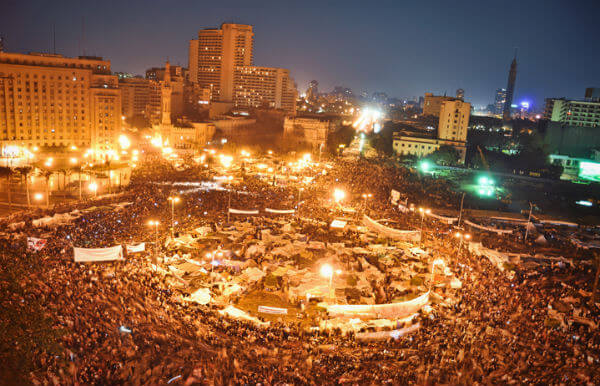
Corruption in oil production – one of the world’s richest industries and one that touches us all through our reliance on petrol – fuels inequality, robs people of their basic needs and causes social unrest in some of the world’s poorest countries. It was among the factors that prompted the Arab Spring.
Fairfax Media and The Huffington Post today reveal how Unaoil carved up portions of the Middle East oil industry for the benefit of western companies between 2002 and 2012. [Continue reading…]
The end of the Arab affair
Bassel Salloukh writes: What kind of a Syria will emerge from the wreckage of – so far – more than five years of fighting? This is the question international, regional, and local actors are pondering as ‘proximity talks’ between Syrian government envoys and representatives of the internationally-designated opposition commenced in Geneva in March 2016 under UN auspices.
What political system can restore a semblance of territorial integrity to a country devastated by all kinds of overlapping international, regional, and local wars and crisscrossed by transnational and local salafi-jihadi groups, where sectarian and ethnic identities, never the sole markers of political identity, have been securitised and are now assumed primordial and the main source of political identity and community?
How will communities that have witnessed political mobilisation in the name of the sect or the ethnic group, as well as sectarian and ethnic massacres, accept to live together again under the same flag or inside the same borders?
The inescapable question then is whether postwar Syria will retain its centralised unitary political structure, will be divided along ethno-federal lines, or a middle ground will be devised between these binary choices that may help restore peace to Syria without altering its political geography forever or denying its peoples their justifiable democratic aspirations. [Continue reading…]
During Russia’s ‘withdrawal,’ it has been shipping more into Syria than it has been removing
Reuters reports: When Vladimir Putin announced the withdrawal of most of Russia’s military contingent from Syria there was an expectation that the Yauza, a Russian naval icebreaker and one of the mission’s main supply vessels, would return home to its Arctic Ocean port.
Instead, three days after Putin’s March 14 declaration, the Yauza, part of the “Syrian Express”, the nickname given to the ships that have kept Russian forces supplied, left the Russian Black Sea port of Novorossiysk for Tartous, Russia’s naval facility in Syria.
Whatever it was carrying was heavy; it sat so low in the water that its load line was barely visible.
Its movements and those of other Russian ships in the two weeks since Putin’s announcement of a partial withdrawal suggest Moscow has in fact shipped more equipment and supplies to Syria than it has brought back in the same period, a Reuters analysis shows.
It is not known what the ships were carrying or how much equipment has been flown out in giant cargo planes accompanying returning war planes.
But the movements – while only a partial snapshot – suggest Russia is working intensively to maintain its military infrastructure in Syria and to supply the Syrian army so that it can scale up again swiftly if need be. [Continue reading…]
Leahy asked State Dept. to investigate Israel and Egypt’s human rights ‘violations’
Politico reports: Sen. Patrick Leahy (D-Vt.) and 10 House members have asked the Obama administration to investigate claims that the Israeli and Egyptian security forces have committed “gross violations of human rights” — allegations that if proven truei could affect U.S. military aid to the countries.
In a letter to Secretary of State John Kerry dated Feb. 17, the lawmakers list several examples of suspected human rights abuses, including reports of extrajudicial killings by Israeli and Egyptian military forces, as well as forced disappearances in Egypt. The letter also points to the 2013 massacre in Egypt’s Rab’aa Square, which left nearly 1,000 people dead as the military cracked down on protesters, as worthy of examination.
Leahy’s signature is particularly noteworthy because his name is on a law that conditions U.S. military aid to countries on whether their security forces are committing abuses. [Continue reading…]
Growing international movement seek to place arms embargo on Saudi Arabia
The Intercept reports: A lawsuit filed last week in Canada is seeking to halt a major $15 billion sale of light-armored vehicles to the government of Saudi Arabia, part of a growing international movement to stop arms sales to the Saudi government over its alleged war crimes in Yemen.
The suit, filed by University of Montreal constitutional law professor Daniel Turp, argues the vehicle sales to Saudi Arabia violate a number of Canadian laws, including regulations on the export of military equipment, which prohibit arms sales to countries where human rights are “subject to serious and repeated violations” and there is a reasonable risk exported equipment “will be used against the civilian population.” Saudi Arabia, which has a deplorable human rights record at home, has inflicted considerable civilian casualties in Yemen as part of its yearlong bombing campaign in support of the contested government of President Abdu Rabbu Mansour Hadi.
“The suppression of human rights in Saudi Arabia and the Saudi government’s actions during the war in Yemen make the sale of these armored vehicles legally unacceptable,” Turp said.[Continue reading…]
Pakistan militant group Jamaat-ul-Ahrar threatens fresh wave of violence
The Wall Street Journal reports: The militant group behind the park massacre here this week on Tuesday threatened to unleash a wave of new attacks, as the government rounded up thousands of suspects.
The Easter Sunday bombing that killed 72 people was the latest in a series of bloody assaults by Jamaat-ul-Ahrar extremists over the past two years, which has established them as the most brutal and capable militant group in the country. The Pakistani Taliban affiliate’s network, officials say, reaches into the country’s heartland of Punjab province, whose capital Lahore is Prime Minister Nawaz Sharif’s hometown and political base.
“Let Nawaz Sharif know that this war has now reached the doorstep of his home,” Ehsanullah Ehsan, the militant group’s spokesman, said in a Twitter post on Tuesday, announcing a new campaign of violence. “God willing, the winners of this war will be the righteous holy warriors.” [Continue reading…]
Why it’s wrong to say that the Arab uprisings failed

Marc Lynch writes: Conventional wisdom holds that the Arab uprisings that began in Tunisia in December 2010 failed. It’s hard to argue with such a harsh verdict. Most Arab regimes managed to survive their popular challenges through some combination of cooptation, coercion and modest reform. Egypt’s transition ended in an even harsher military regime. Yemen and Libya collapsed into state failure and regionalized wars, while Syria degenerated into a horrific war.
But simply dismissing the uprisings as a failure does not capture how fully they have transformed every dimension of the region’s politics. Today’s authoritarians are more repressive because they are less stable, more frightened and ever more incapable of sustaining their domination. With oil prices collapsing and popular discontent again spiking, it is obvious that the generational challenge of the Arab uprising is continuing to unfold. “Success or failure” is not a helpful way to understand these ongoing societal and political processes.
Instead of binary outcomes, political scientists have begun to more closely examine the new political forms and patterns, which the uprisings generated. A few months ago, the Project on Middle East Political Science convened a virtual symposium with 30 political scientists examining how the turmoil of the past five years have affected Arab politics. Those essays, many of them originally published on the Monkey Cage, are now available for open access download as an issue of POMEPS Studies. Those essays offer an ambivalent, nuanced perspective on what has and has not changed in the region since 2011 – and point to the many challenges to come.
The new politics shaped by the Arab uprising can be tracked along multiple levels of analysis, including regional international relations, regimes, states, and ideas. [Continue reading…]
U.S. sold $33 billion of weapons to Gulf states in 11 months
Defense News reports: The US State Department has facilitated $33 billion worth of weapons sales to its Arab Gulf allies since May 2015, according to department figures.
The six Gulf Cooperation Council (GCC) countries have received weapons including ballistic missile defense capabilities, attack helicopters, advanced frigates and anti-armor missiles, according to David McKeeby, a spokesman the State Department’s Bureau of Political-Military Affairs.
“Consistent with the commitments we made to our Gulf partners at the Camp David summit last May, we have made every effort to expedite sales. Since then, the State and Defense departments have authorized more than $33 billion in defense sales to the 6 Gulf Coordination Council countries,” McKeeby told Defense News. [Continue reading…]
Pentagon reaches out to U.S. weapons manufacturers to find new ways to threaten Russia and China
Reuters reports: The Pentagon’s Strategic Capabilities Office plans to reach out to U.S. industry in about a month for ways to put existing weapons technologies to new uses as the department scrambles to maintain its competitive edge over Russia and China.
“We’re looking for things we can put our hands on today, go test today,” said Will Roper, director of the SCO, or what he called the Pentagon’s “take risk” office, said.
This is the first time the office is broadly going out to industry for specific ideas on how to repurpose existing weapons, which could result in lucrative new contracts.
The secretive Pentagon office was set up in August 2012 at the behest of Defense Secretary Ash Carter, then the deputy defense secretary, who worried that the U.S. military was not ready for a return to great power competition after years of fighting extremist groups in Iraq and Afghanistan.
The office is now managing a nearly $1 billion dollar annual budget that is aimed at upsetting assumptions made by China and Russia about U.S. military capabilities. [Continue reading…]
How ISIS built the machinery of terror under Europe’s gaze

The New York Times reports: The day he left Syria with instructions to carry out a terrorist attack in France, Reda Hame, a 29-year-old computer technician from Paris, had been a member of the Islamic State for just over a week.
His French passport and his background in information technology made him an ideal recruit for a rapidly expanding group within ISIS that was dedicated to terrorizing Europe. Over just a few days, he was rushed to a park, shown how to fire an assault rifle, handed a grenade and told to hurl it at a human silhouette. His accelerated course included how to use an encryption program called TrueCrypt, the first step in a process intended to mask communications with his ISIS handler back in Syria.
The handler, code-named Dad, drove Mr. Hame to the Turkish border and sent him off with advice to pick an easy target, shoot as many civilians as possible and hold hostages until the security forces made a martyr of him.
“Be brave,” Dad said, embracing him.
Mr. Hame was sent out by a body inside the Islamic State that was obsessed with striking Europe for at least two years before the deadly assaults in Paris last November and in Brussels this month. In that time, the group dispatched a string of operatives trained in Syria, aiming to carry out small attacks meant to test and stretch Europe’s security apparatus even as the most deadly assaults were in the works, according to court proceedings, interrogation transcripts and records of European wiretaps obtained by The New York Times. [Continue reading…]
Brussels attacks: ‘Fight the Westerners’ text sent to youths in Molenbeek
The Guardian reports: Young men in the Molenbeek district of Brussels were sent messages over the weekend calling on them to “make the right choice” and “fight the westerners”.
The texts were sent on Sunday night from a prepaid account that could not be traced or replied to. It followed a video distributed on Facebook, since removed, apparently showing local youths celebrating the attacks in Brussels last week. The death toll from the bombings has risen to 35, Belgium’s health minister said on Monday.
The short SMS message written in French, which the Guardian has seen, says: “My brother, why not fight the westerners? Make the right choice in your life.”
The rapid use of technology to spread propaganda after the attacks will stoke fears that Islamic State is trying to use the heightened tension to recruit more disaffected youths.
It is not known how the recipients’ phone numbers were obtained, but community activists believe Isis handlers download all contacts from the phone books of new recruits and select young men of north African origin to follow up. [Continue reading…]
Companies are leaving the West Bank as international boycott campaign gains ground
Vice News reports: For the past 28 years, the Israeli cosmetics giant Ahava has manufactured its line of Dead Sea mud-based skincare products in a settlement located in the Israeli-occupied West Bank. But this month, the company announced it would build a new facility 10 miles to the south, just across the internationally recognized border separating Israel proper from the Palestinian territory.
Though the company did not link the move to political pressure, instead citing “expanding production needs due the success in marketing Ahava products around the world,” it has long been targeted by activists who protest Israeli companies operating in the West Bank, which much of the international community regards as illegally occupied.
Ahava is not alone — a number of companies have chosen to abandon their operations in the West Bank, according to a new report by the Israeli anti-occupation group Gush Shalom that was compiled from publicly available information and published as a wiki-entry.
Twenty years ago, Gush Shalom drew up a list of Israeli companies doing business across the Green Line, the pre-1967 boundary between Israel and the West Bank that has been a sticking point in negotiations over a future Palestinian state. As of March, between 20 and 30 percent of those companies are no longer operating there. [Continue reading…]
European policy is driving refugees to more dangerous routes across the Mediterranean
By Heaven Crawley, Coventry University and Nando Sigona, University of Birmingham
It is estimated that in 2015, more than a million people crossed the
Mediterranean to Europe in search of safety and a better life. 3,770 are known to have died trying to make this journey during the same period. This so-called “migration crisis” is the largest humanitarian disaster to face Europe since the end of World War II.
That’s why we’ve been working to examine the conditions underpinning this recent migration across, and loss of life in, the Mediterranean.
Our first research brief , based on interviews with 600 people, including 500 refugees, shines a light on the reasons why so many risk everything on the dangerous sea crossing. It also offers an insight into why the EU response has been so ineffective.
One of the main problems with the current approach to this crisis is the assumption that refugees and migrants are drawn towards particular countries because they offer employment, welfare, education or housing. This ignores the fact that in 2015 over 90% of those arriving by sea in Greece came from the world’s top-ten refugee producing countries, 56% from Syria. The ‘migration crisis’ is in fact a crisis of refugee protection.
Nusra’s ambition to govern faces challenge from Syrian activists
Borzou Daragahi reports: Syria’s al-Qaeda branch is seeking to emulate its jihadi rival, ISIS, by establishing its own government in areas it controls.
Over the past year, the Nusra Front, a powerful and well-organized Syrian rebel army that is the country’s official arm of al-Qaeda, has shifted tactics from being a solely military force to one seeking to tighten its hold over areas under its control by seizing the reins of governance, including law enforcement and municipal affairs, in what its supporters have hinted could become its own emirate in the northwestern Idlib province.
“They switched from just being a military power to taking over services,” said Abu Yahya, nom de guerre of a Syrian activist in the city of Muraat al-Noman, in Idlib province. “Nusra is trying to build institutions and trying to oversee services. They have now developed a love for power.”
The group’s efforts are concentrated on the city of Idlib, which the regime surrendered last year as a coalition of Islamist rebel groups that included Nusra pushed its way into the city. Over the following months, Nusra began to muscle out other rebel groups when it came to running the city. It did the same in other parts of Idlib province, where it has sought to create an institution called the The Liberated Districts Administration (Idaret al Manateq al Muharrarra), in an area that includes the cities of Idlib, Reeha and Jusr al-Shughoor, which would give them direct control of taxation, sanitation, electricity, water and as well as municipal governance. [Continue reading…]
Assad’s success in Palmyra dims prospects for political change in Syria
Charles Lister writes: The capture of Palmyra is an invaluable opportunity for the Assad regime and Russia to now proclaim themselves as capable and willing partners in the fight against ISIS. But we must not forget that the Assad regime purposefully ignored ISIS gains in Syria for nearly 18 months — April 2013 to August 2014 — as they proved an effective counterweight to the mainstream opposition. There is also bountiful evidence of the Assad regime’s deep and decades-long complicity in bolstering ISIS and its predecessor movements, for the purpose of manipulating them into shaping Syria’s domestic and foreign policy agendas. While there can be no doubting that ISIS’ loss of Palmyra represents a substantial strategic blow to their operations in Syria, this is the Assad regime’s first major victory against the group — after its presence on its territory for 3 years.
Events in Palmyra will also affect the viability of the political process in Geneva. Russia’s intervention has fundamentally transformed the balance of power on the ground and for the first time since mid-2013, the Assad regime is sitting comfortably in Damascus. Having recaptured Palmyra in a widely reported military operation conducted with Russian support, there is now no reason at all for Bashar al-Assad to even get close to considering a political transition. The next round of Geneva talks are scheduled to begin on April 11. Not only will this almost certainly be delayed, but the prospects for any progress on the substantive issue of political change look slim to none. [Continue reading…]