Author Archives: News Sources

Seas are now rising faster than they have in 2,800 years, scientists say

The Washington Post reports: A group of scientists says it has now reconstructed the history of the planet’s sea levels arcing back over some 3,000 years — leading it to conclude that the rate of increase experienced in the 20th century was “extremely likely” to have been faster than during nearly the entire period.

“We can say with 95 percent probability that the 20th-century rise was faster than any of the previous 27 centuries,” said Bob Kopp, a climate scientist at Rutgers University who led the research with nine colleagues from several U.S. and global universities. Kopp said it’s not that seas rose faster before that – they probably didn’t – but merely that the ability to say as much with the same level of confidence declines.

The study was published Monday in the Proceedings of the National Academy of Sciences.

Seas rose about 14 centimeters (5.5 inches) from 1900 to 2000, the new study suggests, for a rate of 1.4 millimeters per year. The current rate, according to NASA, is 3.4 millimeters per year, suggesting that sea level rise is still accelerating.

Unsurprisingly, the study blames the anomalous 20th-century rise on global warming — and not just that. It also calculates that, had humans not been warming the planet, there’s very little chance that seas would have risen so much during the century, finding that instead of a 14 centimeter rise, we would have seen somewhere between a 3 centimeter fall and a 7 centimeter rise. [Continue reading…]


Facebooktwittermail

Scientists: Air pollution led to more than 5.5 million premature deaths in 2013

The Guardian reports: Air pollution caused more than 5.5 million people to die prematurely in 2013, according to research presented on Friday, with more than half of those deaths in India and China and illnesses in those countries almost certain to rise.

According to scientists from the US, Canada, China and India, who presented their findings at the annual meeting of the American Association for the Advancement of Science (AAAS) in Washington DC, conditions caused by air pollution killed 1.6 million people in China and 1.4 million people in India in 2013.

“Air pollution is the fourth-highest risk factor for death globally and by far the leading environmental risk factor for disease,” said Michael Brauer, a researcher from the University of British Columbia.

Brauer said air pollution contributed to heart disease, stroke, lung cancer, bronchitis, emphysema and acute infections.

He and his colleagues compared the problem in Asia to the conditions under centuries of industrial revolution in the US and Europe: massive economic growth smothered by clouds of toxic matter in the air. [Continue reading…]

Facebooktwittermail

How Denmark turned ugly

refugees1

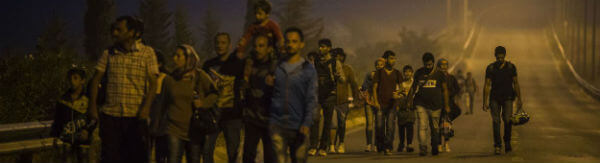
Hugh Eakin writes: In country after country across Europe, the Syrian refugee crisis has put intense pressure on the political establishment. In Poland, voters have brought to power a right-wing party whose leader, Jarosław Kaczyński, warns that migrants are bringing “dangerous diseases” and “various types of parasites” to Europe. In France’s regional elections in December, some Socialist candidates withdrew at the last minute to support the conservatives and prevent the far-right National Front from winning. Even Germany, which took in more than a million asylum-seekers in 2015, has been forced to pull back in the face of a growing revolt from Chancellor Angela Merkel’s own party and the recent New Year’s attacks on women in Cologne, allegedly by groups of men of North African origin.

And then there is Denmark. A small, wealthy Scandinavian democracy of 5.6 million people, it is according to most measures one of the most open and egalitarian countries in the world. It has the highest income equality and one of the lowest poverty rates of any Western nation. Known for its nearly carbon-neutral cities, its free health care and university education for all, its bus drivers who are paid like accountants, its robust defense of gay rights and social freedoms, and its vigorous culture of social and political debate, the country has long been envied as a social-democratic success, a place where the state has an improbably durable record of doing good. Danish leaders also have a history of protecting religious minorities: the country was unique in Nazi-occupied Europe in prosecuting anti-Semitism and rescuing almost its entire Jewish population.

When it comes to refugees, however, Denmark has long led the continent in its shift to the right—and in its growing domestic consensus that large-scale Muslim immigration is incompatible with European social democracy. To the visitor, the country’s resistance to immigrants from Africa and the Middle East can seem implacable. In last June’s Danish national election—months before the Syrian refugee crisis hit Europe—the debate centered around whether the incumbent, center-left Social Democrats or their challengers, the center-right Liberal Party, were tougher on asylum-seekers. The main victor was the Danish People’s Party, a populist, openly anti-immigration party, which drew 21 percent of the vote, its best performance ever. Its founder, Pia Kjærsgaard, for years known for suggesting that Muslims “are at a lower stage of civilization,” is now speaker of the Danish parliament. With the backing of the Danish People’s Party, the center-right Liberals formed a minority government that has taken one of the hardest lines on refugees of any European nation. [Continue reading…]

Facebooktwittermail

A requiem for the European dream

Olivier Guez writes: Even though radical Islam, mass migrations, Russian revanchism and military interventions are challenges that no European state can meet alone, political sentiments across the Continent are all in the wrong direction. Frightened Europeans retreat into their sovereign little states, propelled by the popular right and xenophobia. In Hungary and Poland, those forces have taken power. By 2017, they may well do so in France, and Britons may have quit Europe altogether. That would leave no nation in a position to take the reins from France or Germany in leading Europe’s imperfect union.

So what comes next? Can we reasonably believe Europe will snap out of it? Will there be a Franco-German turnaround in shamed memory of the slaughter at Verdun 100 years ago? I don’t think so.

It is a matter of leadership. In the 1990s, François Mitterrand and Helmut Kohl, like Adenauer and De Gaulle before them, could work together, in part because they had experienced the ultimate alternative — the horrors of war. But those giants have long left the stage. There exists today neither any guiding program nor true solidarity, and historical memories have grown very short. Ms. Merkel and Mr. Hollande are more than ever focused on their own national conundrums: for France, how to control terrorism; for Germany, how to treat refugees.

What Europe’s heads of state have not done, and simply must begin to do, is prepare their citizens for the one great requirement for progress toward more unity — an enormous leap of faith and optimism, even while in the grip of fear. Instead, they betray their peoples’ fondest dreams by pecking at one another. And even my generation, who were 15 to 20 years old when the Berlin Wall fell, fails to stand up to them and demand that they save the dream we were promised — a Europe finally at permanent peace and working in unison after all the divisions and horrors of the 20th century. [Continue reading…]

Facebooktwittermail

Inside Obama administration differing views on support for Syrian Kurds

Josh Rogin and Eli Lake write: Syrian Kurds are now attacking U.S.-supported rebels, but U.S. officials disagree about whether the Kurds have switched sides — and about whether the U.S. should continue increasing its arms support for them, as opposed to focusing support on Sunni Arab rebels.

Kurdish fighters have taken advantage of the Russian-backed Syrian regime offensives in the north of the country, seizing territory from U.S.-backed rebels who are on the defensive. But factions within the Obama administration disagree about whether the Kurds are simply being opportunistic, or have coordinated their attacks with Russia, Iran and the Syrian regime.

Some administration officials told us that U.S. intelligence has documented meetings between the Kurds’ armed group and officials in the Iranian Revolutionary Guards Quds Force, which has fought alongside the Assad regime against the opposition since 2011. This faction also says the Kurdish group, the YPG, is closely working with the PKK, a Kurdish terrorist organization at war with Turkey. [Continue reading…]

Facebooktwittermail

UN finds ‘deliberate’ destruction of hospitals in Syria

msf-hospital

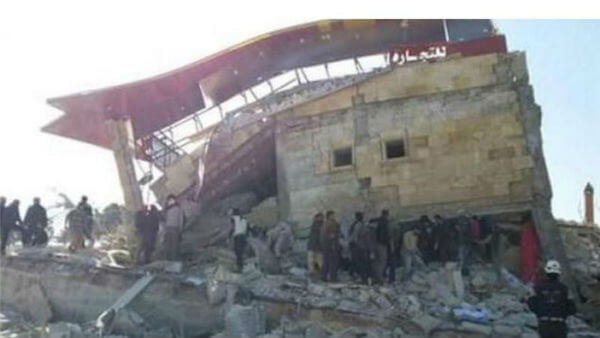
The New York Times reports: First, the government soldiers made sure no food could get into rebel-held towns. Then, government planes bombed what health centers remained in those towns, making sure that those who got sick from hunger had no medical care to save them.

That is the harrowing picture painted by the latest report of the United Nations Commission of Inquiry on the war in Syria. The report, released Monday, chronicles a series of attacks on health care centers by government forces and the Islamic State, and it says the “deliberate destruction of health care infrastructure” was responsible for driving up deaths and permanent disabilities.

To follow the commission’s work in Syria — it has written 11 reports since August 2011 — is to witness how blatantly the laws of war have been broken, with no prospects of accountability.

The commission flatly asserts in the latest report that “war crimes are rampant” by government forces and their armed rivals, and for the first time it sharply points to the very countries that are bargaining over a peace deal for fueling the violence. [Continue reading…]

Facebooktwittermail

Syrian rebels see flaws in U.S.-Russian truce plan

Reuters reports: The United States and Russia announced plans for a “cessation of hostilities” in Syria that would take effect on Saturday but exclude groups such as Islamic State and al Qaeda’s Nusra Front, a loophole Syrian rebels immediately highlighted as a problem.

Monday’s agreement, described by a U.N. spokesman as “a first step towards a more durable ceasefire,” is the fruit of intensive diplomacy between Washington and Moscow, which back opposing sides in the 5-year-old civil war that has killed more than 250,000 people.

Presidents Barack Obama and Vladimir Putin discussed the accord by phone, and the Kremlin leader said it could “radically transform the crisis situation in Syria.” The White House said it could help advance talks on bringing about political change in Syria.

To succeed, the deal will require both countries to persuade their allies on the ground to comply. Fighting and air strikes continued on Monday, according to a British-based monitoring group.

The plan allows the Syrian army and allied forces, as well as Syrian opposition fighters, to respond with “proportionate use of force” in self-defense. It leaves a significant loophole by allowing further attacks, including air strikes, against Islamic State, Nusra and other militant groups.

Bashar al-Zoubi, head of the political office of the Yarmouk Army, part of the rebel Free Syrian Army, said that would provide cover for Syrian President Bashar al-Assad and his Russian allies to keep attacking opposition-held territory where rebel and militant factions are tightly packed.

“Russia and the regime will target the areas of the revolutionaries on the pretext of the Nusra Front’s presence, and you know how mixed those areas are, and if this happens, the truce will collapse,” he said. [Continue reading…]

Facebooktwittermail

U.S. scrambles to contain growing ISIS threat in Libya

The New York Times reports: The Islamic State’s branch in Libya is deepening its reach across a wide area of Africa, attracting new recruits from countries like Senegal that had been largely immune to the jihadist propaganda — and forcing the African authorities and their Western allies to increase efforts to combat the fast-moving threat.

The American airstrikes in northwestern Libya on Friday, which demolished an Islamic State training camp and were aimed at a top Tunisian operative, underscore the problem, Western officials said. The more than three dozen suspected Islamic State fighters killed in the bombing were recruited from Tunisia and other African countries, officials said, and were believed to be rehearsing an attack against Western targets.

Even as American intelligence agencies say the number of Islamic State fighters in Iraq and Syria has dropped to about 25,000 from a high of about 31,500, partly because of the United States-led air campaign there, the group’s ranks in Libya have roughly doubled in the same period, to about 6,500 fighters. More than a dozen American and allied officials spoke of their growing concern about the militant organization’s expanding reach from Libya and across Africa on rules of anonymity because the discussions involved intelligence and military planning. [Continue reading…]

Facebooktwittermail

Russia wants closer look from above the U.S.

The New York Times reports: Russia asked on Monday to fly surveillance planes equipped with high-powered digital cameras over the United States, fueling a long-simmering debate among Pentagon and intelligence officials over Russia’s intentions to use such flights to spy on American power plants, communications networks and other critical infrastructure.

Russia has for years conducted unarmed observation flights over the United States — as the United States does over Russia — as part of the Open Skies Treaty that was signed in 1992 by both nations and 32 other countries at the end of the Cold War, and entered into force a decade later. Although the treaty and the flights, unfamiliar to most Americans, amount to officially sanctioned spying, their goal has been to foster transparency about military activity and to reduce the risk of war and miscalculation, especially in Europe.

Now some senior American intelligence and military officials say the new digital technology combined with shifting Russian flight plans would violate the spirit of the treaty. Some Republicans also expressed alarm. [Continue reading…]

Facebooktwittermail

Apple vs. FBI: ‘Just this once’?

Julian Sanchez writes: Loudly as the Justice Department protests that this dispute is simply about one particular phone, that’s fairly clearly not the case. Forget other even more dangerous ways Apple could be compelled to use their private key and let’s stay focused on breaking iPhones for the moment. The Manhattan DA’s office alone has at least 175 iPhones that they’d like Apple to help them break into, and DOJ itself has 12 other ongoing lawsuits seeking access to iPhones. Realistically, if Apple loses here — and especially if they lose at the appellate level, which is where this is likely going given Apple’s decision to hire superstar lawyer Ted Olson for the case — they’re going to be fielding thousands of similar demands every year. As a practical matter, they’re going to need a dedicated team dedicated to developing, debugging, testing, customizing, and deploying the code used to brute force passcodes.

Now, when it comes to the Holy Grail of Apple’s security infrastructure — the private key — it’s almost certainly stored in secure vaults, on a Hardware Security Module that makes it difficult or impossible to copy the key itself off that dedicated hardware, and likely protected by elaborate procedures that have to be followed to authenticate major new software releases. If your adversaries realistically include, say, the Chinese and Russian intelligence services — and for Apple, you’d better believe it — it’s a serious enough security problem to guard against exfiltration or use of that Holy Grail private key. Doing the same for a continuously updated and deployed hacking tool is likely to be hugely more difficult. As the company explains:

Apple would do our best to protect that key, but in a world where all of our data is under constant threat, it would be relentlessly attacked by hackers and cybercriminals. As recent attacks on the IRS systems and countless other data breaches have shown, no one is immune to cyberattacks.

The Justice Department might not intend to “set a master key loose on the land” — but the predictable consequence of mandating compliance with requests of this type will be to significantly increase the chance of exactly that occurring. And that’s an increased risk that every individual or enterprise customer relying on iOS devices to secure critical data will need to take into account. [Continue reading…]

Facebooktwittermail

Sheldon Adelson is hedging his bets in this presidential race

Politico reports: Few of the Adelsons’ associates wanted to be quoted talking about the famously temperamental self-made billionaire, who is known for valuing loyalty and holding grudges. But, with Tuesday’s GOP presidential caucuses in his backyard looming, several expressed concern that Adelson’s hesitance could have long-lasting consequences. Time is running short, they say, for major donors to fund an assault to try to slow the momentum of GOP front-runner Donald Trump.

While Adelson, whose political involvement is largely animated by his support for Israel’s defense, is thought to distrust Trump on the issue, an Adelson adviser suggested his boss had no plans to spend big on behalf of — or against — any candidate in the tumultuous GOP primary.

“I don’t see any involvement until there is a nominee,” the adviser told POLITICO.

If Adelson sticks with that plan — a big “if” given his reputation for writing massive checks with little warning — it could remove a major source of anti-Trump cash and also could hamper Republicans’ general election chances up and down the ballot.

The prospect is a serious source of concern for other Republican megadonors and operatives, who have offered a range of explanations for Adelson’s sudden tightening of his purse strings.

“Nobody knows exactly why he’s still on the sidelines or when he might come off,” said one operative with ties to Adelson, “but the party needs him to get in the game before it’s too late.” [Continue reading…]

In the past, Adelson’s concern has been to back the candidate who he thinks would best serve his interests. His greater interest right now might not be to support the stop-Trump campaign but instead to avoid making Trump his enemy. Both Trump and Adelson operate in a world where loyalty gets rewarded and enemies get punished.

Facebooktwittermail

The curious case of San Francisco’s Tech bro v. Homelessness

Holly Wood writes: I am writing today to voice my concern and outrage over the increasing tech bro problem, conspicuously concentrated in the city of San Francisco. The curious case of Tech bro v. Homelessness has been presented before me for comment.

Many of you have petitioned the Council for Human Decency your concerns regarding the callousness of one startup entrepreneur, Justin Keller. As penance for sins I must no doubt have committed in a past life, I found this case dumped on my desk alongside the even more absurd case of Marc Andreessen v. Indian Emancipation and the morally bankrupt case of Yelp v. Talia Jane. Yes indeed, this week has been a low watermark for Human Decency in San Francisco. But I digress.

In publishing his open letter to Mayor Ed Lee and Police Chief Greg Suhr on Feb. 15, Keller is guilty of betraying an incredible sense of bourgeois entitlement, reckless irony, and sloppy philosophy. “I shouldn’t have to see the pain, struggle, and despair of homeless people to and from my way to work every day,” he writes. But I urge, nevertheless, that we stay the blade.

You are not wrong to imagine Keller’s morality long rusted, encrusted in the residue of so long having volunteered himself a willing cog in a fetishized industry. But here at the Council, we husband our resources strategically. It bears recognition that Keller is merely a foot soldier on the tech front of the class war, a prole with aspirations so banal, history has already forgotten him. As a startup founder, statistics and conventional wisdom would suggest Keller will burn out — if not this year, then the next. Your anger is my anger is our anger, but from our vantage, Keller is but Silicon Valley cannon fodder.

Still, the irony of the incident warrants reflection. Perhaps the greatest tragedy of Tech bro v. Homelessness is that Keller sincerely believes himself entitled to comfort and security from the city—not because he believes these protections should be guaranteed to everyone as rights, but because of all the money he hopes to earn as a tech startup founder. “The wealthy working people have earned their right to live in the city,” he declares, despite the fact that he is unlikely to have yet earned anything at all. [Continue reading…]

Facebooktwittermail

Azaz: The border town that is ground zero in Syria’s civil war

Martin Chulov reports: For nearly five years of war, the Syrian border town of Azaz had been little more than a staging point. Opposition fighters used it to receive supplies from the main crossing three miles north, and casualties of the brutal conflict were sent the other way to hospitals inside Turkey.

Nothing changed when Islamic State made Azaz one of its main hubs for six months from mid-2013. The supplies kept coming and the wounded continued to leave, even as the struggle for the north slowly changed hue from homegrown insurrection to a conflict fuelled by many international agendas. The gateway remained just that – until a fortnight ago, when the Kurds of northern Syria moved towards it.

Since then, Azaz has been transformed into ground zero of the war for the north of Syria. Its fate has implications far beyond, with Turkey, especially, now more heavily invested – and exposed – to the region’s shifting dynamics than at any point since its leaders swung behind the Syrian opposition in the summer of 2011.

What becomes of Syria could well be determined in the border areas around Azaz, where a Game of Thrones-like cast of players is vying for supremacy over lands that stretch south to the ancient city of Aleppo, and north beyond the Turkish frontier, over which Ankara now has less control than at any point since the modern state of Turkey was formed. [Continue reading…]

Facebooktwittermail

‘Provisional’ Syria ceasefire plan called into question as bombs kill 120

The Guardian reports: A “provisional agreement” on a ceasefire in Syria has been reached between the US and Russia, the US secretary of state, John Kerry, said on Sunday, but serious doubts remain on whether it will come into force as the country reeled from a series of deadly car bombs in Syria’s two biggest cities that left more than 120 dead.

In Homs, twin car bombs killed at least 57 people and wounded 100 on Sunday, and explosions hit parts of the capital, Damascus, killing a further 62 and wounding 180, according to the UK-based Syrian Observatory for Human Rights. The attacks on both cities were claimed by Islamic State.

Kerry said he had reached an agreement following phone talks with his Russian counterpart, Sergei Lavrov, amid signs that Russia is putting some pressure on the Syrian president, Bashar al-Assad, to comply. There are serious doubts over the strength of the deal, which would need the agreement of Vladimir Putin and Barack Obama, who are expected to speak by phone later this week.

A previous UN-brokered ceasefire, agreed between the interested parties in Munich a fortnight ago, failed to come into force on Friday as expected, with Russia continuing its bombing campaign and the Syrian army moving to encircle Syria’s second city of Homs. [Continue reading…]

Facebooktwittermail

Concerns in Saudi Arabia over signs of more military involvement in Syria

The Washington Post reports: Saudi Arabia is flexing its muscles as pro-government forces in Syria’s civil war make sweeping advances, but concerns have mounted about its expanding military involvement in the conflict.

Syrian President Bashar al-Assad’s military, backed by Iranian-led militiamen and Russian airstrikes, has pressed a major offensive in the northern city of Aleppo, even as talks to broker a ceasefire have made some progress.. The move threatens rebel groups that have received cash and weapons from Saudi Arabia, a Sunni powerhouse and U.S. ally that opposes Assad because of his alliance with Shiite rival Iran.

Saudi officials have responded by dispatching warplanes to Turkey, another opponent of the Syrian leader. They have said they could commit ground forces to Syria that would technically fight the Islamic State militant group but could also seemingly challenge pro-Assad forces.

Saudi leaders also have announced large-scale military exercises involving 20 mostly Arab and African nations.

“Bashar al-Assad will leave – have no doubt about it,” Saudi Foreign Minister Adel al-Jubeir recently told CNN. “He will either leave by a political process or he will be removed by force.” [Continue reading…]

Facebooktwittermail

Is it really so terrible for Britain to have a different vision for Europe?

By Igor Merheim-Eyre, University of Kent

In May 1950, at the height of the Cold War, Robert Schuman, one of the founding fathers of the European Union, offered his vision for the future. Following the devastation of the World War II, he said the future of Europe “cannot be safeguarded without … creative efforts proportionate to the dangers which threaten it”.

However, he also famously warned: “Europe will not be made all at once, or according to a single plan”.

What happened to those aspirations? Today, the EU lacks leadership. Frustration is growing within the union and the group is failing to make a positive impact beyond its own borders. Brexit, Grexit, economic stagnation, youth unemployment and uncontrolled migration – all are threatening this partnership.

At the core of this problem is the fundamentally dangerous belief that the EU can become some kind of a promised land. In fact, too few people are actually questioning the EU integration project as an end in itself – its aims, its intentions and, above all, the impact on those “creative efforts” that Schuman argued had to be at the heart of European integration.

Continue reading

Facebooktwittermail

David Cameron loses Michael Gove and Boris Johnson to Brexit campaign

By Martin Smith, University of York

David Cameron, the UK prime minister, has announced that the referendum on whether Britain will leave the EU is to be held on June 23. This marks the beginning of a four-month campaign that will have enormous repercussions for his country, his party and his own legacy.

Cameron left gruelling negotiations in Brussels with a deal that he claims has resulted in Britain’s concerns being addressed and the sovereignty of Britain being assured. The country now has “special status” in the EU, he said after the meeting with fellow national leaders.

So far, so predictable. There has never been any doubt that Cameron would emerge with an agreement. The alternative was to recommend Britain leave the EU – something the PM could never have done.

Continue reading

Facebooktwittermail

The EU referendum campaign is finally underway – here’s how to win it

By Sofia Vasilopoulou, University of York

Following long-winded negotiations with the 27 other heads of government in Europe, David Cameron has secured a deal that he hopes will win him the June referendum.

Cameron’s argument now is that he is the only prime minister ever to have renegotiated the UK’s position in the EU and to secure a special status for the country. His opponents say that his deal is at best modest.

But will the negotiation outcome matter in swaying voters either way?

Continue reading

Facebooktwittermail