Author Archives: News Sources

The UK deal with the EU explained: what it says and what it means

By Steve Peers, University of Essex

The late-night deal struck between national leaders in Brussels on February 19 will change the UK’s future relationship with the European Union. British voters will decide if they want to remain in the EU or leave in a referendum now set for June 23.

The deal addresses all four issues which David Cameron, the UK prime minister, wanted to renegotiate, although in each case he got only part of what he asked for. Those four issues were: free movement for EU citizens; UK sovereignty; competitiveness of the EU; and relations between eurozone and non-eurozone countries.

Continue reading

Facebooktwittermail

Britain lobbied UN to whitewash Bahrain police abuses

The Observer reports: neutering United Nations criticism of Bahrain for its human rights record, including the alleged use of torture by its security forces.

Documents shared with the Observer reveal that the UN’s criticism of the Gulf state was substantially watered down after lobbying by the UK and Saudi Arabia, a major purchaser of British-made weapons and military hardware.

The result was a victory for Bahrain and for Saudi Arabia, which sent its troops to quell dissent in the tiny kingdom during the Arab spring.

But the UK’s role has prompted concern among human rights groups. According to the international human rights organisation, Reprieve, two political prisoners in Bahrain are facing imminent execution and several more are on trial, largely due to confessions obtained through torture. [Continue reading…]

Facebooktwittermail

Iran’s thwarted reformers set careful goals for coming vote

The New York Times reports: They clapped and cheered, and many shouted for the release of their political leaders under house arrest for the past five years. Some held up pictures of a popular former president, Mohammad Khatami. Pictures of his hands, to be exact, because displaying his portrait is illegal.

The young supporters of Iran’s reformist movement gathered behind the safe walls of a sports hall last week to campaign for elections on Friday for Parliament and an influential clerical council. Their longstanding demand has been tangible change, but the forced absence of most of their political leaders illustrated how far they were from their goal of a new and modern Iran.

A decade of relentless pressure from the judiciary, the Revolutionary Guards and clerical councils dominated by hard-liners has confined Iran’s reformists. The reformists were a force during the presidential contest of 2009, but the movement was decapitated after its political leaders voiced support for the millions of people who took to the streets to challenge the fairness of the vote. Reformist parties were closed down, and hundreds of activists, politicians and journalists were given long jail sentences.

The election of President Hassan Rouhani in 2013 raised the hopes of the reform movement, and Iran negotiated a nuclear deal with the West and rejoined the world economy. But internally, virtually nothing changed. The political space remained constrained, and the hope that reformers would re-emerge as a guiding force has not come to fruition. [Continue reading…]

Facebooktwittermail

Iranian state media renew fatwa on Salman Rushdie with $600,000 bounty

rushdie

The Independent reports: Forty state-run Iranian media outlets have jointly offered a new $600,000 bounty for the death of British Indian author Salman Rushdie, according to the state-run Fars News Agency.

Fars News Agency, which is closely affiliated with the Islamic Revolutionary Guards Corps (IRGC), was among the largest contributors, donating one billion Rials – nearly $30,000.

The announcement coincides with the anniversary of the fatwa issued the Ayatollah Ruhollah Khomeini, the founder of the Islamic Republic, the agency said. [Continue reading…]

Facebooktwittermail

The NSA’s SKYNET program may be killing thousands of innocent people

Ars Technica reports: In 2014, the former director of both the CIA and NSA proclaimed that “we kill people based on metadata.” Now, a new examination of previously published Snowden documents suggests that many of those people may have been innocent.

Last year, The Intercept published documents detailing the NSA’s SKYNET programme. According to the documents, SKYNET engages in mass surveillance of Pakistan’s mobile phone network, and then uses a machine learning algorithm on the cellular network metadata of 55 million people to try and rate each person’s likelihood of being a terrorist.

Patrick Ball — a data scientist and the director of research at the Human Rights Data Analysis Group — who has previously given expert testimony before war crimes tribunals, described the NSA’s methods as “ridiculously optimistic” and “completely bullshit.” A flaw in how the NSA trains SKYNET’s machine learning algorithm to analyse cellular metadata, Ball told Ars, makes the results scientifically unsound. [Continue reading…]

Facebooktwittermail

My friend, the former Muslim extremist

Nicholas Kristof writes: Whenever a Muslim carries out a terror attack in the West, the question arises: Why do they hate us?

Provocative answers come from my friend Rafiullah Kakar, who has lived a more astonishing life than almost anyone I know. Rafi is a young Pakistani who used to hate the United States and support the Taliban. His brother joined the Taliban for a time, but now I worry that the Taliban might try to kill Rafi — ah, but I’m getting ahead of myself.

One of 13 children, Rafi is a Pashtun who grew up in a mud home close to the Afghan border, in an area notorious for tribal feuds and violent clashes. His parents are illiterate farmers, and it looked as if Rafi’s education would end in the fifth grade, when he was sent to a madrasa. His mom wanted him to become a hafiz, someone who has memorized the entire Quran.

“One reason people send kids to madrasa is that a hafiz can get to paradise and take 10 other people along,” Rafi notes, explaining a local belief about getting to heaven. “My mother wanted me to be a hafiz, so I could be her ticket to paradise.” [Continue reading…]

Facebooktwittermail

Trump’s remarks on pigs’ blood elicit challenge from sister of Chapel Hill victim

The New York Times reports: Suzanne Barakat, the sister of a Muslim student killed alongside his wife and sister-in-law last year in an attack in North Carolina, challenged Donald J. Trump to meet with her after a speech in which he spoke approvingly of killing Islamic terrorists with bullets dipped in the blood of pigs.

Ms. Barakat, 28, said the comments and other anti-Muslim rhetoric from Mr. Trump, including a proposal to ban Muslims from entering the country, have contributed to an atmosphere of intolerance that she fears could have deadly consequences.

“It allows for the Average Joe to see Muslims the way Craig Hicks saw my brother and his wife of six weeks and her sister,” she said, referring to the man who killed her relatives last February. “As ‘The Other,’ as subhuman, because of their faith.” [Continue reading…]

Facebooktwittermail

Ex-NSA chief opposes government effort to require ‘back doors’ in all devices

USA Today reports: Retired four-star general Michael Hayden, who as director of the NSA installed and still defends the controversial surveillance program to collect telephone metadata on millions of Americans, says he opposes proposals to force Apple and other tech companies to install “back doors” in digital devices to help law enforcement.

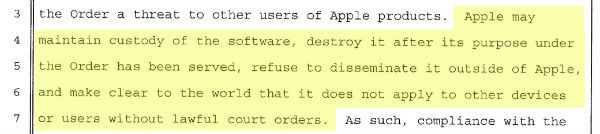
In an emerging court battle over access to information on the iPhone owned by one of the San Bernardino attackers, Hayden says “the burden of proof is on Apple” to show that limited cooperation with investigators would open the door to broader privacy invasions. Apple is being asked not to decrypt information on the smartphone but rather to override the operating system so investigators could try an endless series of passwords to unlock it.

“In this specific case, I’m trending toward the government, but I’ve got to tell you in general I oppose the government’s effort, personified by FBI Director Jim Comey,” Hayden told Capital Download in an interview about his memoir, Playing to the Edge: American Intelligence in the Age of Terror. “Jim would like a back door available to American law enforcement in all devices globally. And, frankly, I think on balance that actually harms American safety and security, even though it might make Jim’s job a bit easier in some specific circumstances.”[Continue reading…]

Facebooktwittermail

Syria and the world: Reactionarism is back and progressing

Yassin Al-Haj Saleh writes: There is something deeply atavistic about the course that the Syrian conflict has taken. Its latest developments, in particular, take us back to a time prior to the formation of the contemporary Syrian entity at the end of the First World War – indeed back to the nineteenth century or earlier. And behind this atavistic drama, some episodes of which are reviewed in this article, there appears to be an antiquating dynamic, so to speak, accompanied by justifications for the repeated resurrections of the what I shall call here “the antiquated.”

The manifestations, dynamisms and justifications of this antiquating process are facets of an increasing reactionarism, the scope of which is now expanding far beyond Syria into the rest of the world. [Continue reading…]

Facebooktwittermail

The significance of Aleppo

Syria Deeply spoke with Frederic Hof, a former ambassador and resident senior fellow at the Atlantic Council’s Rafik Hariri Center for the Middle East, Dmitri Trenin, director of the Carnegie Moscow Center, and Hassan Hassan, a Syria expert with the Tahrir Institute for Middle East Policy, about the strategic importance of Aleppo, the likelihood of a “cessation of hostilities” by the end of the week, and the difference in endgames between Damascus and Moscow.

Syria Deeply: Would a siege on Aleppo be a game changer for Russia and the Assad regime?

Frederic Hof: A siege of Aleppo would add about 250,000 people to the 1 million Syrians already besieged, the overwhelming majority by the Assad regime. As over 20 reports by Ban Ki-moon testify, the regime systematically denies access by U.N. humanitarian aid convoys to these areas. So a besieged Aleppo would change an already abysmal game to something even worse. There is no evidence of Moscow seeking an exit from Syria, graceful or otherwise. The nature of the Russian military campaign suggests that President Vladimir Putin wishes to neutralize all alternatives to Assad and ISIS in the hope that Washington will embrace Assad and thus implicitly renounce “regime change.” It is not unthinkable that he could succeed. [Continue reading…]

Facebooktwittermail

Sudden retreats don’t mean that ISIS is defeated

Hassan Hassan writes: On Friday, Hasaka became the second Syrian province to be fully liberated from ISIL in two years, after Idlib around this time in 2014. According to local reports, the group’s withdrawal from its last stronghold in Hasaka was “swift and surprising”. This sudden defeat, which follows similar ones in recent months, raises questions about the group’s current capabilities.

ISIL’s loss of Shaddadi, its last outpost in Hasaka, is significant and symbolic. This was the town from where, in 2014, the group planned much of its effort to take or secure its control of Syrian territory. Jabhat Al Nusra, Al Qaeda’s affiliate in Syria, crumbled there after most of its fighters switched sides when Abu Bakr Al Baghdadi announced the formation of ISIL. The city was the planning centre for ISIL, and there were rumours that Mr Al Baghdadi had visited it a few times.

The defeat is also operationally remarkable. The group has now lost control over oilfields – about 200 small oil wells and major oilfields such as Jibisa and Kabibah – and critical areas that could potentially weaken its defences in Deir Ezzor, Raqqa and even Mosul. [Continue reading…]

Facebooktwittermail

Russia guilty of Syria war crimes, says Amnesty

msf-hospital

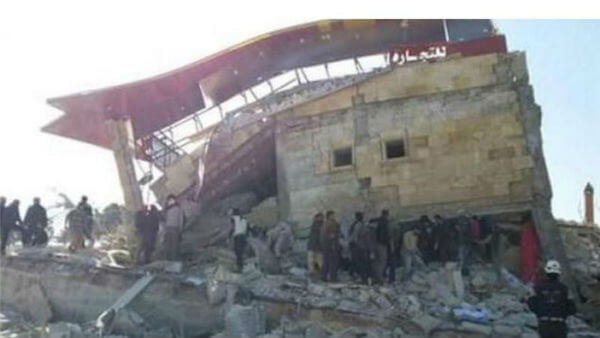
Sky News reports: Amnesty International has told Sky News that Russia is guilty of some the most “egregious” war crimes it has seen in decades.

The human rights organisation claims Moscow’s warplanes have been deliberately targeting civilians and rescue workers in Syria over the last week.

Tirana Hassan, director of Amnesty’s crisis response programme, said the attacks are ongoing – with strikes documented on schools, hospitals and civilian homes.

She claimed the bombing of civilian targets by Russian and Syrian forces was in itself a war crime, but warned there have been consistent reports of second bombardments which injure and kill humanitarian workers and civilians attempting to evacuate the wounded and the dead. [Continue reading…]

Facebooktwittermail

Russia steps up Syria cyber assault

Financial Times reports: Russia is mounting a far-reaching cyber espionage campaign against Syrian opposition groups and NGOs, as Moscow seeks to influence the flow of information on the country’s humanitarian crisis and obscure the full extent of its military operations there.

Targets include some of the most important human rights organisations and aid groups operating in the country, such as the Syrian Observatory of Human Rights, which reports on military incidents and is frequently cited in western media outlets, the Financial Times has learnt. The operation shares many of the hallmarks of Moscow’s sustained hacking campaign against the Ukrainian government in 2013 and 2014. [Continue reading…]

Facebooktwittermail

America is now fighting a proxy war with itself in Syria

kobane

Mike Giglio reports: American proxies are now at war with each other in Syria.

Officials with Syrian rebel battalions that receive covert backing from one arm of the U.S. government told BuzzFeed News that they recently began fighting rival rebels supported by another arm of the U.S. government.
The infighting between American proxies is the latest setback for the Obama administration’s Syria policy and lays bare its contradictions as violence in the country gets worse.

The confusion is playing out on the battlefield — with the U.S. effectively engaged in a proxy war with itself. “It’s very strange, and I cannot understand it,” said Ahmed Othman, the commander of the U.S.-backed rebel battalion Furqa al-Sultan Murad, who said he had come under attack from U.S.-backed Kurdish militants in Aleppo this week.

Furqa al-Sultan Murad receives weapons from the U.S. and its allies as part of a covert program, overseen by the CIA, that aids rebel groups struggling to overthrow the government of Syrian president Bashar al-Assad, according to rebel officials and analysts tracking the conflict.

The Kurdish militants, on the other hand, receive weapons and support from the Pentagon as part of U.S. efforts to fight ISIS. Known as the People’s Protection Units, or YPG, they are the centerpiece of the Obama administration’s strategy against the extremists in Syria and coordinate regularly with U.S. airstrikes. [Continue reading…]

Facebooktwittermail

In Syria ‘the Americans are like a policeman that passes by the scene of a crime and closes his eyes’

The Telegraph reports: If anywhere can show the consequences of American foreign policy under President Barack Obama, it may be the small town of Marea, north of Aleppo.

In the course of the last five years, it has seen Assad regime tanks roll through from the south, firing shells through its houses.

It has been repeatedly attacked from the east by Islamic State of Iraq and the Levant (Isil). On occasion it has been bombed from the air by the regime and shelled from the ground by Isil on the same day.

Now its rebel defenders are fighting Isil, the regime, Russian bombers, and a new enemy, the Syrian Kurdish militia the YPG, all at once.

America is calling for a ceasefire. But it is not clear whether even if one were declared, it would stop any of those enemies from attacking Marea. [Continue reading…]

Facebooktwittermail

Sunni tribesman rise up against ISIS rulers in Fallujah

The Wall Street Journal reports: Islamic State reasserted its authority over the Iraqi city of Fallujah on Sunday following clashes with local Sunni tribesman that showed the first signs of serious resistance to the extremist group’s two-year rule over the city.

The militants detained up to 180 men after the fighting ended late on Saturday, local officials said, leading to fears among the city’s exiled leadership that the insurgency will severely punish anyone suspected of participating in the brief show of defiance.

“Daesh is going through a shaky situation and are full of worries because of the revolution against it,” said Col. Mahmood Al Jumaili, the commander of the local force of the Popular Mobilization Forces, using the Arabic acronym for Islamic State. “This might lead Daesh to commit a new crime of executing the detained people.“

Officials from the Sunni-majority city have pleaded for military intervention from the Shiite dominated central government.

“We are aware of what will happen if the government and the security forces won’t support us,” said Majeed al-Juraisi, a tribal leader from Fallujah. “We will be slaughtered silently.”

Lightly armed local tribesmen on Friday and Saturday fought the militants in three neighborhoods in the city that had long been a center of Sunni extremist insurgency in Iraq.

The revolt signaled that residents of the city have become frustrated with Islamic State governance, the city’s exiled mayor Saadoun al-Shaalan said.

“Tribal fighters need the support of the security forces,“ said Mr. Shaalan, who is based in Baghdad but in frequent contact with tribal leaders. [Continue reading…]

Facebooktwittermail

The technical reasons the FBI’s claim, ‘just this one phone,’ is bogus

fbi

Jonathan Zdziarski, an expert in iOS forensics, writes: For years, the government could come to Apple with a subpoena and a phone, and have the manufacturer provide a disk image of the device. This largely worked because Apple didn’t have to hack into their phones to do this. Up until iOS 8, the encryption Apple chose to use in their design was easily reversible when you had code execution on the phone (which Apple does). So all through iOS 7, Apple only needed to insert the key into the safe and provide FBI with a copy of the data.

This service worked like a “black box”, and while Apple may have needed to explain their methods in court at some point, they were more likely considered a neutral third party lab as most forensics companies would be if you sent them a DNA sample. The level of validation and accountability here is relatively low, and methods can often be opaque; that is, Apple could simply claim that the tech involved was a trade secret, and gotten off without much more than an explanation. An engineer at Apple could hack up a quick and dirty tool to dump disk, and nobody would need to ever see it because they were providing a lab service and were considered more or less trade secrets.

Now lets contrast that history with what FBI and the courts are ordering Apple to do here. FBI could have come to Apple with a court order stating they must brute force the PIN on the phone and deliver the contents. It would have been difficult to get a judge to sign off on that, since this quite boldly exceeds the notion of “reasonable assistance” to hack into your own devices. No, to slide this by, FBI was more clever. They requested that Apple developed a forensics tool but did not do the actual brute force themselves. [Continue reading…]

Facebooktwittermail

After Paris terror attacks, France struggles with faith on the job

The New York Times reports: A week after the terrorist attacks in France last November, Bachir B., a passenger screener at Orly airport south of Paris, was called into his manager’s office. Bachir, a devout Muslim who wears a thick beard in keeping with his faith, was ordered to trim his facial hair. His boss even offered to buy him a beard clipper as a birthday gift.

While supervisors had sometimes reminded him of a company dress code requiring whiskers to be kept “tidy” and “short,” Bachir said that the rule had been enforced only sporadically over his six years working for Securitas, a private security company. This time, the manager made clear that the new crackdown was “because of what was happening in the news,” said Bachir, who asked that his last name not be used to protect his family’s privacy.

Bachir trimmed his beard that weekend. But he said his boss sent him home about 10 days later, again citing his failure to comply with the dress code. Soon after, Bachir received a registered letter from Securitas, saying that he was fired. [Continue reading…]

Facebooktwittermail