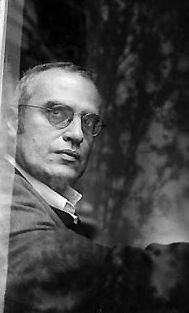
Max Blumenthal writes: In a small courtroom on the sixth floor of Haifa’s District Court, a colonel in the Israeli engineering corps who wrote a manual for the bulldozer units that razed the Rafah Refugee Camp in 2003 offered his opinion on the killing of the American activist Rachel Corrie.
“There are no civilians during wartime,” Yossi declared under oath.
Yossi made his remarkable statement under withering cross-examination by Hussein Abu Hussein, the lawyer for Corrie’s family, who was crushed to death by an Israeli bulldozer in Rafah on 17 March 2003. Rachel’s parents, Craig and Cindy, and her sister, Sarah, stood in the back of the courtroom to witness the 2010 proceedings. This marked their second visit for the second round of hearings in their civil suit against the state of Israel. Yesterday, an Israeli court issued its final judgment and exculpated the Israeli soldier who drove the bulldozer, the Army, and the State for all blame. Instead, the court held that Rachel bore responsibility for her own death for failing to move out of the bulldozer’s way.
In the immediate wake of Corrie’s killing, Colonel Lawrence Wilkerson, then the chief of staff to Secretary of State Colin Powell, instructed Corrie’s parents to demand a “thorough, fair and transparent investigation” from the Israeli government. Since then, the Israelis have stonewalled them, refusing to provide key details of their investigation, which was corrupted from the start by the investigators’ apparent attempts to find evidence that a bulldozer did not in fact kill Rachel. [Continue reading…]
Author Archives: News Sources
Greed and debt: The true story of Mitt Romney and Bain Capital
Matt Taibbi writes: The great criticism of Mitt Romney, from both sides of the aisle, has always been that he doesn’t stand for anything. He’s a flip-flopper, they say, a lightweight, a cardboard opportunist who’ll say anything to get elected.
The critics couldn’t be more wrong. Mitt Romney is no tissue-paper man. He’s closer to being a revolutionary, a backward-world version of Che or Trotsky, with tweezed nostrils instead of a beard, a half-Windsor instead of a leather jerkin. His legendary flip-flops aren’t the lies of a bumbling opportunist – they’re the confident prevarications of a man untroubled by misleading the nonbeliever in pursuit of a single, all-consuming goal. Romney has a vision, and he’s trying for something big: We’ve just been too slow to sort out what it is, just as we’ve been slow to grasp the roots of the radical economic changes that have swept the country in the last generation.
The incredible untold story of the 2012 election so far is that Romney’s run has been a shimmering pearl of perfect political hypocrisy, which he’s somehow managed to keep hidden, even with thousands of cameras following his every move. And the drama of this rhetorical high-wire act was ratcheted up even further when Romney chose his running mate, Rep. Paul Ryan of Wisconsin – like himself, a self-righteously anal, thin-lipped, Whitest Kids U Know penny pincher who’d be honored to tell Oliver Twist there’s no more soup left. By selecting Ryan, Romney, the hard-charging, chameleonic champion of a disgraced-yet-defiant Wall Street, officially succeeded in moving the battle lines in the 2012 presidential race.
Like John McCain four years before, Romney desperately needed a vice-presidential pick that would change the game. But where McCain bet on a combustive mix of clueless novelty and suburban sexual tension named Sarah Palin, Romney bet on an idea. He said as much when he unveiled his choice of Ryan, the author of a hair-raising budget-cutting plan best known for its willingness to slash the sacred cows of Medicare and Medicaid. “Paul Ryan has become an intellectual leader of the Republican Party,” Romney told frenzied Republican supporters in Norfolk, Virginia, standing before the reliably jingoistic backdrop of a floating warship. “He understands the fiscal challenges facing America: our exploding deficits and crushing debt.”
Debt, debt, debt. If the Republican Party had a James Carville, this is what he would have said to win Mitt over, in whatever late-night war room session led to the Ryan pick: “It’s the debt, stupid.” This is the way to defeat Barack Obama: to recast the race as a jeremiad against debt, something just about everybody who’s ever gotten a bill in the mail hates on a primal level.
Last May, in a much-touted speech in Iowa, Romney used language that was literally inflammatory to describe America’s federal borrowing. “A prairie fire of debt is sweeping across Iowa and our nation,” he declared. “Every day we fail to act, that fire gets closer to the homes and children we love.” Our collective debt is no ordinary problem: According to Mitt, it’s going to burn our children alive.
And this is where we get to the hypocrisy at the heart of Mitt Romney. Everyone knows that he is fantastically rich, having scored great success, the legend goes, as a “turnaround specialist,” a shrewd financial operator who revived moribund companies as a high-priced consultant for a storied Wall Street private equity firm. But what most voters don’t know is the way Mitt Romney actually made his fortune: by borrowing vast sums of money that other people were forced to pay back. This is the plain, stark reality that has somehow eluded America’s top political journalists for two consecutive presidential campaigns: Mitt Romney is one of the greatest and most irresponsible debt creators of all time. In the past few decades, in fact, Romney has piled more debt onto more unsuspecting companies, written more gigantic checks that other people have to cover, than perhaps all but a handful of people on planet Earth. [Continue reading…]
Donors invest millions in Romney for billions in returns
Bloomberg reports: Wealthy donors and corporations are more heavily invested in this presidential election than at any time since the 1972 Watergate scandal led to stricter campaign- finance laws.
A series of court decisions and regulatory changes in 2010 unraveled federal limits on donations, paving the way for a return of the big players. They are pooling their money in nonprofits, which keep contributor names secret, and super- political action committees, which amassed $350 million through the end of July.
One-quarter of that money comes from just 10 donors, led by Las Vegas casino billionaire Sheldon Adelson, according to data from the Center for Responsive Politics, a Washington-based group that tracks such spending.
Top Republican contributors say they back the party’s presidential candidate Mitt Romney because they agree with his small-government philosophy or oppose President Barack Obama’s new regulations on banks and the health-care industry.
Yet Romney is more than just a political kindred spirit; he’s a sound investment. Here’s how a Romney presidency might pay off — literally — for some of these super-donors. [Continue reading…]
The disposable pawns of the American criminal-justice system
Sarah Stillman reports: On the evening of May 7, 2008, a twenty-three-year-old woman named Rachel Hoffman got into her silver Volvo sedan, put on calming jam-band music, and headed north to a public park in Tallahassee, Florida. A recent graduate of Florida State, she was dressed to blend into a crowd—bluejeans, green-and-white patterned T-shirt, black Reef flip-flops. On the passenger seat beside her was a handbag that contained thirteen thousand dollars in marked bills.
Before she reached the Georgia-peach stands and Tupelo-honey venders on North Meridian Road, she texted her boyfriend. “I just got wired up,” she wrote at 6:34 P.M. “Wish me luck I’m on my way.”
“Good luck babe!” he replied. “Call me and let me know what’s up.”
“It’s about to go down,” she texted back.
Behind the park’s oaks and blooming crape myrtles, the sun was beginning to set. Young mothers were pushing strollers near the baseball diamonds; kids were running amok on the playground. As Hoffman spoke on her iPhone to the man she was on her way to meet, her voice was filtered through a wire that was hidden in her purse. “I’m pulling into the park with the tennis courts now,” she said, sounding casual.
Perhaps what put her at ease was the knowledge that nineteen law-enforcement agents were tracking her every move, and that a Drug Enforcement Administration surveillance plane was circling overhead. In any case, Rachel Hoffman, a tall, wide-eyed redhead, was by nature laid-back and trusting. She was not a trained narcotics operative. On her Facebook page you could see her dancing at music festivals with a big, goofy smile, and the faux profile she’d made for her cat (“Favorite music: cat stevens, straycat blues, pussycat dolls”).
A few weeks earlier, police officers had arrived at her apartment after someone complained about the smell of marijuana and voiced suspicion that she was selling drugs. When they asked if she had any illegal substances inside, Hoffman said yes and allowed them in to search. The cops seized slightly more than five ounces of pot and several Ecstasy and Valium pills, tucked beneath the cushions of her couch. Hoffman could face serious prison time for felony charges, including “possession of cannabis with intent to sell” and “maintaining a drug house.” The officer in charge, a sandy-haired vice cop named Ryan Pender, told her that she might be able to help herself if she provided “substantial assistance” to the city’s narcotics team. She believed that any charges against her could be reduced, or even dropped.
Hoffman’s legal worries were augmented by the fact that this wasn’t her first drug offense. A year earlier, while she was a senior, police pulled her over for speeding and found almost an ounce of marijuana in her car. She was ordered into a substance-abuse program, which required regular drug testing. Later, after failing to report for a test, she spent three days in jail.
Hoffman chose to coöperate. She had never fired a gun or handled a significant stash of hard drugs. Now she was on her way to conduct a major undercover deal for the Tallahassee Police Department, meeting two convicted felons alone in her car to buy two and a half ounces of cocaine, fifteen hundred Ecstasy pills, and a semi-automatic handgun.
The operation did not go as intended. By the end of the hour, police lost track of her and her car. Late that night, they arrived at her boyfriend’s town house and asked him if Hoffman was inside. They wanted to know if she might have run off with the money. Her boyfriend didn’t know where she was.
“She was with us,” he recalled an officer saying. “Until shit got crazy.”
Two days after Hoffman disappeared, her body was found in Perry, Florida, a small town some fifty miles southeast of Tallahassee, in a ravine overgrown with tangled vines. Draped in an improvised shroud made from her Grateful Dead sweatshirt and an orange-and-purple sleeping bag, Hoffman had been shot five times in the chest and head with the gun that the police had sent her to buy.
By the evening of her death, Rachel Hoffman had been working for the police department for almost three weeks. In bureaucratic terms, she was Confidential Informant No. 1129, or C.I. Hoffman. In legal parlance, she was a “coöperator,” one of thousands of people who, each year, help the police build cases against others, often in exchange for a promise of leniency in the criminal-justice system.
Informants are the foot soldiers in the government’s war on drugs. By some estimates, up to eighty per cent of all drug cases in America involve them, often in active roles like Hoffman’s. [Continue reading…]

Envisioning a post-Assad Syria as civil war grinds on
The Los Angeles Times reports: On Tuesday, the United States Institute of Peace issued “The Day After” plan for a post-Assad Syria. The 133-page statement of goals and principles for a new Syria was six months in the making. It was produced by 45 Syrian opposition figures brought together by the State Department-funded institute’s Middle East experts and partners from the German Institute for International and Security Affairs. It is long on institution-building wonk-speak and short on how the opposition is supposed to get to the post-Assad era. But analysts hailed it as a worthy undertaking even as government and rebel forces are mired in protracted battles to control key areas of Damascus and Aleppo.
No representatives of the Free Syrian Army fighting the regime were party to the post-Assad project, said Steven Heydemann, a senior advisor on Middle East initiatives who coordinated the talks among Syrian exiles, defectors and regime opponents who managed to travel abroad or participate via video linkup.
“The group very sensibly recognized there was no way to anticipate how the transition would happen,” instead focusing on identifying the challenges that would confront the next leadership whether Assad flees, negotiates an exit or is deposed in a palace coup, Heydemann said. However the Assad dynasty ends, he noted, Syrians will have to grapple with divisive questions on how to treat those accused of war crimes, deter revenge killings and get the economy and social services back in working order.
While the United States is holding firm to its policy of providing only nonlethal aid to the rebels, Heydemann said, Washington could play a more effective role in coordinating other outside support. He pointed to the mounting incidents of Islamic extremists waging strikes against the Assad regime for their own purposes and weaponry coming in from autocratic supporters like Qatar and Saudi Arabia as giving “a Wild West quality” to help for the underdog rebels.
“The United States is very concerned that support from outside for elements of the Syrian opposition not lead to strengthening of Al Qaeda or Islamic fundamentalist forces that becomes problematic in the postwar process,” said Charles Ries, a career diplomat heading Rand Corp.’s Center for Middle East Public Policy. “But our reluctance [to supply arms] has paradoxically caused the division of the Syrian opposition and has encouraged those Islamist elements to find their own sources of support and influence.”
The task eluding the United States and its allies is uniting the disparate opposition forces inside and outside Syria into a cohesive leadership that they can support and ratchet up the pressure on Assad, Ries said.
Bilal Y. Saab, a Syria expert at the Monterey Institute of International Studies, shares other analysts’ concerns that Islamic militants are filling the vacuum left by a hands-off U.S. policy toward the rebels. But it would be “ill-advised,” he said, for the United States to recognize a transitional government that isn’t broadly inclusive of the myriad ethnic, sectarian, religious and political factions in Syria.
Turkey to press for safe zone in Syria
The Associated Press reports: Turkey’s foreign minister said Wednesday he would press the United Nations Security Council to set up a safe haven inside Syria to protect thousands of people fleeing the violence there as his country is straining to shelter an increasing flow of refugees.
Turkey has long been floating the idea of a no-fly zone, or buffer zone, to protect displaced Syrians from attacks by President Bashar Assad’s forces, but the issue has become more pressing now the number of refugees in Turkey has exceeded 80,000 — an amount it says approaches its limits.
The refugee agency has said up to 200,000 refugees could eventually flee to Turkey.
“We expect the U.N. to step in and protect the refugees inside Syria, and if possible, to shelter them in camps there,” Foreign Minister Ahmet Davutoglu told reporters before leaving for New York to attend Thursday’s high-level U.N. Security Council meeting on Syria.
French essayist blames multi-culturalism for Breivik’s killing spree
Time magazine reports: Richard Millet is an accomplished figure in French literature. His le Sentiment du Langue (The Feeling of Language) won the Académie Française’s 1994 essay award. His work as an editor for celebrated publisher Gallimard, meanwhile, helped produce two recent Goncourt winners—including the 2006 novel les Bienveillantes (The Kindly Ones) by American author Jonathan Littell. Now, however, Millet is getting attention of an entirely different kind with a new work attacking immigration and multi-culturalism, and describing the acts of convicted Norwegian multi-murderer Anders Behring Breivik as “formal perfection…in their literary dimension.”Richard Millet
That bookish qualifier, says newsweekly l’Express in its critique of Millet’s new essay, Eloge Littéraire d’Anders Breivik (Literary Elegy of Anders Breivik), is a “gratuitous façade” for an otherwise “vindictive text” and thesis. Indeed, though Millet states he does not approve of Breivik’s murderous action July 22, 2011 that left 77 innocent people dead, he does write the slaughter was “without doubt what Norway deserved.” The reason? Norway, Millet contends, allowed immigration, multi-culturalism, and the domination of foreign customs, language, and religion to become such dominant influences that a self-designated defender of traditional society felt compelled to take decisive action.
“Multi-culturalism as it has been imported from the United States is the worst thing possible for Europe…and creates a mosaic of ghettoes in which the [host] nation no longer exists,” Millet told France Info radio Aug. 27. “Breivik, I believe, perceived that, and responded to that question with the most monstrous reply.”
Little wonder that such views — published just as Breivik was being sentenced Aug. 24 — have sparked controversy in France. As word of Millet’s writing spreads, so, too, may the objections it has inspired.
If so, that may only serve to reinforce Millet’s accusations that most of Europe — and indeed the West — is dominated by the same attitudes that motivated Breivik’s attack. Breivik, Millet writes, is “an exemplary product of Western decadence,” and a “child of the ideologico-racial fracture that extra-European immigration has introduced in Europe.” Because he sees the resulting “loss of national identity” and “Islamization of Europe” decaying “Christian roots” everywhere, Millet appears to believe acts similar to Breivik’s may be replicated outside Norway as well. [Continue reading…]
Syria refugee exodus raises pressure for buffer zone
Reuters reports: Syria’s refugee exodus is accelerating and up to 200,000 people could settle in Turkey alone if the conflict worsens, the United Nations warned on Tuesday, increasing pressure for creation of a buffer zone inside Syria.
Turkey has floated the idea of a “safe zone” to be set up for civilians under foreign protection as fighting has intensified in a 17-month-old uprising against President Bashar al-Assad.
Up to 5,000 refugees a day have been crossing into Turkey over the past two weeks while the pace of refugees arriving at a camp in northern Jordan has doubled, heralding what could be a much bigger movement there, the U.N. refugee agency said.
Although there is no sign divided world powers are ready to back a buffer and no-fly zone, as rebels and aid organizations would like, U.N. Security Council foreign ministers are expected to discuss the idea at a meeting on Thursday.
While Turkey could in theory create a buffer zone itself, it has said it is reluctant to go it alone.
Already hosting more than 80,000 refugees, Turkey has warned it could run out of space if the number goes above 100,000.
Israel indicts Jewish teenagers over attack on Palestinian in Jerusalem
Reuters reports: Nine Jewish teenagers were indicted on Tuesday over a ferocious assault that nearly killed a young Arab in Jerusalem, an alleged hate crime in a city divided by religion and politics.
Israeli prosecutors said a girl, cursing and shouting anti-Arab taunts, lit the spark that set off a chain reaction of racist violence on August 16 in which Jamal Julani, a 17-year-old Palestinian, was punched, kicked and left for dead.
Julani’s heart stopped after the assault in a main Jerusalem square, where drunken teenagers often gather, but was brought back to life by a paramedic at the scene.
“Death to Arabs,” the youngsters chanted as they swept through the popular nightspot, rallying to the girl’s call to find and attack Palestinians, according to a summary of the charge sheet released by the Justice Ministry.
“Be a man and come and beat the Arabs,” one of the attackers shouted to the crowd, the indictment said.
Eight of the suspects are minors in their teens. A ninth suspect, aged 19, will be tried as an adult. Charges include assault and incitement to racism and violence.
Lawyers for the accused said they would study the indictment before entering a plea. It was not clear when the cases would go to trial.
The attack, which laid bare an undercurrent of racial tension in Jerusalem, was swiftly condemned by Prime Minister Benjamin Netanyahu and other Israeli leaders.
“This is something we cannot accept – not as Jews, not as Israelis,” Netanyahu said of the assault, whose intensity, along with the lack of remorse shown by some of the suspects in court appearances, jolted many in the Jewish state.
“He’s an Arab, and he cursed my mother, so he should die,” one suspect said at a remand hearing last week.
Julani comes from mainly Arab east Jerusalem, which was captured by Israel in the 1967 war. The state later declared that the city was the “complete and undivided” capital of Israel, an assertion not recognized by international powers.
Adnan Husseini, the Palestinian minister for Jerusalem affairs, said Palestinians in the city faced a constant battle against racism.
“This widely publicized incident revealed the true face of Israel and the true culture of hatred that is imbedded in its youth,” he told Reuters.
Rachel Corrie lawsuit result ‘dangerous precedent’ say human rights groups
The Guardian reports: Human rights organisations have warned of a “dangerous precedent” following an Israeli court’s dismissal of a civil lawsuit over the death of US activist Rachel Corrie, which stated that Israel could not be held responsible because its army was engaged in a combat operation.
Corrie “was accidentally killed in the framework of a ‘war-related activity’ … [and] the state bears no responsibility for the damages inflicted on the plaintiffs resulting from a war-related action,” said Judge Oded Gershon at Haifa district court.
The 23-year-old activist was crushed by a military bulldozer which she believed was intent on demolishing a Palestinian home in Rafah, southern Gaza, in March 2003. Gershon ruled that it was a “regrettable accident” that Corrie had brought upon herself. There had been no fault in the internal Israeli military investigation, which cleared the bulldozer driver of any blame, the court found. “The deceased was in a blind spot – the operator didn’t see her,” said Gershon.
Corrie had “put herself in a dangerous situation” and could have saved herself by moving out of the zone of danger, he said. The area was “the site of daily warfare” and a closed military zone, and the US government had warned its citizens not to go there.
Hussein Abu Hussein, the Corrie family’s lawyer, said the ruling sent “a very dangerous message and precedent that there are no restrictions on Israeli military behaviour in Gaza and the West Bank”. The ruling would “close the doors of justice to civilian victims”, including foreigners, and “expand a legal black hole” in which Israel seeks to evade responsibility for its actions.
The verdict, he said, was “yet another example of where impunity has prevailed over accountability and fairness. We knew from the beginning that we had an uphill battle to get truthful answers and justice, but we are convinced that this verdict distorts the strong evidence presented in court, and contradicts fundamental principles of international law with regard to protection of human rights defenders. In denying justice in Rachel Corrie’s killing, this verdict speaks to the systemic failure to hold the Israeli military accountable for continuing violations of basic human rights.”
Human Rights Watch said the ruling contravened international law, which is intended to protect non-combatants in war zones, and set “a dangerous precedent”. “The idea that there can be no fault for killing civilians in a combat operation flatly contradicts Israel’s international legal obligations to spare civilians from harm during armed conflict and to credibly investigate and punish violations by its forces,” said Bill van Esveld, a senior Middle East researcher at HRW.
Shawan Jabarin, director of the Palestinian human rights organisation, Al Haq, said: “Israel has claimed that it is not responsible for the death of a civilian in armed conflict. However, this flatly ignores international law, which stipulates that Israel is under an obligation to take all measures to ensure that no civilians will be harmed during hostilities, and must at all times distinguish between military targets and civilians.
“The presence of a civilian in a combat zone does in any way not affect their right to protection. Instead, their protected status applies regardless of their location in a conflict, and international law clearly states that they must be protected against acts of violence in all circumstances.”
Amnesty International: Amnesty International condemns an Israeli court’s verdict that the government of Israel bears no responsibility in the death of Rachel Corrie, saying the verdict continues the pattern of impunity for Israeli military violations against civilians and human rights defenders in the Occupied Palestinian Territories (OPT). The verdict shields Israeli military personnel from accountability and ignores deep flaws in the Israeli military’s internal investigation of Corrie’s death.
“Rachel Corrie was a peaceful American protestor who was killed while attempting to protect a Palestinian home from the crushing force of an Israeli military bulldozer,” said Sanjeev Bery, Middle East and North Africa advocacy director for Amnesty International USA.
“More than nine years after Corrie’s death, the Israeli authorities still have not delivered on promises to conduct a ‘thorough, credible and transparent’ investigation. Instead, an Israeli court has upheld the flawed military investigation and issued a verdict that once again shields the Israeli military from any accountability,” Bery said.
The verdict, issued by Judge Oded Gershon in the Haifa District Court, maintains that the Israeli military is not responsible for ‘damages caused’ because the D9 Caterpillar bulldozer was engaged in a combat operation in Rafah in the southern Gaza Strip on March 16, 2003.
International humanitarian law prohibits the destruction of property unless required by imperative military necessity, and requires that in any military operation, constant care is taken to protect civilians.
“Rachel Corrie was clearly identifiable as a civilian, as she was wearing a fluorescent orange vest when she was killed,” said Bery. “She and other non-violent activists had been peacefully demonstrating against the demolitions for hours when the Israeli military bulldozer ran over her.”
By upholding the flawed Israeli military investigation, completed within one month of Rachel Corrie’s death in 2003, the verdict seems to have ignored substantial evidence presented to the court, including by eyewitnesses. The full military investigation has never been made public, but US government officials have stated that they do not believe the investigation was ‘thorough, credible and transparent.’
Amnesty International has made similar criticisms of Israel’s system of military investigations for many years. For example, the organization has monitored the investigations carried out by IDF commanders and the Israeli military police into violations during Operation ‘Cast Lead’, launched by Israeli forces on December 27, 2008, in which hundreds of unarmed civilians in the Gaza Strip were killed.
Israel’s military investigations have lacked independence, impartiality, transparency, appropriate expertise and sufficient investigatory powers. The failure of both Israel and the Hamas de facto administration to conduct credible investigations into violations committed during the conflict led Amnesty International to call for the Gaza situation to be referred to the International Criminal Court.
Palestinian civilians from the OPT are killed or injured by the Israeli military all too frequently, but they face significant barriers in accessing Israeli civil courts, which means that Israeli civil courts rarely examine the killings of civilians in the OPT, particularly those in Gaza. Steep court fees required of claimants before the case can begin are beyond the means of most Palestinians. As part of Israel’s continuing closure of the Gaza Strip, the Israeli authorities deny Palestinian victims or witnesses from Gaza permission to enter Israel to testify in court, lawyers from Gaza cannot represent clients before Israeli courts, and Israeli lawyers cannot enter Gaza to meet with clients.
Amnesty International has repeatedly condemned Israel’s policy of demolishing homes and other structures in the OPT, but demolitions are still routine in the occupied West Bank. Over 600 structures were demolished in 2011, resulting in the forcible eviction of almost 1,100 people. In the first seven months of 2012, the Israeli military demolished 327 structures in the West Bank, displacing 575 people, according to the UN Office for the Coordination of Humanitarian Affairs.
Rachel Corrie verdict exposes Israeli military mindset
Chris McGreal writes: Reporters covering Israel are routinely confronted with the question: why not call Hamas a terrorist organisation? It’s a fair point. How else to describe blowing up families on buses but terrorism?
But the difficulty lies in what then to call the Israeli army when it, too, at particular times and places, has used indiscriminate killing and terror as a means of breaking Palestinian civilians. One of those places was Rafah, in the southern tip of the Gaza strip, where Rachel Corrie was crushed by a military bulldozer nine years ago as she tried to stop the Israeli army going about its routine destruction of Palestinian homes.
An Israeli judge on Tuesday perpetuated the fiction that Corrie’s death was a terrible accident and upheld the results of the military’s own investigation, widely regarded as such a whitewash that even the US ambassador to Israel described it as neither thorough nor credible. Corrie’s parents may have failed in their attempt to see some justice for their daughter, but in their struggle they forced a court case that established that her death was not arbitrary but one of a pattern of killings as the Israeli army pursued a daily routine of attacks intended to terrorise the Palestinian population of southern Gaza into submission.
The case laid bare the state of the collective Israeli military mind, which cast the definition of enemies so widely that children walking down the street were legitimate targets if they crossed a red line that was invisible to everyone but the soldiers looking at it on their maps. The military gave itself a blanket protection by declaring southern Gaza a war zone, even though it was heavily populated by ordinary Palestinians, and set rules of engagement so broad that just about anyone was a target.
With that went virtual impunity for Israeli troops no matter who they killed or in what circumstances – an impunity reinforced by Tuesday’s verdict in Haifa. [Continue reading…]
Video: Have Obama and Romney forgotten Afghanistan?
Syria rebels dream of weapons to down aircraft
AFP reports: On the edge of the Saif al-Dawla district of Aleppo, a commander argues with a rebel. He has ordered him to try to take out a regime tank, alone and with a single rocket-propelled grenade.
“Just one is enough — you can take out the whole army,” the commander tells the reluctant fighter.
The scene is one repeated across the frontlines of the battle between the Free Syrian Army and the Syrian regime, as the rag-tag rebel forces try to take on tanks, helicopter gunships and fighter jets with armoury that is desperately lacking.
Rebel commanders say the weapons they do have — Kalashnikovs, some RPGs, a handful of anti-aircraft guns — are old and expensive while the weapons they need to take on the might of an army are impossible to come by.
“I flew MIG war planes for 12 years, and we are fighting these planes with Kalashnikovs, and not even good Kalashnikovs,” says Alaa Saadeddin, a defected pilot.
“Anti-aircraft guns are the heaviest weapon we have,” he adds. “We don’t have ground-to-ground rockets, we don’t have Grads, we don’t have surface-to-air missiles.”
When Abu Maryam decided to set up his own rebel brigade, he approached the Liwa al-Tawhid, a rebel umbrella group, to ask about the possibility of getting weapons.
“Liwa al-Tawhid gave us two Kalashnikovs, but we had to find a way to buy the rest. We have 22 men and 12 guns, so we will go in groups. The first group will take the guns, when they come back, they will give the guns to the second group.”
And the weapons that are available don’t come cheap — a Kalashnikov goes for 150,000 Syrian pounds, nearly $2,400, bullets start at $2 each, and a grenade will set you back over $150, according to commanders.
Syria’s rebels laugh at stories of Libyan fighters who regularly unloaded their weapons into the air to celebrate a victory on the battlefront.
“If any rebel in any group fires a single bullet in any direction other than at the enemy, they will be kicked out of the group,” Saadeddin said.
Western nations have said they are providing non-lethal aid, in the form of money or communications equipment to the rebels, and the opposition Syrian National Council says countries including Saudi Arabia and Qatar have provided arms to fighters inside the country.
But the weapons in evidence on the ground look as old as rebels claim they are — beaten-up guns and dusty RPGs that are a world away from the shiny new equipment that was in circulation on the Libyan battlefield.
How the Syrian revolution became militarized
Sharif Abdel Kouddous writes: Emad Khareeta says he had no choice but to defect. The 23-year-old member of the Free Syrian Army stands outside his family home in a deserted section of town. Shards of concrete and glass litter the ground, the result of nearby shelling. The street is dark and quiet, Emad’s face only discernible in the glow of his cigarette. He tells his story slowly.
In April 2010, Emad was called up for his mandatory army service. When the revolution broke out in March 2011, he was deployed to various parts of the country—but it was his time in Homs, where he was sent on December 31, 2011, that compelled him to leave his unit. Sometimes called the ‘capital of the revolution,’ the restive city in western Syria had been under siege by the regime of Bashar al-Assad since May and was the site of some of its bloodiest crackdowns. Emad describes indiscriminate killing and widespread looting by fellow soldiers, as well as an incident that deeply affected him, when an unarmed truck driver shot in the arm and legs was left to bleed to death in front of him. Ordered to fire on protesters at demonstrations, he says he aimed away.
“I was ready to die after what I had seen and been through,” he says. “I don’t want to oppress anyone.” He eventually bribed an officer 20,000 Syrian pounds (approximately $300) for a three-day vacation leave. On January 26, Emad left and never returned, making his way back home to Zabadani.
Emad is just one of thousands of army defectors who are switching sides in a conflict that began as a nonviolent popular uprising but has since spiraled into an increasingly bitter and polarizing civil war, one that has become a theater for geopolitical interests.
The armed opposition to the Assad regime first began to take form in the late summer of 2011, following months of mass demonstrations that were overwhelmingly nonviolent. Facing repeated crackdowns and mass detentions by security forces, protesters began to arm themselves, many by purchasing smuggled weapons from border countries like Lebanon, Iraq and Jordan. The revolt was further militarized by increasing numbers of army soldiers defecting to their local communities and bringing their weapons with them.
“They dragged us into arming ourselves,” says Malek al-Tinnawi, a 25-year-old FSA volunteer. He limps badly as he goes to retrieve a newly acquired assault rifle. Two months ago, he was shot through the ankle in clashes with the army. The local doctor inserted a metal rod in his leg to replace the shattered bone. “It’s a good one, isn’t it?” he smiles, brandishing the German-made H&K Model G3 rifle. “Not too used, almost like new.”
The rifle was brought to him on foot, through a mountainous smuggling route from Lebanon. Malek received it as a gift, along with two extra magazines and a chain of bullets, compliments of his fellow opposition fighters who gave it to him, he says, in acknowledgment of his role in being one of the first to demonstrate in Zabadani, and one of the first in the town to take up arms against the regime. Still, Malek says, he would have preferred for the revolution to have remained nonviolent. “When we were peaceful, we were stronger than when we had weapons,” he says, patting the gun in his lap.
“This revolt started out with very modest demands concerning the state of emergency, and it has been dealt with since then as a war of the security state against its people,” says Fawwaz Traboulsi, a Beirut-based historian and columnist. “What should be understood is that this militarization of the response to a vast popular movement ended up by militarizing the opposition.” [Continue reading…]
When Assad falls, Kurds in Syria say they’ll take back lands given to Arabs
David Enders reports: Sattam Sheikhmous still farms wheat on what’s left of his grandfather’s land, shrunk from more than 32,000 acres to less than 5,000 by the Syrian government in 1966.
“They said it was a socialist policy, but we believe it was political,” said Sheikhmous, now in his 60s, referring to the government confiscation of land that began when Syria joined with Egypt, then ruled by Gamal Abdel Nasser, to form the United Arab Republic in 1958.
The land confiscation took place across the country. But in the predominantly Kurdish province of Hasaka, in Syria’s northeast corner, the resettlement of Arabs from another part of the country in the 1970s created ethnic tensions that could manifest themselves violently when the Syrian government fully relinquishes control of the area, now seen by many as only a matter of time.
“We have to ask them to give us our land back. If they don’t, we have to do whatever we need to do,” said Sheikhmous. “It’s not just our land, it’s Kurdish land. If they don’t leave peacefully, we will use weapons.”
With Syria convulsed by a civil war that shows no signs of ending soon, the country’s Kurdish region, fast against Turkey and Iraq, is surprisingly peaceful, thanks to a maneuver by the government of President Bashar Assad, who first granted the Kurds greater rights last year, then surrendered security to a Kurdish militia this summer. While anti-Assad demonstrations still take place here, there is none of the kind of fighting that has convulsed other parts of Syria.
But the history of relations between Syria’s Kurdish and Arab ethnic groups suggests that peace may be short-lived, especially if Assad falls and a successor government clashes with Kurds over long-held grievances. The confiscated Kurdish areas contain both rich agricultural land and oil, and neither will be easy for Kurds to take control of. [Continue reading…]
‘I saw the whole beating, it’s a good thing that they beat the Arabs…’
The Institute for Middle East Understanding: Just days after a mob of Jewish Israelis beat and injured three Palestinian youth, one nearly to death, Israel’s Ynet news website conducted interviews in central Jerusalem’s Kikar Hahatulot [Cat Square], just a few hundred feet from the site of what was dubbed by Israeli police a “lynching.” The video is reminiscent of a controversial 2009 video made by Jewish-American journalist/author Max Blumenthal and American-Israeli journalist Joseph Dana titled “Feeling the hate in Jerusalem.”
IMEU also provides a translation of the transcript of the video.
Along with the Arctic ice, the rich world’s smugness will melt
George Monbiot writes: There are no comparisons to be made. This is not like war or plague or a stockmarket crash. We are ill-equipped, historically and psychologically, to understand it, which is one of the reasons why so many refuse to accept that it is happening.
What we are seeing, here and now, is the transformation of the atmospheric physics of this planet. Three weeks before the likely minimum, the melting of Arctic sea ice has already broken the record set in 2007. The daily rate of loss is now 50% higher than it was that year. The daily sense of loss – of the world we loved and knew – cannot be quantified so easily.
The Arctic has been warming roughly twice as quickly as the rest of the northern hemisphere. This is partly because climate breakdown there is self-perpetuating. As the ice melts, for example, exposing the darker sea beneath, heat that would previously have been reflected back into space is absorbed.
This great dissolution, of ice and certainties, is happening so much faster than most climate scientists predicted that one of them reports: “It feels as if everything I’ve learned has become obsolete.” In its last assessment, published in 2007, the Intergovernmental Panel on Climate Change noted that “in some projections, Arctic late-summer sea ice disappears almost entirely by the latter part of the 21st century”. These were the most extreme forecasts in the panel’s range. Some scientists now forecast that the disappearance of Arctic sea-ice in late summer could occur in this decade or the next.
As I’ve warned repeatedly, but to little effect, the IPCC’s assessments tend to be conservative. This is unsurprising when you see how many people have to approve them before they are published. There have been a few occasions – such as its estimate of the speed at which glaciers would be lost in the Himalayas – on which the panel has overstated the case. But it looks as if these will be greatly outnumbered by the occasions on which the panel has understated it. [Continue reading…]
Obama administration backs Shell in Supreme Court case
CorpWatch reports: The Obama administration is backing Shell Oil after abruptly changing sides in a landmark U.S. Supreme Court case that could make it even more difficult for survivors of human rights abuses overseas to sue multinational corporations in federal courts. The case will be heard on October 1.
Lawyers at EarthRights International, a Washington-based human rights law nonprofit, say they suspect that a new legal submission – which was signed only by the U.S. Justice Department – reflects tensions inside the government on how to deal with multinational corporations do business in the U.S. Significantly, neither the State nor the Commerce Department signed on to the brief, despite their key roles in the case.
“It was shocking,” Jonathan Kaufman EarthRights legal policy coordinator commented to Reuters. “The brief was largely unexpected, based on what they had filed previously, and pretty breathtaking.”
At issue is the Alien Torts Claim Act (ATCA) – an 18th century U.S. law originally designed to combat piracy on the high seas – that has been used during the last 30 years as a vehicle to bring international law violations cases to U.S. federal courts.
Lawyers began using ATCA as a tool in human rights litigation in 1979, when the family of 17-year-old Joel Filartiga, who was tortured and killed in Paraguay, sued the Paraguayan police chief responsible. Filartiga v. Peña-Irala set a precedent for U.S. federal courts to punish non-U.S. citizens for acts committed outside the U.S. that violate international law or treaties to which the U.S. is a party. ATCA has brought almost 100 cases of international (often state-sanctioned) torture, rape and murder to U.S. federal courts to date.
In recent years, a number of ATCA lawsuits have also been filed against multinationals which has angered the business lobby. [Continue reading…]