Ali Akbar Salehi, Iran’s foreign minister, writes: We humans often make the mistake of not learning from history, even when it is recent. Civil war in the Levant is not a thing of the distant past. With Syria descending into worsening violence, the 15-year Lebanese civil war should provide frightening lessons of what happens when the fabric of a society unravels.
When the Islamic Awakening — also known as the Arab Spring — began in December 2010, we all saw people rising up to claim their rights. We have witnessed the emergence of civic movements demanding freedom, democracy, dignity and self-determination.
We in Tehran have watched these developments with delight. After all, a civic movement demanding the same things that many Arabs want today is what led to the emergence of…
… the Green Movement and mass protests across Iran following presidential elections in June 2009 whose outcome appeared to have been rigged.
Even if the protests were eventually crushed, most of the movement’s leaders imprisoned and many tortured, the popular uprising which drew support from all quarters of Iranian society was at that time one of the most impressive demonstrations of people power that the region had ever experienced. While it’s influence might not often be cited in what has been labelled an ‘Arab’ spring, ordinary Iranians surely served as inspiring role models who made it clear that democracy is never a gift from enlightened or benign rulers — it is a demand which eventually cannot be refused.
Oh, and just to make it clear to readers who didn’t follow the link to the rest of Salehi’s commentary: he was not doing the political unthinkable for someone in his position — praising the 2009 protests; he was presenting the 1979 Islamic revolution as a precursor to the Arab Spring. That, in and of itself, does not reveal Iranian hypocrisy. It is in the following three sentences that Assad-backing Iran loses any credibility:
During the past three decades, Iran has consistently underlined that it is the duty of all governments to respect their people’s demands. We have maintained this position as the Islamic Awakening has unfolded, without any lopsided shifts depending on the location of these civic movements. We have been in favor of change to meet people’s demands, whether in Syria or Egypt or anywhere else.
Really? So has the only mistake made by Syrians been that they failed to rely on the appropriate channels for pressing their demands? Any what of the Iranian government’s duty to respect their own people’s demands?
What the last 30 years reveal is how easy it is for revolutionaries to turn into counter-revolutionaries.
Ian Black writes: Kofi Annan has just three weeks left to serve out his time as the UN envoy for Syria. Understandably disappointed at the failure of what others had called “mission impossible” – a description he came to agree with – he lamented two aspects of the crisis: its increasing militarisation and the disunity of the security council. Earlier, in a Guardian interview, he had deplored the “destructive competition” of the five big powers who still sit round the world’s “top table” on New York’s East river.
It bears repeating that Syria is first of all a human tragedy, with thousands of dead and many thousands more lives ruined in the bloodiest chapter of what in happier or more naive times and circumstances was called the Arab spring. Feelings are running high. For some, however, principled objections to western policy clearly weigh more heavily than the suffering of the Syrian people at the hands of a government that used deadly force from the moment protests erupted in Deraa in March 2011.
It is a moot point whether diplomacy could ever have succeeded in ending the carnage. Syria, it has been wisely observed, is where the Arab uprisings met the cold war and the Sunni-Shia divide. Regional and international rivalries worsened by the Libyan crisis last year, sectarian incitement and a fight to the death for regime survival all make for a toxic mixture.
For most elements of Syria’s fractured opposition, Assad’s acceptance of Annan’s six-point peace plan was only ever a way to buy time, exploit divisions and carry on killing. The regime barely observed a ceasefire that notionally began in April or implemented any of the plan’s other five conditions. The armed opposition accepted it but carried on fighting even as mass peaceful protests continued.
Yet the cartoon book claim that “the west” (conspiring with compliant Arabs) has malevolently blocked an agreement that a principled Russia tirelessly supported does not stand up to scrutiny. (Nor does the closely related and deeply patronising notion that Syrians who are prepared to risk all for freedoms others take for granted are mere puppets in the hands of others.) [Continue reading…]
To focus on Black’s last point, it’s worth underlining the blatant hypocrisy of those who acknowledge the legitimacy of armed resistance when the injustice being challenged is Zionism, yet view armed resistance to the Assad regime as inherently suspect.
Syrians supposedly have the right to peacefully demonstrate yet anyone who picks up a gun suddenly becomes an instrument of imperialism. Indeed, few with this twisted perspective will even acknowledge that it is possible for an individual to make the transition from marching to fighting without having been corrupted in the process. Moreover, protesters and fighters are very often referred to as though they are mutually exclusive categories. Most perplexing is when these anti-resistance voices are raised in the United States.
It makes me wonder: would the proponents of this anti-revolutionary view, had they been alive at that time, have raised similar objections to the American Revolution — that it lost its legitimacy when the revolutionaries took up arms and accepted support from imperial powers?
The Washington Post reports: Mitt Romney mistakenly confused the words “Sikh” and “sheik” at a fundraiser here Tuesday night when he offered his condolences to the victims of last weekend’s shooting at a Sikh temple in Wisconsin.
The presumptive Republican presidential nominee correctly spoke of the Sikh religion earlier in the day when he observed a moment of silence at a campaign event in Illinois. But at the Iowa fundraiser, he instead talked about the “sheik temple” and the “sheik people.” Sheik is an Arabic honorific, whereas Sikh is a religion with roots in South Asia.
Referencing his earlier event in the Chicago area, Romney said: “We had a moment of silence in honor of the people who lost their lives at that sheik temple. I noted that it was a tragedy for many, many reasons. Among them are the fact that people, the sheik people, are among the most peaceable and loving individuals you can imagine, as is their faith. And of course, the person who carried out this heinous act was a person motivated by racial hatred and religious intolerance.”
While referring to Sikhs as peace-loving people can be an appropriate way of saying that no one deserves to get slaughtered by a gun-wielding American bigot, there is without doubt an Islamophobic undercurrent in the ‘peace-loving’ meme that has permeated public discourse since the Wisconsin shootings. There’s a constant sub-audible whisper: they were Sikhs, not Muslims.
Whether among Sikhs or any other community of faith, there is no religious code observed so perfectly that peaceful religious tenets will always prevent individual acts of violence. India’s former prime minister, Indira Gandhi, was gunned down by her Sikh bodyguards in 1984. Multiple hijackings in India have been conducted by sword-wielding Sikhs.
Sikhs have always distinguished themselves as warriors. Among the officers and ranks of the Indian National Army that fought for independence against the British, 60% were Sikhs.
As a religious commandment, Sikhs are required to carry a sword or dagger called a kirpan which can be used to defend the defenseless. In just such an act of courage, Sadwant Singh Kaleka, the 65-year old head of the Sikh temple used his sword to confront Wade Michael Page before being gunned down himself.
Attempting to characterize the degree of innocence of Page’s targets is simply another way of turning attention away from looking at a much more challenging issue: why violence is so deeply woven into the American way of life.
For some of those of us who grew up taking the inclusive, pluralistic, internationalist, and egalitarian values of the Left for granted, it’s hard to fathom that bigotry fueled by post 9/11 fear-mongering would not only have empowered men like Wade Michael Page, but that it would have also fostered the development of the Left’s own peace-loving, anti-imperialist Islamophobes.
Fear of Islam might seem subtler on the Left than the Right yet it has the crudeness of any other form of bigotry in the ease with which people can be stereotyped and dehumanized. If a man with a beard has a gun and can be heard shouting “Allahu Akbar,” then it goes without question — so the thinking goes — he must be a terrorist.
No doubt those who might feel like I’m pointing an accusatory finger at them will now feel duly outraged. But look around your ranks. Look at the comment threads where you find yourself among the like-minded. Are there many or any Muslims? Are there many or any Syrians or Libyans? I know you are convinced you know exactly what is going on inside each of those countries, but do you ever pause to consider why your views are not being articulated and amplified even more forcefully by the very people you presume to speak for?
Louis Proyect writes about the issue of Islamophobia on the Left and does so while employing a delicious amount of irony. I post his observations here, not in the hope of provoking debate with those who will now feel under attack. I have engaged in enough of those debates myself and found them to be fruitless. No matter how varied and nuanced the input might be, ideological robots have the irksome habit of endlessly repeating the same talking points.
What’s the point of trying to speak with those who cannot hear?
There are others however, who might find this exploration useful, having already observed a strange contradiction evident among some in their midst who one minute are champions of the revolutionary Occupy Movement and yet the next display transparently counter-revolutionary tendencies when it comes Libya and Syria, and whose views are colored by a measured skepticism about the Arab Spring in general.
In his brilliant analysis of leftist hostility to the revolutions in Libya and Syria titled Blanket Thinkers, Robin Yassin-Kassab described the way that the Syrian rebels are viewed in those quarters:
They are also depicted as wild Muslims, bearded and hijabbed, who do not deserve democracy or rights because they are too backward to use them properly. Give them democracy and they’ll vote for the Muslim Brotherhood, and slaughter the Alawis and drive the Christians to Beirut.
Exactly.
This has been on my radar screen ever since the struggle against Qaddafi got off the ground, but Yassin-Kassab’s article persuaded me to investigate a bit further. Basically what seems to be taking place is a hatred for Islamism that is reminiscent of what we heard from Christopher Hitchens and Paul Berman during the heights of the war in Iraq, but deployed on behalf of an “anti-imperialist” narrative.
Perhaps the most prominent exponent of left Islamophobia is Asia Times’s Pepe Escobar. In an article on Libya titled How al-Qaeda got to rule in Tripoli, Abdelhakim Belhaj became an object of hate:
Abdelhakim Belhaj, aka Abu Abdallah al-Sadek, is a Libyan jihadi. Born in May 1966, he honed his skills with the mujahideen in the 1980s anti-Soviet jihad in Afghanistan.
He’s the founder of the Libyan Islamic Fighting Group (LIFG) and its de facto emir – with Khaled Chrif and Sami Saadi as his deputies. After the Taliban took power in Kabul in 1996, the LIFG kept two training camps in Afghanistan; one of them, 30 kilometers north of Kabul – run by Abu Yahya – was strictly for al-Qaeda-linked jihadis.
After 9/11, Belhaj moved to Pakistan and also to Iraq, where he befriended none other than ultra-nasty Abu Musab al-Zarqawi – all this before al-Qaeda in Iraq pledged its allegiance to Osama bin Laden and Ayman al-Zawahiri and turbo-charged its gruesome practices.
(For what it is worth, Escobar’s article contains an ad for the Central Intelligence Agency. Talk about crowning ironies.)
Escobar adds that “In Iraq, Libyans happened to be the largest foreign Sunni jihadi contingent, only losing to the Saudis.” Well, how despicable, Libyans going to Iraq to fight against the American occupation. He also considers Belhaj a rather shifty sort, “not remotely interested in relinquishing control just to please NATO’s whims.” What an ingrate.
Not long after the overthrow of Qaddafi, left Islamophobes held up a magnifying glass to detect any evidence of Jihadist influence in the new Libya. Last November word went out that the al-Qaeda flag was flying over the Benghazi courthouse. Not surprisingly, this became a cause celebre for the rightwing but the vanguard of the “anti-imperialist” left got just as worked up. Voltairenet.org, a website devoted to 9/11 conspiracy-mongering and the defense of Qaddafi and al-Assad, alerted its readers through an article that included a graphic of the flag:
Mustafa Abdul Jalil, the former Justice Minister of the Libyan Arab Jamahiriya who became chairman of the National Transitional Council, announced the rebels’ intention to turn Libya into an Islamic state and implement Sharia as the only law.
For some odd reason, the Libyan people were never clued in that they were about to willingly accept such a state of affairs. As it turned out, the vote for the Libyan branch of the Muslim Brotherhood was a paltry 130,000 nationally, just 21.3%. Today’sAustralian explained the low total:
But another reason for the strong “liberal” turnout is the “blood” factor. “I am not giving my family’s votes to the MB. Two of my cousins died because of them,” Mohamed Abdul Hakim, a voter from Benghazi, told me. He agrees that Islam should be the source for legislation, and his wife wears a niqab. Nonetheless, he voted liberal: his cousins were killed in a confrontation in the 1990s, most likely between the Martyrs Movement (a small jihadist group operating in his neighborhood at the time) and Gaddafi’s forces.
But many average Libyans, including Hakim, do not distinguish between Islamist organisations and their histories. For them, all Islamists are “Ikhwan” (MB). The “stain” of direct involvement in armed action, coupled with fear of Taliban-like laws or a civil war like Algeria’s in the 1990′s harmed Islamists of all brands.
A third reason for the Islamists’ defeat had to do with their campaign rhetoric. “It is offensive to tell me that I have to vote for an Islamic party,” Jamila Marzouki, an Islamic studies graduate, told me. Marzouki voted liberal, despite believing that Islam should be the ultimate reference for Libyan laws. “In Libya, we are Muslims. They can’t take away my identity and claim that it’s only theirs.”
So much for Libya turning into a Taliban state.
Without skipping a beat, the dreadful Pepe Escobar now has Syria in his sights, using the same hackneyed analysis:
A Kalashnikov in Iraq, until recently, sold for US$100. Now it’s at least $1,000, and most probably $1,500 (those were the days when Sunnis joining the resistance in 2003 could buy a fake Kalashnikov made in Romenia [sic] for $20).
Destination of choice of the $1,500 Kalashnikov in 2012: Syria. Network: al-Qaeda in the Land of the Two Rivers, also known as AQI. Recipients: infiltrated jihadis operating side-by-side with the Free Syrian Army (FSA).
Also shuttling between Syria and Iraq is car bombing and suicide bombing, as in two recent bombings in the suburbs of Damascus and the suicide bombing last Friday in Aleppo.
Who would have thought that what the House of Saud wants in Syria – an Islamist regime – is exactly what al-Qaeda wants in Syria?
Christopher Hitchens couldn’t have put it better.
For left Islamophobes, the idea of a secular, nationalistic and populist Syria serves as a kind of rallying point in the same way that “existing socialism” in the USSR once was for a gullible left, whether or not either proposition was true.
The byline on the NBC News report below says Andrea Mitchell and Catherine Chomiak. I’ll assume Chomiak wrote it and Mitchell provided a veteran reporter’s oversight. “Now take care, we don’t want this to sound too much like Iraq. Make sure no one gets the idea that the US is planning an invasion and occupation.” I’m imagining Mitchell offered a tip like this, and that’s why, deep into the report a reference to the opposition comes out as “occupation.”
Besides planning for a major influx of additional refugees into neighboring states — a real likelihood that demands to be addressed by adequate planning and funding — the rest of this planning for a post-Assad Syria sounds like Washingtonian wishful thinking. An array of fine ideas and total lack of any practical means through which the U.S. might play an instrumental role in seeing they could be implemented. Don’t get me wrong. It’s not as though I’m suggesting that it would be good if the U.S. actually had such power, but this looks like an Obama-esque PR exercise — the application of one of the lessons-learned from Iraq: the necessity for a post-regime collapse plan. But it skips over that little detail: the U.S. has no presence inside Syria and thus very little ability to control what happens after the fall of Assad even if this time there is a plan. It’s the bureaucrat’s security blanket: have strong documentation and then when others ask, what went wrong?, you can say: But we did have a very good plan.
Perhaps the phrase that most accurately captures the substance of this effort came when a State Dept spokesman said: “that’s certainly where our feelings are.”
The U.S. knows what it wants Syria to end up looking like and it’s going to pray in earnest that this might happen.
But what more tangible and immediate outcome might there be from this last-minute planning? The creation of a website in English and Arabic? The drafting of a “Syria roadmap”? I’m sure that will prove indispensable.
At the same time, have no doubt that anti-imperialist conspiracy theorists will be jumping all over this: the imperial blueprint for a NATO-controlled Syria. Hot stuff!
The State Department and the Pentagon are jointly working on plans for a post-President Bashar al-Assad Syria, NBC News has learned.
They hope to avoid the kind of implosion they believe occurred because of a lack of planning for post-Saddam Iraq.
The Bush administration’s decision to disband Iraqi security forces, made shortly after the U.S.-led invasion in 2003, was a catalyst for the bloody civil war that followed.
Critics said that decision, made by senior Pentagon officials and announced by the head of the U.S. occupation authority at the time, Paul Bremer, set loose tens of thousands of armed, disaffected young men.
The U.S. is indicating to the Syrian army that it does not want it to dissolve and those not directly involved in atrocities could be part of a successor regime.
State Department Spokesman Patrick Ventrell said at a daily press briefing Monday:
“What we’re focused on and our concern is that as the opposition comes together with the remaining elements of the regime that don’t have blood on their hands, that they create an inclusive Syria where the rights of all Syrians are respected. And so that’s our focus and that’s what we’re directly communicating to the opposition, and that’s certainly where our feelings are.”
U.S. officials also hope that civil servants and other Assad holdovers will work with an interim government to avoid the kind of vacuum that led to widespread civil disorder, looting, and ultimately to civil war in Iraq.
Officials believe it is only a matter of time before Assad is gone, one way or another — although they can’t predict when.
Deputy Secretary of State William Burns, a veteran in Middle East affairs, is in charge of the planning.
An activist takes a photo of buildings damaged by what activists say is shelling by forces loyal to Syrian President Bashar al-Assad, in Talbeiseh, near Homs, on Monday.
He is assisted by U.S. Ambassador to Syria Robert Ford, who had returned to Washington after diplomatic operations in Damascus were suspended in February.
Last week, Ford talked with Syria opposition leaders in Cairo.
Burns’ schedule includes two White House meetings Tuesday, likely indicating more inter-agency planning on the Syria crisis.
Secretary of State Hillary Clinton, traveling in South Africa on Monday, announced a day earlier that she will add a stop in Turkey to her overseas trip for meetings with Prime Minister Recip Tayyip Erdogan on the Syria crisis.
Part of the U.S. planning includes Pentagon contingency plans for NATO and Syria’s neighbors to help provide transportation, food and medical supplies to a potential flood of refugees — well beyond the current numbers — in case there is a total collapse of the Syrian regime.
A key component of the post-Assad plan: pressing the occupation [sic] not to inflict reprisals against Assad loyalists after he goes.
“When we talk to the opposition we’re very clear … revenge or reprisals are totally unacceptable,” Ventrell said Monday.
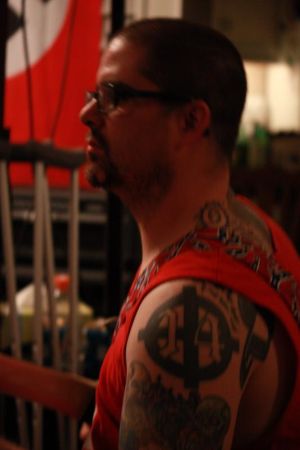
Wade Michael Page, vocalist and guitarist in the band 'End Apathy' and suspected gunman in the Sikh temple shooting. Note Page's Confederate flag design guitar-strap and the Nazi flag draped behind his band.
Is there much chance that America will own its latest mass murderer?
I doubt it.
When a white man picks up a gun and slaughters a bunch of fellow Americans, the most predictable feature of the subsequent process through which everyone else tries to come to terms with what happened is that it will be seen as an isolated event. We will look at it through the narrow prism of the personal history of the gunman and his idiosyncratic pathology and refuse to acknowledge that the killing might also have been shaped by some of the darker contours of the surrounding culture.
In the case of Wade Michael Page, the suspect in the Sikh temple shootings that took place in Wisconsin yesterday, there are already a few indications that this time some cultural context becomes inescapable.
The Southern Poverty Law Center has already pointed out some of the white supremacist connections that surely say a great deal about why Page chose his targets.
The man who allegedly murdered six people at a Sikh temple in suburban Milwaukee yesterday, identified in media reports as Wade Michael Page, was a frustrated neo-Nazi who had been the leader of a racist white-power band.
In 2010, Page, then the leader of the band End Apathy, gave an interview to the white supremacist website Label 56. He said that when he started the band in 2005, its name reflected his wish to “figure out how to end people’s apathetic ways” and start “moving forward.” “I was willing to point out some of my faults on how I was holding myself back,” Page said. Later, he added, “The inspiration was based on frustration that we have the potential to accomplish so much more as individuals and a society in whole.” He did not discuss violence in the interview.
Page told the website that he had been a part of the white power music scene since 2000, when he left his native Colorado on a motorcycle. He attended white power concerts in Georgia, North Carolina, West Virginia and Colorado. At various times, he said, he also played in the hate rock bands Youngland (2001-2003), Celtic Warrior, Radikahl, Max Resist, Intimidation One, Aggressive Force and Blue Eyed Devils. End Apathy, he said, included “Brent” on bass and “Ozzie” on drums; the men were former members of Definite Hate and another band, 13 Knots.
In 2000, the Southern Poverty Law Center has found that Page also attempted to purchase goods from the neo-Nazi National Alliance, then America’s most important hate group.
The fact that many (most?) Americans are too ignorant to know the difference between a Sikh and a Muslim is reason, some observers infer, to think that Page wrongly believed the people he was killing were Muslims. But given the other indications of his racist xenophobia, it seems quite likely that Page bore equal animosity towards everyone who in his eyes did not look like an ‘American.’
If American xenophobia does not frequently express itself through mass murder on American soil, the tentacles of racism — particularly fear and hatred of Muslims — nevertheless spread far and wide.
Pastor John Hagee, Pastor Terry Jones, Robert Spencer, Pamela Geller, Sam Harris, Frank Gafney, David Yerushalmi, Daniel Pipes, Steven Emerson, Geert Wilders, Michael Savage — all would no doubt disavow Page’s action, yet they share a kind of spiritual kinship. At one end of the spectrum are those who can apply varying degrees of intellectual sophistication to soften the edges of their fear of Islam and to dampen the flames of hatred with what appears like cool rationality. Yet the underlying message they promote is that Islam is a pathogen and individual Muslims are infecting America.
Once in a while this message gets translated into physical action as individuals such as Wade Michael Page take it upon themselves to engage in a barbaric act of ‘cultural defense.’ And at such moments all attention turns to the brutality on display while very little goes to the tendrils of the mycelium through which the fungus of hatred permeates this society.
Where pluralism has demanded that Americans broaden their knowledge of the world, instead political correctness has provided effective tools through which hatred can be kept alive, yet largely out of sight.
American racists have found it much easier to change the way they talk than change the way they think. And while Page most likely, in his actions, speaks for far too many, unlike him, most of them will continue to harbor their hatred in silence.
President Bashar al-Assad on Monday issued Decree No 294 on dismissing Prime Minister Riyad Hijab from his post.
The President issued Decree No. 295 on designating Eng. Omar Galawanji as a caretaker premier.
Each time there is a major defection and a new crack opens in the crumbling Assad regime, we witness the same chirade: the defector flees, then gets fired. The sad thing is that as farcical as this might look from outside Syria, Assad is probably correct in believing that a segment of the population believe the lies they continue being fed.
BBC News reports: Syrian Prime Minister Riad Hijab has defected from President Bashar al-Assad’s government to join “the revolution”, his spokesman says.
Mr Hijab was appointed less than two months ago and his departure is the highest-profile defection since the uprising began in March 2011.
His family is reported to have fled Syria with him.
Riad Hijab is a Sunni Muslim from the Deir al-Zour area of eastern Syria which has been caught up in the revolt.
His spokesman Mohammed el-Etri told al-Jazeera TV that he was in a safe location.
“I announce today my defection from the killing and terrorist regime and I announce that I have joined the ranks of the freedom and dignity revolution,” ran the statement read by his spokesman.
Mr Hijab is the first cabinet minister to defect. The BBC’s Dale Gavlak in Jordan says the development underscores the cracks in the regime which are reaching beyond military ranks.
Unconfirmed reports suggested that two other cabinet ministers had also deserted and there were claims that a third, Finance Minister Mohammad Jalilati, had been arrested while trying to flee.
But Syrian state TV said he was still in his office working as usual, and it broadcast what it said was a phone interview with Mr Jalilati categorically denying reports that he had been detained.
I imagine a phone interview was all he could give. There’d be no point having him appear on TV reading a statement while a revolver’s pointed at his head.
Reuters adds: A senior Syrian intelligence officer has defected to Jordan, Al Arabiya television reported on Sunday.
It said Colonel Yarub Shara was head of the Damascus branch of Political Security, an intelligence organization responsible for monitoring and suppressing dissent.
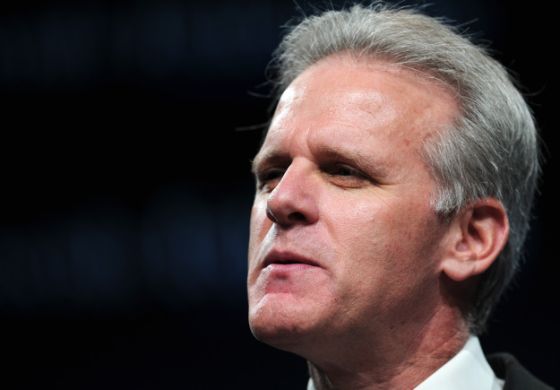
Michael Oren with lips pursed. Something's rolling around on his tongue. Did he just cough up some phlegm or come up with his latest lie?
I know it’s one of the most worn-out jokes in existence but never more true than when applied to Israel’s ambassador to the US. How can you tell when Michael Oren is lying? You can see his lips move.
Israel’s ambassador to the U.S Michael Oren, who is no stranger to gaffes, provided yet another strange headline on Sunday. Only hours after the attack on the Kerem Shalom crossing, before the fog of war had time to dissipate, the ambassador announced on his Twitter account that Iran was behind the assault.
“Iranian backed terrorists again struck at our Southern border today killing 15 Egyptian guards and attempting to massacre Israeli civilians,” Oren wrote in a Twitter post. On his Facebook page he wrote that “terrorists also shelled Israeli farms and towns along the border… the thwarted attack underscores the length to which the extremist regime in Iran will attempt to kill innocent Israelis.”
It is unclear what prompted Oren to release these statements, as it is clear he was in no possession of evidence linking Iran to the attack. Just how unfounded these allegations are was further underscored by a briefing given Monday morning by Defense Minister Ehud Barak at the Knesset Foreign Affairs and Defense Committee. In the briefing, Barak said the insurgents were operatives in an organization affiliated with Al-Qaida, “apparently some kind of global Jihad, with unclear connections.”
Oren’s gaffe brings to mind a statement made last month by his boss, Prime Minister Benjamin Netanyahu – shortly after the terror attack in Burgas, Bulgaria. While it was still unclear whether the attack was carried out by a suicide bomber or caused by hidden explosives, Netanyahu wasted no time in pointing a finger at Iran. A day later Netanyahu corrected himself, saying Hezbollah was behind the attack. It is worth noting, however, that two weeks after the Bulgaria attack, Israeli, Bulgarian and U.S. officials are still searching for a lead on the identity of the perpetrator.
Like Netanyahu, Oren’s statements on Twitter and Facebook are part of an Israeli propaganda campaign aimed at smearing Iran’s image. Yet like everything in life – it is all about dosage. Sometimes the urge to galvanize the world against the Iranians can lead to nothing more than baseless exaggerations.
Colum Lynch writes: The resignation of Kofi Annan as the U.N.-Arab League joint envoy to Syria on Aug. 2 effectively marks the end of U.N.-led diplomatic efforts to persuade President Bashar al-Assad to leave office peacefully, setting the stage for a new and deadlier phase of the Syrian crisis and heightening pressure on the United States and its allies to now step up military support for an armed opposition movement that they don’t know well or entirely trust. But it also raises questions as to what extent the United States ever believed the peace process would succeed and whether it misplayed its hand in attempting to convince Syria’s longstanding Russian ally to back a cessation of violence and Assad’s removal from power. In explaining his refusal to approve a Chapter VII resolution threatening sanctions against Syria and opening the door to additional unspecified measures, President Vladimir Putin told Annan in a closed-door meeting in Moscow: “We have been bitten by the West before, and we won’t let it happen again,” according to an account by a diplomat present at the meeting.
From the earliest stages of the Syrian uprising, the Obama administration harbored reservations about the wisdom of confronting Russia at the U.N., anticipating that Moscow would block any meaningful action to pressure Assad. But with little stomach for intervening militarily in Syria, the administration ultimately backed a European- and Arab-led drive to pursue Assad’s negotiated departure through the United Nations while publicly denouncing Russia for protecting a dictator. Some observers charge, however, that the U.N. strategy ultimately provided diplomatic cover for an administration in Washington that feared getting embroiled in another Middle Eastern war.
“Washington’s primary goal has been to avoid getting dragged into a military operation in Syria,” said Richard Gowan, an analyst at New York University’s Center for International Cooperation. “And to some extent the high-profile diplomatic clashes with the Russians let the Americans look tough and active but without them actually having to invest militarily. In a sense, the angry diplomacy of the Security Council has been an alibi for military inaction in Syria.”
Indeed, the Obama administration has been widely criticized for proceeding too cautiously in its response to the Arab Spring, and even today it continues to resist calls to arm the opposition, limiting its support to humanitarian assistance, communications equipment, and intelligence, much of it channeled through Jordanian and Turkish agents. Earlier this year, President Barack Obama signed a “finding” authorizing the CIA to provide indirect military support for the rebels, but the administration has refused to provide lethal assistance, according to news reports this week.
It has been almost a year since Obama first called on Assad to “step aside,” proclaiming “the future of Syria must be determined by its people.” But his strategy for dislodging the Syrian leader — which hinged in large part on a U.N. diplomatic effort to push Assad out voluntarily — finally ran aground in the Security Council last month, leaving Assad clinging to power and raising the prospect that Syria’s fate will be settled on the battlefield. How did we get to this point?
The story begins not in Syria, where protests broke out in earnest in March 2011, but in Benghazi, Libya, where the late Libyan leader Muammar al-Qaddafi, was poised to deliver a decisive blow to the insurgency, raising fear among Arab and Western governments that thousands of civilians could be slaughtered in the process. “We are coming tonight,” Qaddafi warned on state television as his forces prepared for their final assault. Buoyed by a call for action from Libya’s own diplomats, the United States and its European and Arab allies drove through a resolution that granted NATO sweeping powers to protect civilians from imminent threat of violence. Confronted with support from the Arab League and the African Union, China and Russia grudgingly allowed the resolution to pass, casting abstentions along with Brazil, Germany, and India. But Russia and other critics reacted angrily after NATO and a handful of Arab countries entered the conflict on behalf of the rebels, targeting the Qaddafi family’s homes from the air, while providing intelligence – and, in some cases — arms to the insurgents. Even South Africa, which had voted in favor of the resolution, complained that NATO had overreached.
The dispute would poison the atmosphere in the Security Council just at a time when it was seeking to forge an agreed response to the violence in Syria. Libya “did create some bad blood” which has spilled over into the deliberations on Syria, Russia’s U.N. envoy Vitaly Churkin told me back in January. “The worst way to achieve [your] goal in the Security Council is to mislead and manipulate…. We are going to have a tougher look at all of the sort of draft resolutions we are considering in the Security Council because we have to take now into account the scope of misinterpretation.” [Continue reading…]
The idea that Russia was misled and manipulated into allowing a NATO intervention in Libya which, had they foreseen the manner of its implementation, they would have opposed, is a narrative that has been widely accepted. The Russians were tricked but they are not going to let that happen again. This is a line that has been swallowed whole by most of the opponents of the intervention in Libya.
The problem is, if the Russians truly were misled, then why didn’t they vote in favor of UN Resolution 1973? In fact, they were unwilling to support the resolution and merely refrained from exercising their veto power. The fact that they and China abstained suggests that their primary concern was to avoid the diplomatic repercussions of being seen in the eyes of the world as having allowed Gaddafi to conduct an unrestrained assault on Benghazi.
Then as now, Russia is no different from any other country in pursuing what it sees as its own interests. The idea that Russia has become the champion of sovereignty and serves as a healthy restraint on US manipulation of the UN should be treated with just as much skepticism as America’s claim that it is a champion of democracy.
As has been widely reported, a Reuters blog was hacked yesterday and bogus articles were posted claiming that rebel forces had withdrawn from Aleppo.
What observations can we make about the hacking?
Firstly, the hackers have no sympathies with the Free Syrian Army since the reporting clearly had the potential (even if not the actual effect) of sowing confusion among the scattered units of fighters operating inside Aleppo who might have heard rumors that a withdrawal was underway.
Secondly, even if an isolated report which conflicted with most of the other coverage would have been received with due skepticism by most observers, a few suckers would be quick to swallow the bait. Enter, Moon of Alabama.
After reading that rebel forces “have fallen” in key districts of Aleppo, Bernhard at MoA said with apparent satisfaction, “This is very much what I had expected.”
If the hacking incident is instructive in revealing security weaknesses in the Reuters site, it also says a lot about the media illiteracy of both the hackers and those who got duped.
Bernhard noted the name of the Reuters reporter — Jeffrey Goldfarb — and said that some of Goldfarb’s post “is really explosive.” What Bernhard appears to have failed to do was to glance to the right side of the page and read Goldfarb’s bio which begins: “Jeffrey Goldfarb writes about investment banking and the financial sector.”
So, the source of this explosive stuff is a financial reporter who covers revolutions in the Middle East during his lunch breaks? No, not surprisingly, Goldfarb’s real blog posts focus exclusively on business issue.
Bernhard’s explanation about how he got duped was that in being directed to the story he was relying on tweeters whose accounts he has been following for several weeks.
Sorry, but, I trusted those tweets, is a bit of a lame excuse.
That said, none of us is invulnerable to getting caught by false leads. Recently, I posted a report from the Times of Israel that falsely claimed that Iran’s president had made a speech in which he gloated over the recent coach bombing killing Israeli tourists in Bulgaria. However, the fact that I got duped had nothing to do with wishful thinking on my part. I was relieved that Nima Shirazi was quick to expose the lies in the original report.
To get a sense of how deep a hole Bernhard jumped into eagerly, here’s a snippet:
Reuters' Jeffrey Goldfarb has more and some of it is really explosive:
The chief leader of Syrian Free Army (FSA) has stated on Friday that the Syrian Free Army has tactically withdrawn from Aleppo province after severe clashes took place yesterday between the regular army and FSA.
[Riad] Al-Asaad confirmed on a phone call to Reuters that the regular army killed 1000 soldiers of Free Syrian Army and arrest around 1500.
That is quite a huge loss of the insurgencies personal.
He added that Syrian regular army carried out several airdrops on Friday early morning.
Those airdrops, probably parachuters by helicopter, will not have been in the city. I guess they have been between Aleppo and the Turkish border 30 miles north to cut of the supply and retreat route for the fighters in Aleppo.
Riad Al-Asaad said that the Syrian Free Army will withdraw from all Syrian cities due to the huge losses caused upon the soldiers, as well, the betrayals made by rebels, due to in-fighting amongst them, for money and positions. They are expected to re-coordinate in Turkish territory where they have set up secret bases under the close supervision with the Turkish government and the Israeli intelligence service.
One wonders how Turkey will now handle these insurgents. Will it try to build them up for another attack or will it finally stop supporting them? And to admit that Israeli(!) intelligence plays a key role here, some David Ignatius of the Washington Post had mentioned earlier, is quite a blow for the insurgents and their supporters moral.
To their credit, many of Moon of Alabama‘s commenters were quick to suspect that Reuters had been hacked, but even once this had been established, Bernhard seemed to think there might be some truth embedded in the hoax:
What did the hackers achieve?
The most interesting is the Scenario they put up. Not so much the insurgents loosing but the negotiations between Syrian, Saudi Arabia and Qatar. It smells like there is a whiff of truth in that.
And then one “Walter Wit Man” presents himself as either the most resolute conspiracy theorist or does a good job of posing as one:
It smells like a fake hack to me. b asked what it achieved.
Here’s what the fake hack achieved for the U.S./NATO/Israel:
1. Make the “regime” look bad for hacking the news. This adds to the other recent allegation of Syrian media fakery where the BBC and the Guardian had the story of the Syrian defector/former employee who is now a whistle blower. According to a RT story, the ‘whistle blower’ never actually worked there and only applied for a job 1 1/2 years ago and was turned down.
2. Mix up some true facts with the disinformation to confuse. Like the negotiations b hints at being true.
More than anything, what the Reuters hacking reveals is a ravenous appetite among those who reject the “mainstream media narrative” (neo-imperial, neo-liberal agenda, or whatever you want to call it) and will gobble up any piece of information, however far-fetched, if it appears to “expose” Western lies. It is a form of skepticism and gullibility whose two sides perfectly interlock.
With reports of jihadists crossing into Syria in increasing numbers, summary executions being carried out by units of the Free Syrian Army, and al Qaeda lending their bomb-making expertise in support of the revolution, some observers in the West — especially those who already see the Assad government as the target of an anti-Iranian campaign hell-bent on toppling Tehran’s closest ally — view the diverse range of elements lumped together under the label of “rebels” as an indication that the revolution in Syria lacks legitimacy. But here’s the thing to keep in mind:
The legitimacy of an insurgency is defined by the illegitimacy of its opponent.
In other words, the identities of the Assad regime’s opponents is utterly secondary to the nature of the regime. This is not like the Olympics where all contestants must comply with stringent regulations or risk getting barred from the competition. The revolution is the bitter fruit of five decades of autocratic rule.
What happens after the regime collapses will no doubt be complicated by the heterogeneous nature of the rebellion, but that’s no reason to suggest that no one has a right be fighting.
As they stood outside the commandeered government building in the town of Mohassen, it was hard to distinguish Abu Khuder’s men from any other brigade in the Syrian civil war, in their combat fatigues, T-shirts and beards.
But these were not average members of the Free Syrian Army. Abu Khuder and his men fight for al-Qaida. They call themselves the ghuraba’a, or “strangers”, after a famous jihadi poem celebrating Osama bin Laden’s time with his followers in the Afghan mountains, and they are one of a number of jihadi organisations establishing a foothold in the east of the country now that the conflict in Syria has stretched well into its second bloody year.
They try to hide their presence. “Some people are worried about carrying the [black] flags,” said Abu Khuder. “They fear America will come and fight us. So we fight in secret. Why give Bashar and the west a pretext?” But their existence is common knowledge in Mohassen. Even passers-by joke with the men about car bombs and IEDs.
According to Abu Khuder, his men are working closely with the military council that commands the Free Syrian Army brigades in the region. “We meet almost every day,” he said. “We have clear instructions from our [al-Qaida] leadership that if the FSA need our help we should give it. We help them with IEDs and car bombs. Our main talent is in the bombing operations.” Abu Khuder’s men had a lot of experience in bomb-making from Iraq and elsewhere, he added.
Abu Khuder spoke later at length. He reclined on a pile of cushions in a house in Mohassen, resting his left arm which had been hit by a sniper’s bullet and was wrapped in plaster and bandages. Four teenage boys kneeled in a tight crescent in front of him, craning their necks and listening with awe. Other villagers in the room looked uneasy.
Abu Khuder had been an officer in a mechanised Syrian border force called the Camel Corps when he took up arms against the regime. He fought the security forces with a pistol and a light hunting rifle, gaining a reputation as one of the bravest and most ruthless men in Deir el-Zour province and helped to form one of the first FSA battalions.
He soon became disillusioned with what he saw as the rebel army’s disorganisation and inability to strike at the regime, however. He illustrated this by describing an attempt to attack the government garrison in Mohassen. Fortified in a former textile factory behind concrete walls, sand bags, machine-gun turrets and armoured vehicles, the garrison was immune to the rebels’ puny attempt at assault.
“When we attacked the base with the FSA we tried everything and failed,” said Abu Khuder. “Even with around 200 men attacking from multiple fronts they couldn’t injure a single government soldier and instead wasted 1.5m Syrian pounds [£14,500] on firing ammunition at the walls.”
Then a group of devout and disciplined Islamist fighters in the nearby village offered to help. They summoned an expert from Damascus and after two days of work handed Abu Khuder their token of friendship: a truck rigged with two tonnes of explosives.
Two men drove the truck close to the gate of the base and detonated it remotely. The explosion was so large, Abu Khuder said, that windows and metal shutters were blown hundreds of metres, trees were ripped up by their roots and a huge crater was left in the middle of the road.
The next day the army left and the town of Mohassen was free.
“The car bomb cost us 100,000 Syrian pounds and fewer than 10 people were involved [in the operation],” he said. “Within two days of the bomb expert arriving we had it ready. We didn’t waste a single bullet.
“Al-Qaida has experience in these military activities and it knows how to deal with it.”
After the bombing, Abu Khuder split with the FSA and pledged allegiance to al-Qaida’s organisation in Syria, the Jabhat al Nusra or Solidarity Front. He let his beard grow and adopted the religious rhetoric of a jihadi, becoming a commander of one their battalions.
“The Free Syrian Army has no rules and no military or religious order. Everything happens chaotically,” he said. “Al-Qaida has a law that no one, not even the emir, can break.
“The FSA lacks the ability to plan and lacks military experience. That is what [al-Qaida] can bring. They have an organisation that all countries have acknowledged.
“In the beginning there were very few. Now, mashallah, there are immigrants joining us and bringing their experience,” he told the gathered people. “Men from Yemen, Saudi, Iraq and Jordan. Yemenis are the best in their religion and discipline and the Iraqis are the worst in everything – even in religion.”
At this, one man in the room – an activist in his mid-30s who did not want to be named – said: “So what are you trying to do, Abu Khuder? Are you going to start cutting off hands and make us like Saudi? Is this why we are fighting a revolution?”
The report describes an al Qaeda leader who preaches jihad and says that the Syrians “were not only victims of the regime but also of the hypocrisy of the west, which refused to help them.”
An FSA brigade commander acknowledges that al Qaeda has good fighters, but he warns: “They are stealing the revolution from us and they are working for the day that comes after.”
While the Syrian army is not technically an army of occupation, it faces some of the same disadvantages that every occupation force faces:
while its own soldiers are obedient to a government, its opponent’s are obedient to a cause — their drive comes from within rather than above;
while it possesses a disproportionate amount of military strength, it lacks the flexibility of its opponent;
most importantly, it can never thwart the ‘home team’ advantage — local civilian support and an intimate knowledge of the terrain.
An example of the kind of local knowledge being successfully employed by rebels in Idlib is their use of an ancient network of tunnels, reminiscent of the tunnels that helped the Viet Cong win the war against the United States.
Yaara Bou Melhem, reporting for Australia’s SBS Dateline, was given a tour of the tunnels and she also interviewed Free Syrian Army leader, Colonel Riad al-Asaad.
Ian Black reports: Syria’s opposition fighters are increasingly using Iraqi-style roadside bombs in their war against Bashar al-Assad, most recently blowing up tanks in a large convoy travelling to attack rebels inside Aleppo.
Free Syrian Army (FSA) commanders told the Guardian the use of improvised explosive devices has gone up in recent months, with fighters growing increasingly adept at bomb-making. Iraqi insurgents used roadside bombs extensively in their campaign against the US military.
FSA commanders said a secret network of informers inside the Syrian army and other parts of the regime passed on regular information on troop movements, allowing the rebels to strike at the army.
Syrian state TV said on Tuesday that government forces were inflicting heavy losses on “terrorist groups” in and around Aleppo.
FSA sources said they had captured several police stations in the city. The Local Co-ordination Committees, an activist network, reported shelling in several areas. The UN said thousands of people were trapped.
Government forces were also reported to have shelled targets in Damascus and the surrounding region as well as Deir el-Zour, Deraa, Homs, Idlib and Latakia.
Opposition leaders, meanwhile, have asked Haitham al-Maleh, a veteran dissident, to lead a government-in-exile that will replace Assad when he falls. The decision to set up a rebel-led administration reflects the end of hopes for a negotiated transition, part of Kofi Annan’s now moribund UN-backed peace plan.
The mood on the ground is increasingly that Syria’s future will be settled by war. Mohamad Baree, a commander in the northern town of Korkanaya, said his fighters ambushed a tank column at 5am on 29 July as it left Idlib. The 20 tanks and armoured vehicles had been sent to reinforce government positions in Aleppo, part-seized by the rebels nine days earlier.
“We used five or six self-made bombs and destroyed two of the tanks. The other 18 returned to Idlib,” he said. The bombs were set off remotely by rebels hidden behind rocks.
The operation, though a success, had tragic consequences: a retreating tank fired a shell into a fifth-storey flat in Idlib, killing five members of a family. “They [the regime soldiers] were afraid. They didn’t know what was happening. They wanted revenge,” Baree said.
The commander, a pharmacist who spent seven years living in Ukraine, said he personally lacked the skills to make bombs. But he said that a “professor of chemistry” was aiding the rebels, and that other members of his unit who had served in the Syrian military possessed bomb-making skills. “We also take bombs from army bases. They are better than ours,” he admitted.
His remarks are evidence that the FSA is becoming more professional. It began as a disparate group of volunteers, many of them with no military experience. But after 16 months of operations against the Damascus government it now resembles a formidable military force.
A power failure in North India has left 620 million people without electricity. That’s a 100 million more than the total population of North America. That’s like the lights going out from Anchorage in Alaska all the way down to Caracas in Venezuela.
The massive failure — a day after a similar, but smaller power failure — has raised serious concerns about India’s outdated infrastructure and the government’s inability to meet its huge appetite for energy as the country aspires to become a regional economic superpower.
But what’s driving that growing energy demand is not simply economic growth but also a warming planet evident in “a booming market for air conditioning — world sales in 2011 were up 13 percent over 2010, and that growth is expected to accelerate in coming decades.”
The United States has long consumed more energy each year for air conditioning than the rest of the world combined. In fact, we use more electricity for cooling than the entire continent of Africa, home to a billion people, consumes for all purposes. Between 1993 and 2005, with summers growing hotter and homes larger, energy consumed by residential air conditioning in the U.S. doubled, and it leaped another 20 percent by 2010. The climate impact of air conditioning our buildings and vehicles is now that of almost half a billion metric tons of carbon dioxide per year.
China is already sprinting forward and is expected to surpass the United States as the world’s biggest user of electricity for air conditioning by 2020. Consider this: The number of U.S. homes equipped with air conditioning rose from 64 to 100 million between 1993 and 2009, whereas 50 million air-conditioning units were sold in China in 2010 alone. And it is projected that the number of air-conditioned vehicles in China will reach 100 million in 2015, having more than doubled in just five years.
It’s easy to forget that every piece of our current infrastructure — roads, rails, runways, bridges, industrial plants, housing — was built with a certain temperature range in mind. Our agricultural system and much of our electrical generating system (including dams, nuclear power stations and conventional thermal electric plants which burn coal and natural gas) were created not only with a certain temperature range in mind, but also a certain range of rainfall. Rainfall, whether it is excessive or absent, can become a problem if it creates 1) floods that damage and sweep away buildings and crops or 2) if there isn’t enough water to quench crops and supply industrial and utility operating needs.
This summer has shown just what can happen when those built-in tolerances for heat, moisture (or lack of it) and wind are exceeded. The New York Times did an excellent short piece providing examples of some of those effects:
A jet stuck on the tarmac as its wheels sank into asphalt softened by 100-degree heat.
A subway train derailed by a kink in the track due to excessive heat.
A power plant that had to be shut down due to lack of cooling water when the water level dropped below the intake pipe.
A “derecho“, a severe weather pattern of thunderstorms and very high straight-line winds, that deprived 4.3 million people of power in the eastern part of the United States, some for eight days.
Drainage culverts destroyed by excessive rains.
Past attempts to forecast the possible costs of climate change have been largely inadequate. They failed because of unanticipated effects on and complex interconnections among various parts of critical infrastructure.
Back in 2007 Yale economist William Nordhaus wrote in a paper that “[e]conomic studies suggest that those parts of the economy that are insulated from climate, such as air-conditioned houses or most manufacturing operations, will be little affected directly by climatic change over the next century or so.” Having air-conditioning does not do you much good, however, if the electricity is out. And, manufacturing operations depend on reliable electric service. Many manufacturing operations are also water-intensive and so will be affected by water shortages.
India’s current energy demands have been worsened by this year’s weak monsoon and consequent higher temperatures — in some states rainfall has been 70% below average. Monsoons are erratic in four years out of ten, but as Fred Guterl explains, the Indian monsoon may be subject to a much greater vulnerability: the dynamics of a climate change tipping point in which the monsoons could be here one year and then gone the next. In that event, the effects will be devastating not only across India but far beyond.
So far 2012 is on pace to be the hottest year on record. But does this mean that we’ve reached a threshold — a tipping point that signals a climate disaster?
For those warning of global warming, it would be tempting to say so. The problem is, no one knows if there is a point at which a climate system shifts abruptly. But some scientists are now bringing mathematical rigor to the tipping-point argument. Their findings give us fresh cause to worry that sudden changes are in our future.
One of them is Marten Scheffer, a biologist at Wageningen University in the Netherlands, who grew up swimming in clear lowland ponds. In the 1980s, many of these ponds turned turbid. The plants would die, algae would cover the surface, and only bottom-feeding fish remained. The cause — fertilizer runoff from nearby farms — was well known, but even after you stopped the runoff, replanted the lilies and restocked the trout, the ponds would stay dark and scummy.
Mr. Scheffer solved this problem with a key insight: the ponds behaved according to a branch of mathematics called “dynamical systems,” which deals with sudden changes. Once you reach a tipping point, it’s very difficult to return things to how they used to be. It’s easy to roll a boulder off a cliff, for instance, but much harder to roll it back. Once the ponds turned turbid, it wasn’t enough to just replant and restock. You had get them back to their original, clear state.
Science is a graveyard of grand principles that fail in the end to explain the real world. So it is all the more surprising that Mr. Scheffer’s idea worked.
By applying the principles of dynamical systems, Mr. Scheffer was able to figure out that to fix the ponds, he had to remove the fish that thrive in the turbid water. They stir up sediment, which blocks sunlight from plants, and eat the zooplankton that keep the water clear. His program of fixing the Netherlands’ ponds and lakes is legendary in ecology.
Mr. Scheffer and other scientists are now trying to identify the early-warning signals for climate that precede abrupt transitions. Tim Lenton, a climate scientist at the University of Exeter in England, has identified a handful of climate systems that could reach tipping points in the not-too-distant future. These are not so much related to global average temperatures — the main metric for climate-change arguments — as they are to patterns of climate that repeat themselves each year.
El Niño is one such pattern — a gigantic blob of warm water that sloshes around in the Pacific Ocean, causing weather changes across wide swaths of the globe. Another is the West African monsoon, which brings rain to the west coast of the continent. Each is subject to behaving like dynamical systems — which means they are prone to “flip” from one state to another, like one of Mr. Scheffer’s ponds, over time periods that vary from a year to a few hundred.
The most frightening prospect that Mr. Lenton has found is the vulnerability of the Indian monsoon. More than a billion people depend on this weather pattern each year for the rain it brings to crops. The monsoon, though, is being affected by two conflicting forces: the buildup of carbon dioxide in the atmosphere is adding energy to the monsoons, making them more powerful. On the other hand, soot from fires and coal plants acts to blocks the sun’s energy, weakening the monsoons.
This opposition creates potential instability and the possibility that the atmospheric dynamics that bring the monsoons could change suddenly. Mr. Lenton’s analysis shows this could occur in a remarkably short time. The monsoons could be here one year, then gone the next year.
Other possible tipping points are the melting of the North Pole’s sea ice, Greenland’s glaciers and the Antarctic ice sheets, and the destruction of the Amazon rain forest and Canada’s boreal forests.
We know that the dynamical-systems idea worked for Mr. Scheffer’s ponds because he achieved real-world results. But why should we believe that the principle explains things like El Niño and the Indian monsoon? The acid test will be whether the real world behaves the way Mr. Lenton says it will. If the Indian monsoon disappears, we’ll know he is right.
What then? The real worst-case scenario would have one such event triggering others, until you have a cascade of weather flips from one end of the planet to another. It wouldn’t be quite as dramatic as Hollywood might want to depict, perhaps, but it would be dramatic enough to rewrite the predictions for sea level and temperature rises that are part of the current consensus. This worst case is highly speculative, but sudden shifts in climate patterns may already be happening.
The policy makers aren’t likely to be discussing dynamical-systems theory anytime soon. Fortunately, scientists like Mr. Scheffer and Mr. Lenton are trying to work out the details of how closely nature hews to these mathematics, what a true tipping point would look like and what we might do if and when we face one.
We need a tipping point in climate politics, where all of a sudden we start paying attention.
The Guardian reports: Scores of foreign jihadists have crossed into Syria from Turkey in the past two weeks, some of them telling Syrians that they are planning to travel to Aleppo to join a decisive battle against regime troops.
Syrian residents and a Turkish smuggler interviewed by the Guardian say many of the men have come from the Caucasus, while others had arrived from Pakistan, Bangladesh and Gulf Arab states.
According to locals who have dealt with them, the new arrivals embrace a global jihadist worldview that sets them apart from most leaders in the armed Syrian opposition and is stirring deep discontent among the rebel leadership.
Rebel leaders inside Syria say about 15-20 foreign fighters have been crossing each day since mid-July, trying to join up with an estimated 200-300 foreigners in Syria.
The New York Times reports, however: [T]here is, as yet, no significant presence of foreign combatants of any stripe in Syria, fighters and others said. The … commander [with the Free Syrian Army council in Saraqib, a strategic town on the main highway southwest from Aleppo] estimated there were maybe 50 Qaeda adherents in all of Idlib, a sprawling northwestern province that borders Turkey. The foreigners included Libyans, Algerians and one Spaniard, he said, adding that he much preferred them over homegrown jihadists. They were both less aggressive and less cagey than the locals, said the commander, interviewed in Turkey and via Skype and declining to be further identified.
An activist helping to organize the Syrian military councils said there were roughly 50,000 fighters in total, and far fewer than 1,000 were foreigners, who often have trouble gaining local support. “If there were 10,000, you would know, and less than 1,000 is nothing,” said the activist, Rami, declining for safety reasons to use more than one name.
Not all foreign fighters are jihadists, either. One Libyan-Irish fighter, Mahdi al-Harati, who helped lead the battle for Tripoli, Libya, organized a group of volunteers for Syria, noted Thomas Pierret, a lecturer in contemporary Syrian Islam at the University of Edinburgh. “He is not a jihadi; he sees himself as a Libyan revolutionary there to help the Syrian revolution,” Mr. Pierret said.
Fighters, activists and analysts say that jihadi groups are emerging now for several reasons. They generally stand apart from the Free Syrian Army, the loose national coalition of local militias made up of army defectors and civilian volunteers. Significantly, most of the money flowing to the Syrian opposition is coming from religious donors in Saudi Arabia, Qatar and elsewhere in the Persian Gulf region whose generosity hinges on Salafi teaching.
A recent report in Time magazine included the following observation about the Free Syrian Army:
Interestingly, many FSA members have taken to wearing Salafi-style beards while not adopting the ideology. “It’s just a fashion,” one person told me, by way of explanation.
Besides the fact that regular shaving probably falls very low among the priorities of men engaged in urban warfare, there may be another more compelling reason why Salafi-style beards have become fashionable in Syria. As the NYT notes, religious donors in the Gulf want to support Salafists. For groups struggling to arm themselves, the allure of the Salafi style may amount to nothing more than the desire to be better armed.
In the Oval Office on Friday, President Obama said: “This week we are going to be able to announce 70 million dollars in additional spending — 70 billion dollars, excuse me — in additional spending for [Israel’s] Iron Dome [missile defense shield].”
He got the number right the first time but Obama’s “correction” was perhaps of way of saying there need be no dollar limit on any military aid for Israel he is willing to support. AIPAC can draft the bills and he’ll sign them — whatever the cost.
The Wall Street Journal reports: With a stroke of a pen on Friday, President Barack Obama gave Israel a long-distance embrace ahead of Republican presidential hopeful Mitt Romney’s trip to the Jewish state this weekend.
Mr. Obama held an Oval Office photo-op for his signing of legislation that enhances U.S.-Israel security cooperation, saying the move underscores “our unshakeable commitment to Israel security.”
“I have made it a top priority for my administration to deepen cooperation with Israel across the whole spectrum of security issues,” Mr. Obama said. “I hope that, as I sign as this bill, once again everybody understands how committed all of us are – Republicans and Democrats – as Americans to our friends in making sure that Israel is safe and secure.”
Mr. Obama also noted the U.S.’s funding this week of an additional $70 million for Israel’s missile defense system, which the administration had announced months ago.
The moment comes amid a flurry of attention Obama administration officials have been showering on Israel ahead of Mr. Romney’s meeting with Prime Minister Benjamin Netanyahu on Sunday. Over the past two weeks, Secretary of State Hillary Clinton, Undersecretary of State Wendy Sherman, National Security Adviser Tom Donilon, and the White House’s counter-terrorism adviser John Brennan have visited Israel.
On Monday, Defense Secretary Leon Panetta will make a two-day stop in Israel to discuss Iran’s nuclear program, Egypt and Syria’s political unrest, according to officials involved in the planning. Mr. Obama said Friday that the goal of Mr. Panetta’s trip is “to further consult and find additional ways that we can ensure such cooperation at a time when, frankly, the region is experiencing heightened tensions.”
The president’s team has also been reaching out to American Jewish leaders in recent days to shore up support in advance of Mr. Romney’s trip, a White House official said.
Both Messrs. Obama and Romney are vying for Jewish voters in the November election. Mr. Romney accused Mr. Obama of straining U.S.-Israel relations, and Republicans have criticized the president for not visiting Israel during his first term.
Ynet reports: “This was a historical landmark in the defense relations between the US and Israel,” said Amos Gilad, the director of policy and political-military affairs at the Defense Ministry.
The legislation, knowns as the “United States-Israel Enhanced Security Cooperation Act of 2012,” allows Israel to purchase American KC-135 aerial refueling aircraft for the first time. Thus far, the Bush and Obama administrations refused to sell planes of this kind to the Jewish state, primarily in order to bar it from launching a massive aerial strike on Iran.
In all likelihood, such a military operation would involve F-15I and F-16I fighter jets, as well as helicopters, all of which will have to refuel on their way to the Islamic Republic, and on the return trip. Mid-air refueling capabilities are therefore essential for the mission.
So far, Israel has had to buy used commercial Boeing 707 airliners and convert them into tanker jets, a far from ideal solution considering the planes were originally designed for passenger flights. Just last week an accident occurred during an exercise involving such aircraft.
Is there a difference between Israeli tourists viewing the conflict in Syria through binoculars and Americans following the same events on the internet? Sometimes maybe not, but largely I would say there is a significant difference.
For Israelis the spectacle of regional violence is self-affirming.
It reinforces the idea that Israel is justifiably obsessed with its own security because it is surrounded by a ‘dangerous neighborhood.’
It confirms Ehud Barak’s racist notion that Israel is a villa in a jungle and that tranquility inside this villa can only be afforded by high walls.
It defines neighbors on the basis of their otherness and legitimizes indifference in preference to empathy.
It denies the common ground of human existence and suggests that the miserable plight of those who live literally a stone’s throw outside Israel need not impinge on the good life inside the Jewish state.
Haaretz reports: The U.S. national security adviser has shared with Prime Minister Benjamin Netanyahu the United States’ contingency plans for a possible attack on Iran.
According to a senior American official, National Security Advisor Tom Donilon briefed Netanyahu on the plans during Donilon’s visit to Israel two weeks ago. According to the official, who requested anonymity, Netanyahu hosted Donilon at a three-hour dinner. For part of the time, Israel’s national security adviser, Yaakov Amidror, was on hand.
Donilon sought to make clear that the United States is seriously preparing for the possibility that negotiations will reach a dead end and military action will become necessary. He said reports of such preparations were not just a way to assuage Israel’s concerns.
Donilon’s talks in Jerusalem were the most significant so far between American and Israeli officials here in recent weeks. Secretary of State Hillary Clinton and Deputy Secretary of State William Burns have been in Israel as well.
Reuters reports: A senior Israeli official denied on Sunday a newspaper report that President Barack Obama’s national security adviser had briefed Israel’s Prime Minister Benjamin Netanyahu on a U.S. contingency plan to attack Iran should diplomacy fail to curb its nuclear programme.
[…]
“Nothing in the article is correct. Donilon did not meet the prime minister for dinner, he did not meet him one-on-one, nor did he present operational plans to attack Iran,” the senior official, who declined to be named given the sensitivity of the issue, told Reuters.
Note: the Haaretz report does not claim this was a one-on-one meeting. Perhaps Donilon did not meet Netanyahu for dinner — maybe it was brunch. And Donilon wasn’t, according to Haaretz, presenting operational plans — he was presenting contingency plans.
While the Israelis present this non-denial denial, more significantly the White House is saying nothing. Why would Obama want to offer any revisions to this self-serving narrative while his competitor is in Israel?
Mitt Romney is shut behind closed doors hustling up donations from casino boss Sheldon Adelson and his buddies while Obama is pledging billions in aid, access to military technology previously withheld and the promise of a long-threatened war — all music to the ears of Netanyahu and the Israel lobby.
Have tens of thousands of Syrians sacrificed their lives rising up against Bashar al Assad just so that the U.S. and its allies can have a say in who might replace him? I don’t think so.
There is, the Wall Street Journal reports, a “relative lack of Western options” for Assad’s replacement.
A relative lack? Why should there be any Western options in a choice that belongs to the Syrian people alone?
The Obama administration and officials of some Arab and Western nations are discussing ways to place Syria’s highest-ranking military defector at the center of a political transition in the Arab state, according to U.S. and Middle East officials.
The focus on Brig. Gen. Manaf Tlass, a childhood friend of President Bashar al-Assad, is increasing as hopes fade for prospects that an umbrella resistance group, the Syrian National Council, can galvanize the opposition, the officials said.
Efforts to find a transitional figure who is palatable to the Assad regime’s Russian backers and leading Arab states, as well as to the opposition, have taken on added urgency as rebel fighters make gains in major Syrian cities and more high-level officials defect, the officials said.
The officials said Gen. Tlass is one of the few figures in opposition to the regime who could potentially help restore order in Damascus and secure Syria’s vast chemical-weapons stockpile.
Gen. Tlass was a commander in Syria’s elite Republican Guard before his July 6 defection, and his father served as defense minister under Mr. Assad’s late father, Hafez al-Assad, for 30 years.
He is also, unlike the Assad clan, a Sunni Muslim—which Western officials hope could make him acceptable as a transitional figure to the country’s rebel fighters and opposition leaders, who are also largely from the Sunni sect of Islam.
“It’s too early to say if Tlass will stand the strain and pick up traction or just fade away,” a senior U.S. defense official said. “The next week or two will reveal his credentials and attractiveness to the various components internally and internationally.”
But the focus on Gen. Tlass also underscores the dearth of figures who can present a viable alternative to Mr. Assad. Many in the opposition consider Gen. Tlass and his family too closely tied to the Assads’ repression and corruption to be acceptable to Syrians. They also question his ability to win over members of Mr. Assad’s Alawite sect, which makes up 12% of Syria’s population and appears largely unified behind the regime.
“Someone like Tlass is difficult to sell to the Syrian people,” said Ammar Abdulhamid, an anti-Assad activist based in Washington. “He certainly can’t play any leading role in a transition.”
The relative lack of Western options became clear this week, when the European Union’s foreign ministers shifted from its longtime support of the Syrian National Council, a largely émigré group that Brussels had made an official interlocutor in early 2012. On Monday, EU foreign ministers dropped all reference to the group in its statement on Syria.
A turning point came at the Paris meeting of the Friends of Syria on July 6, a senior European diplomat said, when the SNC seemed to have no response to the EU’s calls for it to broaden its political base. They “just don’t seem to be making progress on this,” the diplomat said.
Gen. Tlass’s flight to Paris this month was cheered in Washington and Brussels as the clearest sign of cracks inside Damascus’s ruling elite. The majority of Syria’s officer corps hails from Mr. Assad’s Alawite sect, an offshoot of Shiite Islam. Gen. Tlass’s defection has been viewed as a potential rallying cry for the Syrian armed forces’ Sunni base to switch sides.
On Tuesday, Gen. Tlass went on television and pledged to facilitate change in his country and promote religious and racial harmony. He spoke from Saudi Arabia, looking slightly ill at ease in an open-neck shirt on the Saudi-owned Al-Arabiya network.
“I speak to you not as an official, but as one of the sons of Syria….One of the sons of the Syrian Arab army that rejects the criminal path of this corrupt regime,” he said.
Arab officials said his appearance in Saudi Arabia showed how the ruling al-Saud family is seeking a role for the Syrian officer. Saudi Arabia is the leading Sunni state backing Syria’s rebels against Mr. Assad, along with Qatar and Turkey.
A senior Arab official said Gen. Tlass’s trip to Saudi Arabia was arranged by the country’s new head of intelligence, Prince Bandar Bin Sultan. Diplomats at Saudi Arabia’s ambassador in Washington weren’t available for comment.
The website of the Saudi-owned Al Arabiya reporting on Tlass’s appearance on its own TV channel said: “The former general was believed to be speaking from Paris.” They also reported: “French officials later confirmed that he was in France.”
Since Tlass was speaking into an Al Arabiya microphone and filmed by an Al Arabiya camera, I’ll assume that Al Arabiya‘s own staff did not need to consult French officials in order to determine whether they were located in Paris or Riyadh. In other words, Al Arabiya knows exactly where Tlass gave the interview, it is only others who believed he was speaking from Paris and the French officials merely confirmed that he was in France prior to giving the interview.
I’m inclined to trust the WSJ‘s sources on the rather significant detail of Tlass’s location.
Here is Tlass making his statement in Arabic. The report below includes quotations:
Al Arabiya reports: Defected Syrian Brigadier-General Manaf Tlas called on Syrians to unite and look towards a post-revolutionary Syria, in a statement broadcast exclusively on Al Arabiya late Tuesday.
“I speak to you as a defected member of the Syrian army, who refuses criminal violence … I speak to you as one of the sons of Syria,” Tlas said, dressed in a light blue shirt with an open collar, his gray hair tussled.
The former general was believed to be speaking from Paris.
“Honorable Syrian army officers do not accept the criminal acts in Syria … Allow me to serve Syria after [President Bashar] al-Assad’s era.
“We must all unite to serve Syria and promote stability in the country, rebuilding a free and democratic Syria.”
“Allow me to call on a united Syria,” Tlas added.
Tlass said the “new Syria … should not be built on revenge, exclusion or monopoly.”
He said he did not blame those troops who have not defected, adding that “whatever mistakes made by some members of the Syrian Arab Army … those honorable troops who have not partaken in the killing … are the extension of the (rebel) Free Syrian Army.”
It was his first public appearance since he left Syria earlier this month. French officials later confirmed that he was in France.
His long silence raised questions about whether he had joined the anti-Assad uprising or merely fled the civil war.
Maybe Tlass could have a role in unifying Syria, but I doubt that his chances of doing so will be enhanced by getting the endorsement of Saudi Arabia’s autocratic rulers.
This website or its third-party tools use cookies, which are necessary to its functioning. By closing this banner, you agree to the use of cookies.