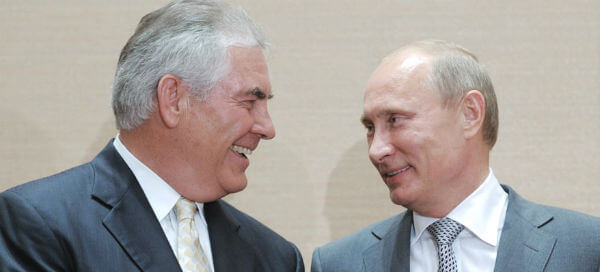
Steven Goldstein writes: President-elect Donald Trump has just said that he considers America’s One China policy a bargaining chip, to be traded off against other things that the United States wants from China. In his description:
I don’t know why we have to be bound by a One China policy unless we make a deal with China having to do with other things, including trade. … I mean, look … we’re being hurt very badly by China with devaluation; with taxing us heavy at the borders when we don’t tax them; with building a massive fortress in the middle of the South China Sea, which they shouldn’t be doing; and, frankly, with not helping us at all with North Korea.
In other words, the One China policy isn’t a big deal — it’s a bargaining issue, like many other issues. So is Trump right?
No. The big deal is this: The relationship between the People’s Republic of China (PRC) and Taiwan is an ambiguous one, where the People’s Republic claims Taiwan as part of its national territory but is prepared for the present to let Taiwan continue in existence, while Taiwan also has an interest in not clarifying its relationship with the People’s Republic too precisely. Both the PRC and the United States adhere to the notion of One China, but they mean very different things by it. Undermining the status quo could lead to full-scale military conflict between the United States and China over an island that both see as vital to their national interests and whose unique status they have managed well up to this point. [Continue reading…]
Category Archives: Analysis
Rex Tillerson, from a corporate oil sovereign to the State Department
Steve Coll writes: The news that President-elect Donald Trump is expected to nominate Rex Tillerson, the chairman and chief executive of ExxonMobil, as his Secretary of State is astonishing on many levels. As an exercise of public diplomacy, it will certainly confirm the assumption of many people around the world that American power is best understood as a raw, neocolonial exercise in securing resources.
Tillerson figures prominently in “Private Empire: ExxonMobil and American Power,” a book I wrote about the corporation that came out in 2012. He declined my requests to interview him for that project, but I turned up at several public appearances he made and asked him a few questions from the reporters’ gallery. I also studied his public remarks, reviewed accounts of his activities reported in State Department cables obtained by Freedom of Information Act requests or released by WikiLeaks, and conducted interviews with other ExxonMobil executives, retirees, friends, competitors, civil-society activists and business partners from Asia to Africa to the Middle East.
Tillerson’s life has been shaped to a profound extent by two institutions: ExxonMobil and the Boy Scouts of America. He grew up in Texas, where his father was a modestly compensated administrator for the Scouts. Tillerson became an Eagle Scout. An engineering major at the University of Texas, in Austin, Tillerson joined ExxonMobil in 1975. He has never worked anywhere else. Of all the companies that were born out of the breakup of Standard Oil, Exxon is culturally the most direct descendant of John D. Rockefeller’s monopolistic giant, which was organized on principles of ruthless capitalism and Protestant faith. Exxon today is an unusually cloistered corporation that promotes virtually all of its top executives from within. Former executives I interviewed mentioned that as recently as the nineteen-seventies, it was not unusual to start company meetings with a prayer. When Tillerson finally won a competition for the top job, in 2004, he directed substantial time and charitable activity toward the Boy Scouts. In public appearances, he comes across as sophisticated, yet his life is rooted in environments that are fundamentally nostalgic for imagined midcentury virtues and for the days when burning fossil fuels did not threaten to trigger catastrophic climate change. Tillerson once listed his favorite book as “Atlas Shrugged,” Ayn Rand’s 1957 novel that has become a touchstone for libertarians and promoters of unbridled capitalism. Compared to the records of some of the other people around Trump, Tillerson’s is at least one of professional integrity; Exxon is a ruthless and unusually aggressive corporation, but it is also rule-bound, has built up a relatively strong safety record, and has avoided problems such as prosecutions under the Foreign Corrupt Practices Act, even though it operates in many countries that are rife with corruption. [Continue reading…]
What it really means to be a ‘friend of Putin’
Julia Ioffe writes: In June 2008, ExxonMobil CEO Rex Tillerson attended the St. Petersburg Economic Forum, Russia’s answer to Davos, its way of showing itself to the world as the kind of economic powerhouse that can attract executives like Rex Tillerson to its banquets. It was a key and very shaky moment for Russia. Vladimir Putin was bowing out after his second term as president of Russia — the most the Russian constitution allows in a row, though he would figure out a way around it by 2012 — and his successor, the relatively liberal Dmitri Medvedev, was debuting at the Forum. Tensions were heating up with Russia’s southern neighbor, Georgia, and would soon spill into war. The Russian economy was already getting shaky, and within a few months it would crater, faring the worst out of all the G20 economies, sinking from eight percent GDP growth, to negative eight percent.
Even after eight years of Putin assiduously taking control of the Russian economy and trying to restore some modicum of Soviet geopolitical power, Russia was still a pretty weak player. It had been relegated to last place among the BRICs, that term coined by a Goldman Sachs banker to connote the emerging markets of Brazil, Russia, India, and China. And despite surging commodity prices — oil at the time was around $130 a barrel — Russia wasn’t making a good case for itself in the world. Gazprom, the Russian state gas monopoly, was rattling European nerves by shutting gas supplies on and off in an effort to control an increasingly independent Ukraine, thus leaving much of Central Europe without heat in the winters. It had only been five years since oil tycoon Mikhail Khodorkovsky was thrown in jail for not bowing to Putin’s will, and two years since the Kremlin unceremoniously pushed Royal Dutch Shell out of a lucrative gas project in the far eastern island of Sakhalin. BP was on the obvious verge of meeting the same fate. The following month, BP chief Robert Dudley would flee Russia, complaining of “sustained harassment.”
When Tillerson mounted the stage in St. Petersburg that summer, he chastised the Russian government for the way it was operating. The Kremlin, he said, “must improve the functioning of its judicial system and its judiciary. There is no respect for the rule of law in Russia today.”
It’s hard to imagine Tillerson, now reportedly the frontrunner for Secretary of State under president-elect Donald Trump, saying something similar today, much less from a stage in Russia’s second capital, Vladimir Putin’s birthplace, and at a high-stakes, window-dressing government function. It’s not that Russia has suddenly acquired a taste for the rule of law—if anything, things have only gotten far, far worse, and Russia’s judiciary has become no more independent. And it’s not even because Tillerson is now ubiquitously identified in the press as being personally close to Putin. As the Wall Street Journal puts it, “Among those considered for the post, Mr. Tillerson has perhaps the closest ties to Russian President Vladimir Putin,” adding that, in 2012, Putin personally bestowed Russia’s Order of Friendship on Tillerson.
It’s hard to imagine Tillerson publicly chiding Putin today because he is now so very dependent on that friendship. [Continue reading…]
Let’s get the facts right on foreign involvement in our elections
Michael McFaul, former U.S. ambassador to Russia from 2012-2014, writes: President-elect Donald Trump won the 2016 presidential election and will be the next president of the United States. As I have written before in these pages, the rules of the game for choosing our presidents need to be changed, but that discussion concerns future elections, not this past one. A win is a win.
That most people acknowledge Trump’s victory should now free us to have a serious discussion about the role of foreign interference in the 2016 presidential election. During the campaign, mentions of foreign meddling quickly became partisan and polarized, blocking any real examination of the facts, let alone a discussion of prescriptions. Even Obama administration officials seemed to tiptoe around these issues, not wanting to appear to use their privileged access to classified information to help the Democratic Party’s candidate, Hillary Clinton. But now the election is over. Before the next one, we need to know the facts — investigate what did and did not occur — so that we can develop procedures, policies and laws to strengthen the integrity of our electoral process before 2020. This is not a partisan plea; it is a national security issue.
We know some facts, and they are disturbing. For instance, we know that Russian actors stole data from people working at the Democratic National Committee. We know that another foreign actor, WikiLeaks, published data stolen from the DNC to adversely affect Clinton. We also know that WikiLeaks and others published data stolen from John Podesta, Clinton’s campaign chairman, in order to try to damage further the Democratic candidate. We also know that WikiLeaks did not publish similar kinds of data from the Trump campaign or the Republican Party. [Continue reading…]
An alt-right makeover shrouds the swastikas
The New York Times reports: A small but determined political organization in Detroit began to worry that its official symbol was a bit off-putting. With the group’s central philosophy suddenly finding traction in the daily discourse, appearances mattered.
So in November, as the country’s divisive presidential campaign became ever more jagged, the National Socialist Movement, a leading neo-Nazi group, did away with its swastika. In its stead, the group chose a symbol from a pre-Roman alphabet that was also adopted by the Nazis.
According to Jeff Schoep, the movement’s leader, the decision to dispense with the swastika was “an attempt to become more integrated and more mainstream.”
Let us pause. Not even two years ago, white supremacists like Mr. Schoep would rant from the fringe of the fringe, their attention-desperate events rarely worth mention. Today, though, the Schoeps of America are undergoing a rebranding, as part of the so-called alt-right: a grab bag of far-right groups generally united by the belief that white identity has become endangered in what they deride as this era of dangerous diversity and political correctness.
The deceptively benign phrase “alt-right” now peppers the national conversation, often in ways that play down its fundamental beliefs, which have long been considered intolerant and hateful. The term’s recent prevalence corresponds with the rise of President-elect Donald J. Trump; alt-right leaders say his inflammatory statements and Twitter habits in the campaign energized, even validated, their movement.
The movement is also acutely image-conscious, seeing the burning crosses, swastikas and language of yesteryear as impediments to recruitment. Its adherents talk of “getting red-pilled,” a reference to the movie “The Matrix,” in which the protagonist ingests a tablet that melts away artifice to reveal the truth. New, coded slurs have emerged. Fewer pointed hoods, more khaki pants.
But the alt-right movement is hardly monolithic, despite a well-publicized gathering last month in Washington — one that might have been mistaken for just another corporate conference were it not for the white-nationalist sentiments and the Nazi salutes. The factions within its ranks can differ on any number of subjects: white supremacy versus white nationalism, for example, or the vexing “J.Q.” — the “Jewish Question.”
James Edwards, a far-right talk radio host who describes himself as a “European-American advocate” — and who interviewed the president-elect’s son Donald Trump Jr. this year — wrote in an email that the alt-right movement was “a group of marauding conservatives who reject both the failures of establishment conservatism and the false gods of political correctness.”
Race is the uniting factor, Mr. Edwards wrote. “One fundamental element of the Alt-Right that brings the disparate factions together is the awareness of the reality of race and the need for European Americans to have organizations and spokespeople that explicitly advocate for our unique group interests.” [Continue reading…]
BuzzFeed reports: On Saturday evening, Twitter reinstated — with verification — the account of Richard Spencer, a leading figure of the so-called alt-right movement, and the head of the white nationalist think tank, The National Policy Institute.
Spencer’s account was suspended mid-November as part of a larger cull of prominent alt-right accounts, including Ricky Vaughn (who was previously banned after a BuzzFeed News story detailing his campaign to disenfranchise voters with false information), former Business Insider CTO Pax Dickenson, and John Rivers. Twitter did provide a reason for the move at the time it was undertaken, leading many to conclude the accounts were suspended for violations of the company’s prohibitions on targeted harassment, incitement, and hate speech.
However, according to Twitter, Spencer was banned on a technicality: creating multiple accounts with overlapping uses. [Continue reading…]
ISIS retakes UNESCO heritage site Palmyra — so where is Putin’s army now?
Michael Weiss writes: “Our future Russian allies, with all their international legitimacy, are too busy elsewhere in Syria to help much against ISIS.”
So witheringly tweeted former U.S. ambassador Robert Ford on the day that the CIA went public with disclosures about Russian government hacks designed to get Donald Trump elected president; a report emerged that Trump’s imminent appointment for Secretary of State is ExxonMobil CEO Rex W. Tillerson, a personal friend of Vladimir Putin who awarded him Russia’s Order of Friendship in 2012; and news broke that ISIS has recaptured much of the ancient Syrian city of Palmyra, its most successful territorial revanche in two years.
Moscow, as Ford implied, was evidently too busy bombing the rebel-held parts of Eastern Aleppo to prevent one of its major symbolic prizes in the war in Syria from slipping its grasp.
The crossroads of several antique civilizations, Palmyra was sacked by the head-chopping fanatics of the so-called Islamic State in May 2015, just days after they seized the Iraqi provincial capital of Ramadi. After promising not to powder the standing Roman, Persian and Assyrian ruins which have made the city a UNESCO World Heritage Site, ISIS did indeed blow up millennia-old monuments, horrifying historians and archaeologists.
Palmyra’s recapture last March by Syrian government loyalists, backed by heavy Russian airstrikes and Russian-seconded ground mercenaries — including neo-Nazi veterans of the 1990s Balkans wars — was met with cheers from some Western officials, such as then-British MP and now British Foreign Secretary Boris Johnson, as a triumph of culture over barbarism.
Which was exactly the intended propaganda point being made by the Kremlin. [Continue reading…]
How do you brief a president who refuses to believe what you tell him?
Politico reports: Donald Trump’s insult-laced dismissal of reports that the CIA believes Russia hacked the 2016 election to help him is rattling a spy community already puzzled over how to gain the ear and trust of the incoming president.
Some fear that Trump’s highly public rebukes of the U.S. intelligence apparatus will undermine morale in the spy agencies, politicize their work, and damage their standing in a world filled with adversaries. After all, if the U.S. president doesn’t believe his own intelligence officials, why should anyone else?
“There is nothing more sacred to intelligence officers than their professionalism, honesty and non-partisanship. Trump’s charges strike at the core of their integrity,” said John Sipher, a former CIA officer with broad expertise on Russia.
Trump, a career businessman with no national security experience, has long taken positions that have alarmed intelligence officials, such as supporting torture and suggesting that it’s OK to kill the family members of terrorists.
His choice of retired Lt. Gen. Michael Flynn, a man who promotes conspiracy theories on Twitter, as his national security adviser has unnerved observers. And his apparent reluctance to accept daily intelligence briefings since winning on Nov. 8 has fueled concerns that Trump will assume the presidency blind to the dangers facing the United States. [Continue reading…]
White House ethics experts argue Trump’s business conflicts are so big it should affect how the Electoral College votes
Politico reports: Norm Eisen has become an unlikely media darling. Since Donald Trump’s victory on Nov. 8 opened a debate about how the president-elect would keep his vast business interests separate from his new public obligations, Eisen has emerged as one of the two most prominent government ethicists calling for Trump to take drastic action to avoid scandal or worse. Eisen, the former top Obama White House ethics lawyer, has been cited more than 1,000 times in news stories, explaining the intricacies of the “emoluments clause” to journalists many of whom hadn’t heard the words a month ago. With Richard Painter, who held the same job under President George W. Bush, Eisen has taken control of a leading government watchdog group that’s staffing up to hound Trump’s administration for conflicts of interest they say are unprecedented for the occupant of the Oval Office. A video produced by the liberal advocacy group MoveOn.org of Eisen and Painter talking about a potentially obscure constitutional violation notched more than 2.5 million views in its first week.
“It’s unreal. It’s like a full-employment plan for government ethicists, for White House ethicists,” Eisen told me Monday as he dashed between interviews with U.S. and international journalists lining up to ask him about Trump’s complicated financial arrangements. “Fortunately, there’s basically only a handful of us. There’s really only two.”
That might be an exaggeration, but Eisen and Painter happen to be the two ethicists who are actively working to shape the outcome of an election that most voters think has already been decided. For the #stillnevertrump faction, Eisen and Painter represent the last hope of persuading wobbly members of the Electoral College to vote against the president-elect when they convene on Dec. 19. Failing that, the two men are laying the groundwork for a case that Trump’s sprawling financial arrangements—real estate investments, hotels, golf courses and product licenses spread across the U.S. and at least 20 other countries—will inevitably lead him into scandal or worse once he takes office. Trump is set to hold a news conference Dec. 15 in New York to provide more detail on his future financial plans, but the two men have no expectation that Trump will take their advice and sell off his entire business enterprise and put the proceeds into a “blind trust” with no control or knowledge over where the money goes. [Continue reading…]
Rex Tillerson, Exxon chief with close ties to Russia, is expected to be Trump’s pick for secretary of state

The New York Times reports: Rex W. Tillerson, the chief executive of Exxon Mobil, whose extensive deal-making for the energy giant has plunged him into global politics from Yemen to Russia, is expected to be offered the secretary of state post this weekend by President-elect Donald J. Trump, according to two people close to Mr. Trump’s transition team.
Mr. Tillerson, 64, has spent the past 41 years at Exxon, where he began as a production engineer and went on to strike deals around the world for a company that explores, buys and sells oil and gas in some of the globe’s most troubled corners.
Those travels have engendered close ties with a number of world leaders, notably President Vladimir V. Putin of Russia, who has known Mr. Tillerson for more than two decades, and who awarded him the country’s Order of Friendship in 2013. The next year, Washington’s relationship with Moscow was plunged into a deep freeze with Russia’s annexation of Crimea and its shadow war in eastern Ukraine, a problem that Mr. Tillerson would inherit. [Continue reading…]
Steve Horn notes: Exxon, the top U.S. producer of oil and gas and a well-documented funder of climate science denial, actually leases more land in Russia than it does in the U.S.
“Exxon boosted its Russian holdings to 63.7 million acres in 2014 from 11.4 million at the end of 2013, according to data from U.S. regulatory filings,” reported Bloomberg in March 2014. “That dwarfs the 14.6 million acres of rights Exxon holds in the U.S., which until last year was its largest exploration prospect.”
Exxon, though headquartered in Irving, Texas near Dallas, is a sprawling “private empire” with assets spread across the globe. When asked about building more U.S. refineries to protect the U.S. economy and consumers from fuel shortages, former CEO and chairman Lee Raymond put Exxon’s view of itself and its loyalty to the U.S. bluntly.
“I’m not a U.S. company, and I don’t make decisions based on what’s good for the U.S,” Raymond is quoted as saying in the 2012 book Private Empire: ExxonMobil and American Power by Steve Coll. [Continue reading…]
Stay informed. Click below to sign up for daily email updates from War in Context:
Trump, McConnell, Putin, and the triumph of the will to power
Jonathan Chait writes: Of the many things that resulted in Donald Trump’s election, from Hillary Clinton’s own errors to James Comey’s extraordinary insinuations against her in the contest’s final stages, Russian hacking played a meaningful enough role to tilt a razor-tight contest. Russia successfully riled up Bernie Sanders die-hards against the Democratic Party by leaking minor intrigue that fueled their suspicions, aggravating a Clinton liability with young voters that never healed. They also dribbled out enough emails in the succeeding months to keep stories using the word “emails” in the lead of Hillary Clinton news, adding more smoke to the haze of scandal that permeated coverage of her campaign.
We now know with near-certainty that Russia did this with the goal of electing Trump president. During the campaign, this reality was not quite certain enough to be reported as fact. Trump, of course, insisted there was no evidence Russia even had a hand in the attacks, let alone with the goal of helping him. (It “could be somebody sitting on their bed that weighs 400 pounds.”) Elements of the left decried suspicions of Russia’s role as “neo-McCarthyism.” The Nation editorialized, “ liberal-media elites have joined with the Clinton campaign in promoting the narrative of a devious Russian cyber-attack.” Others on the left insisted that the substance of the stolen emails command far more importance than their provenance, which in any case was disputed and unknowable. On October 31, the New York Times reported that the attack was probably “aimed at disrupting the presidential election rather than electing Mr. Trump.”
Friday, the Washington Post reported that the CIA had concluded well before November that Russia specifically sought to elect Trump. The CIA’s analysis is obviously not infallible, but it fits with a wide array of other evidence. Russia had a clear motive: chilly relations with the Democratic administration that had orchestrated sanctions against it, close ties with Donald Trump and several of his advisers, and a series of pro-Russian positions from Trump on such issues as Crimea, NATO, and Vladimir Putin’s human rights abuses. Russia also hacked the Republican National Committee but declined to release any of the contents. The disruption was intentionally one-sided. The CIA’s conclusion merely lends incrementally more confidence to a deduction that was already fairly obvious.
What is more interesting in the Post story is the response of various officials to the revelations. The Obama administration declined to publicize, wary of being seen as intervening on Clinton’s behalf. Instead, it devised a fallback plan. Concerned that Russia might attempt to hack into electronic voting machines, it gathered a bipartisan group of lawmakers to hear the CIA’s report, in the hopes that they would present a united front warning Russia not to disrupt the election. According to the Post, Republican Majority Leader Mitch McConnell “raised doubts about the underlying intelligence and made clear to the administration that he would consider any effort by the White House to challenge the Russians publicly an act of partisan politics.” Other Republicans refused to join the effort for reasons that can only be understood as a desire to protect the Republican ticket from any insinuation, however well-founded, that Russia was helping it.
Even the most cynical observer of McConnell — a cynical man to his bones — would have been shocked at his raw partisanship. Presented with an attack on the sanctity of his own country’s democracy by a hostile foreign power, his overriding concern was party over country. Obama’s fear of seeming partisan held him back from making a unilateral statement without partisan cover. No such fear restrained McConnell. This imbalance in will to power extended to the security agencies. The CIA could have leaked its conclusion before November, but held off. The FBI should have held off on leaking its October surprise, but plunged ahead. [Continue reading…]
Trump, mocking claim that Russia hacked election, at odds with GOP
The New York Times reports: An extraordinary breach has emerged between President-elect Donald J. Trump and the national security establishment, with Mr. Trump mocking American intelligence assessments that Russia interfered in the election on his behalf, and top Republicans vowing investigations into Kremlin activities.
Mr. Trump, in a statement issued by his transition team on Friday evening, expressed complete disbelief in the intelligence agencies’ assessments.
“These are the same people that said Saddam Hussein had weapons of mass destruction,” Mr. Trump’s team said, adding that the election was over and that it was time to “move on.”
Though Mr. Trump has wasted no time in antagonizing the agencies, he will have to rely on them for the sort of espionage activities and analysis that they spend more than $70 billion a year to perform.
At this point in a transition, a president-elect is usually delving into intelligence he has never before seen and learning about C.I.A. and National Security Agency abilities. But Mr. Trump, who has taken intelligence briefings only sporadically, is questioning not only analytic conclusions, but also their underlying facts. [Continue reading…]
The violent costs of the global palm-oil boom
Jocelyn C. Zuckerman writes: Just after nine o’clock on a Tuesday morning in June, an environmental activist named Bill Kayong was shot and killed while sitting in his pickup truck, waiting for a traffic light to change in the Malaysian city of Miri, on the island of Borneo. Kayong had been working with a group of villagers who were trying to reclaim land that the local government had transferred to a Malaysian palm-oil company. A few days after the murder, the police identified Stephen Lee Chee Kiang, a director and major shareholder of the company, Tung Huat Niah Plantation, as a suspect in the crime, but Kiang flew to Australia before he could be questioned by authorities. (Three other individuals were eventually charged in the case.) Around the world, environmental and human-rights activists added Kayong’s death to the tally of violent incidents connected to the production of palm oil, which has quietly become one of the most indispensable substances on Earth.
The World Wildlife Fund says that half of the items currently on American grocery-store shelves contain some form of palm oil. (“You’re soaking in it,” went the old tagline of the palm-oil-based dish detergent Palmolive.) The move away from trans fats in processed foods was a particular boon for the industry — semi-solid at room temperature, palm oil emerged as an ideal swap-in for the partially hydrogenated oils formerly used to enhance the texture, flavor, and shelf life of products like cookies and crackers. Since 2002, when a report from the National Academy of Sciences found a link between trans fats and heart disease, palm-oil imports to the U.S. have risen four hundred and forty-six per cent, and have topped a million metric tons in recent years. In addition to its widespread use in processed foods, the oil palm plant, Elaeis guineensis, lurks in one form or another in many cosmetics and personal-care products, such as shampoos, soaps, and lipsticks. It’s also used in animal feeds and industrial materials, and, increasingly, as a biofuel.
Elaeis guineensis is native to West Africa, and while its cultivation has spread recently in Central and South America and across equatorial Africa, eighty-five per cent of the palm oil produced today comes from Indonesia or Malaysia. Rising palm-oil exports have helped both countries make enormous economic strides in the past few decades, but the growth has come at a cost: deforestation rates in both places have been listed among the highest in the world. The habitat destruction brought about by palm-oil production has helped push scores of the region’s species, including orangutans and Sumatran elephants, rhinos, and tigers, to the brink of extinction. And, mostly thanks to palm-oil production, Indonesia can boast some of the world’s highest levels of greenhouse-gas emissions.
Yet it is violence — against local populations, farmers, and activists — that has human-rights groups closely watching the palm-oil industry. [Continue reading…]
Russia intervened in election to help Donald Trump win, CIA has concluded
The Washington Post reports: The CIA has concluded in a secret assessment that Russia intervened in the 2016 election to help Donald Trump win the presidency, rather than just to undermine confidence in the U.S. electoral system, according to officials briefed on the matter.
Intelligence agencies have identified individuals with connections to the Russian government who provided WikiLeaks with thousands of hacked emails from the Democratic National Committee and others, including Hillary Clinton’s campaign chairman, according to U.S. officials. Those officials described the individuals as actors known to the intelligence community and part of a wider Russian operation to boost Trump and hurt Clinton’s chances.
“It is the assessment of the intelligence community that Russia’s goal here was to favor one candidate over the other, to help Trump get elected,” said a senior U.S. official briefed on an intelligence presentation made to U.S. senators. “That’s the consensus view.”
The Obama administration has been debating for months how to respond to the alleged Russian intrusions, with White House officials concerned about escalating tensions with Moscow and being accused of trying to boost Clinton’s campaign. [Continue reading…]
Aaron Blake writes: The report highlights and exacerbates the increasingly fraught situation in which congressional Republicans find themselves with regard to Russia and Trump. By acknowledging and digging into the increasing evidence that Russia helped — or at least attempted to help — tip the scales in Trump’s favor, they risk raising questions about whether Trump would have won without Russian intervention.
Trump, after all, won by a margin of about 80,000 votes cast across three states, winning each of the decisive states by less than one percentage point. So even a slight influence could have plausibly made the difference, though we’ll never be able to prove it one way or another.
While saying that Russia clearly tried to help Trump doesn’t inherently call into question the legitimacy of Trump’s win —earlier Friday, the White House made sure to emphasize that it’s not making that case — it’s not hard to connect the dots. And Trump and his party know it. [Continue reading…]
Killing hope in Aleppo
MI6 chief, Alex Younger, says: “Russia and the Syria regime seek to make a desert and call it peace.”
Yemen conflict: The view from the Saudi side
BBC News reports: Saudi Arabia is at war.
You wouldn’t know it on the peaceful streets of its capital, Riyadh, but hundreds of miles to the south the civil war that has torn apart neighbouring Yemen is spilling over the border into Saudi towns and villages.
Saudi officials say more than 500 of their citizens have been killed by the Yemen war, a number dwarfed by the thousands killed in Yemen itself, but still a shock for this otherwise tranquil kingdom that is home to the holiest sites in Islam and is also the world’s biggest oil producer.
We visited the ruins of a girls’ elementary school in the village of Khawber, hit by a Houthi missile in the middle of the night.
In the shattered classroom the school clock lay on the floor, its hands stopped at the moment the missile exploded.
We met badly injured villagers, maimed by flying shrapnel when a Houthi rocket struck their mosque, and we were given rare access to a Saudi army Patriot anti-missile battery, placed in the desert facing Yemen, that has been intercepting ballistic missiles fired at Saudi Arabia’s southern towns.
These Soviet-era missiles are aimed at the towns of Najran, Abha, Gizan, Khamis Mushayt and even, according to the Saudis, at the holy city of Mecca.
These ageing but still deadly Russian-made missiles belong to a stockpile amassed by the Yemeni army over the years and now taken over by the Houthis.
The weapons include Scud B missiles with a payload of nearly one tonne of high explosives, and the smaller Tochka with a payload of 482kg of explosives.
Saudi officers showed us the remnants of a downed Tochka, still bearing Cyrillic writing on its fuselage.
Between 6 June 2015 and 26 November 2016 the Saudi authorities have recorded 37 ballistic missiles fired from Yemen across the border into Saudi airspace.Yet the damage to Saudi Arabia pales before the destruction next door in Yemen. [Continue reading…]
What the U.S. government really thought of Israel’s apparent 1979 nuclear test
Avner Cohen and William Burr write: On the dawn of September 22, 1979, a U.S. Vela satellite used to detect nuclear explosions spotted a double flash somewhere in the South Atlantic. Normally characteristic of nuclear detonations, the double flash quickly set off a panic within the U.S. national security apparatus: Had a nation really detonated a nuclear weapon, possibly in violation of the Limited Test Ban Treaty? And if so, who had done it? Or was it simply a technical malfunction, or even a reflection of a natural cosmic phenomenon?
Over the months that followed, U.S. scientists and intelligence experts launched a series of investigations to determine what happened, but the results were never conclusive. While White House science advisers officially maintained that the double flash was a result of a technical malfunction, others in the government believed that it was a nuclear test, possibly by South Africa or more likely Israel. Today, U.S. government officials appear more interested in preserving secrecy about the incident than shedding light on what it might have known at the time.
What the Vela 6911 satellite actually detected on September 22 is one of the biggest unsolved mysteries of the nuclear age, and probably will remain so as long as significant intelligence reports on the Vela flash remain classified. But thanks to a new trove of declassified documents at the National Archives (from the files of Ambassador Gerard C. Smith, President Jimmy Carter’s special representative for non-proliferation matters) and a few items from the Carter Presidential Library — all published today for the first time by the National Security Archive — we are able to discover more about what really happened that morning, how the Carter administration reacted and why many in the intelligence community never accepted the official White House narrative. [Continue reading…]
Scott Pruitt, Trump’s climate-denying EPA pick, is worse than you think
Jay Michaelson writes: Every scientist not on the corporate dole is upset about Scott Pruitt, Donald Trump’s pick to head the Environmental Protection Agency.
Like Betsy DeVos, who wants to destroy public education, and Jeff Sessions, who wants to destroy the Voting Rights Act, Pruitt is against the very laws he will soon be in charge of enforcing.
And the more you know about environmental law, the more you know that the Oklahoma attorney general and his minions could be way, way, way worse at the EPA than pundits and scientists have said. Yes, he’s a climate denier. Yes, he’s sued the EPA five times to prevent regulations (and lost every time). And yes, he has openly defied court orders on same-sex marriage and abortion, investigated the Humane Society for daring to back an animal welfare law, and opined that public schools should distribute religious materials to children. But he’s about to enjoy free rein to gut environmental regulations, without Congress or the courts to stop him.
That’s because environmental laws are deliberately broad, delegating massive authority to the EPA, which then has broad discretion to determine how to implement them. If you think about it, this makes sense. Congress isn’t populated by scientists but by politicians. So they set policy goals — clean air, clean water, toxin-free environments — and leave it up to the experts to determine how to meet them.
Most of the nuts and bolts of environmental law have thus been created not by Congress but by generations of EPA regulations and implementations. Clean air standards for factories, thresholds for pesticides in fuels or toxic chemicals in detergents and fuels, pollution levels for rivers — all of these, and many more, exist in regulations contained in the Code of Federal Regulations.
Usually, it’s conservatives who have complained about this. First, of course, they tend not to like anything that restricts unfettered capitalism, and environmental law certainly does that. Second, they tend not to like big government and unaccountable bureaucracy, and reams of agency-generated regulations are exactly that. And they tend to be wary of executive power in general.
Thus, for the last 40 years, corporations, industry groups, conservative think tanks, and Republican lawmakers have sued the bejeezus out of the EPA (and other agencies), challenging just about every regulation the agency puts out.And usually, they have lost. Over several decades, the Supreme Court has tended to side more with the EPA than with its challengers. There have been exceptions — one of Justice Antonin Scalia’s last opinions required the EPA to limit mercury emissions only when it is cost-effective for corporations to do so. But in general, the court has observed that the “enabling statutes” passed by Congress deliberately cede authority to the EPA. Without congressional authority, the EPA couldn’t make up regulations and decide how to enforce them. But with it, the agency can.
Now the shoe is on the other foot. Now it’s arch-conservatives who will be controlling the EPA, with exactly the same level of authority as the environmentalists who preceded them. [Continue reading…]

Noam Chomsky & Harry Belafonte in conversation on Trump and the times in which we live