Category Archives: Analysis

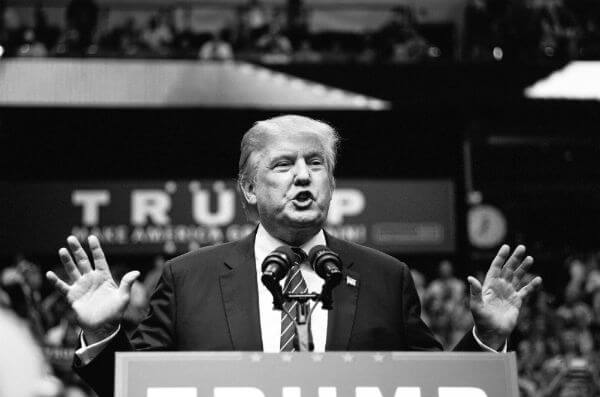
Professor who’s predicted 30 years of presidential elections correctly is doubling down on a Trump win

trump-bw

The Washington Post reports: Last month, the man who’s tried to turn vote prediction into a science predicted a Trump win.

Allan J. Lichtman, distinguished professor of history at American University, said Democrats would not be able to hold on to the White House.

In the intervening weeks, the campaign was rocked by a series of events. The release of the Access Hollywood tape obtained by The Washington Post was followed by accusations from a growing list of women of various improprieties on Trump’s part, ranging from verbal abuse and harassment to outright sexual assault. Fix founder Chris Cillizza named Trump the winner of the inauspicious “Worst Week in Washington” award for four weeks running. At the same time, WikiLeaks released internal Clinton campaign emails, and the U.S. government flatly accused the Kremlin of being involved. And let’s not forget those presidential debates.

So plenty has changed. But one thing hasn’t: Lichtman, author of “Predicting the Next President: The Keys to the White House 2016,” is sticking with his prediction of a Trump victory.

If you aren’t familiar with his somewhat unique prediction system, here are the basics: The keys to the White House, he says, are a set of 13 true/false statements. If six of them are false, the incumbent party loses the presidency. His system has correctly predicted the winner of the popular vote in every U.S. presidential election since 1984. Our first interview went into the keys more in-depth, and in September he said the keys were settled enough to make an official prediction of a Democratic loss and a Trump win. [Continue reading…]

Facebooktwittermail

In the age of Trump, Muslim voters mobilize

Religion & Politics reports: Equipped with burner phones and laptops, the volunteers took their seats. A dozen voices echoed around the Muslim community space in Alexandria, Virginia, as they cold-called phone numbers from a database. “As-salamu Alaikum,” read the traditional Arabic greeting in their script.

“Are you planning on voting in the upcoming election?” Farheena Mustafa, 22, asked the person on the other line. A recent University of Virginia graduate, Mustafa came to the phone-banking event with two of her sisters.

They came to mobilize Muslim voters, even though Donald Trump may well do that on his own. The Republican presidential nominee has proposed banning Muslim immigration to the United States. He has accused Muslim Americans of harboring terrorists, and he has insulted the Muslim parents of a fallen American soldier. Just a few hours south in Virginia, one of Trump’s steadfast supporters, Liberty University Chancellor Jerry Falwell Jr., has suggested concealed-carry weapons may be the solution to “end those Muslims,” only later clarifying that he meant terrorists.

In northern Virginia, though, the phone bank was about getting out the vote, not telling people how to vote. Still, it was hard to escape Trump. [Continue reading…]

Facebooktwittermail

The man at the center of ‘Bill Clinton Inc.’

The Atlantic reports: Who is Doug Band, and what did he do for Bill Clinton?

A little bit of everything, it turns out.

He helped launch the Clinton Foundation, came up with the idea for the Clinton Global Initiative, brokered deals for paid speeches that enriched Clinton, and then started a private consulting firm called Teneo that made the Foundation, Bill Clinton, and Band himself even wealthier.

All of that became clear in the latest batch of hacked emails released by WikiLeaks, which include messages from Band and a 12-page memo that he wrote both explaining and defending his and his company’s work on Clinton’s behalf. For Hillary Clinton’s campaign, the publication of the Band memo is yet another WikiLeaks-induced headache, as it provides even more detail into the unsavory-if-not-illegal intersection of interests at the heart of her family’s philanthropic work.

Band, now 44, was to Bill Clinton what Huma Abedin has been to Hillary. He started as a junior staffer in the White House straight out of college in the 1990s, and once the Clintons left office in 2001, he never left Bill’s side. [Continue reading…]

Facebooktwittermail

NATO and Russia playing dangerous game with military build-up

The Guardian reports: It has been billed as Nato’s biggest military build-up on Russia’s borders since the cold war. Britain is sending fighter jets next year to Romania. The US is dispatching troops, tanks and artillery to Poland. Germany, Canada and other Nato countries also pledged forces at a meeting on Wednesday of defence chiefs in Brussels.

The move comes after Russia has been busy deploying hardware of its own. Earlier this month, Moscow said it was stationing nuclear-capable missiles in Kaliningrad, Russia’s Baltic exclave. This week, two Russian warships armed with cruise missiles slipped into the Baltic sea.

Meanwhile, the hulking Russian aircraft carrier Admiral Kuznetsov has been belching its way through the Channel en route to Syria. Spain said Moscow had withdrawn a request to refuel on Spain’s north African coast, amid western suspicions the Russian fleet will be used to flatten civilians in Aleppo.

Nato’s apparent goal here is to deter future acts of aggression on European territory by Vladimir Putin’s revanchist Russia. After a period in which Nato has seemed slow to react, and lacking in backbone, the alliance is now sending out a robust message. As the US defence secretary, Ash Carter, put it this week, these deployments are all about deterrence. [Continue reading…]

Facebooktwittermail

In Lebanon deal, Iran wins and Saudi retreats

Reuters reports: A veteran Christian leader is set to fill Lebanon’s long-vacant presidency in a deal that underlines the ascendancy of the Iranian-backed Hezbollah movement and the diminished role of Saudi Arabia in the country.

It appears all but certain that Michel Aoun will become president next week under an unlikely proposal tabled by Sunni leader Saad al-Hariri, whose Saudi-backed coalition opposed Hezbollah for years.

Parliament will likely elect Aoun on Oct. 31. This will end one element of a paralyzing political crisis: the 29-month-long presidential vacuum. But it is also creating new tensions that may disrupt the formation of a new government expected to be led by Hariri under a deal with Aoun.

Aoun’s election will also raise questions over Western policy toward Lebanon. Lebanon’s army, guarantor of the country’s internal peace, depends on aid from the United States, which deems Hezbollah a terrorist group.

Hariri’s proposal, unthinkable a few weeks ago, appears to have been forced on him by problems at his Saudi-based construction firm, Saudi Oger, the financial backbone of his political network in Lebanon.

It marks the death throes of the Hariri-led alliance that struggled with Hezbollah for more than a decade, only to see the heavily armed Shi’ite group go from strength to strength in Lebanon and the wider region. [Continue reading…]

Facebooktwittermail

Jill Stein’s ideology says one thing — her multi-million dollar investment portfolio says another

The Daily Beast reports: According to the financial-disclosure form she filed with the U.S. Office of Government Ethics on March 30, 2016, [Green Party presidential nominee Jill] Stein and her husband, Richard Rohrer, have investments (with the exception of real estate) valued at anywhere from $3,832,050 to $8,505,000.

Stein’s controversial investments include:

Big Carbon. On Oct. 26, 2015, Stein’s campaign sent out a statement calling for Exxon to get the death penalty for its “climate-change fraud.” (it should be noted that Stein has called for the abolition of the death penalty for human beings). She has also repeatedly called for public pension funds to divest from companies in the fossil-fuel industry.

Yet Stein has invested $995,011 to $2.2 million in funds such as the Vanguard 500 fund that maintain significant stakes in Exxon and other energy companies like Chevron, Duke Energy, Conoco Phillips, and Toho Gas, a Japanese company that engages in the sale of natural gas, tar, and coke, a fuel made from coal.

Financial Industry. Like Sen. Bernie Sanders, Stein has consistently denounced the banking industry and Wall Street. She has said that big banks should be nationalized or broken up. And she has refused to agree that there is a stark difference between how the Democrats have regulated the financial-services industry and how Republicans have approached the same task.

Yet Stein has invested roughly $1.2 to $2.65 million in funds like the TIAA-CREF Equity Index that have big stakes in the financial-services industry. Holdings in these funds include big banks like JP Morgan Chase, Citigroup, and Deutsche Bank as major parts of their investment portfolios. Five of the funds that Stein invests in maintain large positions in Wells Fargo, which has come under fire recently amid charges that its employees were pressured to open up fraudulent new accounts for clients.

One of the funds Stein has invested in maintains a significant position in Goldman Sachs bonds. Stein once referred to Goldman Sachs as Hillary Clinton’s best friend. She has also invested in a fund that contains significant investments in mortgage-backed securities, including subprime mortgage-backed securities, and mortgage-backed derivatives. These financial instruments played a significant role in the financial crisis of 2008. [Continue reading…]

Facebooktwittermail

Trump moves to protect his assets as he faces electoral bankruptcy

The New York Times reports: As his poll numbers have declined in the closing weeks of the presidential race, Donald J. Trump has begun to engage in barely veiled promotions of his business brand off the campaign trail, dragging reporters to his marquee properties in between his campaign events.

On Tuesday, Mr. Trump added an abrupt appearance at the Trump National Doral, one of his gilded golf courses and resorts in Florida, ostensibly to demonstrate how many employees he has there and how much they admire him as a boss.

On Wednesday, instead of spending the morning in one of the battleground states where polls show him trailing Hillary Clinton, Mr. Trump planned to attend a ribbon-cutting at his elaborately remade hotel at the Old Post Office on Pennsylvania Avenue in Washington.

The stops are a remarkable display of personal promotion by a presidential nominee, raising questions about whether the businessman, who has lived by the mantra that “all publicity is good publicity,” is at least partly casting his eye past the 2016 race, and toward bolstering the brand that bears his name.

In a telephone interview, Mr. Trump rejected such questions and said he was demonstrating his credentials for the presidency at such events by showing the type of efficiencies he would bring to government.

“Today it was about jobs. Tomorrow it’s about being under budget and ahead of schedule,” Mr. Trump said, referring to the Washington hotel.

His critics saw a different motive.

“This is the worst message to send to all of those true and loyal Trump supporters out there who actually did believe in him and actually did have a stake in this election,” said Kevin Madden, a former adviser to Mitt Romney, the 2012 Republican nominee.

“With less than two weeks to go until Election Day,” Mr. Madden added, “Mr. Trump is repaying them by using their campaign to showcase his hotel. He said he wouldn’t let them down, but he already has. They have a right to be disappointed.” [Continue reading…]

Facebooktwittermail

Syria’s ‘voice of conscience’ has a message for the West

Murtaza Hussain and Marwan Hisham report: Yassin Al-Haj Saleh has lived a life of struggle for his country. Under the Syrian regime of Hafez al-Assad, he was a student activist organizing against the government. In 1980, Saleh and hundreds of others were arrested and accused of membership in a left-wing political group. He was just 19 years old when a closed court found him guilty of crimes against the state. Saleh spent the next 16 years of his life behind bars.

“I have a degree in medicine, but I am a graduate of prison, and I am indebted to this experience,” Saleh said, sitting with us in a restaurant near Istanbul’s Taksim Square. Now in his 50s, with white hair and a dignified, somewhat world-weary demeanor, Saleh, called Syria’s “voice of conscience” by many, has the appearance and bearing of a university professor. But he speaks with passionate indignation about what he calls the Assad dynasty’s “enslavement” of the Syrian people.

Saleh was living in Damascus in 2011 when Syrian civilians rose up to demand political reform. That protest movement soon turned into open revolution after government forces met the protestors with gunfire, bombardment, mass arrests, and torture.

From painful firsthand experience, Saleh knew the cost of challenging the Assad regime. But when the uprising started, he did not hesitate to join it. He left home and spent the next two years in hiding, helping Syrian activists organize their struggle.

By late 2013, Syria had descended into anarchy. The conflict between the government and a range of opposition forces had become increasingly militarized. Like many other activists for the revolution, Saleh was forced to flee across the border to Turkey. That same year, armed groups in the Damascus suburbs kidnapped his wife, along with three other activists. ISIS kidnapped his brother in 2013. Neither has been heard from since. [Continue reading…]

Facebooktwittermail

Hacked emails reveal ties between Kremlin and Ukraine rebels

The Associated Press reports: A group of Ukrainian hackers has released thousands of emails from an account used by a senior Kremlin official that appear to show close financial and political ties between Moscow and separatist rebels in Eastern Ukraine.

The cache published by the Ukrainian group CyberHunta reveals contacts between President Vladimir Putin’s adviser Vladislav Surkov and the pro-Russia rebels fighting Ukrainian forces.

Ukraine’s National Security Service said Wednesday the emails were real, although they added the files may have been tampered with. Putin’s spokesman Dmitry Peskov dismissed the published emails as a sham, saying Wednesday that Surkov doesn’t use email.

Russian journalist Svetlana Babaeva told The Associated Press emails from her in the cache were genuine. “I sent those emails,” Babaeva said, referring to three emails in the leak discussing arrangements for an off-the-record meeting between Surkov and editors at her publication.

Russian businessmen Evgeny Chichivarkin, who lives in London, said in a Facebook post Wednesday that emails attributed to him in the cache were genuine too. [Continue reading…]

The Guardian reports: Sanctioned and thus banned from travel to the EU for his role in the Kremlin’s Ukraine policy, the 52-year-old Surkov nevertheless popped up at recent four-way negotiations in Berlin over Ukraine, sitting at the round table next to Putin, and just one seat across from Angela Merkel. It was a very visible signal of Surkov’s importance to the Kremlin’s controversial Ukraine policy.

Several sources have told the Guardian that Surkov has on occasion made secret trips to Donetsk, technically still part of Ukraine, to bring local separatist politicians into line and tell them what is expected of them if they are to continue to receive Russian funding and support. More regularly, emissaries from east Ukraine come to Moscow to meet with Surkov. [Continue reading…]

Chris Zappone writes: The timing of the hack and the target, Vladislav Surkov, suggest that this could be a form of retaliation for the purported Russian hacking of the US election.

The group, called Kiberkhunta (or Cyber Junta) posted 2000 emails from Surkov dating from between September 2013 and November 2014.

Coming against the backdrop of the Russian cyber campaign against the US during the current presidential election year, at least one analyst sees the possibility of a connection to those events.

“It is possible that we are seeing the first example of mutually assured doxing,” said Kenneth Geers, Kiev-based Senior Research Scientist at COMODO, referring to the practice of hacking and publishing private emails.

‘Mutually assured doxing’ is a play on the Cold War concept of Mutually Assured Destruction – the permanent nuclear stand-off between Russia and the US which dissuaded either side from starting a war.

“We should usually assume there is some political goal behind every leak,” he said.

Geers, who is also an ambassador for the NATO Cyber Centre, said the Surkov leak may hint at an emerging behavioural norm between nation states.

“We may see a doxing escalation ladder materialise: how far do you want me to go, all the way to the top?” said Geers.

“As painful as it is today, doxing serves a long-term historical role in reducing corruption.” [Continue reading…]

Facebooktwittermail

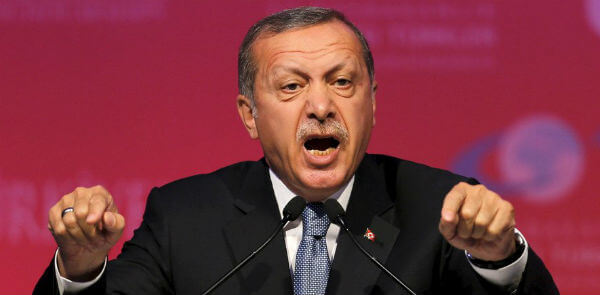
Erdoğan pursues his plan for even greater power

erdogan

Politico reports: If you’ve been listening to Recep Tayyip Erdoğan this past month, you’d be forgiven for thinking the Turkish president was intent on redrawing his country’s borders.

In a series of provocative speeches, he has lamented the loss of Ottoman territories, complained that Turkey “gave away” islands to Greece, and invoked a century-old plan that included the Iraqi cities of Mosul and Kirkuk in Turkey’s boundaries.

“We did not accept the borders of our country voluntarily,” Erdoğan said in one of his speeches. Yet while he has used this expansionist rhetoric to argue that Turkey has a say in the ongoing battle for Mosul, his target audience are not Greek or Iraqi officials. Rather, it’s intended for potential voters back home — election talk ahead of a looming referendum on the nature of his presidency.

Erdoğan’s long-standing ambition to replace Turkey’s parliamentary system with an executive presidency — a constitutional change that would grant him significantly greater powers — is inching closer to becoming reality. This month, ministers and officials began floating a timeline, suggesting that a parliamentary vote could be held early next year with a subsequent referendum in April.

After this summer’s attempted coup, Erdoğan’s popularity has soared; a popular vote may well succeed. Yet it remains uncertain whether his ruling Justice and Development Party (AKP) will be able to shore up enough support from other parties to reach the necessary parliamentary majority to call a referendum.

Politicians across the otherwise deeply divided opposition parties object that the introduction of a presidential system would allow the increasingly authoritarian Erdoğan to rule Turkey unchecked.

The president’s best bet is the nationalist opposition: Their leader, Devlet Bahceli, signaled he would not challenge a plebiscite in recent weeks. If his parliamentary group follows suit, the AKP could take their proposal to a referendum.

Hence the belligerent rhetoric. The talk of Turkey’s rights regarding parts of Iraq and the Aegean islands plays well with the nationalists, who often bemoan the territorial concessions made in the 1920s by the crumbling Ottoman Empire.

“Erdoğan is a savvy politician who understands very well the sort of emotional chords of the Turkish public,” said Sinan Ülgen, a former Turkish diplomat and visiting scholar at Carnegie Europe. “This is part of an overall strategy to shore up national support that started in the wake of the elections last June.” [Continue reading…]

Facebooktwittermail

The Pentagon’s ‘Terminator conundrum’: Robots that could kill on their own

The New York Times reports: The small drone, with its six whirring rotors, swept past the replica of a Middle Eastern village and closed in on a mosque-like structure, its camera scanning for targets.

No humans were remotely piloting the drone, which was nothing more than a machine that could be bought on Amazon. But armed with advanced artificial intelligence software, it had been transformed into a robot that could find and identify the half-dozen men carrying replicas of AK-47s around the village and pretending to be insurgents.

As the drone descended slightly, a purple rectangle flickered on a video feed that was being relayed to engineers monitoring the test. The drone had locked onto a man obscured in the shadows, a display of hunting prowess that offered an eerie preview of how the Pentagon plans to transform warfare.

Almost unnoticed outside defense circles, the Pentagon has put artificial intelligence at the center of its strategy to maintain the United States’ position as the world’s dominant military power. It is spending billions of dollars to develop what it calls autonomous and semiautonomous weapons and to build an arsenal stocked with the kind of weaponry that until now has existed only in Hollywood movies and science fiction, raising alarm among scientists and activists concerned by the implications of a robot arms race.

The Defense Department is designing robotic fighter jets that would fly into combat alongside manned aircraft. It has tested missiles that can decide what to attack, and it has built ships that can hunt for enemy submarines, stalking those it finds over thousands of miles, without any help from humans. [Continue reading…]

Facebooktwittermail

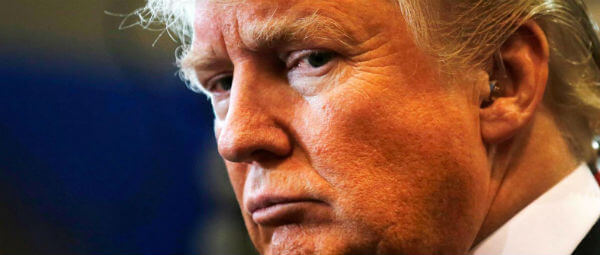
Donald Trump’s deep-seated fear of public embarrassment

trump-frown

The New York Times reports: The intense ambitions and undisciplined behaviors of Mr. Trump have confounded even those close to him, especially as his presidential campaign comes to a tumultuous end, and he confronts the possibility of the most stinging defeat of his life. But in the more than five hours of conversations — the last extensive biographical interviews Mr. Trump granted before running for president — a powerful driving force emerges: his deep-seated fear of public embarrassment.

The recordings reveal a man who is fixated on his own celebrity, anxious about losing his status and contemptuous of those who fall from grace. They capture the visceral pleasure he derives from fighting, his willful lack of interest in history, his reluctance to reflect on his life and his belief that most people do not deserve his respect.

In the interviews, Mr. Trump makes clear just how difficult it is for him to imagine — let alone accept — defeat.

“I never had a failure,” Mr. Trump said in one of the interviews, despite his repeated corporate bankruptcies and business setbacks, “because I always turned a failure into a success.”

When people lose face, Mr. Trump’s reaction is swift and unforgiving.

And when Mr. Trump feels he has been made a fool of, his response can be volcanic. Ivana Trump told Mr. D’Antonio [the author of a biography of Trump called The Truth About Trump] about a Colorado ski vacation she took with Mr. Trump soon after they began dating. The future Mrs. Trump had not told her boyfriend that she was an accomplished skier. As she recalls it, Mr. Trump went down the hill first and waited for her at the bottom:

IVANA TRUMP: So he goes and stops, and he says, “Come on, baby. Come on, baby.” I went up. I went two flips up in the air, two flips in front of him. I disappeared. Donald was so angry, he took off his skis, his ski boots, and walked up to the restaurant. … He could not take it. He could not take it. [Continue reading…]

Facebooktwittermail

In pop culture, there are no bad police shootings

Alyssa Rosenberg writes: Movies, television and novels have trained audiences to excuse almost any police shooting, including the deaths of children — until now, when the emergence and near-ubiquity of real-life videos have made the gap between fiction and reality undeniable.

Whether a shooting is legal is determined in part by an officer’s fear. But when the Los Angeles Police Department cleared scripts for television series such as “Dragnet” or “Adam-12,” “any shooting that was done on the shows was squeaky clean,” explained former detective sergeant Joseph Wambaugh, who worked briefly in the LAPD’s public information office, where the scripts were reviewed. “Any officer would have to be in total control.”

If this standard had nothing to do with how officers actually reacted after shooting someone, it was intended to bolster the audience’s confidence in police officers.

In fact, officers on early cop shows such as “Dragnet” and “Naked City” were often presented as so decent that they questioned their own decisions to shoot and had to be convinced that they’d done the right thing. Often, the person doing the convincing was a parent or relative of the dead person.

The first time Joe Friday (Jack Webb), the archetypal stoic police officer, killed a person in the “Dragnet” episode “The Big Thief,” he was so distressed that his partner had to help him fill out his incident report. “I kind of wonder if there was another way,” Friday declared glumly, unconvinced that he was right to shoot even though the other man had a gun. Friday was ultimately reassured by the law itself, when the shooting was ruled a justifiable homicide.

Friday’s question hangs in the air, but it both casts and dispels doubt in a single sentence. If someone who cares as much as Joe Friday does couldn’t find a better solution when confronted with a dangerous criminal, then maybe one doesn’t exist. Friday’s concerns are themselves the proof that he would never do the wrong thing. [Continue reading…]

Facebooktwittermail

Remain means remain: Nicola Sturgeon cannot be ignored on Brexit

By Andrew Scott Crines, University of Liverpool

The meeting between Prime Minister Theresa May and the leaders of the United Kingdom’s devolved administrations was a significant moment in setting the tone for the Brexit negotiations ahead.

May has pledged to advance a single UK position when negotiations with the EU begin next year. This pledge could be interpreted in either of two ways. She could be attempting to compel the nations of the UK to conform to the Westminster government’s Brexit position, or she could be opening the door to other positions in the hope of destabilising the moves towards leaving the EU. The former is the most likely, however May cannot be seen to be overtly imposing the will of the Brexiteers on the devolved institutions without risking political consequences.

In the case of Scotland such consequences are well advertised. First Minister Nicola Sturgeon wants to at least keep Scotland in the single market and, really, her ultimate goal is to stay in the EU. The Scottish people voted to remain, which Sturgeon is interpreting as a solid mandate to oppose moves in London to take Scotland out.

Similarly, Northern Ireland voted to remain. The deputy first minister, Martin McGuinness, warned of dire consequences if it is also taken out of the EU, both economically and constitutionally. Only Wales and England voted to leave, which was enough to deliver a Brexit vote.

Continue reading

Facebooktwittermail

The more the West ignores Putin’s provocations, the more he escalates

Michael Khodarkovsky writes: The Russian media have been talking up war for some time, but it has now reached new heights of warmongering. Dmitry Kiselev, a television journalist known for his close ties to the Kremlin, keeps threatening the West with nuclear weapons. Another ally of President Vladimir V. Putin, the voluble ultranationalist party leader Vladimir V. Zhirinovsky, recently declared that if Hillary Clinton were elected, it would mean World War III.

Clearly, the Kremlin is deliberately creating a sense of impending war by having its own media insist that NATO has put Russia under threat — from the military alliance itself and its democratic ethos. Ominously, Mr. Putin loses no opportunity to extol the Russian people’s wartime virtues of heroism and martyrdom.

Most recently, the war scenario moved from talk on television to Russian city streets. From Oct. 4 to 7, a Russian civil defense drill reportedly involved 40 million civilians and 200,000 civil defense experts who instructed citizens in schools, factories and offices. The government-controlled media rhapsodized that the bomb shelters were found to be in good order, as the people drilled in what to do during a nuclear, chemical or bacteriological war.

In one Moscow district, local authorities posted fliers asking residents to contribute money to hasten construction of a bomb shelter “because of the growing international tensions, particularly the expected nuclear aggression against Russia by the unfriendly countries,” clearly a reference to the United States and its allies. Maybe all that these fliers signify is pandering to the Kremlin by local bureaucrats eager to impress the authors of a propaganda blitz. But there is no denying that such announcements are strengthening a genuine bout of war hysteria, emanating from the Kremlin. [Continue reading…]

Facebooktwittermail

Why the Middle East knows not to trust the United States

David Ignatius writes: When the United States fights its wars in the Middle East, it has a nasty habit of recruiting local forces as proxies and then jettisoning them when the going gets tough or regional politics intervene.

This pattern of “seduction and abandonment” is one of our least endearing characteristics. It’s one reason the United States is mistrusted in the Middle East. We don’t stick by the people who take risks on our behalf in Iraq, Egypt, Lebanon and elsewhere. And now, I fear, this syndrome is happening again in Syria, as a Kurdish militia group known as the YPG, which has been the United States’ best ally against the Islamic State, gets pounded by the Turkish military. [Continue reading…]

Facebooktwittermail

How ISIS is using scorched earth tactics as it retreats

The Washington Post reports: Satellite imagery of the current operations by Iraqi forces to retake Mosul reveal how the Islamic State can inflict damage even when the militant group is on the run.

Iraqi forces began the operation to retake Mosul on Oct. 16, with forces advancing from the south along the Tigris River and from the east with the goal of retaking the outskirts of the city before beginning a block-by-block clearing of the largest city still held by the Islamic State in Iraq.

Imagery from the past week reveals front-line fires near the city as well as two large industrial fires that were set off by the Islamic State as the militants retreated from those positions. The black smoke is from the Qayyarah oil field, which burned for over four months, and the white smoke that begins on Oct. 20 is from a sulphur plant in Mishraq that was retaken by Iraqi forces within days of the start of the operation. [Continue reading…]

Facebooktwittermail