Category Archives: Analysis

Trump’s plan for winning if he loses

Politico reports: In 2016’s race to the bottom, Donald Trump is going to find out if you can become president when two-thirds of Americans don’t like you — and a majority can’t stand you.

Recent polls have showed Trump’s unfavorable rating spiking again, after a brief improvement last month. That’s also coincided with a slide in national horse-race polls, which now unanimously show Hillary Clinton leading the presumptive Republican nominee. Clinton is also more unpopular than past nominees, but her negatives are neither as wide nor as deep as the broadly detested Trump.

Trump is setting modern records for political toxicity — at least for a major-party candidate this far out from an election. Seventy percent of Americans surveyed in an ABC News/Washington Post poll out this week had an unfavorable opinion of Trump, up 10 points over the past month. The poll showed Trump’s favorable rating cratering at 29 percent, down from 37 percent last month.

The numbers were similar in a Bloomberg Politics poll: Trump’s favorable rating is just 31 percent, with 66 percent viewing him unfavorably. That’s only marginally better than in March, when 29 percent viewed Trump favorably, and 68 percent had an unfavorable opinion. [Continue reading…]

Americans like winners and at the core of the Trump brand is the claim that he’s Mr Successful. As a yugely successful businessman with unparalleled talent, he has the unique capacity to make America great again — or so he’d like most voters to believe. But Trump’s support can easily collapse and right now he seems to be steering a course towards spectacular failure.

As a man who has built his life around his unquestioned conviction in his own greatness, Trump is likely to be the last person who can acknowledge his flaws. He’s not only setting himself up for spectacular failure but also spectacular humiliation.

But maybe his conviction is unshakable and he’s already crafting a plan to snatch victory from the jaws of defeat — not by winning the election but by turning his campaign experience into the launchpad for his next commercial venture.

Vanity Fair reports: Every election cycle has its own breakout media star. In 1992, it was CNN. A few years later, it would be an e-mail blast called the Drudge Report. By 2000, the country had more or less been neatly delineated between MSNBC and Fox News households. The 2008 election introduced Politico and the Huffington Post to the adults’ table. BuzzFeed joined in 2012.

The breakout media star of 2016 is, inarguably, Donald Trump, who has masterfully — and horrifyingly — demonstrated an aptitude for manipulating the news cycle, gaining billions of dollars worth of free airtime, and dominating coverage on every screen. Now, several people around him are looking for a way to leverage his supporters into a new media platform and cable channel.

Trump is indeed considering creating his own media business, built on the audience that has supported him thus far in his bid to become the next president of the United States. According to several people briefed on the discussions, the presumptive Republican nominee is examining the opportunity presented by the “audience” currently supporting him. He has also discussed the possibility of launching a “mini-media conglomerate” outside of his existing TV-production business, Trump Productions LLC. He has, according to one of these people, enlisted the consultation of his daughter Ivanka Trump and son-in-law, Jared Kushner, who owns the The New York Observer. Trump’s rationale, according to this person, is that, “win or lose, we are onto something here. We’ve triggered a base of the population that hasn’t had a voice in a long time.” For his part, Kushner was heard at a New York dinner party saying that “the people here don’t understand what I’m seeing. You go to these arenas and people go crazy for him.” [Continue reading…]


Facebooktwittermail

Former staffers describe Trump as a ‘germophobic’ ‘narcissist’ who is ‘obsessed with menstruation’

Seth Stevenson writes: We know about Donald Trump’s on-camera persona as the star of The Apprentice: his tyrannical management style, his gruff demeanor, his terse catchphrase. But what was Trump like between takes, when the cameras were off but the crew was watching?

Slate reached out to find people who’d worked on The Apprentice during Trump’s tenure. Most people we contacted declined to talk, citing nondisclosure agreements they’d signed as a condition of their employment on the show. But three were willing to speak — as long as we didn’t use their names. And one spoke to us on the record.

What do they recall about Trump’s on-set behavior? It’s a lot like his campaign behavior. [Continue reading…]

Facebooktwittermail

Syria’s civil war: On Syria’s forgotten detainees

Al Jazeera reports: In early May, hundreds of detainees at Syria’s Hama central prison went into a week-long revolt to protest against the planned transfer of five inmates to the notorious Sednaya prison near Damascus, purportedly so that they could be executed.

The prisoners, many of whom are held without charge, rioted in solidarity.

Seven prison guards were taken hostage. Prisoners demanded “basic rights,” including a fair trial or release.

A deal, however, was soon reached resulting in the release of 83 prisoners held without charge.

Two weeks later, a similar scene played out again when inmates captured a high-ranking police officer to protest at what they say was the government’s reneging on an earlier deal to release several hundred political detainees.

Inmates have previously demanded the restoration of electricity and water amid food shortages and serious medical conditions among prisoners, according to to UK-based Syrian Observatory for Human Rights.

Both incidents highlighted the plight of thousands of detainees who are languishing in government prisons in appalling conditions. Both rights groups and opposition negotiators had hoped the first Hama standoff would push Syria’s forgotten detainees back to the forefront of the Syria peace talks. [Continue reading…]

Facebooktwittermail

Washington’s war on ISIS is only making it stronger

Hassan Hassan writes: For the first time since U.S.-led coalition operations began two years ago, almost all of the group’s vital strongholds in Syria, Iraq, and Libya have come under serious pressure. In a recent statement, Abu Muhammad al-Adnani, the group’s spokesman, even alluded to the fact that followers should be prepared for losses, from Sirte to Mosul.

But while the group’s performance has hit an all-time low, its appeal does not seem to have diminished. CIA Director John Brennan recognizes this fact: “Despite all our progress against ISIL on the battlefield … our efforts have not reduced the group’s terrorism capability and global reach,” he told the Senate Intelligence Committee on June 16, using another term for the Islamic State. “[A]s the pressure mounts on ISIL, we judge that it will intensify its global terror campaign to maintain its dominance of the global terrorism agenda.”

Brennan also confirmed that the CIA had found no “direct link” between Omar Mateen, the gunman in Orlando, and the Islamic State. This is no surprise, as Mateen does not seem to fit familiar patterns of dogmatic support for the group. In the space of three years, he had supported Hezbollah, al Qaeda, and the Islamic State. His profile suggests that he belongs in the category of sympathizers who are only superficially influenced by the organization’s ideology, but who nonetheless can be inspired to carry out attacks in its name.

Such sympathizers are not driven by the Islamic State’s military successes, such as the takeover of Mosul in the summer of 2014. The group built its narrative around Sunni victimization, an idea that both predates its establishment of a caliphate and continues to exert a strong pull on many in the Middle East. The Islamic State has also tapped into the rampant political stagnation and popular grievances to gain popular support beyond the number of people who actually joined its ranks.

Consider, for example, the ongoing offensives against the Islamic State in Fallujah, Raqqa, and Manbij. While Washington insists the onslaughts include forces that represent the Sunni Arab communities that dominate the three cities, the prominence of Iranian-backed sectarian militias and Kurdish groups has triggered outrage in groups that are otherwise hostile to the Islamic State.

Two examples stand out. As the People’s Protection Units advanced on Raqqa, the activist group Raqqa is Being Slaughtered Silently warned that civilians in the city were drifting toward the Islamic State due to their hatred for the Kurdish group. Meanwhile, Arabic media like al-Arabiya and al-Hayat — which last year described the offensive on the Islamic State-held city of Tikrit as a “liberation” — called the war on Fallujah a sectarian conflict, led by Iranian spymaster Qassem Suleimani.

Many observers throughout the region see Washington turning its back on Sunni civilians in order to cozy up to Tehran and Moscow. Reports in Arabic media have accused the United States of deliberately backing a sectarian war against Sunnis. This narrative invokes old patterns that could again help the Islamic State convert territorial losses into legitimacy among certain segments of the Sunni world. [Continue reading…]

Facebooktwittermail

Looking for ISIS where the light is

The New York Times reports: After Orlando and San Bernardino and Paris, there is new urgency to understand the signs that can precede acts of terrorism. And with the Islamic State’s prolific use of social media, terrorism experts and government agencies continually search for clues in posts and Twitter messages that appear to promote the militants’ cause.

A physicist may not seem like an obvious person to study such activity. But for months, Neil Johnson, a physicist at the University of Miami, led a team that created a mathematical model to sift order from the chaotic pro-terrorism online universe.

In a study published Thursday in the journal Science, Dr. Johnson and Miami colleagues searched for pro-Islamic State posts each day from mid-2014 until August 2015, mining mentions of beheadings and blood baths in multiple languages on Vkontakte, a Russia-based social media service that is the largest European equivalent to Facebook. Ultimately, they devised an equation that tries to explain the activity of Islamic State sympathizers online and might, they say, eventually help predict attacks that are about to happen. [Continue reading…]

This is a classic example of the ‘streetlight effect.’

To anticipate acts of terrorism being initiated by ISIS, other terrorist groups or individuals, you’d need access to all forms of communication and planning. That means gathering information from a field much wider than social media and even wider than digital communications. What it requires is omniscience. Currently — and anytime in the foreseeable future — omniscience is unavailable, unlike grandiose propositions which pop up all the time.

When it comes to the art of the possible, too often the question that researchers seem to be preoccupied with is not whether they can accomplish their research goals but whether they can secure their funding needs.

Facebooktwittermail

El Niño has ended kingdoms and civilizations

Claudia Geib writes: On a damp, foggy January morning in 1793, Louis XVI, besieged monarch of France, stood before a guillotine. To some 20,000 of his angry subjects, Louis declared: “I die innocent of all the pretended crimes laid to my charge. I forgive all those who have had any hand in my misfortunes, and I pray that my blood may be of use in restoring happiness to France — and you, unhappy people!” The rest of his speech was cut short. The king was strapped to a plank, slid through the “widow’s window,” and decapitated.

What Louis could not have known was that one root of his “misfortunes” was not any one of his subjects. It was El Niño, the climatic fluctuation that has sown misfortune for humankind for millennia. Today, as global temperatures rise, El Niño events will likely become more dramatic — causing longer, drier droughts, extreme floods, and more unpredictable weather. Stories of how El Niño shaped history are thus more than mere curiosities, says Brian Fagan, author of Floods, Famines, and Emperors: El Niño and the Fate of Civilizations.

“You cannot study climate change without looking at human experience of climate in the past,” he says. We might live in a world of billions more people, but past El Niños can still offer insights into human behavior. “They won’t tell you how to do something,” Fagan says, “but they can give you precedents for how you might.” [Continue reading…]

Facebooktwittermail

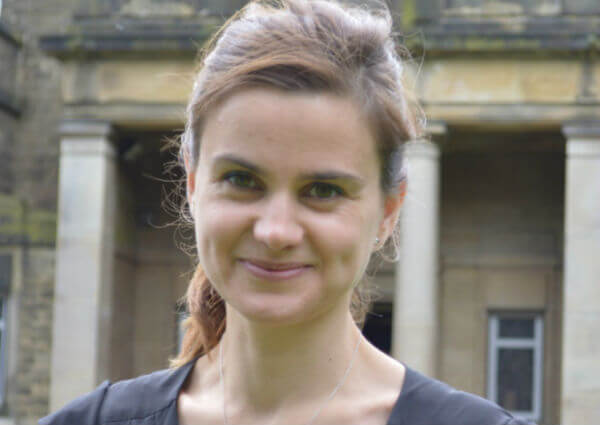
The murder of Jo Cox: An attack on humanity, idealism and democracy

jo-cox

In an editorial, The Guardian says: The slide from civilisation to barbarism is shorter than we might like to imagine. Every violent crime taints the ideal of an orderly society, but when that crime is committed against the people who are peacefully selected to write the rules, then the affront is that much more profound.

The assassination, by stabbing and repeated shooting in the street, of Jo Cox is, in the first instance, an exceptionally heinous villainy, as the killing of a mother of young children is bound to be. It is also, however, and in a very real sense, an attack on democracy. Here was the MP whom the citizens of Batley and Spen had entrusted to represent them, fresh from conducting her duty to solve the practical problems of those same citizens in a constituency surgery. To single her out, at this time and in this place, is to turn a gun on every value of which decent Britons are justifiably proud.

Jo Cox, however, was not just any MP doing her duty. She was also an MP who was driven by an ideal. She explained what that was as eloquently as anyone could in her maiden speech last year. “Our communities have been deeply enhanced by immigration,” the new member said, “be it of Irish Catholics across the constituency or of Muslims from Gujarat in India or from Pakistan, principally from Kashmir. While we celebrate our diversity, what surprises me time and time again as I travel ​around the constituency is that we are far more united and have far more in common with each other than things that divide us.” [Continue reading…]

Facebooktwittermail

British MP Jo Cox, a passionate campaigner for the people of Syria, murdered in Yorkshire

Jeremy Corbyn, leader of Britain’s Labour party has issued this tribute to Jo Cox:

The whole of the Labour party and Labour family – and indeed the whole country – will be in shock at the horrific murder of Jo Cox today.

Jo had a lifelong record of public service and a deep commitment to humanity. She worked both for Oxfam and the anti-slavery charity, the Freedom Fund, before she was elected last year as MP for Batley and Spen – where she was born and grew up.

Jo was dedicated to getting us to live up to our promises to support the developing world and strengthen human rights – and she brought those values and principles with her when she became an MP.

Jo died doing her public duty at the heart of our democracy, listening to and representing the people she was elected to serve. It is a profoundly important cause for us all.

Jo was universally liked at Westminster, not just by her Labour colleagues, but across Parliament.

In the coming days, there will be questions to answer about how and why she died. But for now all our thoughts are with Jo’s husband Brendan and their two young children. They will grow up without their mum, but can be immensely proud of what she did, what she achieved and what she stood for.

We send them our deepest condolences. We have lost a much loved colleague, a real talent and a dedicated campaigner for social justice and peace. But they have lost a wife and a mother, and our hearts go out to them.

The Guardian reported earlier: The Labour MP Jo Cox is in a critical condition after being shot and stabbed multiple times after a constituency meeting. [“Dee Collins, the chief constable of West Yorkshire police, announces that Jo Cox has died.” The Guardian.]

Armed officers responded to the attack near a library in Birstall, West Yorkshire, on Thursday afternoon. A 52-year-old man was arrested in the area, police confirmed. The suspect was named locally as Tommy Mair.

Police added that Cox, the MP for Batley and Spen, had suffered “serious injuries and is in a critical condition”. She has been taken by helicopter to Leeds General Infirmary.

Police also confirmed a man in his late 40s to early 50s nearby suffered slight injuries in the incident. They are also investigating reports that the suspect shouted “Britain first”, a possible reference to the far-right political party of that name, as he launched the attack. [Continue reading…]

BuzzFeed reports: In parliament Cox has proved herself a committed campaigner on the Syrian crisis. Last October she joined forces with Tory former international development secretary Andrew Mitchell to write an article in The Observer calling for more UK action to help desperate families in the region.

She also launched the all-party Parliamentary Friends of Syria group, which she now chairs. Cox abstained in the House of Commons vote on UK airstrikes in Syria, saying she was not against them in principle but “cannot actively support them unless they are part of a plan”.

Cox has described herself as a “huge President Obama fan” – indeed she worked on his first campaign in 2008 – but she has criticised both him and David Cameron for putting Syria on the “too difficult” pile. She warned last month this had led to the biggest refugee crisis in Europe in a generation and the emergence of ISIS. [Continue reading…]

Here is Cox speaking recently on the need to help Syrians.


Here she was giving her maiden speech last year, describing the diverse West Yorkshire constituency she represented:


Facebooktwittermail

What Obama actually thinks about radical Islam

Jeffrey Goldberg writes: It is not a new practice for critics of President Obama to question his commitment to the fight against Islamist terrorism, but Donald Trump, the presumptive Republican presidential nominee, has cast doubt on Obama’s commitment to this struggle in uniquely florid and bizarre ways. On Tuesday, he claimed that Obama “prioritizes” America’s enemies over the American people; on Monday, he insinuated that Obama is sympathetic to the Islamic State terror group. (Read the previous sentence again and ask yourself: How has it come to this?)

Trump’s recent statements about Obama grow from a neurotic belief in the president’s malevolent otherness: On ISIS, Trump said, Obama “doesn’t get it, or he gets it better than anybody understands.” Barack Obama, to Donald Trump, is, and will forever be, the Manchurian President — Manchuria, by way of Kenya, with a detour in Raqqa.

It is true that Trump’s critique of Obama’s handling of terrorism is, among other things, analysis-free and comprehensively unserious, but it is also true is that there are non-hysterical critiques to be made, and not only critiques that concern Obama’s reluctance to describe the threat as one posed by “radical Islam” (a reluctance the president addressed on Tuesday). Critics to Obama’s right fault him for prematurely withdrawing American troops from Iraq, and for not doing enough to prevent Syria from becoming a safe haven for ISIS. His reluctance to involve the U.S. more systematically in the Syrian civil war, the argument goes, has allowed jihadists to fill the vacuum created by the absence of the world’s sole superpower. Some critics on the right also argue that Obama blanches when confronted by the ugly truth about Muslim dysfunction and extremism; political correctness, in this view, hamstrings the president, and makes him obtuse. Critics to Obama’s left, on the other hand, argue that he is killing too many people, particularly through the use of drone strikes, and that his policies are distressingly of a piece with those of his Republican predecessor. The over-militarization of the so-called war on terror, that argument goes, exacerbates a problem that has already been hyped by “Islamophobic” fearmongers. [Continue reading…]

Facebooktwittermail

Andrew Cockburn: Victory assured on the military’s main battlefield — Washington

When it comes to Pentagon weapons systems, have you ever heard of cost “underruns”? I think not. Cost overruns? They turn out to be the unbreachable norm, as they seem to have been from time immemorial. In 1982, for example, the Pentagon announced that the cumulative cost of its 44 major weapons programs had experienced a “record” increase of $114.5 billion. Three decades later, in the spring of 2014, the Government Accountability Office (GAO) reported that the military’s major programs to develop new weapons systems — by then 80 of them — were a cumulative half-trillion dollars over their initial estimated price tags and on average more than two years delayed. A year after, the GAO found that 47 of those programs had again increased in cost (to the cumulative tune of $27 billion) while the average time for delivering them had suffered another month’s delay (although the Pentagon itself swore otherwise).

And little seems to have changed since then — not exactly a surprise given that this has long been standard operating procedure for a Pentagon that has proven adamantly incapable not just of passing an audit but even of doing one. What we’re talking about here is, in fact, more like a way of life. As TomDispatch regular William Hartung has written, the Pentagon regularly takes “active measures to disguise how it is spending the hundreds of billions of taxpayer dollars it receives every year — from using the separate ‘war budget’ as a slush fund to pay for pet projects that have nothing to do with fighting wars to keeping the cost of its new nuclear bomber a secret.”

When it comes to those cost overruns, Exhibit A is incontestably the F-35 Joint Strike Fighter, a plane whose total acquisition costs were pegged at $233 billion back in 2001. That price now: an estimated $1.4 trillion for far fewer planes. (Even the F-35 pilot’s helmet costs $400,000 apiece.) In other words, though in test flights it has failed to outperform the F-16, a plane it is supposed to replace, it will be, hands down (or flaps up), the most expensive weapons system in history — at least until the next Pentagon doozy comes along.

Today, Andrew Cockburn, whose recent book, Kill Chain: The Rise of the High-Tech Assassins (just out in paperback), is a devastating account of how U.S. drone warfare really works, suggests that this is anything but a matter of Pentagon bungling. Quite the opposite, it’s strategy of the first order. Tom Engelhardt

The Pentagon’s real $trategy
Keeping the money flowing
By Andrew Cockburn

These days, lamenting the apparently aimless character of Washington’s military operations in the Greater Middle East has become conventional wisdom among administration critics of every sort. Senator John McCain thunders that “this president has no strategy to successfully reverse the tide of slaughter and mayhem” in that region. Anthony Cordesman of the Center for Strategic and International Studies bemoans the “lack of a viable and public strategy.” Andrew Bacevich suggests that “there is no strategy. None. Zilch.”

After 15 years of grinding war with no obvious end in sight, U.S. military operations certainly deserve such obloquy. But the pundit outrage may be misplaced. Focusing on Washington rather than on distant war zones, it becomes clear that the military establishment does indeed have a strategy, a highly successful one, which is to protect and enhance its own prosperity.

Continue reading

Facebooktwittermail

Second gravitational wave detected from ancient black hole collision

The Guardian reports: Physicists have detected ripples in the fabric of spacetime that were set in motion by the collision of two black holes far across the universe more than a billion years ago.

The event marks only the second time that scientists have spotted gravitational waves, the tenuous stretching and squeezing of spacetime predicted by Einstein more a century ago.

The faint signal received by the twin instruments of the Laser Interferometer Gravitational Wave Observatory (LIGO) in the US revealed two black holes circling one another 27 times before finally smashing together at half the speed of light. [Continue reading…]


Facebooktwittermail

If Omar Mateen was gay, it makes his LGBT nightclub attack more homophobic

Jay Michaelson writes: If Mateen turns out to have been repressing his sexuality, that makes the attack more about homophobia, not less. Now what we have is not a gay-hating radical Islamist but a self-hating gay man who found in Islamist ideology a way to express his animus at everyone and everything.

Nor is this unique to Islam. When Christian fundamentalist Ted Haggard preached vitriolic sermons against homosexuality, it was because of — not despite — his furtive sex dates with a drug-dealing gay masseur. When former senator Larry Craig inveighed against the evils of equality, it was because of — not despite — his own shame around soliciting men for sex in public restrooms.

That is why study after study has shown that the more homophobic one is, the more likely one is to have repressed homosexual desires. If you’re battling your demons in private, you’re going to battle them in public too.

It is also why repressed gay people seek out fundamentalist religion in the first place. Religious fundamentalism sublimates the repressed sexual urge into religious zeal. In its Christian, Muslim, and Jewish forms, it insists that we are all struggling with evil urges that must be assiduously repressed. And its restrictions on sexual expression, coupled with often single sex male environments, work just fine for those who couldn’t express their sexuality in an “acceptable” way anyway.

Once again, that is as true for “celibate” Catholic priests as it is for ultra-Orthodox Jews as it is for born-again evangelicals as it is for newly radicalized Muslims. The logic of fundamentalist religion is the logic of repression and sublimation, of projecting one’s own inner struggles onto the screen of the theological.

I know this from personal experience. For 10 years, I lived my life as a closeted, Orthodox Jew. I wasn’t closeted because I was Orthodox; I was Orthodox because I was closeted. [Continue reading…]

Facebooktwittermail

After Orlando, gay rights moves off diplomatic back burner

The New York Times reports: For years, diplomats were more comfortable talking about nuclear warheads than sexual orientation.

Sexual orientation was one of those subjects burdened with too many cultural sensitivities. American officials, even if they wanted to advance it on the diplomatic agenda, were wary of offending their allies, not least in the Islamic world.

The attack on a gay nightclub in Orlando, Fla., moved the needle.

In its aftermath, the United States corralled an unlikely group of countries to support a United Nations Security Council statement that condemned the attack for “targeting persons as a result of their sexual orientation.” Even Egypt and Russia — not known for embracing their gay and lesbian citizens — signed on, after what diplomats called intense consultations.

Earlier in the day, the United States delivered a pointed rebuke to countries that block gay rights at the United Nations, urging them to “contribute more than condolences and condemnations” after the Orlando attack.

And American embassies in several countries, including India, which still has an anti-sodomy law on the books, draped themselves in the colors of the rainbow flag that signifies gay pride.

The Security Council statement, which was drafted by the United States and issued Monday, carries no legal weight. But it is the first time that the powerful institution, with the capacity to authorize wars, weighed in on sexual orientation.

Homosexuality is still a crime in 73 of the world’s 193 countries, according to the International Lesbian, Gay, Bisexual, Trans and Intersex Association; in 13, the death penalty can be applied. In some countries, like Egypt, laws against “debauchery” are used to target gays. Russian law prohibits what it calls “propaganda on nontraditional sexual relationships,” which critics call a thinly veiled measure to harass gay men and lesbians.

“We’re hopefully moving into an era when gross acts of violence are condemned by global leaders rather than when violence motivated by sexual orientation or gender identity” is “dismissed as irrelevant or unworthy,” said Jessica Stern, the executive director of OutRight Action International, an advocacy group.

Still, she said, the United States will be able to sway others only if it can protect its own citizens. “The more we demonstrate respect for Muslim Americans and the more violence we prevent domestically by passing meaningful gun control, the more credible we are likely to be as a global leader,” she said. [Continue reading…]

Facebooktwittermail

The Orlando shooter may have been gay? The gay community isn’t surprised

Dave Cullen writes: My mantra after every mass-shooting tragedy is and always will be: don’t jump to conclusions too quickly, especially on motive. It’s healthy to discuss possibilities, particularly as the evidence piles up, but remember that early facts often turn out to point in the wrong direction. The media and even the president lunged way too quickly to assume that the Orlando massacre was an act of international terrorism, which it may or may not have been. Today we’re all asking a different question: Was the shooter gay? A rapidly accumulating set of evidence — including reports that he had been to Pulse in the years prior to the shooting — suggests that he was, or that he was still struggling with gay urges. But he might also just have been casing the place.

The idea that the killer, Omar Mateen, was gay himself may sound baffling, and much of the national media has treated it that way in the day or so since news of his bar-hopping habits surfaced. But it’s no surprise to most gay people. Many of my gay friends assumed as much from the beginning, and predicted this before the first scraps of evidence surfaced. It sounds as if he was a self-loathing gay — which is almost the same as saying he was just coming to terms with being gay. Has anyone ever discovered his gayness and not wanted to tear it out of himself?

Most of us haven’t just known that guy, we’ve been that guy. I never touched a man, or admitted how badly I wanted to, until I was 28. That initiated a seven-year bi phase, which I called “experimenting” for the first half, even after a friend said, “Experimenting? How many times do you need to rerun the experiment?” I had slept with at least a hundred men by then. Still not convinced. Hmmm.[Continue reading…]

Facebooktwittermail