Reuters reports: In September, U.S. State Department officials invited a foreign delegation to the Guantanamo Bay detention center to persuade the group to take detainee Tariq Ba Odah to their country. If they succeeded, the transfer would mark a small step toward realizing President Barack Obama’s goal of closing the prison before he leaves office.
The foreign officials told the administration they would first need to review Ba Odah’s medical records, according to U.S. officials with knowledge of the episode. The Yemeni has been on a hunger strike for seven years, dropping to 74 pounds from 148, and the foreign officials wanted to make sure they could care for him.
For the next six weeks, Pentagon officials declined to release the records, citing patient privacy concerns, according to the U.S. officials. The delegation, from a country administration officials declined to identify, canceled its visit. After the administration promised to deliver the records, the delegation traveled to Guantanamo and appeared set to take the prisoner off U.S. hands, the officials said. The Pentagon again withheld Ba Odah’s full medical file.
Today, nearly 14 years since he was placed in the prison and five years since he was cleared for release by U.S. military, intelligence and diplomatic officials, Ba Odah remains in Guantanamo. [Continue reading…]
Category Archives: Analysis
To what extent might Stephen Hawking and Elon Musk be right about the dangers of artificial intelligence?

Suzanne Sadedin, an evolutionary biologist, writes: I think they are right that AI is dangerous, and they are dangerously wrong about why. I see two fairly likely futures.
Future 1: AI destroys itself, humanity and most or all life on earth, probably a lot sooner than in 1000 years.
Future 2: Humanity radically restructures its institutions to empower individuals, probably via transhumanist modification that effectively merges us with AI. We go to the stars.
Right now, we are headed for Future 1, but we could change this. Much as I admire Elon Musk, his plan to democratise AI actually makes Future 1 more, not less, likely.
Here’s why:
There’s a sense in which humans are already building a specific kind of AI; indeed, we’ve been gradually building it for centuries. This kind of AI consists of systems that we construct and endow with legal, real-world power. These systems create their own internal structures of rules and traditions, while humans perform fuzzy brain-based tasks specified by the system. The system as a whole can act with an appearance of purpose, intelligence and values entirely distinct from anything exhibited by its human components.
All nations, corporations and organisations can be considered as this kind of AI. I realise at this point it may seem like I’m bending the definition of AI. To be clear, I’m not suggesting organisations are sentient, self-aware or conscious, but simply that they show emergent, purpose-driven behaviour equivalent to that of autonomous intelligent agents. For example, we talk very naturally about how “the US did X”, and that means something entirely different from “the people of the US did X” or “the president of the US did X”, or even “the US government did X”.
These systems can be entirely ruthless toward individuals (just check the answers to What are some horrifying examples of corporate evil/greed? and What are the best examples of actions that are moral, even uplifting, but illegal? if you don’t believe me). Such ruthlessness is often advantageous — even necessary, because these systems exist in a competitive environment. They compete for human effort, involvement and commitment. Money and power. That’s how they survive and grow. New organisations, and less successful ones, copy the features of dominant organisations in order to compete. This places them under Darwinian selection, as Milton Friedman noted long ago.
Until recently, however, organisations have always relied upon human consent and participation; human brains always ultimately made the decisions, whether it was a decision to manufacture 600 rubber duckies or drop a nuclear bomb. So their competitive success has been somewhat constrained by human values and morals; there are not enough Martin Shkrelis to go around.
With the advent of machine learning, this changes. We now have algorithms that can make complex decisions better and faster than any human, about practically any specific domain. They are being applied to big data problems far beyond human comprehension. Yet these algorithms are still stupid in some ways. They are designed to optimise specific parameters for specific datasets, but they’re oblivious to the complexity of the real-world, long-term ramifications of their choices. [Continue reading…]
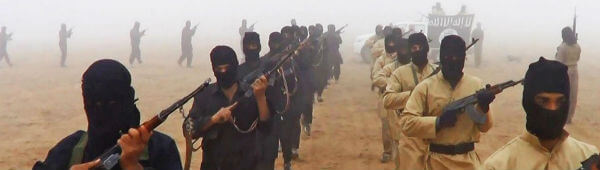
Terror: After Paris, Tunisia and California, can we stop it spreading?

Jason Burke writes: On a bleak day in November, Annelise Augustyns led her two children to the playground near their home in Brussels. Just over a week before, Islamist militants had killed 130 people and injured many more in a series of attacks in Paris. The Belgian capital had been under unprecedented lockdown for three days amid fears of a new attack there. Several of the Paris attackers had been traced to the Brussels neighbourhood of Molenbeek, a few miles from Augustyns’ apartment. They included at least one man who was now on the run.
To protect the population, the Belgian government had shut schools, cancelled sporting events and deployed soldiers on the streets. If the scenes were reminiscent of earlier conflicts, the enemy now was very different: a hybrid terrorist and insurgent entity in the Middle East calling itself the Islamic State.
Augustyns, a local government administrator, glanced at the armoured vehicle posted outside the entrance of the Gare du Midi. “We are worried of course,” she told me. “But what to do? We have to get on with our lives.”
Her words summed up the feelings of many across Europe that week, and indeed across much of the world last year. If 2014 was a year that set a grisly new record in the number of casualties inflicted by terrorist attacks – 33,000 people were killed, almost double the year before – then 2015 appears to have been worse. [Continue reading…]
U.S. foreign arms deals surge by 35% in 2014
The New York Times reports: Foreign arms sales by the United States jumped by almost $10 billion in 2014, about 35 percent, even as the global weapons market remained flat and competition among suppliers increased, a new congressional study has found.
American weapons receipts rose to $36.2 billion in 2014 from $26.7 billion the year before, bolstered by multibillion-dollar agreements with Qatar, Saudi Arabia and South Korea. Those deals and others ensured that the United States remained the single largest provider of arms around the world last year, controlling just over 50 percent of the market.
Russia followed the United States as the top weapons supplier, completing $10.2 billion in sales, compared with $10.3 billion in 2013. Sweden was third, with roughly $5.5 billion in sales, followed by France with $4.4 billion and China with $2.2 billion.
South Korea, a key American ally, was the world’s top weapons buyer in 2014, completing $7.8 billion in contracts. It has faced continued tensions with neighboring North Korea in recent years over the North’s nuclear weapons program and other provocations. The bulk of South Korea’s purchases, worth more than $7 billion, were made with the United States and included transport helicopters and related support, as well as advanced unmanned aerial surveillance vehicles.
Iraq followed South Korea, with $7.3 billion in purchases intended to build up its military in the wake of the American troop withdrawal there. [Continue reading…]
The most unconventional weapon in Syria: Wheat

Annia Ciezadlo writes: In the fall of 2012, fighters from the Free Syrian Army took over Eastern Ghouta, a semi-agricultural area about eight miles northeast of Damascus. Government forces responded by placing the area under siege, cutting off water, electricity, gas, medical assistance and bread.
The regime’s goal was to starve the people of Eastern Ghouta into submission, and it was working: The price of bread and rice went up 50 times. Locals were living on animal feed or sometimes eating nothing at all. “They began to wage war against the people even through their daily bread,” says Majd al-Dik, an aid worker for a Syrian humanitarian group called Spring of Life.
Nine months later, the Free Syrian Army mounted a military operation in a regime-controlled area called al-Matahin, the Mills, just outside Eastern Ghouta. Its objective was a flour mill, flanked by two rows of grain silos that housed part of the Syrian government’s strategic wheat reserves — a potent weapon in the conflict that now, after 4 1/2 years, has killed at least a quarter of a million people. If the opposition could capture the mill, it could keep the wheat, break the siege, gain a strategic point on the airport road — and perhaps even make some money.
The firefight lasted a day and a half. Before the battle ended on the second day, anti-government fighters sent a message via walkie-talkie to aid workers waiting inside Eastern Ghouta: We are in partial control of the mill. Come and help us get the flour. Dik and other volunteers drove toward the mill, taking a back road to avoid government snipers.
When they arrived, they were alarmed to see about 80 people, mostly civilians. Everyone in Eastern Ghouta had heard that there would be flour, and some people were desperate enough to run through shelling and sniper fire to get it. Locals climbed out of their cars and rushed toward the mill, eager to grab the sacks of flour inside the central storage area. The fighters tried to stop them, but they kept coming.
“They explained that they were hungry,” Dik says, “and they were ready to die just to be able to eat.” Too many of them would make exactly that sacrifice.
Bread is the staple food in the Middle East. Daily bread is “liqmet aeesh” — a Levantine idiom that translates as “morsel of life.” In addition to its crucial carbohydrates, it is the main source of protein for many people in poor and rural areas. “You can’t imagine life without bread,” says a Syrian aid worker from Aleppo, who spoke on the condition of anonymity. “The calories, the energy it gives you, is equivalent to anything else you eat. Except it’s a lot cheaper. So there’s a chance for survival.”
The Syrian government understands the importance of bread. So does the Islamic State, as well as the constellation of other armed groups vying to control the country’s land and its people. Strategically, bread is as important as oil or water. Civilians are dependent on the authority that distributes it, and profiteers are eager to resell it to hungry people at grotesque prices. “When you control bread and fuel,” says a Syrian analyst from Damascus who spoke on the condition of anonymity, “you control the whole society.” [Continue reading…]
Syria rebel group will survive leader’s death
Hassan Hassan writes: Zahran Alloush, the former leader of Jaish Al Islam who was killed by Russian air strikes on Friday evening near Damascus, was more widely mourned than any other opposition figure since the start of the Syrian conflict. He has also been condemned for having made sectarian statements alluding to the extermination of Shia in Syria.
Sectarian statements are unjustifiable because they stoke tensions in an already polarised landscape. Jaish Al Islam was guilty of playing a cynical game of religious one-upmanship against extremist groups, especially at the height of religious polarisation in late 2013, during the Hizbollah-led offensive inside Syria. But it is a mistake to equate the group with extremist organisations, especially since such statements by no means reflect the group’s intentions or actions.
People who met Alloush and members of his faction, including members of Syria’s religious minorities, challenged such perceived views. Bassam Malouf, a Christian dissident, for example, recalled a meeting he had with Alloush, in which the former warned against targeting Christian churches in the suburbs of Damascus where the faction operated. Alloush replied, according to Mr Malouf, referring to Christians, by saying: “You are part of us and we are part of you. We will not allow anybody to violate the sanctity of homes, churches or people. Even Alawites, they are not our enemies, they are victims of the regime.”
Mr Malouf added: “His religious discourse was meant to encourage young people living under siege to join Jaish Al Islam and pull them away from ISIL.”
Alloush was one of the earliest, if not the earliest, rebel leader to unequivocally and consistently combat ISIL. Unlike other forces that reluctantly or intermittently fought ISIL, Jaish Al Islam can be credited for single-handedly preventing ISIL from establishing a foothold for itself in the areas it controlled near Damascus. If ISIL is a minor player at the outskirts of Damascus, it is because of Jaish Al Islam. [Continue reading…]
Syrian rebel leader killed in airstrike: Who was Zahran Alloush?
Aron Lund writes: Mohammed Zahran Alloush (1971-2015), also known as Abu Abdullah, was a salafi activist from Douma, a town east of Damascus in the Ghouta region. His father, Abdullah Alloush, is a salafi theologian resident in Saudi Arabia.
Alloush was arrested several times before the uprising for his religious and political activism and sent to the ”Islamist wing” of the Seidnaia prison north of Damascus. There, he formed close connections to many other Syrian Islamists, including people who now run large rebel factions like Ahrar al-Sham. He was released from jail in June 2011 and quickly joined the armed uprising, eventually emerging as the strongman of his home region in the Eastern Ghouta and one of the most powerful rebel leaders in all of Syria.
He was also one of the most controversial ones. His supporters were taken in by his forceful personality and his personal bravery, as a commander who lived with his men in the warzone and visited the frontline. They admired his knack for organization and politics and credited him with the semi-stability that reigned inside the besieged Eastern Ghouta enclave—a bombed out and starved suburban region that resembles nothing so much as a giant version of the Gaza Strip in Palestine. The Ghouta has been under constant pressure since the marginalized Sunni suburbs of Damascus, where hatred against Bashar al-Assad and his government ran strong, began to throw out the police and security servies in 2011 and 2012. Since then, the region has been under siege and functioned as a world of its own. Holding the frontline in Damascus, where Assad has concentrated so much of his army, was no small feat and it was much thanks to Alloush’s men. Coordinating the rebels there and limiting their infighting was no less of an achievement, especially considering the all-out chaos that reigned in other areas of Syria, where conditions were much better. For many supporters of the opposition, defending and stabilizing the Eastern Ghouta despite unceasing war and artillery bombardment, including with nerve gas, was enough to make Zahran Alloush a hero of the Syrian revolution. Continue reading
Stateless in Europe: ‘We are no people with no nation’
The Guardian reports: Sitting in the living room of her Berlin apartment, Sanaa* [her and her daughter’s name have been changed] watches proudly as her one-year-old daughter clings to the edge of a coffee table and hauls herself to her feet. Siba* squeals with delight, then drops back down with a giggle. Being a single mother is hard work, but filled with daily rewards. Sanaa, who fled the Syrian war, is just thankful for the chance to raise a child.
Experts are warning that children such as Siba could turn into a stateless generation. Though the infant was born in Berlin after her mother arrived from Damascus, there is no automatic German citizenship. And under Syrian law, a child can only inherit nationality from its father. As a single mother, Sanaa was well aware that Siba would be stateless.
“There is no paper for Siba in Syria. Because it’s the law, you don’t have any relations before you are married. People have boyfriends but it’s secret,” Sanaa says. “We just grow up and this is the rule. We didn’t know that the women in other countries can give their nationality [to their children], or we didn’t care because we would get married and the child would have a nationality.”[Continue reading…]
Did Erdogan give up Gaza in return for Israeli gas?
Kadri Gursel writes: Days before Israeli media broke the news of a preliminary Turkish-Israeli deal to normalize ties, Turkish President Recep Tayyip Erdogan had thrown a signal flare of impending moves to settle the Mavi Marmara crisis between the two countries.
Speaking to journalists on a flight back from Turkmenistan on Dec. 13, Erdogan broke with his usual hostile rhetoric against Israel, saying that “Turkish-Israeli rapprochement is vital for the region” and that normalizing ties would be “to the benefit of the whole region.” He then reiterated his three conditions for reconciliation: first, an Israeli apology for the killing of 10 Turks, including one with US citizenship, in the Israeli raid on the Mavi Marmara ferry on May 31, 2010, as it sailed in international waters in the Mediterranean with 590 activists aboard, mostly Turks, seeking to break the naval blockade of the Gaza Strip; second, the payment of compensation to the families of the victims; and third, the lifting of Israel’s naval blockade on Gaza.
Four days later, the Israeli daily Haaretz reported, “Israel and Turkey have reached understanding on the outlines of a reconciliation agreement that would put an end to the long crisis in relations between the two countries and normalize ties.” [Continue reading…]
Stress amplifies the illusion of control

Bob Henderson writes: I’d lost almost $200 million in October. November wasn’t looking any better.
It was 2008, after the Lehman Brothers bankruptcy. Markets were in turmoil. Banks were failing left and right. I worked at a major investment bank, and while I didn’t think the disastrous deal I’d done would cause its collapse, my losses were quickly decimating its commodities profits for the year, along with the potential pay of my more profitable colleagues. I thought my career could be over. I’d already started to feel those other traders and salespeople keeping their distance, as if I’d contracted a disease.
I landed in London on the morning of November 4, having flown overnight from New York. I was a derivatives trader, but also the supervisor of the bank’s oil options trading team, about a dozen guys split between Singapore, London, and New York. Until this point I’d managed the deal almost entirely on my own, making the decisions that led to where I … we … were now. But after a black cab ride from Heathrow to our Canary Wharf office, I got the guys off the trading floor and into a windowless conference room and confessed: I’d tried everything, but the deal was still hemorrhaging cash. Even worse, it was sprouting new and thorny risks outside my area of expertise. In any case, the world was changing so quickly that my area of expertise was fast becoming obsolete. I pleaded for everyone to pitch in. I said I was open to any ideas.
As I spoke, I noticed that one of the guys had tears welling up in his eyes. I paused for a second, stunned. Then my own eyes started to fill from a sudden wash of gratitude and relief that came, I think, from no longer being alone.
Stress testing is a standard technique derivatives traders use to test how their portfolio will perform in an imagined “worst-case” scenario. The problem is that “worst-case” is subjective, making stress testing as much of an art as a science, and exposing the trader doing the testing to something called the “illusion of control.” [Continue reading…]
Soil loss: An unfolding disaster that will have catastrophic effects on world food production

The Guardian reports: The world has lost a third of its arable land due to erosion or pollution in the past 40 years, with potentially disastrous consequences as global demand for food soars, scientists have warned.
New research has calculated that nearly 33% of the world’s adequate or high-quality food-producing land has been lost at a rate that far outstrips the pace of natural processes to replace diminished soil.
The University of Sheffield’s Grantham Centre for Sustainable Futures, which undertook the study by analysing various pieces of research published over the past decade, said the loss was “catastrophic” and the trend close to being irretrievable without major changes to agricultural practices.
The continual ploughing of fields, combined with heavy use of fertilizers, has degraded soils across the world, the research found, with erosion occurring at a pace of up to 100 times greater than the rate of soil formation. It takes around 500 years for just 2.5cm of topsoil to be created amid unimpeded ecological changes. [Continue reading…]
The magical Solar System discoveries we made in 2015
By Monica Grady, The Open University
It has been a busy year for Solar System exploration – and particularly our galactic neighbourhood’s small icy bodies. Comets, asteroids, Kuiper Belt Objects and planetary satellites have all been in the news – from stunning images of comet 67P Churyumov-Gerasimenko at the start of the year, to the recent close-up of Saturn’s moon, Enceladus, via Ceres and Pluto.
Early January was a continuation of the stream of data from Rosetta, as comet 67P drew closer to the sun. Images were released of jets emanating from the sun-facing surface, from which it could be seen that sublimation of water-ice increased during the daytime, and died down at night. But because the dark surface of the comet retained some heat, the comet was not completely inactive at night – it was possible that fluid might exist for very short periods, leading to sub-surface hydrous activity.

ESA/Rosetta/MPS for OSIRIS Team MPS/UPD/LAM/IAA/SSO/INTA/UPM/DASP/IDA, CC BY-SA
One of the other significant results from Rosetta was recognition from magnetic measurements that the two lobes of the comet had been separate bodies, presumably brought together by collision.
Closest approach to the sun was in mid-August, a few weeks after the Philae lander signalled that it had woken up after its enforced hibernation. Unfortunately, communication between Rosetta and Philae could not be established reliably, leaving a certain amount of frustration that additional data could not be acquired from the surface.
Britain: Saudi Arabia’s silent partner in Yemen’s civil war

At a hospital in Yemen’s capital, Sana’a, 18-month-old Faisal is treated for severe acute malnutrition. His mother braved a two-day journey to take him to the hospital from her village – a trip that would have taken four hours by bus in peace time.
The Independent reports: If you were told that British fighter jets and British bombs were involved in a Middle Eastern war which has left thousands of civilians dead, you could be forgiven for assuming this referred to Iraq, or perhaps the more recent UK aerial campaign extended to Syria.
What is less likely to spring to mind is another, forgotten conflict in the region – a war sponsored by the UK that is rarely talked about. For the past nine months, British-supplied planes and British-made missiles have been part of near-daily air raids in Yemen carried out by a nine-country, Saudi Arabian-led coalition.
In this conveniently hidden campaign, thousands have died. Bombardments by the Saudi coalition accounted for 60 per cent of the 4,493 civilian casualties in the first seven months of this year. Saudi Arabia waded into what began as a domestic political power struggle between the country’s incumbent president, Abd Rabbu Mansour Hadi, and his predecessor of 33 years’ standing, Ali Abdullah Saleh. The marginalised, predominantly Shia Houthi militiamen, viewed as an Iranian proxy by the Sunni kingdom, joined forces with Saleh’s loyalists in the military to seize swathes of territory over the past 18 months, eventually forcing Hadi into self-imposed exile in Riyadh earlier this year. [Continue reading…]
The mercenaries commanding UAE forces in Yemen
Middle East Eye reports: An Australian citizen is the commander of an elite UAE military force deployed in Yemen as part of the Saudi-led coalition, which human rights groups accuse of war crimes.
Mike Hindmarsh, 59, is a former senior Australian army officer who is publicly listed as commander of the UAE’s Presidential Guard.
The Presidential Guard is a unit of marines, reconnaissance, aviation, special forces and mechanised brigades, according to the US State Department website.
Hindmarsh oversaw the guard’s formation in early 2010 shortly after he took up his estimated $500,000-a-year, tax-free job in Abu Dhabi, where he reports directly to Crown Prince Mohammed bin Zayed al-Nahyan.
The Presidential Guard has been lauded for playing a key role in the Saudi-led coalition seeking to reinstall the exiled Yemeni government of President Abd Rabbuh Mansour Hadi. [Continue reading…]
America moving left — and right

Peter Beinart writes: By the time Barack Obama defeated Hillary Clinton for the Democratic presidential nomination in 2008, in part because of her support for the Iraq War, the mood inside the party had fundamentally changed. Whereas the party’s most respected thinkers had once urged Democrats to critique liberal orthodoxy, they now criticized Democrats for not defending that orthodoxy fiercely enough. The presidency of George W. Bush had made Democrats unapologetically liberal, and the presidency of Barack Obama was the most tangible result.
But that’s only half the story. Because if George W. Bush’s failures pushed the Democratic Party to the left, Barack Obama’s have pushed it even further. If Bush was responsible for the liberal infrastructure that helped elect Obama, Obama has now inadvertently contributed to the creation of two movements — Occupy and Black Lives Matter — dedicated to the proposition that even the liberalism he espouses is not left-wing enough.
Given the militant opposition Obama faced from Republicans in Congress, it’s unclear whether he could have used the financial crisis to dramatically curtail Wall Street’s power. What is clear is that he did not. Thus, less than three years after the election of a president who had inspired them like no other, young activists looked around at a country whose people were still suffering, and whose financial titans were still dominant. In response, they created Occupy Wall Street.
When academics from the City University of New York went to Zuccotti Park to study the people who had taken it over, they found something striking: 40 percent of the Occupy activists had worked on the 2008 presidential campaign, mostly for Obama. Many of them had hoped that, as president, he would bring fundamental change. Now the collapse of that hope had led them to challenge Wall Street directly. “Disenchantment with Obama was a driver of the Occupy movement for many of the young people who participated,” noted the CUNY researchers. In his book on the movement, Occupy Nation, the Columbia University sociologist Todd Gitlin quotes Jeremy Varon, a close observer of Occupy who teaches at the New School for Social Research, as saying, “This is the Obama generation declaring their independence from his administration. We thought his voice was ours. Now we know we have to speak for ourselves.”
For a brief period, Occupy captured the nation’s attention. In December 2011, Gitlin notes, the movement had 143 chapters in California alone. Then it fizzled. But as the political scientist Frances Fox Piven has written, “The great protest movements of history … did not expand in the shape of a simple rising arc of popular defiance. Rather, they began in a particular place, sputtered and subsided, only to re-emerge elsewhere in perhaps a different form, influenced by local particularities of circumstance and culture.”
That’s what happened to Occupy. The movement may have burned out, but it injected economic inequality into the American political debate. (In the weeks following the takeover of Zuccotti Park, media references to the subject rose fivefold.) The same anger that sparked Occupy — directed not merely at Wall Street but at the Democratic Party elites who coddled it—fueled Bill de Blasio’s election and Elizabeth Warren’s rise to national prominence. And without Occupy, it’s impossible to understand why a curmudgeonly Democratic Socialist from Vermont is seriously challenging Hillary Clinton in the early primary states. The day Bernie Sanders announced his candidacy, a group of Occupy veterans offered their endorsement. In the words of one former Occupy activist, Stan Williams, “People who are involved in Occupy are leading the biggest group for Bernie Sanders. Our fingers are all over this.”
It’s true that Americans have grown more conservative on some issues over the past few years. Support for gun control has dropped in the Obama era, even as the president and other Democrats have pursued it more aggressively. Republicans also enjoy a renewed advantage on combatting international terrorism, an issue whose salience has grown with the rise of the Islamic State. Still, in an era when government has grown more intrusive, African American activists have grown more confrontational, and long-standing assumptions about sexual orientation and gender identity have been toppled, most Americans are not yelling “stop,” as they began doing in the mid-1960s. The biggest reason: We’re not dealing with the same group of Americans.
On issue after issue, it is the young who are most pleased with the liberal policy shifts of the Obama era, and most eager for more. In 2014, Pew found that Americans under 30 were twice as likely as Americans 65 and older to say the police do a “poor” job of “treating racial, ethnic groups equally” and more than twice as likely to say the grand jury in Ferguson was wrong not to charge Darren Wilson in Michael Brown’s death. According to YouGov, more than one in three Americans 65 and older think being transgender is morally wrong. Among Americans under 30, the ratio is less than one in five. Millennials — Americans roughly 18 to 34 years old — are 21 percentage points less likely than those 65 and older to say that immigrants “burden” the United States and 25 points more likely to say they “strengthen” the country. Millennials are also 17 points more likely to have a favorable view of Muslims. [Continue reading…]
Still, these measures are relative.
In a recent poll of support for Trump among Millennials, 32.2% of young adults aged 18-24 said they would support his ban on Muslims entering the U.S. They were outnumbered by 46.4% being opposed, but the fact that opposition was not found in an overwhelming majority is telling.
As much as it might be true that the Bush era provoked a backlash that pushed America leftward, the ideology of the war on terrorism can be viewed by its advocates as a success in this sense: the core issue perceived by most Americans is their experience of insecurity and any remedy for that insecurity must make them feel safe.
Many Americans express opposition to policies instituted in the name of counterterrorism and yet simultaneously harbor the multifaceted fears which have become a core component in American consciousness.
Insecurity comes in many forms — economic insecurity, fear of police brutality, fear of terrorism, fear of immigrants — but whenever the problem is fear, the remedy is security.
The fact that fear has become the foundation of the American zeitgeist is evident in the varieties of isolationism found across the political spectrum.
Isolationism on the right calls for increased defense spending and stronger borders, while on the left it promotes anti-interventionism and a broad disengagement from global affairs.
This inward turning has happened not only collectively, but also individually. No generation has become less trusting of others than are Millennials.
Where trust is so lacking, how can mass movements grow? Where will a sense of human solidarity take root?
Consider the tepid response to Donald Trump’s proposal to exclude Muslims from America. As much as he might have provoked many expressions of principled outrage, why has he not been countered by calls for a massive increase in refugee intake?
The United States is almost 30 times the size of Germany and has four times the population. If the U.S. was to match Germany in its willingness to welcome refugees, President Obama, following Chancellor Merkel’s lead, would be saying we need to accept four million and not a paltry 10,000.
There are 300 cities larger than 100,000 population across America and if all were to accept an average of 500 refugees, this would only amount to a modest intake of 150,000.
The number of Syrian refugees granted asylum in the U.S. in 2015 amounted to one per 172,000 Americans.
Let’s suppose that Americans were to feel collectively strong enough that 1,000 would still feel safe if they were to welcome just one refugee in their communities. This would result in an intake of 322,000 refugees.
The issue here has much less to do with an economic burden or national security, than it has with xenophobic paranoia.
That paranoia might be at its highest concentration in Trump’s America, but it seems to exist in varying dilutions across much of the rest of this nation.
Among the presidential candidates, as the self-declared socialist, Bernie Sanders should have taken the boldest stand on Syrian refugees and he has called on his supporters to sign a petition saying “we should not turn our backs on these refugees escaping violence in the Middle East” — a feel-good sentiment. But when it comes to a call for action, all he appealed for was this:
Support continuing the refugee program that promises to resettle 10,000 Syrians, mostly women and children, who are escaping violence in their home country.
Perhaps he and those in his campaign who arrived there from the Occupy movement personally favor a more radical response to the refugee crisis but have refrained from advocating for this because they believe it would undermine Sander’s electoral viability. Or perhaps this timidity is their own.
Either way, this purported antidote to “anti-immigrant hysteria” nevertheless seems to accommodate rather than challenges America’s more pervasive fears.

ISIS’s countercultural appeal is real

Simon Cottee writes: If you want to get a sense of what attracts westernized Muslims to ISIS, you could do worse than listen to one of its sympathizers, as opposed to its legion of opponents, who are liable to pathologize the group’s appeal as an ideological contagion that infects the weak, instead of taking it seriously as a revolutionary movement that speaks to the young and the strong-minded.
Check out, as just one of many examples, the Twitter user “Bint Emergent”: an apparent ISIS fangirl and keen observer of the jihadist scene. (Bint Emergent has not disclosed her identity, or gender, but bint is an honorific Arabic word for girl or daughter; like umm — mother in Arabic — bint features prominently in the Twitter display names of female ISIS sympathizers.)
“Jihadis,” she explains on her blog BintChaos, “look cool — like ninjas or video game warriors — gangstah and thuggish even — the opposition doesnt.” She concedes that “There aren’t a lot of jihadist ‘poster-girls’ displayed—they all wear niqab [face veil], but sometimes its tastefully accessorized with an AK47 or a bomb belt.” By contrast, “Team CVE [a reference to Countering Violent Extremism, or Anglo-American counterterrorism entrepreneurs whose role, state- or self-appointed, is to challenge “extremist” narratives],” consists “mostly [of] middleaged white guys with a smidgin of scared straight ex-mujahids [ex-jihadists] and a couple middleaged women.” [Continue reading…]
Turkey’s Kurdish cities become war zones
The Wall Street Journal reports: Turkey’s stepped-up military campaign to crush Kurdish insurgents has reduced some urban neighborhoods in the southeast of the country to battle zones, raising fears the conflict could escalate and spread elsewhere in the country unless peace talks resume.
Since the government last week declared what it called a “decisive” campaign to end five months of limited violence between Kurds and government security forces, young Kurdish militants in the cities of Diyarbakir, Cizre, Silopi and Nusaybin have been targeted by Turkish tanks, helicopters, artillery and snipers, according to local residents and news reports from the region.
Militants in the mainly Kurdish cities have erected barricades to seal off neighborhoods they’ve declared outside the authority of the Turkish state, and are using AK-47s, rocket launchers and homemade bombs to defend the enclaves, these residents say.
Turkish officials said Wednesday that about 170 Kurdish militants and at least 11 members of Turkey’s security services have been killed since the government’s announcement last week.
The rising death toll has raised concerns among human-rights groups, the U.S. and the European Union that the fighting could expand beyond southeastern Turkey and become more indiscriminate if both sides fail to heed appeals by Washington and Brussels to stop fighting and return to negotiations. [Continue reading…]
A Christmas of despair for Syrian Christian refugees in Lebanon

The Washington Post reports: Not so many years ago, Christmas Day for the Kouriehs began with Mass at the village church. The family would return home for an afternoon feast of rice and meat with sides of salad and hummus.
Neighbors would stop by to extend holiday greetings. Children would play next to the Christmas tree.
That was before the Islamic State and other extremists started kidnapping Christians like the Kouriehs, before the relentless violence, before civil war tore apart their country.
That was before the Kouriehs had to flee Syria for their lives.
“It used to be beautiful there,” Joseph Kourieh, 57, recalled from the dilapidated apartment in Lebanon’s capital, Beirut, where he, his wife and five of his grown children now live.
More than a million Syrians have taken refuge in neighboring Lebanon, a country of barely 4 million people that can hardly cope with the influx. Among the mostly Muslim refugees are hundreds and possibly thousands of Syrian Christian families that also endure the hardship and humiliation of displacement. [Continue reading…]