Category Archives: Analysis

Will we ever understand the beginning of the universe?

blakes-rock2

Ross Andersen writes: One crisp day last March, Harvard professor John Kovac walked out of his office and into a taxicab that whisked him across town, to a building on the edge of the MIT campus. People were paying attention to Kovac’s comings and goings that week. He was the subject of a fast-spreading rumour. Kovac is an experimental cosmologist midway through the prime of a charmed career. He did his doctoral work at the University of Chicago and a postdoc at Caltech before landing a professorship at Harvard. He is a blue chip. And since 2009, he has been principal investigator of BICEP2, an ingenious scientific experiment at the South Pole.

Kovac had come to MIT to visit Alan Guth, a world-renowned theoretical cosmologist, who made his name more than 30 years ago when he devised the theory of inflation. Guth told Kovac to take the back steps up to his office, to avoid being seen. If Guth’s colleagues caught a glimpse of the two men talking, the whispers swirling around Kovac would have swelled to a roar.

The science of cosmology has achieved wonders in recent centuries. It has enlarged the world we can see and think about by ontological orders of magnitude. Cosmology wrenched the Earth from the centre of the Universe, and heaved it, like a discus, into its whirling orbit around one unremarkable star among the billions that speed around the black-hole centre of our galaxy, a galaxy that floats in deep space with billions of others, all of them colliding and combining, before they fly apart from each other for all eternity. Art, literature, religion and philosophy ignore cosmology at their peril.

But cosmology’s hot streak has stalled. Cosmologists have looked deep into time, almost all the way back to the Big Bang itself, but they don’t know what came before it. They don’t know whether the Big Bang was the beginning, or merely one of many beginnings. Something entirely unimaginable might have preceded it. Cosmologists don’t know if the world we see around us is spatially infinite, or if there are other kinds of worlds beyond our horizon, or in other dimensions. And then the big mystery, the one that keeps the priests and the physicists up at night: no cosmologist has a clue why there is something rather than nothing. [Continue reading…]


Facebooktwittermail

War by other means in the shadow of globalization

destruction

Peter Pomerantsev writes: perhaps this year’s most spectacular propagandists are those of ISIS, with its aggressive use of social media to recruit new combatants and slick, gruesome execution videos to provoke and frighten opponents. Though ISIS has killed roughly seven times fewer people in Syria than the Assad regime, the group has used social media (some 46,000 accounts on Twitter alone) to make itself look even more menacing than it is. Every social-media user who retweets or posts ISIS material, whether in support or censure, ultimately helps strengthen ISIS’s narrative of history-making stature and millenarian significance. The Islamic State’s terrorist attacks in Paris left 130 people dead in a spate of horrific violence, but the operation was executed in a manner that made it seem as if the organization had killed orders of magnitude more.

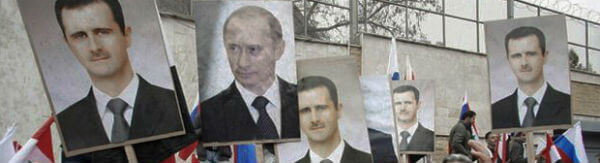
There is, of course, nothing new about using information as a vital instrument of war. But in the past information tended to be a handmaiden to action. Now the informational element appears to be as important as, if not more important than, the physical dimension. Take Russia’s air strikes in Syria. The Kremlin’s official rationale for the military campaign was to combat the Islamic State. But very few of its operations have actually been aimed at ISIS, with many more directed at U.S.-supported rebels fighting Syrian President, and Russian client, Bashar al-Assad. The Kremlin clearly has more in mind than defeating ISIS militarily. Russia has entered the Syrian stage in such a way as to surprise the West and ensure it will play a starring role in any narrative going forward — whether that narrative involves keeping Assad in power or a “global fight against terror.” The Russian military might be small compared to America’s, and the Russian economy may be a mess, but Vladimir Putin has cleverly undermined America’s reputation as a “global policeman” and boosted his stature as the man who is restoring Russia as a Great Global Power.

This is not “soft power” in the classic sense of projecting a positive national image through culture and public relations, but rather a case of using strategic narrative to keep your opponent intimidated, confused, and dismayed — of exploiting ubiquitous information to appear bigger, scarier, and more indispensable than reality would suggest. Russia’s bombing raids in Syria also have the positive side effects (for Moscow) of distracting from the conflict in Ukraine and helping maintain a steady torrent of refugees to Europe, which in turn strengthens right-wing parties in countries such as France and Hungary that peddle anti-refugee fears, are supported by the Kremlin, and advocate dropping Western sanctions against Russia. What matters in the information age is not so much “military escalation dominance” — the Cold War doctrine emphasizing the ability to introduce more arms than the enemy into a conflict. Rather, it’s “narrative escalation dominance” — being able to introduce more startling storylines than your opponent. [Continue reading…]

Facebooktwittermail

I revealed the truth about President Erdogan and Syria. For that, he had me jailed

erdogan

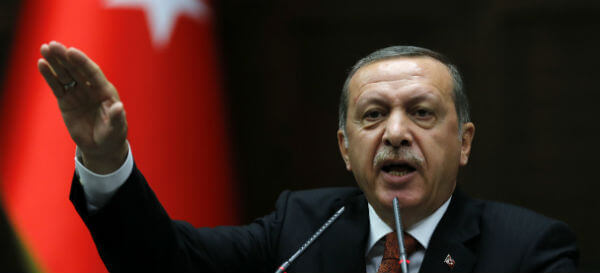
Can Dündar writes: In Turkey, a debate as old as government itself is on the agenda again. This time, it is the Turkish government’s secret arms transfer to Syria that has revitalised the subject.

Early in 2014, a truck understood to belong to the Turkish intelligence service (MIT) was stopped near the Syrian border. The gendarmerie and the intelligence officials in control of the convoy pulled guns on each other. This was the moment the two blocks vying to rule the state came face to face. The truck was searched. Beneath the camouflage composed of medicines boxes, weapons and ammunition were found. The truck was held for a while, but following the intervention of government officials a safe passage into Syria was granted.

The government immediately discharged the prosecutor and gendarmerie who stopped the convoy and had them arrested. It was declared that the trucks contained humanitarian aid. This incident, which fuelled allegations that President Recep Tayyip Erdoğan’s government was intervening in the Syrian civil war, was rapidly covered up.

In May 2015, however, Cumhuriyet Daily, the newspaper I serve as the editor-in-chief, acquired the footage of this incident. It was clearly visible that the truck was loaded with arms. It was thus documented that the intelligence service was illegally carrying arms into the civil war raging in a neighbouring country. This was big news. We published details of the operation with photos, and uploaded the video to our website. [Continue reading…]
Facebooktwittermail

Strike that killed Syrian rebel chief complicates peace talks push, says U.S.

Reuters reports: Russian air strikes like the one that killed a top Syrian rebel leader last week send the wrong message to groups engaged in a political dialogue to end the conflict and complicate efforts to begin negotiations, the U.S. State Department said on Monday.

Syrian rebel chief Zahran Alloush, the leader of Jaysh al Islam who commanded thousands of fighters in the Damascus suburbs, was killed on Friday in an air strike that rebel sources said was carried out by Russian warplanes.

Jaysh al Islam was a participant in the Riyadh conference where Syrian opposition groups agreed on common aims for proposed political negotiations to end the country’s civil war and chose a former Syrian prime minister to represent them in the dialogue.

State Department spokesman Mark Toner said the United States did not provide support to Alloush’s group and had concerns about its “behavior on the battlefield,” but noted that Jaysh al Islam had fought Islamic State rebels and was participating in the political dialogue to end Syria’s civil war. [Continue reading…]

Facebooktwittermail

Out of touch: U.S. diplomacy shackled by security concerns

Peter Schwartzstein writes: The U.S. embassy in Cairo is a forbidding-looking fortress. Its imposing concrete blast walls are visible for miles, and cast an ugly shadow over a cluster of surrounding villas. Flanked on all sides by edgy soldiers in body armor and camouflage uniforms, the atmosphere can scarcely be called welcoming.

For diplomatic personnel posted across the Middle East, the security protocols are often no less daunting. Many are shuttled from their offices to their homes in armored vans with tinted windows. When the U.S. ambassador to Cairo’s car emerges onto one of the capital’s main drags, city police block lanes and back up traffic as they hustle to facilitate the convoy’s passage.

Given recent events, the U.S. instinct to wrap its foreign representatives in cotton wool is somewhat understandable. The mission in Cairo — considered relatively safe by regional standards — was attacked by a mob and the site of the stabbing of a U.S. citizen in the last four years alone. The list of assaults on State Department posts around the world runs long and lethal.

But to those who puzzle over Washington’s erratic foreign policy in these parts, this safety-centric tack has much to answer for. [Continue reading…]

Facebooktwittermail

How Iraqis learned to fear and hate Americans in Ramadi eleven years ago

The Economist reported on December 29, 2004: There is only one traffic law in Ramadi these days: when Americans approach, Iraqis scatter. Horns blaring, brakes screaming, the midday traffic skids to the side of the road as a line of Humvee jeeps ferrying American marines rolls the wrong way up the main street. Every vehicle, that is, except one beat-up old taxi. Its elderly driver, flapping his outstretched hand, seems, amazingly, to be trying to turn the convoy back. Gun turrets swivel and lock on to him, as a hefty marine sergeant leaps into the road, levels an assault rifle at his turbanned head, and screams: “Back this bitch up, motherfucker!”

The old man should have read the bilingual notices that American soldiers tack to their rear bumpers in Iraq: “Keep 50m or deadly force will be applied”. In Ramadi, the capital of central Anbar province, where 17 suicide-bombs struck American forces during the month-long Muslim fast of Ramadan in the autumn, the marines are jumpy. Sometimes, they say, they fire on vehicles encroaching within 30 metres, sometimes they fire at 20 metres: “If anyone gets too close to us we fucking waste them,” says a bullish lieutenant. “It’s kind of a shame, because it means we’ve killed a lot of innocent people.”

And not all of them were in cars. Since discovering that roadside bombs, known as Improvised Explosive Devices (IEDs), can be triggered by mobile telephones, marines say they shoot at any Iraqi they see handling a phone near a bomb-blast. Bystanders to an insurgent ambush are also liable to be killed. Sometimes, the marines say they hide near the body of a dead insurgent and kill whoever comes to collect it. According to the marine lieutenant: “It gets to a point where you can’t wait to see guys with guns, so you start shooting everybody…It gets to a point where you don’t mind the bad stuff you do.”

Since September 1st, when the battalion’s 800 men were deployed to Ramadi, they have killed 400-500 people, according to one of their senior officers. A more precise estimate is impossible, because the marines rarely see their attackers. When fired upon, they retaliate by blitzing whichever buildings they think the fire is coming from: charred shells now line Ramadi’s main streets. “Sometimes it works in the insurgents’ favour,” admits Rick Sims, a chief warrant officer. “Because by the time we’ve shot up the neighbourhood, then the guys have torn up a few houses, they’re four blocks away, and we just end up pissing off the locals.” [Continue reading…]

Facebooktwittermail

This Syrian filmmaker was assassinated in broad daylight after receiving death threats

Naji-al-Jerf

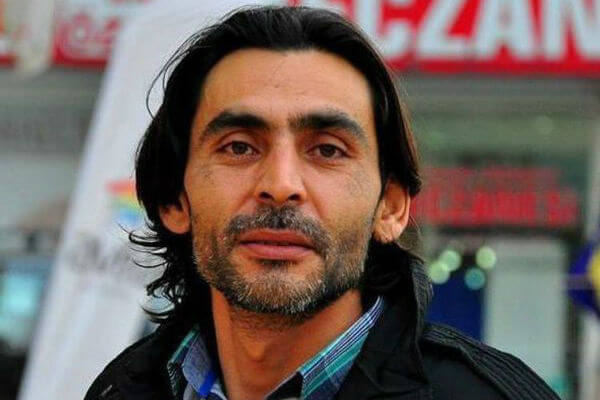
Borzou Daragahi reports: If all had gone according to plan, Syrian filmmaker and activist Naji al-Jerf, his wife, and their two daughters would be in the relative safety of France right now, 2,000 miles from Turkey’s troubled southeast.

But on Sunday, the violence increasingly spilling over from Syria into Turkey caught up with Jerf when he was gunned down in broad daylight by a masked assassin. He was 37.

Amid wailing and stunned friends and colleagues, he was buried in a hilltop cemetery plot Monday afternoon. “Congratulations, congratulations!” his anguished wife, Bushra Kashmar, cried as she gripped his coffin. “Now you will have the freedom that you wanted,” she said, wrapped in the flag of Syria’s revolution. “Now you will have the peace that you wanted.”

A foe of both ISIS and the Syrian regime, the independent filmmaker and native of Salamia, a town near the city of Hama, was among the peaceful democracy activists who spearheaded the 2011 uprising against Bashar al-Assad. They are now being subsumed by the ensuing violence and sidelined by a war that has become a regional conflagration with no end in sight. [Continue reading…]

Facebooktwittermail

What’s the biggest reason to be hopeful about the climate at the end of 2015?

lichen8

Climate Central got answers from the following climate experts:
David Titley, director of Penn State’s Center for Solutions to Weather and Climate Risk: Paris, of course, but more substantively for the U.S. domestic movement is the sense more and more different groups are seeing climate change as an issue within their domain: big business, insurance and finance, multiple major religions, the divestment movement, health, national security, movies, and the media, as well as the traditional science and environmental communities. Ultimately, we have to have enough people care enough to get Congress to engage constructively and move both policies and money to transition our energy systems to non-carbon based forms as quickly as possible. Huge task, but if we’re focused we can do this.

Richard Somerville, professor emeritus at Scripps Institution of Oceanography: The biggest reason to be hopeful about the climate at the end of 2015 is the Paris Agreement reached in December 2015 at the COP21 negotiations in Paris. This agreement provides a roadmap to reducing the risk of dangerous climate change. However, when all is said and done, sometimes more is said than done, and the future of the climate system depends on the degree to which nations obey the letter and spirit of this roadmap and work to improve it.

Marshall Shepherd, director of atmospheric sciences at the University of Georgia: I am encouraged that the notion that climate change is a political issue is starting to erode. Key conservatives, major corporations, the military and faith communities recognize the challenges and opportunities. The recent Paris agreement is a bold step. It isn’t perfect, but it is an important signal.

Simon Donner, climate scientist at the University of British Columbia: We’ve thrown down the gauntlet. In Paris, the world agreed that greenhouse gas emissions must reach net zero during the second half of the century to avoid dangerous impacts from climate change. With global emissions peaking this year, and wind and solar prices at all time lows, there’s hope we can meet the ambition of Paris with action. [Continue reading…]

Facebooktwittermail

A century after Sykes-Picot

Eugene Rogan writes: The British wartime alliance with the sharif of Mecca would be concluded after months of increasingly anxious negotiations, with both sides driven by wartime fears. Sharif Hussein had reason to believe the Young Turks sought his overthrow. Moreover, to realize his ambitious goal of carving an independent Arab kingdom from Ottoman domains, he needed Great Power support. The British feared their recent string of defeats to the Ottomans would encourage colonial Muslims to rebel against the Entente Powers. War planners in Cairo and Whitehall hoped that an alliance with the custodian of Islam’s holiest shrines would neutralize the appeal of the Ottoman sultan-caliph’s jihad at a moment when Britain’s military credibility was at its lowest point since the start of the war.

On the eve of the Arab Revolt, the Anglo-Hashemite alliance offered far less than both sides originally believed they were securing on first entering into negotiations. The British were not the invincible power they had appeared to be in early 1915 when first setting off to conquer Constantinople. The Germans had inflicted terrible casualties on the British on the western front, and even the Ottomans had dealt them humiliating defeats. Sharif Hussein and his sons had every reason to question their choice of ally.

Yet the Hashemites were in no position to bargain. All through their correspondence with Sir Henry McMahon, the high commissioner in Egypt, Sharif Hussein and his sons had presented themselves as leaders of a pan-Arab movement. By May 1916 it was apparent that there would be no broader revolt in Syria and Iraq. The most the sharifs could do was challenge Ottoman rule in the Hijaz. Success depended on their ability to mobilize the notoriously undisciplined Bedouin to their cause.

Arguably, the alliance survived because the Hashemites and the British needed each other more in the summer of 1916 than ever. Sharif Hussein had strained relations with the Young Turks to the breaking point; he knew they would seize the first opportunity to dismiss—even murder—him and his sons. The British needed the sharif’s religious authority to undermine the Ottoman jihad, which officials in Cairo and Whitehall feared recent Turkish victories had strengthened. Whatever the results of a Hashemite-led revolt, the movement would at least weaken the Ottoman war effort and force the Turks to divert troops and resources to restore order in the Hijaz and possibly in other Arab provinces. For their own reasons, both the British and the Hashemites were in a hurry to launch the revolt. [Continue reading…]

Facebooktwittermail

Life under siege: Inside Taiz, the Yemeni city being slowly strangled

Ghaith Abdul-Ahad writes: Ismail lies on green linoleum sheets, his black eyes too large for his gaunt face. Craning his neck, he tries to inspect the bandage covering his body, but weakness pulls him back. From the pillow, he whispers “hawan” (mortar).

Ismail, who says he is 12 but has the body of a six-year-old, used to make a few Yemeni riyals every day by washing graves in a new cemetery in the city of Taiz devoted to those killed in Yemen’s ongoing civil war.

Just before noon on one day in November, he and his two young cousins were sitting under a mango tree, cleaning the grave of a 10-year-old girl called Basma, when three mortar shells fell. A splatter of deep scars on the tree trunk and on the grave’s concrete surface mark the spot where one exploded. The two cousins, aged two and four, died instantly.

Ismail was severely injured and is now in the Rawdha, a hotel-turned-hospital in Taiz, Yemen’s second most populated city, a place being slowly strangled by a Houthi rebel siege. He is far from the only one here. One floor above, Amer recounts how he was hit by an explosion after dining in a restaurant and walking out into the street. The threads stitching folds of flesh on the stump of his left leg are black and new. [Continue reading…]

Facebooktwittermail

U.S. sees key goals met for Russia with bearable costs in Syria so far

Assad

Reuters reports: Three months into his military intervention in Syria, Russian President Vladimir Putin has achieved his central goal of stabilizing the Assad government and, with the costs relatively low, could sustain military operations at this level for years, U.S. officials and military analysts say.

That assessment comes despite public assertions by President Barack Obama and top aides that Putin has embarked on an ill-conceived mission in support of Syrian President Bashar al-Assad that it will struggle to afford and that will likely fail.

“I think it’s indisputable that the Assad regime, with Russian military support, is probably in a safer position than it was,” said a senior administration official, who requested anonymity. Five other U.S. officials interviewed by Reuters concurred with the view that the Russian mission has been mostly successful so far and is facing relatively low costs.

The U.S. officials stressed that Putin could face serious problems the longer his involvement in the more than four-year-old civil war drags on.

Yet since its campaign began on Sept. 30, Russia has suffered minimal casualties and, despite domestic fiscal woes, is handily covering the operation’s cost, which analysts estimate at $1-2 billion a year. The war is being funded from Russia’s regular annual defense budget of about $54 billion, a U.S. intelligence official said. [Continue reading…]

Facebooktwittermail

Homs: Syria’s Stalingrad

Homs

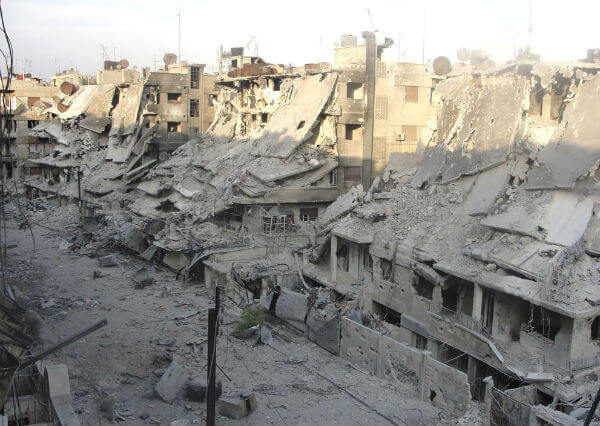
Thanassis Cambanis writes: More than four years of relentless shelling and shooting have ravaged beyond recognition this city, which once served as the symbolic capital of the revolution.

The buildings hang in tatters, concrete floors collapsed like sandcastles, twisted reinforced metal bars and window frames creaking in the wind like weather vanes. The only humans are occasional military guards, huddling in the foundations of stripped buildings. Deep trenches have been dug in thoroughfares to expose rebel tunnels. Everywhere the guts of buildings and homes face the street, their private contents slowly melting in the elements. Ten-foot weeds have erupted through the concrete.

As far as the government of Syria is concerned, the war in Homs is over. Rebel factions were defeated more than a year ago in the Old City, and the last holdouts, who carried on the revolt from the suburb of al-Waer, signed a cease-fire agreement this month. A few weeks before Christmas, busloads of fighters quit al-Waer for rebel-held villages to the north, under what the Syrian government and the United Nations hailed as a breakthrough cease-fire agreement to bring peace to one of the Syrian war’s most symbolic battlefields.

Gov. Talal al-Barazi, an energetic Assad-supporting Sunni, has been instrumental in pushing the cease-fires in Homs’s Old City and recently in al-Waer district. But almost none of the pro-uprising Sunnis who once filled its center have returned, and at times he seems to be presiding over a graveyard — an epic ruin destined to join Hiroshima, Dresden, and Stalingrad in the historical lexicon of siege and destruction.

By the end of a two-year siege of the Old City, the entire population of about 200,000 had fled, and more than 70 percent of the buildings in the area were destroyed. Today, according to the Syrian government, less than one-third of those who left have returned to the Homs area — but the ravaged city center is largely uninhabitable. Barazi said the cost of physically rebuilding the city would be enormous; without help from Russia, Iran, China, and other international donors, he said, full reconstruction would be impossible. Experts estimate it will cost upwards of $200 billion to rebuild across the entire country, or three times the country’s pre-war GDP.

And yet the Syrian government hopes to turn this shattered city into a symbol of its resurgent fortunes. Authorities showcase the reconstruction of Homs to spread a clear message: They intend to regain full control of the country. If they can tame Homs, a Sunni city where the majority of people actively embraced the revolt, they can do it anywhere.

There’s another more menacing message in the Homs settlement, however, as the neighborhoods that wholeheartedly sided with the revolution were entirely destroyed and have been left to collapse after the government’s victory. Almost no Sunnis have been allowed to return. Displaced supporters of the revolt from Homs understand that this is the regime’s second wave of punishment — they might never be allowed to go home. [Continue reading…]

Facebooktwittermail

Forget the sympathy – asylum is a refugee’s right

By Renos Papadopoulos, University of Essex

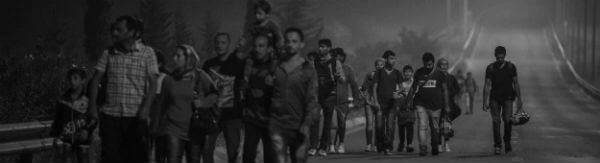
This year, the media has been full of tragic images of people risking their lives in a desperate attempt to flee their troubled countries. This phenomenon is not new, by any means, but the number of people involved has increased dramatically over a short period.

The statistics – which change almost daily – are staggering. It is estimated that more than 130,000 refugees and migrants have entered the European Union this year and more than 3,000 are known to have perished during their perilous crossing in the Mediterranean from Libya. Around 7,200 landed on just one Greek island, Lesvos, during May 2015. The numbers are equally shocking in other known crossings, notably from Somalia to Yemen and in the Far East to Indonesia and Australia.

The phenomenon is truly overwhelming. Whenever we are overwhelmed, we tend to oversimplify our perception in order to minimise our discomfort.

Perhaps the most common form of oversimplification is polarisation – and this is what we are witnessing around us now in relation to these images and statistics. On one side, some strongly oppose the uncontrolled influx of foreigners, arguing that developed countries can ill afford to host hordes of people. On the other are those who base their argument on compassion, urging governments to offer people dignified assistance in their hour of need.

In fact, neither view hits the mark.

Continue reading

Facebooktwittermail

Syria refugees: Family’s tragedy goes beyond one boy

refugees3

The New York Times reports: When Alan Kurdi’s tiny body washed up on a beach in Turkey, forcing the world to grasp the pain of Syria’s refugees, the 2-year-old boy was just one member of a family on the run, scattered by nearly five years of upheaval.

As a Turkish officer lifted the boy from the shallow waves at the edge of the Mediterranean Sea, one of Alan’s teenage cousins was alone on a bus in Hungary, fleeing the fighting back home in Damascus.

An aunt was stuck in Istanbul, nursing a baby, as her son and daughter worked 18-hour shifts in a sweatshop so the family could eat. Dozens of other relatives — aunts, uncles and cousins — had fled the war in Syria or were making plans to flee.

And just weeks after Alan’s image shocked the world in September, another aunt prepared to do what she had promised herself to avoid: set sail with four of her children on the same perilous journey.

“We die together, or we live together and make a future,” her 15-year-old daughter said, concluding, as have hundreds of thousands of other Syrians, that there was no going back, and that the way to security led through great risk. [Continue reading…]

Facebooktwittermail

Armed with intel, U.S. strikes curtail ISIS oil sector

Iraq Oil Report reports: An intensifying campaign of U.S. air strikes on the self-proclaimed Islamic State (IS) has nearly shut down its oil operations in Iraq and has hampered its more lucrative business in Syria, eroding the group’s largest source of financing and threatening its ability to govern territory.

Iraq Oil Report has compiled a comprehensive history of the IS oil sector based on the organization’s own records, details of which have just been declassified by the U.S. government and are being published here for the first time. Those accounts have been broadly corroborated by the first-hand testimony of residents and oil workers in IS-occupied territory.

They show that, until recently, nearly 2,000 IS oil workers, many recruited from abroad, were able to outfox early U.S. attempts to derail the group’s oil operations. From the end of 2014 through May 2015, even after being hit by a series of air strikes, the highly bureaucratic and organized operation generated as much as $40 million per month from the sale of crude oil. (The IS organization generated millions more by taxing transportation and refining, though the U.S. officials declined to give more detailed figures.)

“From the documents, we see this: oil has traditionally been approaching 50 percent of their profits. And the other 50 percent was the total of all the other things,” said Amos Hochstein, the State Department’s Special Envoy for International Energy Affairs, who is at the center of the U.S. government’s efforts to identify weaknesses in the IS group’s oil sector. [Continue reading…]

Facebooktwittermail

Seized documents reveal ISIS’s department of ‘war spoils’

Reuters reports: Islamic State has set up departments to handle “war spoils,” including slaves, and the exploitation of natural resources such as oil, creating the trappings of government that enable it to manage large swaths of Syria and Iraq and other areas.

The hierarchical bureaucracy, including petty rivalries between officials, and legal codes in the form of religious fatwas are detailed in a cache of documents seized by U.S. Special Operations Forces in a May raid in Syria that killed top IS financial official Abu Sayyaf. Reuters has reviewed some of the documents.

U.S. officials say the documents have helped deepen their understanding of a militant group whose skill in controlling the territory it has seized has surprised many. They provide insight into how a once small insurgent group has developed a complex bureaucracy to manage revenue streams – from pillaged oil to stolen antiquities – and oversee subjugated populations.

“This really kind of brings it out. The level of bureaucratization, organization, the diwans, the committees,” Brett McGurk, President Barack Obama’s special envoy for the anti-IS coalition, told Reuters. [Continue reading…]

Facebooktwittermail

Apostates can be killed for food or organ transplants, ISIS says

Baghdadi

By Brian Whitaker, December 28, 2015

Documents reportedly captured from the Islamic State and circulated by the US government include what appears to be an official fatwa authorising the killing of “apostates” for food or organ transplants.

According to a US government translation, IS’s Research and Fatwa Committee was asked to consider whether it is “permissible to take the captured apostate’s body organs and give them to Muslims who are in need of them”.

The committee’s reply, issued last January as Fatwa Number 68, was as follows:

“Saving a Muslim from death or deterioration is an Islamic legal duty that should be performed with every legitimate way or financial means.

“The jurists of the Shafi’i and Hanbali schools [of Islamic jurisprudence] and others permitted, when necessary, the killing of the infidel combatant or the apostate should one need to consume their flesh for the purpose of saving his own life. 

“If the jurists had permitted, when necessary, the consumption of human flesh as a means to counter death or harm, then it is even more appropriate to transplant organs from the apostate to save the life of the latter. This is especially the case since it was ruled that the apostate’s life and organs are not protected. On the contrary, the apostate’s life and organs don’t have to be respected and may be taken with impunity.”

Killing an apostate by removing body parts for use in transplants is “not prohibited”, it said.

Continue reading

Facebooktwittermail

Turkey sees no normalization of Israel ties without end to Gaza blockade

Reuters reports: Turkey sees no normalization in ties with Israel unless its conditions for ending the Gaza blockade and compensation for the deaths of 10 Turkish activists in 2010 are met, a presidential spokesman said on Monday.

Relations between Turkey and Israel soured when the activists were killed in a raid by Israeli commandos on a Turkish boat, the Mavi Marmara, which was trying to breach the blockade.

Expectations of a breakthrough were intensified after senior officials met this month to try to repair ties. The talks have raised hopes of progress in negotiations to import Israeli natural gas, particularly since Turkey’s relationship with major energy producer Russia has worsened over Syria.

But comments from Presidential spokesman Ibrahim Kalin suggest Turkey may be trying to play tough in the negotiations. [Continue reading…]

Facebooktwittermail