Category Archives: Analysis

Syria and surrealism

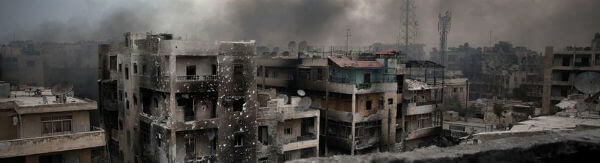
Syria5

Muhammad Idrees Ahmad writes: Wishful thinking is the essence of Barack Obama’s Syria policy. In lieu of decisive action, the president opted for brave words. He has drawn red lines that he wasn’t willing to enforce. With no strategic interests at stake, he saw no reason to expend resources on mere humanitarian concerns. In an explicit break with the past decade’s neoconservative interventionism, he has chosen a policy of “realist” restraint.

This amoral policy of malleable principles and unsentimental reserve should warm the heart of any “realist.” But a recent issue of The New York Times carries a curious indictment by two luminaries of the “realist” school: Stephen Walt of Harvard and Gordon Adams of the American University. The authors deride Obama for basing his Syria policy on a wish and a prayer: “A wish that President Bashar al-Assad would leave and a prayer that the ‘moderate’ Syrian opposition would be more than it is.”

It would be brave for “realists” to admit that their prescriptions yielded a disaster: absent a deterrent, Assad bombed his opponents with impunity; the repression and slaughter precipitated a mass exodus; and with the US a mere spectator, Russia and Iran stepped in to shore up their ally. Meanwhile ISIS remains entrenched and blowback has reached Western capitals.

But “realists,” like their neoconservative counterparts, rarely admit error. They can, however, be relied upon to compound mistakes. [Continue reading…]

Facebooktwittermail

Brave New China: The most disturbing tech story of 2015

shadow8

The New Republic reports: China wants to get in on the credit racket. At the moment, most Chinese citizens don’t have credit scores, unlike in the United States, where they have been part of the consumer landscape for decades, led by the big three credit bureaus, Equifax, Experian, and TransUnion. The Chinese government aims to fix that and fast, establishing a nationwide credit scoring system, known as the Social Credit System (SCS), by 2020.

As with China’s vast construction projects, this scoring system is fiercely ambitious, authoritarian, technologically sophisticated, and likely to disrupt the lives of millions of people. And although it is a deeply capitalist undertaking, the SCS is being positioned as a socialist effort. A 2014 planning document states that “a social credit system is an important component part of the Socialist market economy system” and that “its inherent requirements are establishing the idea of an sincerity culture, and carrying forward sincerity and traditional virtues.” That vague phrasing actually speaks to the scope of the project. With “social credit,” the Chinese authorities plan to do more than gauge people’s finances; they want to rate the trustworthiness of citizens in all facets of life, from business deals to social behavior. Eventually, all Chinese citizens will be required to be part of the SCS.

As of now, the Chinese government is allowing select companies to roll out test projects designed to rate individuals’ trustworthiness. These include efforts by Baidu and Alibaba, respectively the country’s largest search engine and e-commerce site. The involvement of these tech companies is key. Credit scoring in the U.S. has long graduated beyond simple matters of credit card debt or bankruptcy history. The credit bureaus now double as some of the country’s biggest data brokers, and they consider a range of consumer activity when creating their proprietary scores. The scores themselves have grown in value, now being used for anything from rating credit worthiness to evaluating one’s fitness for a job (some states, including New York, have banned the use of credit scores in job screenings). As a consequence many forms of consumer scoring now lie outside existing consumer protections, as a World Privacy Forum report found last year.

China’s Social Credit System promises to build on these techniques, using the vast behavioral records of its people to rate them — as consumers, as citizens, as human beings. According to that same planning document, the SCS will be used “to encourage keeping trust and punish breaking trust,” which includes violations of the “social order.” In other words, everything Chinese citizens do, especially online, may be incorporated into their scores. Doctors, teachers, construction firms, scientists, and tourism employees will be scored. So will sports figures, NGOs, companies, members of the judicial system, and government administrators.

Approved behaviors and purchases will raise a score; other activities may lower it, perhaps drawing the unwanted attention of authorities in the process. Scores in turn will be used for employment, disbursing credit, and determining eligibility for social benefits. While the Chinese government has frequently touted its desire to create “a culture of sincerity” and “trust,” the plan uses surveillance, data collection, online monitoring, and behavioral tracking to render practically all of its citizens’ affairs in market terms. Rather than being equal, China’s citizens will be in fierce competition with one another, jostling for rankings better than their peers. [Continue reading…]

Facebooktwittermail

Russia endorsed and then immediately violated the UN resolution on Syria

An editorial in the Washington Post begins: The UN Security Council unanimously passed a resolution Friday demanding that “all parties immediately cease any attacks against civilians and civilian objects” as well as “any indiscriminate use of weapons, including through shelling and aerial bombardment.” Less than 48 hours later, Russian planes carried out at least six airstrikes on civilian targets in the northern Syrian provincial capital of Idlib, killing scores of people. It was a blatant violation of the resolution Russia had just voted for — and an indication of how Vladimir Putin actually regards the diplomatic deals on Syria the Obama administration has been pushing.

According to local sources cited by Reuters and The Post’s Hugh Naylor, the Russian bombing struck a marketplace in the heart of Idlib as well as a courthouse. Rescue workers told Reuters they had confirmed 43 dead and that dozens more bodies had yet to be identified or pulled from the rubble. While the town is controlled by a rebel alliance composed mostly of Islamist factions, it is nowhere near territory held by the Islamic State. And few would argue that a souq was not a civilian target.

Not just the Security Council’s ambassadors should be embarrassed by this outrage. There is also Secretary of State John F. Kerry, who just last Tuesday emerged from a meeting with Mr. Putin saying that the Russian ruler would “take on board” Mr. Kerry’s objections to airstrikes on Syrian targets outside Islamic State-held land. Perhaps Mr. Putin tossed the U.S. concerns back overboard once Mr. Kerry had left Moscow. More likely, he never had any intention of altering Russia’s policy of proclaiming war against the Islamic State while focusing its fire on the forces opposed to Syrian dictator Bashar al-Assad. [Continue reading…]

Facebooktwittermail

What really happened to the U.S. train-and-equip program in Syria?

McClatchy reports: When the first group of Syrians from a U.S.-trained force intended to combat the Islamic State crossed into their country from Turkey in mid-July, they arrived in uniform carrying M16 rifles, mortars and flak vests. But they had no expense money, little food and no clear idea of how they, just 54 men, were to do battle against the extremists.

Most had been in near-total isolation during their two months of training in Turkey and Jordan, and they wanted to see their families, many of whom had been under heavy government bombardment. And it was Ramadan, a month of fasting, so they voted to take a two-week break, according to their elected commander, a former Syrian army lieutenant colonel, Amin Ibrahim.

Disaster struck when the break was over and they were headed back to their base. On July 29, a day after U.S. aircraft had attacked an outpost of the Nusra Front, al Qaida’s Syrian affiliate, Nusra seized Col. Nedim Hassan – the commander of Division 30, the rebel unit in which the trainees were to be embedded – along with seven of his men.

Then on July 31, Nusra attacked the headquarters of the division in a battle that ended with U.S. airstrikes and ground intervention by Kurdish militias. As many as 50 Nusra members died in the fighting, according to some reports, but Nusra managed to seize 10 graduates of the so-called train-and-equip program.

Ten weeks later, the Pentagon announced that it had halted the program, which until that moment had been the keystone of the Obama administration’s policy to combat the Islamic State, also known as ISIS and ISIL, in Syria.

The program’s demise has been ascribed to a number of factors, including the participants, the Turkish intelligence agency MIT and a Syrian militia, the Kurdish People’s Protection Units, better known as the YPG.

But a McClatchy investigation shows that the primary factor may well have been the United States itself, which conceived of a program that didn’t have the support of the people it was intended to train and was viewed with deep skepticism by its key training partner, Turkey. [Continue reading…]

Facebooktwittermail

Why a Syrian town surrendered to ISIS — and why it now wishes it never had

Raqqa2

The Daily Beast reports: “It was a two-year nightmare I just woke up from.”

Muhammad just arrived in Turkey with his family after fleeing the ISIS-controlled Syrian town of al-Ashara, in the eastern province of Deir Ezzor. He’d spent two years under the jihadist army’s rule. “I am going to tell my story once,” he told The Daily Beast after several prior attempts to get him to share his tale. “And then I want to forget it for good.”

Muhammad is a Syrian in his early thirties. He holds a Bachelor of Arts and worked as a teacher. He asked to keep his full name and any other details secret, because some members of his family are still back in al-Ashara and could face retribution from the so-called Islamic State widely known as ISIS. He added that even in Turkey, he doesn’t feel safe since ISIS operatives are all over the place. Two members of the activist monitor Raqqa is Being Slaughtered Silently were murdered in Urfa around a month ago in the living room of their house.

Just a few days after Muhammad fled from his town, on Nov. 20, the Russians bombed it. Many houses were destroyed, but none of them was used by ISIS. Nor were the jihadists’ facilities destroyed or any militant killed. A number of civilians were injured. The one fatality was a little girl named Maha Ghazi al-Abbad. She was 15 years old. [Continue reading…]

Facebooktwittermail

Turkey is betting on Aleppo rebels to get ISIS out of border area

Vice News reports: After the Islamic State’s November attack on Paris, carried out by European fighters returning from the Syrian battlefield, international efforts to close the terrorist group’s last route to and from Turkey have taken on a new urgency.

US officials have been publicly leaning on Turkey to immediately close its border with the Islamic State (IS) in Syria’s northern Aleppo province and deploy thousands of troops on the frontier. The Turkish government has proposed instead that Turkey and the US-led coalition first back Syrian rebels who can drive IS out of the area and create a rebel-controlled “safe zone.”

Amid this public back-and-forth, Turkey’s plan is already underway — and, according to rebels interviewed by VICE News, it is making some progress. The question is whether it can work fast enough to stop the two-way flow of would-be IS recruits heading to Syria and battle-hardened jihadists returning from Syria to terrorize Europe. [Continue reading…]

Facebooktwittermail

How to help Libya … before it’s too late

Mustafa Fetouri writes: While the US-led coalition has been busy attacking Islamic State (IS) strongholds in Raqqa, Syria, and Mosul, Iraq, the faraway coastal city of Sirte, Libya, has been seized by the extremist group. Only an hour’s flight from Europe’s southern shores, Sirte fell without a shot of resistance. What began as a small group of locals pledging allegiance to IS has evolved into a sizeable force that has extended its control nearly 40 miles west of Sirte and nearly twice that to the east, threatening the city of Ajdabiya and even Benghazi.

Omar, a civil servant who requested the use of a pseudonym, has lived all of his 30 years in Sirte. He told Al-Monitor by phone, “IS now has full control of the city and all roads leading to Sirte in all directions.” IS has imposed laws banning tobacco sales and smoking and ordering women to cover their hair. “Actually, my own brother was jailed for a couple of days because they caught him smoking in the street,” Omar said. Like other residents, he is extremely worried and is already planning to leave if his mother agrees to go with him.

Sirte is strategically situated at the crossroads connecting Libya’s three regions: Fezzan in the south, Cyrenaica to the east and Tripolitania to the west. In addition, it is close to the country’s main oil terminals at Brega and Ras Lanuf as well as Sidra. Ras Lanuf could well be the next safe haven for IS’ top leaders. On Dec. 9, England’s Daily Mail cited the Iranian news agency, FARS, as reporting that an injured Abu Bakr al-Baghdadi had already arrived in Sirte, having fled his headquarters in Mosul with Turkish assistance. [Continue reading…]

Facebooktwittermail

How ConocoPhillips won the fight for oil drilling in the Alaskan wilderness

By Alec MacGillis, ProPublica, December 21, 2015

This story was co-published with Politico Magazine.

From his seat in the small plane flying over the largest remaining swath of American wilderness, Bruce Babbitt thought he could envision the legacy of one of his proudest achievements as Interior Secretary in the Clinton administration.

Babbitt was returning in the summer of 2013 from four sunlit nights in Alaska’s western Arctic, where at one point his camp was nearly overrun by a herd of caribou that split around the tents at the last minute. Now, below him, Babbitt saw an oil field 2014 one carefully built and operated to avoid permanent roads and other scars on the vast expanse of tundra and lakes.

Under the deal he’d negotiated just before leaving Interior in 2000, that would be the only kind of drilling he thought would be allowed in the 23 million acres of the National Petroleum Reserve-Alaska, which, despite its name, is a pristine region home to one of the world’s largest caribou herds and giant flocks of migratory birds. The compromise was fair and, he hoped, enduring — clear-eyed about the need for more domestic oil but resolute in defense of the wilderness.

The deal lasted barely 15 years.

In February, the Obama administration granted the ConocoPhillips oil company the right to drill in the reserve. The Greater Mooses Tooth project, as it is known, upended the protections that Babbitt had engineered, saving the oil company tens of millions and setting what conservationists see as a foreboding precedent.

Continue reading

Facebooktwittermail

Why is the U.S. subsidizing Israeli settlements?

Uri Blau writes: An office chair is positioned on the top of Dagan Hill, on the outskirts of Efrat, a thriving West Bank settlement. Someone must like to sit here and take in the changing landscape. Once-bare mountains are losing their shape, carved up by new roads and villas for a growing population of Jewish settlers.

Nadia Matar, one pillar of this community, should be happy. Twenty years ago, as she struggled to make a life on this hill, the success of her mission seemed improbable, if not impossible. Now, from the top of the windy peak, the fruits of her victory are apparent. Yet Matar, founder and leader of the pro-settlement nonprofit Women in Green, doesn’t sound cheerful when I call to ask about the funding of her organization. “Choose which side are you on,” she tells me in Hebrew, “ours, or the enemies who try to destroy us.”

Many from Israel’s far right and the settlers’ community condemn the Obama administration as that “other” side. They should know better: While one American hand opposes development of settlements, the other keeps feeding it. [Continue reading…]

Facebooktwittermail

Russia’s airstrikes on Syria appear futile with little progress on ground

The Guardian reports: When Russia launched an air campaign to support Bashar al-Assad, it was banking on a ground force of Syrian troops to finish what its warplanes started.

However, more than 12 weeks later, Syria’s army and the large numbers of Shia militias that back it have made few meaningful gains on the ground. Meanwhile, Moscow’s jets have added a new layer of carnage, reportedly killing at least 600 Syrian citizens, including 70 in Idlib on Sunday.

In Syria’s north and in opposition-held parts of the cities of Hama and Damascus, the destruction wrought on civilian infrastructure and population centres over the past fortnight is more intense than at any point in almost five years of war, residents of the communities and observers outside Syria say.

Meanwhile, the US has claimed that a once-broad gap with Russia over how to end the war has been narrowing, with both sides last week championing a peace process that aims to defuse a conflict that has killed at least 250,000 people and left Syria in ruins.

On the ground in rebel areas, there is little faith in the process. “Where are these reasonable Russians that Kerry claims are starting to see the light?” said a doctor in an Idlib hospital who was treating casualties, referring to the US secretary of state, John Kerry. “Bashar’s jets never bombed us like the Russians do. Isis never hunted us down like this.”

Damage from airstrikes is intensifying, but the Syrian ground forces are showing few signs of being able to use this to their advantage. With opposition anti-tank rockets taking a heavy toll on regime armour between Hama and Latakia, conscription of military-age males is stepping up across government-held parts of the country in an attempt to boost national forces. [Continue reading…]

Facebooktwittermail

Hassan Aboud: Profile of a Syrian ISIS commander

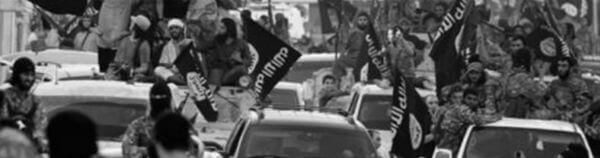
Raqqa2

C.J. Chivers writes: Mr. Aboud, in his mid-30s, is an exile from Sarmin, where he had lived most of his adult life. Past associates refer to him as either an ISIS wali or emir, titles conveying authority or military power that the Islamic State bestows on governors and its middle rank.

They note that he did not simply drift to ISIS; he has had a relationship with the original underground Sunni insurgents in Iraq’s Anbar Province, part of the crucible where ISIS formed, reaching back more than a decade.

Mr. Aboud and one of his brothers fought American forces there in 2004 and 2005, several townspeople said. Some suggested that the pair returned to Syria as a sleeper cell tied to Al Qaeda in Iraq, which was founded by Abu Musab al-Zarqawi and after his death in 2006 eventually became ISIS.

In the nearly year and a half since Mr. Aboud publicly joined the Islamic State, taking with him most of his fighters and many powerful weapons, he has been credited with, or blamed for, a sprawling mix of battlefield action and crime. Those who know him contend he led the capture of Palmyra, the town and ancient heritage site that ISIS defiled.

For all of Mr. Aboud’s activity, however, his story suggests limits to advancement within the group, which analysts say to a large degree remains led by Iraqis, including many connected to the dismantled Baathist regime of Saddam Hussein.

Hassan al-Dugheim, a rebel cleric who said he had observed Mr. Aboud since 2011, said his tactical skill and ruthlessness were beyond question. He bluntly added, however, that he considered Mr. Aboud stupid, and that the Islamic State had found in him a man who could be flattered, bought, then used.

“Syrians are for fighting,” he said, and those who had joined ISIS recently faced a glass ceiling inside. “They are like animals to be ridden, like a horse or a mule.” [Continue reading…]

Facebooktwittermail

ISIS creates a new type of jihadist: Part terrorist, part gangster

The Washington Post reports: The recent terrorist attacks in Paris have brought into sharper focus the rise of a new breed of jihadists, one that blurs the line between organized crime and Islamist extremism, using skills honed in lawbreaking in the service of violent radicalism.

The Islamic State is constructing an army of loyalists from Europe that includes an increasing number of street toughs and ex-cons as the nature of radicalization evolves in the era of its self-proclaimed caliphate. Rather than leave behind lives of crime, some adherents are using their illicit talents to finance recruiting rings and travel costs for foreign fighters even as their backgrounds give them potentially easier access to cash and weapons, posing a new kind of challenge to European authorities.

Before he became the notorious ringleader of last month’s terrorist attacks in Paris, for instance, Abdelhamid Abaaoud, 28, was linked to a den of radicalized thieves led by a man nicknamed “Santa Claus.”

The gang — including young men who would go on to fight in Syria and Iraq — robbed tourists and shoplifted, forming a petty-crime operation in the service of the Islamic State, authorities say. [Continue reading…]

Facebooktwittermail

An antidote to ISIS’s arrogance

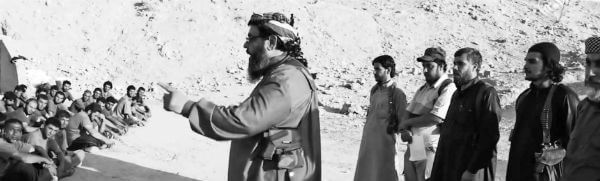
ISIS-instructor-bw

Mustafa Akyol writes: The recent massacres in Paris and San Bernardino, Calif., demonstrated, once again, the so-called Islamic State’s ability to win over disaffected Muslims. Using a mixture of textual literalism and self-righteous certainty, the extremist group is able to persuade young men and women from Pakistan to Belgium to pledge allegiance to it and commit violence in its name.

This is why the Islamic State’s religious ideology needs to be taken seriously. While it’s wrong to claim that the group’s thinking represents mainstream Islam, as Islamophobes so often do, it’s also wrong to pretend that the Islamic State has “nothing to do with Islam,” as many Islamophobia-wary Muslims like to say. Indeed, jihadist leaders are steeped in Islamic thought and teachings, even if they use their knowledge to perverse and brutal ends.

A good place to start understanding the Islamic State’s doctrine is by reading Dabiq, the digital English-language magazine that the group puts out every month. One of the most striking pieces I have seen in it was an 18-page article in March titled “Irja’: The Most Dangerous Bid’ah,” or heresy.

Unless you have some knowledge of medieval Islamic theology you probably have no idea what irja means. The word translates literally as “postponing.” It was a theological principle put forward by some Muslim scholars during the very first century of Islam. At the time, the Muslim world was going through a major civil war, as proto-Sunnis and proto-Shiites fought for power, and a third group called Khawarij (dissenters) were excommunicating and slaughtering both sides. In the face of this bloody chaos, the proponents of irja said that the burning question of who is a true Muslim should be “postponed” until the afterlife. Even a Muslim who abandoned all religious practice and committed many sins, they reasoned, could not be denounced as an “apostate.” Faith was a matter of the heart, something only God — not other human beings — could evaluate. [Continue reading…]

Facebooktwittermail

The refugee crisis is forcing Germans to ask: Who are we?

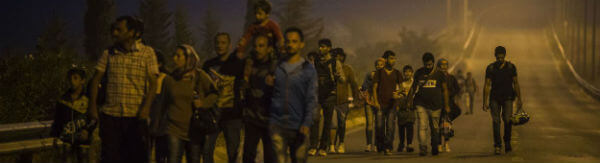
refugees1

Jenny Erpenbeck writes: I recently read that criminality is on the rise in German towns that have accepted refugees. But it’s not the refugees who are responsible for this crime wave: Germans in these towns have been committing arson, damaging property and attacking refugees. In other words, Germans have been making their own worst fears come true. Often the fear of loss leads to the very loss we fear – a principle that holds true not only for jealous lovers but also, it seems, for those who turn to violence out of fear that the refugees will cost them their safety and peace.

The refugees haven’t even all been registered yet, but already they raise questions about who we are. Some Germans can imagine what it means to lose everything – hence their empathy; some can imagine what it means to lose everything – hence their fear.

We no longer have a universal frame of reference. Angela Merkel’s declaration that refugees are fundamentally deserving of protection – hers was the only declaration of its kind in Europe – has two main sticking points in her own country. First, there’s the free-market logic according to which the German government will prohibit neither the export of weapons by German companies to warring nations nor the ruthless exploitation of resources under corrupt systems in Africa, Asia and eastern Europe.

And then there’s the ever-growing violence, both verbal and physical, from part of the German population: those who would like to see their country walled off with barbed wire – as is happening in Hungary – or, failing that, to at least have the Berlin government refuse to accept even the ridiculously low numbers of refugees mandated by the European Union – as Poland and the UK have done.

But which “European values” are best upheld with barbed wire and fences, regulations, harassment and attacks? Liberté, égalité, fraternité? Or is this mainly about our own survival? In eastern Germany, you can once again hear people chanting Wir sind das Volk (“We are the people”). In 1989 that sentence opened a border; now it’s being used to close a border, to insulate this finally unified Volk from the newcomers, who lack any unity since they are fleeing so many different wars. Are other countries’ wars our responsibility? That’s a question you hear a lot these days. But no one wants to hear the answer. [Continue reading…]

Facebooktwittermail

How Trump is helping American white supremacists evangelize

The Washington Post reports: Making friends is no easy task for modern white nationalists.

In an era of gay marriage and a black president, more than a half-century after the Civil Rights Act of 1964 became law, separatists can’t exactly swan dive into conversations with strangers about the white-power cause.

But Rachel Pendergraft — the national organizer for the Knights Party, a standard-bearer for the Ku Klux Klan — told The Washington Post that the KKK, for one, has a new conversation starter at its disposal.

You might call it a “Trump card.”

It involves, say, walking into a coffee shop or sitting on a train while carrying a newspaper with a Donald Trump headline. The Republican presidential candidate, Pendergraft told The Post, has become a great outreach tool, providing separatists with an easy way to start a conversation about issues that are important to the dying white supremacist movement. [Continue reading…]

Facebooktwittermail

Who killed Hezbollah’s Samir Qantar?

According to Hezbollah’s Al-Manar, Samir Qantar, a Lebanese commander who had become a high-profile figure in the group, was killed by an Israeli airstrike in Damascus on Saturday.

Israeli officials welcomed the news but did not confirm responsibility for the attack.

While Hezbollah had no hesitation in accusing Israel, as Raed Omari notes, Syrian officials have been more circumspect:

Remarkably enough, the Syrian account of the incident resembled to a greater degree that of Israel – no confirmation and no refuting.

‏But the Syrian statements on Qantar’s killing were worded with a heavy Russian military presence in the background and they were inseparable from new political developments on Syria and the new international coalitions in the making.

It can’t be that the Israelis launched an airstrike on Syria now without coordination with their Russian allies who now control Syria’s airspace. And if the Syrians confirmed that Israeli jets killed Qantar, then they would appear as either having prior knowledge of the plan or have no sovereignty over their country.

Who actually killed the 54-year-old Qantar? In my opinion, Israel is a likely perpetrator but the question is how its jets flew over Syria now without being spotted by the Russian satellites and space power. The Russian silence on the incident is also worth-noting.

Meanwhile, a Syrian rebel group has released a statement claiming that they were responsible for Qantar’s death.

The New York Times quotes a Druze militia group that said the building which was targeted had been hit by “four long-range missiles.”

An Israeli columnist quotes “Western sources” claiming that Qantar was a “ticking bomb.”

The sources said Kuntar had recently not been working on behalf of Hezbollah, but rather acting with increasing independence alongside pro-Assad militias in Syria.

The attack in Damascus comes at a moment when, according to Israeli sources, “Iran has withdrawn most of the Revolutionary Guards fighters it deployed to Syria three months ago.”

Assuming that this was indeed an Israeli airstrike, it appears to have not only been aimed at an individual, but also intended to send some additional messages: that Israel is not unduly constrained by Russia’s air operations in Syria and that the Hezbollah fighters propping up the Assad regime are more expendable than their Iranian counterparts.

Creede Newton writes:

Regardless of who fired the missile, Sayed Hassan Nasrallah, the secretary-general of Hezbollah, has already made his decision: this was Israel. Now, the question is, how will Nasrallah respond to another high-level assassination?

Some think Hezbollah’s falling popularity with the Sunni majority in the Middle East due to its meddling in the Syrian conflict could use a boost, and a conflict with Israel would help.

Others say Hezbollah is stretched, and a war with the powerful Israeli military is the last thing the Shia group needs.

Nicholas Blanford writes:

The current situation mirrors the immediate aftermath of an Israeli pilotless drone strike on 18 January in the Golan that killed Jihad Mughniyeh — son of former Hezbollah military commander Imad Mughniyeh — an Iranian general and five other Hezbollah fighters. Hezbollah struck back 10 days later with an anti-tank missile ambush against an Israeli army convoy at the foot of the Shebaa Farms hills, killing an officer and a soldier.

Following the ambush, Hezbollah Secretary General Hassan Nasrallah said in a speech that the rules of engagement that had defined the tit-for-tat conflict between Hezbollah and Israel were over.

“From now on, if any Hezbollah resistance cadre or youth is killed in a treacherous manner, we will hold Israel responsible and it will then be our right to respond at any place and at any time and in the manner we deem appropriate,” he said.

Nasrallah is due to speak Monday night and will probably reaffirm that commitment, which will ensure a state of tension along Israel’s northern border in the coming days.

The concept of reciprocity is a cornerstone of Hezbollah’s defense strategy against Israel, which may offer a clue as to the party’s response to Kuntar’s assassination. In the years following the 2006 War, Nasrallah has articulated on several occasions Hezbollah’s strategy of retaliating in kind for Israeli actions against Lebanon in a future conflict — if Israel bombs Beirut, Hezbollah bombs Tel Aviv; if Israel blockades Lebanese ports, Hezbollah will blockade Israeli ports with its long-range anti-ship missiles; if Israel invades Lebanon, Hezbollah will invade Galilee.

Even on a tactical level, Hezbollah has sought to achieve reciprocity against Israel. In October 2014, Hezbollah mounted a roadside bomb ambush in the Shebaa Farms that wounded two Israeli soldiers in response to the death a month earlier of a party military technician who died when a booby-trapped Israeli wire-tapping device exploded.

The January anti-tank missile attack against the Israeli convoy in the Shebaa Farms also sought to echo Israel’s deadly drone missile strike in the Golan 10 days earlier.

“They killed us in broad daylight, we killed them in broad daylight… They hit two of our vehicles, we hit two of their vehicles,” Nasrallah said at the time.

Facebooktwittermail