Category Archives: Analysis

Is Turkey responsible for ISIS?

Kyle Orton writes: Turkey concluded its biggest investigation to date into Islamic State (IS) operatives on its territory on Friday, and blacklisted sixty-seven people. This provides a good moment to review what Turkey’s role has been in the rise of IS, especially amid the escalating accusations from Russia that Turkey is significantly responsible for financing IS. The reality is that while Turkish policy has, by commission and omission, made IS stronger than it would otherwise have been, so has Russia’s policy—and Russia’s policy was far more cynical than Turkey’s, deliberately intended empower extremists to discredit the rebellion against Bashar al-Assad. Turkey’s focus on bringing down Assad and Ankara’s fear of Kurdish autonomy led it into these policies and now—having seemingly found the will to act to uproot IS’s infrastructure on Turkish territory—there is the problem of actually doing so, when IS can (and has) struck inside Turkey. The concerns about these external funding mechanisms for IS, while doubtless important, obscure the larger problem: IS’s revenue is overwhelmingly drawn from the areas it controls and only removing those areas of control can deny IS its funds.

Turkey shot down a Russian jet on November 24, the first time since 1952 a NATO member had brought down a Russian military aircraft. Ankara claimed that its airspace had been violated and numerous requests to withdraw were ignored. The Russian plane landed in northern Syria: one pilot, Oleg Peshkov, was killed in the descent by the Turkoman rebels of Alwiya al-Ashar (The Tenth Brigade) and one, Konstantin Murakhtin, was later rescued. In the wake of this, Moscow took retribution with economic sanctions against Turkey, including limiting tourism and banning charter flights to Turkey and also trade in certain foodstuffs.

Russia’s ruler, Vladimir Putin, then raised the stakes on November 30 by accusing Turkey of perpetrating the shoot-down in order to protect IS, with which the Turkish government has commercial interests, notably oil, but also weapons. Moscow subsequently accused the Turkish President Recep Tayyip Erdogan of being a personal profiteer from the criminal trade in oil with IS. The reality is quite otherwise, of course. As David Butter of Chatham House put it, given Turkey’s reliance on Russia for energy, “if oil was a consideration for the Turkish authorities … it would have had good reason to hold fire.” [Continue reading…]


Facebooktwittermail

In Gaza’s Khuzaa caravans, families fear another winter

Al Jazeera reports: As cold, late-autumn rain poured down on the Gaza Strip last month, Yousef al-Najjar watched as his makeshift home sunk deeper into the mud, its thin laminate floors cracking.

Intended as a temporary solution for residents made homeless by Israel’s 2014 war on Gaza, the static caravans of Khuzaa – a cluster of around 70 tin-sheet homes on the town’s outskirts, paid for by donor nations such as Qatar and the United Arab Emirates – are scarcely equipped for another winter. Najjar fears that cold temperatures and increased rainfall will make the homes unliveable.

“We live in a horrible situation,” Najjar, a 47-year-old father of three, told Al Jazeera. “This area of Khuzaa is lower than the rest. When it rains, the water settles here.”

“The [caravans] aren’t insulated, and over time, they have shifted,” he added. “The outside air comes in, then it gets hotter or colder depending on the season. We are provided heaters, but they aren’t effective. Last year, we tried to build fires inside the caravan, but we stopped. We know it’s not safe. What if we fell asleep and it caught fire?” [Continue reading…]

Facebooktwittermail

Egypt’s expanding military economy

Yezid Sayigh writes: On November 29, 2015, Egyptian President Abdel Fattah el-Sisi amended the powers of the Armed Forces Land Projects Agency, which was set up by presidential decree in 1981 to manage the sale of real estate no longer in use by the armed forces. The latest amendment now additionally empowers the agency to engage in commercial activity “to develop its resources, for which purpose it may form companies in all their guises, whether on its own or jointly with national and foreign capital.”

At first glance, Sisi’s Presidential Decree 446 of 2015 on military land and proceeds merely confirms and continues the expansionary trend of the Egyptian military’s involvement in the civilian economy since he took power in July 2013. Over the past two years, the Egyptian Armed Forces (EAF) have taken on the management role for a number of mega-projects, including construction of a second Suez Canal and plans for over one million new housing units and a new administrative capital. This is part of a broad trend that, according to a study by Shana Marshall published by the Carnegie Middle East Center in April 2015, has made the EAF “the primary gatekeeper for the Egyptian economy” since 2013, if not earlier. [Continue reading…]

Facebooktwittermail

Connections aren’t conversations – while technology enables, it can also interfere

By Daria Kuss, Nottingham Trent University

A prisoner was in the US was recently released after 44 years of incarceration for the attempted murder of a police officer. Emerging onto the streets of New York City, Otis Johnson, now 69, found himself bewildered by the world before him. Seeing people apparently talking to themselves on the street, futuristic headphones dangling from their ears, reminded him of CIA agents. People barely paid attention to their surroundings, and instead studied their smartphones while crossing the street, engrossed in their own personal bubbles.

Technology had delivered Johnson a massive culture shock, the shock of a world where technology has quickly changed the way we live and the way we relate to one another.

In 2013 Sherry Turkle, a clinical psychologist and esteemed professor at the prestigious Massachusetts Institute of Technology, wrote Alone Together, in which she questioned the extent to which social media is bringing people together. Following decades of research on the profound impact of modern technology on human relationships, Turkle concluded that with the omnipresence of technology “we’re moving from conversation to connection”.

Connection, it seems, denotes a very different quality of social interaction in comparison to conversation, as it refers to continuous streams of little titbits of information, such as those neatly packaged into 140 characters on Twitter.

Conversation, on the other hand, refers to listening and empathic understanding, actively attending to another person, rather than fleetingly commenting on their status updates online while simultaneously talking on the phone, doing the laundry, or preparing the children’s dinner.

Continue reading

Facebooktwittermail

The ominous story of Syria’s climate refugees

shadow17

John Wendle reports: Kemal Ali ran a successful well-digging business for farmers in northern Syria for 30 years. He had everything he needed for the job: a heavy driver to pound pipe into the ground, a battered but reliable truck to carry his machinery, a willing crew of young men to do the grunt work. More than that, he had a sharp sense of where to dig as well as trusted contacts in local government on whom he could count to look the other way if he bent the rules. Then things changed. In the winter of 2006–2007, the water table began sinking like never before.

Ali had a problem. “Before the drought I would have to dig 60 or 70 meters to find water,” he recalls. “Then I had to dig 100 to 200 meters. Then, when the drought hit very strongly, I had to dig 500 meters. The deepest I ever had to dig was 700 meters. The water kept dropping and dropping.” From that winter through 2010, Syria suffered its most devastating drought on record. Ali’s business disappeared. He tried to find work but could not. Social uprisings in the country began to escalate. He was almost killed by crossfire. Now Ali sits in a wheelchair at a camp for wounded and ill refugees on the Greek island of Lesbos.

Climatologists say Syria is a grim preview of what could be in store for the larger Middle East, the Mediterranean and other parts of the world. The drought, they maintain, was exacerbated by climate change. The Fertile Crescent — the birthplace of agriculture some 12,000 years ago — is drying out. Syria’s drought has destroyed crops, killed livestock and displaced as many as 1.5 million Syrian farmers. In the process, it touched off the social turmoil that burst into civil war, according to a study published in March in Proceedings of the National Academy of Sciences USA. A dozen farmers and former business owners like Ali with whom I recently spoke at camps for Syrian refugees say that’s exactly what happened. [Continue reading…]

Facebooktwittermail

Optimism on Syria is misplaced. Here’s why

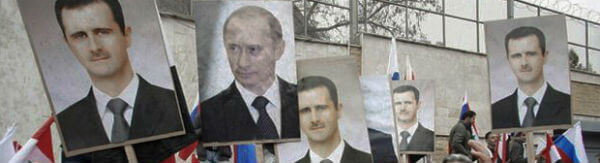
Assad-3

Hassan Hassan writes: One of the common sentences repeatedly said by Syrians from the two main warring sides is that the solution to the conflict is attainable when the “big guys” decide to end it. Those big guys – at the UN Security Council – passed a unanimous decision on Friday calling for peace negotiations and a ceasefire to steer the country towards a political settlement.

“This council is sending a clear message to all concerned that the time is now to stop the killing in Syria and lay the groundwork for a government that the long-suffering people of that battered land can support,” the US secretary of state, John Kerry, proclaimed after the successful vote.

Both inside and outside Syria, the resolution has raised hopes that this may indeed mark the start of a serious process to find a solution. And much can be achieved, at least in preventing the conflict from spiralling further out of control.

But the optimism seems to be misplaced, mostly because it is not based on any progress or attainable objectives in the foreseeable future. Instead of the usual focus on the difficulty of rallying the opposition around one vision to end the conflict, one aspect related to the regime can help illuminate the intractability of the process: the fate of Bashar Al Assad. [Continue reading…]

Facebooktwittermail

The right path to a Syrian accord

Kenneth Roth writes: As Syrian civilians suffer ceaseless indiscriminate attacks, millions of their compatriots flee their homes, and the self-proclaimed Islamic State (also known as ISIS) extends its killing beyond Syria and Iraq, the only good news coming out of the Middle East’s most violent conflict is that the contours of a deal to end it have become clearer. After talks in Vienna in late October, the main foreign actors in Syria’s civil war issued a declaration outlining the principles that could guide some of the conflict’s combatants toward a political settlement. The Vienna declaration calls for secular governance, the eventual defeat of ISIS “and other terrorist groups,” the maintenance of the country’s prewar borders, and the protection of minority groups and state institutions, among other provisions. Yet it fails to address a key issue: how the warring parties might build the trust needed to achieve such goals. As negotiators prepare for a new round of talks in New York in late December or early January, it is essential that they address trust building head-on, above all by demanding an end to the attacks on civilians that are driving Syrians apart and by sidelining the people who have been responsible for them. [Continue reading…]

Facebooktwittermail

Russia/Syria: Extensive recent use of cluster munitions

Human Rights Watch reports: The military offensive that the Russian and Syrian government forces opened against armed groups opposed to the government on September 30, 2015, has included extensive use of cluster munitions – inherently indiscriminate and internationally banned weapons.

The use violates United Nations resolution 2139 of February 22, 2014, which demanded that all parties involved in Syria end “indiscriminate employment of weapons in populated areas,” Human Rights Watch said. It also contradicts a statement issued by the Syrian Ministry of Foreign Affairs and Expatriates on November 9, 2015, in which it insisted that the Syrian Arab Armed Forces do not and will not use indiscriminate weapons.

“Syria’s promises on indiscriminate weapons ring hollow when cluster munitions keep hitting civilians in many parts of the country,” said Ole Solvang, deputy emergencies director. “The UN Security Council should get serious about its commitment to protect Syria’s civilians by publicly demanding that all sides stop the use of cluster munitions.” [Continue reading…]

Facebooktwittermail

In ISIS strategy, U.S. weighs risk to civilians

The New York Times reports: For months, the United States military has known that the Islamic State uses the city hall in Raqqa, Syria, as an administrative center and a dormitory for scores of fighters. Some American officials even believe that Abu Bakr al-Baghdadi, the group’s leader, may have been in the building at times.

Yet, despite the American air campaign against the Islamic State, the white, three-story building remains standing because it also houses a jail. Its inmates are mainly victims of the extremist group — men caught sneaking a cigarette, women spotted with clothes that reveal even a hint of skin, shop owners who failed to pay their bills — and for American officials, the risk of killing any of them in an airstrike is too high.

The same is true of six other nearby buildings, including a mosque and court complex, which, together with city hall, compose the closest thing the Islamic State has to a headquarters.

In the aftermath of the attacks in Paris in November and the shootings this month in San Bernardino, Calif., President Obama and European leaders pledged to intensify the campaign against the Islamic State, also known as ISIS or ISIL. Mr. Obama, speaking last week at the Pentagon, said that the United States-led coalition was hitting the Islamic State “harder than ever,” and added that warplanes were “going after ISIL from their stronghold right in downtown Raqqa.”

But Mr. Obama also acknowledged the dilemma the United States and its allies face in Raqqa and other urban areas in Syria and Iraq, noting that the Islamic State “is dug in, including in urban areas, and they hide behind civilians.” [Continue reading…]

Facebooktwittermail

Fear of terrorism may cause more physical harm than terrorism itself

shadow16

Melissa Dahl reports: On Tuesday morning, kids all over Los Angeles arrived at school only to be told to turn around and go back home. Every last school in the Los Angeles Unified School District was closed on Tuesday as a result of a bomb threat that warned of an impending attack on “not one school, but many schools in the district,” superintendent Ramon Cortines said.

The threat is now thought to have been a hoax, something New York authorities — who received a similar message — had already suspected. “These threats are made to promote fear … we can not allow us to raise the levels of fear,” Police Commissioner William Bratton said. But in some ways, whether or not the threat was real is almost beside the point. Either way, the fear is real, and that alone can be dangerous. The latest medical research suggests that, over the years, simply being afraid of terror — even if you never actually witness any sort of attack — may be enough to trigger measurable, physiological harm.

That finding comes from a study published late last year in the journal Proceedings of the National Academy of Sciences, led by a team of physicians at the Hebrew University of Jerusalem. The researchers gathered 11 years’ worth of data from more than 17,000 healthy Israeli adults, who had completed multiple physical health tests as well as surveys measuring their fear of terror. (For example, they were asked how strongly they worried about a terror strike harming themselves or their family, and how tense they felt when in a crowd.)

Their results showed that those who feared terror the most were also most likely to show signs of poorer cardiovascular health — specifically, a resting heart rate that increased over the years. A person’s resting heart rate — their pulse, in other words — typically decreases with age, and a heart that beats 60 times per minute is considered normal. In contrast, some of the people in this study who feared terrorism the most had a resting heart rate as high as 80 beats per minute. An increased heart rate signals a higher risk for cardiac problems, like heart attacks or strokes, and as the Washington Post noted, previous research has found that people “whose resting heart rate rose by 15 beats per minute were 90 percent more likely to die” over the course of a two-year study. And here’s another striking part of this research: These people in the survey suffered real, physical damage because of their anxiety over terrorism, even though none of them had ever actually witnessed an act of terrorism themselves. [Continue reading…]

Facebooktwittermail

The soft power of militant jihad

Thomas Hegghammer writes: After Abu Musab al-Zarqawi, the leader of Al Qaeda in Iraq, the predecessor to the Islamic State, reportedly beheaded the American hostage Nicholas Berg in 2004, he became known in jihadi circles as the Slaughterer. Few people in the West are aware that he also went by the nickname He Who Weeps a Lot. Mr. Zarqawi was known for weeping during prayer and when speaking about Muslim women’s suffering under occupation.

The Slaughterer’s brand of radical Islam was brutal even by jihadi standards. Under Mr. Zarqawi’s command, Al Qaeda in Iraq executed so many hostages and killed so many Shiite civilians that Al Qaeda’s leadership reprimanded him. But in his public displays of emotion, He Who Weeps a Lot was not an aberration. For radical Islamists who view crying as a sign of devotion to God, communal sobbing is as common as car bombing.

A foreign fighter in Syria who wrote a blog post in March about an imam crying while making an invocation wrote that “brothers were crying with him, some audible, and others would have their tears fall silently.” Jihadis also weep when listening to religious hymns, watching propaganda videos, discussing the plight of Sunni Muslims or talking about the afterlife. Some weep more than others, and those who do are looked up to by those who don’t.

Why have tens of thousands of people from around the world chosen to live under the Islamic State’s draconian rule and fight under its black flag? To understand this phenomenon, we must recognize that the world of radical Islam is not just death and destruction. It also encompasses fashion, music, poetry, dream interpretation. In short, jihadism offers its adherents a rich cultural universe in which they can immerse themselves. [Continue reading…]

Facebooktwittermail

Inside Putin’s cold war with Turkey

Anna Nemtsova reports: In a favorite Russian corner of old Istanbul, Laleli, the streets and stores are eerily quiet. The little boutiques, stores, stands and outlets selling leather and fur coats are just about empty. The prostitutes from the former Soviet empire and from Africa are lonely as well.

Until recently there were crowds of Russian shoppers and Russian clients here. Now, in vain, shop assistants run out of their stores yelling, “Devushka, kurtki, dublenki!” They’re begging a woman to buy a fur coat, in hopes of attracting Russian clients, famous for their generous purchases. But there are none.

Such are the local symptoms of the growing cold war between two countries, or perhaps better said, two leaders who seemed until recently to be fraternal allies.

Yes, one of them is the commander in chief of NATO’s second biggest military, Turkish President Recep Tayyip Erdogan, and the other is Russian President Vladimir Putin, but over the years they had found so many common interests, from tourism to oil shipments, that they seemed almost inseparable.

Then Putin entered the Syria war to defend his client, Syrian President Bashar al-Assad, whom Erdogan is sworn to depose. And on Nov. 24, one of Erdogan’s American-made F-16s shot a Russian Mig-24 out of the air on the serrated edge of the frontier between Syria and Turkey.

And, so, the Turkish-Russian cold war began, and is growing worse.

On Thursday, speaking at a press conference, Putin said that at the state-to-state level the relations between the two countries were damaged beyond repair. The Turkish leadership, he said, “decided to lick Americans in a certain place.”

Putin’s coarse language, reminiscent of his threats to hang other regional enemies “by the balls,” picked up on weeks of vitriol spewed at Erdogan. The ever-vituperative State Duma deputy, Vladimir Zhirinovsky, claimed that if Turkey “acts as a hooligan” its northern neighbor would answer with destructive bombing, “so that half of Turkey would lie in ruins.” [Continue reading…]

Facebooktwittermail

Why Turkey and Israel are renewing their frozen relations

Joseph Dana writes: Turkey and Israel are close to agreeing on a full restoration of diplomatic ties after five years of hostility. The dispute began when Israeli commandos stormed the Mavi Marmara, a ship carrying Turkish activists attempting to break Israel’s blockade of the Gaza Strip, killing 10. The heavy-handed Israeli response had a dramatic effect on the Turkish public and provided Recep Tayyip Erdogan with an ideal scapegoat to advance his own regional policy. Now, the countries are close to becoming friends again, with economics, not ideology, driving the reconciliation.

In the years that followed the Mavi Marmara attack, Mr Erdogan fashioned himself as a regional champion of Palestinian rights. After the Arab Spring, Turkish leaders sensed a new regional order on the horizon and tried to capitalise on it. Mr Erdogan’s support for Hamas in Gaza, along with Turkey’s close cooperation with the Muslim Brotherhood in Egypt, positioned Ankara as part of a new axis of power in the region.

The Turkish economy was strong and Istanbul was re-emerging as a global city. The national airline was opening new routes at a frenzied speed, bringing the world to Istanbul. Ankara aligned itself with the new regimes in the region and forcefully adopted an anti-Assad stance in Syria.

Mr Erdogan’s pro-Palestinian stance was a critical aspect of his new regional appeal. But attacking Israelis with rhetoric belied the deep economic relationship between the two countries. At the height of the standoff between Tel Aviv and Ankara, Turkish Airlines was the second-largest operator of flights out of Tel Aviv’s international airport. [Continue reading…]

Facebooktwittermail

Humans sleep less but more deeply than any other primate

Carl Zimmer writes: Over the past few million years, the ancestors of modern humans became dramatically different from other primates. Our forebears began walking upright, and they lost much of their body hair; they gained precision-grip fingers and developed gigantic brains.

But early humans also may have evolved a less obvious but equally important advantage: a peculiar sleep pattern. “It’s really weird, compared to other primates,” said Dr. David R. Samson, a senior research scientist at Duke University.

In the journal Evolutionary Anthropology, Dr. Samson and Dr. Charles L. Nunn, an evolutionary biologist at Duke, reported that human sleep is exceptionally short and deep, a pattern that may have helped give rise to our powerful minds. [Continue reading…]

Facebooktwittermail

The West in the Arab world and the flight from complexity

Peter Harling and Alex Simon write: To outsiders, the Middle East usually is an intellectual object — a place on a map onto which they project their fears, fantasies and interests. But to many it is a home to live and despair in, to flee and to cling to, to loath and to love. When writing for the truly concerned, commentary has become futile: what is there to say that they do not already know? The ideals and hopes we could once believe in have disintegrated as a bewildering array of players wrought destruction, seemingly teaming up in the region’s devastation rather than fighting each other as they claim—let alone seeking solutions.

With suffering and complexity relentlessly on the uptick, even well-intentioned observers are tempted to simplify what we cannot fully understand, focusing excessively on the distraction of daily news and drifting toward some convenient intellectual extreme. It is a constant struggle to rebalance one’s positions, resume analysis of meaningful, underlying trends, and attempt to contribute responsibly. At the heart of this ambition is a need for honesty and humility rather than partisan hackery and hubris — acknowledging our failures and our limitations and our inability to fully comprehend, let alone effectively correct, the course of events in the Middle East. From there we may step back and appraise how best to play a positive rather than destructive role in shaping the region’s trajectory.

The dominant trend, however, has been in the opposite direction. Most conversations are self-centered and reductive. This reality is starkest in the debate about the Islamic State (hereafter “Daesh”) and the Iran nuclear deal, but the tendency is pervasive: the Russian intervention in Syria, a mushrooming refugee crisis, pulverizing wars in Libya and Yemen, only enter the discussion inasmuch as they disturb our “national interests” as we narrowly and shortsightedly define them. In Washington, the brutal execution of one American journalist has approximately the same galvanizing potential as the large-scale persecution and enslavement of Iraq’s Yazidi minority. Both are more compelling than the arrival of several hundred thousand refugees on the shores of Europe, who are in turn of far greater concern than the millions more stranded in their own countries and those throughout the region who are routinely bombed into nothingness.

More than well-defined interests, the Western response to a given Middle Eastern tragedy is often dictated by knee-jerk, emotional factors — cultural affinities (or lack thereof) with the victims, an enduring obsession with “terrorism”, and sheer visual potency (whether Daesh’s horror-movie barbarism or the occasional heart-wrenching image of a drowned child) are but a few. While understandable, these are not a basis for strategy.

The United States, of course, is not the lone culprit. Key players across the board are acting less on the basis of interest than obsession, pursuing ad hoc and reactive means in support of amorphous and ill-defined ends. While Washington proposes to destroy the mind-bogglingly complex socio-economic-political-military entity that is Daesh through airstrikes (and a dash of social media evangelism and tepid support to whomever appears willing to pitch in), Moscow seeks to restore its prestige and cut Obama down to size by pummeling what remains of Syria’s non-jihadist opposition; Tehran works its way to regional leadership by pumping more weapons, money and hubris into whichever proxy is most expedient at a given moment in a given country; Riyadh clambers to head off presumed Persian scheming by whatever means necessary, while Cairo does the same toward the Muslim Brotherhood bogeyman. And so on and so forth.

Behind of all this posturing are incoherent binaries of good versus evil—typically euphemized in the language of “stability versus terrorism” — whereby states attempt to reduce the pandemonium to one or two irreconcilable enemies, one or two overarching goals and however many direct or proxy wars appear necessary to suppress the former and achieve the latter. In other words, keep it simple: pick your mania, ignore all else, and it will finally make sense. [Continue reading…]

Facebooktwittermail

Saudi Arabia’s ‘coalition’ is a brazen challenge to Syria, Iran, and the U.S.

By Scott Lucas, University of Birmingham

Deputy crown prince and minister of defense of Saudi Arabia Mohammed bin Salman’s announcement of a new Saudi-led counter-terrorism coalition surprised allies like the US, adversaries such as Iran, and other interested parties including Russia.

Prince Mohammed said the Saudis had formed a 34-nation “Islamic military coalition” to fight Islamic State (IS) and other terrorist groups. A headquarters in Riyadh will provide military, intelligence, logistics, and other support to members as needed.

This was so surprising that countries in the new coalition said they were unaware they were founding members. Pakistan’s foreign secretary Aizaz Chaudhry said he had only learned of the initiative when he read the prince’s statement, and that he had asked Pakistan’s ambassador in Riyadh to get a clarification from Saudi officials.

The Indonesian Foreign Ministry was only slightly more diplomatic, saying that “the government is still observing and waiting to see the modalities of the military coalition”. Malaysian defence minister Hishammuddin Hussein, while supporting the coalition, ruled out “any military commitment”.

So this was hardly the unveiling of a grand military initiative. Instead, it was a political message – not just to Russia and Iran, but to Riyadh’s nominal allies in Washington.

Continue reading

Facebooktwittermail