The New York Times reports: The causes of the current crisis are plain. Neighboring countries like Lebanon and Jordan became overwhelmed with refugees and closed their borders to many, while international humanitarian funding fell further and further short of the need. Then, Syrian government losses and other battlefield shifts sent new waves of people fleeing the country.
Some of these people had thought they would stick it out in Syria, and they are different from earlier refugees, who tended to be poor and vulnerable, or wanted by the government, or from areas hard-hit early in the civil war. Now those departing include more middle-class or wealthy people, more supporters of the government, and more residents of areas that were initially safe.
Rawad, 25, a pro-government university graduate, left for Germany with his brother Iyad, 13, who as a minor could help his family obtain asylum. They walked from Greece to save money, Rawad said via text message, sleeping in forests and train stations alongside families from northern Syria who opposed President Bashar al-Assad.
People like Rawad and Iyad have been joined by growing numbers of refugees who had for a time found shelter in neighboring countries. Lebanon, where one in three people is now a Syrian refugee, and Jordan have cracked down on entry and residency policies for Syrians. Even in Turkey, a larger country more willing and able to absorb them, new domestic political tensions make their fate uncertain.
As the numbers of displaced Syrians mounted to 11 million today from a trickle in 2011, efforts to reach a political solution gained little traction. The United States and Russia bickered in the Security Council while Syrian government warplanes continued indiscriminate barrel bombing, the Islamic State took over new areas, other insurgent groups battled government forces and one another, and Syria’s economy collapsed. [Continue reading…]
Category Archives: Analysis
What refugees bring when they run for their lives
International Rescue Committee: This year, nearly 100,000 men, women and children from war-torn countries in the Middle East, North Africa and South Asia have fled their homes and traveled by rubber dinghies across the Aegean Sea to Lesbos, Greece.
Refugees travel light, for their trek is as dangerous as it is arduous. They are detained, shot at, hungry. Smugglers routinely exploit them, promising safety for a price, only to squeeze them like sardines into tiny boats. Most have no option but to shed whatever meager belongings they may have salvaged from their journeys. Those allowed to bring extra baggage aboard often toss it overboard, frantically dumping extra weight as the leaky boats take on water.
Few arrive at their destinations with anything but the necessities of life. The International Rescue Committee asked a mother, a child, a teenager, a pharmacist, an artist, and a family of 31 to share the contents of their bags and show us what they managed to hold on to from their homes. Their possessions tell stories about their past and their hopes for the future. [Continue reading…]
Europe needs the migrants it doesn’t want
Paul Mason writes: The OECD’s central projection is that, to stand a chance of avoiding stagnation, the EU’s workforce will have to add 50 million more people through migration by 2060 (a similar number is needed in the US). The Paris-based thinktank says if that doesn’t happen, it is a “significant downside risk” to growth. What this means should be spelled out, because no politician has bothered to do so: to avoid economic stagnation in the long term, Europe needs migrants.
Consent for inward economic migration is fragile and falling – as evidenced by the sudden rush by politicians and tabloids to reclassify the Syrian exodus as a special case. Even if populist resistance to migration stops short of fascism, and even if anti-migration parties are disempowered by the electoral system, their existence highlights a failing consensus. And that is, in turn, founded on economic failure. The Eurozone has produced an arc of stagnation and discontent along its southern border. There is mass unemployment in the very countries that have become the first port of call for migrants and refugees.
So the challenge for Europe is clear. To absorb the refugees we are going to need a new set of rules about where they’re processed; new arrangements for internal travel in Europe. Plus a new social consensus about who can come, who can’t and where they are going to live and work. And, ultimately, a massive economic stimulus.
If the EU cannot do all this, its constituent nations will begin to do so separately. And so, in the space of a summer, the refugee crisis crashes into the Euro crisis, and the one consistent problem is failure of leadership, anticipation and vision. [Continue reading…]
Faith in humanity should be restored
Winnie Byanyima, the executive director of Oxfam International, writes: In 1978, I ran away from the brutal dictatorship of Idi Amin in Uganda to the United Kingdom via Kenya. My family and I chose Britain, knowing then – as I do now – that this was a country with a door open to people like me. As I arrived in the UK, this black, 18-year-old African refugee girl was not deported. I got the chance to stay.
This was a European country where I safely had a chance to fulfil my potential. I studied at the University of Manchester and, years later, have been brought full circle back to the UK to serve a great movement, which started in the UK, called Oxfam.
My story might have turned out very differently if a door to a safe haven was closed to me forty years ago. That memory quickly turns now into a calling.
Today, we are in the midst of a global and complex displacement crisis. To view this global crisis solely through the lens of Europe is to miss the bigger picture.
According to the UN figures, 59.5 million people fled from their homes at the end of 2014 – an increase of 63 percent compared to a decade ago – and the highest number since World War II.
The majority of displaced people are as young as or younger than I was when I fled Uganda for the UK.
Oxfam is well-placed to connect the dots between the sources and the destinations of displaced people. This helps us understand the reasons for displacement and to strive for solutions.
We witness the terrible human suffering that every day forces people into exile. We know this well because we work in nine of the top ten source countries for refugees.
It is clear to us that the broken politics of conflict weigh most heavily on forced migration. The UN recently found that the majority of people arriving in Europe by sea were fleeing from war, conflict or persecution – half of them from Syria and Afghanistan.
Yet, conflict is preventable. Critical questions must be asked of international political leaders who are initiating or prolonging these conflicts but are unable or unwilling to take responsibility for their humanitarian consequences. [Continue reading…]
On the refugee issue, French politicians are paralyzed by fear
Sylvie Kauffmann writes: When the body of a Syrian toddler was washed up on a Turkish beach, most European newspapers put the excruciating picture on their front page. In France, the only major national paper to do so was Le Monde. Have we become numb?
Polls actually reveal some uncomfortable truths. The number of people in France opposed to taking in refugees from Syria, for example, has decreased since July, down from 64 percent to 56 percent, but they are still a majority. There is a strong partisan divide: 91 percent of National Front voters and 67 percent of former President Nicolas Sarkozy’s supporters are against taking in more migrants, while 68 percent of Socialist voters and 73 percent of Green supporters are in favor.
There is also a generational and social divide; older and well-off people are more likely to accept migrants. The reason is simple: Older people have left the competition for jobs, and well-off people don’t live in neighborhoods with high immigrant populations. The age category most hostile to new immigrants is people 35 to 49; not surprisingly, it is also the one where the far-right National Front enjoys more support.
Marine Le Pen, the National Front leader, has not been very vocal on the migrant crisis — she doesn’t need to. Her party is the elephant in the room. Its 20 to 25 percent share of the votes over the past year partly explains why French politicians, with the belated exception of the Greens, are so silent about the refugee issue: They are paralyzed by fear, the fear of feeding the xenophobic National Front. [Continue reading…]
Video: Edward Snowden and Daniel Ellsberg interviewed by Mehdi Hasan
Israeli terrorists, born in the U.S.A.
Sara Yael Hirschhorn writes: On July 31, in the West Bank village of Duma, 18-month-old Ali Dawabsheh was burned alive in a fire. All available evidence suggests that the blaze was a deliberate act of settler terrorism. More disturbingly, several of the alleged instigators, currently being detained indefinitely, are not native-born Israelis — they have American roots.
But there has been little outcry in their communities. Settler rabbis and the leaders of American immigrant communities in the West Bank have either played down their crime or offered muted criticism.
It’s worth recalling the response of the former prime minister Yitzhak Rabin to another heinous attack two decades ago, when an American-born doctor, Baruch Goldstein, gunned down dozens of Palestinians while they prayed in Hebron.
“He grew in a swamp whose murderous sources are found here, and across the sea; they are foreign to Judaism, they are not ours,” thundered Mr. Rabin before the Knesset in February 1994. “You are a foreign implant. You are an errant weed. Sensible Judaism spits you out.”
The shocking 1994 massacre was, at the time, the bloodiest outbreak of settler terrorism Israelis and Palestinians had ever seen. Less than two years later, Mr. Rabin himself would be dead, felled by an ultranationalist assassin’s bullet.
Suddenly, a group of American Jewish immigrants that had existed on the fringes of society became a national pariah. A former president of Israel, Chaim Herzog, labeled the United States “a breeding ground” for Jewish terror; the daily newspaper Maariv castigated American Jews who “send their lunatic children to Israel.” One Israeli journalist even demanded “operative steps against the Goldsteins of tomorrow” by banning the immigration of militant American Jews.
But tomorrow has arrived. [Continue reading…]
Aylan Kurdi drowned because the deaths of Hamza Ali Al-Khateeb and so many others were ignored
Even now, when the carnage and destruction throughout Syria has been so extensively documented, there are still those in the West who parrot the Assad regime by claiming that most of the blame for the war rests on foreign jihadists and their Arab and Western supporters. It’s a claim much easy to repeat than it is to substantiate.
While the Assad regime has the most blood on its hands, culpability must be shared by a world that preferred to ignore what was happening at the very beginning as a civilian uprising was brutally crushed.
Those who had spoken out most loudly during the U.S. invasion and occupation of Iraq, largely remained silent during Syria’s descent into hell.
Western imperialism was apparently much easier to oppose than ruthless oppression.
At the same time, for those with no particular political axe to grind, Syria remained easy to ignore because it could be viewed as part of a region a world away from the concerns of the average American.
Charles Homans writes about what finally grabbed his attention: Why this boy?
It feels like an obscene question to ask of the photographs of Aylan Kurdi, the 3-year-old Syrian Kurdish child whose body washed up on a beach in Turkey yesterday morning, images that have since appeared on the front pages of the major American and European newspapers and flooded Twitter with video montages and sorrowful memes, the social-media equivalents of the stuffed animals and bouquets that pile up at the sites where children have died in car accidents or shootings.
But as human rights groups have grown hoarse reminding us, nearly 12,000 children have reportedly been killed so far as a result of the Syrian civil war. Nearly 2 million more are living as refugees, according to Unicef. Both the Islamic State and its enemies have enlisted child soldiers in their causes. It’s not just the numbing statistics that are familiar. The Internet is flooded with images of dead Syrian children, and it’s hard to imagine that the people who were transfixed by Aylan on Facebook yesterday had not seen at least some of them. Why this picture? Why not all the others?
For me, it was the shoes. Aylan appeared in my Twitter feed early yesterday afternoon, and I spent the rest of the day wrecked by his image. More than once I found myself staring out the window, thinking about the boy on the beach. I have a young son, a couple of years younger than Aylan but close enough to him in size that every detail of the photo — down to the angle of repose that, as more than one artist noticed, so precisely echoes that of an exhausted child asleep in his crib — was terribly familiar. [Continue reading…]
As I wrote yesterday, we didn’t see him as other; we saw him as ours.
And perhaps lurking beneath that sympathy and sense of kinship was a subliminal awareness of the absence of those visible marks of otherness — that other than by name, he was not visibly Middle Eastern or Muslim.
Four years ago, the lives and sometimes gruesome deaths of individual children in Syria were details in an unfolding drama whose outcome seemed to matter little to most Americans and Europeans.
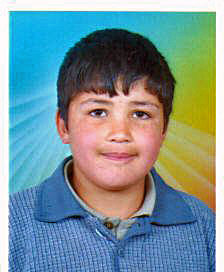
On March 30, 2011, the New York Times reported: Hamza Ali al-Khateeb, a round-faced 13-year-old boy, was arrested at a protest in Jiza, a southern Syrian village near Dara’a, on April 29. Nothing was known of him for a month before his mutilated corpse was returned to his family on the condition, according to activists, that they never speak of his brutal end.
But the remains themselves testify all too clearly to ghastly torture. Video posted online shows his battered, purple face. His skin is scrawled with cuts, gashes, deep burns and bullet wounds that would probably have injured but not killed. His jaw and kneecaps are shattered, according to an unidentified narrator, and his penis chopped off.
“These are the reforms of the treacherous Bashar,” the narrator says. “Where are human rights? Where are the international criminal tribunals?”
In Syria and beyond, the youth’s battered body has cast into shocking relief the terrors wielded by the Syrian state against its people.
Circulating in various versions, the video has injected new life into a six-week uprising against President Bashar al-Assad that has appeared to settle into a bloody stalemate of protests and violent government responses. In the days since news of the death spread, more than 58,000 people have visited and expressed support for a Facebook page memorializing the boy, Hamza Ali al-Khateeb, as a “child martyr.”
Demonstrators in several Syrian cities protested the boy’s death last weekend, weaving chants and banners dedicated to him into the mix of antigovernment slogans that have become staples of the uprisings shaking the Arab world. [Continue reading…]
Europe’s fear of Muslim refugees echoes rhetoric of 1930s anti-Semitism
Ishaan Tharoor writes: Some governments in Eastern Europe have even specifically indicated they don’t want to accommodate non-Christian refugees, out of supposed fear over the ability of Muslims to integrate into Western society.
“Refugees are fleeing fear,” urged a spokesman for the U.N. refugee agency last week. “Refugees are not to be feared.”
It’s important to recognize that this is hardly the first time the West has warily eyed masses of refugees. And while some characterize Muslim arrivals as a supposedly unique threat, the xenophobia of the present carries direct echoes of a very different moment: The years before World War II, when tens of thousands of German Jews were compelled to flee Nazi Germany.
Consider this 1938 article in the Daily Mail, a British tabloid still known for its bouts of right-wing populism. Its headline warned of “German Jews Pouring Into This Country.” And it began as follows:
“The way stateless Jews and Germans are pouring in from every port of this country is becoming an outrage. I intend to enforce the law to the fullest.”
In these words, Mr Herbert Metcalde, the Old Street Magistrate yesterday referred to the number of aliens entering this country through the ‘back door’ — a problem to which The Daily Mail has repeatedly pointed.
The number of aliens entering this country can be seen by the number of prosecutions in recent months. It is very difficult for the alien to escape the increasing vigilance of the police and port authorities.
Even if aliens manage to break through the defences, it is not long before they are caught and deported.
No matter the alarming rhetoric of Hitler’s fascist state — and the growing acts of violence against Jews and others — popular sentiment in Western Europe and the United States was largely indifferent to the plight of German Jews.
“Of all the groups in the 20th century,” write the authors of the 1999 book, “Refugees in the Age of Genocide,” “refugees from Nazism are now widely and popularly perceived as ‘genuine’, but at the time German, Austrian and Czechoslovakian Jews were treated with ambivalence and outright hostility as well as sympathy.”
Part of that hostility was fueled, as some of the European grievances are now, by stereotypes of the refugees as harbingers of a dangerous ideology, in this instance communism and anarchist violence. [Continue reading…]
Neo-Nazi arsonists: German officials concerned by growing far-right networks
Der Spiegel reports: It was April 16 when around 100 right-wing extremists marched through the small town of Nauen in the eastern German state of Brandenburg. Their message: “Nein zum Heim!” or “No to the Hostel!” They carried posters and German flags along with them. “Nauen Will Stay White!” read one. “Take Action!” read another.
One day later, employees of Mikado, a local youth center, found that the tires of the center’s minibus had been slashed. There was a note under the windshield wiper reading: “Dear asylum friends, Tröglitz is here too.” The reference was to an arson attack on a refugee shelter not two weeks before in the town of Tröglitz in the eastern state of Saxony.
Skip ahead to Monday night a week ago when a planned asylum hostel — to be established inside a high school gymnasium — was gutted by flames in Nauen, just outside Berlin. The fire occurred just a short time before the first refugees were scheduled to move in. On the Tuesday evening after the fire, a group of 300 assembled for a vigil amid the biting stench of the rubble. Local politician Roger Lewandowski, of the conservative Christian Democrats, pledged that town residents wouldn’t be cowed by the attack. “If you shrink in the face of such attacks, gymnasiums and hostels will soon be burning everywhere.”
Soon?
The fire in Nauen was the 27th at a German refugee hostel since 2012 — and the fifth within a single week. [Continue reading…]
For Syrian civilians, the Assad regime is still the deadliest threat
For every Syrian that ISIS kills, Bashar Assad kills seven more pic.twitter.com/UyHkaZRGvK @vocativ http://t.co/cambf5WDQH
— Paul Woodward (@warincontext) September 4, 2015
American paranoia and govt. red tape creates multiple barriers for Syrian refugees
Olivia Goldhill writes: [O]nce the US agrees, in theory, to resettle a refugee, authorities then begin a laborious vetting process that can take up to two years, a State Department spokesman told Voice of America.
The refugees, who have already been vetted by the UN, must then be screened by US authorities — involving the National Counterterrorism Center, the Terrorist Screening Center, the Department of Defense, the FBI, and Homeland Security officers, former State Department spokeswoman Jen Psaki said in February.
Syrians who have been approved for resettlement are often survivors of torture, female-led families without protection, and unaccompanied minors. They can be in danger throughout the vetting process, and delays are common, Daryl Grisgraber, senior advocate for the Middle East and North Africa at Refugees International, tells Quartz.
“Once the person is cleared medically, that medical clearance may even expire while the security check is happening,” she says from Washington. “There’s a whole cycle that makes the process quite slow.”
Syrian refugees face particularly long delays because of anxieties about terrorism in the Middle East. But excessive fears can make the resettlement process redundant. The US does not accept refugees who have given “material support” to armed groups, but this has previously been used to block people for the slightest excuse — a Burundi refugee was detained for 20 months because armed rebels robbed him of $4 and his lunch. The immigration judge decided this counted as “material support.” [Continue reading…]
The Arab world’s wealthiest nations are doing next to nothing for Syria’s refugees
#Syria: Number of #Syrian #refugees taken in by countries in the Middle East. pic.twitter.com/qWcktXwEkW
— Luay لؤي الخطيب (@AL_Khatteeb) September 4, 2015
Ishaan Tharoor writes: To varying degrees, elements within Saudi Arabia, Qatar, the U.A.E. and Kuwait have invested in the Syrian conflict, playing a conspicuous role in funding and arming a constellation of rebel and Islamist factions fighting the regime of Syrian President Bashar al-Assad.
None of these countries are signatories of the United Nations’ 1951 Refugee Convention, which defines what a refugee is and lays out their rights, as well as the obligations of states to safeguard them. For a Syrian to enter these countries, they would have to apply for a visa, which, in the current circumstances, is rarely granted. According to the BBC, the only Arab countries where a Syrian can travel without a visa are Algeria, Mauritania, Sudan and Yemen — hardly choice or practical destinations.
Like European countries, Saudi Arabia and its neighbors also have fears over new arrivals taking jobs from citizens, and may also invoke concerns about security and terrorism. But the current gulf aid outlay for Syrian refugees, which amounts to collective donations under $1 billion (the United States has given four times that sum), seems short — and is made all the more galling when you consider the vast sums Saudi Arabia and the U.A.E. poured into this year’s war effort in Yemen, an intervention some consider a strategic blunder.
As Bobby Ghosh, managing editor of the news site Quartz, points out, the gulf states in theory have a far greater ability to deal with large numbers of arrivals than Syria’s more immediate and poorer neighbors, Lebanon and Jordan:
The region has the capacity to quickly build housing for the refugees. The giant construction companies that have built the gleaming towers of Dubai, Abu Dhabi, and Riyadh should be contracted to create shelters for the influx. Saudi Arabia has plenty of expertise at managing large numbers of arrivals: It receives an annual surge of millions of Hajj pilgrims to Mecca. There’s no reason all this knowhow can’t be put to humanitarian use.
No reason other than either indifference or a total lack of political will. [Continue reading…]
Lost generation: In war-torn Middle East, 14 million school-age children are not in school
The Associated Press reports: Forty percent of children from five conflict-scarred Middle Eastern countries are not attending school, the United Nations agency for children said Thursday, warning that losing this generation will lead to more militancy, migration and a dim future for the region.
An estimated 13.7 million school age children from Syria, Iraq, Yemen, Libya and Sudan are not in school, out of a total of 34 million, UNICEF said.
The dropout rate could increase to 50 percent in coming months as conflicts intensify, Peter Salama, the agency’s regional chief, told The Associated Press.
“We are on the verge of losing a generation of children in this region,” he said. “We must act now or we will certainly regret the consequences.” [Continue reading…]
Did Bush and Cheney consider launching a nuclear strike on Afghanistan after 9/11?
SPIEGEL: What was it like in the days following the [al Qaeda] attacks?
Steiner: Condoleezza Rice was George W. Bush’s security advisor at the time. I actually had quite a good relationship with her. But after Sept. 11, the entire administration positively dug in. We no longer had access to Rice, much less to the president. It wasn’t just our experience, but also that of the French and British as well. Of course that made us enormously worried.
SPIEGEL: Why?
Steiner: Because we thought that the Americans would overreact in response to the initial shock. For the US, it was a shocking experience to be attacked on their own soil.
SPIEGEL: What do you mean, overreact? Were you afraid that Bush would attack Afghanistan with nuclear weapons?
Steiner: The Americans said at the time that all options were on the table. When I visited Condoleezza Rice in the White House a few days later, I realized that it was more than just a figure of speech.
SPIEGEL: The Americans had developed concrete plans for the use of nuclear weapons in Afghanistan?
Steiner: They really had thought through all scenarios. The papers had been written. [Continue reading…]
How AIPAC failed to block the Iran deal
The Washington Post reports: Not since George H.W. Bush was president has the American Israel Public Affairs Committee sustained such a public defeat on an issue it deemed an existential threat to Israel’s security.
But the Iran nuclear deal has Washington insiders wondering if the once-untouchable lobbying giant has suffered lasting damage to its near-pristine political reputation.
In fighting the deal, AIPAC and its affiliates mustered all of its considerable resources: spending tens of millions on television ads in the home states of undecided lawmakers and organizing a fly-in to blitz lawmakers on Capitol Hill – another is planned for next week when Congress returns from August recess to vote on a resolution of disapproval. But all that noise amounted to a humbling and rare defeat this week, when President Obama secured a strong enough plurality in the Senate to protect the pact from efforts to dismantle it. [Continue reading…]
The New York Times reports: Just before the Senate left town for its August break, a dozen or so undecided Democrats met in the Capitol with senior diplomats from Britain, China, France, Germany and Russia who delivered a blunt, joint message: Their nuclear agreement with Iran was the best they could expect. The five world powers had no intention of returning to the negotiating table.
“They basically said unanimously this is as good a deal as you could get and we are moving ahead with it,” recalled Senator Chris Coons, the Delaware Democrat who lent crucial support to the deal this week despite some reservations. “They were clear and strong that we will not join you in re-imposing sanctions.”
For many if not most Democrats, it was that message that ultimately solidified their decisions, leading to President Obama on Wednesday securing enough votes to put the agreement in place over fierce and united Republican opposition. One after another, lawmakers pointed to the warnings from foreign leaders that their own sanctions against Iran would be lifted regardless of what the United States did. [Continue reading…]
‘Jewish Schindler,’ amid skepticism, insists his Yazidi rescue efforts are for real
JTA reports: Skepticism is rising over the Montreal businessman dubbed the “Jewish Schindler” for purportedly rescuing Yazidi and Christian women and children from ISIS in Iraq.
Steve Maman has earned worldwide praise for his efforts to save 128 people.
But in a statement released Wednesday, the Foundation for Relief and Reconciliation in the Middle East, or FRRME, rejected Maman’s assertion that the Rev. Canon Andrew White, its founding president, has been “instrumental” in the success of Maman’s group, the Liberation of Christian and Yazidi Children of Iraq, or CYCI.
Some reports “have inaccurately made a connection between CYCI’s activities, as publicized by Mr. Maman,” the statement by the United Kingdom-based FRRME said. But while Maman is a “personal contact” of White who has supported CYCI’s aims, “FRRME does not collaborate with CYCI either financially or in terms of practical assistance.”
Similarly, the CICY website says that rescued girls are sent to a displaced persons camp run by White in Kurdistan, but the United Nations High Commissioner on Refugees has denied such a camp exists. [Continue reading…]
Vice News reports: A group of Yazidi spiritual and political leaders, activists, and aid workers are demanding an inquiry into the work of a Montreal man who claims to have rescued 128 Yazidi and Christian women and children enslaved by Islamic State militants.
Steve Maman has attracted international attention for his Canadian non-profit group, The Liberation of Christian and Yazidi Children of Iraq (CYCI), which on its website claims to have “single handedly helped save over 120 Yazidi and Christian women and children from ISIS [Islamic State, or IS] controlled territories in Iraq” through a network of volunteers. Headlines affectionately dubbed the Moroccan-born Jew and luxury car and crystal dealer the “Jewish Schindler.”
As of Tuesday, a GoFundMe page he set up in early July had swelled to more than $580,000 from donors around the world.
But now, concerned members of the Yazidi community in Iraq and the United States — including their top spiritual leader Baba Sheikh — have issued a written statement calling on Maman to cease taking donations until he proves that he’s doing the work he says he’s doing. [Continue reading…]
New study shows how climate change is already reshaping the Earth
Joe Romm writes: A landmark study in the journal Nature documents an expansion of the world’s dry and semi-arid climate regions since 1950 — and attributes it to human-caused global warming.
This expansion of the world’s dry zones is a basic prediction of climate science. The fact it is so broadly observable now means we must take seriously the current projections of widespread global Dust-Bowlification in the coming decades on our current CO2 emissions pathway — including the U.S.’s own breadbasket.
The new study, “Significant anthropogenic-induced changes of climate classes since 1950,” looks at multiple datasets of monthly temperature and precipitation over time. The main finding:
About 5.7% of the global total land area has shifted toward warmer and drier climate types from 1950–2010, and significant changes include expansion of arid and high-latitude continental climate zones, shrinkage in polar and midlatitude continental climates….
As for the cause, “we find that these changes of climate types since 1950 cannot be explained as natural variations but are driven by anthropogenic factors.”
In short, humans are causing the world’s arid and semi-arid climate zones to expand into the highly populated mid-latitude continental climates (where, for instance, most Americans live) — and causing the high-latitude climates to expand into the polar zones. Of course, the polar zones are precisely where the carbon-rich frozen tundra is and the land-locked ice of the world’s biggest ice sheets and glaciers.
These are stunning changes when you consider the fact that the world has only warmed about 1°F since 1950, and we are on track to warm 5 times that much (or more) this century alone. [Continue reading…]


