
Category Archives: Analysis

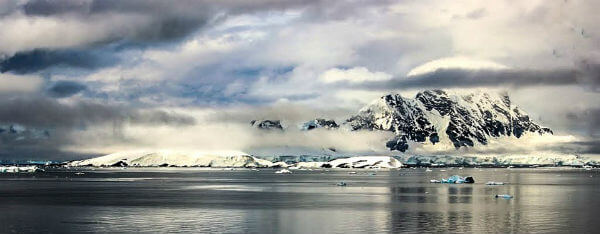
Antarctica is melting, and giant ice cracks are just the start

National Geographic reports: Seen from above, the Pine Island Ice Shelf is a slow-motion train wreck. Its buckled surface is scarred by thousands of large crevasses. Its edges are shredded by rifts a quarter mile across. In 2015 and 2016 a 225-square-mile chunk of it broke off the end and drifted away on the Amundsen Sea. The water there has warmed by more than a degree Fahrenheit over the past few decades, and the rate at which ice is melting and calving has quadrupled.

On the Antarctic Peninsula, the warming has been far greater—nearly five degrees on average. That’s why a Delaware-size iceberg is poised to break off the Larsen C Ice Shelf and why smaller ice shelves on the peninsula have long since disintegrated entirely into the waters of the Weddell Sea. But around the Amundsen Sea, a thousand miles to the southwest on the Pacific coast of Antarctica, the glaciers are far larger and the stakes far higher. They affect the entire planet.

The Pine Island Ice Shelf is the floating terminus of the Pine Island Glacier, one of several large glaciers that empty into the Amundsen Sea. Together they drain a much larger dome of ice called the West Antarctic Ice Sheet, which is up to two and a half miles thick and covers an area twice the size of Texas. The ice sheet is draped over a series of islands, but most of it rests on the floor of a basin that dips more than 5,000 feet below sea level. That makes it especially vulnerable to the warming ocean. If all that vulnerable ice were to become unmoored, break into pieces, and float away, as researchers increasingly believe it might, it would raise sea level by roughly 10 feet, drowning coasts around the world. [Continue reading…]


Facebooktwittermail

Vladimir Putin is suddenly on the defensive against corruption

Stephen Sestanovich writes: For years now, Putin has claimed — with brazen but disarming candor — to be fighting hard against corruption and the abuse of state power. In his 2015 speech to parliament, he complained that the bullying of legitimate businesses by bribe-seeking officials was a blight on the Russian economy. In his April 2016 call-in, he took questions about shakedowns by government inspectors, about real estate scams enabled by the courts, about the enslavement of workers in a fish cannery (ignored by the police), about the illegal seizure of a Moscow research institute by officials who wanted its land, and more. Putin has said that without fundamental reforms, the country’s economic growth will “hover around zero.” Last summer he told parliamentary candidates of his own party, United Russia, that they had to work harder to win the people’s trust.

Most of this was, of course, meaningless rhetoric. Any serious follow-through would threaten the system Putin has created.

But that’s why we should pay attention when he changes course. On the program last week, Putin announced that corruption is simply “not among the top” issues bothering Russians. When an earnest high school student complained about light punishment meted out to corrupt officials, the president’s initial, prickly response was to suggest that someone else had written the question. His lame concluding plea: “Let us rely on the work of the judicial system.”

Dismissing corruption and the abuse of power didn’t keep Putin from playing his usual role as national problem solver. Was a young teacher paid too little? The president said he’d look into it. Was a single mother in Siberia homeless after forest fires? Putin said he’d talk to the governor of her region. And the woman who lost her home to floods in southern Russia? Again, he promised to talk to her governor.

Yet through all this Putin kept repeating that there was something “strange” about the problems being raised. After all, money had been budgeted to help victims of natural disasters. Maybe, he volunteered, one of the governors was just new on the job? He steered consistently clear of the need for systemic reform or stronger anti-corruption initiatives. Sure, officials at all levels sometimes made wrong decisions, Putin admitted, adding, “I will reprimand them for this” (a typical response). And when asked what he did when people cheated him, the president modeled acceptance: “I try not to make a fuss.”

It’s obvious why Putin has gotten nervous about the corruption issue. His most visible political opponent, Alexei Navalny, has made it the centerpiece of hugely popular online videos and of recent rallies against the “crooks and thieves” of the current regime. It was always a bit shocking that Putin thought he could claim to be a champion of clean government, but somehow he got away with it. Now, apparently, he worries that even talking about corruption will validate Navalny’s critique. [Continue reading…]

Facebooktwittermail

Why CIA vets say Putin hates America — and why Trump shouldn’t trust him

The Daily Beast reports: The Russian intelligence officers picked up the American spies from Moscow’s Metropole Hotel and drove them a few short blocks to an ornate, lushly appointed guest house. It used to be the home of a wealthy Jewish dentist before being turned into a meeting place for Russia’s intelligence services.

The 17th-century mansion served as backdrop of a 2007 summit of CIA officers, FBI agents, and their Russian counterparts, as the Bush administration tried to build a cooperative relationship with Moscow on counterterrorism.

Over glasses of cognac and the occasional shot of chilled vodka, the Russian and American agents sat across from each other at a long conference table, in what turned into an interrogation instead of the hoped-for bridge-building exercise. The Russians probed the Americans to find out where their sources were, how big their networks were and any potential weaknesses to exploit them later.

“It was worse than a polygraph,” one former senior intelligence officer told The Daily Beast. “They used different people to ask us the same questions over and over, each time phrased in slightly different ways, as if to see whether we were lying,” and to trick information out of them.

That interaction is emblematic of 20 years of U.S. attempts to reach out to Moscow, with the initially Pollyannish new American administration seeking cooperation, and the Russians using each opportunity to gather intelligence on their enemy to advance their own interests.

“We, the United States, are the ‘main enemy’ to them,” said former CIA officer John Sipher. “In their mind, they are at war with us. Anything that’s hurtful to the United States is positive for Russia.” That goes doubly for Russian President Vladimir Putin, who once led Russia’s FSB, the successor to the infamous Soviet-era KGB. [Continue reading…]

Facebooktwittermail

Trump’s Twitter feed is a gold mine for foreign spies

Nada Bakos writes: Every time President Trump tweets, journalists and Twitter followers attempt to analyze what he means. Intelligence agencies around the world do, too: They’re trying to determine what vulnerabilities the president of the United States may have. And he’s giving them a lot to work with.

Trump’s Twitter feed is a gold mine for every foreign intelligence agency. Usually, intelligence officers’ efforts to collect information on world leaders are methodical, painstaking and often covert. CIA operatives have risked their lives to learn about foreign leaders so the United States could devise strategies to counter our adversaries. With Trump, though, secret operations are not necessary to understand what’s on his mind: The president’s unfiltered thoughts are available night and day, broadcast to his 32.7 million Twitter followers immediately and without much obvious mediation by diplomats, strategists or handlers.

Intelligence agencies try to answer these main questions when looking at a rival head of state: Who is he as a person? What type of leader is he? How does that compare to what he strives to be or presents himself as? What can we expect from him? And how can we use this insight to our advantage?

At the CIA, I tracked and analyzed terrorists and other U.S. enemies, including North Korea. But we never had such a rich source of raw intelligence about a world leader, and we certainly never had the opportunity that our adversaries (and our allies) have now — to get a real-time glimpse of a major world leader’s preoccupations, personality quirks and habits of mind. If we had, it would have given us significant advantages in our dealings with them. [Continue reading…]

Facebooktwittermail

Trump just ended a long tradition of celebrating Ramadan at the White House

The Washington Post reports: In the early days of December 1805, a handful of prominent politicians received formal invitations to join President Thomas Jefferson for a White House dinner.

Such entreaties were not uncommon: Jefferson frequently hosted lawmakers for political working dinners at the White House, almost always commencing them about 3:30 in the afternoon, shortly after the House or Senate had adjourned for the day.

But this gathering, scheduled for Dec. 9, would be slightly different.

dinner will be on the table precisely at sun-set — ” the invitations read. “The favour of an answer is asked.”

The occasion was the presence of a Tunisian envoy to the United States, Sidi Soliman Mellimelli, who had arrived in the country just the week before, in the midst of America’s ongoing conflict with what were then known as the Barbary States.

And the reason for the dinner’s later-than-usual start was Mellimelli’s observance of Ramadan, a holy month for Muslims in which observers fast between dawn and dusk. Only after sunset do Muslims break their fast with a meal, referred to as an iftar.

Jefferson’s decision to change the time of the meal to accommodate Mellimelli’s observance of Ramadan has been seized on by both sides in the 21st-century debate over Islam more than 200 years later. Historians have cited the meal as the first time an iftar took place in the White House — and it has been referenced in recent White House celebrations of Ramadan as an embodiment of the Founding Father’s respect for religious freedom. Meanwhile, critics on the far right have taken issue with the characterization of Jefferson’s Dec. 9, 1805, dinner as an iftar.

Whatever Jefferson could have foreseen for the young country’s future, it appears the modern-day White House tradition of marking Ramadan with an iftar dinner or Eid celebration has come to an end. [Continue reading…]

Facebooktwittermail

Why your brain hates other people — and how to make it think differently

Robert Sapolsky writes: As a kid, I saw the 1968 version of Planet of the Apes. As a future primatologist, I was mesmerized. Years later I discovered an anecdote about its filming: At lunchtime, the people playing chimps and those playing gorillas ate in separate groups.

It’s been said, “There are two kinds of people in the world: those who divide the world into two kinds of people and those who don’t.” In reality, there’s lots more of the former. And it can be vastly consequential when people are divided into Us and Them, ingroup and outgroup, “the people” (i.e., our kind) and the Others.

Humans universally make Us/Them dichotomies along lines of race, ethnicity, gender, language group, religion, age, socioeconomic status, and so on. And it’s not a pretty picture. We do so with remarkable speed and neurobiological efficiency; have complex taxonomies and classifications of ways in which we denigrate Thems; do so with a versatility that ranges from the minutest of microaggression to bloodbaths of savagery; and regularly decide what is inferior about Them based on pure emotion, followed by primitive rationalizations that we mistake for rationality. Pretty depressing.

But crucially, there is room for optimism. Much of that is grounded in something definedly human, which is that we all carry multiple Us/Them divisions in our heads. A Them in one case can be an Us in another, and it can only take an instant for that identity to flip. Thus, there is hope that, with science’s help, clannishness and xenophobia can lessen, perhaps even so much so that Hollywood-extra chimps and gorillas can break bread together. [Continue reading…]

Facebooktwittermail

Trump slanders Comey in Fox & Friends interview

The New York Times reports: President Trump appeared to acknowledge on Friday in an interview that his tweet hinting of taped conversations with James B. Comey was intended to influence the fired F.B.I. director’s testimony before Congress, and he emphasized that he committed “no obstruction” of the inquiries into whether his campaign colluded with Russia.

The interview, with “Fox & Friends,” was shown one day after the president tweeted what most people in Washington had already come to believe: that he had not made recordings of his conversations with Mr. Comey.

Instead, the president explained in the television interview, his tweets were referring to the possibility that anyone could have taped those discussions.

“I’ve been reading about it for the last couple of months about the seriousness of the horribleness of the situation with surveillance all over the place,” the president said in the interview. “So you never know what’s out there, but I didn’t tape, and I don’t have any tape and I didn’t tape.”

When the Fox interviewer suggested that the possible existence of recordings might make sure Mr. Comey “stayed honest in those hearings,” Mr. Trump paused before responding, “Well, it wasn’t very stupid, I can tell you that.”

Referring to Mr. Comey, the president said that “when he found out that I, you know, that there may be tapes out there whether it’s governmental tapes or anything else and who knows, I think his story may have changed.” [Continue reading…]

“When he found out that I…” — at this point Trump’s brain catches up with his mouth. He can’t say that Comey “found out” that Trump recorded their conversations, having finally confirmed what everyone already assumed — that he didn’t record them.

Comey’s revelation, Trump would have us believe, was that thanks to a tweet, Comey firstly was alerted to the possibility that their conversations could have been recorded by parties unknown, and secondly on that basis he had second thoughts about lying about the content of those conversations.

Put simply, Trump is saying that had he not alerted Comey to the possibility of having been recorded, the former director of the FBI would have lied.

What Trump has yet to grasp is that each time he questions Comey’s integrity, he’s also implicitly questioning the integrity of the FBI officials and Mueller’s team who are currently investigating him.

Trump persistently acts as a man who sees himself as the target of an investigation he wants to thwart, undermine, and swiftly curtail. He has zero interest in assisting the investigation or supporting its conclusions.

He thereby provides compelling reason for the investigators to be tireless, tenacious and resolute in their pursuit of the truth.

Facebooktwittermail

What happens when a presidency loses its legitimacy?

David Frum writes: Day by day, revelation after revelation, the legitimacy of the Trump presidency is seeping away. The question of what to do about this loss is becoming ever more urgent and frightening.

The already thick cloud of discredit over the Trump presidency thickened deeper Friday, June 23. The Washington Post reported that the CIA told President Obama last year that Vladimir Putin had personally and specifically instructed his intelligence agencies to intervene in the U.S. presidential election to hurt Hillary Clinton and help Donald Trump.

Whether the Trump campaign knowingly coordinated its activities with the Russians remains uncertain. The Trump campaign may have been a wholly passive and unwitting beneficiary. Yes, it’s curious that the Russians allegedly directed their resources to the Rust Belt states also targeted by the Trump campaign. But it’s conceivable they were all just reading the same polls on FiveThirtyEight and RealClearPolitics.

Trump himself passionately denounces the whole thing as a monstrous hoax, a “made-up story.” He has not yet lost all his true believers. But those believers do not include very many of the leading Republicans in Congress. Senate Majority Leader Mitch McConnell agrees it happened. So does House Speaker Paul Ryan. The House number two, Kevin McCarthy, has even joked that Russia pays Trump.

It’s not seriously disputed by anyone in a position of authority in the U.S. government—apart from the president himself—that Donald Trump holds his high office in considerable part because a foreign spy agency helped place him there. So now what? [Continue reading…]

Facebooktwittermail

Contradictory U.S. policies upend a Syrian asylum seeker’s life

The New York Times reports: A prominent Syrian dissident has been told he cannot get political asylum in the United States because he organized a conference with Syrian opposition groups — even though the American government has supported members of those same groups in the Syrian civil war.

The case of the dissident, Radwan Ziadeh, 41, who lives in a suburb of Washington, reveals a stark gap between American immigration law and foreign policy.

Ever since counterterrorism provisions were expanded after the Sept. 11 attacks, the United States government has considered many armed opposition groups around the world, including some that it backs diplomatically or financially, to be “undesignated terrorist organizations.” Anyone who provides “material support” to those groups can be disqualified from receiving immigration papers.

Mr. Ziadeh is a prominent political opponent of the Syrian president, Bashar al-Assad. He has received fellowships at Harvard, Georgetown and the United States Institute of Peace, which is funded by Congress. He has testified in Congress, written books and served briefly as a spokesman for the Syrian opposition umbrella group that the American government supported.

But early this month, Mr. Ziadeh was informed that he would be denied political asylum in the United States. In a 12-page letter laying out the government’s “intent to deny” his asylum claim, Citizenship and Immigration Services explained that he had provided “material support” to Syrian groups that the government considered undesignated terrorist organizations.

Mr. Ziadeh said he was shocked. He and his wife have lived in the United States for 10 years on a series of temporary permits, the latest of which expires next spring. Their children were born here.

“Right now, I can’t even plan for the future,” he said. “What will happen? I have three American kids. I love, actually, the U.S. I visited all 50 states, even U.S. territories. I visited all the presidential libraries.”

Going back to Syria is not an option. The government there has a warrant out for his arrest; the Islamic State has him on a list of Syrians it wants dead.

At issue, specifically, is that Mr. Ziadeh organized a series of conferences from November 2012 to May 2013 to discuss a democratic transition in Syria. [Continue reading…]

Facebooktwittermail

Rival groups vie for supremacy as fight against ISIS reaches tipping point

The Guardian reports: Iraqi forces have advanced to the base of the toppled minaret of Mosul’s Great Mosque of al-Nuri, hours after it was destroyed by Islamic State militants, as the bitter eight-month battle to recapture the city reached a tipping point.

The destruction of the mosque marked a pivotal moment in the war against Isis, which declared its now withered caliphate from there three years ago. The terror group’s wanton act of sabotage was widely seen as a harbinger of its imminent defeat.

Across northern Iraq, only a portion of Mosul’s old city and a small adjoining neighbourhood remain under Isis control. The nearby towns of Tel Afar and Hweija, both of which are surrounded, make up the remainder of the group’s territory, a mere sliver of the lands over which it had lorded at the height of its power in mid-2014.

As its fortunes have turned, the group’s remaining members have fled Iraq for the deserts of Syria. So rapid has been their capitulation that plans are now being drafted for a decisive battle later this year, somewhere between the Syrian and Jordanian borders, areas far from those that Isis had coveted.

Lined up in pursuit are a range of players who had have staked claims throughout the fight with Isis, as well as parallel regional conflicts, and have waited for the time to consolidate. As the organisation crumbles, all sides have now started competing for an edge, who gets to define what emerges from the collapse of Isis is a prize bigger than winning the war itself. [Continue reading…]

Facebooktwittermail

Obama’s secret struggle to punish Russia for Putin’s election assault

The Washington Post reports: Early last August, an envelope with extraordinary handling restrictions arrived at the White House. Sent by courier from the CIA, it carried “eyes only” instructions that its contents be shown to just four people: President Barack Obama and three senior aides.

Inside was an intelligence bombshell, a report drawn from sourcing deep inside the Russian government that detailed Russian President Vladi­mir Putin’s direct involvement in a cyber campaign to disrupt and discredit the U.S. presidential race.

But it went further. The intelligence captured Putin’s specific instructions on the operation’s audacious objectives — defeat or at least damage the Democratic nominee, Hillary Clinton, and help elect her opponent, Donald Trump.

At that point, the outlines of the Russian assault on the U.S. election were increasingly apparent. Hackers with ties to Russian intelligence services had been rummaging through Democratic Party computer networks, as well as some Republican systems, for more than a year. In July, the FBI had opened an investigation of contacts between Russian officials and Trump associates. And on July 22, nearly 20,000 emails stolen from the Democratic National Committee were dumped online by WikiLeaks. [Continue reading…]

Facebooktwittermail

Saudi and allied autocrats demand Qatar shuts down Al Jazeera

Reuters reports: Four Arab states boycotting Qatar over alleged support for terrorism have sent Doha a list of 13 demands including closing Al Jazeera television and reducing ties to their regional adversary Iran, an official of one of the four countries said.

The demands aimed at ending the worst Gulf Arab crisis in years appear designed to quash a two decade-old foreign policy in which Qatar has punched well above its weight, striding the stage as a peace broker, often in conflicts in Muslim lands.

Doha’s independent-minded approach, including a dovish line on Iran and support for Islamist groups, in particular the Muslim Brotherhood, has incensed some of its neighbors who see political Islamism as a threat to their dynastic rule.

The list, compiled by Saudi Arabia, the United Arab Emirates (UAE), Egypt and Bahrain, which cut economic, diplomatic and travel ties to Doha on June 5, also demands the closing of a Turkish military base in Qatar, the official told Reuters.

Turkey’s Defense Minister Fikri Isik rejected the demand, saying any call for the base to be shut would represent interference in Ankara’s relations with Doha. He suggested instead that Turkey might bolster its presence.

“Strengthening the Turkish base would be a positive step in terms of the Gulf’s security,” he said. “Re-evaluating the base agreement with Qatar is not on our agenda.” [Continue reading…]

In an editorial, the New York Times says: [B]y attacking Al Jazeera, the Saudis and their neighbors are trying to eliminate a voice that could lead citizens to question their rulers. Al Jazeera was the prime source of news as the Arab Spring rocked the Middle East in 2011.

That uprising ousted the military-backed autocrat Hosni Mubarak and led to Egypt’s first free election, which brought the Muslim Brotherhood to power. A loose political network founded in Egypt in 1928, the Muslim Brotherhood has renounced violence. The real reason it’s been labeled a terrorist group is that autocratic regimes see it as a populist threat. [Continue reading…]

For CNBC, Abid Ali writes: Al-Jazeera has been a constant thorn in the side of its neighbors. The news network was the first independent media network in the Middle East winning plaudits with more than 20 years of broadcasting. But after the Arab Spring, Doha was forced to tone down coverage to maintain stability in neighboring countries, especially in Bahrain.

Qatar has been forging an independent foreign policy since the discovery of gas and a palace coup where the former Emir ousted his pro-Saudi leaning father. Since 1995 the country has been on a tear with a construction boom reshaping the desert state. While Qataris are the world’s richest per capita ($130,000), in neighboring Saudi Arabia more than 35 percent live under the national poverty line.

“The State of Qatar recognizes that a decision to close Al-Jazeera will infringe on their sovereignty,” Wadah Khanfar, the former director general of Al-Jazeera, told CNBC in a phone interview. “The independence of the state is at risk. If they move against Al-Jazeera what next? They will stand firm.” [Continue reading…]

Facebooktwittermail

How an entire nation became Russia’s test lab for cyberwar

Wired reports: The clocks read zero when the lights went out.

It was a Saturday night last December, and Oleksii Yasinsky was sitting on the couch with his wife and teenage son in the living room of their Kiev apartment. The 40-year-old Ukrainian cybersecurity researcher and his family were an hour into Oliver Stone’s film Snowden when their building abruptly lost power.

“The hackers don’t want us to finish the movie,” Yasinsky’s wife joked. She was referring to an event that had occurred a year earlier, a cyberattack that had cut electricity to nearly a quarter-million Ukrainians two days before Christmas in 2015. Yasinsky, a chief forensic analyst at a Kiev digital security firm, didn’t laugh. He looked over at a portable clock on his desk: The time was 00:00. Precisely midnight.

Yasinsky’s television was plugged into a surge protector with a battery backup, so only the flicker of images onscreen lit the room now. The power strip started beeping plaintively. Yasinsky got up and switched it off to save its charge, leaving the room suddenly silent.

He went to the kitchen, pulled out a handful of candles and lit them. Then he stepped to the kitchen window. The thin, sandy-blond engineer looked out on a view of the city as he’d never seen it before: The entire skyline around his apartment building was dark. Only the gray glow of distant lights reflected off the clouded sky, outlining blackened hulks of modern condos and Soviet high-rises.

Noting the precise time and the date, almost exactly a year since the December 2015 grid attack, Yasinsky felt sure that this was no normal blackout. He thought of the cold outside—close to zero degrees Fahrenheit—the slowly sinking temperatures in thousands of homes, and the countdown until dead water pumps led to frozen pipes.

That’s when another paranoid thought began to work its way through his mind: For the past 14 months, Yasinsky had found himself at the center of an enveloping crisis. A growing roster of Ukrainian companies and government agencies had come to him to analyze a plague of cyberattacks that were hitting them in rapid, remorseless succession. A single group of hackers seemed to be behind all of it. Now he couldn’t suppress the sense that those same phantoms, whose fingerprints he had traced for more than a year, had reached back, out through the internet’s ether, into his home.

The Cyber-Cassandras said this would happen. For decades they warned that hackers would soon make the leap beyond purely digital mayhem and start to cause real, physical damage to the world. In 2009, when the NSA’s Stuxnet malware silently accelerated a few hundred Iranian nuclear centrifuges until they destroyed themselves, it seemed to offer a preview of this new era. “This has a whiff of August 1945,” Michael Hayden, former director of the NSA and the CIA, said in a speech. “Somebody just used a new weapon, and this weapon will not be put back in the box.”

Now, in Ukraine, the quintessential cyberwar scenario has come to life. Twice. On separate occasions, invisible saboteurs have turned off the electricity to hundreds of thousands of people. Each blackout lasted a matter of hours, only as long as it took for scrambling engineers to manually switch the power on again. But as proofs of concept, the attacks set a new precedent: In Russia’s shadow, the decades-old nightmare of hackers stopping the gears of modern society has become a reality. [Continue reading…]

Facebooktwittermail

Trump appointee is a Saudi government lobbyist

The Center for Public Integrity reports: One of President Donald Trump’s newest appointees is a registered agent of Saudi Arabia earning hundreds of thousands of dollars to lobby on the kingdom’s behalf, according to U.S. Department of Justice records reviewed by the Center for Public Integrity.

Since January, the Saudi Arabian foreign ministry has paid longtime Republican lobbyist Richard Hohlt about $430,000 in exchange for “advice on legislative and public affairs strategies.”

Trump’s decision to appoint a registered foreign agent to the President’s Commission on White House Fellowships clashes with the president’s vow to clean up Washington and limit the influence of special interests.

Trump singled out lobbyists for foreign governments for special criticism, saying they shouldn’t be permitted to contribute to political campaigns. Hohlt is himself a Trump donor, though his contributions came before he registered to represent Saudi Arabia. [Continue reading…]

Facebooktwittermail

The new ‘King’ of Saudi Arabia

Simon Henderson writes: The latest Saudi transition had been predictable since soon after King Salman ascended the throne on the death of his older half-brother Abdullah in January 2015. Within three months, Salman had positioned Muhammad bin Salman, the eldest son of his third wife, as his intended eventual successor. The only question was when the transition would occur. It has now happened, although raising new questions: When will MbS, as he is known, become king in name and under what circumstances?

Those answers are hard to guess, but the king’s now-dismissed predecessor, Muhammad bin Nayef, or MbN, was long perceived by many as a stopgap. Additionally, although an experienced minister of interior and the kingdom’s counterterrorism chief, he was scarred by the 2009 experience of having a supposedly surrendering jihadist meet him wearing a rectal device.

King Salman’s own health is also uncertain. At eighty-one, he walks with a cane and, when meeting foreign leaders, sits before a computer screen to remind him of his talking points. Once reputed to be the House of Saud’s institutional memory, Salman now often displays a puzzled visage and has leaned increasingly on MbS for advice, apparently regarding him as almost a reincarnation of King Abdulaziz, known as Ibn Saud, Salman’s father and the founder in 1932 of Saudi Arabia. [Continue reading…]

Facebooktwittermail

Trump, Russia and a shadowy business partnership

Timothy L. O’Brien writes: Trump has repeatedly labeled Comey’s and Mueller’s investigations “witch hunts,” and his lawyers have said that the last decade of his tax returns (which the president has declined to release) would show that he had no income or loans from Russian sources. In May, Trump told NBC that he has no property or investments in Russia. “I am not involved in Russia,” he said.

But that doesn’t address national security and other problems that might arise for the president if Russia is involved in Trump, either through potentially compromising U.S. business relationships or through funds that flowed into his wallet years ago. In that context, a troubling history of Trump’s dealings with Russians exists outside of Russia: in a dormant real-estate development firm, the Bayrock Group, which once operated just two floors beneath the president’s own office in Trump Tower.

Bayrock partnered with the future president and his two eldest children, Donald Jr. and Ivanka, on a series of real-estate deals between 2002 and about 2011, the most prominent being the troubled Trump Soho hotel and condominium in Manhattan.

During the years that Bayrock and Trump did deals together, the company was also a bridge between murky European funding and a number of projects in the U.S. to which the president once leant his name in exchange for handsome fees. Icelandic banks that dealt with Bayrock, for example, were easy marks for money launderers and foreign influence, according to interviews with government investigators, legislators, and others in Reykjavik, Brussels, Paris and London. Trump testified under oath in a 2007 deposition that Bayrock brought Russian investors to his Trump Tower office to discuss deals in Moscow, and said he was pondering investing there.

“It’s ridiculous that I wouldn’t be investing in Russia,” Trump said in that deposition. “Russia is one of the hottest places in the world for investment.” [Continue reading…]

Facebooktwittermail

Forced displacement worldwide at its highest in decades

UNHCR reports: War, violence and persecution have uprooted more men, women and children around the world than at any time in the seven-decade history of UNHCR according to a report published today.

The UN Refugee Agency’s annual Global Trends study found that 65.6 million people were forcibly displaced worldwide at the end of 2016 – a total bigger than the population of the United Kingdom and about 300,000 more than last year.

It noted that the pace at which people are becoming displaced remains very high. On average, 20 people were driven from their homes every minute last year, or one every three seconds – less than the time it takes to read this sentence. [Continue reading…]

Facebooktwittermail