Category Archives: Analysis

In his first address to Congress, Trump demonizes immigrants — with a smile

Betsy Woodruff writes: Donald Trump’s first joint address to Congress was bursting with hope, optimism, and good feelings — except toward immigrants. The president laid out a vision of a country that would be free from vice, crime, poverty, and all other ailments, if only there weren’t so many foreigners.

It was a distillation of one core view Trump has held ever since that fateful escalator ride two summers ago: that immigrants in the U.S. are a net negative, and that the way the U.S. government treats them needs to change, and fast. The media and the “special interests,” he hinted darkly, are conspiring to keep Americans from knowing the truth about the threat immigrants pose. But soon, things will be different.

“I have ordered the Department of Homeland Security to create an office to serve American Victims,” he said. “The office is called VOICE — Victims Of Immigration Crime Engagement. We are providing a voice to those who have been ignored by our media, and silenced by special interests.” [Continue reading…]

Facebooktwittermail

Why Americans don’t win wars anymore

Mark Perry writes: President Trump bemoans the fact that when it comes to wars, America’s best days are behind her. “We never win, and we don’t fight to win,” he said on the same day that he declared his new budget would include a 10-percent increase for military spending. But there is an example of American victory — and in the Middle East , no less — that the new commander-in-chief would do well to study because it provides a lesson wholly at odds with Trump’s muscle and menace style.

The lesson comes from an actual war hero who was — somewhat amazingly — branded a wimp when he landed in the Oval Office.

On September 2, 1944, Lt. j.g. George H.W. Bush’s TBM Avenger was shot down on a bombing run over Chichi Jima, a Japanese held island. As his aircraft spun seaward, Bush ordered his gunner and bombardier out of the plane, then climbed onto the wing and parachuted into the sea. Afloat on a life raft, Bush admits he feared the Japanese would find him and deliver him to Chichi Jima’s commander who, after the war, was executed for murdering captured American pilots and eating their livers. Bush later joked that he would have made a modest meal, as he was “a skinny wretch.”

It takes a lot of sand to fly into the teeth of enemy fire, but Bush’s reputation for courage didn’t stick. Forty years later, in October of 1987, he was labeled a “wimp” by Newsweek, which questioned whether he was “tough enough” to succeed Ronald Reagan as president. Even British Prime Minister Margaret Thatcher had doubts. When Saddam Hussein invaded Kuwait on August 1, 1990 and Bush seemed to waver, Thatcher bucked him up: “Don’t go all wobbly on me, George,” she said. In fact, Bush wasn’t about to.

In the weeks following Saddam’s aggression, Bush recruited an international coalition of countries to oppose him, gained the approval of the U.N. to condemn his invasion, deployed hundreds of thousands of U.S. and coalition of troops to defend Saudi Arabia, then fought a 100- hour ground war (preceded by a 900-hour air war), dubbed Operation Desert Storm, that expelled Saddam’s army from Kuwait. “We set the goal, formed the coalition, did the diplomacy, gave peace a chance, had the fight, defined the mission of the battle, fought and won,” as Bush succinctly put it. The “mother of all battles” (as Saddam bragged) was “the mother of all victories” — the last clear and decisive military triumph in American history. [Continue reading…]

Facebooktwittermail

New evidence links the Kremlin to efforts to destabilize Montenegro and slow its path to NATO

John R. Schindler writes: For Vladimir Putin, NATO expansion is a major bugbear and any chance Russia gets to thwart further expansion of the Atlantic Alliance is an opportunity not to be missed. Not to mention that the breakup of Yugoslavia — which the Russian leader has repeatedly held up as an example of what Western governments do to smaller Slavic states — is viewed with shame in the Kremlin. Here, too, Putin wants payback.

Just how serious Moscow is about Montenegro was revealed in a sinister plot that was unmasked last fall, shortly before its execution. In mid-October, Montenegrin authorities arrested some 20 people, most of them citizens of neighboring Serbia, for conspiring to overthrow the government in Podgorica and assassinate Prime Minister Milo Djukanović, the wily politician who ruled Montenegro from 1991 until 2016. Soon it emerged that the plot ringleaders were two Russian nationalists. While Montenegrin officials were careful not to point fingers directly at the Kremlin, questions lingered about what really happened.

The two Russians were quickly expelled from the country. That several of the Serbs and Montenegrins who were arrested for their role in the plot had served with Russian forces fighting in eastern Ukraine — where Moscow’s proxy war has included the use of foreign mercenaries, including Slavic nationalists from Eastern Europe — appeared to be more than a coincidence. Security services in the Balkans and beyond suspected that Russian intelligence was the hidden hand behind the plot, which seemed plausible given the large amounts of cash and the late-model communications gear found in the possession of the coup plotters.

That said, hard evidence of Moscow’s role didn’t appear immediately. While the Kremlin unquestionably wanted to dissuade Montenegro from joining NATO, assaulting the parliament in Podgorica and assassinating the prime minister to install a pro-Russian government seemed like outrageous behavior, even for Putin’s Kremlin — which is hardly squeamish about employing what Russian spies term wetwork against their enemies abroad.

Now, however, there is solid evidence that the Kremlin was directly behind the plot against Montenegro. [Continue reading…]

Facebooktwittermail

Trump is flirting with the idea that anti-Semitic incidents are false flags — again

Aaron Blake writes: President Trump seemed to suggest Tuesday that the recent bomb threats and vandalism at Jewish community centers and cemeteries across the country might be false flags, according to a Democratic attorney general who met with him. And Trump’s comments came the same day that one of his top advisers suggested the culprits could be Democrats.

It wouldn’t be the first time Trump went down this road.

Pennsylvania Attorney General Josh Shapiro (D) told reporters Tuesday that Trump expressed horror at the situation but also appeared to suggest it might not be anti-Semitism and that it could be “the reverse,” according to reports from the BillyPenn and BuzzFeed. [Continue reading…]

Facebooktwittermail

Trump’s ambition to poison America and destroy the planet

The New York Times reports: President Trump is expected to sign an executive order on Tuesday aimed at rolling back one of former President Barack Obama’s major environmental regulations to protect American waterways, but it will have almost no immediate legal effect, according to two people familiar with the White House plans.

The order will essentially give Mr. Trump a megaphone to direct his new Environmental Protection Agency administrator, Scott Pruitt, to begin the complicated legal process of rewriting the sweeping 2015 rule known as Waters of the United States. But that effort could take longer than a single presidential term, legal experts said.

An advance copy of the order was viewed by The New York Times on Monday. It is the first of two announcements expected to direct Mr. Pruitt to begin dismantling the major pillars of Mr. Obama’s environmental legacy.

In the coming week, Mr. Trump is also expected to sign a similar order instructing Mr. Pruitt to begin the process of withdrawing and revising Mr. Obama’s signature 2015 climate-change regulation, aimed at curbing emissions of planet-warming greenhouse gases from coal-fired power plants.

Because both of those rules were finalized under existing laws long before Mr. Obama left office, they cannot be simply undone with a stroke of the president’s pen, legal experts in both the Obama and Trump White Houses have said.

“The executive order has no legal significance at all,” said Richard L. Revesz, a professor of environmental law at New York University. “It’s like the president calling Scott Pruitt and telling him to start the legal proceedings. It does the same thing as a phone call or a tweet. It just signals that the president wants it to happen.” [Continue reading…]

Facebooktwittermail

The green movement is talking about racism? It’s about time

Brentin Mock writes: Facing a new White House administration led by Donald Trump, environmental leaders recently signed an accord pledging their allegiance to civil rights and social justice. Among the signatories are several leaders of the Sierra Club, including its executive director, Michael Brune, who in recent years has steered the organization toward rather bold stances on a range of issues that aren’t traditionally recognized as “green.” In 2013, its board of directors voted that the organization should advocate for immigrant rights. The following year, the Sierra Club endorsed and defended the Black Lives Matter movement. Since President Trump came into office, the organization’s resolve has only strengthened, as Brune indicated in a November 18 blog post: “I’m proud of how the Sierra Club has begun to address the intersection of climate with inequality, race, class, and gender, and I guarantee that we’ll go even deeper.”

This shift toward racial justice matters has not been universally accepted among the Sierra Club’s ranks and may even have cost it a few members. Those who disapprove have often expressed sentiments amounting to “racism is not the environmental movement’s responsibility.” But Brune says the organization won’t be backing off anytime soon, a position he forcefully defended on the group’s blog. He will assure his members, he tells me, “that we are continuing to protect wildlife and wild places, and this is how we can best do that in the 21st century.”

What Brune is acknowledging is the darker legacy of the green movement. Some may believe that environmentalism has little to do with social justice issues, but the mission of the Sierra Club, and many conservation groups like it throughout the late-19th century and most of the 20th century, was anything but race neutral. In many ways, racial exclusivity actually shaped the environmental mission, which is what makes the Sierra Club’s leap toward civil rights advocacy such a radical move. It’s important not because a network like Black Lives Matter needs environmentalists, but because environmentalists need black lives. Given the history of conservationists elevating endangered plant life over endangered people of color, it is environmentalism’s soul that most needs saving. [Continue reading…]

Facebooktwittermail

Trump is just as much Stephen Miller’s mouthpiece as vice versa

Bloomberg reports: Stephen Miller’s corner office in the West Wing of the White House is utterly barren — no pictures on the walls, no books on the shelves, no indication even of who inhabited the space a month earlier, before the Obama administration cleared out. “Couldn’t tell you,” Trump’s intense and polarizing 31-year-old senior policy adviser says with a shrug. Miller isn’t being unfriendly. Rather, his spartan surroundings and indifference to small talk are byproducts of a life pared of every detail that doesn’t advance the singular glory of Donald J. Trump. Concerned that Trump wasn’t accruing the praise Miller felt was merited, he wanted to set the record straight. “Donald Trump has fundamentally realigned American politics,” he says, stabbing a finger on his desk. “It’s time the media acknowledge this and give him the credit he deserves.”

That’s not, to put it mildly, the story preoccupying the media right now. Over the last few weeks, Trump’s White House has exploded in chaos and infighting — a situation Miller exacerbated by helping to mastermind the sudden and much-criticized rollout of Trump’s Jan. 27 executive order banning refugees from seven Muslim-majority countries, which federal judges swiftly blocked. In fact, it was no accident that the order was sprung without warning on a Friday afternoon. Trump’s chief strategist Steve Bannon arranged the timing in the expectation that opponents, freed from work on the weekend, would stage huge protests — drawing maximum attention and galvanizing Trump supporters as the president followed through on a controversial campaign promise, says a senior administration official.

The order did indeed spark nationwide demonstrations, but things veered off script from there, as the White House struggled to explain to law enforcement officials, federal agencies, and foreign governments what the hastily drafted document did and didn’t say. Miller in particular became the target of withering attacks by everyone from Republican elected officials to Stephen Colbert, host of The Late Show, which did a skit featuring Miller’s severed — but still talking — head on a spike. Joe Scarborough, the co-host of MSNBC’s Morning Joe, with whom Trump has a complicated psychological fascination, spent days deriding Miller, whom he dubbed “Little Napoleon.” Yet not only has Miller survived the uproar and calls for his firing but he appears to be ascendant at a time when other West Wing staffers are diving for cover. [Continue reading…]

Facebooktwittermail

These Iowans voted for Trump. Many of them are already disappointed

The Washington Post reports: Tom Godat, a union electrician who has always voted for Democrats, cast his ballot for Donald Trump last year as “the lesser of two evils” compared to Hillary Clinton.

He’s already a little embarrassed about it.

There’s a lot that Godat likes about President Trump, especially his pledge to make the country great again by ignoring lobbyists, challenging both political parties and increasing the number of good-paying jobs.

But Godat was surprised by the utter chaos that came with the president’s first month. He said it often felt like Trump and his staff were impulsively firing off executive orders instead of really thinking things through.

“I didn’t think he would come in blazing like he has,” said Godat, 39, who has three kids and works at the same aluminum rolling plant where his father worked. “It seems almost like a dictatorship at times. He’s got a lot of controversial stuff going on and rather than thinking it through, I’m afraid that he’s jumping into the frying pan with both feet.” [Continue reading…]

Facebooktwittermail

Amazon deforestation, once tamed, comes roaring back

The New York Times reports: A few months ago, a representative from Cargill traveled to this remote colony in Bolivia’s eastern lowlands in the southernmost reaches of the vast Amazon River basin with an enticing offer.

The American agricultural giant wanted to buy soybeans from the Mennonite residents, descendants of European peasants who had been carving settlements out of the thick forest for more than 40 years. The company would finance a local warehouse and weighing station so farmers could sell their produce directly to Cargill on-site, the man said, according to local residents.

One of those farmers, Heinrich Janzen, was clearing woodland from a 37-acre plot he bought late last year, hustling to get soy in the ground in time for a May harvest. “Cargill wants to buy from us,” said Mr. Janzen, 38, as bluish smoke drifted from heaps of smoldering vegetation.

His soy is in demand. Cargill is one of several agricultural traders vying to buy from soy farmers in the region, he said.

Cargill confirmed the accounts of colony residents, and said the company was still assessing whether it would source from the community. That decision would depend on a study of the area’s productivity and land titles, said Hugo Krajnc, Cargill’s corporate affairs leader for the Southern Cone, based in Argentina. “But if a farmer has burned down its forest we’ll not source from that grower,” he said.

A decade after the “Save the Rainforest” movement forced changes that dramatically slowed deforestation across the Amazon basin, activity is roaring back in some of the biggest expanses of forests in the world. That resurgence, driven by the world’s growing appetite for soy and other agricultural crops, is raising the specter of a backward slide in efforts to preserve biodiversity and fight climate change. [Continue reading…]

Facebooktwittermail

Regent Mattis tries to contain King Trump’s madness

The New York Times reports: Inside the Pentagon, civilian and military officials appear to be relishing the fact that, so far, Mr. Mattis has protected them from many of the ups and downs coming out of the White House.

During a recent talk with policy officials at the Defense Department, Mr. Mattis told people to stay strong and keep going in the right direction — in many cases, largely the direction that they had already been going, according to a former senior military official who speaks frequently to his former colleagues. The former official said Mr. Mattis appeared to be pushing for greater expertise in the Pentagon and had asked officials not to change jobs so frequently that they are not able to become true experts.

An avid reader, Mr. Mattis also says he wants the Defense Department’s regional desks to be able to think the way people in their respective countries would think, officials said. He wants military officials to have read the literature of the country in which they specialize and to really understand the countries, not just the issues that affect bilateral relations with the United States. [Continue reading…]

The New York Times reports: As commander of an armored cavalry troop, H. R. McMaster fought in the largest tank battle of the Persian Gulf war, earning a Silver Star in the process. Afterward, the young captain reflected on how different his experience had been from the accounts he had read about Vietnam.

So when he arrived at the University of North Carolina for graduate studies in fall 1992, questions swirled through his head: How had Vietnam become an American war? Why did American troops die without a clear idea of their mission? “I began to seek answers to those questions,” he later wrote.

The result was a dissertation that turned into a book that would become, for a whole generation of military officers, a must-read autopsy of a war gone wrong. Now, as a three-star general and President Trump’s national security adviser, General McMaster will have the opportunity to put the lessons of that book to the test inside the White House as he serves a mercurial commander in chief with neither political nor military experience.

The book, “Dereliction of Duty,” published in 1997, highlighted the consequences of the military not giving candid advice to a president. General McMaster concluded that during Vietnam, officers on the Joint Chiefs of Staff “failed to confront the president with their objections” to a strategy they thought would fail. Twenty years later, the book serves as a guidepost to how he views his role as the coordinator of the president’s foreign policy team.

“It’s a history, but he obviously draws conclusions about the need for what you might term brutally forthright assessments by military and indeed also by civilian leaders,” David H. Petraeus, the retired Army general and a patron of General McMaster, said in an interview. “That’s a hugely important takeaway. He has a record of being quite forthright.” [Continue reading…]

Steven Simon and Daniel Benjamin write: The new point man for the Trump administration’s counter-jihadist team is Sebastian Gorka, an itinerant instructor in the doctrine of irregular warfare and former national security editor at Breitbart. Stephen K. Bannon and Stephen Miller, the chief commissars of the Trump White House, have framed Islam as an enemy ideology and predicted a historic clash of civilizations. Mr. Gorka, who has been appointed deputy assistant to the president, is the expert they have empowered to translate their prediction into national strategy.

Mr. Gorka was born and raised in Britain, the son of Hungarian émigrés. As a political consultant in post-Communist Hungary, he acquired a doctorate and involved himself with ultranationalist politics. He later moved to the United States and became a citizen five years ago, while building a career moderating military seminars and establishing a reputation as an ill-informed Islamophobe. (He has responded to such claims by stating that he has read the Quran in translation.)

In 2015, he caught Donald Trump’s eye, perhaps appealing to someone who had no government experience by declaring everything done by the government to be idiotic. Most notably, Mr. Gorka derides the notion that Islamic militancy might reflect worldly grievances, like poor governance, repression, poverty and war. “This is the famous approach that says it is all so nuanced and complicated,” Mr. Gorka recently told The Washington Post. “This is what I completely jettison.” [Continue reading…]

Facebooktwittermail

The world is ignoring an ‘unprecedented’ starvation crisis

Ishaan Tharoor writes: The world is in the grip of an astonishing and acute crisis: More than 20 million people in South Sudan, Somalia, northern Nigeria and Yemen face starvation in the next six months, according to the United Nations. Nearly 1.4 million children are at “imminent risk” of death. The scale of the hunger epidemic was described last month by U.S.-based researchers as “unprecedented in recent decades.”

The crises are in large part man-made, stoked by ruinous conflicts, collapsing governance and international indifference. Only in one country, Somalia, which is recovering from years of war, is drought the main cause of the current food shortages.

“The situation is dire,” warned U.N. Secretary General Antonio Guterres earlier this week, in a desperate appeal for funds. “We need $4.4 billion by the end of March to avert a catastrophe.” So far, his organization has raised only $90 million, a drop in the bucket. At a time when the Trump administration has already threatened funding cuts to the U.N., the prospects for global relief look dim. [Continue reading…]

Facebooktwittermail

Robert Mercer: The big data billionaire waging war on mainstream media

Carole Cadwalladr writes: Mercer started backing Ted Cruz, but when he fell out of the presidential race he threw his money – $13.5m of it – behind the Trump campaign.

It’s money he’s made as a result of his career as a brilliant but reclusive computer scientist. He started his career at IBM, where he made what the Association for Computational Linguistics called “revolutionary” breakthroughs in language processing – a science that went on to be key in developing today’s AI – and later became joint CEO of Renaissance Technologies, a hedge fund that makes its money by using algorithms to model and trade on the financial markets.

One of its funds, Medallion, which manages only its employees’ money, is the most successful in the world – generating $55bn so far. And since 2010, Mercer has donated $45m to different political campaigns – all Republican – and another $50m to non-profits – all rightwing, ultra-conservative. This is a billionaire who is, as billionaires are wont, trying to reshape the world according to his personal beliefs.

Robert Mercer very rarely speaks in public and never to journalists, so to gauge his beliefs you have to look at where he channels his money: a series of yachts, all called Sea Owl; a $2.9m model train set; climate change denial (he funds a climate change denial thinktank, the Heartland Institute); and what is maybe the ultimate rich man’s plaything – the disruption of the mainstream media. In this he is helped by his close associate Steve Bannon, Trump’s campaign manager and now chief strategist. The money he gives to the Media Research Center, with its mission of correcting “liberal bias” is just one of his media plays. There are other bigger, and even more deliberate strategies, and shining brightly, the star at the centre of the Mercer media galaxy, is Breitbart.

It was $10m of Mercer’s money that enabled Bannon to fund Breitbart – a rightwing news site, set up with the express intention of being a Huffington Post for the right. It has launched the careers of Milo Yiannopoulos and his like, regularly hosts antisemitic and Islamophobic views, and is currently being boycotted by more than 1,000 brands after an activist campaign. It has been phenomenally successful: the 29th most popular site in America with 2bn page views a year. It’s bigger than its inspiration, the Huffington Post, bigger, even, than PornHub. It’s the biggest political site on Facebook. The biggest on Twitter.

Prominent rightwing journalist Andrew Breitbart, who founded the site but died in 2012, told Bannon that they had “to take back the culture”. And, arguably, they have, though American culture is only the start of it. In 2014, Bannon launched Breitbart London, telling the New York Times it was specifically timed ahead of the UK’s forthcoming election. It was, he said, the latest front “in our current cultural and political war”. France and Germany are next. [Continue reading…]

Facebooktwittermail

No, Sweden isn’t hiding an immigrant crime problem. This is the real story

Kristine Eck and Christopher J. Fariss write: Last weekend at a Florida campaign rally, the president of the United States made vague claims intimating that Sweden has an immigrant violence problem. Research we have conducted shows that this is not true. In fact, criticism of Sweden is based on common misconceptions and mishandled information.

The president’s comments were originally inspired by a Fox News report on a video propaganda piece released by Ami Horowitz, which alleges that Sweden faces a spate of Muslim immigrant violence and that Swedish authorities are covering this up. The video misuses quotes from Swedish police to suggest that official crime statistics in Sweden are being purposely withheld. After President Trump’s comments, several right-wing media outlets doubled down on these claims. This is a feedback loop based on what are now called “alternative facts.”

Official crime statistics from Sweden actually show that the crime rate has remained steady since 2005. What’s more, the Swedish police do not collect information on the ethnicity, religion, or race of perpetrators or victims of crime, which means there’s no evidence for claims that Muslim immigrants are committing crimes in record numbers. Nor is there any evidence to support the claim that Swedish authorities are manipulating the statistics, as the producer of the video alleges.

Actually, compared to the U.S., the government of Sweden is a model in making data accessible and actions transparent. Its official statistics are some of the most complete and readily accessible in the world. Since 1766, Swedish law on freedom of the press has included a principle of public access (Offentlighetsprincipen), which grants public access to all government documents upon request unless they fall under secrecy restrictions. This law is the oldest piece of freedom of information legislation in the world. [Continue reading…]

Facebooktwittermail

Trump’s ties to organized crime — past and present

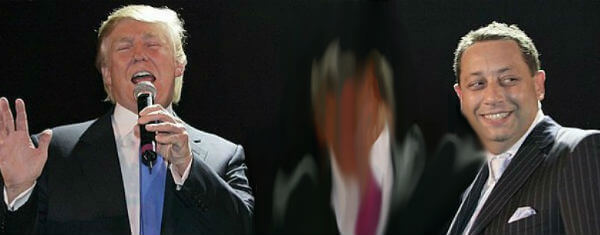
The Daily Beast reports: In 2013, Sater’s connection to Trump, who was still two years shy of running for national office, caused the mogul one of his many moments of pique with a member of the international press. Trump stormed out of a BBC Panorama interview when asked by John Sweeney, “Shouldn’t you have said, Felix Sater, you’re connected with the Mafia and you’re fired.” Trump replied by suggesting Sweeney might be “thick” and that he could not break a contract with Bayrock even if Sater’s mob ties were established to his satisfaction.

Sater’s tenure at Bayrock wasn’t just confined to leveraging the Trump brand. He was accused of threatening gruesome acts of violence against erstwhile business associates who were in a position to disclose his shady history. In 2007, the manager of one Trump hotel-condo in Phoenix, Arizona, sued Sater after he allegedly threatened to get a cousin to electrocute the manager’s testicles, dismember him and leave him “dead in the trunk of his car.” Sater reportedly settled that case out of court, but denied the charges.

By 2010, Sater was out at Bayrock — but in at the Trump Organization. He reportedly brandished a business card naming him as a “Senior Advisor to Donald Trump.” He also had a valid email address at the organization, a phone number that had previously belonged to one of Trump’s general counsels, and his own office in Trump Tower on Fifth Avenue.

Sater’s role as an employee of the Trump Organization also came to light when he was accused of shaking down one of his former colleagues at Bayrock.

Jody Kriss, the former finance director of Bayrock, alleged that he was entitled to a share of the $227 million profits in the Trump SoHo project. As reported by The Daily Beast in August 2016, Kriss claimed, in a court case filed in Delaware, that he was owed $7 million for his work on the project but offered a settlement of only half a million dollars. His principal antagonist in recouping his investment, he said, was Felix Sater.

In sworn testimony, Kriss stated that his money had become entangled with an Icelandic financial company known as FL Group, which seemed to draw Russian investors “in favor” with Vladimir Putin. (Bayrock founder Tevfik Arif was also part of this deal.) According to Kriss:

“Felix Satter [sic] told me that the deal with FL prohibited me from getting the rest in that I could either take the money and shut up or risk being killed if I made trouble. I knew at that time Satter had served a prison sentence for first degree assault (stabbing someone in the face with a wine glass stem) and with learning what would soon become common knowledge, that Satter had had a decades-long involvement with the New York and Russian mafia and had just in 2007 been sued in a civil action in Phoenix.”

The Delaware case ultimately was dismissed because of jurisdiction; but the judge stated on the record that Kriss’s accusations appeared to be legitimate. Sater’s defense team denied allegations.

In a separate and still-pending suit to which Kriss is a plaintiff, this one filed in New York’s Southern District, he has alleged that “tax evasion and money-laundering are the core of Bayrock’s business model.”

The defendants have argued that the suit amounts to a shakedown, but the judge has ruled that Kriss has enough of a case to warrant moving forward.

As for Sater, he had coffee the other day with the president’s personal lawyer and discussed a peace plan for Ukraine. [Continue reading…]


Facebooktwittermail

Trump’s Cabinet has to work as a cleanup crew

The Washington Post reports: After President Trump said that deporting undocumented immigrants was “a military operation,” Homeland Security Secretary John F. Kelly, speaking in Mexico, clarified that there would be “no use of military force in immigration operations.”

After Trump, standing next to Israeli Prime Minister Benjamin Netanyahu, upended decades of U.S. policy by saying he was open to a one-state solution to the conflict in the Middle East, U.N. envoy Nikki Haley asserted that the United States “absolutely” supports a two-state solution.

And after Trump alarmed European allies by declaring NATO obsolete, Vice President Pence flew to Munich and Brussels, where he reassured a worried continent that the president remains “fully devoted to our transatlantic union.”

One of the unofficial duties of Trump’s Cabinet, it seems, is cleaning up the statements of the man they serve. Five weeks into Trump’s tenure in office, his deputies have found themselves softening, explaining and sometimes outright contradicting the president. [Continue reading…]

Facebooktwittermail

I cover hate. I didn’t expect it at my family’s Jewish cemetery

By Ariana Tobin, ProPublica, February 23, 2017

When it comes to death, my family honors all of the Ashkenazi Jewish traditions: We name our children after dead relatives, we sit shiva for a week, we gather around trays of fruit and lox and cream cheese, we cover the mirrors, we say the Kaddish prayer, we each toss three shovelfuls of dirt into the grave, and we wait a year to put a stone on top of it. When I got my driver’s license at 16, my mom asked me not to sign the organ donor card because Jews are supposed to be laid to rest in one piece. When I turned 18 and signed it anyway, I couldn’t stop imagining her face when she found out after I’d died in a car accident.

But traditions don’t protect you from death, or the life of anxiety in preparation for it. When I told my grandmother — her mother called her Malka, her sisters called her Mollie — that I had an opportunity to teach English abroad, I knew what to expect in response: “That’s nice, baby, but why don’t you find a teaching job around here where it’s safe?” That, and a $20 bill she couldn’t necessarily afford to give.

But when I added, “I’m going to a place in Belarus called Minsk; it’s a big city,” her reply took me by surprise. “Minsk!” she exclaimed. “That’s where my mother was from! I guess you could go. Maybe you’ll see where they lived?”

I did go. I didn’t see where they lived because that place does not exist anymore, thanks to World War II and the Soviets. To identify the symbols of Judaism left in a city that was about 37 percent Jewish in 1941, you have to squint at the stone facades of buildings and say, “Yes, I think that might be a Hebrew character.” You have to stare hard, and wonder, “Hmm, is that Yiddish?”

There are statues and plaques here and there. But look as one might, there are few relics of Jewish death. When you visit Khatyn, a memorial to the victims of “the Great War,” you learn about the deaths of hundreds of thousands of civilians, but little to nothing about what religion they practiced. Nor are there signs marking entire villages of Belarussians, Jews and non-Jews, that became unmarked mass graves. When I would ask my students and co-workers and friends, “What happened to the Jews here?” all most of them would say was, “They left.”

Continue reading

Facebooktwittermail

Who is Nils Bildt? Swedish ‘national security advisor’ interviewed by Fox News is a mystery to Swedes

The Washington Post reports: In a segment on Fox News’s “The O’Reilly Factor” that aired Thursday, host Bill O’Reilly spoke with two Swedish nationals about allegations that Sweden had become a more dangerous place in recent years because of immigration.

One guest, Swedish journalist Anne-Sofie Naslund of the Expressen newspaper, pushed back against O’Reilly’s comments, suggesting that her country was far safer than it was being presented.

Nils Bildt, billed as a “Swedish defense and national security advisor” by Fox News, told O’Reilly that Naslund was “rather incorrect” and that there had been big problems with integrating immigrants into Swedish society. “These things are not being openly and honestly discussed,” Bildt said.

It was only a brief segment, but it quickly caused controversy back in Sweden, where reporters and experts suggested that Bildt was unknown within the Swedish national security world.

The Dagens Nyheter newspaper reported Friday that neither the Swedish armed forces nor the Foreign Ministry had heard of Bildt. Johan Wiktorin, a fellow at the Royal Swedish Academy of War Sciences, took to Twitter to suggest he had not heard of Bildt either. [Continue reading…]

Facebooktwittermail