Meet Oz Katerji, a volunteer who discusses the evolution of the Islamic State, the Assad Regime and the Syrian Civil War and its effect on the island of Lesvos.




Meet Oz Katerji, a volunteer who discusses the evolution of the Islamic State, the Assad Regime and the Syrian Civil War and its effect on the island of Lesvos.
The Washington Post reports: Iraqi forces began an attack on downtown Ramadi on Tuesday, in what they hope will mark a final push to wrest control of the western city from Islamic State militants.
The offensive began at around 10 a.m., with Iraqi counterterrorism troops crossing the Euphrates River to storm the Bakir neighborhood and advancing on the city’s main government compound, the Iraqi military said in a statement. Iraqi commanders said they were encountering limited resistance.
Ramadi has been under the control of the extremists since May, when it fell despite an ongoing U.S.-led air campaign in support of Iraqi troops. Backed by intensified airstrikes, Iraqi forces have encircled the city in recent weeks in an offensive that is seen as a key test of their ability to recapture urban areas from the Islamic State.
Much of the city’s center remains in the hands of the extremists, with booby traps and remaining civilians likely to hamper progress. Iraqi commanders, however, have said they believe they can completely retake it by the end of the year. [Continue reading…]
McClatchy reports: When the first group of Syrians from a U.S.-trained force intended to combat the Islamic State crossed into their country from Turkey in mid-July, they arrived in uniform carrying M16 rifles, mortars and flak vests. But they had no expense money, little food and no clear idea of how they, just 54 men, were to do battle against the extremists.
Most had been in near-total isolation during their two months of training in Turkey and Jordan, and they wanted to see their families, many of whom had been under heavy government bombardment. And it was Ramadan, a month of fasting, so they voted to take a two-week break, according to their elected commander, a former Syrian army lieutenant colonel, Amin Ibrahim.
Disaster struck when the break was over and they were headed back to their base. On July 29, a day after U.S. aircraft had attacked an outpost of the Nusra Front, al Qaida’s Syrian affiliate, Nusra seized Col. Nedim Hassan – the commander of Division 30, the rebel unit in which the trainees were to be embedded – along with seven of his men.
Then on July 31, Nusra attacked the headquarters of the division in a battle that ended with U.S. airstrikes and ground intervention by Kurdish militias. As many as 50 Nusra members died in the fighting, according to some reports, but Nusra managed to seize 10 graduates of the so-called train-and-equip program.
Ten weeks later, the Pentagon announced that it had halted the program, which until that moment had been the keystone of the Obama administration’s policy to combat the Islamic State, also known as ISIS and ISIL, in Syria.
The program’s demise has been ascribed to a number of factors, including the participants, the Turkish intelligence agency MIT and a Syrian militia, the Kurdish People’s Protection Units, better known as the YPG.
But a McClatchy investigation shows that the primary factor may well have been the United States itself, which conceived of a program that didn’t have the support of the people it was intended to train and was viewed with deep skepticism by its key training partner, Turkey. [Continue reading…]
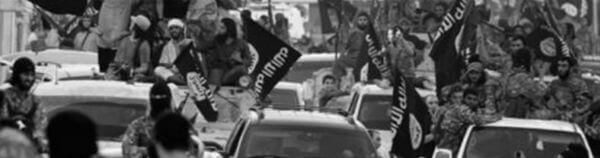
The Daily Beast reports: “It was a two-year nightmare I just woke up from.”
Muhammad just arrived in Turkey with his family after fleeing the ISIS-controlled Syrian town of al-Ashara, in the eastern province of Deir Ezzor. He’d spent two years under the jihadist army’s rule. “I am going to tell my story once,” he told The Daily Beast after several prior attempts to get him to share his tale. “And then I want to forget it for good.”
Muhammad is a Syrian in his early thirties. He holds a Bachelor of Arts and worked as a teacher. He asked to keep his full name and any other details secret, because some members of his family are still back in al-Ashara and could face retribution from the so-called Islamic State widely known as ISIS. He added that even in Turkey, he doesn’t feel safe since ISIS operatives are all over the place. Two members of the activist monitor Raqqa is Being Slaughtered Silently were murdered in Urfa around a month ago in the living room of their house.
Just a few days after Muhammad fled from his town, on Nov. 20, the Russians bombed it. Many houses were destroyed, but none of them was used by ISIS. Nor were the jihadists’ facilities destroyed or any militant killed. A number of civilians were injured. The one fatality was a little girl named Maha Ghazi al-Abbad. She was 15 years old. [Continue reading…]

Vice News reports: After the Islamic State’s November attack on Paris, carried out by European fighters returning from the Syrian battlefield, international efforts to close the terrorist group’s last route to and from Turkey have taken on a new urgency.
US officials have been publicly leaning on Turkey to immediately close its border with the Islamic State (IS) in Syria’s northern Aleppo province and deploy thousands of troops on the frontier. The Turkish government has proposed instead that Turkey and the US-led coalition first back Syrian rebels who can drive IS out of the area and create a rebel-controlled “safe zone.”
Amid this public back-and-forth, Turkey’s plan is already underway — and, according to rebels interviewed by VICE News, it is making some progress. The question is whether it can work fast enough to stop the two-way flow of would-be IS recruits heading to Syria and battle-hardened jihadists returning from Syria to terrorize Europe. [Continue reading…]
Mustafa Fetouri writes: While the US-led coalition has been busy attacking Islamic State (IS) strongholds in Raqqa, Syria, and Mosul, Iraq, the faraway coastal city of Sirte, Libya, has been seized by the extremist group. Only an hour’s flight from Europe’s southern shores, Sirte fell without a shot of resistance. What began as a small group of locals pledging allegiance to IS has evolved into a sizeable force that has extended its control nearly 40 miles west of Sirte and nearly twice that to the east, threatening the city of Ajdabiya and even Benghazi.
Omar, a civil servant who requested the use of a pseudonym, has lived all of his 30 years in Sirte. He told Al-Monitor by phone, “IS now has full control of the city and all roads leading to Sirte in all directions.” IS has imposed laws banning tobacco sales and smoking and ordering women to cover their hair. “Actually, my own brother was jailed for a couple of days because they caught him smoking in the street,” Omar said. Like other residents, he is extremely worried and is already planning to leave if his mother agrees to go with him.
Sirte is strategically situated at the crossroads connecting Libya’s three regions: Fezzan in the south, Cyrenaica to the east and Tripolitania to the west. In addition, it is close to the country’s main oil terminals at Brega and Ras Lanuf as well as Sidra. Ras Lanuf could well be the next safe haven for IS’ top leaders. On Dec. 9, England’s Daily Mail cited the Iranian news agency, FARS, as reporting that an injured Abu Bakr al-Baghdadi had already arrived in Sirte, having fled his headquarters in Mosul with Turkish assistance. [Continue reading…]
C.J. Chivers writes: Mr. Aboud, in his mid-30s, is an exile from Sarmin, where he had lived most of his adult life. Past associates refer to him as either an ISIS wali or emir, titles conveying authority or military power that the Islamic State bestows on governors and its middle rank.
They note that he did not simply drift to ISIS; he has had a relationship with the original underground Sunni insurgents in Iraq’s Anbar Province, part of the crucible where ISIS formed, reaching back more than a decade.
Mr. Aboud and one of his brothers fought American forces there in 2004 and 2005, several townspeople said. Some suggested that the pair returned to Syria as a sleeper cell tied to Al Qaeda in Iraq, which was founded by Abu Musab al-Zarqawi and after his death in 2006 eventually became ISIS.
In the nearly year and a half since Mr. Aboud publicly joined the Islamic State, taking with him most of his fighters and many powerful weapons, he has been credited with, or blamed for, a sprawling mix of battlefield action and crime. Those who know him contend he led the capture of Palmyra, the town and ancient heritage site that ISIS defiled.
For all of Mr. Aboud’s activity, however, his story suggests limits to advancement within the group, which analysts say to a large degree remains led by Iraqis, including many connected to the dismantled Baathist regime of Saddam Hussein.
Hassan al-Dugheim, a rebel cleric who said he had observed Mr. Aboud since 2011, said his tactical skill and ruthlessness were beyond question. He bluntly added, however, that he considered Mr. Aboud stupid, and that the Islamic State had found in him a man who could be flattered, bought, then used.
“Syrians are for fighting,” he said, and those who had joined ISIS recently faced a glass ceiling inside. “They are like animals to be ridden, like a horse or a mule.” [Continue reading…]

The Washington Post reports: The recent terrorist attacks in Paris have brought into sharper focus the rise of a new breed of jihadists, one that blurs the line between organized crime and Islamist extremism, using skills honed in lawbreaking in the service of violent radicalism.
The Islamic State is constructing an army of loyalists from Europe that includes an increasing number of street toughs and ex-cons as the nature of radicalization evolves in the era of its self-proclaimed caliphate. Rather than leave behind lives of crime, some adherents are using their illicit talents to finance recruiting rings and travel costs for foreign fighters even as their backgrounds give them potentially easier access to cash and weapons, posing a new kind of challenge to European authorities.
Before he became the notorious ringleader of last month’s terrorist attacks in Paris, for instance, Abdelhamid Abaaoud, 28, was linked to a den of radicalized thieves led by a man nicknamed “Santa Claus.”
The gang — including young men who would go on to fight in Syria and Iraq — robbed tourists and shoplifted, forming a petty-crime operation in the service of the Islamic State, authorities say. [Continue reading…]
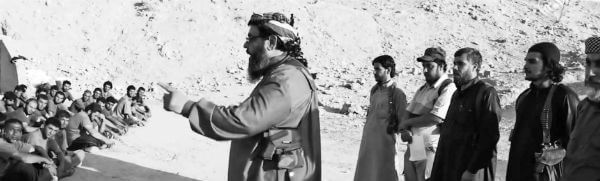
Mustafa Akyol writes: The recent massacres in Paris and San Bernardino, Calif., demonstrated, once again, the so-called Islamic State’s ability to win over disaffected Muslims. Using a mixture of textual literalism and self-righteous certainty, the extremist group is able to persuade young men and women from Pakistan to Belgium to pledge allegiance to it and commit violence in its name.
This is why the Islamic State’s religious ideology needs to be taken seriously. While it’s wrong to claim that the group’s thinking represents mainstream Islam, as Islamophobes so often do, it’s also wrong to pretend that the Islamic State has “nothing to do with Islam,” as many Islamophobia-wary Muslims like to say. Indeed, jihadist leaders are steeped in Islamic thought and teachings, even if they use their knowledge to perverse and brutal ends.
A good place to start understanding the Islamic State’s doctrine is by reading Dabiq, the digital English-language magazine that the group puts out every month. One of the most striking pieces I have seen in it was an 18-page article in March titled “Irja’: The Most Dangerous Bid’ah,” or heresy.
Unless you have some knowledge of medieval Islamic theology you probably have no idea what irja means. The word translates literally as “postponing.” It was a theological principle put forward by some Muslim scholars during the very first century of Islam. At the time, the Muslim world was going through a major civil war, as proto-Sunnis and proto-Shiites fought for power, and a third group called Khawarij (dissenters) were excommunicating and slaughtering both sides. In the face of this bloody chaos, the proponents of irja said that the burning question of who is a true Muslim should be “postponed” until the afterlife. Even a Muslim who abandoned all religious practice and committed many sins, they reasoned, could not be denounced as an “apostate.” Faith was a matter of the heart, something only God — not other human beings — could evaluate. [Continue reading…]

Kyle Orton writes: Turkey concluded its biggest investigation to date into Islamic State (IS) operatives on its territory on Friday, and blacklisted sixty-seven people. This provides a good moment to review what Turkey’s role has been in the rise of IS, especially amid the escalating accusations from Russia that Turkey is significantly responsible for financing IS. The reality is that while Turkish policy has, by commission and omission, made IS stronger than it would otherwise have been, so has Russia’s policy—and Russia’s policy was far more cynical than Turkey’s, deliberately intended empower extremists to discredit the rebellion against Bashar al-Assad. Turkey’s focus on bringing down Assad and Ankara’s fear of Kurdish autonomy led it into these policies and now—having seemingly found the will to act to uproot IS’s infrastructure on Turkish territory—there is the problem of actually doing so, when IS can (and has) struck inside Turkey. The concerns about these external funding mechanisms for IS, while doubtless important, obscure the larger problem: IS’s revenue is overwhelmingly drawn from the areas it controls and only removing those areas of control can deny IS its funds.
Turkey shot down a Russian jet on November 24, the first time since 1952 a NATO member had brought down a Russian military aircraft. Ankara claimed that its airspace had been violated and numerous requests to withdraw were ignored. The Russian plane landed in northern Syria: one pilot, Oleg Peshkov, was killed in the descent by the Turkoman rebels of Alwiya al-Ashar (The Tenth Brigade) and one, Konstantin Murakhtin, was later rescued. In the wake of this, Moscow took retribution with economic sanctions against Turkey, including limiting tourism and banning charter flights to Turkey and also trade in certain foodstuffs.
Russia’s ruler, Vladimir Putin, then raised the stakes on November 30 by accusing Turkey of perpetrating the shoot-down in order to protect IS, with which the Turkish government has commercial interests, notably oil, but also weapons. Moscow subsequently accused the Turkish President Recep Tayyip Erdogan of being a personal profiteer from the criminal trade in oil with IS. The reality is quite otherwise, of course. As David Butter of Chatham House put it, given Turkey’s reliance on Russia for energy, “if oil was a consideration for the Turkish authorities … it would have had good reason to hold fire.” [Continue reading…]
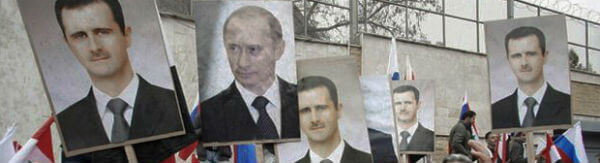
Hassan Hassan writes: One of the common sentences repeatedly said by Syrians from the two main warring sides is that the solution to the conflict is attainable when the “big guys” decide to end it. Those big guys – at the UN Security Council – passed a unanimous decision on Friday calling for peace negotiations and a ceasefire to steer the country towards a political settlement.
“This council is sending a clear message to all concerned that the time is now to stop the killing in Syria and lay the groundwork for a government that the long-suffering people of that battered land can support,” the US secretary of state, John Kerry, proclaimed after the successful vote.
Both inside and outside Syria, the resolution has raised hopes that this may indeed mark the start of a serious process to find a solution. And much can be achieved, at least in preventing the conflict from spiralling further out of control.
But the optimism seems to be misplaced, mostly because it is not based on any progress or attainable objectives in the foreseeable future. Instead of the usual focus on the difficulty of rallying the opposition around one vision to end the conflict, one aspect related to the regime can help illuminate the intractability of the process: the fate of Bashar Al Assad. [Continue reading…]

The New York Times reports: For months, the United States military has known that the Islamic State uses the city hall in Raqqa, Syria, as an administrative center and a dormitory for scores of fighters. Some American officials even believe that Abu Bakr al-Baghdadi, the group’s leader, may have been in the building at times.
Yet, despite the American air campaign against the Islamic State, the white, three-story building remains standing because it also houses a jail. Its inmates are mainly victims of the extremist group — men caught sneaking a cigarette, women spotted with clothes that reveal even a hint of skin, shop owners who failed to pay their bills — and for American officials, the risk of killing any of them in an airstrike is too high.
The same is true of six other nearby buildings, including a mosque and court complex, which, together with city hall, compose the closest thing the Islamic State has to a headquarters.
In the aftermath of the attacks in Paris in November and the shootings this month in San Bernardino, Calif., President Obama and European leaders pledged to intensify the campaign against the Islamic State, also known as ISIS or ISIL. Mr. Obama, speaking last week at the Pentagon, said that the United States-led coalition was hitting the Islamic State “harder than ever,” and added that warplanes were “going after ISIL from their stronghold right in downtown Raqqa.”
But Mr. Obama also acknowledged the dilemma the United States and its allies face in Raqqa and other urban areas in Syria and Iraq, noting that the Islamic State “is dug in, including in urban areas, and they hide behind civilians.” [Continue reading…]
Thomas Hegghammer writes: After Abu Musab al-Zarqawi, the leader of Al Qaeda in Iraq, the predecessor to the Islamic State, reportedly beheaded the American hostage Nicholas Berg in 2004, he became known in jihadi circles as the Slaughterer. Few people in the West are aware that he also went by the nickname He Who Weeps a Lot. Mr. Zarqawi was known for weeping during prayer and when speaking about Muslim women’s suffering under occupation.
The Slaughterer’s brand of radical Islam was brutal even by jihadi standards. Under Mr. Zarqawi’s command, Al Qaeda in Iraq executed so many hostages and killed so many Shiite civilians that Al Qaeda’s leadership reprimanded him. But in his public displays of emotion, He Who Weeps a Lot was not an aberration. For radical Islamists who view crying as a sign of devotion to God, communal sobbing is as common as car bombing.
A foreign fighter in Syria who wrote a blog post in March about an imam crying while making an invocation wrote that “brothers were crying with him, some audible, and others would have their tears fall silently.” Jihadis also weep when listening to religious hymns, watching propaganda videos, discussing the plight of Sunni Muslims or talking about the afterlife. Some weep more than others, and those who do are looked up to by those who don’t.
Why have tens of thousands of people from around the world chosen to live under the Islamic State’s draconian rule and fight under its black flag? To understand this phenomenon, we must recognize that the world of radical Islam is not just death and destruction. It also encompasses fashion, music, poetry, dream interpretation. In short, jihadism offers its adherents a rich cultural universe in which they can immerse themselves. [Continue reading…]
Peter Harling and Alex Simon write: To outsiders, the Middle East usually is an intellectual object — a place on a map onto which they project their fears, fantasies and interests. But to many it is a home to live and despair in, to flee and to cling to, to loath and to love. When writing for the truly concerned, commentary has become futile: what is there to say that they do not already know? The ideals and hopes we could once believe in have disintegrated as a bewildering array of players wrought destruction, seemingly teaming up in the region’s devastation rather than fighting each other as they claim—let alone seeking solutions.
With suffering and complexity relentlessly on the uptick, even well-intentioned observers are tempted to simplify what we cannot fully understand, focusing excessively on the distraction of daily news and drifting toward some convenient intellectual extreme. It is a constant struggle to rebalance one’s positions, resume analysis of meaningful, underlying trends, and attempt to contribute responsibly. At the heart of this ambition is a need for honesty and humility rather than partisan hackery and hubris — acknowledging our failures and our limitations and our inability to fully comprehend, let alone effectively correct, the course of events in the Middle East. From there we may step back and appraise how best to play a positive rather than destructive role in shaping the region’s trajectory.
The dominant trend, however, has been in the opposite direction. Most conversations are self-centered and reductive. This reality is starkest in the debate about the Islamic State (hereafter “Daesh”) and the Iran nuclear deal, but the tendency is pervasive: the Russian intervention in Syria, a mushrooming refugee crisis, pulverizing wars in Libya and Yemen, only enter the discussion inasmuch as they disturb our “national interests” as we narrowly and shortsightedly define them. In Washington, the brutal execution of one American journalist has approximately the same galvanizing potential as the large-scale persecution and enslavement of Iraq’s Yazidi minority. Both are more compelling than the arrival of several hundred thousand refugees on the shores of Europe, who are in turn of far greater concern than the millions more stranded in their own countries and those throughout the region who are routinely bombed into nothingness.
More than well-defined interests, the Western response to a given Middle Eastern tragedy is often dictated by knee-jerk, emotional factors — cultural affinities (or lack thereof) with the victims, an enduring obsession with “terrorism”, and sheer visual potency (whether Daesh’s horror-movie barbarism or the occasional heart-wrenching image of a drowned child) are but a few. While understandable, these are not a basis for strategy.
The United States, of course, is not the lone culprit. Key players across the board are acting less on the basis of interest than obsession, pursuing ad hoc and reactive means in support of amorphous and ill-defined ends. While Washington proposes to destroy the mind-bogglingly complex socio-economic-political-military entity that is Daesh through airstrikes (and a dash of social media evangelism and tepid support to whomever appears willing to pitch in), Moscow seeks to restore its prestige and cut Obama down to size by pummeling what remains of Syria’s non-jihadist opposition; Tehran works its way to regional leadership by pumping more weapons, money and hubris into whichever proxy is most expedient at a given moment in a given country; Riyadh clambers to head off presumed Persian scheming by whatever means necessary, while Cairo does the same toward the Muslim Brotherhood bogeyman. And so on and so forth.
Behind of all this posturing are incoherent binaries of good versus evil—typically euphemized in the language of “stability versus terrorism” — whereby states attempt to reduce the pandemonium to one or two irreconcilable enemies, one or two overarching goals and however many direct or proxy wars appear necessary to suppress the former and achieve the latter. In other words, keep it simple: pick your mania, ignore all else, and it will finally make sense. [Continue reading…]
By Scott Lucas, University of Birmingham
Deputy crown prince and minister of defense of Saudi Arabia Mohammed bin Salman’s announcement of a new Saudi-led counter-terrorism coalition surprised allies like the US, adversaries such as Iran, and other interested parties including Russia.
Prince Mohammed said the Saudis had formed a 34-nation “Islamic military coalition” to fight Islamic State (IS) and other terrorist groups. A headquarters in Riyadh will provide military, intelligence, logistics, and other support to members as needed.
This was so surprising that countries in the new coalition said they were unaware they were founding members. Pakistan’s foreign secretary Aizaz Chaudhry said he had only learned of the initiative when he read the prince’s statement, and that he had asked Pakistan’s ambassador in Riyadh to get a clarification from Saudi officials.
The Indonesian Foreign Ministry was only slightly more diplomatic, saying that “the government is still observing and waiting to see the modalities of the military coalition”. Malaysian defence minister Hishammuddin Hussein, while supporting the coalition, ruled out “any military commitment”.
So this was hardly the unveiling of a grand military initiative. Instead, it was a political message – not just to Russia and Iran, but to Riyadh’s nominal allies in Washington.

Dominic Tierney writes: At first glance, Donald Trump looks like Islamic extremism’s worst nightmare. Trump said he would ban the billion-plus Muslims around the world from visiting the U.S. He would send the medieval ISIS back to the proverbial Stone Age: “Bomb the shit outta them.” In Tuesday’s Republican debate, Trump underscored his previously stated desire to deliberately kill the families of ISIS members. “I would be very, very firm with families. Frankly, that will make people think because they may not care much about their lives, but they do care, believe it or not, about their families’ lives.”
From another angle, however, Trump and ISIS are effectively, if not intentionally, helping each other. They don’t communicate. There’s no moral equivalence between them. Nevertheless, Trump and ISIS aid each other’s agendas in a strange combination of the coiffured and the caliphate. Even in a Republican Party that has drifted closer to Islamophobia in recent years, Trump stands out for his polarizing rhetoric, which poses a threat to openness and tolerance in the United States. “Terrorists like ISIL are trying to divide us along lines of religion and background,” as President Obama warned recently. “Prejudice and discrimination helps ISIL and it undermines our national security.”
The Trump-ISIS symbiosis reveals a bigger story. International politics often looks like a contest between opposing countries, terrorist groups, and insurgencies. But the hardliners on all sides may be working together—deliberately or inadvertently. In other words, there’s a global confederation of extremists.
“Hardliner” refers to an uncompromising mentality, which lumps enemies together; sees the world in black-and-white, “good-versus-evil” terms; and backs extreme responses to perceived threats. Today, hardliners are often found on the populist right, preying on economic insecurity and fears of terrorism: Trump in the United States, Marine Le Pen’s National Front in France, or Viktor Orban’s “illiberal state” in Hungary. But there are also plenty of hardliners in communist countries as well as in the Islamic world. The ultras — whether they’re in Raqqa, Tehran, Washington, or Tel Aviv — can form a symbiotic relationship. Like tango dancers, the hardliners move in a close embrace, taking steps that facilitate the actions of the other. [Continue reading…]
Der Spiegel reports on Harry S., a 27-year-old from Bremen, who may shed light on ISIS’s plans for new attacks: Harry S. returned to Germany from Syria and is now in investigative custody. He has told security officials everything about the brief time he spent with Islamic State and has also demonstrated his readiness to deliver extensive testimony to German public prosecutors. He stands accused of membership in a terrorist group. His lawyer Udo Würtz declined to offer a detailed response when contacted, but said of his client: “He wants to come clean.”
German investigators are extremely interested in the testimony of the apparently repentant returnee, even as they are likely unsettled by what he has to say.
Harry S., after all, is more than just a witness to firing squads and decapitations. He also says that on several occasions, IS members tried to recruit volunteers for terrorist attacks in Germany. In the spring, just after he first arrived in Syria, he says that he and another Islamist from Bremen were asked if they could imagine perpetrating attacks in Germany. Later, when he was staying not far from Raqqa, the self-proclaimed Islamic State capital city, masked men drove up in a jeep. They too asked him if he was interested in bringing the jihad to his homeland. Harry S. says he told them that he wasn’t prepared to do so.
Harry S. was only in IS controlled territory for three months. Yet he might nevertheless become a vital witness for German security officials. Since the Nov. 13 attacks in Paris, fear of terrorism has risen across Europe, including in Germany, and security has been stepped up in train stations and airports. And the testimony from the Bremen returnee would seem to indicate that the fear is justified. Harry S. says that, during his time in the Syrian warzone, he frequently heard people talking about attacks in the West and says that pretty much every European jihadist was approached with the same questions he had been asked. “They want something that happens everywhere at the same time,” Harry S. says. [Continue reading…]