Category Archives: ISIS

Islamic State of Iraq and Syria

The Iraqis America has forgotten

Among opponents of the war in Iraq there remains a considerable amount of bitterness that none of the authors of the war were held accountable for their actions.

The past cannot be so easily swept aside, many reasonably argue.

But alongside this righteous insistence that the past must not be forgotten, there seems to be a simultaneous eagerness to forget Iraq itself.

America, like a hit-and-run driver, must keep facing forward — no point looking back to a scene of carnage if one lacks the skill to help… Or so the sentiment seems to go.

President Obama might have just been serving his own interests — anticipating a similar need in the future to be excused by his own successors for authorizing extrajudicial killings — when he enunciated his belief that “we need to look forward as opposed to looking backwards” and not hold torturers accountable. But he was also expressing the spirit of a nation that has so often preferred to bury and forget its crimes and mistakes, seeming to regard amnesia as an aid to progress.

The Wall Street Journal reports: The battles to control Fallujah were the most devastating of the Iraq war. To rebuild after the fighting subsided, the Americans needed local Iraqi partners. Gaining their trust was Mr.[John Kael] Weston’s mission.

For most of three years, Mr. Weston was the only [U.S.] diplomat embedded with more than 30,000 Marines and soldiers in Fallujah and Anbar province.

Mr. Weston met Capt. Saad in early 2005 during a long lunch of meat over rice. The American was curious about domestic life in Fallujah. Capt. Saad, a Sunni, told Mr. Weston about his family and talked to Mr. Weston about American politics and policy.

The two men saw eye-to-eye about the need to stamp out al Qaeda and reduce sectarian tensions. They swapped intelligence about Hollywood blockbusters for sale in Fallujah’s black market and stories about their mutual love of German shepherds.

Mr. Weston’s local ties surprised some of his American colleagues, who preferred to keep their Iraqi partners at greater distance. Maj. Gen. Nicholson, then a colonel, recalls a meeting attended by the U.S. ambassador to Iraq, Zalmay Khalilzad, where Mr. Weston was introduced by Fallujah’s city-council chairman as “Kael al-Falluji,” using the middle name by which Mr. Weston is known to his friends. The nickname stuck.

Almost every week, a city council leader in Fallujah was assassinated. Capt. Saad’s family also paid a steep price. His younger brother was shot and killed while visiting a mosque.

By 2007, Mr. Weston felt burned out. He said goodbye without fanfare and started a new assignment in Afghanistan.

The two men last saw each other when Mr. Weston returned to Fallujah for Iraq’s elections in 2009. Security and stability had improved, and he saw the grinning Capt. Saad on the street.

“Look, no masks!” the policeman said, referring to facemasks long worn to shield officials’ identities from insurgents.

As the U.S. pulled out its troops from Iraq, Mr. Weston and Capt. Saad used email for updates on work and family. “I often wish I was closer so that we could visit in person,” Mr. Weston wrote in October 2011.

Capt. Saad soon resigned from the police force, tired of corruption in the ranks and eager to pursue his dream of teaching physics. He found a job at a boys’ high school and wrote excitedly to Mr. Weston about having a quieter life.

Mr. Weston quit the State Department and started writing a book about his wartime experiences. Iraq was never far from his mind. The sound of explosives used by the ski patrol at Utah’s Solitude Mountain to reduce avalanche risk reminded him of 155mm howitzers.

Islamic State seized Fallujah in January. On New Year’s Day, Mr. Weston got a harrowing email in broken English from a Fallujah highway-patrol officer with whom he had also kept in touch.

“Al Qaeda flags is over all the goverment buildings…..all the citizens of fallujah start to leave,” wrote the officer. “We are looking for help.”

The frantic messages stopped as suddenly as they had started. The silence left Mr. Weston with no idea if his Fallujah friends were still alive. [Continue reading…]


Facebooktwittermail

3,000 in Turkey linked to ISIS, police intelligence report says

Hurriyet Daily News: There are around 3,000 people linked to the Islamic State of Iraq and the Levant (ISIL) group in Turkey, a police intelligence report has alleged, raising a red alert over the possible future actions of “sleeping cells” of the jihadist group, sources have told Hürriyet.

The number is in addition between 700 and 1,000 Turkish fighters in the group, whose potential return has concerned Turkey, Foreign Minister Mevlüt Çavuşoğlu said earlier this week.

Turkey has so far deported 1,165 people and placed an entry ban on 7,250 more, Çavuşoğlu also said.

Facebooktwittermail

The new war: How targeted killing has become the tactic of choice for both governments and terrorists

After Israel assassinated Sheikh Ahmed Yassin, the founder and spiritual leader of Hamas in Gaza on March 22, 2004, John Negroponte, the U.S. Ambassador to the UN, said that the United States was “deeply troubled by this action by the Government of Israel.”

Britain’s Foreign Secretary Jack Straw (representing the U.S.’s closest ally in the war in Iraq) went further and said that Israel “is not entitled to go in for this kind of unlawful killing and we condemn it. It is unacceptable, it is unjustified and it is very unlikely to achieve its objectives.”

A decade later, so-called targeted killing is no longer a counter-terrorism tactic favored mostly just by the Israelis — it has become a tactic of choice both for the U.S. government and for groups and individuals linked to Al Qaeda.

When Barack Obama took office in 2009, he entered the White House with the promise of ending the wars in Iraq and Afghanistan and closing down Guantánamo Bay, but with no hope of being able to credibly claim victory in the war on terrorism, he opted to replace boots on the ground with drone warfare.

He seemed enamored with the technique’s precision, its futuristic glamor and the fact that it would have an even less impact on the lives of ordinary Americans — lives already far removed from the effects of foreign wars. A drone war was a war that America could conduct with very few Americans needing to leave home or even pay much attention.

War was going to shift from shock-and-awe to background noise with drone strikes occurring like lightening strikes in a storm too distant for any American to hear the thunder.

The use of targeted killing apparently no longer deeply troubled the U.S. government. But the tactic that was supposed to finish off Al Qaeda seems to have had the opposite effect.

The U.S. might at this point retain close to exclusive control over deadly drone warfare but it has neverthless created an easy to imitate model of targeted violence where the claimed legitimacy of the violence is not defined by its instruments or the authority of its perpetrators but simply by the idea that the targets are not innocent.

Following the Charlie Hebdo killings, the unity of “Je suis Charlie” in France is meant to show the terrorists that they cannot win, but in as much as Cherif and Said Kouachi and Amedy Coulibaly hoped to be of influence, I doubt very much that they cared about broad public opinion. Their target audience, narrow yet widely dispersed, readily accepts the idea that a war defending Islam can legitimately strike “blasphemers,” security forces, Jewish, and political targets.

Terrorism is redefining itself, shifting away from the use of indiscriminate violence in preference for precision targeting.

Analysts in the media have generally ascribed this shift to a matter of expedience — it’s easier to buy guns than construct bombs. But true as that might be, I suspect the shift has more to do with an ideological shift which springs from the desire to widen the recruiting base of future killers.

Killing innocent people is very hard to justify in the name of any cause. Moreover, to hold ordinary citizens accountable for the actions of their governments isn’t a particularly persuasive argument when universally people feel like they have little influence over the affairs of state.

Just hours before the Kouachi brothers were killed, a Frenchman identified in the media simply as Didier was greeted by one of them at the entrance to the print shop in Dammartin-en-Goele where they had taken refuge. As he left, the gunman said, “Go, we don’t kill civilians.”

This seems to now be central to Al Qaeda’s message: we are not indiscriminate killers.

When President Obama ordered the killing of Anwar al-Awlaki, no doubt he believed his decision was legally defensible and morally justifiable, but in the eyes of Awlaki’s supporters this action must have reinforced the notion that anyone can claim the right to kill when they are convinced that their victims deserve to die.

U.S. Attorney General Eric Holder last week reiterated what have become frequent warnings about the rising threat from “lone wolf” terrorists — those whose actions are impossible to anticipate.

But the lone wolves are not out committing random acts of violence:

A new ISIS video released last week warned: “We will expand across all of Europe, to France, Belgium, Germany, Switzerland and also the USA… I say to my brothers, if you see a police officer — kill him. Kill them all.”

(The same video also encouraged killing “all infidels that you see in the streets” — an indication that ISIS still has a predilection for old-school, indiscriminate, mass violence.)

Over the last year, as government and security officials in Europe and North America have made increasingly frequent warnings about the dangers posed by Western fighters returning to their home countries from Syria, bringing the war with them, I have been among those who thought the threat was being exaggerated.

The flow of fighters appeared to be going overwhelmingly in the opposite direction and if a few returned home, it seemed much more likely that their decision would be precipitated by disenchantment with jihad rather than the desire to take their fight to the West.

The evidence now suggests, however, that the official warnings were not the kind of fear-mongering that commonly and cynically gets ascribed to nothing more than the promotion of an ever-expanding national security state.

When 80,000 security personnel get deployed to hunt down two men, it’s easy to argue that this kind of response amounts to a massive over-reaction. To a degree, that seems true, yet police and other domestic security forces do actually find themselves in a situation for which there are neither parallels in conventional law enforcement or even earlier forms of terrorism.

Even so, as Hans-Georg Maassen, the head of Germany’s domestic intelligence service, said on German public television this week, “we must be calm and master the situation with a sense of proportion. Panic and hysteria don’t help.”

Facebooktwittermail

ISIS losing ground in symbolic Kobane battle

The Associated Press: With more than a thousand militants killed and territory slipping away, the Islamic State group is losing its grip on the Syrian border town of Kobani under intense U.S.-led airstrikes and astonishingly stiff resistance by Kurdish fighters.

It is a stunning reversal for the Islamic State group, which just months ago stood poised to conquer the entire town — and could pierce a carefully crafted image of military strength that helped attract foreign fighters and spread horror across the Middle East.

“An IS defeat in Kobani would quite visibly undermine the perception of unstoppable momentum and inevitable victory that IS managed to project, particularly after it captured Mosul,” said Faysal Itani, a fellow at the Atlantic Council, referring to the militants’ seizure of Iraq’s second-largest city during its blitz into Iraq from Syria last summer.

It would also rob the group of a “psychological edge that both facilitated recruitment and intimidated actual and potential rivals, as well as the populations IS controlled,” Itani said.

Facebooktwittermail

‘They run from our women’

In the Kurds war against ISIS, I see here quite a lot of women. Women are fighting like men in the PKK?

Chamil, guerrilla fighter (YPG), Syria: Not just like men, they fight better than lots of men. They fight better than men.

Really?

Yes, because they are good teachers and they know what they are fighting for.

It’s interesting, because ISIS treats its women as if they’re not human beings.

Honestly, they cannot stand from our women. They run from our women.

Facebooktwittermail

ISIS gaining ground in Syria, despite U.S. strikes

The Daily Beast reports: ISIS continues to gain substantial ground in Syria, despite nearly 800 airstrikes in the American-led campaign to break its grip there.

At least one-third of the country’s territory is now under ISIS influence, with recent gains in rural areas that can serve as a conduit to major cities that the so-called Islamic State hopes to eventually claim as part of its caliphate. Meanwhile, the Islamic extremist group does not appear to have suffered any major ground losses since the strikes began. The result is a net ground gain for ISIS, according to information compiled by two groups with on-the-ground sources.

In Syria, ISIS “has not any lost any key terrain,” Jennifer Cafarella, a fellow at the Washington, D.C.-based Institute for the Study of War who studies the Syrian conflict, explained to The Daily Beast.

Even U.S. military officials privately conceded to The Daily Beast that ISIS has gained ground in some areas, even as the Pentagon claims its seized territory elsewhere, largely around the northern city of Kobani. That’s been the focus of the U.S.-led campaign, and ISIS has not been able to take the town, despite its best efforts. [Continue reading…]

Facebooktwittermail

Did the Kurdish women of the YPJ simply fall from the sky?

Meral Çiçek, from the Kurdish Women’s Relations Office in Erbil, writes: “These Remarkable Women Are Fighting ISIS. It’s Time You Know Who They Are”

This was the title of an article published in the October issue of the women’s magazine Marie Claire: “There’s a group of 7,500 soldiers who have been fighting an incalculably dangerous war for two years. They fight despite daily threats of injury and death. They fight with weapons that are bigger and heavier than they are against a relentless enemy. And yet they continue to fight. They are the YPJ (pronounced Yuh-Pah-Juh) or the Women’s Protection Unit, an all-women, all-volunteer Kurdish military faction in Syria that formed in 2012 to defend the Kurdish population against the deadly attacks lead by Syrian President, Bashar al-Assad, the al-Nusra Front (an al-Qaeda affiliate), and ISIS.”

Or so it was frequently reported in the world press about the “YPJ: The Kurdish feminists fighting the Islamic State”(The Week). There is hardly an internationally known daily newspaper, a magazine or broadcaster that has not sent their reporters in recent months to Kurdistan to document these ‘Amazons of the 21st century’. And so on the cover page of Der Spiegel there was a picture of a PKK woman fighter with a bazooka, while a YPJ fighter was depicted on the cover of Newsweek with a firm grip on her Kalashnikov.

The phenomenon of armed Kurdish women fighting against the terrorists of the Islamic State (IS), has been uncovered by the world press and the public realm due to the IS-attack on the Southern Kurdish/Northern Iraqi, predominantly Yazidi, town of Sinjar at the beginning of August 2014. Suddenly, Kurdistan became a Mecca for journalists. From everywhere, reporters and camera crews made pilgrimages to the Maxmur refugee camp (which was being shelled by the IS), to the guerrilla fighters of the PKK in the Qandil Mountains, to Sinjar and across the border into Rojava (northern Syria), where in September, the battle for Kobanê had begun.

The international coverage of the fighting against the Islamic State by the YPJ women and YJA-Star (Women’s Army of PKK guerrillas) can be looked at and interpreted from many different perspectives. One might, for example, examine how the fighters are portrayed visually, which of their characteristics come to the foreground, with what words they are described, etc. However, this is not the concern of this article. Rather, what is written here is that which was mostly omitted from the press coverage concerning the YPJ. [Continue reading…]

Facebooktwittermail

‘Welcome to Stalingrad. Welcome to Kobane’: Inside the Syrian town under siege by ISIS

Vice News: “Welcome to Stalingrad. Welcome to Kobane,” said a Kurdish militant, starting his car. A mad dash across the closed Turkish border had just brought us into the majority Kurdish Syrian town, then nearing its 100th day of fighting off a brutal siege by the Islamic State. The jihadists have blitzed it since mid-September from the south, west, and east after taking over all the nearby towns, sending wave after wave of fighters for more than three months.

The Kurdish militia defending the city, the People’s Protection Units (YPG), have made progress in pushing back the Islamic State back in recent weeks, but it was still necessary for the YPG fighter driving to keep the headlights off so as not to draw attention to the vehicle. All across the city, hardened YPG fighters are still on guard, defending against new Islamic State attacks daily and pushing forward, block by block and house by house.

When VICE News arrived in late December, the YPG had effectively pushed the Islamic State outside the city center. One YPG commander said they controlled 75 percent of the city, but that appeared an over-estimation, and a sizeable portion is changing hands regularly. Fierce street battles have mostly given way to mortar and rocket attacks, as well as constant sniper fights.

Facebooktwittermail

Afghan officials: ISIS operating in volatile southern Helmand province

Associated Press: Afghan officials confirmed for the first time Monday that the extremist Islamic State group is active in the south, recruiting fighters, flying black flags and, according to some sources, even battling Taliban militants.

The sources, including an Afghan general and a provincial governor, said a man identified as Mullah Abdul Rauf was actively recruiting fighters for the group, which controls large parts of Syria and Iraq.

Gen. Mahmood Khan, the deputy commander of the army’s 215 Corps, said that within the past week residents of a number of districts in the southern Helmand province have said Rauf’s representatives are fanning out to recruit people.

“A number of tribal leaders, jihadi commanders and some ulema (religious council members) and other people have contacted me to tell me that Mullah Rauf had contacted them and invited them to join him,” Khan said.

Facebooktwittermail

The birth of an international jihadi social movement?

Clint Watts writes: The jihadi movement may have finally become what its original luminaries always wanted it to be – and in Paris of all places. The amorphous connections between the Charlie Hebdo attackers, the Kouachi brothers – who attributed their actions to “al Qaeda in Yemen” – and kosher market attacker Amedy Coulibali – who pledged allegiance to the Islamic State in a recently released online video – may reflect exactly what some early jihadi strategists intended: broad based jihad via a loose social movement. Terrorism researchers, obsessed with the writings of their academic adversary in jihad, Abu Musab al Suri, have for years suggested the social movement approach represented the ultimate vision of al Qaeda’s founding leadership.

This vision, however, does not seem to be shared by today’s al Qaeda chief, Ayman al Zawahiri, who for nearly a decade has sought to rein in the group’s disobedient affiliate in Iraq, which now also controls much of Syria in the guise of the Islamic State. Al Zawahiri also questioned the value of goofy self-recruits perpetrating attacks on behalf of al Qaeda without formal membership or direction from the group. Zawahiri’s resistance to freelance members may not be sufficient to quell the zeal witnessed by last week’s Charlie Hebdo attack. The manifestation of al Qaeda social movement theory may finally be realized by three forces: the growing development and global proliferation of social media, an unending call for jihad due to the intractable Syrian civil war, and the West’s failure to adapt to the wicked problem of non-state threats in a networked world.

Today’s jihadi threat, blended between al Qaeda and ISIS, networked by Facebook, and evolving based on conditions in hundreds of locations, produces attacks on three or more continents every day. On the surface this seems to indicate a stronger, unprecedented emerging jihadi threat to the West. Media coverage of the Charlie Hebdo attack and others suggest as much. We analysts and followers of jihadi activity, though, often give terrorists too much credit. Many, if not most, Western jihadis are deeply troubled souls, at times more confused about their intentions and motivations than we are – Omar Hammami, Zachary Chesser, Michael Zehaf-Bibeau are three of many such examples. Counterterrorism pundits, myself included, try to tease out order from chaos. But today’s counterterrorism landscape does not lend itself to such linearity. [Continue reading…]

Facebooktwittermail

Charlie Hebdo: Why not mock Al Qaeda and ISIS?

IBT reports: The next issue of Charlie Hebdo will feature cartoons mocking the Prophet Mohammed in the first copy of the satirical magazine to be published after the massacre of its cartoonists and other staff by terrorists enraged by previous cartoons of Islam’s most sacred figure.

Lawyers announced the typically combative move as they prepared a bumper issue of one million copies which will hit the news stands on Wednesday (14 January), exactly one week after gunmen claiming to be members of al-Qaeda stormed Charlie Hebdo’s Paris offices, killing 12 people.

“We will not give in to anything,” Charlie Hebdo’s lawyer, Richard Malka, told Le Figaro. “The spirit of ‘Je suis Charlie [I am Charlie] also means the right to blasphemy”.

I understand that the magazine refuses to cower in the face of the most extreme form of intimidation, but satire is a precision weapon. It won’t have the right effect if it’s aimed at the wrong target.

Last week, no one in Paris got killed by the Prophet Mohammed. France is not under attack from Islam.

The killers were nihilistic, egotistical, young hotheads who by their own declarations acted in the name of Al Qaeda and ISIS and whose actions were applauded by the supporters of these two groups.

Satirists short on ideas for skewering those who deserve to be mocked, only need to turn to social media where an endless supply of often funny and often tasteless parody can be found from the likes of @CaliphIbrahimAR and @ISIS_Med.

Facebooktwittermail

The new spectacular terror attack

TSG IntelBrief: Recent unsophisticated attacks by individuals or very small groups of people have achieved what the original core of al-Qaeda (AQ) has failed to achieve for almost a decade: each of these lone wolves or wolf packs conducted a “spectacular” — the term AQ also used to describe a devastating attack along the lines of 9/11, the Madrid train bombing, or the London Tube attacks. The new attackers achieved this by simply changing the definition of “spectacular,” applying it to the reaction instead of the attack itself. The focus has shifted from a high casualty count to a high response count. These attacks involve planning but relatively little skill, and are never judged to be failures, meaning they are ripe for copycats.

How this came about is the result of the merging of several terrorism and geopolitical trend lines over recent years. To be certain, explosives remain the tactic of choice for terrorists in weak-state areas such as Yemen, Nigeria, Iraq, Syria, or places that border theses areas, such as northern Lebanon and southern Turkey. But in places with well-established counterterrorism (CT) and law enforcement capabilities, the trend is to avoid plots that involve complicated steps such as mixing, preparing, and transporting explosives in favor of small arms attacks that are extremely difficult to detect or deter and that result in inordinately large responses and reactions. [Continue reading…]

Facebooktwittermail

Paris attacks: Video shows grocery gunman pledging allegiance to ISIS

The Associated Press reports: Posthumous video emerged Sunday of the gunman who killed a policewoman and four hostages at a kosher grocery, pledging allegiance to the Islamic State group and defending the attacks on the satirical newspaper and the Jewish store.

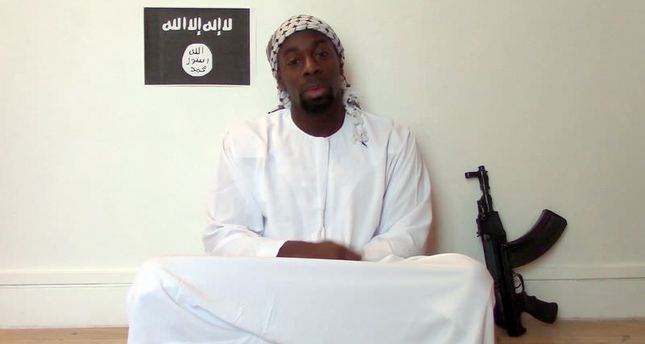
Speaking fluent French and broken Arabic in the video, apparently filmed over several days, Amedy Coulibaly can be seen with a gun, exercising and giving speeches in front of an Islamic State emblem. He defends the attacks carried out on the satirical newspaper Charlie Hebdo, police and the Jewish store.

“What we are doing is completely legitimate, given what they are doing,” Coulibaly tells the camera. “You cannot attack and not expect retribution so you are playing the victim as if you don’t understand what’s happening.” [Continue reading…]

A statement alleged to be from Coulibaly has been posted on JustPaste.it

Facebooktwittermail

The Arab world has no counterforce to the murderers in our midst

Hisham Melhem writes: There is something malignant in the brittle world the Arab peoples inhabit. A murderous, fanatical, atavistic Islamist ideology espoused by Salafi Jihadist killers is sweeping that world and shaking it to its foundations, and the reverberations are felt in faraway continents. On the day the globalized wrath of these assassins claimed the lives of the Charlie Hebdo twelve in Paris, it almost simultaneously claimed the lives of 38 Yemenis in their capital Sana’a, and an undetermined number of victims in Syria and Iraq. Like the Hydra beast of ancient Greece this malignancy has many heads: al Qaeda, the Islamic State, Sunni Salafists and Shiite fanatics, armies and parties of God and militias of the Mahdi. This monstrous ideology has been terrorizing Arab lands long before it visited New York on 9/11, and its butchers assassinated Arab journalists and intellectuals years before committing the Paris massacre of French journalists, cartoonists and police officers.

The devil’s rejects of this ideology engage in wanton ritualistic beheadings while intoxicated with shouts of Allahu Akbar, oblivious to the fact that most of their victims are Muslims. They are perpetuating mass killings and rapes, uprooting ancient communities, declaring war on the great pre-Islamic civilizations and religions of the Fertile Crescent, and managing to turn large swaths of Syria and Iraq into earthly provinces of hell.

The time of the assassins is upon us. And the true tragedy of the Arab and Muslim world today is that there is no organized, legitimate counterforce to oppose these murderers—neither one of governments nor of “moderate” Islam. Nor is there any refuge for those who want to escape the assassins. [Continue reading…]

Facebooktwittermail

Anonymous ‘AQAP source’ leaks information about group’s role in Charlie Hebdo?

Someone alleged to be a member of Al-Qaeda in the Arabian Peninsula says the group directed the Paris attack this week “as revenge for the honor” of the Prophet Muhammad, according to the Associated Press. “The member provided the statement on condition of anonymity because he is not authorized by the group to give his name.”

Another statement also provided by an anonymous “AQAP source” to The Intercept said: “Do not look for links or affiliation with Jihadi fronts. It is enough they are Muslims. They are Mujahideen. This is the Jihad of the Ummah.”

This “source” appears to be someone who tweets as @AL_hezbr1. Since neither the AP nor The Intercept offer any indication as to how or if they know that their source actually belongs to AQAP, it sounds like more accurate reporting would require referring to an anonymous source who claims to be a member of AQAP. But of course, a report that was sourced to some guy on Twitter probably wouldn’t get published.

A video released today by AQAP’s official media contains a statement by Harith al-Nazari its top sharia official who apparently praises the Paris attack without claiming responsibility.


Before he was killed today, Cherif Kouachi told BMFTV, a CNN affiliate in France, “I was sent, me, Cherif Kouachi, by al Qaeda in Yemen. I went there and Sheikh Anwar al-Awlaki financed my trip.”

The Long War Journal reports:

Separately, BMFTV was also in contact today with Amedy Coulibaly, who was not involved in the assault on Charlie Hebdo, but is suspected of killing a Paris police officer and holding hostages at a kosher market.

Coulibaly apparently did not mention any ties to AQAP, but did say he was a member of the Islamic State, an al Qaeda offshoot that claims to rule over parts of Iraq and Syria as a “caliphate.” Coulibaly also claimed that he had coordinated his actions with the Kouachi brothers.

It is not clear at this point if Coulibaly had any ties to the Islamic State, or was simply claiming an affiliation.

That the gunmen had ties to AQAP and ISIS seems unlikely.

Facebooktwittermail

Hezbollah leader says groups like ISIS offend Prophet more than cartoons

The Daily Star reports: Extremist religious groups following a “takfiri” ideology have offended the Prophet Mohammad more than the Western cartoons mocking him, Hezbollah chief Hasan Nasrallah said Friday.

“The behavior of the takfiri groups that claim to follow Islam have distorted Islam, the Quran and the Muslim nation more than Islam’s enemies … who insulted the prophet in films… or drew cartoons of the prophet,” Nasrallah said in a televised speech in an event marking the prophet’s birthday.

The remarks came two days after an Islamist attack on a French satirical magazine that had printed cartoons mocking the prophet. [Continue reading…]

Facebooktwittermail