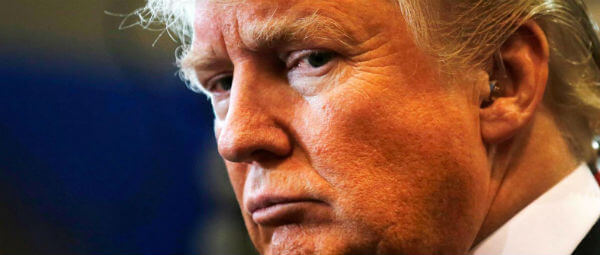
David Remnick writes: Vladimir Vladimirovich Putin and Donald J. Trump are locked in a humid political embrace, which seems, at first glance, unlikely. Putin grew up in postwar Leningrad. In the dismal courtyard of his building on Baskov Lane, a hangout for local thugs and drunks, he and his childhood friends pursued their favorite pastime: chasing rats with sticks. His father, a wounded veteran, beat him with a belt. Putin’s way up, his dream, was to volunteer for the K.G.B. Donald Trump encountered few rats on his lawn in Jamaica Estates. Soft, surly, and academically uninterested, Donald was disruptive in class — so much so that his father, a real-estate tycoon of the outer boroughs, shipped him off to military school when he was thirteen. He did not set out to serve his country; he set out to multiply his father’s fortune. “When I look at myself in the first grade and I look at myself now, I’m basically the same,” Trump has said. “The temperament is not that different.”
Decades later, Trump has praised Putin as a forceful leader, a “better leader” than Barack Obama; Putin hardly conceals his hope that Trump will win election to the White House. What would be more advantageous for Putin than to see the United States elect an incompetent leader who just so happens to be content to leave the Russian regime to its own devices, particularly in Europe? Even as non-Democrats have variously described their own nominee as a “con,” a “bully,” and a “borderline” 9/11 conspiracy theorist, Putin has acted as a surrogate from afar, dropping clear hints at his preference, slyly declaring Trump “bright” and “talented without doubt.”
The Times has reported that hackers who broke into the Democratic National Committee’s e-mail trove — a cyber version of the Watergate burglary — were likely agents of the Russian Federation. We shall see if that suspicion holds up. But what’s undisputed is that the gathering of kompromat — compromising material — is a familiar tactic in Putin’s arsenal. For years, the Russian intelligence services have filmed political enemies in stages of sexual and/or narcotic indulgence, and have distributed the grainy images online. Last April, state TV broadcast a black-and-white film of Mikhail Kasyanov, Putin’s former Prime Minister but now a potential opposition leader, exchanging carnal favors and playing “Name That Tune” with his political assistant, Natalya.
Even if the Russian government is not responsible for the hack on the D.N.C., Putin’s affinity for Trump is clear. Some part of it may be a matter of kindred temperament. Just as Trump talks ominously about Mexican “rapists” and tens of thousands of “illegal immigrants … roaming free” in the land, Putin won early popularity by vowing to dispense with terrorists from the Caucasus: “We will ice them in their shithouses.” Trump is, after all, a kind of parody of Putin: the bluster, the palaces. As the historian Timothy Snyder puts it, “Putin is the real world version of the person Trump pretends to be on television.” [Continue reading…]
In spite of Donald Trump’s proclivity for making statements that aren’t meant to be taken literally — be that through sarcasm, hyperbole, or outright lying — it seems reasonable that in the Trump lexicon the phrase “it’s true” shouldn’t require much interpretation. That is to say, in Trump talk, “it’s true” should at least mean that Trump thinks it’s true — whether it’s actually true is a completely different question.
So, when Trump calls Hillary Clinton “the devil” and adds “it’s true,” as he did yesterday in Pennsylvania, this might prompt a number of questions:
Does Trump believe in the literal existence of the devil and see Clinton as a human incarnation of Satan?
Or, is Trump using “the devil” as a metaphor — the most provocative way of saying Hillary would make a really, really bad president?
Or, was Trump just grabbing the nastiest expression that came to mind at that moment?
What’s actually more telling than the phrase “the devil,” however, is the phrase “it’s true.”
Trump is using a stock phrase from stand-up comedy and late-night talk shows — the bit that comes with a straight face after the punch line.
The sad truth that Trump employs to some effect is that we live in a world where people are more receptive to words coming from the mouths of comedians than they are to those coming from candidates for high office. Trump is a showman posing as a politician acting like a comic, with considerable success.
But here’s the thing — and the media knows it and should stop feigning shock with each new utterance: Trump’s a garbage truck. Each time he opens his mouth, out comes a new pile of garbage.
Is there a compelling reason to sift through the putrid items each time he dumps — oh, Trump just coughed up a dead cat; is that horse shit or cow shit that’s now dripping from his lips?
No. Trump’s a trash-talker and each new piece of trash doesn’t need to fill the airwaves — it should go straight to the landfill.
Trump craves endless and free media attention and he has long operated as the media’s ringmaster as he hangs out one piece of bait after another. Every single time, the media obediently bites.
By so doing, the media is evading it’s real responsibility which is to seriously vet a man who could become president and to do this without him dictating the terms of that vetting process.
Given that no one actually knows what Trump believes or whether he believes anything at all, it’s time to focus much less on what comes out his mouth — the gap between his words and thoughts is inherently unbridgeable.
Instead of fruitlessly attempting to attend to what Trump thinks, we should focus more on how he thinks.
To observe how Trump thinks, no one needs access to Trump’s mind — the train of Trump’s thought is physically manifest.
By the account of those who have spent time with him and through the evidence of his rambling style of speech-making and in his responses to interview questions, we know that the train of Trump’s thought is extremely short and subject to frequently getting derailed.
Tony Schwartz, who as Trump’s ghostwriter was the author of The Art of the Deal, tells Jane Mayer that one of the real estate developer’s most essential characteristics is that, “he has no attention span.”
At the time the author embarked on research for the book that through its phenomenal success would expand Trump’s renown far beyond his home town:
Schwartz recalls, Trump was generally affable with reporters, offering short, amusingly immodest quotes on demand. Trump had been forthcoming with him during the New York interview, but it hadn’t required much time or deep reflection. For the book, though, Trump needed to provide him with sustained, thoughtful recollections. He asked Trump to describe his childhood in detail. After sitting for only a few minutes in his suit and tie, Trump became impatient and irritable. He looked fidgety, Schwartz recalls, “like a kindergartner who can’t sit still in a classroom.” Even when Schwartz pressed him, Trump seemed to remember almost nothing of his youth, and made it clear that he was bored. Far more quickly than Schwartz had expected, Trump ended the meeting.
Week after week, the pattern repeated itself. Schwartz tried to limit the sessions to smaller increments of time, but Trump’s contributions remained oddly truncated and superficial.
“Trump has been written about a thousand ways from Sunday, but this fundamental aspect of who he is doesn’t seem to be fully understood,” Schwartz told me. “It’s implicit in a lot of what people write, but it’s never explicit — or, at least, I haven’t seen it. And that is that it’s impossible to keep him focussed on any topic, other than his own self-aggrandizement, for more than a few minutes, and even then . . . ” Schwartz trailed off, shaking his head in amazement. He regards Trump’s inability to concentrate as alarming in a Presidential candidate. “If he had to be briefed on a crisis in the Situation Room, it’s impossible to imagine him paying attention over a long period of time,” he said.
In a recent phone interview, Trump told me that, to the contrary, he has the skill that matters most in a crisis: the ability to forge compromises. The reason he touted “The Art of the Deal” in his announcement [as a presidential candidate], he explained, was that he believes that recent Presidents have lacked his toughness and finesse: “Look at the trade deficit with China. Look at the Iran deal. I’ve made a fortune by making deals. I do that. I do that well. That’s what I do.”
But Schwartz believes that Trump’s short attention span has left him with “a stunning level of superficial knowledge and plain ignorance.” He said, “That’s why he so prefers TV as his first news source — information comes in easily digestible sound bites.” He added, “I seriously doubt that Trump has ever read a book straight through in his adult life.”
Maybe that’s true. But be that as it may, Trump’s ability to fulfill the responsibilities of a president doesn’t hinge as much on how well read he may or may not be, as it does simply on his capacity to digest information.
An American president is much less the king of deal-making than he or she is one of the world’s preeminent decision-makers.
Decision-making that is of national and often global consequence is not a responsibility that should be handed to an impulsive, egotistical, narcissistic, vindictive, bullying, xenophobic, misogynistic man who on top of that is a complete scatterbrain.
McKay Coppins reports: On July 17, 2015, Donald Trump received a caps lock–heavy campaign memo from one of his advisers containing instructions on how to communicate with a voter species that was especially exotic to the candidate at the time.
“The audience is CHRISTIAN SOCIAL CONSERVATIVES,” the Trump adviser wrote on the eve of the the 2015 Family Leadership Summit in Iowa. “They are open to your candidacy but NEED TO KNOW that their issues are IMPORTANT TO YOU.”
The document — along with several other internal Trump camp memos recently obtained by BuzzFeed News — illustrates just how tenuous the New York billionaire’s connection was to his party’s religious base at the outset of this election cycle. Throughout 2014 and 2015, Trump’s small political team coached him on how to make himself more palatable to conservative Christians.
On the issue of abortion, one memo urged, “Unless you are specifically asked, it is not beneficial to state that you support the exceptions of life of the mother, rape, and incest.” Another suggested that Trump “DEFLECT” any debate questions about school prayer by saying, “I employ thousands of individuals and make sure my employees have the freedom to express their faith however they see fit.” If asked whether he believed in “creationism or evolution,” an adviser suggested the candidate respond, “I believe in both” — and then added in a parenthetical, “(Mr. Trump — we may want to follow up on this.)”
For all his advisers’ best efforts, of course, Trump never did master the language of the religious right — but it has hardly held him back. Not only has Trump succeeded in capturing the Republican nomination, but according to a recent Pew survey, he is also currently polling better among white evangelicals than any GOP nominee on record. This success has dismayed many of Trump’s Christian critics, who have spent much of this year fretting that a biblically illiterate adulterer was fleecing their fellow believers.
But in fact, some devout detractors argue, the real threat Trump poses to the conservative Christian movement may be in just how many of his god-fearing supporters know exactly what they’re getting. Never before has the Republican Party nominated a standard-bearer so nakedly illiterate on religious matters — and so unwilling to even pretend. [Continue reading…]
Kirsten Powers writes: Donald Trump thinks it’s “very sad” that women at Fox News are “complaining” about being sexually harassed by former Fox chief Roger Ailes.
As allegations against his old friend piled up, Trump told NBC’s Chuck Todd on July 24 that, “Some of the women that are complaining, I know how much he’s helped them…And when they write books….and say wonderful things about him….[N]ow, all of a sudden, they’re saying these horrible things about him.”
Without passing judgment about the specific allegations, which are currently under investigation by 21st Century Fox, one should be able to accept that a woman could both have been promoted by a boss and harassed by him. Women are often forced to maintain good relations with men who abuse them precisely because those men have power.
When I mentioned this to Trump in a phone interview last Tuesday, he doubled down on his retrograde take. “There was quite a bit of fabulous things said [about Ailes by Gretchen Carlson],” he told me. “It would be easier for me and more politically correct for me to say you are right. But you would think she wouldn’t say those things.”
I pointed out that it wasn’t just Carlson who had made allegations. “I didn’t know it was more than just her,” Trump told me, even though his comments to Chuck Todd referred to women, plural.
What if someone had treated Ivanka in the way Ailes allegedly behaved?
His reply was startling, even by Trumpian standards. “I would like to think she would find another career or find another company if that was the case,” he said. [Continue reading…]
The New York Times reports: In his strongest denunciation of Donald J. Trump so far, President Obama on Tuesday said Mr. Trump was “unfit to serve as president” and urged the leaders of the Republican Party to withdraw their backing for his candidacy.
Mr. Obama said the Republican criticisms of Mr. Trump “ring hollow” if the party’s leaders continue to support his bid for the presidency this fall, particularly in light of Republican criticisms of Mr. Trump for his attacks on the Muslim parents of an American soldier, Humayun Khan, who died in Iraq.
“The question they have to ask themselves is: If you are repeatedly having to say in very strong terms that what he has said is unacceptable, why are you still endorsing him?” Mr. Obama said at a news conference at the White House. [Continue reading…]
New York Republican Congressman, Richard Hanna, writes: Our country is desperate for a functioning two-party system. A system that understands that compromise is the sweet spot of peace in a pluralistic society that values tolerance and inclusiveness. Not these endless attempts to run the table in two- and four-year cycles that produce few results and parties that seem to regard gridlock as an accomplishment.
Government has become unable to address big problems. Talking points are presented as if they were solutions. Critical issues like tax reform, infrastructure, immigration, the environment and any future investments in people and assets are relegated to the opinions of the extremes of both parties. Electing Donald Trump will only make this worse, much worse.
Months ago I publicly said I could never support Trump. My reasons were simple and personal. I found him profoundly offensive and narcissistic but as much as anything, a world-class panderer, anything but a leader. Little more than a changing mirror of those he speaks to. I never expect to agree with whoever is president, but at a minimum the president needs to consistently display those qualities I have preached to my two children: kindness, honesty, dignity, compassion and respect.
I do not expect perfection, but I do require more than the embodiment of at least a short list of the seven deadly sins. [Continue reading…]
Not all officers at Forward Operating Base Warhorse would choose to spend that kind of time outside the gates of their fortified compound, checking on lower-ranking soldiers pulling security detail, said Marie Legros, a staff sergeant posted at the facility in eastern Iraq in 2004.
But Khan, a Army reserve officer and naturalized American on his first deployment to Iraq, was a hands-on supervisor who wanted to know what was going on with the men and women under his command. It was early summer 2004, and conditions in Iraq — including in the restive eastern province of Diyala — were growing more dangerous by the day.
“That’s the thing,” Legros said. “He went just to check on his troops.”
What’s more, June 8 was Khan’s day off, said Crystal Selby, a sergeant at the time, who like Khan worked the midnight-to-noon force protection shift. Selby said she had tried to convince the 27-year-old captain that he needed his rest, but he was adamant that she drive him to the base’s gate so he could see how the guard personnel were doing.
“I dropped him off there, and it wasn’t five minutes after that it happened,” Selby said in a phone interview, her voice choked with emotion.
Khan was standing with other troops outside Warhorse that morning when an orange taxi came speeding toward them. Instructing his soldiers to get down, Khan moved toward the vehicle, motioning for it to stop. Before he could reach the car, an improvised bomb went off, killing Khan and two Iraqi civilians in addition to the two suicide bombers. A dozen more people were wounded.
For fellow members of the 1st Infantry Division’s 201st Forward Support Battalion, the loss of an officer who, according to his comrades, was universally liked and respected was a devastating moment relatively early in their deployment in Iraq.
“He was just that type of person, wanting to make sure his soldiers were okay,” Legros said. He was a “soldier’s officer,” she said, personally invested in those serving under him. [Continue reading…]
Harold Pollack writes: Sixty-five years ago, America faced the challenge of a snarling demagogue, who captured the imagination of millions by fusing legitimate fears of an external enemy with the cultural, regional and demographic resentments of people who disliked the changing nature of our postwar country. Then, as now, a demagogue could draw upon widespread weariness with imperfect and occasionally complacent liberal leaders, important or petty security scandals, the grind of military stalemate in an inconclusive long war.
Then, as now, the demagogue benefited from apologists and enablers who privately wanted him defeated, but who would not take risks or bear political costs to openly confront him. Then, as now, his political adversaries were divided and hesitant in their efforts to formulate an effective response. Then, as now, parts of the Republican Party gave a vicious demagogue a congenial political home.
Of course, history doesn’t repeat itself. Donald Trump is no Joe McCarthy. For one thing, President Eisenhower and other Republican gatekeepers never allowed McCarthy near their party’s nomination for president. For another, America is a far more cosmopolitan and diverse nation today than it was at the close of the Korean War. [Continue reading…]
The New York Times reports: Few political consultants have had a client fail quite as spectacularly as Paul Manafort’s did in Ukraine in the winter of 2014.
President Viktor F. Yanukovych, who owed his election to, as an American diplomat put it, an “extreme makeover” Mr. Manafort oversaw, bolted the country in the face of violent street protests. He found sanctuary in Russia and never returned, as his patron, President Vladimir V. Putin, proceeded to dismember Ukraine, annexing Crimea and fomenting a war in two other provinces that continues.
Mr. Manafort was undaunted.
Within months of his client’s political demise, he went to work seeking to bring his disgraced party back to power, much as he had Mr. Yanukovych himself nearly a decade earlier. Mr. Manafort has already had some success, with former Yanukovych loyalists — and some Communists — forming a new bloc opposing Ukraine’s struggling pro-Western government.
And now Mr. Manafort has taken on a much larger campaign, seeking to turn Donald J. Trump into a winning presidential candidate.
With Mr. Putin’s Russia, and its interference in Ukraine, becoming a focus of the United States presidential campaign, Mr. Manafort’s work in Ukraine has come under scrutiny — along with his business dealings with prominent Ukrainian and Russian tycoons.
After disclosures of a breach of the Democratic National Committee’s emails — which American intelligence officials have linked to Russian spies — both men are facing sharp criticism over what is seen as an unusually sympathetic view of Mr. Putin and his policies toward Ukraine. That view has upended decades of party orthodoxy toward Russia, a country that the previous Republican presidential nominee, Mitt Romney, called “our No. 1 geopolitical foe.”
On Sunday, Mr. Trump even echoed Mr. Putin’s justification of the annexation of Crimea, saying the majority of people in the region wanted to be part of Russia, remarks that were prominently featured on state news channels in Moscow. [Continue reading…]
Khizr Khan’s Democratic convention speech paying tribute to his son, Humayun Khan, a 27-year-old Army captain killed in Iraq in 2004, has reframed the presidential race through an expression of moral authority.
In December, Donald Trump pandered to the fears and prejudices of many Americans by calling for a “total ban” on Muslims entering the United States.
The Khan family, in the testimony of the father and the military service and lost life of the son, have irrefutably destroyed any semblance of legitimacy to Trump’s proposal.
There is no counter-argument Trump can effectively make and thus as a man “totally void of any decency” (as Khan observes), Trump has resorted to insulting his critics.
He has insulted both father and mother and their marriage and by extension all Muslims by suggesting that Ghazala Khan was not “allowed” to speak at the convention — Trump’s insinuation being that all Muslim women live under enforced silence.
In one respect, Trump’s response is completely true to form — he always denigrates his critics — but what is most revealing in this case is his willingness to trample on an American family who in the eyes of most Democrats and Republicans embody a widely accepted definition of patriotic citizens.
Trump wants voters to believe that as president, he would put America first, but what he has demonstrated again and again is that his vision extends no further than himself — that he is psychologically incapable of doing anything other than put Trump first.
Trump brags about his enormous success, his great wealth, and his huge popularity, but underneath all this self-aggrandizing swagger is a hollow core.
This is a man whose self-worth depends on him seeing his name emblazoned in giant letters because he is too afraid to look inside and take an honest account of how he measures as a human being.
Buried underneath Trump’s profusion of self-praise is the terror of a man in flight from his own sense of worthlessness.
This is a man who always hungers for more as he struggles to mask his own spiritual poverty.
The ugliness without, mirrors the ugliness within.
In response to Trump’s attack on his wife, Khan said the Republican nominee’s words were “typical of a person without a soul.”
Khan said his wife didn’t speak because she breaks down when she sees her son’s photograph — a huge one of which was projected onto a screen behind the stage at the convention.
“Emotionally and physically — she just couldn’t even stand there, and when we left, as soon as we got off camera, she just broke down. And the people inside, the staff, were holding her, consoling her. She was just totally emotionally spent. Only those parents that have lost their son or daughter could imagine the pain that such a memory causes. Especially when a tribute is being paid. I was holding myself together, because one of us had to be strong. Normally, she is the stronger one. But in the matter of Humayun, she just breaks down any time anyone mentions it.”
Khan said he asked his wife whether she wanted to address the convention.
“I asked her, ‘Do you want to say something? Thank you? We are glad?’” Khan said. “She said, ‘You know what will happen. I will sob.’ Would any mother be able to utter a word under those circumstances?”
Khan also said that he is now turning his attention to Senate Majority Leader Mitch McConnell (R-Ky.) and House Speaker Paul Ryan (R-Wis.), appealing to them to repudiate what he considers to be Trump’s divisive rhetoric. He said the matter of Trump’s candidacy has become a moral issue beyond policy or political disagreement.
“I am saying to them that this is your moral duty — and history will judge you . . . This will be a burden on their conscience for the rest of their lives,” Khan said near midnight Saturday.
Speaking of Trump’s proposed suspension of Muslim immigration, Khan said that the candidate is simply “pandering for votes.”
“This is my country too,” he said, adding that Trump “lacks understanding,” that most Muslims are victims of terrorism, not perpetrators — and they condemn it. “He lacks awareness of these issues. He doesn’t realize there are patriotic Muslim Americans in this country willing to lay their lives for this country. We are a testament to that.”
On Friday, Khizr and Ghazala Khan spoke to Lawrence O’Donnell. (In the videos below, their conversation is preceded by a short review of the highlights of other speeches delivered at the Convention.)
Khizr Khan spoke directly to Republican leaders, Senate Majority Leader, Mitch McConnell and Speaker Paul Ryan, saying: “If your candidate wins and he governs the way he has campaigned, my country, this country will have [a] constitutional crisis that has never [occurred] before in this history of this country.” Appealing to both men, Khan said: “There comes a time in the history of a nation, where an ethical, moral stance has to be taken regardless of the political cost.”
On Friday night, Donald Trump along with nine other people got trapped in an elevator at The Mining Exchange Hotel in Colorado Springs. It wasn’t long before firefighters came to the rescue. The Washington Postreports:
“The firefighters were able to secure the elevator, open the top elevator hatch, lower a ladder into the elevator, which allowed all individuals to self-evacuate, including Mr. Trump, onto the second-floor lobby area,” fire department spokesman Steven Wilch told Colorado station KRDO in a Saturday report. Trump was over an hour late to his event at the University of Colorado campus located in solidly conservative Colorado Springs — but he made it.
If you think that’s the sort of thing that might prompt him to mention the fire department in his remarks at that event, as you may have heard Friday, you’re right! “We have a fire marshal that said we can’t allow more people,” Trump said, as the crowd booed. “….The reason they can’t let them in is because they don’t know what they’re doing.”
Fire Marshal Brett Lacey, the candidate said, was “probably a Democrat, probably a guy that doesn’t get it.”
Trump went on. “Hey, maybe they’re a Hillary person. Could that be possible? Probably,” he said, calling the restriction a “disgraceful situation.”
Mark Joseph Stern writes: Khizr Khan, a Muslim immigrant whose son was killed while serving in Iraq, brought the Democratic National Convention to tears and raucous applause on Thursday when he held up his pocket Constitution and admonished Donald Trump: “Have you even read the United States Constitution? I will gladly lend you my copy.” Khan’s rebuke was, of course, a profoundly moving and very necessary rejoinder to Trump’s rampant Islamophobia. But that powerful moment, as well as Khan’s entire address, also revealed that after years of surrendering the issue to the GOP, Democrats have finally learned how to talk about and present a progressive vision of religious liberty.
Indeed, that very phrase — religious liberty — has become so freighted with discriminatory overtones that I hesitate to use it. The fight for “religious liberty” has come to dominate the Republican Party in recent years, through a series of campaigns that aim to promote prejudiced Christians’ freedom over everybody else’s. We saw conservative advocacy groups persuade the Supreme Court that for-profit corporations have a religious right to discriminate against female employees who wished to access contraception through their own health insurance. We saw Republicans endorse the idea that religious businesses should be able to refuse to serve same-sex couples. We’ve even seen laws that, under the banner of religious freedom, give mental health counselors and medical doctors the right to refuse to treat gay and trans patients.
The Washington Post reports: Donald Trump was speaking at an event in Iowa, complaining that America was not allowed to waterboard terrorists, when Khizr Khan and his wife walked up to the microphone at the Democratic convention in Philadelphia.
Khan’s son, Humayun, was a captain in the U.S. Army. When a vehicle packed with explosives approached his compound in Iraq in 2004, he instructed his men to seek cover as he ran toward it. The car exploded, killing Khan instantly. He was awarded the Bronze Star posthumously.
In 2005, The Washington Post interviewed Khizr Khan. “They did not call him Captain Khan,” he said of the men his son led. “They called him ‘our captain.’ ”
“We are honored to stand here as the parents of Capt. Humayun Khan,” the elder Khan said at the Democratic convention, “and as patriotic American Muslims with undivided loyalty to our country.” He spoke of his son’s dreams of becoming a military lawyer and how Hillary Clinton had referred to his son as “the best of America.”
Then he focused his attention on Trump.
“If it was up to Donald Trump, [Humayun] never would have been in America,” Khan said. “Donald Trump consistently smears the character of Muslims. He disrespects other minorities, women, judges, even his own party leadership. He vows to build walls and ban us from this country. [Continue reading…]
Politico reports: Donald Trump’s call on Russia to hack Hillary Clinton’s emails has shocked, flabbergasted and appalled lawmakers and national security experts across the political spectrum, with one saying it was “tantamount to treason.”
Few would argue Wednesday that what the Republican presidential nominee said will directly cause Russia to conduct more cyber-espionage against the U.S. than it already is doing. But several described Trump’s statements as dangerous for America’s global standing. Some echoed the Clinton campaign in calling the comments a threat to national security.
“It’s just one more example of the reckless and dangerous comments that Donald Trump makes that compromises American foreign policy objectives,” said Sen. Ben Cardin of Maryland, the ranking Democrat on the Senate Foreign Relations Committee.
Leon Panetta, a former CIA director, told CNN’s Christiane Amanpour that Trump’s comments were “beyond the pale” because he was “in fact asking the Russians to engage in American politics.” Later during a panel at the University of Pennsylvania, Panetta ramped up his rebuke, calling Trump’s remarks a “threat to our national security.”
An aide to House Speaker Paul Ryan, the Wisconsin Republican who has endorsed Trump, added, meanwhile, that “Russia is a global menace led by a devious thug” and that it should stay out of the U.S. election.
“The United States should not tolerate Russian meddling in November’s election,” said House Foreign Affairs Committee Chairman Ed Royce (R-Calif.). “Period.”
Philip Reiner, a former National Security Council official in the Obama administration, called Trump a “scumbag animal.”
“Hacking email is a criminal activity. And he’s asked a foreign government — a murderous, repressive regime — to attack not just one of our citizens but the Democratic presidential candidate? Of course it’s a national security threat,” he added.
And William Inboden, who served on the NSC during the George W. Bush administration, said Trump’s comments were “tantamount to treason.” [Continue reading…]
Mikhail Zygar writes: The year 2005 was a turning point in Vladimir Putin’s foreign policy and worldview. Until then, he’d had the sense that he was in control on the world stage, that he knew the rules of the game, that he understood whom he was dealing with and who his partners were. But in 2005, everything changed, and slowly the ground started moving out from under his feet.
That was the year Putin’s friend and partner Gerhard Schroeder lost the German elections and resigned as chancellor. Schroeder and Putin, who spoke German after serving in the KGB in East Germany, understood each other well and established close diplomatic and personal ties. But in 2005, Schroeder was replaced by Angela Merkel, whom Putin didn’t understand — and doesn’t understand to this day. In the intervening 12 years, he started suspecting Merkel of deceiving him, spinning intrigues and weaving conspiracies against him. He showed his distrust by bringing his dog to meetings with Merkel, knowing full well that she had an intense fear of canines.
Now, Putin seems to be experiencing déjà vu: In the upcoming U.S. election, the battle is, once again, between a Gerhard Schroeder and an Angela Merkel—but with the differences and the stakes hugely amplified. The American Merkel is even more unpleasant to Putin. Hillary Clinton is already inclined to dislike him and Russia from her experience as secretary of state. Their personal interactions have not been positive; there is no love lost between the two. And then you have the American Schroeder, who seems to be an even better fit for Putin than the German one, and better even than Putin’s favorite international partner, former Italian prime minister Silvio Berlusconi. Donald Trump, in the Kremlin’s view, is extremely pragmatic, extremely unprincipled and extremely cynical — which makes him easier to reach an understanding with. Not to mention that Trump, unlike Clinton and just about the entire rest of the Washington foreign policy class, has explicitly expressed admiration and sympathy for Putin.
This is the kind of relationship with a US president the Kremlin has dreamed about, and has been unable to attain, for years. [Continue reading…]
George Will speculates that the reason Donald Trump has so far been unwilling to make public his tax returns is because they would expose his ties to Russia.
The fact that Trump, after so many attempts and with such warm intentions toward the country, was not able to build anything in Russia – when Ritz Carlton and Kempinski and Radisson and Hilton and any number of Western hotel chains were able to — speaks to his abysmal lack of connections to influential Russians. Since his first foray into Russia in 1987, the head of state changed four times — Gorbachev, Yeltsin, Putin, Medvedev, Putin — but one thing stayed constant: In such a deeply personalized system of patronage, nothing could’ve been built without the right people inside the Kremlin helping you maneuver in the complicated web of whose palm to grease. The fact that pretty much every major hotel chain in the world was able to build something in Moscow but Trump wasn’t speaks to his inability to navigate this shadowy world, and to his weakness as a businessman. If Trump truly was in bed with Putin, there would be a Trump Tower in Moscow by now, if not several.
Still, Trump doesn’t have to be in bed with Putin for Putin to have an interest in Trump becoming president.
But perhaps Trump’s reluctance to have his financial condition more widely understood is primarily because this would expose his financial instability.
And this raises a question that would be worth posing in a presidential debate:
Mr Trump, do you anticipate any risk that you might face bankruptcy in the next four years, and in that event, would you be able to prevent this from interfering in your ability to fulfill your responsibilities as the president?
“I put lipstick on a pig,” he said. “I feel a deep sense of remorse that I contributed to presenting Trump in a way that brought him wider attention and made him more appealing than he is.” He went on, “I genuinely believe that if Trump wins and gets the nuclear codes there is an excellent possibility it will lead to the end of civilization.”
If he were writing “The Art of the Deal” today, Schwartz said, it would be a very different book with a very different title. Asked what he would call it, he answered, “The Sociopath.”
Schwartz had written about Trump before. In 1985, he’d published a piece in New York called “A Different Kind of Donald Trump Story,” which portrayed him not as a brilliant mogul but as a ham-fisted thug who had unsuccessfully tried to evict rent-controlled and rent-stabilized tenants from a building that he had bought on Central Park South. Trump’s efforts — which included a plan to house homeless people in the building in order to harass the tenants — became what Schwartz described as a “fugue of failure, a farce of fumbling and bumbling.” An accompanying cover portrait depicted Trump as unshaven, unpleasant-looking, and shiny with sweat. Yet, to Schwartz’s amazement, Trump loved the article. He hung the cover on a wall of his office, and sent a fan note to Schwartz, on his gold-embossed personal stationery. “Everybody seems to have read it,” Trump enthused in the note, which Schwartz has kept.
“I was shocked,” Schwartz told me. “Trump didn’t fit any model of human being I’d ever met. He was obsessed with publicity, and he didn’t care what you wrote.” He went on, “Trump only takes two positions. Either you’re a scummy loser, liar, whatever, or you’re the greatest. I became the greatest. He wanted to be seen as a tough guy, and he loved being on the cover.” [Continue reading…]
Thomas Rid, Professor in Security Studies at King’s College, London, writes: In the wee hours of June 14, the Washington Postrevealed that “Russian government hackers” had penetrated the computer network of the Democratic National Committee. Foreign spies, the Post claimed, had gained access to the DNC’s entire database of opposition research on the presumptive Republican nominee, Donald Trump, just weeks before the Republican Convention. Hillary Clinton said the attack was “troubling.”
It began ominously. Nearly two months earlier, in April, the Democrats had noticed that something was wrong in their networks. Then, in early May, the DNC called in CrowdStrike, a security firm that specializes in countering advanced network threats. After deploying their tools on the DNC’s machines, and after about two hours of work, CrowdStrike found “two sophisticated adversaries” on the Committee’s network. The two groups were well-known in the security industry as “APT 28” and “APT 29.” APT stands for Advanced Persistent Threat — usually jargon for spies.
CrowdStrike linked both groups to “the Russian government’s powerful and highly capable intelligence services.” APT 29, suspected to be the FSB, had been on the DNC’s network since at least summer 2015. APT 28, identified as Russia’s military intelligence agency GRU, had breached the Democrats only in April 2016, and probably tipped off the investigation. CrowdStrike found no evidence of collaboration between the two intelligence agencies inside the DNC’s networks, “or even an awareness of one by the other,” the firm wrote.
This was big. Democratic political operatives suspected that not one but two teams of Putin’s spies were trying to help Trump and harm Clinton. The Trump campaign, after all, was gettingfriendly with Russia. The Democrats decided to go public.
The DNC knew that this wild claim would have to be backed up by solid evidence. A Post story wouldn’t provide enough detail, so CrowdStrike had prepared a technical report to go online later that morning. The security firm carefully outlined some of the allegedly “superb” tradecraft of both intrusions: the Russian software implants were stealthy, they could sense locally-installed virus scanners and other defenses, the tools were customizable through encrypted configuration files, they were persistent, and the intruders used an elaborate command-and-control infrastructure. So the security firm claimed to have outed two intelligence operations.
The Russian spies got their hands on a large number of files from inside and beyond the Democratic National Committee. APT 29 — the suspected FSB-controlled group — had protracted access to the DNC’s email messages, chats, attachments, and more. Russian groups have also targeted Clinton’s wider campaign organisation at least since October 2015. Guccifer 2.0, in an email to The Smoking Gun, even claimed to have “some secret documents from Hillary’s PC she worked with as the Secretary of State.” It is unclear if this assertion is accurate, and indeed it is unclear if all leaked documents are actually sourced from the DNC breach. About three weeks later, on July 5, the FBI’s James Comey assessed that it was “possible that hostile actors gained access to Secretary Clinton’s personal email account.” The DNC intruders are likely to retain or regain some of this access. Moreover, the Guccifer 2.0 account has now been established as venue to distribute leaked documents. More activity, if not escalation, is to be expected.
Second, stolen documents leaked in an influence operation are not fully trustworthy. Deception operations are designed to deceive. The metadata show that the Russian operators apparently edited some documents, and in some cases created new documents after the intruders were already expunged from the DNC network on June 11. A file called donors.xls, for instance, was created more than a day after the story came out, on June 15, most likely by copy-pasting an existing list into a clean document.
Although so far the actual content of the leaked documents appears not to have been tampered with, manipulation would fit an established pattern of operational behaviour in other contexts, such as troll farms or planting fake media stories. Subtle (or not so subtle) manipulation of content may be in the interest of the adversary in the future. Documents that were leaked by or through an intelligence operation should be handled with great care, and journalists should not simply treat them as reliable sources.
Third, the DNC operation is unlikely to remain an exception. The political influencing as well as the deception worked, at least partly. The DNC’s ability to use its opposition research in surprise against Trump has been blunted, and some media outlets lampooned Clinton — not a bad outcome for an operation with little risk or cost for the perpetrators.
Another takeaway: the deception does not have to be executed with perfection; it is sufficient simply to spread doubt. High journalistic standards, paradoxically, work in GRU’s favour, as stories come with the Kremlin’s official denials casting doubt as well as pundits second-guessing even solid forensic evidence. If other intelligence agencies also assess that this operation was a success, even if only a moderate one, then more such false flag influence operations are likely in future elections, especially in Europe.
Democracies, finally, have a double disadvantage. General election campaigns and their ad-hoc organisations offer a soft, juicy target: improvised and badly secured networks, highly combustible content, all combined with a reluctance on the part of law enforcement agencies and private sector companies to wade into what could easily become a high-stakes political mess. [Continue reading…]
While Russia develops its evolving military doctrine, known as New Generation Warfare, it is able to exploit a panoply of useful idiots (most of whom see themselves as stalwart enemies of The Establishment) — a network much more extensive than the Soviets ever had at their disposal.
The prospect of being able to steer the grandest useful idiot of all — Donald Trump — into the Oval Office has presented what appears to be an irresistible opportunity.
This website or its third-party tools use cookies, which are necessary to its functioning. By closing this banner, you agree to the use of cookies.