Category Archives: GOP

America feels like it’s in decline again — and Trump is just a symptom

By Liam Kennedy, University College Dublin

A visceral sense of domestic decline is coursing through contemporary American culture and politics – and it’s become one of the central themes of this year’s presidential campaign. Donald Trump in particular has used it to stoke the inchoate anger of his supporters, telling them: “Our country is falling apart. Our infrastructure is falling apart … Our airports are, like, third world.”

And paradoxically, even as Trump laments the US’s decline, leading pundits are pointing to his remarkably successful insurgency as evidence of the same phenomenon. Andrew Sullivan, describing the election campaign as “dystopian”, argued that “America has never been so ripe for tyranny.“ He concluded: “In terms of our liberal democracy and constitutional order, Trump is an extinction-level event.”

But while they certainly have a deep resonance today, dramatic lamentations of American decline have a long history. Ever since the founding of the nation, Americans have gone through bouts of self-doubt, struggling to come to terms with national and global crises both real and perceived. American political culture is shot through with the theme of decline followed by regeneration, a distinctive pattern that helps frame the idea of American exceptionalism.

Political leaders frequently invoke this dynamic in their rhetoric, although usually to paint a picture of regeneration. Pessimism is not often rewarded. Jimmy Carter’s notorious “crisis of confidence” speech in 1979 may have been meant as a bold admonition to the nation to pick up its spirits, but its dour attempt at straight talk was no match for Carter’s sunnier successor, Ronald Reagan, who was re-elected by a landslide in 1984 as he declared it “morning again in America”.

Continue reading

Facebooktwittermail

This is how fascism comes to America

Robert Kagan writes: We’re supposed to believe that Trump’s support stems from economic stagnation or dislocation. Maybe some of it does. But what Trump offers his followers are not economic remedies — his proposals change daily. What he offers is an attitude, an aura of crude strength and machismo, a boasting disrespect for the niceties of the democratic culture that he claims, and his followers believe, has produced national weakness and incompetence. His incoherent and contradictory utterances have one thing in common: They provoke and play on feelings of resentment and disdain, intermingled with bits of fear, hatred and anger. His public discourse consists of attacking or ridiculing a wide range of “others” — Muslims, Hispanics, women, Chinese, Mexicans, Europeans, Arabs, immigrants, refugees — whom he depicts either as threats or as objects of derision. His program, such as it is, consists chiefly of promises to get tough with foreigners and people of nonwhite complexion. He will deport them, bar them, get them to knuckle under, make them pay up or make them shut up.

That this tough-guy, get-mad-and-get-even approach has gained him an increasingly large and enthusiastic following has probably surprised Trump as much as it has everyone else. Trump himself is simply and quite literally an egomaniac. But the phenomenon he has created and now leads has become something larger than him, and something far more dangerous.

Republican politicians marvel at how he has “tapped into” a hitherto unknown swath of the voting public. But what he has tapped into is what the founders most feared when they established the democratic republic: the popular passions unleashed, the “mobocracy.” Conservatives have been warning for decades about government suffocating liberty. But here is the other threat to liberty that Alexis de Tocqueville and the ancient philosophers warned about: that the people in a democracy, excited, angry and unconstrained, might run roughshod over even the institutions created to preserve their freedoms. As Alexander Hamilton watched the French Revolution unfold, he feared in America what he saw play out in France — that the unleashing of popular passions would lead not to greater democracy but to the arrival of a tyrant, riding to power on the shoulders of the people. [Continue reading…]

Unfortunately, some people, lacking the confidence to think for themselves, are instead inclined to mirror the opinions of their ideological mentors, in which case it often seems to matter more who is speaking than what they are saying.

In this case, for those for whom the label neocon provokes disgust, the warnings from a leading neoconservative (Robert Kagan) might easily be dismissed — even though they are well-grounded. My advice: Ignore the byline and simply consider what he is saying. And remember that tyrants aren’t born — they emerge in a suitable set of conditions and those conditions themselves give birth to tyranny.

Facebooktwittermail

Austria’s election is a warning to the West

Sylvie Kauffmann writes: On Monday, the Western world may well wake up to the news that, for the first time since the defeat of Nazism, a European country has democratically elected a far-right head of state. Norbert Hofer, of the Austrian Freedom Party, claimed 35 percent of the vote in the first round of the presidential election on April 24. Now he is heading into the second round on Sunday with the two mainstream parties having been eliminated from the runoff and the Social Democratic chancellor, Werner Faymann, having resigned.

One month later, Europeans may wake up to the news that British voters have decided, in their June 23 referendum, that their country should become the first member state to leave the European Union. Many observers fear that would be fatal to the European project itself.

And on April 24, 2017, exactly a year after Mr. Hofer’s first-round victory, the French may well wake up to the news that Marine Le Pen, leader of the far-right National Front, has come out on top in the first round of France’s presidential election. That is what polls say we could expect if the election were held today.

In the meantime, it is not impossible that Donald J. Trump, however low his odds seem now, will have moved into the White House.

These are not Orwellian scenarios. Signs of defiance toward the old democratic order are so numerous that the news of Mr. Hofer’s first-round victory hardly reached the front pages of European newspapers. Remember when the election of President Kurt Waldheim in the 1980s, or the antics by the Freedom Party leader Jörg Haider in the 1990s were considered deeply disturbing? That was last century. Today, Austria’s weird politics are no longer isolated. They are part of a solid trend across Europe.

And not just Europe. The trend reaches across the Atlantic, too, with Trumpism threatening to split or take over the Republican Party. [Continue reading…]

Facebooktwittermail

Dying GOP senator apologizes to Muslims for Donald Trump

The Daily Beast reports: Former GOP senator Bob Bennett lay partially paralyzed in his bed on the fourth floor of the George Washington University Hospital. He was dying.

Not 48 hours had passed since a stroke had complicated his yearlong fight against pancreatic cancer. The cancer had begun to spread again, necessitating further chemotherapy. The stroke had dealt a further blow that threatened to finish him off.

Between the hectic helter-skelter of nurses, doctors, and well wishes from a long-cultivated community of friends and former aides, Bennett faced a quiet moment with his son Jim and his wife Joyce.
It was not a moment for self-pity.

Instead, with a slight slurring in his words, Bennett drew them close to express a dying wish: “Are there any Muslims in the hospital?” he asked.

“I’d love to go up to every single one of them to thank them for being in this country, and apologize to them on behalf of the Republican Party for Donald Trump,” Bennett told his wife and son, both of whom relayed this story to The Daily Beast. [Continue reading…]

Facebooktwittermail

Donald Trump’s war on the media threatens fundamental American principles

Peter Beinart writes: On Saturday, Donald Trump ally and confidante Roger Stone declared that CNN “is not a news organization but an advocacy group” and that “when Donald Trump is president, he should turn off their FCC license.” (Full disclosure: I’m a CNN contributor.)

In any other election year, that would be news. But this cycle, Trump and his campaign have threatened the press in so many unprecedented ways that they’ve overloaded the system. The press itself can’t keep up. The day before Stone’s comments, Trump implied that he’d retaliate against The Washington Post’s critical coverage of him by going after its owner, Amazon CEO Jeff Bezos, who has been “getting away with murder, tax-wise” and has a “huge antitrust problem.” In March, Trump campaign manager Corey Lewandowski was arrested on misdemeanor battery charges for grabbing Breitbart reporter Michelle Fields at a campaign rally. (The charges were later dropped.) In February, Trump declared, “If I win … I’m going to open up our libel laws so when they [journalists] write purposely negative and horrible and false articles, we can sue them and win lots of money.” In January, the Trump campaign barred New York Times reporters from covering campaign events after the Times published an unflattering story about his ground operation. (At various times, Team Trump has also barred reporters from National Review, The Des Moines Register, Univision, BuzzFeed, The Daily Beast, Fusion, The Huffington Post, Mother Jones, and Politico, sometimes in explicit retaliation for negative coverage.)

There’s more. Trump has publicly called the journalists who cover him “scum” on at least two occasions. Last July, when The Daily Beast ran a piece about sexual-assault accusations by Trump’s ex-wife, Michael Cohen — executive vice-president at the Trump Organization — told the reporters who wrote it that “what I’m going to do to you is going to be fucking disgusting … I’m going to mess your life up.” As Vice’s Olivia Becker has noted, “Trump is the only presidential candidate whose rallies feature a specific area in the back where journalists are corralled and not permitted to leave. Other candidates have areas designated for the media, but reporters are free to mingle in the crowd to interview people. Leaving the press pen at a Trump rally [by contrast] comes with its own risk.” In February, when a Time magazine journalist tried to leave the pen to photograph protesters being ejected, a secret-service agent grabbed him by the neck and slammed him to the ground. [Continue reading…]

Facebooktwittermail

Donald Trump is about to start getting intelligence briefings — ‘it could be a disaster’

NPR reports: Harry Truman had been vice president for only 82 days when Franklin Roosevelt died, so there was quite a lot he needed to learn when he became president in 1945.

“He didn’t even know the atomic bomb existed,” historian David Priess said. “He didn’t know about the Manhattan Project.”

Priess, a former CIA officer and author of The President’s Book of Secrets, a history of the president’s daily brief, said that experience made Truman resolve that no future president should come into office unprepared.

So in 1952, as the world grew accustomed to nuclear peril and other threats in the unfolding Cold War, Truman offered classified briefings about the global security situation to each of the major-party nominees running to replace him. That tradition has held up ever since.

Traditionally, the White House waits until Republicans and Democrats have formally nominated their candidates at their party conventions, Priess said, but not always. Georgia Gov. Jimmy Carter had no experience with foreign intelligence, so he asked President Gerald Ford for his briefings before he was nominated — and got them.

“Ultimately, it’s the president’s call,” Priess said, about who is briefed and when.

Although presidents typically try to accommodate candidates, even ones in the opposite party, they do not share everything. So, as the White House prepares to arrange briefings by the intelligence community, officials will likely hold back sensitive details about covert operations, secret nuclear and other defense programs, and other such details.

In fact, intelligence briefers this year may need to be more careful than ever, said former CIA analyst Aki Peritz. The de facto Republican nominee, Donald Trump, is “a man famously with no filter,” Peritz said of Trump, who has built his campaign upon what he calls straight talk.

“He’s never held public office before,” Peritz said. “He’s a business developer and a reality TV star. So if the United States starts giving Donald Trump classified briefings” with certain kinds of sensitive information, “it could be a disaster.” [Continue reading…]

Facebooktwittermail

GOP leaders: ‘People don’t care’ about Trump’s woman problem

The Guardian reports: After a week of make-up meetings with Donald Trump, Republican party leaders have arrived at a new strategy to accommodate their presumptive presidential nominee: ignore his problematic attitude to women, his tax issues and his fluctuating positions on trade, immigration, foreign relations and a host of other topics, and instead embrace the will of Republican voters.

The switch was illuminated on Sunday, a day after the New York Times published a lengthy investigation into Trump’s alleged mistreatment and objectification of women in his personal life.

Reince Priebus, chair of the Republican National Committee, told Fox News Sunday that if voters have shown they are prepared to ride over issues surrounding the nominee’s behavior, so should the party.

“We’ve been working on this primary for over a year,” he said. “People don’t care. The question is, who is going to bring an earthquake to Washington DC?”

Trump, Priebus added, “represents something much different from the analysis of traditional candidates. Donald Trump is going to have to answer the question, but we’re in a year where nothing applies.

“It’s down to the bigger question: Who is going to blow up the system? That’s what this election is coming down to.” [Continue reading…]

Facebooktwittermail

Sheldon Adelson is poised to give Donald Trump a $100 million donation boost

The New York Times reports: The casino magnate Sheldon G. Adelson told Donald J. Trump in a private meeting last week that he was willing to contribute more to help elect him than he has to any previous campaign, a sum that could exceed $100 million, according to two Republicans with direct knowledge of Mr. Adelson’s commitment.

As significant, Mr. Adelson, a billionaire based in Las Vegas, has decided that he will significantly scale back his giving to congressional Republicans and direct most of his contributions to groups dedicated to Mr. Trump’s campaign. The two Republicans familiar with Mr. Adelson’s plans spoke anonymously because they were not authorized to discuss the matter publicly.

Mr. Adelson’s pledge to Mr. Trump, the presumptive Republican presidential nominee, comes at an opportune time. Mr. Trump has relied on a mix of his own wealth and small-dollar contributions to finance his primary effort and lacks the sort of major donor network needed to sustain him in the general election. Mr. Trump has said that he may need $1 billion for the campaign but has only recently begun scheduling fund-raisers and hiring finance staff members. Many of the Republican Party’s wealthiest contributors, including the billionaire brothers Charles G. and David H. Koch, have indicated they are unlikely to give to his candidacy. [Continue reading…]

Chas Danner writes: Trump has often boasted about how he was self-funding his campaign and thus wasn’t beholden to special interest groups or wealthy donors like, well, Sheldon Adelson:


[Continue reading…]

Facebooktwittermail

No, Donald Trump has not softened his stance on banning Muslims

The Washington Post reports: As headlines popped up this week declaring that Donald Trump had softened his position on banning most foreign Muslims from entering the United States, some Republicans celebrated the news.

“Glad he’s walking it back,” Sen. Jeff Flake (R-Ariz.) tweeted on Thursday.

Except that Trump has not actually walked anything back. The presumptive Republican nominee still wants to ban nearly all members of the world’s fastest-growing religion from entering the United States in an effort to prevent terrorist attacks. [Continue reading…]

Facebooktwittermail

Why many of Iran’s ‘moderates’ say they prefer Trump to Clinton

Jeremy Shapiro and Ellie Geranmayeh write: Much of the world seems fairly put off by Donald Trump. Europeans are annoyed that he has threatened to withdraw from NATO. The Japanese and South Koreans seem upset about his intention to withdraw US troops from their shores. Mexicans dislike him so much they are selling Donald Trump piñatas like hotcakes. Even the Chinese seem worried about his idea to slap them with a 45 percent tariff and his support for a nuclear-armed Japan.

So does anyone outside of America like Trump? Many people point to Russian President Vladimir Putin. He and Trump have expressed admiration for each other’s leadership qualities. But beyond Putin, there is (unsurprisingly) little foreign support for Trump’s trademark blend of American nationalism and xenophobia.

Recent conversations, however, have led us to suspect that there might be another country of potential Trump supporters out there: Iran. [Continue reading…]

Facebooktwittermail

Trump’s empty administration

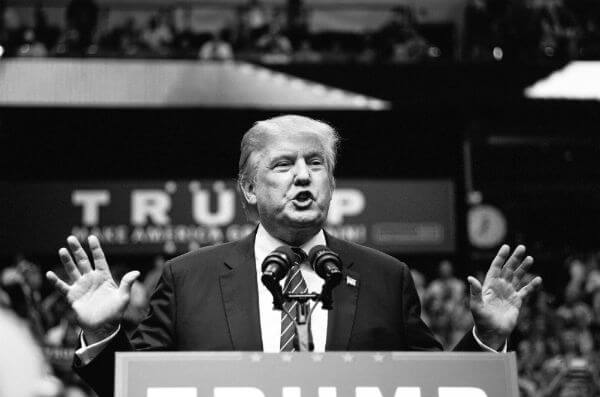
trump-bw

Politico reports: Top Republican political leaders aren’t the only ones shunning their party’s presidential nominee — a vast number of highly skilled managers and policy experts, veterans of recent GOP administrations who would normally be expected to fill key positions for a new White House, are also vowing to sit out a Donald Trump presidency.

And while the failure of the two Presidents Bush or House Speaker Paul Ryan to endorse the presumptive nominee carries political consequences, the absence of policy veterans in a new administration would have a substantive effect on the running of government.

POLITICO interviewed nearly five dozen Republicans over the past two weeks — people with experience working in government and who understand how Congress can enact, or shred, a new president’s agenda — and heard the same sentiment expressed repeatedly. If Trump doesn’t change his tune or extend much longer olive branches, many of these government veterans say they intend to cede highly coveted administration posts to less-experienced competitors.

“I would never serve in a Trump administration,” said James Capretta, a former Office of Management and Budget official under George W. Bush. “The person at the top is unfit for the presidency. He’s made that very clear with his behavior.” [Continue reading…]

Facebooktwittermail

Sadiq Khan vs. Donald Trump

Roger Cohen writes: The most important political event of recent weeks was not the emergence of Donald J. Trump as the presumptive presidential nominee of the Republican Party but the election of Sadiq Khan, the Muslim son of a London bus driver, as mayor of London.

Trump has not won any kind of political office yet, but Khan, the Labour Party candidate, crushed Zac Goldsmith, a Conservative, to take charge of one of the world’s great cities, a vibrant metropolis where every tongue is heard. In his victory, a triumph over the slurs that tried to tie him to Islamist extremism, Khan stood up for openness against isolationism, integration against confrontation, opportunity for all against racism and misogyny. He was the anti-Trump.

Before the election, Khan told my colleague Stephen Castle, “I’m a Londoner, I’m a European, I’m British, I’m English, I’m of Islamic faith, of Asian origin, of Pakistani heritage, a dad, a husband.”

The world of the 21st century is going to be shaped by such elided, many-faceted identities and by the booming cities that celebrate diversity, not by some bullying, brash, bigoted, “America first” white dude who wants to build walls. [Continue reading…]

Time interviewed Khan and asked:

You’re the first Muslim mayor of a major western city. Do you feel an extra responsibility to tackle religious extremism?

One of the things that’s important to me as a Londoner is making sure my family, people I care about, are safe. But clearly, being someone who is a Muslim brings with it experiences that I can use in relation to dealing with extremists and those who want to blow us up. And so it’s really important that I use my experiences to defeat radicalization and extremism. What I think the election showed was that actually there is no clash of civilization between Islam and the West. I am the West, I am a Londoner, I’m British, I’m of Islamic faith, Asian origin, Pakistan heritage, so whether it’s [ISIS] or these others who want to destroy our way of life and talk about the West, they’re talking about me. What better antidote to the hatred they spew than someone like me being in this position? [Continue reading…]

The Independent reports: Sadiq Khan has criticised Donald Trump for suggesting he would exempt him from his proposed temporary ban on Muslims entering the US, adding his comments play “into the hands of extremists”.

It comes after Mr Trump, the presumptive Republican presidential candidate, said he was happy to see London’s new Muslim mayor elected, saying it could be “very, very good”.

The billionaire property mogul caused international outrage when he called for the temporary ban after the November 2015 Paris attacks. David Cameron labelled the idea “stupid” and calls to ban Mr Trump from entering Britain were raised in Parliament after a petition attracted nearly 600,000 signatures.

“This isn’t just about me – it’s about my friends, my family and everyone who comes from a background similar to mine, anywhere in the world,” Mr Khan said.

“Donald Trump’s ignorant view of Islam could make both our countries less safe – it risks alienating mainstream Muslims around the world and plays into the hands of the extremists.

“Donald Trump and those around him think that western liberal values are incompatible with mainstream Islam – London has proved him wrong.” [Continue reading…]

Facebooktwittermail

The rise of militias: Patriot candidates are now getting elected in Oregon

The Guardian reports: Joseph Rice’s manner is a long way from militia stereotypes. The Patriot Movement leader does not present as a crazed gun nut, nor as a blowhard white supremacist. He’s genial, folksy, and matter-of-fact in laying out his views. But talk to him for long enough, and time and again the Patriot Movement leader returns to what really drives him: land.

Rice is running for Josephine county commissioner in south-west Oregon, and believes that the federal government’s current role in land management is illegitimate and even tyrannical.

His campaign is well-advertised around the county and appears well-organised. His growing experience in organising Patriot groups and community watch organisations has polished his skills in retail politics. He’s clearly done a lot of work to make himself politically palatable to conservative rural voters.

He has positions on education (kids should finish high school), legalised marijuana (it presents an economic opportunity) and Donald Trump (“people are tired of career politicians, and they know the country’s in trouble”).

But county supremacy is what really drives him.

It’s this notion that is once again becoming central to local politics in the Pacific north-west. Throughout the region, people whose ideas about land management broadly align with Rice and the now infamous Bundy clan are aiming for elected office in cities, counties and even the state houses.

Taking notice of the trend, progressive watchdog group Political Research Associates even pointed to “a wave of Patriot-affiliated candidates in Oregon”. [Continue reading…]

Facebooktwittermail

Trumpism meets its first defeat … in London

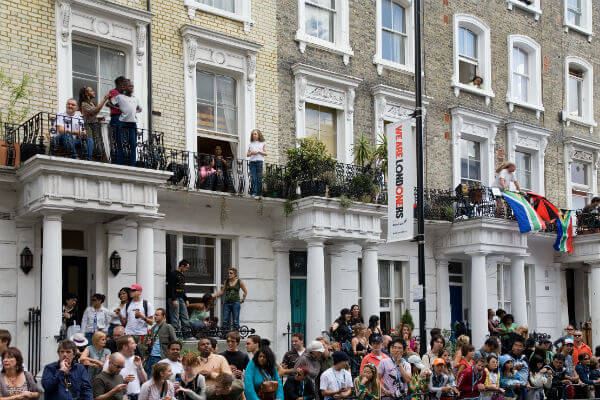
Londoners

Pankaj Mishra writes: Donald Trump became last week the presumptive Republican nominee in the U.S. presidential elections. But those condemned to agonizing suspense and anxiety until November should note that Trumpism, or the politics of hate and fear, also suffered a major defeat last week.

I refer to the election of former human rights lawyer Sadiq Khan as London’s mayor. That the son of a Pakistani bus driver, whose campaign team included gay men and Jewish women, should become the mayor of a great European city would at any time have signaled hope for our irrevocably mixed societies. Its significance in this era of politically expedient bigotry cannot be overestimated.

For, as Khan said a day after his remarkable victory, his Conservative opponents set out “to divide London’s communities in an attempt to win votes,” using “fear and innuendo to try and turn different ethnic and religious groups against each other — something straight out of the Donald Trump playbook.” [Continue reading…]

Facebooktwittermail

Donald Trump and the authoritarian temptation

Shadi Hamid writes: When I was living in the Middle East, politics always felt existential, in a way that I suppose I could never fully understand. After all, I could always leave (as my relatives in Egypt were fond of reminding me). But it was easy enough to sense it. Here, in the era of Arab revolt, elections really had consequences. Politics wasn’t about policy; it was about a battle over the very meaning and purpose of the nation-state. These were the things that mattered more than anything else, in part because they were impossible to measure or quantify.

The primary divide in most Arab countries was between Islamists and non-Islamists. The latter, especially those of a more secular bent, feared that Islamist rule, however “democratic” it might be, would alter the nature of their countries beyond recognition. It wouldn’t just affect their governments or their laws, but how they lived, what they wore, and how they raised their sons and daughters.

Perhaps more than at any other time, millions of Americans are getting a sense, however mild in comparison, of what it might feel like to lose your country — or at least think about losing your country — because of what people decide to do in the privacy of the voting booth. It still remains (somewhat) unlikely that Donald Trump, the now presumptive Republican nominee, can win a general election. Regardless of the final outcome, however, the billionaire’s rise offers up a powerful — and frightening — reminder that liberal democracy, even where it’s most entrenched, is a fragile thing.

* * *

When I hear my friends debating how, exactly, so many of their fellow citizens could support someone like Trump, it reminds me a bit of Egypt. In my forthcoming book, I relay a telling conversation I had four years ago, which has stayed with me since. A few days after the country’s first post-revolutionary elections concluded in January 2012, I visited my great aunt in her extravagant flat in the posh Cairo suburb of Heliopolis. She was in a state of shock, but worse than that was the confusion. It was one thing for the Muslim Brotherhood, long Egypt’s largest opposition group, to win close to 40 percent of the vote, but how could 28 percent of Egyptians vote for ultraconservative Salafi parties, which believed in the strict implementation of Islamic law?

Like most Egyptians, she personally knew Brotherhood members even if she didn’t quite like them, but she hadn’t had much experience with Salafis and seemed totally unaware that they had extended their reach deep into Egyptian society. She realized, perhaps for the first time, that the country she had thought was hers for the better part of 70 years would never quite be the same. It hadn’t really even been hers to begin with.

What my aunt feared was that Egypt would become an “illiberal democracy,” a term popularized by Fareed Zakaria in his 2003 book The Future of Freedom, but one that’s still difficult for Americans to fundamentally relate to. In the American experience, democracy and liberalism seemed to go hand in hand, to such an extent that democracy really just became shorthand for “liberal democracy.”

As Richard Youngs writes in his excellent study of non-Western democracy, liberalism and democracy have historically been “rival notions and not bedfellows.” Liberalism is about non-negotiable personal rights and freedoms. Democracy, while requiring some basic protection of rights to allow for meaningful competition, is more about popular sovereignty, popular will, and accountability and responsiveness to the voting public. Which, of course, raises the question: What if voters don’t want to be liberal and vote accordingly? [Continue reading…]

Facebooktwittermail

Why Sadiq Khan’s victory matters

Muddassar Ahmed writes: the type of aggressive, populist campaign that has so far been successful for Donald Trump in the United States will not necessarily be a blueprint for success elsewhere. Although many on the right in Britain apparently believed that capitalizing on anti-Muslim sentiment is not just acceptable, but a sure ticket to victory, the strategy was found wanting. In short, there is a limit to the ability of bigotry to capture elections.

And it is not just Britain that has demonstrated that resorting to anti-Muslim language can backfire. Take the example of former Canadian Prime Minister Stephen Harper. Last year, he resorted to crude anti-Muslim language as he sought re-election. In contrast, Harper’s opponent, Justin Trudeau, went out of his way to embrace Muslims (and other minorities). Harper didn’t just lose — he was trounced.

Why?

Many non-Muslim Canadians were repelled by seeing this faith-based bigotry in their secular politics. Just as importantly, the Muslim-bashing had another effect that Harper apparently did not seem to see coming — it prompted Canadian Muslims to vote in record numbers. You can bet that these new voters will continue and extend their political involvement, meaning that in a well deserved bit of irony, Harper’s Islamophobic campaign may have created a Canadian Muslim political consciousness where none existed before.

With this in mind, it is likely for good reason that in the United Kingdom, the Conservative group leader of the Greater London assembly, Andrew Boff, criticized Goldsmith’s divisive campaign for damaging his party’s relations with the Muslim community, something that could further hurt it down the road.

In fact, the same thing could happen in America. After all, not only is Donald Trump now a widely detested politician (polls suggest that more Americans disapprove of him than are worried about Muslims), but American Muslims are becoming more politically engaged. And although the American Muslim population is relatively small, it may hold the key to swing states like Virginia, Florida and Ohio. [Continue reading…]

Facebooktwittermail

The rest of the world has no Trump contingency plan

The New York Times reports: Alarmed by Donald J. Trump’s grip on the Republican presidential nomination, world leaders are wrestling with the possibility that, even if he loses the general election, his ascent reflects a strain of American public opinion that could profoundly reshape the way the United States addresses security alliances and trade.

From Beijing, Tokyo and Seoul to the headquarters of NATO in Brussels and the vulnerable Baltic nations along Russia’s western border, officials and analysts said in interviews that they saw the success of Mr. Trump’s “America first” platform as a harbinger of pressure for allies to pay up or make trade concessions in return for military protection.

In many capitals, Mr. Trump’s formal and off-the-cuff foreign policy proposals — his threat to pull out of NATO; his musings about removing the United States’ nuclear umbrella over Japan and South Korea; his pledge to slap huge trade tariffs on China — are regarded with a mix of alarm and confusion. Asked on Thursday if Beijing was concerned about the prospect of a Trump presidency, the Chinese Foreign Ministry spokesman, Hong Lei, replied, “We hope the U.S. people from all walks of life would view bilateral relations from a reasonable and objective perspective.”

Stefano Stefanini, a former representative of Italy to NATO and former diplomatic adviser to the Italian president, put it this way: “There is no Donald Trump contingency plan.” [Continue reading…]

Facebooktwittermail

How ‘America First’ got its nationalistic edge

Eric Rauchway writes: When Donald Trump declared,⁠ “‘America First’ will be the overriding theme of my administration,” he invoked the America First Committee, which opposed U.S. aid to the opponents of Nazi Germany before December 1941. This legacy sparked critiques⁠ and defenses⁠ alike of Trump’s appeal to nationalism. Nervous⁠ U.S. allies even worried the phrase heralded a new isolationism. One of Trump’s advisers, however, insisted the phrase was a coincidental echo that didn’t “go back to negative aspects at all.” Apparently, it was merely quaint⁠ in today’s relatively Nazi-free era. But the slogan actually predates the anti-interventionist committee, and it has a lot more to do with the proto-fascist politics of the publishing magnate and sometime politician William Randolph Hearst.

Hearst did not invent the slogan “America First”; he borrowed it from Woodrow Wilson — so he could hurl it back at the president. After World War I broke out, Wilson used the “motto” of “America First” to define his version of neutrality: The United States should bide its time and husband its resources until the warring powers had “carried the thing so far” that they “must be disposed of” — then America would wade in and sort Europe out. In keeping with this view, after the Germans declared unrestricted submarine warfare against transatlantic shipping, Wilson asked Congress for a declaration of war in April 1917.

Before the United States entered World War I, Hearst’s sympathies lay with Germany. He used his publishing empire to gather pro-German editors and writers around him, did a deal with a German agent for newsreel footage, and used a paid agent of the German government as his newspaper correspondent for German matters. But once the United States declared war on Germany, Hearst could no longer maintain this stance, so he took up a new one. With American flags decorating his newspapers’ masthead, he declared that the freshly belligerent Americans should tender no aid to the Allies also fighting Germany: “[K]eep every dollar and every man and every weapon and all our supplies and stores AT HOME, for the defense of our own land, our own people, our own freedom, until that defense has been made ABSOLUTELY secure. After that we can think of other nations’ troubles. But till then, America first!” [Continue reading…]

Facebooktwittermail