Category Archives: Obama administration

Sadr’s path could determine how Iraq turns

The New York Times reports:

In a classroom in Sadr City, the bustling neighborhood of the Shiite poor, dozens of men in white shirts and black pants received the most basic of Islamic religious instruction: how to wash before praying.

“After you wash your left hand, you must be sure to avoid any water drops on the right hand,” declared the instructor.

The men, once members of the Mahdi Army, the militia of the radical Shiite cleric Moktada al-Sadr, fought the Americans in the first years of the occupation and say they will again if Mr. Sadr gives the order. But for now they have come to wage a different battle in the ranks of the Mumahidoon, the successor to the Mahdi Army that, besides offering its members lessons in the Koran, organizes soccer teams, provides circumcision for the babies of poor families, picks up trash after religious pilgrimages and teaches computer literacy.

On the eve of what is likely to be a nearly complete withdrawal of United States forces from Iraq, one of the great questions is what Mr. Sadr is going to do. The Mumahidoon is one possible direction.

Created after Mr. Sadr disbanded the Mahdi Army in 2008, it is a lesser-known spoke of an Islamist movement that, like Hezbollah in Lebanon and Hamas in Gaza and in the West Bank, has used political, military and social arms — with financial support from Iran — to galvanize a Shiite underclass and stake out a prominent role in public life.

But Mr. Sadr also seems to be trying out several other roles, including street provocateur and vocal resister of American influence. The direction he decides on will determine in great part the immediate future of the country as the American military role diminishes.

Facebooktwittermail

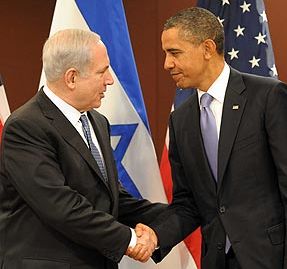
Obama’s passivity could pave the way to a civil uprising against Israel

Akiva Eldar writes:

To realize the extent to which the lame-duck candidate has regressed from the positions of the new and promising President Obama, the speech to the United Nations in September 2011 should be compared to one he gave in Cairo in 2009. At that time he pledged to “personally pursue this outcome with all the patience that the task requires,” and said “… it is time for all of us to live up to our responsibilities.” Yesterday he sent the occupied and the occupier, the strong and the weak, to solve the core issues on their own.

In Cairo he recalled, along with Jewish suffering in the Holocaust, the “daily humiliations … that come with the occupation.” And he added: “Let there be no doubt: The situation for the Palestinian people is intolerable.” He even compared the struggle of the Palestinians for freedom to the struggle of black people in the United States for equal rights. On Wednesday, Obama paid pursed lip service to the legitimate aspirations and forgot to mention the occupation.

In June 2009, Obama spoke of “the obligations that the parties have agreed to under the road map.” He meant, among other things, and perhaps mainly, Israel’s obligation to completely stop construction in the settlements and dismantle the outposts built after March 2001. To remove all doubt, he stated resolutely: “It is time for these settlements to stop.”

On Wednesday, not one word of criticism was heard about Israel creating unilateral physical facts on the ground. To the 2011-model Obama, only the Palestinians’ approach to the United Nations is unilateral, objectionable and meriting the death penalty.

Facebooktwittermail

Obama to UN: yada yada yada — Israelis applaud

In case anyone is in any doubt that President Obama’s comments on the Israeli-Palestinian conflict, delivered to the UN General Assembly this morning, were nothing more than a string of worthless peace-process platitudes, then listen to the rave review he got from Israeli foreign minister Avigdor Lieberman: “I congratulate President Obama, and I am ready to sign on this speech with both hands.” Prime Minister Netanyahu and opposition leader Tzipi Livni were similarly pleased.

As usual Israel and the United States are speaking with one voice: Israel’s.

One year ago, I stood at this podium and called for an independent Palestine. I believed then – and I believe now – that the Palestinian people deserve a state of their own. But what I also said is that genuine peace can only be realized between Israelis and Palestinians themselves. One year later, despite extensive efforts by America and others, the parties have not bridged their differences. Faced with this stalemate, I put forward a new basis for negotiations in May. That basis is clear, and well known to all of us here. Israelis must know that any agreement provides assurances for their security. Palestinians deserve to know the territorial basis of their state.

I know that many are frustrated by the lack of progress. So am I. But the question isn’t the goal we seek – the question is how to reach it. And I am convinced that there is no short cut to the end of a conflict that has endured for decades. Peace will not come through statements and resolutions at the UN – if it were that easy, it would have been accomplished by now. Ultimately, it is Israelis and Palestinians who must live side by side. Ultimately, it is Israelis and Palestinians – not us – who must reach agreement on the issues that divide them: on borders and security; on refugees and Jerusalem.

Peace depends upon compromise among peoples who must live together long after our speeches are over, and our votes have been counted. That is the lesson of Northern Ireland, where ancient antagonists bridged their differences. That is the lesson of Sudan, where a negotiated settlement led to an independent state. And that is the path to a Palestinian state.

We seek a future where Palestinians live in a sovereign state of their own, with no limit to what they can achieve. There is no question that the Palestinians have seen that vision delayed for too long. And it is precisely because we believe so strongly in the aspirations of the Palestinian people that America has invested so much time and effort in the building of a Palestinian state, and the negotiations that can achieve one.

America’s commitment to Israel’s security is unshakeable, and our friendship with Israel is deep and enduring. And so we believe that any lasting peace must acknowledge the very real security concerns that Israel faces every single day. Let’s be honest: Israel is surrounded by neighbors that have waged repeated wars against it. Israel’s citizens have been killed by rockets fired at their houses and suicide bombs on their buses. Israel’s children come of age knowing that throughout the region, other children are taught to hate them. Israel, a small country of less than eight million people, looks out at a world where leaders of much larger nations threaten to wipe it off of the map. The Jewish people carry the burden of centuries of exile, persecution, and the fresh memory of knowing that six million people were killed simply because of who they were.

These facts cannot be denied. The Jewish people have forged a successful state in their historic homeland. Israel deserves recognition. It deserves normal relations with its neighbors. And friends of the Palestinians do them no favors by ignoring this truth, just as friends of Israel must recognize the need to pursue a two state solution with a secure Israel next to an independent Palestine.

That truth – that each side has legitimate aspirations – is what makes peace so hard. And the deadlock will only be broken when each side learns to stand in each other’s shoes. That’s what we should be encouraging. This body – founded, as it was, out of the ashes of war and genocide; dedicated, as it is, to the dignity of every person – must recognize the reality that is lived by both the Palestinians and the Israelis. The measure of our actions must always be whether they advance the right of Israeli and Palestinian children to live in peace and security, with dignity and opportunity. We will only succeed in that effort if we can encourage the parties to sit down together, to listen to each other, and to understand each other’s hopes and fears. That is the project to which America is committed. And that is what the United Nations should be focused on in the weeks and months to come.

The New York Times reports:

Less than an hour after Mr. Obama spoke, President Nicolas Sarkozy of France stood at the same podium in a sharp repudiation, calling for a General Assembly resolution that would upgrade the Palestinians to “observer status,” as a bridge towards statehood. “Let us cease our endless debates on the parameters,” Mr. Sarkozy said. “Let us begin negotiations and adopt a precise timetable.”

For Mr. Obama, the challenge in crafting the much-anticipated General Assembly address on Wednesday was how to address the incongruities of the administration’s position: the president who committed himself to making peace between the Israelis and the Palestinians a priority from Day One, who still has not been able to even get peace negotiations going after two and a half years; the president who opened the door to Palestinian state membership at the United Nations last year ending up threatening to veto that very membership; the president who was determined to get on the right side of Arab history ending up, in the views of many on the Arab street, on the wrong side of it on the Palestinian issue.

The US-Israeli message to Palestinians remains now what it has long been: the Palestinians deserve a state, but not just yet.

So if you’re looking for Palestine, all you need to do is find your way to the end of the peace process rainbow — it’s right there, alongside a pot of gold.

But if the White House is still willing to collude with its Israeli partners in refusing to set a deadline for the creation of a Palestinian state, France’s president issued Obama a stern warning:

“Each of us knows that Palestine cannot immediately obtain full and complete recognition of the status of United Nations member state,” he said. “But who could doubt that a veto at the Security Council risks engendering a cycle of violence in the Middle East?”

Those who still declare their belief that a two-state solution is the only viable solution to the conflict must move beyond their endless repetition of the parameters of such a solution and declare without equivocation when a Palestinian state must be created.

Without a date there will be no state.

Facebooktwittermail

U.S. should recognize Palestinian state

Zvi Bar’el writes:

Memory is short and forgetfulness is often deliberate, but 23 years ago the UN General Assembly decided to move its session from New York to Switzerland so that Palestine Liberation Organization head Yasser Arafat could deliver a speech. The reason: U.S. Secretary of State George Schultz refused to issue Yasser Arafat an entry visa to the United States.

Today too, with the opening of the session of the General Assembly, Washington is standing like a fortified wall blocking the entry of Palestine to the UN building. Although Palestinian Authority President Mahmoud Abbas has no problem getting a visa, when he comes to ask for a state for the Palestinians he is put on a roller coaster. The list of threats and future punishments to be imposed on him and his country, if it is established, guarantees that this will be a state that is battered from birth.

Here is colonialism in all its glory. After all, the United States agrees that there should be a Palestinian state, it even twisted the arm of Prime Minister Benjamin Netanyahu a little bit, cautiously so it wouldn’t hurt, so that he would blurt out the necessary formula “two states for two peoples.” U.S. President Barack Obama even spoke about the optimal borders of the Palestinian state and Abbas was not yet required to recognize Israel.

After all, Arafat already recognized it. Palestine fulfilled all the threshold conditions. And still, this state has only one chance of being born the American way. Through negotiations that will lead to a consensual agreement and a handshake. And if Israel’s hand is missing, never mind, the Palestinians will wait until it grows.

But Abbas has learned a thing or two from Israel. The main lesson he has learned is that his real negotiations are not with Israel but with Washington. The second lesson: The negotiations must not take place on a playing field that is convenient for Obama, but rather at the United Nations. There Obama is not facing a beggarly Palestinian Authority that can be frightened with a shout, but 193 countries, each of which must be negotiated with.

New York is not Ramallah. Abbas saw how Israel chose its own playing field in the U.S. Congress, and carefully responded in kind. Instead of going out on a limb, he planted the tree by himself, nurtured it, diligently recruited most of the countries in the world, was helped substantially by Israel’s mistakes, took good advantage of Jerusalem’s isolation, examined the pros and cons and decided that even in loss there would be great gain.

If the United States casts a veto in the UN Security Council, it will cause more damage to Washington than to Abbas; if he makes do with recognition in the General Assembly, it will be in exchange for an American commitment to support a Palestinian state if negotiations fail, as they will.

Abbas caused Washington to be embroiled in a dispute with its European colleagues, and presented Israel as a cripple. He is forcing the United Nations to do what it usually fails to do: to find a peaceful solution to conflicts. As a bonus he caused Netanyahu to say that he is going to deliver a “speech of truth” at the United Nations, thereby admitting in effect that until now he has been lying.

The panic in Washington is genuine. It was evident when David Hale, Obama’s special envoy, was unable to control his temper and simply shouted at Abbas when he understood that he had no intention of retreating from his initiative.

Anger and helplessness could also be detected in the voice of U.S. Secretary of State Hillary Clinton, when she announced that the United States would cast a veto in the Security Council. Suddenly she realized that the Israeli-Palestinian conflict is not only “the business of the parties involved” but threatens Washington’s regional and international status.

If the United States fails to recognize the Palestinian state, it will have difficulty sidelining its rivals in the new Middle East, where the public has more power than the rulers; if it recognizes the Palestinian state, it will have to ensure its sustainability, in other words, to direct the sanctions against Israel. Truly a bad situation for a great power that aspires to draw the map of the new Middle East.

Had it only made an effort to achieve genuine negotiations when that was still possible, had it invested its efforts into reaching an agreement that it is now investing in preventing the declaration of independence, had it shared the threats equally between the PA and Israel, it may not have found itself in this difficult situation.

It should at least recognize the state now. It should recall what has happened since it refused to grant Arafat his visa.

Facebooktwittermail

New York Times discovers Netanyahu has friends in Congress

“House Republicans Discover a Growing Bond With Netanyahu” says the headline in the New York Times.

Discover? This isn’t exactly news. What the headline should say (and I know I’m fantasizing about an imaginary New York Times whose headlines don’t pull any punches) is: “House GOP trusts Netanyahu more than Obama.”

The report does acknowledge: “Unbending support for Israel has long been a bipartisan fact of American politics, but Mr. Netanyahu’s popularity in Congress now runs deeper than ever.” Or, as Pat Buchanan would put it, Capitol Hill is still Israeli occupied territory.

When the Obama administration wanted to be certain that Congress would not block $50 million in new aid to the Palestinian Authority last month, it turned to a singularly influential lobbyist: Israel’s prime minister, Benjamin Netanyahu.

At the request of the American Embassy and Secretary of State Hillary Rodham Clinton, Mr. Netanyahu urged dozens of members of Congress visiting Israel last month not to object to the aid, according to Congressional and diplomatic officials. Mr. Netanyahu’s intervention with Congress underscored an extraordinary intersection of American diplomacy and domestic politics, the result of an ever-tightening relationship between the Israeli government and the Republican Party that now controls the House.

On Tuesday, one of President Obama’s potential rivals in 2012, Gov. Rick Perry of Texas, delivered a speech in New York criticizing Mr. Obama’s stance toward Israel as “naïve, arrogant, misguided and dangerous.” Mr. Perry said that he would be a guest soon of Danny Danon, the hard-right deputy speaker of the Israeli Parliament.

The relationship between the Israeli government and the Republican Party has significantly complicated the administration’s diplomatic efforts to avert a confrontation at the United Nations this week over the Palestinian bid for full membership as a state, limiting President Obama’s ability to exert pressure on Mr. Netanyahu to make concessions that could restart negotiations with the Palestinians.

One of the members of Congress who attended the meeting with Mr. Netanyahu in August, Representative Michael G. Grimm of New York, a Republican, said that it was carefully explained to the delegation that the money would be used for training Palestinian police officers who work closely with the Israeli government.

Mr. Grimm said he felt more comfortable receiving the explanation from the prime minister than from Obama administration officials.

Facebooktwittermail

The 2012 contest to show who loves Israel the most

Daniel Levy writes:

[I]t is in the realm of background noise, more than votes or dollars, that Israel really features as a campaign issue. John Heilemann, in an excellent New York Magazine piece, puts it like this: “the outsize attention they command and the ear-splitting volume of the collective megaphone they (Jews) wield.” Having to deal with relentless calls, op-eds, congressional resolutions and meeting requests (a monumental waste of administration and campaign time) is probably what seals the deal for kicking the Israel issue into the long grass by kissing the ring (or maybe the tuchus, in this case).

While the way in which Israel plays out as an issue with American Jews will not move the dial on next year’s elections, it will have other effects – not least on US policy and interests vis à vis Israel, the region and beyond. On the Republican side, Israel will be the center piece of a narrative that seeks to portray the president’s foreign policy as being too forgiving towards adversaries (with Iran topping the list) and too harsh with allies (see Israel). This is clearly not lined up to be a foreign policy election, and a Bin Laden-slaying incumbent is less easily portrayed as being soft on terror. But to divide the world beyond America’s shores between Judeo-Christian forces of light and Muslim forces of darkness nicely dovetails with a growing (and ugly) theme in domestic politics – sharia law care-mongering. It also still acts as a dog-whistle for the “Obama is a secret Muslim” crew.

Of greater significance for America’s future is how the Israel issue, especially if spun as electorally useful, can help bind neoconservatism to Tea Party-oriented Republicanism. A small-government, no-tax and debt-obsessed Tea Party agenda is an unnatural match for the war-mongering and global domination fantasies of neoconservatives. These trends have clashed already – for instance, with regard to America’s continued role in Afghanistan or its involvement in Libya. If Israel is to be kept far away from this equation and the neoconservatives are to maintain their iron grip on Republican foreign policy, then it is terribly convenient to spread the idea that Israel not only plays well in the bible belt, but that it can also help win the borscht belt. The almost total disappearance of realist or internationalist Rockefeller Republicanism from the party’s foreign policy arena (think GHW Bush, Scowcroft, Baker, and later, Hagel, Powell, and Chaffee) has made Republican and Likud policies indistinguishable.

That is a problem not only for Democrats, but also for America. It used to be claimed that Israel was a cause above partisan politics. Any such notion is utter nonsense today. If one assumes that: (a) Democrat-leaning Jews do largely care about Israel but not from a fundamentalist or hawkish perspective; and (b) that leading Democratic politicians tend to be in the same boat (both reasonable hypotheses); then Democrats have two possible options in responding to this new political reality. They can either make the argument for a different kind of pro-Israel policy or be playing permanent catch-up with the Republican/Likud right. Leading Jewish public intellectuals have been making the case for the former approach, a new movement (J Street) generated momentum for that option, and in a seminal essay, Peter Beinart provided a strong theoretical underpinning for the idea that this made for both good policy and good politics, given Jewish generational attitude shifts. President Obama and some leading figures in his administration initially seemed to concur – that being serious and responsible towards Israeli and American interests meant pushing for a two-state solution immediately, and standing against obstacles to that outcome such as settlements.

But through a combination of insufficient attention to detail, insufficient courage when the going got tough and insufficient coherence inside the administration, the latter approach eventually won out. Administration policy has increasingly become “we’re as pro-Israel as the Republicans and they can define pro-Israel as whatever they like.”

Facebooktwittermail

In Palestinian eyes, U.S. president has become the bad guy

Akiva Eldar writes:

A short time after Palestinian Authority President Mahmoud Abbas landed in New York, MK Ahmed Tibi (United Arab List-Ta’al ) expressed a widespread feeling in the Palestinian delegation regarding U.S. President Barack Obama: “Were Martin Luther King to rise from the dead and see how a black president is waging an all-out war against the rights of the Palestinian people,” opined Tibi, “he would choose to return to the grave.”

This week, Obama has replaced Benjamin Netanyahu, and is playing the part of the bad guy in Palestinian perception. The supporting actor in this capacity is Quartet delegate Tony Blair, who is viewed by the Palestinians as a representative of the U.S. government beholden to the mission of scuttling Palestinian statehood recognition.

After the Palestinians rejected the “compromise proposal” that Blair presented to Abbas this weekend, Obama stepped up his full frontal attack against the Palestinians. The U.S. president wants to bury the Palestinian initiative in the United Nations without having to get his hands dirty by casting a veto in the Security Council. Why should he take the risk of annoying the Saudis if he can get rid of the statehood resolution by utilizing the UN’s serpentine procedures?

When the United States wanted UN action on the Republic of South Sudan, UN procedures lasted no longer than one week. In contrast, with regard to a resolution that is liable to alienate the U.S. Congress, UN procedures can be manipulated so that the proposal is battered for several long months. At the same time, the Americans are mobilizing their political and economic leverage so as to put together a majority of nine Security Council members who are opposed to the statehood resolution – a move that would force the Palestinians to accept a General Assembly decision to grant them a state status equivalent to that enjoyed by the pope’s residence.

As a result of contacts with European leaders, Abbas is aware that the American Goliath does not want to win a victory on points, or on a technical knockout. Obama is trying to persuade “quality states” in Europe to vote against the statehood resolution, or at least to abstain, in the General Assembly. As of Monday, the United States and the Palestinians are both trying to “win everything.”

The “compromise proposal” delivered to Abbas, via Blair, calling on the Palestinians to limit their effort to the General Assembly, is essentially a recycled version of a formula endorsed by Obama last July. The proposal stirred consternation among the three other Quartet partners, who eventually rejected it. The proposal contains not even a hint about a settlement freeze. It limits final status negotiations to a 12-month period, but grants Israel the authority to cease talks the moment it is dissatisfied with the actions of the Palestinian side (especially in the security sphere ).

The proposal refers to the establishment of a Palestinian state alongside the state of the Jewish people; the new state’s borders would not be the 1967 lines, and they would take into account demographic realities in the field. In other words, the July-Obama/Blair proposal enjoins Palestinian recognition of the legality of the settlements without requiring an Israeli commitment to a territorial concession comparable in size and quality.

Meanwhile, the Palestinian leadership is not disclosing the final formulation of the statehood recognition resolution to be brought to the UN. The scant information available indicates that the Palestinians will ask for recognition of a state in the 1967 borders, whose capital is East Jerusalem, and which will live in peace alongside the State of Israel. The resolution will refer to the Arab peace initiative of 2002, which offered Israel normalization in the region in exchange for withdrawal to the 1967 lines, and called for a just, agreed-upon solution to the refugee issue.

This Palestinian formulation could embarrass countries such as Iran and Syria. In the UN, they will have to choose between a vote against the state of Palestine, or the conferral of recognition, of sorts, to the State of Israel in the 1967 borders.

Facebooktwittermail

Obama’s perfect storm

Mark LeVine writes:

[Obama] might have dined with Palestinian professors back in Chicago, but there was no way he would have been allowed near the presidency if he actually internalised the historical narrative represented by Palestinian history and that of the Arab and larger developing worlds. Yes, he’s half African and grew up partly in Indonesia, and can give really nice speeches about the need for the peoples of the world to build a common future.

But more than anything, Obama is a product of the US political machine – from Harvard to Chicago to the White House. And you don’t go through that meat grinder and come out at the other end with many principles left intact.

Even if Obama can’t be blamed for the system – an-nitham, to use the entirely appropriate Arab connotation of the term – he must take responsibility for how many opportunities he has squandered and just how far US strategic designs have moved from the emerging realities in the Middle East and North Africa.

There are many arguments to be made for and against PA president Mahmoud Abbas bringing a statehood bid before the UN. Indeed, in a seemingly strange irony, one of the most eloquent arguments against the bid comes from Susan Rice, the US Ambassador to the UN, who explained that “there’s no shortcut, there’s no magic wand that can be waved in New York and make everything right … The reality is that nothing is going to change. There won’t be any more sovereignty, there won’t be any more food on the table.”

But of course, the reason for US opposition to the statehood bid – namely, US policy that supports Israel’s ongoing entrenchment of its occupation in the West Bank against the wishes of the entire world – is left unstated. Indeed, Rice and the Obama Administration are being patronising in the extreme by arguing that the push for a vote represents a “miscalculation” and a “gap between expectation and reality [that] is in itself quite dangerous”.

Instead, the reality is that the Obama administration, and the US foreign policy system it represents, are the ones who have badly miscalculated.

Palestinians understand quite well that this vote is largely symbolic. But with nothing to lose and the US hopelessly titled towards Israel, if the Palestinians can extract a political price by increasing the amplitude of the wave of anger of the newly empowered “Arab street” (a term that after decades of mis-use finally has some analytical bona fides) in response to the planned US veto in the Security Council, Palestinians will for once have played their historically bad hand well.

Facebooktwittermail

Obama’s Jewish problem

John Heilemann writes:

Again and again, when Israel has been embroiled in international dustups—over its attack last year on a flotilla filled with activists headed from Turkey to Gaza, to cite but one example—the White House has had Israel’s back. The security relationship between the countries, on everything from intelligence sharing to missile-­defense development to access to top-shelf weapons, has never been more robust. And when the Cairo embassy was seized and Netanyahu called to ask for Obama’s help with rescuing the last six Israelis trapped inside the building, the president not only picked up the phone but leaned hard on the Egyptians to free those within. “It was a decisive moment,” Netanyahu recalled after the six had been freed. “Fateful, I would even say.”

All of which raises an interesting, perplexing, and suddenly quite pressing question: How, exactly, did Obama come to be portrayed, and perceived by many American Jews, as the most ardently anti-Israel president since Jimmy Carter?

This meme, of course, has been gathering steam for some time, peddled mainly by right-wing Likudophiles here and in the Holy Land. But last week, it took center stage in the special election in New York’s Ninth Congressional District, maybe the most Jewish district in the nation and one held by Democrats since 1923. When the smoke cleared, the Republican had won—and Matt Drudge was up with a headline blaring REVENGE OF THE JEWS.

Obama’s people deny up and down that the loss of a seat last occupied by Anthony Weiner portends, well, pretty much anything for 2012. But the truth is that they are worried, and worried they should be, for the signs of Obama’s slippage among Jewish voters are unmistakable. Last week, a new Gallup poll found that his approval rating in that cohort had fallen to 55 percent—a whopping 28-point drop since his inauguration. And among the high-dollar Jewish donors who were essential to fueling the great Obama money machine last time around, stories of dismay and disaffection are legion. “There’s no question,” says one of the president’s most prolific fund-raisers. “We have a big-time Jewish problem.”

It’s often said that Netanyahu has an exquisitely calibrated feel for American politics and great savvy in working its press corps. Both are true and both have helped him enormously in resisting the pressure brought to bear by Team Obama. But the administration has also sabotaged itself, in particular by frequently failing to speak with one voice to Israel.

Through much of 2009 and 2010, Obama’s people were divided over just how hard to lean on Netanyahu when it came to negotiating with the Palestinians. On one side were many central figures who favored the tough-love approach: Obama, Clinton, Mitchell, Emanuel. On the other were Dennis Ross, the president’s special assistant on the Middle East, and Tom Donilon, his national-security adviser. “The underlying argument of Dennis and Tom was that you’ll never get the Israelis to do anything by pushing them,” says one official. “The contrary argument is, there’s no evidence you’ll ever get them to do anything without pushing them.”

For Netanyahu, however, the internal division within the administration was a gift. Wary of Emanuel and senior adviser David Axelrod—Netanyahu was quoted in the Israeli press calling them “self-hating Jews,” though he later denied it—he turned to those in the White House who were more sympathetic. “What you had was Bibi doing this go-to-mommy, go-to-­daddy thing,” says the same official. “Which meant there was never a real, effective, tough negotiation with Israel, because every time you tried to say something tough, he’d go to someone else who would tell him, ‘Don’t worry about it.’ ”

Netanyahu’s penchant for forum shopping goes a long way toward explaining the bilateral conniption that erupted this past May. After briefly negotiating face-to-face last fall, the Israelis and the Palestinians were again at loggerheads. For weeks this spring, the administration debated internally how to modify U.S. policy in light of that breakdown as well as the dawning of the Arab Spring and the wave of instability engulfing the region.

With the new Republican Congress having invited Netanyahu to address a full joint session—making him only the fourth foreign leader (along with Yitzhak Rabin, Nelson Mandela, and Winston Churchill) to have been granted the privilege more than once—Obama was planning a major speech on the Middle East ahead of Bibi’s. The question was whether the president should lay out a framework for a two-state solution, including principles on borders, security, Jerusalem, and refugees. Clinton and Mitchell were in favor of including all four; Ross and Donilon were in favor of including none, and until a few days before the speech, it appeared that they would have their way. But in the end, Obama opted for two: principles on borders and security.

Everyone knew that the language on borders would stir up a hell of a fuss, though in truth there was nothing terribly controversial about what Obama said. The 1967 lines plus land swaps has been for decades the geographic template for any plausible two-state solution, and was employed (almost fruitfully) by Clinton, Ehud Barak, and Yasser Arafat in 2000 and (again, almost fruitfully) by Bush, Ehud Olmert, and Abbas in 2008. The trouble was that its explicit embrace by Obama caught Netanyahu by surprise, almost certainly because Dennis Ross had assured him privately that it wouldn’t be in the speech.

Netanyahu threw a nutty. Before he departed Israel for Washington, his office issued a statement saying that the “Prime Minister expects to hear a reaffirmation from President Obama of U.S. commitments made to Israel in 2004 … commitments [that] relate to Israel not having to withdraw to the 1967 lines.” The statement was extraordinary on multiple levels: in its sheer presumptuousness (“expects”?); in its willful misreading of Obama’s words (ignoring the part about land swaps); and in its total neglect of the many hard-line pro-Israel positions the president had advanced, including a scornful rejection of the Palestinian statehood bid at the U.N., sharp criticism of Israel-denying Hamas, skeptical questioning of its new alliance with Israel-accepting Fatah, and harsh condemnation of Iran and Syria.

The next day, Netanyahu delivered his on-camera lecture to Obama. What enraged the president and his team wasn’t the impudence on display; they could live with that. It was the dishonesty at the heart of the thing. “I’ve been in more than one meeting with Bibi where he used the same language to describe the outlines of a deal,” one official says. “It’s outrageous—attacking the president for something he didn’t say, claiming he was putting Israel’s security at risk for stating out loud a position Bibi himself holds privately.”

But Netanyahu knew he could get away with it—so staunch and absolute is the bipartisan support he commands in the U.S. Garishly illuminating the point, on the night before his speech to Congress, the prime minister attended the annual AIPAC policy conference in Washington, where he was the headline speaker at the event’s gala banquet. Before he took the stage, three announcers, amid flashing spotlights and in the style of the introductions at an NBA All-Star game, read the names of every prominent person in the room, including 67 senators, 286 House members, and dozens of administration and Israeli officials, foreign dignitaries, and student leaders. (The roll call took half an hour.) When Harry Reid spoke, he obliquely but unambiguously chastised Obama for endorsing the use of the 1967 lines as the basis for a peace deal: “No one should set premature parameters about borders, about building, or about anything else.” The ensuing ovation was deafening—but a mere whisper compared with the thunderous waves of applause that poured over Netanyahu.

The next day came his speech to Congress, in which he spelled out demands that were maximal by any measure: recognition by the Palestinians of Israel as a Jewish state as a precondition for negotiations, a refusal to talk if Hamas is part of the Palestinian side, an undivided Jerusalem as Israel’s capital, and absolutely no right of return for Palestinian refugees. Taken as a whole, his whirlwind Washington visit provided a strong dose of clarity: With Barak having moved his newly formed Independence Party into Netanyahu’s governing coalition, its new stability has reduced to near zero the incentives for him to take the risks required for peace.

In the eyes of some observers, Netanyahu’s performance over those days suggested something else: that he was taking sides in the 2012 race. As Time’s Joe Klein sharply noted, Netanyahu “has now, overtly, tossed his support to the Republicans.” With cover from Bibi, Mitt Romney pronounced that Obama had “thrown Israel under the bus.” Michele Bachmann tweeted that his “call for 1967 borders will cause chaos, division & more aggression in Middle East and put Israel at further risk.” Tim Pawlenty (remember him?) called Obama’s policy “a disaster waiting to happen.” And Ron Paul declared, “Unlike this president, I do not believe it is our place to dictate to Israel how to run her affairs.”

So much pandering, so little time! Republicans sucking up to Israel, and by extension Jewish voters, is nothing new; and in the past, it has come to naught. Might this election be different? Some political professionals think so. The perception of Obama as harboring antipathy to Israel, they argue, makes 2012 a ripe opportunity for the right Republican to swipe a larger than usual share of Jewish votes and/or pick the Obama campaign’s pocket. Skeptical? I would be, too, except for one thing: the sight of the Obamans scrambling to make sure it doesn’t happen.

Facebooktwittermail

Erdoğan says Syria’s oppressors will not survive

Today’s Zaman reports:

Declaring that the time of autocracies is over, Turkish Prime Minister Tayyip Erdoğan stated on Friday that the autocratic regime in Syria will collapse just like those in Egypt, Tunisia and Libya.

“I was in Tunisia yesterday; I greeted people who carried out the Jasmine Revolution. Two days before that, I was in Egypt and I greeted people who have initiated the Arab Spring. Today, I am with you,” Erdoğan said, addressing an enthusiastic crowd on Martyrs’ Square, which was renamed from the Gaddafi-era Green Square. When the crowd chanted slogans against Syrian President Bashar al-Assad, Erdoğan said: “Those who repress their own people in Syria will not survive. The time of autocracies is over. Totalitarian regimes are disappearing. The rule of the people is coming.”

The New York Times reports:

Increasingly convinced that President Bashar al-Assad of Syria will not be able to remain in power, the Obama administration has begun to make plans for American policy in the region after he exits.

In coordination with Turkey, the United States has been exploring how to deal with the possibility of a civil war among Syria’s Alawite, Druse, Christian and Sunni sects, a conflict that could quickly ignite other tensions in an already volatile region.

While other countries have withdrawn their ambassadors from Damascus, Obama administration officials say they are leaving in place the American ambassador, Robert S. Ford, despite the risks, so he can maintain contact with opposition leaders and the leaders of the country’s myriad sects and religious groups.

Officials at the State Department have also been pressing Syria’s opposition leaders to unite as they work to bring down the Assad government, and to build a new government.

The Obama administration is determined to avoid a repeat of the aftermath of the American invasion of Iraq. Though the United States did not stint in its effort to oust Saddam Hussein, many foreign policy experts now say that the undertaking came at the expense of detailed planning about how to manage Iraq’s warring factions after his removal.

Syria is sure to be discussed when President Obama meets Tuesday with Prime Minister Recep Tayyip Erdogan of Turkey on the periphery of the United Nations General Assembly meeting in New York, administration officials say. A senior administration official said the abandonment of Mr. Assad by Turkey, Saudi Arabia and European nations would increase his isolation, particularly as his military became more exhausted by the lengthening crackdown.

Facebooktwittermail

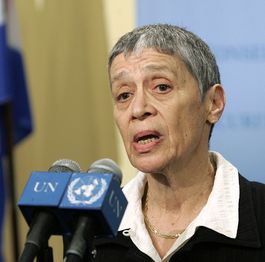
‘Israel will look like South Africa during the apartheid’ — Israeli ambassador Shalev

Gabriela Shalev, Israel’s ambassador to the UN from 2008-2010, was interviewed by Shalom Yerushalmi for Israel’s Hebrew daily, Maariv. Translation provided by Viktoria Lymar (Watching America).

September is already here, and professor Gabriela Shalev, Israel’s previous ambassador to the U.N., is more pessimistic than ever: “We have no tools, we’re in trouble.”

Gaby Shalev, formerly Israel’s ambassador to the U.N., has a joke on the occasion of the beginning of the school year. Someone turns to his mom and complains in the corner: “I don’t want to go to school. All the teachers hate me, and I hate them. All the students hate me, and I hate them.” “You don’t have a choice,” responds the mother. “You’re the principal.”

Israel has no choice as well. Neither does the former ambassador. She had to return daily to a place where she felt condemned and despised. Today, exactly one year after finishing her term, she’s sitting in her beautiful house in Even Yehuda, still overcome by fear. September is in the doorway, and she sees that Israel will be engulfed in the wave of an unprecedented political tsunami, at the end [of which] Israel will be thrown outside of the fence, subject to heavy sanctions and boycotts.

After taking off the diplomat suit, Shalev speaks eloquently and daringly, trying to confront the failures of public relations, acknowledging weaknesses and mistakes and even how she was fundamentally unsuitable for the role she was asigned to.

“Operation Cast Lead [the Gaza War] broke out. The Netanyahu government came to power, the talks with the Palestinians were stopped, the Goldstone report loomed into prominence, and the Marmara affair struck waves in the world,” analyzes Shalev. “Add to this the rewarding diplomatic effort of the Palestinians and Arab countries, and you’ll fathom why Israel is at a political nadir in the U.N. that we have never before been driven to. The U.N. is a drainage collector of all the hostility toward Israel and the global delegitimization of Israel. There, they already don’t recognize our right to exist. These days are the gravest of all you can possibly recollect.”

But the United States is with us.

“Not precisely. We’re going from bad to worse, and losing the United States as well on the way. U.S. Ambassador Dan Shapiro may say that relations are steadfast, strong and good, but this is no longer the same type of relationship and support. A rapport between the leaders is not the most important thing, but even that is nonexistent. Obama is not opening his arms to us. He’s different. In my view, this is very impressive. Distant, noble. He is a cold and rational person. He thinks unusually. Esther Brimmer, Clinton’s assistant secretary of state, told me once, “Help us to help you.” In short, these are not the days of John Bolton, who was the American ambassador to the U.N., but everybody thought he was the Israeli delegate.

What has changed?

“You should comprehend the totality of the new interests of the United States. It wants to be the leader of the world, not to isolate itself from it. Ambassador Susan Rice remarked that the U.N. is not perfect, but it’s impossible [to do] without it. There is new black elite in America today: Barack Obama, his wife Michelle, Susan Rice, Esther Brimmer who is very close to the president and the others. Everyone went to Harvard. They became very associated with the blacks from Africa, from the islands. Susan Rice became attached to them, socially and politically. We remained outside. We are the separatists, we help neither our friends nor ourselves.”

What’s going to happen in September?

“It’s terrifying. I don’t call this ‘the black September’ only because my son was born in September, but the state of affairs is serious. The president of the [General] Assembly will be Abdelaziz al-Nasser, Qatar’s ambassador to the U.N. He used to be my friend, despite Qatar being extremely against us. The president of the Security Council (which changes according to monthly rotation) will be the Lebanese ambassador. From our standpoint, that is an intolerable condition. They are chairing meetings, bringing up proposals, setting the agenda, gaining control of the whole show.

Meanwhile, there are no talks between us and the Palestinians, there is an absolute standstill. Sept. 20 may yield a resolution for the recognition of the Palestinian state within 1967 borders. There’s no way it won’t be accepted.

At a conference of experts organized by the Knesset’s Foreign Affairs and Defense Committee last May, you noted that “As soon as the declaration on the disputable territories is received, the Yesha areas [West Bank] will not be considered as anything other than territories under occupation.”

“It is actually beyond that. Several of my fellow jurists comment that with the declaration, we won’t be regarded as an occupying power but instead, an invading force. This involves international sanctions, and they have fateful significance. Should the Palestinians be admitted as a member state in the U.N. through the Security Council, — we’re in complete trouble.”

Aren’t the Americans going to exercise their veto?

”The Americans are not our puppets. They are not in our pocket. You should remember that sanctions could be imposed on us even without agreement in the Security Council. The matter is based on the Resolution 377, adopted under the name ‘Uniting for Peace.’ Whatever will happen after the declaration, Israel will look like South Africa during the apartheid.”

Facebooktwittermail

Obama is about to squander an historic opportunity

Gideon Levy writes:

What is the American president going to say to his citizens? What will he say to the citizens of the world? How will he rationalize his country’s opposition to recognizing a Palestinian state? How will he explain his position, which runs counter to the position of the enlightened – and less enlightened – world?

And above all, what will Barack Obama say to himself before he goes to bed? That the Palestinians don’t deserve a state? That they have a chance to get it through negotiations with Israel? That they do not have equal rights in the new world that we thought he was going to establish? Will he admit to himself that, because of opportunistic election considerations – yes, Obama is now being exposed as quite an opportunist – he is also harming his country’s interests as well as the (real) interests of Israel, and is acting against his own conscience too?

It is difficult now to understand Obama’s America. The man who promised change is turning out to be the father of American conservatives. With regard to Israel, there is no difference between him and the last of the celebrants at the Tea Party. We did not expect a great deal from Hillary Clinton; she can continue to recite hollow speeches about negotiations-shmegotiations – but Obama?

Et tu, Brute? After all, in your Cairo speech you promised a new dawn for the Muslim world, you promised a new America to the Arab world. And what came of this? The same old American wolf – which blindly and automatically supports every whim of Israel’s to such an extent that it is not clear which is the world power and which is the protectorate – and not even dressed in sheep’s clothing. The riddle remains unsolved: How is it that the supposedly new America is continuing to sing the same old songs from its evil past? How is it that Obama is behaving as if he does not understand that the Palestinians will no longer agree to live another four decades without civil rights, certainly not in view of all that is taking place around them in the awakening Arab world?

The riddle remains unsolved because it is difficult to comprehend how a black president, who believes in justice and equality, can bow down with such unbearable lightness to a right-wing government in Israel, to narrow election considerations in America, and to Jewish and Christian lobbies. It is difficult to comprehend how his America does not understand that it is shooting itself with a lethal bullet in the heart by supporting the Israeli refusal to make peace. After all, deep in his heart this American president knows that the Palestinians’ demand is justified because they too are worthy, finally, of becoming independent – and that Israel supports occupation. Why does one have to wait for the book of memoirs that he will surely write one day in order to hear this? He knows that the Arab Spring, that erupted to a certain extent in the wake of his promising Cairo speech, will now turn its anger and hatred toward America, once more toward America, simply because of its insistent opposition to Palestinian freedom.

Obama is also supposed to know that concern for Israel’s future, and genuine friendship toward Israel, must include support for the establishment of a Palestinian state. That is the only way to neutralize the explosive fuse that is going to set off the entire region, against Israel and against the United States. He also knows that America’s stance against the entire world will once again arouse the hostility of the world against the U.S. leader. And all of that – for what? For a handful of votes in the next elections. That cannot be considered an excuse on the part of someone who was seen as so promising a leader with such a highly developed awareness of history. A person who sells his country’s interests and his own weltanschauung during his first term of office will display similar opportunism during the second term.

How pathetic is the vision of the two American emissaries who are once again shuttling back and forth now in the region and distributing threats. And to whom? To the Palestinians who are turning to a new diplomatic route, but not to the Israeli government for its destructive refusal. How pathetic it is to see Dennis Ross, the eternal American Mr. Negotiations of almost all its administrations, scuttling around with nothing to do between Ramallah and Jerusalem as he has been doing for decades. That is the old, bad America, as if there were no Obama.

The American president this week has the historic opportunity of improving the status of his country, of justifying retroactively the Nobel Prize for Peace that he was awarded, of demonstrating real commitment to imposing peace in the most dangerous region for the fate of the world, and of showing genuine concern for the well-being of Israel – but what do we get instead?

George Bush. George Bush for the poor.

Facebooktwittermail

U.S. envoys’ paper emboldens Abbas to go before U.N.

The Los Angeles Times reports:

A paper special U.S. peace envoys David Hale and Dennis Ross presented to Palestinian Authority President Mahmoud Abbas on Thursday that was supposed to sway him away from going to the United Nations was what caused Abbas to take a final stand in favor of going, according to Nabil Shaath, a member of Abbas’ Fatah Central Committee.

Abbas told the Palestinian people on Friday that he is going to the Security Council to ask for membership in spite of strong U.S. objections and attempts to have him change his mind.

Shaath, speaking in Ramallah on Saturday, said the U.S. paper Hale and Ross had presented to Abbas when they met him at his headquarters and that was supposed to get him to decide against going to the U.N. has actually increased his resolve to go.

“It was the last straw” that got Abbas to take the decision in favor of going to the U.N. to ask for membership, Shaath said. “It seems that it [the paper] was designed to be rejected,” he said.

The American paper, Shaath said, was worse than a statement the U.S. had wanted the Middle East quartet — the U.S., the U.N., Russia and the European Union — to adopt two months ago and which the quartet members had then rejected.

The U.S. paper, he said, referred to the controversial settlements Israel had been building on Palestinian land occupied since 1967 as “demographic changes.” This, he said, would actually legalize the settlements, which the entire world, including the U.S., had so far considered as illegal.

Facebooktwittermail

White House debates who it has the ‘right’ to kill

The New York Times reports:

The Obama administration’s legal team is split over how much latitude the United States has to kill Islamist militants in Yemen and Somalia, a question that could define the limits of the war against Al Qaeda and its allies, according to administration and Congressional officials.

The debate, according to officials familiar with the deliberations, centers on whether the United States may take aim at only a handful of high-level leaders of militant groups who are personally linked to plots to attack the United States or whether it may also attack the thousands of low-level foot soldiers focused on parochial concerns: controlling the essentially ungoverned lands near the Gulf of Aden, which separates the countries.

The dispute over limits on the use of lethal force in the region — whether from drone strikes, cruise missiles or commando raids — has divided the State Department and the Pentagon for months, although to date it remains a merely theoretical disagreement. Current administration policy is to attack only “high-value individuals” in the region, as it has tried to do about a dozen times.

But the unresolved question is whether the administration can escalate attacks if it wants to against rank-and-file members of Al Qaeda in the Arabian Peninsula, based in Yemen, and the Somalia-based Shabab. The answer could lay the groundwork for a shift in the fight against terrorists as the original Al Qaeda, operating out of Afghanistan and Pakistan, grows weaker. That organization has been crippled by the killing of Osama bin Laden and by a fierce campaign of drone strikes in the tribal regions of Pakistan, where the legal authority to attack militants who are battling United States forces in adjoining Afghanistan is not disputed inside the administration.

Facebooktwittermail

Rights groups rally to oppose U.S. aid to Uzbekistan

The Washington Post reports:

Human rights groups are lining up to pressure Congress not to authorize the provision of U.S. military aid to the Central Asian country of Uzbekistan, even though such assistance could prove crucial to getting supplies into and out of Afghanistan.

With the Obama administration weighing whether to request a waiver that would allow military aid to Uzbekistan for the first time since 2005, the groups recently sent a letter to members of the Senate pleading with them to oppose any such move, saying, “Uzbekistan’s status as a strategic partner to the United States should not be allowed to eclipse concerns about its appalling human rights record.”

The issue of military aid to Uzbekistan is a complicated one, but goes to the heart of the U.S.-led military campaign in Afghanistan. Uzbekistan has been prohibited from receiving military aid since government security forces there massacred demonstrators six years ago, and the authoritarian state has carried out a host of human rights abuses since that time.

For Washington, however, the government of Islam Karimov matters more now than perhaps at any other time in the history of their relationship.

U.S. military officials remain leery that Pakistan, a sometimes fickle ally, could cut off its supply routes to American troops in Afghanistan — as it has done for limited stretches in the past. And if that happens, Uzbekistan becomes the best transhipment point into the war zone.

Facebooktwittermail

How can Israel survive without growing up?

“Which prosperous ally gets $3 billion a year in aid, and a veto power over America’s entire Mid-East foreign policy? Which ally refuses to cooperate with its military and political protector – even to the point of humiliating a duly elected American president? Which ally violates the Non-Proliferation treaty and manages to get its super-power protector to maintain total silence on this glaring fact? Which ally is threatening conventional warfare if its own nuclear monopoly in the region is in any way threatened?” asks Andrew Sullivan.

“Israel is the exception to every rule. And its intransigence is beginning to force the US toward a horrible choice between allying ourselves with the tectonic democratic forces in the region, or backing a fundamentalist-dominated state bent on expansion and war.”

Sullivan hasn’t turned into a fringe anti-Zionist blogger. He’s merely echoing views that are expressed much more freely in Washington than mainstream media reports generally reveal.

Robert Gates, having served as defense secretary for both presidents Bush and Obama, clearly wasn’t a political maverick when he ran the Pentagon, yet his assessment of Israel was no less blunt than Sullivan’s.

As Bloomberg columnist Jeffrey Goldberg recounted last week:

In a meeting of the National Security Council Principals Committee held not long before his retirement this summer, Gates coldly laid out the many steps the administration has taken to guarantee Israel’s security — access to top- quality weapons, assistance developing missile-defense systems, high-level intelligence sharing — and then stated bluntly that the U.S. has received nothing in return, particularly with regard to the peace process.

Senior administration officials told me that Gates argued to the president directly that Netanyahu is not only ungrateful, but also endangering his country by refusing to grapple with Israel’s growing isolation and with the demographic challenges it faces if it keeps control of the West Bank. According to these sources, Gates’s analysis met with no resistance from other members of the committee.

Gates has expressed his frustration with Netanyahu’s government before. Last year, when Vice President Joe Biden’s visit to Israel was marred by an announcement of plans to build new housing units for Jews in East Jerusalem, Gates told several people that if he had been Biden, he would have returned to Washington immediately and told the prime minister to call Obama when he was serious about negotiations.

Even so, having thoroughly alienated himself from the Obama administration, who does Netanyahu turn to in a desperate situation?

Former Director of the Mossad Efraim Halevy, speaking in New York on Monday night, described the predicament the Israeli prime minister found himself in on Friday as protesters in Cairo were storming the Israeli embassy and six Israelis remained trapped inside.

[Netanyahu] turned to one man, to the President of the United States, and he spoke to him. And the president of the United States, without having much time to consult with Congress, and with the media, and with the analysts and with all of the other people who have to be consulted on major and grave decisions. He took a decision to take up the telephone and get on the line with the powers that be in Egypt, and get them to order the release of these six people, and the detail of the Egyptian commando forces entered and saved them.

I think that this decision by President Obama was a unique decision in many ways. Because I don’t have to tell you, and this was just said time and time and over again this afternoon/this evening, that the United States is not in a position the way it was many years ago in the Middle East, it has its problems, it has its considerations, and rightly so. But I believe the leadership that the President of the United States showed on that night was a leadership of historic dimensions. It was he who took the ultimate decision that night which prevented what could have been a sad outcome—instead of six men coming home, the arrival in Israel of six body bags.

And I want to say to you very openly and very clearly that had there been six body bags, there would have been a much different Israel today than we have been used to seeing over recent years. This would not have been one more incident, one more operation, one event. And the man who brought this about was one man and that was President Barack Hussein Obama.

And I believe it is our duty as Israelis, as citizens of the free world, to say, not simply thank you President Obama, but also we respect you for the way and the manner in which you took this decision.

Note first the ominous way in which Halevy says that had these Israelis died this would not have been “one more incident” — unlike, say, the deaths of six Egyptian border guards shot by Israelis in late August, or the deaths of nine Turkish activists killed by Israeli commandos on board the Mavi Marmara just over a year ago.

But note also that Israel, while pursuing what a senior Israeli official describes as a “porcupine policy” to defend itself, when caught in this particular corner found its prickles of no use and instead was compelled to turn to its only reliable protector, the United States.

As Tzipi Livni, the head of the Kadima Party, told Goldberg: “For Israelis, when they wake up in the morning and ask themselves, what is the general situation today, the litmus test for them is the health of the relationship between Israel and the United States.”

And thus we see the contradiction which is Israel — forever pumping itself up, flexing its muscles and showing its neighbors that no one should risk messing with the mighty Zionist state, yet all the while knowing that without the protection of the United States, Israel’s survival would depend on a revolutionary transformation.

Absent American protection, Israel, for the first time, would have to seriously take on the challenge of getting along with its neighbors and not, as it has for the last two decades, simply use diplomacy as a facade behind which it can pursue its policies of territorial expansion.

Is the West’s spoiled child ready to grow up? And is the United States ready to see that its own patronage is what has allowed the Jewish state to trap itself in such a prolonged adolescence?

Facebooktwittermail