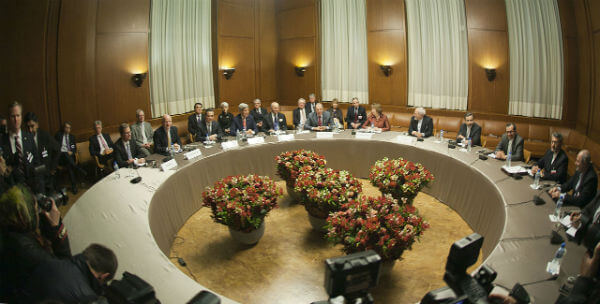
Huffington Post reports: As Syria peace talks begin in Geneva, America’s key partners on the ground feel neglected, excluded and increasingly receptive to a man who says the U.S has the war-torn country all wrong — Russian President Vladimir Putin.
Putin’s government this week used the process of deciding who would attend the negotiations to endear Russia to the Syrian Kurds, whose militia has chalked up high-profile victories against the self-described Islamic State group with U.S. air support.
Moscow repeatedly demanded that the talks should include the most powerful Kurdish political organization, the radically leftist PYD. Its co-president Salih Muslim said this week that the party — controversial among Western and Muslim-backed Syrian Arab nationalist groups — did not receive an invitation. The Middle East Eye reported Friday that he stopped by Geneva and then promptly left.
Conversely, Washington stayed relatively silent.
The Kurds now feel that though they have become close enough to the United States to host America’s Special Operations troops, receive U.S. weapons through a Pentagon-vetted program for an Arab-Kurdish rebel force and share Islamic State targets with American intelligence, the Obama administration abandoned them in the run-up to the high-profile talks, according to analysts close with Kurdish leaders.
“These talks started in a very troublesome manner with the Kurds not being there,” said Mutlu Civiroglu, a Washington-based analyst who monitors the Syrian Kurds. “Kurds being the pioneers of the fight against ISIS, having lost more than 4,000 fighters, were sure they were going to be invited.”
Michael Werz, a senior fellow at the Center for American Progress who just returned from a major Kurdish conference in Brussels, told The Huffington Post the current view among some in the PYD is, “we know that the Russians are going to betray us, but they’re the only ones actually lobbying for us to be part of the Geneva talks.”
“‘We are the only secular fighting force, we are the only movement giving freedom to women, and the United States doesn’t even stand up to the Turks when it comes to participating in the peace negotiations,” Werz added in his summing up of Kurdish sentiment. “‘Nobody is publicly supporting us, so what are we supposed to do?'”
The popularity of that thinking is a problem for Washington because it could bolster distrust among Syrian Kurds already nervous about their fledgling relationship with the U.S. [Continue reading…]
Category Archives: Obama administration
Senator calls on Obama administration to stop UN from letting Assad regime censor aid plans
BuzzFeed reports: Sen. Bob Casey has told the Obama administration he is “appalled” that the United Nations allowed the regime of Syrian President Bashar al-Assad to censor parts of a humanitarian aid plan, in a letter being sent to the State Department on Thursday and obtained in advance by BuzzFeed News.
The letter follows reporting by BuzzFeed News last week that the U.N. had changed parts of a humanitarian aid plan for Syria after consulting with the Assad regime, removing the words “besieged” and “sieged,” references to a de-mining program, and references to violations of international law.
The censorship came to light after revelations of extreme starvation in the Syrian town of Madaya, which has been besieged by regime forces.
Casey, a Democrat from Pennsylvania, is urging the State Department to “insist that UN-produced assessments and humanitarian aid plans accurately reflect conditions on the ground, not the political concerns of the Assad regime.” Casey’s letter, addressed to Secretary of State John Kerry and U.S. Ambassador to the U.N. Samantha Power, states that he is “appalled” by the reports that the Assad regime was allowed to censor parts of the document, which lays out a $3.1 billion aid plan. [Continue reading…]
‘Politics of fear’ threatens human rights around the globe
Human Rights Watch: The politics of fear led governments around the globe to roll back human rights during 2015.
In the 659-page World Report 2016, its 26th edition, Human Rights Watch reviews human rights practices in more than 90 countries. In his introductory essay, Executive Director Kenneth Roth writes that the spread of terrorist attacks beyond the Middle East and the huge flows of refugees spawned by repression and conflict led many governments to curtail rights in misguided efforts to protect their security. At the same time, authoritarian governments throughout the world, fearful of peaceful dissent that is often magnified by social media, embarked on the most intense crackdown on independent groups in recent times.
“Fear of terrorist attacks and mass refugee flows are driving many Western governments to roll back human rights protections,” Roth said. “These backward steps threaten the rights of all without any demonstrated effectiveness in protecting ordinary people.”
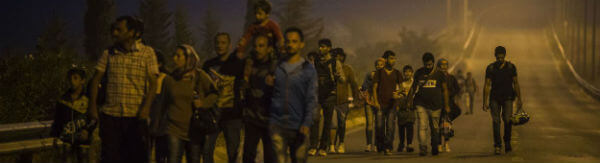
Significant refugee flows to Europe, spurred largely by the Syrian conflict, coupled with broadening attacks on civilians in the name of the extremist group Islamic State (also known as ISIS), have led to growing fear-mongering and Islamophobia, Human Rights Watch said. But as European governments close borders, they are reviving old patterns of shirking responsibility for refugees by passing the problem to countries on Europe’s periphery that are less equipped to house or protect refugees. The emphasis on the potential threat posed by refugees is also distracting European governments from addressing their homegrown terrorist threats and the steps needed to avoid social marginalization of disaffected populations.
Policymakers in the United States have used the terrorism threat to try to reverse recent modest restrictions on intelligence agencies’ ability to engage in mass surveillance, while the United Kingdom and France have sought to expand monitoring powers. That would significantly undermine privacy rights without any demonstrated increase in the ability to curb terrorism. Indeed, in a number of recent attacks in Europe, the perpetrators were known to law enforcement authorities, but the police were too overwhelmed to follow up, suggesting that what’s needed is not more mass data but more capacity to pursue targeted leads, Human Rights Watch said.
“The tarring of entire immigrant or minority communities, wrong in itself, is also dangerous,” Roth said. “Vilifying whole communities for the actions of a few generates precisely the kind of division and animosity that terrorist recruiters love to exploit.” [Continue reading...]
Israel feels the heat of U.S., EU and U.N. criticism
Reuters reports: The United States, European Union and the United Nations have issued unusually stern criticism of Israel, provoking a sharp response from Prime Minister Benjamin Netanyahu and raising Palestinians’ hopes of steps against their neighbor.
U.N. Secretary-General Ban Ki-moon on Tuesday described Israel’s settlements as “provocative acts” that raised questions about its commitment to a two-state solution, nearly 50 years after occupying lands the Palestinians seek for a state.
Ban also laid some of the blame for four months of stabbings and car rammings by Palestinians at Israel’s door, saying “as oppressed peoples have demonstrated throughout the ages, it is human nature to react to occupation, which often serves as a potent incubator of hate and extremism”.
Netanyahu’s response was quick and furious. Ban’s remarks “give a tailwind to terrorism”, he said, and ignore the fact “Palestinian murderers do not want to build a state”. [Continue reading…]
Trump’s appeal as the antithesis of Obama
David Axelrod writes: The Republican base is infuriated by Mr. Obama’s activist view of government and progressive initiatives, from health care reform to immigration, gay rights to climate change.
Beyond specific issues, however, many Republicans view dimly the very qualities that played so well for Mr. Obama in 2008. Deliberation is seen as hesitancy; patience as weakness. His call for tolerance and passionate embrace of America’s growing diversity inflame many in the Republican base, who view with suspicion and anger the rapidly changing demographics of America. The president’s emphasis on diplomacy is viewed as appeasement.
So who among the Republicans is more the antithesis of Mr. Obama than the trash-talking, authoritarian, give-no-quarter Mr. Trump?
His bombast allows no room for nuance or complexity. He proudly extols his intolerance as an assault against “political correctness,” and he vows to bring the world to heel, from Mexico to China to Syria and Iraq.
Mr. Trump has found an audience with Americans disgruntled by the rapid, disorderly change they associate with national decline and their own uncertain prospects. Policies be damned, who better to set things right than the defiant strong man who promises by sheer force of will to make America great again?
Yes, we can? Hell, no!
Just leave it to me, Mr. Trump says. Yes, I can!
The robust condemnations Mr. Trump has received from media and political elites have only intensified the enthusiasm of his supporters, many of whom feel disdained and forgotten by the very same people who regularly mock and chide their man for his boorishness. To his base, he’s a truth-teller, thumbing his nose at conventional politicians, whether they are liberal or conservative. Rebukes from fact checkers and purveyors of civil discourse? They’re just so much establishment claptrap.
Relentlessly edgy, confrontational and contemptuous of the niceties of governance and policy making, Mr. Trump is the perfect counterpoint to a president whose preternatural cool and deliberate nature drive his critics mad. [Continue reading…]
America shouldn’t remain indifferent to the crisis in Europe
Natalie Nougayrède writes: In 1947 George Marshall, the US secretary of state, went to Europe. He was shocked by what he saw: a continent in ruins, and rampant hunger. The mood in Paris, Berlin and other capitals was resigned and doom-laden. On returning to Washington, Marshall told President Truman that something dramatic needed to be done – and very soon. The initiative would have to come from Washington, he said.
On 5 June, in a speech to students at Harvard, Marshall announced his European recovery programme. It became, in the words of the British politician Ernest Bevin, “a lifeline to sinking men”. The Marshall plan not only helped Europe back on its feet, it laid the groundwork for the cooperation that ultimately led to the creation of the European Economic Community, the European Union’s predecessor.
In Davos this week Joe Biden, the US vice-president, may well have had a shock similar to Marshall’s. Of course today’s gloom in Europe is not comparable to the devastation left by the second world war – but alarmist language is being heard all the same. Manuel Valls, the French prime minister, has spoken of a risk of European “dislocation”. “Europe has forgotten that history is fundamentally tragic,” he said. Joachim Gauck, the German president, also used the word “tragic” when describing Europe’s difficulties over the refugee crisis.
Europe today is in such a shambles that it is not absurd to ask whether the US should again do something about it, or whether the old continent even matters to American strategic interests any more. The answer to both questions should be a resounding “yes”.
It is obviously unrealistic to think the US is likely to repeat the kind of assistance it deployed in 1947. But the US urgently needs to seriously re-engage on European matters. Failing that, it risks seeing the European project unravel, with more disorder pouring into and across the continent and, ultimately, the loss of key allies.
Europe is currently struggling with the danger of Brexit and major security threats (which include terrorism, and Russian aggression), as well as the political fallout of the refugee crisis. It’s not that US action in itself would miraculously solve all these problems, but its aloofness has arguably contributed to making them worse. [Continue reading…]
Update in response to comments: Natalie Nougayrède’s reference to the Marshall Plan seems to have led readers to conclude the lifeline she’s calling for is financial. After all, that’s what foreigners always do, isn’t it: beg for money from the U.S.!
Actually, her first appeal is for Obama to be forthright in making it clear that the U.S. has a strong interest in Britain remaining in the EU. The British naively and nostalgically cling on to the UK’s (one-sided) “special relationship” with the U.S.. A wake up call from Washington might alienate a few people, but I think they’d be outnumbered by those who recognized that this kind of counsel was well-intentioned and realistic. Moreover, departure from the EU would have much larger repercussions than diminishing the value of U.S.-UK relations. It may well lead to the rapid breakup of the UK as Scotland seeks swift independence so that it can remain in the EU.
How much would this piece of political engagement cost the U.S.? Nothing.
Second, she calls for “more US political leverage” in supporting a common European defense policy. Cost? Nothing.
Third, “the US cannot continue to treat the refugee crisis destabilising Europe as if it were a far-flung problem that doesn’t affect its direct interests. Around 4.5 million refugees have fled the Syrian civil war. The US has taken just 2,600.”
Refugees are not only fleeing from Syria but also Iraq and Afghanistan (and many other countries).
Instability across the Middle East cannot be attributed solely to American meddling and yet in the last two decades there was no single action that had a more destabilizing effect than the decision to invade Iraq.
Americans who supported the war and many of those who opposed it are now apparently unified in believing that, like a hit-and-run driver, the best course of action is to flee the scene of the crime.
Certainly, those who argue that America’s military interventions invariably seem misguided have plenty of evidence to support their argument.
But when it comes to the issue of helping Europe handle the refugee crisis, the primary impediment in the U.S. is not financial; it’s Islamophobic cowardice.
After the United States had finished carpet-bombing Vietnam and dousing its jungles with Agent Orange and the war’s failure had become undeniable, part of the aftermath of that unconscionable and delusional intervention was that there was sufficient decency in the U.S. to accept what eventually amounted to 1.3 million refugees settling here.
For the U.S. to now step up and welcome tens or even hundreds of thousands more refugees from the Middle East is not to make some unreasonable demand on American generosity. It’s part of paying the price of war.
It’s one thing to argue in advance against meddling in the affairs of other countries and on that basis to promote a relatively benign insularity, but when the meddling has been rampant and long-running, then insularity is just another name for irresponsibility. The United States doesn’t have the option of becoming Switzerland.
Having said that, Nougayrède’s appeal here is less blaming and by no means strident: it is for the U.S. to recognize that it really does have a stake in Europe’s future and it should not remain a mute bystander watching the European project fall apart.
Is that too much to ask?
Origins of the Syrian Democratic Forces
Aron Lund writes: The Syrian Democratic Forces, or SDF, is a coalition of Kurdish, Sunni Arab and Syriac Christian fighters, but is completely dominated by its Kurdish element, which is a powerful and well organized militia known as the Popular Defense Units, YPG, with an all-female branch called the Women’s Defense Units, or YPJ. These organizations, in turn, are Syrian front groups for the Kurdistan Workers’ Party or PKK. The other militias involved in the Syrian Democratic Forces are either long-standing PKK allies or proxies, such as the armed wing of the Syriac Union Party, or more recent allies drawn from the Sunni Arab tribal landscape in this part of Syria and from the remains of small Sunni Arab rebel groups crushed by the so-called Islamic State.
The coalition as a whole receives American air support for operations against Islamic State, as did the YPG/J before it. That started in the Battle of Kobane that began in autumn 2014, which was enormously successful — really the first major battlefield defeat inflicted on Islamic State. It has provided the template for US-PKK cooperation. In addition, the Pentagon has picked out a number of these little Arab groups that work under the SDF umbrella as favored recipients of arms and support. It terms them, collectively, the Syrian Arab Coalition, though no one else seems to use that name.
The idea is to use the SDF as an incubator to breed Sunni Arab militias able to take over where Kurdish territory ends and push deep into Islamic State’s heartland, which is in the Sunni Arab tribal region that connects Syria with Iraq. Relying on the Kurds in that region would create resentment among other Syrian and regional allies, and it would risk pushing locals into the arms of the jihadis. Also, it’s not obvious that the Kurds are interested in dying for U.S. interests that far away from their own home areas. They have many other priorities, chief among them to try to secure their population, to keep Turkey out of Syria and to link the Kurdish enclaves in Kobane and Efrin, which are separated by territory held by Islamic State and rival Turkey-backed Sunni Arab rebels north of Aleppo. In those battles in northwestern Syria, the SDF fighters seem to have received some level of Russian support, but they do not enjoy any U.S. backing – though they like to pretend they do, in order to sell their war on Turkey’s allies as part of the “War on Terror.” Of course, this has embarrassed the Pentagon in front of other American allies, but what can be done? All sides in Syria, including the United States, must balance between allies that do not fully share their own interests. [Continue reading…]
Drone strikes: The brand of detached warfare that Obama made his own
The Guardian reports: Faheem Qureshi’s uncles sat with their neighbors, chatting, cracking jokes and sipping tea, in their family’s lounge for male guests. Qureshi, almost 14, stood nearby, bored and restless, thinking about when he could go to the nearby playground where he and the other Ziraki village kids played badminton and cricket.
It had been a long day – Friday prayers, a food shopping errand at his mother’s behest, hosting – but also a happy occasion, as people stopped by to welcome an uncle home to North Waziristan, in tribal Pakistan, from a work excursion to the United Arab Emirates. Then he heard a sound like a plane taking off.
About two seconds later, the missile punched a hole through the lounge. Qureshi remembers feeling like his body was on fire. He ran outside, wanting to throw water on his face, but his priority was escape. The boy could not see.
This was the hidden civilian damage from the first drone strike Barack Obama ever ordered, on 23 January 2009, the inauguration of a counter-terrorism tactic likely to define Obama’s presidency in much of the Muslim world. It was the third day of his presidency. [Continue reading…]
SEC is criticized for lax enforcement of climate risk disclosure
The New York Times reports: As recently as 2011, shares in Peabody Energy, the world’s biggest private sector coal company, traded at the equivalent of $1,000. Today, they hover around $4 each. Over that time, investors who held the stock lost millions.
Peabody, like other coal companies, has been hammered as cheap natural gas erodes the demand for coal. But concerns about climate change are also an issue for the company as customers and investors turn away from fossil fuels.
Peabody saw this coming. Even as the company privately projected that coal demand would slump and prices would fall, it withheld this information from investors. Instead, Peabody said in filings with the Securities and Exchange Commission that it was not possible to know how changing attitudes toward climate change would affect its business.
Peabody’s double talk was revealed as part of a two-year investigation by the New York attorney general. In a settlement in November, Peabody agreed that it would disclose more about climate change risks in its regular filings with the S.E.C.
In theory, however, Peabody should have been making such disclosures all along. [Continue reading…]
A nation of field mice where fear runs rampant
In an article titled, “One Nation Under Fear,” Mark Edmundson writes:
How did a people who settled a continent, created enormous wealth, and fought and (mostly) won war after war devolve into a nation of such tremulous souls? And how did it happen so quickly? Where once there was the generation of the Second World War, ready to leave home and fight fascists on the far sides of the world, we now have a nation that at times seems composed largely of field mice, prone to quiver when they detect an unfriendly shadow.
In the latest wave of mass hysteria, the barriers of entry to the United States imposed on people with darker skins will once again be raised higher.
The Visa Waiver Program Improvement and Terrorist Travel Prevention Act of 2015 does not make any mention of skin color, yet the officials who are responsible for enforcing this law will inevitably notice skin color when determining if it needs to be applied. Since the law will apply, for instance, to British citizens who are also Iranian nationals simply by virtue of having an Iranian father — such an individual might have been born in the UK, have never visited Iran and not possess an Iranian passport — the way in which they will get flagged for questioning will most likely be because they are Middle Eastern in appearance.
Ostensibly, the law was designed to block U.S. entry to Europeans who have joined ISIS.
Let’s imagine how that would work: A British citizen who fought with ISIS in Syria has now returned home and then decides to fly to New York. He shows up at the airline check-in desk, presents his passport and the clerk, seeing the stamp entered when he visited Syria, says: “Sorry mate, no trip to America for you!” The thwarted traveler responds: “Damn that Terrorist Travel Prevention Act!” … except, of course, such an individual would in reality neither declare nor present any evidence that they had been in Syria or belonged to ISIS. The terrorist would — surprise, surprise — break the rules.
In truth, this isn’t a serious piece of legislation. Those who drafted and passed this law were engaged in a piece of political theater. Indeed, anyone who can coin a phrase like “terrorist travel prevention” would be better employed at The Onion than in the U.S. Congress.
The only people who will be reliably prevented from travel are those innocently trying to do what most travelers do — visit relatives and friends; engage in tourism or business.
The terrorists are not so dumb that they would run afoul of such restrictions — just as no terrorist would subvert his own objectives by tangling himself in the vetting process imposed on asylum seekers. Continue reading
UN envoy says Syria peace talks may be delayed, pressure needed
Reuters reports: Internationally brokered talks between Syria’s government and opposition groups due to start on Jan. 25 may be delayed, but major powers must keep up the pressure to bring participants to the table, the United Nations envoy said on Wednesday.
A Syrian opposition council backed by Saudi Arabia said on Wednesday it will not attend the negotiations in Geneva with the government if a third group takes part, a reference to a Russian bid to widen the opposition team.
U.N. Special Envoy Staffan de Mistura spoke in an interview with broadcaster CNN, hours after U.S. Secretary of State John Kerry and Russian Foreign Minister Sergei Lavrov held talks in Zurich despite no sign of agreement on who should represent the opposition. [Continue reading…]
The ugly truth: Defeating ISIS will take decades
David Ignatius writes: Allies and adversaries see U.S. forces living in secure compounds, eating fancy chow and minimizing their exposure to potential terrorist assaults. The United States may say it’s fighting alongside its allies, but on the ground, it often looks different. Actually living and fighting alongside our partners in Iraq and Syria will be much more dangerous, but it may be the only way to build a solid alliance that can someday eradicate the extremists.
Contrast these stern admonitions from the commanders who have lived through the Iraq and Afghanistan conflicts with the upbeat talk from political leaders. President Obama pledged that “priority number one is protecting the American people and going after terrorist networks” and then said a few moments later that these networks “do not threaten our national existence.” That sends a mixed message — one that Hillary Clinton has echoed in her campaign.
Republican rants about the Islamic State are even worse, in that they promise total victory without suggesting the level of commitment and sacrifice involved. The GOP responses sound tough, from Donald Trump’s “bomb the hell out of [the Islamic State]” to Sen. Marco Rubio’s (Fla.) assurance in last week’s debate that “the most powerful military in the world is going to destroy them.”
The next president is going to inherit an expanding war against a global terrorist adversary. The debate about how best to fight this enemy hasn’t even begun. [Continue reading…]
The opening up of Iran will mean a return to barbarity as usual
Paul Mason writes: “This is a good day,” said Barack Obama, announcing the end of nuclear sanctions against Iran, “because, once again, we’re seeing what’s possible with strong American diplomacy.” The deal, accompanied by a prisoner swap and the release of frozen Iranian funds, signals the end of Iran’s nuclear ambitions.
But it is not a triumph of “strong American diplomacy”. It is testimony to America’s weakness and incoherence, in the very region where it has concentrated its military and diplomatic force for decades. As for Iran, with the nuclear programme gone, and its iconic American prisoners released, normal levels of barbarity can now be resumed.
First, there is the ordinary repression: convicts – two-thirds of them drug dealers or drug users according to the UN – were being executed at the rate of three per day last year, the highest per-capita execution rate in the world. Then there’s the suppression of trade unions. Iran arrested 233 labour activists in the year to May 2015. All strikes and labour agitation are treated as threats to national security by the Revolutionary Guards, the hardline military force that enforces Islamic discipline at home while spearheading military operations abroad. Finally, there is the outright political repression that has left two presidential candidates from the “green” protests of 2009 – Mehdi Karroubi and Mir Hossein Mousavi – under house arrest, and hundreds of other human rights activists, lawyers, journalists and scientists detained.
As western businesses rub their hands at the prospect of renewed access to this market of 78 million consumers, it’s worth remembering what the purpose of all this repression is. Industry is militarised: huge swathes of the economy are owned by the Revolutionary Guards themselves. With their front companies de-listed and given new access to the international bank clearing system, many of the Guards’ leaders will now get very rich. The workforce, deprived of all basic rights to organise, their jobs totally precarious, and with 70% earning less than the official poverty level, will get the chance to be exploited by global capital, not just the Guards, the mullahs and their cronies.
You could lament all of the repression, yet still celebrate the Iran deal as a diplomatic achievement and de-escalation of conflict, if Washington was demonstrating any sign of a coherent regional policy. But it is not.
On the same day Obama lifted nuclear sanctions, he imposed a whole new set of sanctions on Iran for testing a long-range missile. At the same moment, Iran’s Lebanese proxy, Hezbollah, was fighting alongside its ally President Assad in Syria – against both Islamic State and the moderate opposition backed by America. Soldiers from Iran’s Quds force continue to prop up the Shia dominated government in Iraq. And the west’s regional ally, Saudi Arabia, continues to escalate its standoff with Iran after failing to scupper the nuclear deal by executing a Shia cleric.
If your brain is struggling to impose coherence on this picture of half-alliances, provocations and incessant death, that is no accident. Even those with intricate knowledge of the region cannot fathom what the Obama administration is trying to achieve. [Continue reading…]
U.S. prisoner swap may help Iran arm Assad
Josh Rogin writes: In exchange for the release of four American prisoners, the Barack Obama administration agreed to free seven Iranians in U.S. custody and stop trying to arrest 14 others, two of whom the U.S. government had accused of funneling weapons to the Bashar al-Assad regime and Hezbollah in Syria.
For years, Iran’s privately-owned Mahan Air has been using its planes to bring soldiers and arms directly to the Syrian military and the Lebanese terrorist group Hezbollah by flying them from Tehran to Damascus, according to the U.S. Treasury Department. In 2013, Treasury sanctioned Mahan’s managing director, Hamid Arabnejad, for overseeing the company’s efforts to evade U.S. and international sanctions and aiding the Iranian Revolutionary Guards Corps’ elite Quds Force.
“Arabnejad has a close working relationship with IRGC-QF personnel and coordinates Mahan Air’s support and services to the paramilitary group,” the Treasury Department said. “He has also been instrumental in facilitating the shipment of illicit cargo to Syria on Mahan Air aircraft.” [Continue reading…]
Was the Iran deal worth it?

Last July, after the Joint Comprehensive Plan of Action agreement on Iran’s nuclear program had been reached in Vienna, Shadi Hamid wrote: It was clear from the start of the uprising [in Syria] that Obama did, in fact, have a clear objective – minimizing U.S. involvement as much as possible. But there are other places, such as Iraq, where the Obama administration was pulled back in despite (or, more likely, because of) its best efforts. The unwillingness to rethink Syria strategy in any serious way has been reinforced by the momentum of the Iran negotiations. Why rock the boat and potentially provoke a major international incident, when progress was being made on Iran’s nuclear program? Why even take the chance with so much at stake? “Linkage,” moreover, was been built in to the policy process. As the journalist Josh Rogin noted: “All Syria proposals at State must go through the office of the undersecretary for political affairs, Wendy Sherman, who is also the administration’s lead negotiator over a nuclear deal with Iran.”
On the specifics of a deal, I tend to think, like many, that the U.S. made too many concessions, without getting enough in return. According to the New York Times, in the final days of talks, a television anchor on a hardline Iranian channel said: “The fact is, Obama needs this deal much more than we do.” She went on: “The American president needs a victory, and only a deal with Iran can give him that. They have retreated on several issues and compromised on their own red lines.” Whether or not this perception is fair, it’s a perception nonetheless, and perceptions drive behavior.
Others have noted that Iran, due to its deteriorating economy, needed a deal more than the U.S. did. This is almost certainly true. But while Iran may have needed it more, the U.S. wanted it more – or, at the very least, seemed like it did. Some of this, to be fair, was outside the U.S.’s control. The perception had already solidified throughout the region, drawing on 6 years of observing the Obama administration’s handling of various crises, most notably the backing down from stated “red lines” in Syria. Allies, such as Egypt, and enemies, such as Syria, have grown confident that we’ll blink first in a staring contest, in part because we usually do. This was why I was skeptical that any final deal could ever be the best possible deal. The administration has had tendency to misuse and/or underestimate its leverage in some of our most important bilateral relationships. As the negotiations wrapped to a close, there was no obvious way to address this. It was too late. We couldn’t change how Iran viewed the Obama administration.
There was a related asymmetry during the negotiations. As Pollack writes, “I don’t think that Iran values a nuclear deal as much as it does its positions in these various countries.” With us, it was the reverse: we cared less about Iran’s positions in various countries and more about its nuclear program. This, too, was built in to the talks.
Some are troubled that most people had strong opinions about the deal before reading the actual text of the agreement. One certainly hopes that legislators will eventually read at least some of it. But the specifics of the deal aren’t, ultimately, as important as the broader issues and implications, and those aren’t anywhere to be found in the text. Here, I tend to agree with my colleague Jeremy Shapiro who argued in April that that the devil wasn’t in the details. The details “really don’t matter.” He goes on: “At heart, this is a fight over what to do about Iran’s challenge to U.S. leadership in the Middle East and the threat that Iranian geopolitical ambitions pose to U.S. allies.”
In other words, your position on the Iran deal is likely to depend on how you view the Middle East and America’s role in it more broadly. If you see the Syrian civil war as a, or even the, core regional conflict, then you’re probably worried about the $100 billion in potential sanctions relief. Iran, even we assume it chooses butter over guns as American officials hope and uses, say, only 3 percent of that total, will have $3 billion more to prop up the Syrian regime and other regional allies and proxies. It also depends on your starting assumptions about the nature of the Iranian regime. Are Iranian leaders “rational,” and do you think it matters whether “moderates,” such as President Rouhani and Foreign Minister Zarif, are empowered over their “hardline” counterparts?
For me, at least one other issue comes into play, and it’s a factor which has pushed me to be more supportive of the Iran deal than I expected to be. It’s striking how little discussion there has been about what Iranians think and want. As small-d democrats, Americans should always at least take into account public opinion in other countries. Presumably, Iranians know their country better than American politicians do. According to opinion polls, a majority of Iranians favor a deal. We all saw the pictures of ordinary Iranians celebrating the framework agreement in April. This time around, the regime has been more careful, closing off public spaces, with hardliners warning of the dangers of Iran Deal-induced “happiness.” Importantly, as Nader Hashemi notes, “some of the most vociferous defenders of a nuclear deal with the West are Iranian civil society and human rights activists.” It makes little sense for us to say that an Iran deal will make progress on human rights less likely, when Iran’s own human rights activists seem to think the opposite. In a survey of 22 leading human rights activists, support for ongoing negotiations was “unanimous,” while over half believed that a deal would lead to a significant improvement in human rights in Iran. Of course, they could be wrong, but we shouldn’t bet on that.
To be sure, the link between a deal and the empowerment of Iranian reformers, as intuitive as it might seem, is far from guaranteed. As many have noted, conservatives may be just as likely to gain from a deal for any number of reasons. What seems inescapable, however, is that the failure of negotiations would have been a major, perhaps even decisive loss for Iran’s reformist trend. President Hassan Rouhani, who buoyed expectations with his come-from-behind election victory two years ago, has been losing popularity and goodwill. On human rights, he pledged to expand personal freedoms and broaden space for civil society. As for the economy, it can sputter along, as it has, but without sanctions relief, Rouhani’s hands are tied. His raison d’etre, then, depends on a successful deal. Without one, we would have likely had more of the same: conservatives in control and dominating the country’s politics. Now at the least there is a glimmer of possibility, even if the road toward substantive reforms remains a difficult one.
Taking these various, and very different, factors into account, the deal is, on balance, a mixed bag. I don’t think an Iran nuclear deal deserved the near-obsessive focus it received from this administration. Too much was subsumed and compromised due to the desire for a deal, an administration priority which took precedence over nearly everything else. Now that a deal has been concluded, U.S. officials may have more room to maneuver. Of course, the implementation of a deal will still require constant attention, to say nothing of the domestic fight which is still to come. But perhaps, at some point, the U.S. will be able to act and think beyond Iran’s nuclear program and re-focus attention on the broader issues and conflicts in which Iran plays a major role. The U.S. will now come under pressure to “compensate” (or overcompensate depending on your perspective). It will need to reassure skeptical Gulf allies that it will do more to counter Iran’s regional designs. I agree with Ken Pollack that the best place to do this is probably in Syria. As he writes: “In the aftermath of an Iranian nuclear deal, finally executing the Administration’s proclaimed strategy for Syria, may be the best and only way to regain control over the dangerous confrontation escalating between Iran and America’s Arab allies.”
Now that President Obama’s legacy, however controversial, is secure (both on domestic and foreign policy), he can afford to do the very things he wasn’t willing to do when Iran negotiations were the overwhelming focus. That doesn’t mean he will do them, but that’s where, I hope, the debate over a post-Iran deal Middle East can now turn.
Even after the deal was signed, Obama may have felt his hands remained tied on at least two counts: it remained to be seen whether Iran would follow through in implementing the requirements for sanctions to be lifted, and as we have now just learned, secret negotiations were still under way to secure the release of five Americans imprisoned in Iran. They have now been released and sanctions have been lifted.
One thing that no one was anticipating last July was the impact of Russia’s unforeseen intervention in Syria.
Iran’s president today tweeted:
Implementing #JCPOA not a detriment to any country. Our friends are happy & our rivals need not worry. We're no threat to any nation/state.
— Hassan Rouhani (@HassanRouhani) January 17, 2016
But stock markets across the Middle East just saw “£27bn wiped off their value” in anticipation of the new wave of Iranian oil flowing into an already flooded market.
Al Jazeera reports:
With the sanctions now removed, Iran is ready to increase its crude oil exports by 500,000 barrels a day, Deputy Oil Minister Amir Hossein Zamaninia was quoted as saying by the Shana news agency on Sunday.
Iran’s return to an already glutted oil market is one of the factors contributing to a global rout in oil prices, which fell below $30 a barrel last week for the first time in 12 years. Iran is the world’s fourth largest oil producer.
The administration sold the Iran deal by claiming that no deal would make another major war inevitable. The ongoing war in Syria was left out of the equation.
The question now is whether that war is any closer to ending or whether, on the contrary, its conclusion is even further away.
I’m inclined to believe that Shadi Hamid’s assessment last July — that Obama’s objective has always been to minimize U.S. involvement in Syria as much as possible — is just as accurate today as it was then.
If Obama is preoccupied with his legacy, he should be asking himself whether his presidency will be remembered more for what he accomplished through negotiations with Iran or more for what he failed to do as the rest of the region unraveled.

In #Iran today ,good news of sanctions being lifted competes with bad news of MASSIVE disqualifications of candidates for Majlis.
— Arash Azizi (@arash_tehran) January 17, 2016
International sanctions against Iran lifted
The Washington Post reports: Iran reentered the global economy Saturday as years of crippling international sanctions ended in exchange for the verified disabling of much of its nuclear infrastructure.
For Iran, implementation of the landmark deal it finalized with six world powers last summer means immediate access to more than $50 billion in long-frozen assets and freedom to sell its oil and purchase goods in the international marketplace. Tehran has hailed the deal as vindication of its power and influence in the world.
“Today marks the start of a safer world,” said Secretary of State John F. Kerry. “We understand this marker alone will not wipe away all the concerns the world has rightly expressed about Iran’s policies in the region. But we also know there isn’t a challenge in the entire region that wouldn’t become much more complicated, much worse, if Iran had a nuclear weapon.” [Continue reading…]
Prisoner swap: Obama’s secret second channel to Iran
Robin Wright writes: urteen months ago, President Obama authorized a top-secret, second diplomatic channel with Tehran to negotiate freedom for Americans who had disappeared or been imprisoned in Iran. It was a high-risk diplomatic gamble. The initiative grew out of nuclear negotiations, launched in the fall of 2013, between Iran and the world’s six major powers. On the margins of every session, Wendy Sherman, the top American negotiator, pressed her Iranian counterparts about the American cases. The Iranians countered with demands for the release of their citizens imprisoned in the United States for sanctions-busting crimes. More than a year of informal discussions between Sherman and her counterpart, Majid Takht Ravanchi, the Iranian Foreign Ministry official in charge of American and European affairs, led to an agreement, in late 2014, that the issue should be handled separately — but officially — through a second channel. After debate within the Administration, Obama approved the initiative. But it was so tightly held that most of the American team engaged in tortuous negotiations on Iran’s nuclear program were not told about it.
What heightened the risk was the fact that the new Iranian team was headed by a senior intelligence official, a sharp departure from the traditional but still tentative diplomatic channels with the Iranian Foreign Ministry developed in the nuclear talks. The involvement of Iranian intelligence made prospects far more unpredictable — and potentially controversial. Brett McGurk, a senior State Department official, headed the small American team, which also included officials from the Department of Justice, the F.B.I., and the intelligence community. The meetings — facilitated by the Swiss government and often held in Geneva — repeatedly hit snags, complications, legal hurdles, and last-minute demands. The swap — officially referred to as a “humanitarian gesture” — came close to fruition three times over more than a year of secret meetings, only to collapse again and again, an Iranian official said. [Continue reading…]
U.S. accepted 2,500 Syrian refugees over four years while Canada took in more in just two months

The New York Times reports: Among the Obamas’ guests at the State of the Union address on Tuesday was Refaai Hamo, a middle-aged widower with sunken eyes, a side-swept mop of silver hair and a harrowing account of losing his wife and his daughter in an air raid over his home in Syria.
His presence in the gallery was meant to send a signal to the world that the United States — or at least this administration, in its last year in the White House — believes that people like Mr. Hamo deserve a chance to restart their lives in this country.
“The world respects us not just for our arsenal,” President Obama said in his address. “It respects us for our diversity and our openness.”
The gesture raised an obvious question: Has the United States lived up to its idea of itself as a haven for those fleeing war and persecution?
The numbers offer a partial answer, and they reflect the acute dilemmas that confront countries worldwide amid a historic global crisis.
The United Nations says that an estimated 20 million people around the world, half of them children, have fled their home countries because of conflict or persecution. The war in Syria is now the single largest source of new refugees, casting about 4.4 million Syrians out of their country since the conflict began nearly five years ago.
But unlike in 1951 — when the international refugee convention was forged in the aftermath of World War II, requiring countries to offer protection to those scattered by war and persecution — the political calculus for world leaders has sharply shifted. The costs of taking in refugees have grown and the payoffs, many feel, have diminished.
First, the numbers.
The United States has taken in around 2,500 Syrian refugees since 2012, shortly after the war began.
Canada took in more than that in the last two months of 2015 alone.
Brazil has offered what it calls “humanitarian visas” to three times as many Syrian refugees as the United States has accepted — 7,380 at last count by the United Nations refugee agency.
Switzerland has issued 4,700 special-category visas for Syrians who have family in the country. And Australia, which has come under international criticism for turning away boats of potential refugees from South and Southeast Asia, has said it will take 12,000 from Syria and Iraq.
Germany is in a category of its own, with Syrians making up the largest single group (428,500) of the 1.1 million people who were registered as refugees and asylum seekers there in 2015. [Continue reading…]