Joyce Karam writes: Characterizing events from Yemen to Syria to Libya as a “transformation that will play out for a generation, rooted in conflicts that date back millennia” is not only a reality distortion by U.S. President Barack Obama, but also a dangerous fantasy that resigns American diplomacy to dismissiveness in the Middle East.
Shrugging off the Middle East’s largest upheaval in decades as a theological rift, and shying away from major diplomatic initiatives, is a slap in the face for U.S. role and stature, restricted today to responding and containing conflicts.
Blaming the chaos of the Middle East on centuries’ old battles is a perfect cop-out strategy for Obama, avoiding his legacy from being tarnished by the fragmentation of four states, two of which were bombed by the United States (Iraq and Libya).
Except, religious scriptures from a different era are not driving the current regional rivalry, or spurring ISIS. It’s oppression, civil wars, ISIS territorial gains, and unchecked regional bickering that is fueling the hellfire.
Obama’s narrative, however, is largely aimed at absolving his administration of any wrong doing in the Middle East, and attributing current infernos to a “transformation” across a whole generation that Washington apparently has little influence over. This claim self destructs in every conflict zone in the Middle East, three of them started on Obama’s watch four years ago. [Continue reading…]
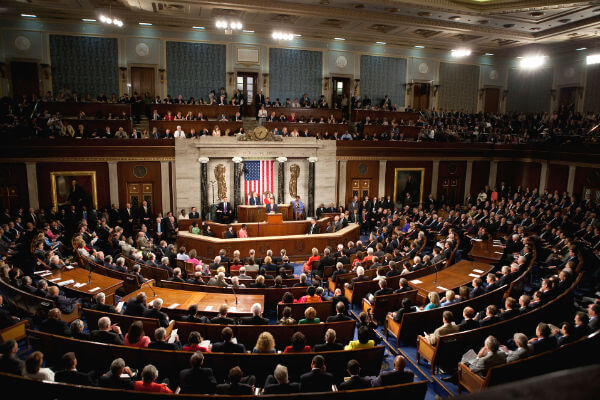
The Washington Post reports: In his seventh and final State of the Union address, President Obama played up the state of the economy, played down the threat of the Islamic State, and introduced a new effort to beat cancer. He also found time for several not-so-subtle swipes at the Republican front-runner Donald Trump.
But for those versed in international relations, there was one line in particular that jumped out from his hour-long speech.
“The Middle East is going through a transformation that will play out for a generation, rooted in conflicts that date back millennia,” Obama said.
Thousands of years? Many of the conflicts in the Middle East don’t even date back a decade.
The Twitterati spotted the gaffe, and pounced. Obama was accused of peddling convenient falsehoods while others said he was espousing concepts unworthy of an undergraduate university student. Many said that Obama was not only excusing the conflicts, but in effect was making them seem normal and intractable. [Continue reading…]
I didn’t watch President Obama’s State of the Union speech on Tuesday, but news reports alerted me to this passage:
A better politics doesn’t mean we have to agree on everything. This is a big country, with different regions and attitudes and interests. That’s one of our strengths, too. Our Founders distributed power between states and branches of government, and expected us to argue, just as they did, over the size and shape of government, over commerce and foreign relations, over the meaning of liberty and the imperatives of security.
But democracy does require basic bonds of trust between its citizens. It doesn’t work if we think the people who disagree with us are all motivated by malice, or that our political opponents are unpatriotic. Democracy grinds to a halt without a willingness to compromise; or when even basic facts are contested, and we listen only to those who agree with us. Our public life withers when only the most extreme voices get attention. Most of all, democracy breaks down when the average person feels their voice doesn’t matter; that the system is rigged in favor of the rich or the powerful or some narrow interest.
It’s easy to view politics as a marketplace in which trading is taking place as competing constituencies haggle over power. From that perspective, the only question is which group best represents your interests and if no such group exists, politics then becomes a dull spectator sport. Such a marketplace is inevitably dominated by the loudest voices.
Even if that characterization is reasonably accurate, it is likely to have a constricting effect.
Politics seen as jostling power groups, makes those groups into somewhat static entities and it saps a spirit of inquiry.
If the activity of asking and answering questions — an activity that needs to be driven by curiosity — seems pointless, it gets replaced by a much less constructive exercise: the solidification of opinion through affiliation.
In other words, politics is reduced to the question of who you want to stand with and who you stand against.
In the Republican response to Obama’s speech, South Carolina Governor Nikki Haley said:
Some people think that you have to be the loudest voice in the room to make a difference. That is just not true. Often, the best thing we can do is turn down the volume. When the sound is quieter, you can actually hear what someone else is saying. And that can make a world of difference.
It would be easy to dismiss these appeals from Obama and Haley to reduce the level of rancor in politics as simply calls for a cosmetic change — as though politics can be reformed by making it more pleasant. But I don’t think these calls for a tone change should be trivialized.
The dynamic at issue is driven by the cycle of attention-seeking and attention-giving.
Donald Trump’s success has had less to do with either his financial independence or his alignment with a large segment of the population, than it has with his skill in co-opting the services of the mass media.
He took reality TV to the next level (cliche intended) by turning a presidential campaign into a form of mass entertainment. Trump supporters commonly say that a significant part of his appeal is that they find him entertaining. The tedium of politics has been turned into a raucous circus with Trump as ringmaster.
He couldn’t have done this without the help of a media which salivates at each and every opportunity to boost ratings and make more money.
Ultimately, this is an issue of American values. If creating wealth is the axis around which American life turns, then the media will inevitably function like every other branch of commerce.
The health of any society, however, requires a balance between self-interest and collective interests.
If government, the legal system, the media, education, medicine, and the arts, are controlled by commerce then we all end up as the slaves of profit.
Reuters reports: The Obama administration is set to refund as much as $14 million in royalties to a coal company run by billionaire investor William Koch that says it is entitled to the money since the now-shut mine on federal land was costly to operate.
The Interior Department recommended the payout in a December letter to Colorado Governor John Hickenlooper, seen by Reuters, that gives the state executive a chance to object.
The subsidy, part of a decades-old program to promote coal production on public lands, is now under scrutiny since President Barack Obama has vowed to curb the nation’s reliance on fossil fuels, which contribute to global warming. [Continue reading…]
The New York Times reports: Iran’s release of 10 United States Navy sailors on Wednesday, less than 24 hours after they were detained on the Persian Gulf, is being hailed in both countries as a sign that their relations have evolved since the signing of the nuclear accord last summer.
Secretary of State John Kerry thanked the Iranians “for their cooperation in swiftly resolving this matter” and suggested in a statement that the quick resolution of the issue was a product of the nearly daily back-and-forth that now takes place between Washington and Tehran, after three decades of hostility and stony silence.
In an appearance later Wednesday at the National Defense University in Washington, Mr. Kerry said that his focus on diplomacy with a country “we hadn’t talked to for 35 years” before the nuclear negotiations had paid off.
“These are always situations that as everybody knows, if not properly handled, can get out of control,” Mr. Kerry said. “We can all imagine how a similar situation might have played out three or four years ago.” [Continue reading…]
The New York Times reports: More than 16 months after Iraqi and Kurdish forces reclaimed Mosul Dam from Islamic State fighters, the structure faces a new threat: the danger that it may collapse because of insufficient maintenance, overwhelming major communities downstream with floodwaters.
In the worst-case scenario, according to State Department officials, an estimated 500,000 people could be killed while more than a million could be rendered homeless if the dam, Iraq’s largest, were to collapse in the spring, when the Tigris is swollen by rain and melting snow. The casualty toll and damage would be much less if Iraqi citizens received adequate warning, if the dam collapsed only partially or if it were breached in the summer or fall, when the water level is lower.
Mosul Dam, which was completed in 1984 by a German and Italian consortium and is 30 miles upstream from the city of Mosul, has long been a maintenance nightmare. Before fighters from the Islamic State, also known as ISIL or ISIS, swept across northern Iraq in 2014, approximately 600 Iraqis worked at the dam.
Because the water was eating away at the gypsum base under the dam, Iraqi teams drilled holes in that foundation and filled them with a cement grout mixture. That work was carried out three times a day, six days a week.
The Islamic State controlled the dam for a little more than a week in August 2014, but its fighters did not damage the structure. After it was retaken later that month, however, many of the Iraqi workers never returned and the Iraqi government did not resume regular maintenance. The Iraqis also lost their usual source of grouting material, which was produced by a factory in Mosul, now under the control of the Islamic State. [Continue reading…]
The New York Times reports: The Obama administration on Friday announced an overhaul of its efforts to respond to online propaganda from the Islamic State after months of acknowledgments that it had largely failed in its attempts to counter extremist recruitment and exhortations to violence on social media.
The administration has emphasized that it needs the assistance of some of the nation’s biggest technology companies, and a group of top White House and national security officials flew to California on Friday to plead their case with executives.
“Given the way the technology works these days, there surely are ways that we can disrupt paths to radicalization, to identify recruitment patterns and to provide metrics that allow us to measure the success of our counter-radicalization efforts,” Josh Earnest, the White House press secretary, said before the meeting began in California.
A task force will be created in the Department of Homeland Security and the Justice Department to coordinate the government’s new effort. The State Department announced the creation of a center to respond to disinformation from extremist groups by highlighting their misdeeds and creating positive images of the West. [Continue reading…]
If one was to picture America as a complex filtration system with Washington DC at its core, the way this operates guarantees that by the time someone passes through the system’s many layers and reaches a position as an influential decision-maker, their psyche has been stripped of every last trace of imagination.
Picture the many meetings that must have taken place over recent months in which policymakers repeatedly said: in order to stop ISIS we need to improve the image of the West.
This proposition should have been met with howls of scorn and yet instead, multiple teams of straight-faced bureaucrats from multiple agencies nodded their heads in agreement.
At the same time, I greatly doubt anyone believes this kind of PR exercise will have any value whatsoever and yet the consensus of support derives from one fact: no one has come up with a better idea.
Better to do something worthless than to do nothing at all — so the thinking goes.
The term radicalization has been pathologized, thereby divorcing it from its psychological meaning. It’s viewed as a disease, with the implication that if the right steps are taken, the contagion can be controlled.
But to be radicalized is to rebel and anyone who has taken up such a position of defiance has, in the case of ISIS, already reached a conclusion about the West. Indeed, they have most likely reflected more deeply on the West than the majority of their generational counterparts who, being less likely to engage in cultural critiques of any kind, don’t have a particularly coherent view of the West — good or bad.
The problem here is not one if inadequate availability of positive images of the West.
Although it’s often said that this is an ideological struggle, ideology is I suspect of less significance than a core value: the willingness to die in the name of ones cause.
This isn’t a value that governments anywhere want to challenge because every state wants to be able to recruit citizens who are willing to die in defense of their country.
Most states don’t overtly recruit would-be martyrs and yet all states promote the idea that anyone who dies for their country has died in the name of a noble cause.
At the same time, this has become an increasingly ambiguous value as professionalized military forces promote their ability to minimize their own loses. They want their soldiers to remain willing to die and yet decreasingly fearful that they might face such a risk.
The religious zealot who is willing to die for what he believes in, will inevitably have a sense of superiority over the non-religious soldier who has submitted to the commands of the state rather than the command of God.
If Washington thinks it can steer ISIS recruits in a different direction, it’s because it sees this as a contest between the might of the United States and the wrong-headed ambitions of a cadre of hapless youth. But the contest inside the minds of these young people is between divine authority and human design. They inevitably side with God.
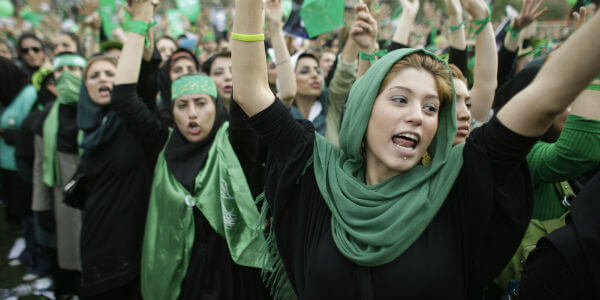
The Wall Street Journal reports: Iranian opposition leaders secretly reached out to the White House in the summer of 2009 to gauge Mr. Obama’s support for their “green revolution,” which drew millions of people to protest the allegedly fraudulent re-election of President Mahmoud Ahmadinejad.
The demonstrations caught the White House off guard, said current and former U.S. officials who worked on Iran in the Obama administration.
Some U.S. officials pressed Mr. Obama to publicly back the fledgling Green Movement, arguing in Oval Office meetings that it marked the most important democratic opening since the 1979 Islamic revolution.
Mr. Obama wasn’t convinced. “‘Let’s give it a few days,’ was the answer,” said a senior U.S. official present at some of the White House meetings. “It was made clear: ‘We should monitor, but do nothing.’ ”
The president was invested heavily in developing a secret diplomatic outreach to Mr. Khamenei that year, sending two letters to the supreme leader in the months before the disputed election of Mr. Ahmadinejad, said current and former U.S. officials.
Obama administration officials at the time were working behind the scenes with the Sultan of Oman to open a channel to Tehran. The potential for talks with Iran — and with Mr. Khamenei as the ultimate arbiter of any nuclear agreement — influenced Mr. Obama’s thinking, current and former U.S. officials said.
U.S. officials said the White House also was getting conflicting messages from Green Movement leaders. Some wanted Mr. Obama to publicly warn Mr. Khamenei against using force. Others said such a declaration would give Iran’s supreme leader an excuse to paint the opposition as American lackeys.
Mr. Obama and his advisers decided to maintain silence in the early days of the 2009 uprising. The Central Intelligence Agency was ordered away from any covert work to support the Green Movement either inside Iran or overseas, said current and former U.S. officials involved in the discussions.
“If you were working on the nuclear deal, you were saying, ‘Don’t do too much,’ ” said Michael McFaul, who served as a senior National Security Council official at the White House before becoming ambassador to Russia in 2012.
After a week of demonstrations, Iran’s security forces went on to kill as many as 150 people and jail thousands of others over the following months, according to opposition and human rights groups. Mr. Khamenei accused the U.S. of instigating the uprising. Iran denied killing protesters.
Some of Mr. Obama’s closest advisers, including former Secretary of State Hillary Clinton, said in retrospect the U.S. should have backed the Green Movement. “If we could do it again, I would give different counsel,” said Dennis Ross, Mr. Obama’s top Mideast adviser during his first term. At the time, he said, he argued against embracing the protests.
A senior U.S. official said this week that the Obama administration argued against covert support for the Green Movement because it risked undermining its credibility domestically, not out of fear of Mr. Khamenei’s reaction. “We did not want to tar the movement,” the official said. [Continue reading…]
Paula J. Dobriansky and David B. Rivkin Jr. write: Although international relations are not conducted under Marquess of Queensberry rules and political satire can be expected from one’s foes, intensely personal attacks on foreign leaders are uncommon except in wartime. While Soviet-era anti-American propaganda could be sharp, it did not employ slurs. But in recent years racist and scatological salvos against foreign leaders have become a staple of official Russian discourse.
Turkish, German and Ukrainian officials are cast as sycophantic stooges of the United States. While slamming Ankara at a December news conference for shooting down a Russian plane that violated Turkish airspace, Russian President Vladimir Putin opined that “the Turks decided to lick the Americans in a certain place.” Sergey Glaziev, a senior adviser to Putin, has called Ukrainian President Petro Poroshenko “a Nazi Frankenstein,” and Deputy Prime Minister Dmitry Rogozin compared Ukrainian Prime Minister Arseniy Yatsenyuk to “a rubber doll from a sex shop.”
The ugliest vilification campaign, however, has been reserved for President Obama. Anti-Obama tweets come openly from government officials. Rogozin, while commenting on Obama’s 2015 State of the Union address, compared Obama to a Tuzik, Russian slang for a pathetic small dog. Irina Rodnina , a well-known Duma member, tweeted doctored images of Barack and Michelle Obama staring longingly at a banana.
Nobody in Russia gets to freelance propaganda-wise. Thus, anti-Obama rants, even when coming from prominent individuals outside government, have Putin’s imprimatur. Russian media personalities, including Dmitry Kiselyov, the host of the widely viewed “News of the Week” TV roundup, often deliver racist slurs, as compiled by Mikhail Klikushin on the Observer Web magazine. Evgeniy Satanovskiy, a Russian academic and frequent guest on Kiselyov’s program, recently also referred to Obama as a “monkey,” prompting derisive laughter and applause from the audience. Meanwhile, the famous nationalist comedian Mikhail Zadornov regularly deploys the term “schmoe” — a slang Russian prison acronym for a person who is so debased he deserves to be defecated upon — alongside Obama’s name. “Obama schmoe” has become ubiquitous enough to be scrawled on the runway of Russia’s Latakia air base in Syria. [Continue reading…]
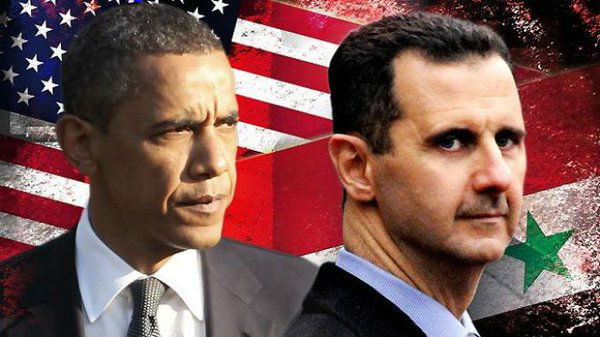
The Associated Press reports: The Obama administration’s best-case scenario for political transition in Syria does not foresee Bashar Assad stepping down as the country’s leader before March 2017, outlasting Barack Obama’s presidency by at least two months, according to a document obtained by The Associated Press.
An internal timeline prepared for U.S. officials dealing with the Syria crisis sets an unspecified date in March 2017 for Assad to “relinquish” his position as president and for his “inner circle” to depart. That would be more than five years after Obama first called for Assad to leave.
The timeline is based on a broad U.N.-endorsed plan that was initially laid out at an international conference in Vienna in November. Syria, according to that strategy, would hold elections for a new president and parliament in August 2017 — some 19 months from now. In the interim, Syria would be run by a transitional governing body. [Continue reading…]
Trita Parsi writes: from the U.S. perspective, Saudi Arabia’s destabilizing activities are a vindication of the nuclear deal it struck with Iran in 2015. One critical benefit of that deal, left unstated by Obama administration officials, is that it helped reduce U.S. dependency on Saudi Arabia.
By resolving the nuclear standoff and getting back on talking terms with Iran, Washington increased its options in the region.
As Admiral Mike Mullen wrote in Politico last year in regards to the benefits of the nuclear deal: “It would also more fairly rebalance American influence. We need to re-examine all of the relationships we enjoy in the region, relationships primarily with Sunni-dominated nations. Detente with Iran might better balance our efforts across the sectarian divide.”
Mindful of the deliberate manner Saudi Arabia is driving matters towards a crisis in the region – partly motivated by a desire to trap the United States in Riyadh’s own enmity with Iran – Washington is clearly better off being able to play a balancing role between Saudi and Iran rather than being obligated to fully support Saudi Arabia’s regional escapades. [Continue reading…]
Laura Rozen reports: Saudi Arabia, in carrying out the execution and severing relations with Iran, may have been trying to send messages to both domestic and international audiences about its resolve against what Riyadh perceives as Iranian expansionism in the region, but it may have miscalculated how the messages would be received, [Philip Gordon, former Obama White House top Middle East adviser] said.
“It is a sign of insecurity,” Gordon, now a senior fellow at the Council on Foreign Relations, said. “I do worry that it is a miscalculation.”
“One of the things the Saudis worry about is that people [including in the US administration] come to the conclusion that Iran, while we have problems with it, could be a partner … [and] we should start working with them,” he said. “With this, the Saudis are saying, that won’t work — choose sides.” [Continue reading…]
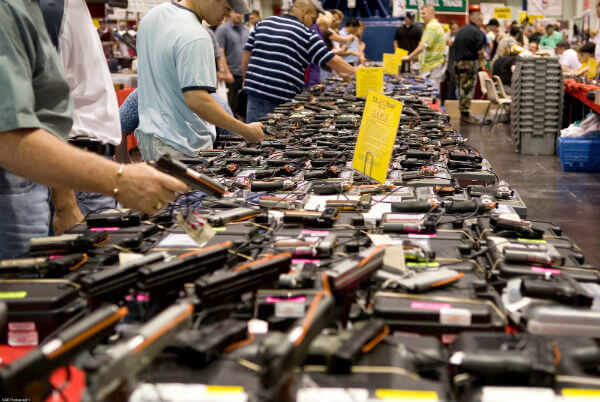
Quartz reports: Another gun control measure, another rally for gun stocks.
As US president Barack Obama spoke about his proposal to further regulate firearms, shares of Smith & Wesson climbed more than 10% in midday trading today (Jan. 5), while Sturm, Ruger & Co. moved up 7%.
Although most Americans don’t own guns and want more gun control, a minority who do own guns end up buying more of them when they feel that stricter regulation — or even just the threat of it — is coming down the pike. And that’s what is set to happen now that Obama, after being repeatedly frustrated by Congress, has chosen to pursue the issue unilaterally with executive action that would: [Continue reading…]
10. The Death of Zahran Alloush.
9. The Failure of the Southern Storm Offensive.
8. Operation Decisive Quagmire.
7. Europe’s Syria Fatigue vs. Assad’s Viability
6. The Vienna Meeting, the ISSG, and Geneva III.
5. The Donald.
4. The Iran Deal.
3. The Continuing Structural Decay of the Syrian Government.
2. The American-Kurdish Alliance.
1. The Russian Intervention. [Continue reading…]
After a 52-minute video made by al-Kataib, the media outlet of Somalia’s al-Qaeda-affiliate, al-Shabaab, was posted on YouTube yesterday, it was swiftly removed. YouTube has a long-standing policy of banning videos that incite violence.
As the ABC News report above shows, the element in the video which has grabbed the media’s attention is its use of Donald Trump’s recent call for Muslims to be prohibited from entering the United States.
Here’s the part of the video which features Trump — although, by the time you read this post, YouTube will have removed this clip, which is why I’m also posting a transcript:
First we see the American imam, Anwar al-Awlaki, making a prediction about the fate of Muslims who continue living in the U.S. — Awlaki was killed by a U.S. drone strike in Yemen in 2011. Then comes a clip of Trump and then Awalaki again.
Awlaki, date unknown: Muslims of the West, take heed and learn from the lessons of history. There are ominous clouds gathering in your horizon.
Yesterday, America was a land of slavery, segregation, lynching, and Ku Klux Klan. And tomorrow it will be a land of religious discrimination and concentration camps.
Trump speaking at a campaign rally on December 7: Guys remember this and listen: Donald J Trump is calling for a total and complete shutdown of Muslims entering the United States [cheers] until our country’s representatives can figure out what [expletive bleeped] is going on [cheers and applause].
Awlaki: The West will eventually turn against its Muslim citizens. Hence, my advice to you is this: You have two choices, either hijra or jihad. You either leave or you fight. You leave and live among Muslims, or you stay behind and follow the example of Nidal Hassan [perpetrator of the Fort Hood mass shooting] and others who fulfilled their duty of fighting for Allah’s cause.
In response to pressure from Western governments, YouTube and other social media channels are becoming increasingly aggressive in blocking the distribution of terrorist propaganda. There is understandable frustration at the fact that the internet is being used to threaten the very societies within which this global communications system was created.
Censorship can easily backfire, however, and this is happening with the removal of clips of the new al-Shabaab video.
After the full-length version had been removed, snippets which just showed the al-Awalaki statement and Trump, have also been removed (as I noted above).
It is clear that these videos are being posted by Trump critics rather than al-Shabaab supporters and their removal is breathing life into a conspiracy theory being propagated by some Trump supporters: that the al-Shabaab video itself is a fabrication created by the Clinton campaign!
It seems likely that there are some Trump supporters who — following the lead of Bashar al-Assad supporters — are using YouTube’s community guidelines in order to silence criticism.
Although in the short clips of the al-Shabaab, Awlaki is indeed inciting violence, the clips themselves are clearly not being posted in order to incite violence — they have been posted to show how Trump’s rhetoric serves as a propaganda gift for jihadists.
By removing these clips, YouTube is playing straight into the hands of conspiracy theorists.
At the same time, censorship also buttresses the perception among ISIS and al Qaeda supporters, that the West feels threatened by “the truth.”
It’s worth remembering the trajectory Awlaki followed which eventually led to him promoting terrorism from Yemen.
In 2000, he supported George Bush’s campaign to become president and after 9/11 believed his own emerging role must be to serve as bridge between America and all Muslims.
At midnight on Sept. 14, 2001, Awlaki, then a young Yemeni-American imam at the prominent Dar al-Hijrah mosque in Falls Church, Va., finished a long day by answering an email from his younger brother about the terrorist attacks of a few days before. ‘‘I personally think it was horrible,’’ he wrote to Ammar, a college student in New Mexico at the time. ‘‘I am very upset about it.’’ He added, ‘‘The media are all over us.’’ Anwar was disconcerted, but perhaps also pleased that an onslaught of reporters had turned his Friday prayers, or jummah, into a circus. ‘‘At jummah today we had ABC, NBC, CBS and The Washington Post.’’ He closed on a positive note, hinting at a noble purpose, to be sure, but also displaying a trace of personal ambition: ‘‘I hope we can use this for the good of all of us.’’
Though the country was in mourning, a sense of defiant unity emerged. A non-Muslim neighbor of Dar al-Hijrah organized a candlelight vigil around the building to show solidarity with the mosque. Roughly 80 residents of a nearby apartment building sent over a note saying, ‘‘We want your congregation to know that we welcome you in this community.’’ Journalists, hunting for an authoritative voice from the Muslim community, began to pass regularly under the mosque’s grand marble arches or to gather in Awlaki’s modest family home. He denounced the 9/11 attacks but in the same breath would criticize America’s record in the Middle East. Reporters were impressed. The New York Times wrote that Awlaki, just 30, was being ‘‘held up as a new generation of Muslim leader capable of merging East and West.’’ He relished the spotlight. He seemed to be quite self-consciously auditioning for a dual role: explainer of Islam to America and of America to Muslims. ‘‘We came here to build, not to destroy,’’ he declared from his pulpit. ‘‘We are the bridge between America and one billion Muslims worldwide.’’
The challenge presented by ISIS, al Qaeda and other jihadist groups is more than one of security and communications. At its core, this is a moral challenge.
The jihadists present themselves as offering the solution to a moral problem: a way for Muslims to confront the immorality, corruption, and hypocrisy they see in the contemporary Western-dominated world.
An effective counter-jihadist strategy cannot simply brush off this critique of the West. It has to present an alternative solution.
Currently, who has the more credible voice? Donald Trump, Hillary Clinton, or Anwar al-Awlaki?
Unfortunately, it’s Awlaki.
As Shane observed:
Awlaki’s pronouncements seem to carry greater authority today than when he was living, because America killed him.
Right now, it’s easy to castigate Trump for providing terrorists with fodder for propaganda, but we mustn’t forget the extent to which the U.S. led by Bush and then Obama, has helped reinforce the jihadists’ narrative — by opening Guantanamo; through the use of torture, rendition and secret prisons; through the disastrous war in Iraq; through drone strikes in Afghanistan, Yemen, and Somalia; through continuing to prop up authoritarian regimes across the Middle East; through allowing the Assad regime to destroy Syria, and through failing to broker an end to the Israeli-Palestinian conflict.
The real challenge for Western political leaders and whoever becomes the next U.S. president is not whether they can destroy ISIS and effectively tackle global terrorism.
It is this: How can they regain sufficient moral authority that their words carry weight? How can they restore some much-needed respect for democracy?
In a global failure of governance, the Middle East can be viewed as the emergency room, while in the West, governance suffers from chronic illness for which symptom-relief is the only treatment on offer.
It’s time we face up to the fact that terrorism is just a symptom what ails the world. Indeed, much of the time a global obsession with terrorism is having the effect of turning our attention away from broader issues that undermine the health of societies and our ability to survive on this planet.
This isn’t a question of striving for some kind of unattainable and contestable moral purity. No one wants to live under the control of zealots. It’s about trying to create societies in which government is no longer a dirty word, where ordinary citizens receive the respect they deserve, and in which individuals are no longer cynical about the possibilities for securing collective interests.
In a word, it’s about the restoration of honesty in public life.
Mahmoud Pargoo writes: [In 2013] Hassan Rouhani, who sternly criticized Ahmadinejad’s nuclear policies, won the election and appointed Mohammad Javad Zarif as foreign minister. Consequently, and as a result of the softening of the rhetoric and engagement in talks with the United States, the Joint Comprehensive Plan of Action (JCPOA) was signed between Iran and six world powers in July. The agreement was seen as evidence that if Iran engages in serious talks with the United States, issues can be gradually solved. Even Supreme Leader Ayatollah Ali Khamenei pointed to the likelihood of extending negotiations to other non-nuclear issues if the United States proves to be trustworthy.
This line of thinking, however, is changing with the recent series of US measures — including the recent congressional vote to restrictvisa-free travel to the United States for those who have visited Iran in the past five years. Indeed, many in Iran are coming to the conclusion that no matter what rhetoric or action the Islamic Republic may assume, the United States will continue its enmity with Iran. Thus, a new consensus is being formed — but this time, against the United States. People from almost all political orientations have interpreted the new Visa Waiver Program (VWP) changes as running counter to the JCPOA. Ali Larijani, the parliament speaker and a powerful conservative supporter of the nuclear negotiations, has criticized the law, while many Reformist politicians have also condemned it as being against Iranian goodwill in engaging with the United States. Zarif, the foreign minister and chief nuclear negotiator, has additionally said that the new law breaches the JCPOA.
When seen in the light of historical parallels, the recent developments could be an alarming sign that certain elements in the US foreign policy establishment are seeking to paralyze any effort to normalize relations with Iran. [Continue reading…]
The Wall Street Journal reports: Iranian President Hassan Rouhani ordered his defense minister to expedite Iran’s ballistic-missile program following newly planned U.S. sanctions, he said Thursday, casting fresh doubt on the implementation of a landmark nuclear accord reached in July.
Mr. Rouhani made the announcement on his official Twitter account, without elaborating on what steps he had ordered Defense Minister Hossein Dehghan to take.
“If [the] U.S. continues its illegitimate interference [with] Iran’s right to defend itself a new program will be devised to enhance missile capabilities,” Mr. Rouhani tweeted.
“We have never negotiated regarding our defense capabilities, including our missile program & will not accept any restrictions in this regard,” he said.
An Iranian Foreign Ministry spokesman said earlier Thursday that Iran considered any new U.S. sanctions on its ballistic-missile program illegal and would respond accordingly.
“Such actions are unilateral, arbitrary and illegal and the Islamic Republic of Iran has warned the U.S. in this respect,” said spokesman Hossein Jaber Ansari, according to the official Islamic Republic News Agency.
The Obama administration is planning new sanctions on Iran, targeting almost a dozen companies and individuals in Iran, Hong Kong and the United Arab Emirates, U.S. officials told The Wall Street Journal on Wednesday. The planned action by the Treasury Department is targeted at businesses and individuals for their alleged role in developing Iran’s ballistic-missile program and would represent the first new sanctions on Iran since six world powers, including the U.S., reached the nuclear deal with Tehran. [Continue reading…]
The New York Times reports: Even as the Obama administration scrambles to confront the Islamic State and a resurgent Taliban, an old enemy seems to be reappearing in Afghanistan: Qaeda training camps are sprouting up there, forcing the Pentagon and American intelligence agencies to assess whether they could again become a breeding ground for attacks on the United States.
Most of the handful of camps are not as big as those that Osama bin Laden built before the Sept. 11, 2001, attacks. But had they re-emerged several years ago, they would have rocketed to the top of potential threats presented to President Obama in his daily intelligence briefing. Now, they are just one of many — and perhaps, American officials say, not even the most urgent on the Pentagon’s list in Afghanistan.
The scope of Al Qaeda’s deadly resilience in Afghanistan appears to have caught American and Afghan officials by surprise. Until this fall, American officials had largely focused on targeting the last remaining senior Qaeda leaders hiding along Afghanistan’s rugged, mountainous border with Pakistan.
At least in public, the administration has said little about the new challenge or its strategy for confronting the threat from Al Qaeda, even as it rushes to help the Afghan government confront what has been viewed as the more imminent threat, the surge in violent attacks from the Taliban, the Haqqani network and a new offshoot of the Islamic State. Former administration officials have been more outspoken — especially those who were on the front lines of the original battle to destroy Al Qaeda’s central leadership. [Continue reading…]
The Washington Post reports: As the Afghan convoy entered the battered village, Taliban fighters opened fire. U.S.-trained Afghan policemen poured out of their Humvees and began wildly shooting their AK-47 rifles in every direction.
“The enemy is firing one bullet, and you are responding with dozens!” their commander, Col. Khalil Jawad, screamed into his radio in frustration. “Aim, then fire!”
A minute later, the militants melted away. On this day in early December in the southern province of Helmand, they had delivered their message: The Taliban is back, its fighters showing a battle discipline and initiative far superior to the Afghan security forces trained and equipped by the United States.
In private, top Afghan and American officials have begun to voice increasingly grim assessments of the resurgent Taliban threat, most notably in a previously undisclosed transcript of a late-October meeting of the Afghan National Security Council. [Continue reading…]
This website or its third-party tools use cookies, which are necessary to its functioning. By closing this banner, you agree to the use of cookies.