Category Archives: US government

Double agents and drones

A successful infiltration of al Qaeda in the Arabian Peninsula by a Saudi intelligence agent with CIA oversight will be hailed in Washington as a major success, but it begs an important question: if the operations of the bomb maker, Fahd Mohammed Ahmed al-Quso, could be tracked so closely, why couldn’t he have been arrested instead of killed by a drone strike?

The supposed rationale for assassinating suspected terrorists by remote control is that they are so elusive and operate in such inaccessible locations that capture is impossible. It’s hard to imagine how this could have been the case with al Quso. He must effectively have been under surveillance and rather than make use of what might have been multiple opportunities to arrest him, the CIA apparently decided there was no need — he could simply be eliminated whenever necessary.

As a battlefield practice, take no prisoners is considered a war crime. For the Obama administration it has become standard procedure — and a procedure that the American journalists virtually never question.

The New York Times reports: The would-be suicide bomber dispatched by the Yemen branch of Al Qaeda last month to blow up a United States-bound airliner was actually an intelligence agent for Saudi Arabia who infiltrated the terrorist group and volunteered for the suicide mission, American and foreign officials said Tuesday.

In an extraordinary intelligence coup, the double agent left Yemen, traveling by way of the United Arab Emirates, and delivered both the innovative bomb designed for his air attack and critical information on the group’s leaders to the C.I.A., Saudi and other foreign intelligence agencies.

After spending weeks at the center of the terrorist network’s most dangerous affiliate, Al Qaeda in the Arabian Peninsula, the agent provided critical information that permitted the C.I.A. to direct the drone strike on Sunday that killed Fahd Mohammed Ahmed al-Quso, the group’s external operations director and a suspect in the bombing of the American destroyer Cole in Yemen in 2000.

He also handed over the bomb, designed by the group’s top explosives expert to be invisible to airport security, to the F.B.I., which is analyzing its properties.

Officials said the agent, whose identity they would not disclose, works for the Saudi intelligence service, which has cooperated closely with the C.I.A. for several years against the terrorist group in Yemen. He operated in Yemen with the full knowledge of the C.I.A., but not under its direct supervision, the officials said.

The agent is now safe in Saudi Arabia, officials said. The bombing plot was kept secret for weeks by the C.I.A. and other agencies because they feared retaliation against the agent and his family.

Facebooktwittermail

FBI: We need wiretap-ready websites — now

CNET reports: The FBI is asking Internet companies not to oppose a controversial proposal that would require the firms, including Microsoft, Facebook, Yahoo, and Google, to build in backdoors for government surveillance.

In meetings with industry representatives, the White House, and U.S. senators, senior FBI officials argue the dramatic shift in communication from the telephone system to the Internet has made it far more difficult for agents to wiretap Americans suspected of illegal activities, CNET has learned.

The FBI general counsel’s office has drafted a proposed law that the bureau claims is the best solution: requiring that social-networking Web sites and providers of VoIP, instant messaging, and Web e-mail alter their code to ensure their products are wiretap-friendly.

“If you create a service, product, or app that allows a user to communicate, you get the privilege of adding that extra coding,” a person who has reviewed the FBI’s draft legislation told CNET. The requirements apply only if a threshold of a certain number of users is exceeded, according to a second person briefed on it.

The FBI’s proposal would amend a 1994 law, called the Communications Assistance for Law Enforcement Act, or CALEA, that currently applies only to telecommunications providers, not Web companies. The Federal Communications Commission extended CALEA in 2004 to apply to broadband networks.

Facebooktwittermail

How the CIA undermined humanitarian aid in Pakistan through the hunt for bin Laden

Declan Walsh reports: In the shadows of the American operation that killed Osama bin Laden, the fate of a small-town Pakistani doctor recruited by the C.I.A. to help track the Qaeda leader still looms between the two countries, a sore spot neither can leave untouched.

Picked up by Pakistani intelligence agents days after the Bin Laden raid a year ago and now in secret detention, the doctor, Shakil Afridi, has embodied the tensions between Washington and Islamabad. To some American officials he is a hero, worthy of praise and protection; Defense Secretary Leon E. Panetta has personally appealed for his release. But inside Pakistan’s powerful military, still smarting from the raid on its soil, he is seen as a traitor who should face treason charges that could bring his execution. “We need to make an example of him,” one senior intelligence official said.

Beyond hard feelings and talk, however, his case has had a much wider effect: It has also roiled the humanitarian community in Pakistan, giving rise to a wave of restrictions that have compromised multimillion dollar aid operations serving millions of vulnerable Pakistanis.

Hardest hit is Save the Children, the largest international aid agency in Pakistan.

Dr. Afridi has told interrogators for the top Pakistani military intelligence agency, the ISI, that he was introduced to the C.I.A. through Save the Children, according to Pakistani officials and Western aid workers. Save the Children vigorously denies the claim, saying it has been made a scapegoat by a desperate man who, according to senior American officials, has been tortured in Pakistani custody. Nevertheless his claims have had a stark impact on an organization that says it spent $105 million last year helping seven million Pakistanis, most of them women and children.

Senior managers have been forbidden from leaving the country, other staff members have been refused visas, and aid supplies have been blocked by customs officials, depriving an estimated 35,000 infants of medical care over a three-month period. Pakistani intelligence has monitored the phone calls and residences of Save the Children staff.

Other aid groups complain of problems, too, largely at the hands of Pakistani officials convinced that their employees could be spies. To them, the affair sheds new light on a murky practice that they say should never take place: the recruitment of aid workers as intelligence operatives in a sensitive country like Pakistan, already awash in conspiracy theories about Western meddling. [Continue reading…]

Facebooktwittermail

The jet that ate the Pentagon

Winslow Wheeler writes: The United States is making a gigantic investment in the F-35 Joint Strike Fighter, billed by its advocates as the next — by their count the fifth — generation of air-to-air and air-to-ground combat aircraft. Claimed to be near invisible to radar and able to dominate any future battlefield, the F-35 will replace most of the air-combat aircraft in the inventories of the U.S. Air Force, Navy, Marine Corps, and at least nine foreign allies, and it will be in those inventories for the next 55 years. It’s no secret, however, that the program — the most expensive in American history — is a calamity.

This month, we learned that the Pentagon has increased the price tag for the F-35 by another $289 million — just the latest in a long string of cost increases — and that the program is expected to account for a whopping 38 percent of Pentagon procurement for defense programs, assuming its cost will grow no more. Its many problems are acknowledged by its listing in proposals for Pentagon spending reductions by leaders from across the political spectrum, including Rep. Barney Frank (D-Mass.), Sen. Tom Coburn (R-Okla.), President Barack Obama’s National Commission on Fiscal Responsibility and Reform, and budget gurus such as former Sen. Pete Domenici (R-N.M.) and Alice Rivlin, former director of the Congressional Budget Office and Office of Management and Budget.

How bad is it? A review of the F-35’s cost, schedule, and performance — three essential measures of any Pentagon program — shows the problems are fundamental and still growing. [Continue reading…]

Facebooktwittermail

U.S. military mutilating live goats in training exercises

Men gathering in the woods and using tree trimmers to chop off the legs from live goats — it sounds like some kind of barbaric satanic ritual, but in fact it’s a description of training exercises being conducted by the U.S. military ostensibly for the purpose of training medics in trauma procedures.

PETA reports: Each year, more than 10,000 live animals are shot, stabbed, mutilated, and killed in horrific military training exercises that are supposed to simulate injuries on the battlefield. But the training exercises that are taking place in these highly secret courses bear no resemblance to real battlefield conditions — and they don’t help soldiers save the lives of their injured comrades.

In disturbing, never-before-seen undercover video footage leaked to PETA showing a Coast Guard training course in Virginia Beach, Virginia, instructors with a company called Tier 1 Group, which was hired by the military, are seen breaking and cutting off the limbs of live goats with tree trimmers, stabbing the animals, and pulling out their internal organs. Goats moan and kick during the mutilations—signs that they had not received adequate anesthesia.

During this cruel exercise, one Tier 1 Group instructor is heard cheerfully whistling on the video as he cuts off goats’ legs and a Coast Guard participant callously jokes about writing songs about mutilating the animals.

Later in the day, according to the distraught whistleblower who came to PETA, goats were shot in the face with pistols and hacked apart with an ax while still alive.

Cruel exercises like these continue regularly across the U.S. even though most civilian facilities and many military facilities have already replaced animal laboratories with superior lifelike simulators that breathe, bleed, and even “die.”

The Army’s own Rascon School of Combat Medicine at Fort Campbell does not use animals in its training program and has even publicly stated that “[t]raining on [simulators] is more realistic to providing care for a person than training on animals.” The Air Force’s Center for Sustainment of Trauma and Readiness Skills and the Navy Trauma Training Center also do not use animals to train soldiers.

Department of Defense regulations actually require that alternatives to animals be used when available, but this policy is not being enforced.

Unlike mutilating and killing animals, training on simulators allows medics and soldiers to practice on accurate anatomical models and repeat vital procedures until all trainees are confident and proficient. Studies show that medical care providers who learn trauma treatment using simulators are better prepared to treat injured patients than those who are trained using animals. A leading surgeon with the U.S. Army even candidly admitted in an internal e-mail obtained by PETA that “there still is no evidence that [training on animals] saves lives.”

For all these reasons, the Battlefield Excellence through Superior Training (BEST) Practices Act (H.R. 1417), which would phase out the U.S. military’s use of live animals in trauma training courses in favor of modern non-animal methods, has been introduced in Congress.

Click here to send a message to Washington demanding an end to these cruel practices.

Warning: disturbing images in this video.

AP reports that the Coast Guard defends its practice of using live animals in its combat medical training:

“Animals used in trauma training are supported and monitored by well-trained, experienced veterinary staff to ensure that appropriate anesthesia and analgesia prevent them from experiencing pain or distress,” Lt. Cmdr. Jamie C. Frederick, spokesman for the Atlantic Area, wrote in an email to AP. The Coast Guard would not verify if the video involved its personnel.

Facebooktwittermail

How the FBI spent a decade hunting white supremacists and missed Timothy McVeigh

J.M. Berger writes: In 1990, the FBI began picking up on rumors about an effort to reconstitute a notorious terrorist-criminal gang known as The Order.

The group’s name was taken from the infamous racist 1978 novel The Turner Diaries, which told the story of a fictional cabal carrying out acts of terrorism and eventually overthrowing the U.S. government in a bloody, nihilistic racial purge. The book was an inspiration to a generation of white nationalists, including Timothy McVeigh, whose path to radicalization climaxed in the Oklahoma City bombing 17 years ago Thursday.

During the 1980s, extremists inspired by the book began robbing banks and armored cars, stealing and counterfeiting millions of dollars and distributing some of the money to racist extremist causes. Members of The Order assassinated Jewish talk radio host Alan Berg in 1984, before most of its members were arrested and its leader killed in a standoff. Less than 10 percent of the money stolen by The Order was ever recovered, and investigators feared members of the group who were still at large would use it to further a campaign of terrorism.

To prevent the rise of a “Second Order,” FBI undercover agents would become it.

Starting in April 1991, three FBI agents posed as members of an invented racist militia group called the Veterans Aryan Movement. According to their cover story, VAM members robbed armored cars, using the proceeds to buy weapons and support racist extremism. The lead agent was a Vietnam veteran with a background in narcotics, using the alias Dave Rossi.

Code-named PATCON, for “Patriot-conspiracy,” the investigation would last more than two years, crossing state and organizational lines in search of intelligence on the so-called Patriot movement, the label applied to a wildly diverse collection of racist, ultra-libertarian, right-wing and/or pro-gun activists and extremists who, over the years, have found common cause in their suspicion and fear of the federal government.

The undercover agents met some of the most infamous names in the movement, but their work never led to a single arrest. When McVeigh walked through the middle of the investigation in 1993, he went unnoticed.

PATCON is history, but it holds lessons for today. Since the attacks of Sept. 11, 2001, a series of arrests for homegrown terrorism has put a spotlight on the secretive world of government infiltration, especially in the Muslim community. Some critics have charged that these investigations, in which suspected jihadists are provided with the means and encouragement to carry out terrorist attacks before being arrested, constitute entrapment and set plots in motion that would never have emerged on their own. But these controversial tactics were around long before the FBI was restructured to prioritize terrorism. And Muslims aren’t the only targets.

Most undercover operations remain secret, especially if they do not result in prosecutions. PATCON stayed under wraps for nearly 15 years, until it was discovered in Freedom of Information Act requests by the author. The account that follows is based on thousands of pages of FBI records on PATCON and the groups it targeted, as well as interviews with FBI agents who worked on the case, former FBI informants, and members of the targeted groups. The documents and interviews reveal important lessons for the modern use of undercover agents and informants. [Continue reading…]

Facebooktwittermail

U.S. Navy program to study how troops use intuition

The New York Times reports: The United States Navy has started a program to investigate how members of the military can be trained to improve their “sixth sense,” or intuitive ability, during combat and other missions.

The idea for the project comes in large part from the testimony of troops in Iraq and Afghanistan who have reported an unexplained feeling of danger just before they encountered an enemy attack or ran into an improvised explosive device, Navy scientists said.

“Research in human pattern recognition and decision-making suggest that there is a ‘sixth sense’ through which humans can detect and act on unique patterns without consciously and intentionally analyzing them,” the Office of Naval Research said in an announcement late last month. The scientists managing the program — which the the naval research office is calling “revolutionary” — commonly refer to this mysterious perception as feeling one’s “Spidey sense” tingling, after the intuitive power of Spiderman.

“Evidence is accumulating that this capability, known as intuition or intuitive decision making, enables the rapid detection of patterns in ambiguous, uncertain and time restricted information contexts,” the office said, citing numerous peer-reviewed studies in cognitive psychology and neuroscience.

The program, called Enhancing Intuitive Decision Making Through Implicit Learning, will be making available $3.85 million over four years to researchers who want to investigate how intuition works. Initial proposals are due April 15, and executives at more than a dozen companies specializing in fields like logistics, software and artificial intelligence have so far expressed interest in applying for the money.

It’s a sad fact that when the U.S. government weighs up the merits of ways to creatively invest tax dollars, the surest way of ensuring backing for unusual research is to show that it could improve America’s war-fighting capabilities.

What would add an interesting dimension to this study on intuition would be if it was made into a cross-cultural study examining differences in intuitive faculties between fighters operating overseas and those defending their home turf.

Facebooktwittermail

U.S. to keep intelligence data on Americans with no terror ties

The Associated Press reports: The U.S. intelligence community will now be able to store information about Americans with no ties to terrorism for up to five years under new Obama administration guidelines.

Until now, the National Counterterrorism Center had to immediately destroy information about Americans that was already stored in other government databases when there were no clear ties to terrorism.

Giving the NCTC expanded record-retention authority had been called for by members of Congress who said the intelligence community did not connect strands of intelligence held by multiple agencies leading up to the failed bombing attempt on a Detroit-bound airliner on Christmas 2009.

“Following the failed terrorist attack in December 2009, representatives of the counterterrorism community concluded it is vital for NCTC to be provided with a variety of datasets from various agencies that contain terrorism information,” Director of National Intelligence James Clapper said in a statement late Thursday. “The ability to search against these datasets for up to five years on a continuing basis as these updated guidelines permit will enable NCTC to accomplish its mission more practically and effectively.”

The new rules replace guidelines issued in 2008 and have privacy advocates concerned about the potential for data-mining information on innocent Americans.

“It is a vast expansion of the government’s surveillance authority,” Marc Rotenberg, executive director of the Electronic Privacy Information Center, said of the five-year retention period.

The government put in strong safeguards at the NCTC for the data that would be collected on U.S. citizens for intelligence purposes, Rotenberg said. These new guidelines undercut the Federal Privacy Act, he said.

“The fact that this data can be retained for five years on U.S. citizens for whom there’s no evidence of criminal conduct is very disturbing,” Rotenberg said.

“Total Information Awareness appears to be reconstructing itself,” Rotenberg said, referring to the Defense Department’s post-9/11 data-mining research program that was killed in 2003 because of privacy concerns.

Facebooktwittermail

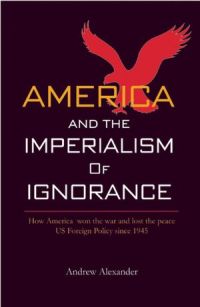
America and the imperialism of ignorance

Rory Stewart reviews America and the Imperialism of Ignorance: US Foreign Policy Since 1945, by Andrew Alexander.

What was the Cold War? For Professor John Lewis Gaddes, it was a conflict between two incompatible systems, democracy and communism, each with a different vision of liberty and human purpose. The result was a potential third world war, in which we risked being crushed by dictators or destroyed by nuclear weapons. And the US saved us. ‘The world,’ he writes, ‘I am quite sure, is a better place for the conflict having been fought in the way that it was and won by the side that won it. For all its dangers, atrocities, costs, distraction and moral compromises, the Cold War was a necessary contest.’

Andrew Alexander disagrees. And Alexander — who has long exposed the myopia and self-deception of the establishment — should be taken seriously. He argued against the Vietnam War, took on prices and incomes policy, the fixed exchange rate and the ERM [European Exchange Rate Mechanism], and continued by opposing the interventions in Iraq and Afghanistan. In almost every case, he stood against the received wisdom of the Financial Times, the Economist, the CBI [Confederation of British Industry], and (though they always printed his pieces) his editors at the Daily Mail.

In almost every case he was right. Now, he argues, in relation to the Cold War, that ‘the world is a much more dangerous place, as a result of America’s determination to save it.’ It is difficult to imagine a more important thesis. As he writes:

If the world came close to nuclear Armageddon on half a dozen occasions, and expended so much blood and treasure for 40 years against a threat that was never real, this raises serious doubt about the integrity and basic intelligence of a whole succession of Western governments and the political institutions for which they make such high claims.

Alexander argues that communism never posed an existential threat to the security of the West. Stalin’s primary aim was the preservation of his regime, and his only objective in Eastern Europe was to create a defensive buffer against any German advance. Not only did he lack the resources, the plans or the will to conquer Western Europe: he actively opposed communist revolutions around the world. If Western Europe was safe from Soviet attack, the United States — thousands of miles further away — was even safer. Nevertheless, an entire US policy industry emerged to argue the opposite, and to produce the most ingenious explanations of why a country like distant Vietnam could be, as Ronald Reagan claimed in 1963, ‘the greatest threat that ever faced humankind in its climb from the swamp to the stars.’

Alexander offers no single explanation for this obsession. Instead he patiently illustrates a dozen factors in the hypnotising, extravagant project. His account of Woodrow Wilson’s peculiar rigidities and self-defeats at the Paris Peace Conference in 1919, and the US involvement in the Philippines and Cuba, suggests that US foreign policy was, for a century, less an instrument of democracy and more a form of eccentric imperialism. Unlike British policy, which was based on unwritten assumptions about the joy, responsibility and honour of imperial government, the US approach reflected a distaste for empire, and a worship of its own written constitution, and law, enlivened by acts of startling gangsterism.

Unlike British political officers, US officers were obsessed with the idea of human equality and freedom, but had little interest in, or attraction to alien cultures. Generals had a disproportionate influence on policy and frequently became presidents or secretaries of state. The resulting policy, from Vietnam to Iraq, could be both high-minded and bluntly brutal.

The Cold War fears of Russia were elaborated by the defence industry, and the military, to justify their programmes, their budgets, and their losses. And they were further intensified by electoral politics, and the temptation in Senator Vandenberg’s advice to Truman to sell international aid by ‘scaring the hell out of the American people’. But it was not simply a conspiracy of defence contractors: as Alexander, (whose time as a parliamentary sketch-writer has left him with a singular sensitivity to the character of politicians) observes: ‘The effect of propaganda … is often greater on those who propound it than on the public which receives it. The messengers become prisoners of their own propaganda.’

In Alexander’s view, the US fight against this misconceived and exaggerated threat was harmful. US leaders assumed that any ‘appeasement’ would encourage Soviet expansion, whereas, in fact, the most dangerous Soviet actions were provoked by US assertiveness. The Soviet Politburo, for example, preferred a non-communist Afghanistan, and was keen not to get involved on the ground. But the apparently strong US position in Pakistan and Iran, and the CIA ties to the Afghan president, ultimately convinced the Soviets that they had no alternative other than nervously to embark on the catastrophic invasion, which ultimately led, via a million deaths, to the horrors that continue to define Afghanistan today. It was not over-confidence but fear of US ambitions which drove Soviet policy. And, as Alexander demonstrates, almost every element of US policy for decades — including the Marshall plan, the Berlin airlift and its defence investment — further intensified the paranoia and aggression.

Alexander builds his case through quotes from primary sources, from National Security Council documents, speeches, telegrams, presidential letters and Soviet archives. His patient, understated discoveries are shocking. Here is a general, commenting on the Japanese: ‘When we knew we didn’t need to do it and they knew we didn’t need to do it, we used them as an experiment for two atomic bombs.’ [Continue reading…]

Simon Jenkins adds:

The cold war consumed trillions of dollars. Hundreds of thousands died in surrogate wars around the globe. The opportunity cost in poverty and disease, in growth foregone and democracy postponed, was awesome. The embattlement of eastern Europe, like that of today’s Islamist states, retarded its passage into economic and political maturity. The cold war was not a war of good against evil. It was ignorance so pernicious as to question “the integrity and basic intelligence” of those democratic institutions persuaded that they were under existential threat.

Where Alexander goes for broke is in showing how this ignorance is ongoing. With the end of the cold war – and the west’s later inept handling of Russia – the west’s craving for a necessary enemy has revived. For a decade after 1990, defence chiefs resorted to genocidal autocrats, drug lords and Balkan separatists to maintain their budgets, which duly dwindled. Then came 9/11 and a “clash of civilisations”. Bush and Blair won elections. Bankers lent money to generals, and the military-industrial complex refloated on an ocean of myth and mendacity.

The brainwashing was ubiquitous. No book, no argument, no evidence could dissuade any British cabinet from the belief that only a giant defensive armoury stood between it and a communist takeover, and now stands against an Islamist Armageddon. Hence the need to keep nuclear-armed submarines at sea, somehow to deter an unnamed “terrorist state”. Likewise, five of the original six Republican candidates for US president recently called for war with Iran for “posing a threat to the American people”. What threat?

I believe Alexander is right to seek explanation not in the realpolitik of international relations, but in the motives of democratic leaders. America’s belief in itself as the “greatest superpower the world has ever seen” led Lyndon B Johnson to impotent fury at being thrashed by “a raggedy-ass little country” – Vietnam. It led Washington lobbyists to protect defence spending, as Truman was advised, by “scaring the hell out of the American people”. Today, a similar self-delusion leads Washington and London to claim the right to drop bombs on anyone they find “unacceptable”.

Facebooktwittermail

Homeland Security kept tabs on Occupy Wall Street

Rolling Stone reports: As Occupy Wall Street spread across the nation last fall, sparking protests in more than 70 cities, the Department of Homeland Security began keeping tabs on the movement. An internal DHS report entitled “SPECIAL COVERAGE: Occupy Wall Street,” dated October of last year, opens with the observation that “mass gatherings associated with public protest movements can have disruptive effects on transportation, commercial, and government services, especially when staged in major metropolitan areas.” While acknowledging the overwhelmingly peaceful nature of OWS, the report notes darkly that “large scale demonstrations also carry the potential for violence, presenting a significant challenge for law enforcement.”

The five-page report – contained in 5 million newly leaked documents examined by Rolling Stone in an investigative partnership with WikiLeaks – goes on to sum up the history of Occupy Wall Street and assess its “impact” on everything from financial services to government facilities. Many of the observations are benign, and appear to have been culled from publicly available sources. The report notes, for instance, that in Chicago “five women were arrested after dumping garbage taken from a foreclosed home owned by Bank of America in the lobby one of the bank’s branches,” and that “OWS in New York staged a ‘Millionaires March,’ from Zucotti Park to demonstrate outside the homes of some of the city’s richest residents.”

But the DHS also appears to have scoured OWS-related Twitter feeds for much of their information. The report includes a special feature on what it calls Occupy’s “social media and IT usage,” and provides an interactive map of protests and gatherings nationwide – borrowed, improbably enough, from the lefty blog Daily Kos. “Social media and the organic emergence of online communities,” the report notes, “have driven the rapid expansion of the OWS movement.” [Continue reading…]

Facebooktwittermail

Tourists visiting the U.S. advised not to use figurative language

BBC News reports: Holidaymakers have been warned to watch their words after two friends were refused entry to the US on security grounds after a tweet.

Before his trip, Leigh Van Bryan wrote that he was going to “destroy America”.

He insisted he was referring to simply having a good time – but was sent home.

Trade association Abta told the BBC that the case highlighted that holidaymakers should never do anything to raise “concern or suspicion in any way”.

The US Department for Homeland Security picked up Mr Bryan’s messages ahead of his holiday in Los Angeles.

The 26-year-old bar manager wrote a message to a friend on the micro-blogging service, saying: “Free this week, for quick gossip/prep before I go and destroy America.”

The Irish national told the Sun newspaper that he and his friend Emily Bunting were apprehended on arrival at Los Angeles International Airport before being sent home.

“The Homeland Security agents were treating me like some kind of terrorist,” Mr Bryan said.

“I kept saying they had got the wrong meaning from my tweet.”

Facebooktwittermail

DHS pumping money into drones for domestic surveillance, hunting immigrants and seizing pot

AlterNet reports: The Department of Homeland Security says it needs a fleet of two-dozen Predator and Guardian drones to protect the homeland adequately. Designed for military use, 10 of these unmanned aerial vehicles (UAVs) are already patrolling U.S. borders in the hunt for unauthorized immigrants and illegal drugs.

DHS is building its drone fleet at a rapid pace despite its continuing inability to demonstrate their purported cost-effectiveness. The unarmed Predator and Guardians (the maritime variant) cost about $20 million each. Yet DHS has little to show for its UAV spending spree other than stacks of seized marijuana and several thousand immigrants who crossed the border without visas.

Aside from a continuing funding bonanza for border security, to pursue its drone strategy DHS is also counting on the Federal Aviation Administration to continue authorizing the use of more domestic airspace by the unarmed drones. And FAA seems set to comply, having approved 35 of the 36 requests by the department’s Customs and Protection agency from 2005 to mid-2010. In congressional testimony in July 2010, the FAA said it was streamlining its authorization process for drones, including the hiring of 12 additional staff to process drone airspace requests.

While DHS is leading the way, national and local law enforcement agencies, as well as private entities, are demanding that FAA open the American skies to drone surveillance. Yet neither the FAA nor the Department of Transportation has been forthcoming in informing the U.S. public about the new robotic presence in the already congested American airways. The Electronic Frontier Foundation recently filed a suit against the transportation department for allegedly withholding information about drones in our skies.

Facebooktwittermail

Killing of Iranian scientist imperils former Marine

The Washington Post reports: The assassination Wednesday of an Iranian nuclear scientist in northern Tehran increases the peril for an Iranian American who was sentenced to death Monday, analysts said.

Iranian officials quickly blamed the scientist’s killing on the United States, ratcheting up tensions between the two countries and making it less likely that Amir Mirzaei Hekmati, a 28-year-old former U.S. Marine arrested in August and accused of spying for the CIA, will be released anytime soon.

“Unfortunately, the greater the escalation is, the greater the likelihood that the perceived costs of executing him decline,” said Trita Parsi, president of the National Iranian American Council and author of a new book about the Obama administration’s dealings with Iran.

In recent years, there has been an increase in mysterious explosions at military and industrial sites in Iran. Three scientists involved in Iran’s nuclear program have been assassinated, and a computer virus called Stuxnet wreaked havoc on the program.

As Tehran faces tighter international sanctions, a faltering economy and continued scrutiny of its nuclear program, the country’s justice system has turned its attention to Iranian Americans.

There has been a string of arrests of dual nationals in recent years. Typically, Iran charges them with espionage and sometimes shows them on state-run television making “confessions,” under what the detainees later say was duress. Negotiations have usually led to the detainees’ release after several months, sometimes after the announcement of a lengthy prison sentence.

But even analysts who believe Hekmati is being used as a bargaining chip say they were taken aback by the swiftness and harshness of his sentence.

The U.S. government, which does not have diplomatic relations with Iran, has said that Hekmati is not a spy. The CIA has declined to comment on the case, but Art Keller, a former CIA case officer, said Hekmati does not fit the profile of an undercover agent.

“I have a hard time believing that we would send someone over under his true name with his military affiliation well known,” he said. “That’s what you have alias documents for.”

Facebooktwittermail

United States condemns latest murder of an Iranian nuclear scientist

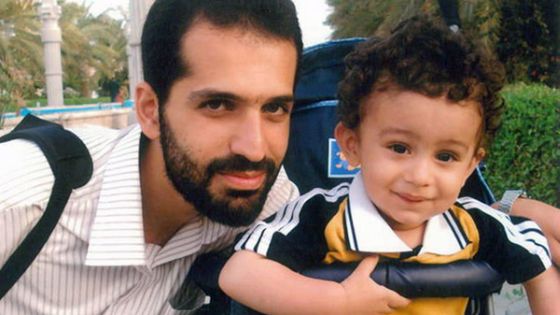
Mostafa Ahmadi Roshan with his son. Roshan is the fifth Iranian nuclear scientist whose murder is being linked to Israel.

The New York Times reports: As arguments flare in Israel and the United States about a possible military strike to set back Iran’s nuclear program, an accelerating covert campaign of assassinations, bombings, cyberattacks and defections appears intended to make that debate irrelevant, according to current and former American officials and specialists on Iran.

The campaign, which experts believe is being carried out mainly by Israel, apparently claimed its latest victim on Wednesday when a bomb killed a 32-year-old nuclear scientist in Tehran’s morning rush hour.

The scientist, Mostafa Ahmadi Roshan, was a department supervisor at the Natanz uranium enrichment plant, a participant in what Western leaders believe is Iran’s halting but determined progress toward a nuclear weapon. He was at least the fifth scientist with nuclear connections to be killed since 2007; a sixth scientist, Fereydoon Abbasi, survived a 2010 attack and was put in charge of Iran’s Atomic Energy Organization.

Iranian officials immediately blamed both Israel and the United States for the latest death, which came less than two months after a suspicious explosion at an Iranian missile base that killed a top general and 16 other people. While American officials deny a role in lethal activities, the United States is believed to engage in other covert efforts against the Iranian nuclear program.

The assassination drew an unusually strong condemnation from the White House and the State Department, which disavowed any American complicity. The statements by the United States appeared to reflect serious concern about the growing number of lethal attacks, which some experts believe could backfire by undercutting future negotiations and prompting Iran to redouble what the West suspects is a quest for a nuclear capacity.

“The United States had absolutely nothing to do with this,” said Tommy Vietor, a spokesman for the National Security Council. Secretary of State Hillary Rodham Clinton appeared to expand the denial beyond Wednesday’s killing, “categorically” denying “any United States involvement in any kind of act of violence inside Iran.”

Facebooktwittermail

U.S. citizen’s death sentence heightens tensions with Iran

The New York Times reports: Iran’s judiciary yesterday sentenced to death an imprisoned American convicted of espionage for the CIA, a punishment that shocked his family and was imposed against a backdrop of increasingly bellicose relations with the United States over the disputed Iranian nuclear program.

The sentence against the American, Amir Mirzaei Hekmati, 28, a retired Marine, was likely to become a new point of contention, and possible bargaining leverage, in Iran’s struggle against the West over its nuclear program. A tightening vise of sanctions, which threaten vital oil sales and with them Iran’s economy, has left Tehran feeling besieged and has pushed relations with the United States and its allies to the lowest ebb since the 1979 Islamic Revolution.

In retaliation, Tehran announced on Sunday that it had begun to enrich uranium at a second site, after having threatened to close the Strait of Hormuz to shipping, a measure that would severely curtail oil shipments.

The details of the case against Hekmati have been cloaked in secrecy since he was detained in August in Iran, to which his family said he had traveled to visit his grandparents. Official confirmation that he was even in Iranian custody was not provided until last month. The White House and the State Department, noting that Iranian prosecutors have a history of coercing confessions, denied that Hekmati was a spy and called for his immediate release. The CIA declined to comment.

Facebooktwittermail