Category Archives: 2016 President Election

Fred Trump taught his son the essentials of showboating self-promotion

The New York Times reports: The throngs of New Yorkers who poured into Coney Island on a sweltering Sunday in July 1939 — shuffling past the rides, hot-dog stands and freak shows — confronted one last spectacle blaring just beyond the surf.

At 65 feet and outfitted with enormous Trump signs, the yacht called the Trump Show Boat was hard to miss. And that was the point.

Its loudspeakers blasted recordings of “The Star-Spangled Banner” and “God Bless America” over and over, compelling many sunbathers, reluctant to be seen as unpatriotic, to stand and salute each time. When the boat floated swordfish-shaped balloons — redeemable for $25 or $250 toward a new Trump Home — toward the shore, bathers nearly rioted as they raced to snatch them up.

Fred C. Trump, the owner of the boat and the master builder of solid homes in Brooklyn and Queens, is often considered a point of contrast to his flashy son Donald, the brash developer who built gilded towers in Manhattan, and became a tabloid fixture, television personality and now, Republican presidential nominee.

But Donald J. Trump inherited more than just a real estate empire from his father. As a salesman, competitor, courter of politicians and controversy and above all, as a showboating self-promoter, Fred Trump was the Donald Trump of his day. [Continue reading…]

Facebooktwittermail

Serving in the military doesn’t make you special

Rosa Brooks writes: A strange thing happened when I married a soldier. Whenever I mentioned my husband’s occupation, my subsequent words, whether controversial or trite, would be greeted with the wide eyes and reverential nods Americans now reflexively offer members of the military community. Sometimes I’d even get an awkward, earnest “Thank you for your service,” or “That must be so hard.”

Our worshipful national attitude toward the military has been on full display during this presidential campaign season, and both major parties have been eager to exploit it. The Republicans trotted out retired Army Lt. Gen. Mike Flynn to tell Americans they should vote for Donald Trump instead of Hillary Clinton. The Democrats countered with retired Marine Gen. John Allen, who urged Americans to do the opposite.

Then came the Gold Star family episode. Trump has spent the entire campaign season insulting one group after another – Women! Immigrants! Democrats! Muslims! African Americans! – without apparent consequence. But when he spoke slightingly about the parents of a Muslim American Army officer killed in Iraq, he instantly found himself on the receiving end of bipartisan public condemnation.

To GOP House Speaker Paul Ryan, Trump’s comments were “beyond the pale”; to former Republican contender Jeb Bush, they were “so incredibly disrespectful of a family that endured the ultimate sacrifice for our country.” A coalition of military support and advocacy groups signed an open letter calling on Trump to apologize, declaring, “Nothing is more sacred or honored than our Gold Star parents.” “We work in a sacred space,” explained one of the signatories. A Gold Star family is “a sacred family,” added another.

This is the language of theology, not civics. And while only someone with a heart of stone could belittle the grief of parents who have lost a child, our national sanctification of the military makes me deeply uneasy. [Continue reading…]

Facebooktwittermail

Another Trump adviser with deep ties to Russia

Businessman and investor, Howard Lorber, who has various business interests in Russia and has been called one of Donald Trump’s “best friends,” is now one of his economic advisers. Josh Rogin writes: Trump’s visits to Russia began in 1987 and lasted until 2013, when he brought the Miss Universe pageant to Moscow and famously wondered on Twitter about Vladimir Putin, “will he become my best friend?” Trump was also deeply involved in discussions to work on the reconstruction of the Moskva and Rossiya hotels in Moscow’s city center. He has bragged about his ties to Russian businessmen connected to the Kremlin.

“The Russian market is attracted to me,” Trump told Real Estate Weekly in 2013. “I have a great relationship with many Russians, and almost all of the oligarchs were in the room.”

In November 1996, Trump spent three days in Moscow with Lorber and visited Ducat Place, a site being developed by Liggett-Ducat Ltd., a cigarette company that was owned by Lorber’s Vector Group at the time.

“We’re looking at building a super-luxury residential tower … which I think Moscow desperately wants and needs,’ Trump told the Moscow Times at the time.

Lorber’s business partner Ben LeBow was also involved in arranging Trump’s trip to Moscow. He bragged about bringing the Trump Organization to Russia in a 1996 interview with the Moscow Times.

“Donald is the preeminent marketeer and developer in the world,” said LeBow. “We want the best for Moscow — and Donald’s it.”

Trump’s plans to build a Trump Tower in Moscow and reconstruct the Moscow hotels eventually fizzled out. But 15 years later, Trump was still at it. In 2013, while he was organizing the Miss Universe pageant in Moscow, Trump tried to restart the Moscow Trump Tower project. He entered talks with Russian billionaire Araz Agalarov, who happened to own the Crocus City Hall, where the Miss Universe finals were held.

Lorber is only the latest Trump adviser to have long ties to Russia and a financial stake there. Campaign chairman Paul Manafort was a paid adviser to Russia’s client Ukrainian President Viktor Yanukovych for more than a decade. Foreign policy adviser Carter Page is a consultant for Russian state-owned energy firm Gazprom.

Donald Trump Jr. has been a huge proponent of expanding the family business to Russia, making half a dozen trips there on behalf of the Trump Organization during the latest U.S. financial crisis. [Continue reading…]

Facebooktwittermail

Hack of Democrats’ accounts was wider than believed, officials say

The New York Times reports: A Russian cyberattack that targeted Democratic politicians was bigger than it first appeared and breached the private email accounts of more than 100 party officials and groups, officials with knowledge of the case said Wednesday.

The widening scope of the attack has prompted the F.B.I. to broaden its investigation, and agents have begun notifying a long list of Democratic officials that the Russians may have breached their personal accounts.

The main targets appear to have been the personal email accounts of Hillary Clinton’s campaign officials and party operatives, along with a number of party organizations.

Officials have acknowledged that the Russian hackers gained access to the Democratic Congressional Campaign Committee, which is the fund-raising arm for House Democrats, and to the Democratic National Committee, including a D.N.C. voter analytics program used by Mrs. Clinton’s presidential campaign.

But the hack now appears to have extended well beyond those groups, and organizations like the Democratic Governors’ Association may also have been affected, according to Democrats involved in the investigation. [Continue reading…]

Facebooktwittermail

Trump’s assassination dog whistle was an act of stochastic terrorism

David S. Cohen writes: One day after his widely discussed “reboot” in which he did nothing more than read basic Republican economic talking points from a teleprompter, Donald Trump uttered perhaps his most outrageous – and dangerous – ad-lib yet. And that’s saying something for a campaign in which he’s criticized John McCain for being a prisoner of war, characterized Mexicans as rapists, called for banning Muslims from coming into the country, picked a fight with a Gold Star family and urged Russia to hack his political opponent.

Speaking to a crowd in Wilmington, North Carolina, Tuesday, Trump expressed concern about Hillary Clinton possibly picking Supreme Court justices and other judges. He then said, “If she gets to pick her judges, nothing you can do, folks. Although the Second Amendment people, maybe there is. I don’t know.”

Let that soak in for a second. One of the two major-party nominees for president just called for “Second Amendment people” to “do” something about his political opponent’s judges. According to the Trump campaign’s rapid response team, he was talking about those “Second Amendment people” coming together politically – “unification,” as they called it. The Clinton campaign, and pretty much the entire Internet, saw it differently: as a clear suggestion of violence against a political opponent.

It’s hard not to side with the Clinton campaign here. What Trump said was that a particular group – those who are defined by rallying around guns – should do something about Clinton and her judicial nominees. What can people who rally around guns do that’s different than others? Use those guns.

But it’s really irrelevant what Trump actually meant, because enough people will hear Trump’s comments and think he’s calling for people to take up arms against Clinton, her judges or both. Though most of the people hearing that call may claim he was joking, given what we know about people taking up arms in this country, there will undoubtedly be some people who think he was serious and consider the possibility.

In other words, what Trump just did is engage in so-called stochastic terrorism. This is an obscure and non-legal term that has been occasionally discussed in the academic world for the past decade and a half, and it applies with precision here. Stochastic terrorism, as described by a blogger who summarized the concept several years back, means using language and other forms of communication “to incite random actors to carry out violent or terrorist acts that are statistically predictable but individually unpredictable.”

Let’s break that down in the context of what Trump said. Predicting any one particular individual following his call to use violence against Clinton or her judges is statistically impossible. But we can predict that there could be a presently unknown lone wolf who hears his call and takes action in the future.

Stated differently: Trump puts out the dog whistle knowing that some dog will hear it, even though he doesn’t know which dog. [Continue reading…]

Facebooktwittermail

One-in-five U.S. Republicans want Trump to drop out

Reuters reports: Nearly one-fifth of registered Republicans want Donald Trump to drop out of the race for the White House, according to a Reuters/Ipsos poll released on Wednesday, reflecting the turmoil his candidacy has sown within his party.

Some 19 percent think the New York real estate magnate should drop out, 70 percent think he should stay in and 10 percent say they “don’t know,” according to the Aug. 5-8 poll of 396 registered Republicans. The poll has a confidence interval of six percentage points.

Among all registered voters, some 44 percent want Trump to drop out. That is based on a survey of 1,162 registered voters, with a confidence interval of 3 percentage points. That is 9 points higher than his support for the presidency in the latest Reuters/Ipsos tracking poll registered on Monday. [Continue reading…]

Facebooktwittermail

Trump crowds are angry about the demise of America’s white Christian majority

Robert P. Jones writes: On the surface, the answer to why the campaign rallies of Donald Trump have been frequently marked by vitriolic and racist outbursts, harsh rhetoric and even violence is simple: the candidate has encouraged it. But the raw materials Trump has at his disposal have been mined and refined for nearly half a century. Trump is not the source but an igniting spark.

The apocalyptic rhetoric that regularly escapes the bounds of civil discourse at Trump events is fueled by the particular energies that are unleashed when a long-dominant group senses the looming end of its era. Certainly, the boarded up shop fronts of small towns that testify to the disappearance of reliable working class jobs are a critical part of this sense of loss and distress. But the watershed moment that many analysts have missed, and that Trump’s most ardent supporters feel in their bones, is this: During Barack Obama’s tenure as president, the United States has crossed the threshold from being a majority white Christian country (54 percent in 2008) to a minority white Christian country (45 percent in 2015). The passing of a coherent cultural world — where working class jobs made ends meet and white conservative Christian values held sway — has produced this powerful politics of white Christian resentment. [Continue reading…]

Facebooktwittermail

50 GOP national security officials warn Trump ‘would be the most reckless president in American history’

The New York Times reports: Fifty of the nation’s most senior Republican national security officials, many of them former top aides or cabinet members for President George W. Bush, have signed a letter declaring that Donald J. Trump “lacks the character, values and experience” to be president and “would put at risk our country’s national security and well-being.”

Mr. Trump, the officials warn, “would be the most reckless president in American history.”

The letter says Mr. Trump would weaken the United States’ moral authority and questions his knowledge of and belief in the Constitution. It says he has “demonstrated repeatedly that he has little understanding” of the nation’s “vital national interests, its complex diplomatic challenges, its indispensable alliances and the democratic values” on which American policy should be based. And it laments that “Mr. Trump has shown no interest in educating himself.”

“None of us will vote for Donald Trump,” the letter states, though it notes later that many Americans “have doubts about Hillary Clinton, as do many of us.”

Among the most prominent signatories are Michael V. Hayden, a former director of both the C.I.A. and the National Security Agency; John D. Negroponte, who served as the first director of national intelligence and then deputy secretary of state; and Robert B. Zoellick, another former deputy secretary of state, United States trade representive and, until 2012, president of the World Bank. Two former secretaries of homeland security, Tom Ridge and Michael Chertoff, also signed, as did Eric S. Edelman, who served as Vice President Dick Cheney’s national security adviser and as a top aide to Robert M. Gates when he was secretary of defense. [Continue reading…]

Facebooktwittermail

If Trump wins, what happens to U.S. relations with its traditional allies?

Politico reports: It was a strange day for Estonia when the tiny Baltic nation became the focus of intense debate in the U.S. presidential campaign.

At issue: Would the United States honor its NATO obligation to defend Estonia in the event of an attack by Russia? Donald Trump, who has repeatedly criticized small NATO members for “taking advantage” of the United States, hedged his answer. “Have they fulfilled their obligations to us?” he told the New York Times. “If they fulfill their obligations to us, the answer is yes.”

Hours later, Trump backer Newt Gingrich doubled down on the Republican candidate’s skepticism toward NATO duties, saying: “Estonia is in the suburbs of [the Russian city of] St. Petersburg … I’m not sure I would risk nuclear war over the suburbs of St. Petersburg.”

For Estonians, and all other NATO members in the region, that was a chilling message. “All of a sudden the issue closest to our skin — the defense of Estonia, of all things — becomes an issue in this campaign,” Jüri Luik, former Estonian ambassador to Russia, said. “It’s a totally unexpected development, and a gloomy situation for all of Eastern Europe.”

“NATO’s deterrent power depends in large part on the U.S. president’s position. If he is unsure … that weakens the deterrent immensely.”

Beyond regional security, the Estonian episode raised a bigger, more troubling question for Europeans watching the U.S. presidential campaign: If Trump wins, will he feel any obligation to uphold his country’s historical role as defender and guarantor of the West? [Continue reading…]

Facebooktwittermail

New Clinton ad insinuates Trump won’t put America first


The Washington Post reports: Insinuations, accusations and speculations have been a staple of Donald Trump’s presidential campaign. Now Hillary Clinton is using the Republican nominee’s own methods against him.

In a new online advertisement, her campaign makes a few factual statements about Trump’s Russian sympathies, stretches the truth in a couple of ways and then invites readers to draw their own conclusions.

It is exactly the technique that Trump has used repeatedly throughout the campaign to feed conspiracy theories, said Joseph Uscinski, a political scientist at the University of Miami who studies conspiracy theories. The advertisement, which is titled “What Is Donald Trump’s Connection to Vladimir Putin?” and appeared online Friday, insinuates that Trump has some kind of business or political alliance with Russia’s president, Uscinski said.

“We don’t know what’s going on here, and Donald won’t tell us,” the spot concludes. “We’ll let you guess.”

To be sure, a victory for Trump would augur a radical shift in U.S. foreign policy toward Russia. The United States would be much friendlier toward Putin and much more accommodating of his international agenda.

Trump has surrounded himself with people who are sympathetic to Putin. Paul Manafort, the chairman of Trump’s campaign, also advised former Ukranian president Viktor Yanukovych, who was aligned with Putin. Carter Page, one of Trump’s advisers on foreign affairs, has openly praised Putin and criticized Western sanctions on Russian officials.

Trump himself has praised Putin, as well, and has also called for the United States to retreat from its responsibilities in NATO — which would probably increase Putin’s influence in the region.

At this point, however, there is no evidence that anyone in the Trump campaign has a direct connection with the Kremlin, as Clinton’s spot insinuated. [Continue reading…]

Facebooktwittermail

Donald Trump is wrong. Rigging an election is almost impossible

Ari Berman writes: In a span of two weeks, federal courts have struck down Republican-backed voting restrictions in six states, including laws that required strict forms of government-issued ID in order to cast a ballot, cut back on early-voting days and made it harder to register. The rulings found that the laws — in Texas, North Carolina, Michigan, North Dakota, Kansas and Wisconsin — violated the Voting Rights Act by discriminating against people of color, sometimes “with almost surgical precision.”

Rather than seeing these rulings as a victory for democracy, Donald Trump says they will lead to a record number of fraudulent votes for Hillary Clinton in November. “The voter-ID situation has turned out to be a very unfair development,” Trump told The Washington Post. “We may have people vote 10 times. . . . Why not? If you don’t have voter ID, you can just keep voting and voting and voting.”

Just how easy would it be to rig a Presidential election, as Trump suggests Democrats are preparing to do? How many people would it require, what tactics would they have to use, and how many votes would they need to flip a major contest or state? [Continue reading…]

Facebooktwittermail

Trump win would offer ‘real opportunity’ for white nationalists says American Nazi Party chairman

Buzzfeed reports: The chairman of the American Nazi Party, Rocky Suhayda, declared on his radio program last month that a Donald Trump victory would present a great opportunity for white nationalists to build pro-white coalitions.

“I’m gonna project, that I believe that Trump is going to win the election this November, for various reasons which I don’t want to go into again,” Suhayda said on his radio program’s July broadcast. “I think it’s gonna surprise the enemy, because, I think that they feel that the white working class, especially the male portion of the working class, and with him his female counterparts have basically thrown in the towel. Given up hope of any politician again standing up for their interests.”

“Now, if Trump does win, okay, it’s going to be a real opportunity for people like white nationalists, acting intelligently to build upon that, and to go and start – you know how you have the black political caucus and what not in Congress, and, everything, to start building on something like that, okay,” continued the American Nazi. “It doesn’t have to be anti, like the movement’s been for decades, so much as it has to be pro-white. It’s kinda hard to go and call us bigots, if we don’t go around and act like a bigot. That’s what the movement should contemplate. Alright.” [Continue reading…]

Facebooktwittermail

Why Vladimir Putin might want to interfere in the U.S. presidential elections

Fiona Hill writes: Whatever his personal preferences, … Putin cannot reasonably expect to influence the outcome of the US presidential election. The best he can hope for is to reduce the ability of whoever comes into the Oval Office to pursue policies that are detrimental to Putin’s and Russia’s interests.

Right now, Putin wants the US to remove sanctions imposed on Russia after its annexation of Crimea in March 2014. Perhaps even more importantly, Russia has parliamentary elections this September, and presidential elections again in 2018, when Putin is expected to run for a fourth term. The Kremlin does not want a repeat of the protests of 2011-’12, and certainly no pronouncements from the US about whether the elections are free and fair or whether Putin has a genuine popular mandate for his next presidency.

Against this backdrop, the information from the DNC files underscores for the Russian public, and the outside world, that US party politics is just as dirty as in Russia or anywhere else. The US looks a lot less credible as the moral authority on the conduct of elections.

Irrespective of whether Donald Trump or Hillary Clinton is elected, from Moscow’s perspective, at the end of this ruinous political campaign, the new US president will look as wounded as Putin did when he took office again in 2012. A US president who is elected amid controversy and recrimination, reviled by a large segment of the electorate, and mired in domestic crises will be hard-pressed to forge a coherent foreign policy and challenge Russia. [Continue reading…]

Facebooktwittermail

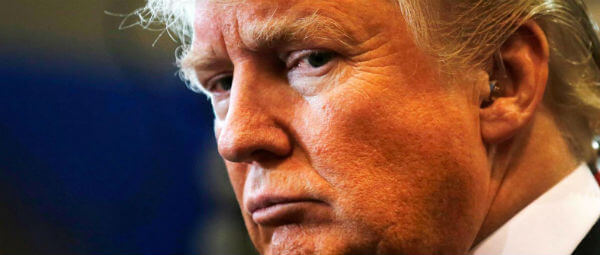
The mind of Donald Trump

trump-frown

Dan McAdams writes: Donald Trump’s basic personality traits suggest a presidency that could be highly combustible. One possible yield is an energetic, activist president who has a less than cordial relationship with the truth. He could be a daring and ruthlessly aggressive decision maker who desperately desires to create the strongest, tallest, shiniest, and most awesome result — and who never thinks twice about the collateral damage he will leave behind. Tough. Bellicose. Threatening. Explosive.

In the presidential contest of 1824, Andrew Jackson won the most electoral votes, edging out John Quincy Adams, Henry Clay, and William Crawford. Because Jackson did not have a majority, however, the election was decided in the House of Representatives, where Adams prevailed. Adams subsequently chose Clay as his secretary of state. Jackson’s supporters were infuriated by what they described as a “corrupt bargain” between Adams and Clay. The Washington establishment had defied the will of the people, they believed. Jackson rode the wave of public resentment to victory four years later, marking a dramatic turning point in American politics. A beloved hero of western farmers and frontiersmen, Jackson was the first nonaristocrat to become president. He was the first president to invite everyday folk to the inaugural reception. To the horror of the political elite, throngs tracked mud through the White House and broke dishes and decorative objects. Washington insiders reviled Jackson. They saw him as intemperate, vulgar, and stupid. Opponents called him a jackass—the origin of the donkey symbol for the Democratic Party. In a conversation with Daniel Webster in 1824, Thomas Jefferson described Jackson as “one of the most unfit men I know of” to become president of the United States, “a dangerous man” who cannot speak in a civilized manner because he “choke[s] with rage,” a man whose “passions are terrible.” Jefferson feared that the slightest insult from a foreign leader could impel Jackson to declare war. Even Jackson’s friends and admiring colleagues feared his volcanic temper. Jackson fought at least 14 duels in his life, leaving him with bullet fragments lodged throughout his body. On the last day of his presidency, he admitted to only two regrets: that he was never able to shoot Henry Clay or hang John C. Calhoun.

The similarities between Andrew Jackson and Donald Trump do not end with their aggressive temperaments and their respective positions as Washington outsiders. The similarities extend to the dynamic created between these dominant social actors and their adoring audiences — or, to be fairer to Jackson, what Jackson’s political opponents consistently feared that dynamic to be. They named Jackson “King Mob” for what they perceived as his demagoguery. Jackson was an angry populist, they believed — a wild-haired mountain man who channeled the crude sensibilities of the masses. More than 100 years before social scientists would invent the concept of the authoritarian personality to explain the people who are drawn to autocratic leaders, Jackson’s detractors feared what a popular strongman might do when encouraged by an angry mob.

During and after World War II, psychologists conceived of the authoritarian personality as a pattern of attitudes and values revolving around adherence to society’s traditional norms, submission to authorities who personify or reinforce those norms, and antipathy — to the point of hatred and aggression — toward those who either challenge in-group norms or lie outside their orbit. Among white Americans, high scores on measures of authoritarianism today tend to be associated with prejudice against a wide range of “out-groups,” including homosexuals, African Americans, immigrants, and Muslims. Authoritarianism is also associated with suspiciousness of the humanities and the arts, and with cognitive rigidity, militaristic sentiments, and Christian fundamentalism.

When individuals with authoritarian proclivities fear that their way of life is being threatened, they may turn to strong leaders who promise to keep them safe — leaders like Donald Trump. In a national poll conducted recently by the political scientist Matthew MacWilliams, high levels of authoritarianism emerged as the single strongest predictor of expressing political support for Donald Trump. Trump’s promise to build a wall on the Mexican border to keep illegal immigrants out and his railing against Muslims and other outsiders have presumably fed that dynamic.

As the social psychologist Jesse Graham has noted, Trump appeals to an ancient fear of contagion, which analogizes out-groups to parasites, poisons, and other impurities. In this regard, it is perhaps no psychological accident that Trump displays a phobia of germs, and seems repulsed by bodily fluids, especially women’s. He famously remarked that Megyn Kelly of Fox News had “blood coming out of her wherever,” and he repeatedly characterized Hillary Clinton’s bathroom break during a Democratic debate as “disgusting.” Disgust is a primal response to impurity. On a daily basis, Trump seems to experience more disgust, or at least to say he does, than most people do.

The authoritarian mandate is to ensure the security, purity, and goodness of the in-group — to keep the good stuff in and the bad stuff out. In the 1820s, white settlers in Georgia and other frontier areas lived in constant fear of American Indian tribes. They resented the federal government for not keeping them safe from what they perceived to be a mortal threat and a corrupting contagion. Responding to these fears, President Jackson pushed hard for the passage of the Indian Removal Act, which eventually led to the forced relocation of 45,000 American Indians. At least 4,000 Cherokees died on the Trail of Tears, which ran from Georgia to the Oklahoma territory.

An American strand of authoritarianism may help explain why the thrice-married, foul-mouthed Donald Trump should prove to be so attractive to white Christian evangelicals. As Jerry Falwell Jr. told The New York Times in February, “All the social issues — traditional family values, abortion — are moot if isis blows up some of our cities or if the borders are not fortified.” Rank-and-file evangelicals “are trying to save the country,” Falwell said. Being “saved” has a special resonance among evangelicals — saved from sin and damnation, of course, but also saved from the threats and impurities of a corrupt and dangerous world.

When my research associates and I once asked politically conservative Christians scoring high on authoritarianism to imagine what their life (and their world) might have been like had they never found religious faith, many described utter chaos — families torn apart, rampant infidelity and hate, cities on fire, the inner rings of hell. By contrast, equally devout politically liberal Christians who scored low on authoritarianism described a barren world depleted of all resources, joyless and bleak, like the arid surface of the moon. For authoritarian Christians, a strong faith — like a strong leader — saves them from chaos and tamps down fears and conflicts. Donald Trump is a savior, even if he preens and swears, and waffles on the issue of abortion.

In December, on the campaign trail in Raleigh, North Carolina, Trump stoked fears in his audience by repeatedly saying that “something bad is happening” and “something really dangerous is going on.” He was asked by a 12-year-old girl from Virginia, “I’m scared — what are you going to do to protect this country?”

Trump responded: “You know what, darling? You’re not going to be scared anymore. They’re going to be scared.” [Continue reading…]

Facebooktwittermail

Trump’s core supporters don’t like the way he treated the Khans — but they’re still afraid of Muslims

Greg Sargent writes: Trump’s attacks on the Khan family appear to have gone too far even for his core supporters. American voters overall disapprove of his handling of the exchange with the Khans by 74-13, and Trump-leaning groups agree: Non-college whites disapprove by 67-14; non-college white men disapprove by 64-19; and white evangelicals disapprove by 63-20. (By the way, Republicans and GOP-leaners disapprove by 58-23, and conservatives disapprove by 62-18.)

The overwhelming public disapproval of Trump’s battle with the Khan family is encouraging to see. It’s looking increasingly like Trump, by engaging the Khans, helpfully reinforced many of the messages coming out of the Democratic convention about Trump’s demagogic scapegoating by religion and his overall hostility towards diversifying America. If the Dem convention brought a sledgehammer down on Trump’s worldview, he basically picked up that sledgehammer and continued to hit himself over the head with it — especially in the eyes of the college educated white voters who appear increasingly repulsed by Trumpism.

And yet, even after the battle over the Khans forced a national debate over Trump’s fearmongering about Muslims, his core voting groups are still sticking by the temporary ban on their entry into the United States — which, after all, is a core tenet of the story he’s telling about America. [Continue reading…]

Facebooktwittermail

Why are some conservative thinkers falling for Trump?

Peter Beinart writes: Logically, Donald Trump should have less support among intellectuals than he had a year ago. That’s because over the past year, he has made statements that expose him as both ignorant of public policy and contemptuous of liberal-democratic norms. He has proposed banning Muslims from entering the United States, incited violence against protesters at his rallies, responded to The Washington Post’s critical coverage by warning that its owner is “getting away with murder” on his taxes and “we can’t let him get away with it,” declared a federal judge biased because he’s Mexican American, and twice revealed his unfamiliarity with the term nuclear triad.

Instead, more than a year after Trump announced his presidential bid, his support among intellectuals has grown. Of course, many prominent conservatives — from George Will to William Kristol to David Brooks to Erick Erickson — oppose him militantly. But another cluster of writers and thinkers have declared themselves supportive of, or at least open to supporting, Trump. Among Trump’s critics, the predominant explanation for this openness is opportunism: Supporting the Republican nominee can have professional benefits. But a deeper dynamic is at work. It’s just hard to recognize, because American intellectuals haven’t felt the allure of authoritarian, illiberal politics this strongly in a long time.

In 1953, Czesław Miłosz published The Captive Mind, which described how a series of Polish intellectuals came to embrace Stalinism. Miłosz detailed the role that “coercion” and “personal ambition” played in their ideological transformation. But he stressed that he was concerned “with questions more significant than mere force” or material advancement. “To belong to the masses is the great longing of the ‘alienated’ intellectual,” Miłosz argued. “The gratifications of personal ambition … are merely the outward and visible signs of social usefulness, symbols of a recognition that strengthens the intellectual’s feeling of belonging.” [Continue reading…]

Facebooktwittermail

Bernie Sanders: I support Hillary Clinton. So should everyone who voted for me

Bernie Sanders writes: The conventions are over and the general election has officially begun. In the primaries, I received 1,846 pledged delegates, 46% of the total. Hillary Clinton received 2,205 pledged delegates, 54%. She received 602 superdelegates. I received 48 superdelegates. Hillary Clinton is the Democratic nominee and I will vigorously support her.

Donald Trump would be a disaster and an embarrassment for our country if he were elected president. His campaign is not based on anything of substance — improving the economy, our education system, healthcare or the environment. It is based on bigotry. He is attempting to win this election by fomenting hatred against Mexicans and Muslims. He has crudely insulted women. And as a leader of the “birther movement,” he tried to undermine the legitimacy of our first African American president. That is not just my point of view. That’s the perspective of a number of conservative Republicans.

In these difficult times, we need a president who will bring our nation together, not someone who will divide us by race or religion, not someone who lacks an understanding of what our Constitution is about.

On virtually every major issue facing this country and the needs of working families, Clinton’s positions are far superior to Trump’s. Our campaigns worked together to produce the most progressive platform in the history of American politics. Trump’s campaign wrote one of the most reactionary documents. [Continue reading…]

Facebooktwittermail

Why we ask to see candidates’ tax returns

Mitchell Zuckoff writes: Lost in the debate over Donald J. Trump’s refusal to release his tax returns is the story of where the custom of disclosure comes from — and why it can be so valuable as a measure of character. It’s a tale of presidential tax shenanigans, political scandal and one of the most famous quotations in American history: Richard M. Nixon’s “I am not a crook.”

The story begins in July 1969, when Congress eliminated a provision of the tax code that had allowed a sitting or former president to donate his papers to a public or nonprofit archive in exchange for a very large tax deduction. Congress’s rationale was that a president’s papers already belonged to the public.

In his taxes for 1969, President Nixon indicated that four months before Congress acted, he had donated more than 1,000 boxes of documents to the National Archives. He claimed a deduction of more than $500,000. [Continue reading…]

Facebooktwittermail