Category Archives: 2016 President Election

Papal official denies report Sanders invited himself to Vatican

Reuters reports: U.S. Democratic presidential candidate Bernie Sanders was invited to speak at an April 15 Vatican event by the Vatican, a senior papal official said on Friday, denying a report that Sanders had invited himself.

“I deny that. It was not that way,” Monsignor Marcelo Sanchez Sorondo told Reuters in a telephone interview while he was traveling in New York. Sorondo, a close aide to Pope Francis, is chancellor of the Pontifical Academy of Social Sciences, which is hosting the event.

He said it was his idea to invite Sanders.

A Bloomberg report quoted Margaret Archer, president of the Pontifical Academy of Social Sciences, as saying that Sanders had broken with protocol by failing to contact her office first.

“This is not true and she knows it. I invited him with her consensus,” said Sorondo, who is senior to Archer. [Continue reading…]

Bloomberg reported: Archer, an English social scientist appointed the head the pontifical academy in 2014, said that while she “quite liked” Sanders’s program on paper, his failure to contact her first is a breach of protocol. “The president of the academy organizing this event has not been contacted with monumental discourtesy,” she said, referring to herself. [Continue reading…]

Facebooktwittermail

The politics of backlash

Roger Cohen writes: There is a global backlash against rising inequality, stagnant middle-class incomes, politicians for sale, social exclusion, offshoring of jobs, free trade, mass immigration, tax systems skewed for giant corporations and their bosses, and what Pope Francis has lambasted as the “unfettered pursuit of money.”

The backlash takes various forms. In the United States it has produced an angry election campaign. The success of both Donald Trump on the right and Bernie Sanders on the left owes a lot to the thirst for radical candidates who break the mold. Trump is unserious and incoherent; Sanders is neither of those things. But they both draw support from constituencies that feel stuck, reject politics as usual, and perceive a system rigged against them.

Hillary Clinton’s chief predicament, apart from the trust issue, is that she represents the past in a world where the post-cold-war optimism that accompanied her husband’s arrival in the White House almost a quarter-century ago has vanished. To embody continuity these days is political suicide.

In an interesting essay in the journal STIR, Jonna Ivin writes: “People want to be heard. They want to believe their voices matter. A January 2016 survey by the Rand Corporation reported that Republican primary voters are 86.5 percent more likely to favor Donald Trump if they ‘somewhat agree or ‘strongly agree’ with the statement, ‘People like me don’t have any say about what the government does.”’ [Continue reading…]

Facebooktwittermail

Why Trump can’t break the GOP

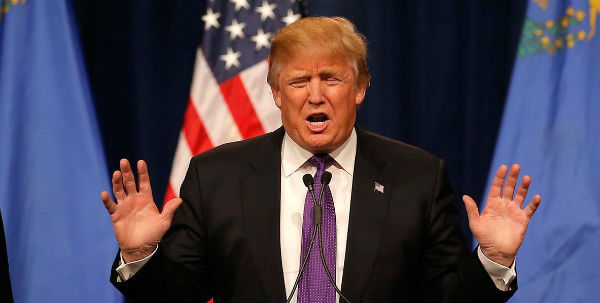
trump

Jacob S. Hacker and Paul Pierson write: Everywhere you look, in the year of Donald J. Trump, observers are talking about a national party realignment or a Republican death spiral. Our two-party system has not undergone a major realignment since the South became solidly Republican. There has not been a major-party demise since the Whigs collapsed on the eve of the Civil War.

Mr. Trump (or Ted Cruz) could very well lead the party to a decisive and divisive defeat. If it was catastrophic enough, it could lead to changes in party strategy. Yet predictions of a Republican crackup should be greeted with skepticism. While rumors of the death of the Republican Party have been common in recent presidential elections, they have proved again and again to be vastly exaggerated.

The gap between expectations and political realities reflects two mistakes: The first is to overestimate the centrality of presidential contests to our system of checks and balances.

The second is to misunderstand the recent Republican electoral successes — which rest less on effective governance than on attacking government, and especially the occupant of the Oval Office. [Continue reading…]

Facebooktwittermail

Trump’s nomination would be ‘a historic election defeat just waiting to happen’

The New York Times reports: Mr. Trump has become unacceptable, perhaps irreversibly so, to broad swaths of Americans, including large majorities of women, nonwhites, Hispanics, voters under 30 and those with college degrees — the voters who powered President Obama’s two victories and represent the country’s demographic future. All view him unfavorably by a 2-to-1 margin, according to a recent New York Times/CBS News poll.

In some states, Mr. Trump has surprised establishment-aligned Republicans with his breadth of support beyond the less-educated men who form his base. Even so, his support in the nominating process, in which some 30 million people may ultimately vote, would be swamped in a general election, when turnout is likely to be four times that.

“We’re talking about somebody who has the passionate devotion of a minority and alternately scares, appalls, angers — or all of the above — a majority of the country,” said Henry Olsen, a conservative analyst. “This isn’t anything but a historic election defeat just waiting to happen.” [Continue reading…]

Facebooktwittermail

Is Donald Trump actually a fascist?

The Toronto Star reports: Google Donald Trump, and it won’t be long before the “f” word comes up.

The word is “fascist.” And it’s back in a way that hasn’t been seen for years, as opponents grope for a term that matches the repulsion that a majority of Americans feel for The Donald.

Former Mexican president Vicente Fox has all but called Trump a fascist — and used another “f-word” for his proposed border wall.

Historian Fedja Buric compared him with founding fascist Benito Mussolini. And New Republic editor Jamil Smith said it straight out: “yes, Donald Trump is a fascist.”

Trump even went too far for tub-thumping far right radio host Glenn Beck, who lumped him with “Adolph Hitler in 1929,” on ABC-TV.

But those who have made an academic study of fascism say although Trump and his Coalition of the Chilling may share some of the characteristics of past fascists, the jaw-jutting reality star doesn’t quite squeeze into the classic 20th-century mould. [Continue reading…]

Facebooktwittermail

How to hack an election

Bloomberg Businessweek reports on the confessions of Andrés Sepúlveda, a political hacker who rigged elections throughout Latin America for almost a decade: His teams worked on presidential elections in Nicaragua, Panama, Honduras, El Salvador, Colombia, Mexico, Costa Rica, Guatemala, and Venezuela. Campaigns mentioned in this story were contacted through former and current spokespeople; none but Mexico’s PRI and the campaign of Guatemala’s National Advancement Party would comment.

As a child, he witnessed the violence of Colombia’s Marxist guerrillas. As an adult, he allied with a right wing emerging across Latin America. He believed his hacking was no more diabolical than the tactics of those he opposed, such as Hugo Chávez and Daniel Ortega.

Many of Sepúlveda’s efforts were unsuccessful, but he has enough wins that he might be able to claim as much influence over the political direction of modern Latin America as anyone in the 21st century. “My job was to do actions of dirty war and psychological operations, black propaganda, rumors — the whole dark side of politics that nobody knows exists but everyone can see,” he says in Spanish, while sitting at a small plastic table in an outdoor courtyard deep within the heavily fortified offices of Colombia’s attorney general’s office. He’s serving 10 years in prison for charges including use of malicious software, conspiracy to commit crime, violation of personal data, and espionage, related to hacking during Colombia’s 2014 presidential election. He has agreed to tell his full story for the first time, hoping to convince the public that he’s rehabilitated — and gather support for a reduced sentence.

Usually, he says, he was on the payroll of Juan José Rendón, a Miami-based political consultant who’s been called the Karl Rove of Latin America. Rendón denies using Sepúlveda for anything illegal, and categorically disputes the account Sepúlveda gave Bloomberg Businessweek of their relationship, but admits knowing him and using him to do website design. “If I talked to him maybe once or twice, it was in a group session about that, about the Web,” he says. “I don’t do illegal stuff at all. There is negative campaigning. They don’t like it — OK. But if it’s legal, I’m gonna do it. I’m not a saint, but I’m not a criminal.” While Sepúlveda’s policy was to destroy all data at the completion of a job, he left some documents with members of his hacking teams and other trusted third parties as a secret “insurance policy.”

Sepúlveda provided Bloomberg Businessweek with what he says are e-mails showing conversations between him, Rendón, and Rendón’s consulting firm concerning hacking and the progress of campaign-related cyber attacks. Rendón says the e-mails are fake. An analysis by an independent computer security firm said a sample of the e-mails they examined appeared authentic. Some of Sepúlveda’s descriptions of his actions match published accounts of events during various election campaigns, but other details couldn’t be independently verified. One person working on the campaign in Mexico, who asked not to be identified out of fear for his safety, substantially confirmed Sepúlveda’s accounts of his and Rendón’s roles in that election.

Sepúlveda says he was offered several political jobs in Spain, which he says he turned down because he was too busy. On the question of whether the U.S. presidential campaign is being tampered with, he is unequivocal. “I’m 100 percent sure it is,” he says. [Continue reading…]

Facebooktwittermail

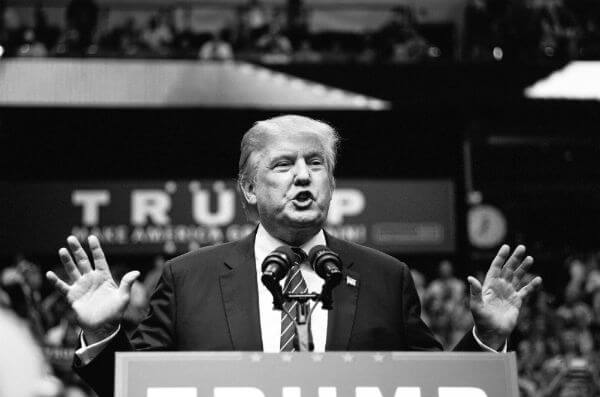
The overlooked star of the Trump show is the crowd

trump-bw

Gwynn Guilford writes: Over the span of three days in March, in far-flung corners of Ohio, more than 20,000 people—retired schoolteachers, hair stylists, chinos-clad Young Republicans, Nicaraguan immigrants, Vietnam vets, primly coiffed soccer moms—braved downpours, traffic, muscle spasms, hunger, and protesters for a chance to behold, in the very tanned flesh, Donald J. Trump, billionaire, business genius, TV star, and, very possibly, the next president of the United States. One of those people was me.

I went, first and foremost, to answer a deceptively simple question: How has Trump defied pretty much every rule not just of electoral politics, but of contemporary civil discourse to lead the race for the Republican party’s nomination for president? Set aside for one moment the economic conditions that we know have made Trump’s rise possible. What about those of the human psyche? What does Trump’s improbable rise reveal about how Americans understand themselves, what they imagine for their country, what they crave in their leaders?

To find answers to these questions, I decided to become part of Trump’s audience, not just its observer. For three days in mid-March, I buried my reporter credentials in my bag and lost myself in the throngs of Trump supporters at rallies in Cleveland, Cincinnati, and Youngstown. What I experienced astonished me. I’m far from being a Trump supporter; in fact I object to most of his views. But as I shuffled out of a Youngstown aircraft hangar, I became aware of the unsettling but very real possibility that, in the thrill of the moment, I’d been chanting along with the Trump crowd. (I don’t think I did, but I can’t be sure). Indeed, it felt like I had just taken part in an epic psychological experiment.

Spending three straight days in the audience taught me one crucial thing. The overlooked star of the Trump show is the crowd—the single-voiced creature that roars “Mexico!” when asked about wall construction, and emits a foghorn of boos when reminded of reporters cooped in a pen at the rear of the room. From within the Trump rally masses, I felt the strange sea-change that fuses 20,000 individuals into one being, I felt its power swell, and sometimes it felt good. [Continue reading…]

Facebooktwittermail

Adventures in the Trump Twittersphere

Zeynep Tufekci writes: Every morning since August, I have steeled myself to enter an alternate universe. I scroll through social media feeds where people are convinced that Congress funds the Islamic State, that our president hates this country and wants it to fail and that Donald J. Trump is the only glimmer of hope in this bleak landscape.

It’s my look at a list of Twitter users whom I’ve identified as Trump supporters. Some accounts have only a few followers while some have tens of thousands. (No one comes close to Mr. Trump himself, at more than seven million.) They include people of many professions and backgrounds. I found them by reading at responses to news media or political accounts, and then went on to seek out other accounts they followed. It’s a large, sprawling network.

As an academic, I study social media and social movements, from the uprising in Egypt to Black Lives Matter. As I watched this election season unfold, I wanted to gain a better understanding of the power of the Trump social media echo chamber. What I’ve been reading has surprised even my jaded eyes. It’s a world of wild falsehoods and some truth that you see only rarely in mainstream news outlets, or hear spoken among party elites.

It’s popular to argue today that Mr. Trump’s success is, in part, a creation of the traditional news media — cable networks that couldn’t get enough of his celebrity and the ratings it brought, and newspapers that didn’t scrutinize him with enough care. There is some truth in that, but the contention misses a larger reality.

Mr. Trump’s rise is actually a symptom of the mass media’s growing weakness, especially in controlling the limits of what it is acceptable to say. [Continue reading…]

Facebooktwittermail

Trump attack on Geneva Conventions denounced by ex-officers and advocates

The Guardian reports: Retired senior military officers and human rights advocates are reacting with disgust at Republican presidential frontrunner Donald Trump’s description of the Geneva Conventions as a “problem” for the conduct of US wars.

At an appearance in Wisconsin on Wednesday that was obscured by his suggestion that women who choose abortion should face punishment, Donald Trump was also quoted as saying: “The problem is we have the Geneva Conventions, all sorts of rules and regulations, so the soldiers are afraid to fight.”

Trump has previously advocated killing the families of terror suspects; torture “a hell of a lot worse” than waterboarding; and widespread bombing campaigns against Islamic State, which operates in civilian-packed areas. The Geneva Conventions provide the basis for protections against war crimes, privileging the status of civilians and detainees during wartime.

Several retired officers said the comments called into question Trump’s fitness to serve as commander-in-chief, saying that service members operating in line with his predilections would be tasked with behavior ranging from the disgraceful to the illegal.

“Donald Trump cannot possibly understand [Geneva] because he has neither the experience, the expertise or the moral compass to grasp it,” said Steve Kleinman, an air force reserve colonel and an interrogations expert. [Continue reading…]

Facebooktwittermail

Thomas Frank: The inequality sweepstakes

Reading Thomas Frank’s new book, Listen, Liberal, or What Ever Happened to the Party of the People?, I was reminded of the snapshot that Oxfam offered us early this year: 62 billionaires now have more wealth than the bottom 50% of the global population, while the richest 1% own more than the other 99% combined. And in case you’re wondering in which direction inequality is trending on Planet Earth, note that in 2010, it took 388 of the super-rich to equal the holdings of that bottom 50%. At this rate in the inequality sweepstakes, by 2030, just the top 10 billionaires might do the trick. Let me just add that, as Frank makes clear in his brilliant new work, Donald Trump doesn’t have to win the presidency for billionaires to stand triumphant on the American part of our planet. Hillary Clinton will do just fine, thank you.

Listen, Liberal is, in a sense, a history of how, from the Clintonesque 1990s on, the Democratic Party managed to ditch the working class (hello, Donald Trump!) and its New Deal tradition, throw its support behind a rising “professional” and technocratic class, and go gaga over Wall Street and those billionaires to come. In the process, its leaders fell in love with Goldman Sachs and every miserable trade pact that hit town, led the way in deregulating the financial system, and helped launch what Frank terms “the greatest wave of insider looting ever seen”; the party, that is, went Silicon Valley and left Flint, Michigan, to the Republicans.  Only a few years after Bill Clinton vacated the Oval Office the financial system he and his team had played such a role in deregulating had to be rescued, lock, stock, and barrel from ultimate collapse. Quite a record all in all. Put another way, as Frank makes clear, in these years the Democrats (with obvious exceptions) became a more or less traditional Republican party. And if the Democrats are now the party of inequality, then what in the world are the Republicans? Don’t even get me started on the cliff that crew walked off of.

In the following post, adapted from his new book, Frank does a typically brainy thing. Since we’ve all heard for years about how the Democrats have been stopped from truly pursuing their political program by Republican experts in political paralysis, he turns to a rare set of places where, in fact, the Republicans were incapable of getting in the way and… well, let him tell the story. Tom Engelhardt

The blue state model
How the Democrats created a “liberalism of the rich”
By Thomas Frank

[This piece has been adapted from Thomas Frank’s new book, Listen, Liberal, or What Ever Happened to the Party of the People? (Metropolitan Books).]

When you press Democrats on their uninspiring deeds — their lousy free trade deals, for example, or their flaccid response to Wall Street misbehavior — when you press them on any of these things, they automatically reply that this is the best anyone could have done. After all, they had to deal with those awful Republicans, and those awful Republicans wouldn’t let the really good stuff get through. They filibustered in the Senate. They gerrymandered the congressional districts. And besides, change takes a long time. Surely you don’t think the tepid-to-lukewarm things Bill Clinton and Barack Obama have done in Washington really represent the fiery Democratic soul.

So let’s go to a place that does. Let’s choose a locale where Democratic rule is virtually unopposed, a place where Republican obstruction and sabotage can’t taint the experiment.

Continue reading

Facebooktwittermail

Donald Trump may sound like a clown, but he is a rhetoric pro like Cicero

Joe Romm writes: A key purpose of hyperbole is to express the emotion of anger, as Aristotle explained in classic work, “Rhetoric,” the first in-depth study of the art. Aristotle explains the hyperboles “show vehemence of character; and this is why angry people use them more than other people.”

When Trump makes wildly over-the-top claims — he’s going to build a wall and make Mexico pay for it — it has no effect on his supporters to point out that this is hyperbolic nonsense. Quite the reverse. Trump’s claim moves them emotionally and persuades them precisely because it is hyperbolic nonsense. They are angry, and he’s showing that he is angry too — which is vastly more effective communications than the bland assertions by the professional politicians that they “understand” there is a lot of anger out there.

“Your language will be appropriate if it expresses emotion and character,” notes Aristotle. “To express emotion, you’ll employ the language of anger in speaking of outrage; the language of disgust and discrete reluctance to utter a word when speaking of impiety or foulness; the language of exultation for a tale of glory.”

Trump loves the rhetorical device of phony “reluctance” to utter a word or phrase: “She just said a terrible thing. You know what she said? Shout it out because I don’t want to say. OK you’re not allowed to say and I never expect to hear that from you again. She said — I never expect to hear that from you again — she said he’s a pussy…. That’s terrible! Terrible.”

This figure, apophasis (from the Greek word for “to deny”), emphasizes a point by pretending to deny it, stresses an idea or image by saying you don’t want talk about it, as with Trump’s use of “pussy.” A favorite of Cicero’s — “I will not even mention the fact that you betrayed us in the Roman people by aiding Catiline” (63 BC) — it’s also called paralipsis (from the Greek word for “omission”).

Trump, however, is more Ciceronian than Cicero himself:

  • “I was going to say ‘dummy’ Bush; I won’t say it. I won’t say it,”
  • “I refuse to call Megyn Kelly a bimbo, because that would not be politically correct,”
  • “Unlike others, I never attacked dopey Jon Stewart for his phony last name. Would never do that!”
  • “I promised I would not say that she [Carly Fiornia] ran Hewlett-Packard into the ground, that she laid off tens of thousands of people and she got viciously fired. I said I will not say it, so I will not say it.”

Seriously — but then again, this should be very serious, selecting a President.

Shakespeare and the great rhetoricians of the past knew and regularly used some two hundred figures of speech. Equally important, they knew which figures expressed which kind of emotion and hence when to use them to get the desired emotional effect.

In recent months, scholars have pointed out Trump’s use of a great many different figures beyond hyperbole (including various figures of repetition) — he uses more figures more often than any of the other major candidates. They’ve called him “a brilliant master of rhetoric” who has “plundered the figures of classical rhetoric.” [Continue reading…]

Facebooktwittermail

Trump says that after 9/11 Bush should have ‘just gone to the beach and enjoyed the ocean and the sun’

In an interview with the New York Times, Donald Trump said: Every bad decision that you could make in the Middle East was made. And now if you look at it, if you would go back 15 years ago, and I’m not saying it was only Obama, It was Obama’s getting out, it was other people’s getting in, but you go back 15 years ago, and I say this, if our presidents would have just gone to the beach and enjoyed the ocean and the sun, we would’ve been much better off in the Middle East, than all of this tremendous death, destruction, and you know, monetary loss, it’s just incredible. ’Cause we’re further, we’re far worse off today than we were 15 years ago or 10 years ago in the Middle East. Far worse. [Continue reading…]

Maybe the trip to the beach should have been preceded by some national mourning, cleaning up the attack sites, and improving airline security, but who can argue with Trump’s colorfully expressed conclusion that the war on terrorism has been an utter failure?

On the international front, the urgent priorities after 9/11 should have been to isolate al Qaeda by putting pressure on the Taliban, Pakistan, and Saudi Arabia.

Bush’s principle problem was that he had surrounded himself with the wrong people — and there’s every reason to believe that is exactly what Trump would do too.

Facebooktwittermail

An American divide

McClatchy reports: “The establishment is anybody with big money who can get to the Congressmen and lobbyists,” said Judy Surak, a nurse from Clemson, South Carolina.

All over South Carolina, ask the people reveling in the music at Greenville Heritage Main Street Fridays, or starting their day with homemade onion sausage at Lizard’s Thicket on Two Notch Road in Columbia to define the establishment, and they usually echo Surak.

They often add a gentle qualifier: They don’t want to blow up the political system. They just want it to be more responsive, to work better.

“The country’s long-term problems have to be fixed within the system we have,” said Mark Cruise, a Columbia executive.

The most wary tend to be better educated, higher earning, older voters, according to the national poll. They tend to see establishment figures easing in and out of lucrative, comfortable jobs, climbing ladders to success that seem unavailable to the rank and file who populate South Carolina’s office cubicles.

Of 78 members of Congress who left after the 2010 elections, four out of five found work with lobbying firms or clients, state or federal governments or political action committees.

One of Bill Clinton’s former White House spokesmen hosts an influential network Sunday talk show. NBC hires Chelsea Clinton as a “special correspondent,” paying her a reported $600,000 annually, far above the typical pay for a reporter with no journalistic experience.

The ties are intricate and deep. Five Treasury secretaries in the past three presidential administrations have either headed big Wall Street firms, or became top executives after leaving their jobs.

Every member of the U.S. Supreme Court has at least one Ivy League degree. Every president elected since 1988 is an Ivy Leaguer. So are Clinton and Trump.

Even among Republican presidential candidates who insist they’re running against the establishment, establishment ties have served them well.

Sen. Ted Cruz, a Texas Republican, promotes himself as a maverick, but has two Ivy League degrees and worked in state and federal governments before being elected. Gov. John Kasich of Ohio was a congressman for 18 years, then was a senior executive at Lehman Brothers’ investment banking division. Trump’s company is building a luxury hotel five blocks from the White House.

Somehow, many see Trump through a different lens.

“He has all he ever wanted. He doesn’t have to bother with this,” explained Elaine Verma, a Kiawah Island court reporter. “He just has the best interests of the United States at heart.” [Continue reading…]

Nicholas Kristof writes: I personally made the mistake of regarding Trump’s candidacy as a stunt, scoffing at the idea that he could be the nominee. Mea culpa.

We failed to take Trump seriously because of a third media failing [the first being that the news media gave Trump $1.9 billion in free publicity, and the second being that the media treated Trump as a farce]: We were largely oblivious to the pain among working-class Americans and thus didn’t appreciate how much his message resonated. “The media has been out of touch with these Americans,” [Ann] Curry notes.

Media elites rightly talk about our insufficient racial, ethnic and gender diversity, but we also lack economic diversity. We inhabit a middle-class world and don’t adequately cover the part of America that is struggling and seething. We spend too much time talking to senators, not enough to the jobless.

All this said, I have to add that I don’t know if more fact-checking would have mattered. Tom Brokaw of NBC did outstanding work challenging Trump, but he says that when journalists have indeed questioned Trump’s untrue statements, nothing much happens: “His followers find fault with the questions, not with his often incomplete, erroneous or feeble answers.” [Continue reading…]

Once a system is perceived as rigged, its agents lose social authority — and that opens a space in which authority is up for grabs and the loudest voices will be those who claim their own authority on the basis that they operate outside the establishment. Paradoxically, authority is easily transferred to those who possess none.

Someone like Kristof can spend as much time as he wants talking to jobless Americans, but that won’t change his status as a member of the establishment. It won’t increase his level of influence among those Americans who are open to the influence of people like Alex Jones.

Half of Republicans don’t believe in evolution. 40% of conservative Republicans think global warming will never happen. 43% of Republicans think that President Obama is a Muslim.

Alex Jones now claims that “the establishment is announcing that they do intend to cancel the presidential election in this country.” And he says the mainstream media is being encouraged to report it “like it’s no big deal.”

In a Facebook video, Jones hands over to his cameraman, Buckley Hamman, who says: “Whether or not Trump is the person that we all hope and believe that he is, he is our last best hope at this point…”

“That’s right,” Jones interjects, “the establishment is scared of him.”

“They don’t have a right to come steal the elections and steal the government and be run by foreign interest, like communist China and all these other foreign governments and Saudi Arabia, telling us we can’t have Donald Trump. Donald Trump could be a monster and I would say we have to vote for him because these foreign mass murderers tell us he’s the worst guy in history.”

Hamman adds: “He is aware, he is open and he is conscious to the idea of the world being enslaved. And he is pissed off about it and he doesn’t want to have it happen any more… And look at how brilliant he is at manipulating the media.”

And who does Trump hold up as an authoritative media source? Alex Jones.

The problem in a broken political system where the mainstream media has largely abandoned its responsibility as a fourth estate, is that the doors get flung open to false prophets — people whose passion for “truth telling” and “exposing lies,” can seduce an audience ripe for a populist, xenophobic message.

Facebooktwittermail

Why young people are right about Hillary Clinton

Matt Taibbi writes: I was disappointed to hear that Rolling Stone had endorsed Hillary Clinton, but I also understood. In many ways, the endorsement by my boss and editor, Jann Wenner, read like the result of painful soul-searching, after this very magazine had a profound influence on a similar race, back in 1972.

Jann explains this eloquently in “Hillary Clinton for President“:

Rolling Stone has championed the ‘youth vote’ since 1972, when 18-year-olds were first given the right to vote. The Vietnam War was a fact of daily life then, and Sen. George McGovern, the liberal anti-war activist from South Dakota, became the first vessel of young Americans, and Hunter S. Thompson wrote our first presidential-campaign coverage. We worked furiously for McGovern. We failed; Nixon was re-elected in a landslide.”

The failure of George McGovern had a major impact on a generation of Democrats, who believed they’d faced a painful reality about the limits of idealism in American politics. Jann sums it up: “Those of us there learned a very clear lesson: America chooses its presidents from the middle, not from the ideological wings.”

But it would be a shame if we disqualified every honest politician, or forever disavowed the judgment of young people, just because George McGovern lost an election four decades ago.

That ’72 loss hovered like a raincloud over the Democrats until Bill Clinton came along. He took the White House using a formula engineered by a think tank, the Democratic Leadership Council, that was created in response to losses by McGovern and Walter Mondale.

The new strategy was a party that was socially liberal but fiscally conservative. It counterattacked Richard Nixon’s Southern Strategy, a racially themed appeal to disaffected whites Nixon tabbed the “Silent Majority,” by subtly taking positions against the Democrats’ own left flank.

In 1992 and in 1996, Clinton recaptured some of Nixon’s territory through a mix of populist positions (like a middle-class tax cut) and the “triangulating” technique of pushing back against the Democrats’ own liberal legacy on issues like welfare, crime and trade.

And that was the point. No more McGoverns. The chief moral argument of the Clinton revolution was not about striving for an end to the war or poverty or racism or inequality, but keeping the far worse Republicans out of power.

The new Democratic version of idealism came in a package called “transactional politics.” It was about getting the best deal possible given the political realities, which we were led to believe were hopelessly stacked against the hopes and dreams of the young.

In fact, it was during Bill Clinton’s presidency that D.C. pundits first began complaining about a thing they called “purity.” This was code for any politician who stood too much on principle. The American Prospect in 1995 derisively described it as an “unwillingness to share the burden of morally ambiguous compromise.” Sometimes you had to budge a little for the sake of progress.

Jann describes this in the context of saluting the value of “incremental politics” and solutions that “stand a chance of working.” The implication is that even when young people believe in the right things, they often don’t realize what it takes to get things done.

But I think they do understand. Young people have repudiated the campaign of Hillary Clinton in overwhelming and historic fashion, with Bernie Sanders winning under-30 voters by consistently absurd margins, as high as 80 to 85 percent in many states. He has done less well with young African-American voters, but even there he’s seen some gains as time has gone on. And the energy coming from the pre-middle-aged has little to do with an inability to appreciate political reality.

Instead, the millions of young voters that are rejecting Hillary’s campaign this year are making a carefully reasoned, even reluctant calculation about the limits of the insider politics both she and her husband have represented.

For young voters, the foundational issues of our age have been the Iraq invasion, the financial crisis, free trade, mass incarceration, domestic surveillance, police brutality, debt and income inequality, among others.

And to one degree or another, the modern Democratic Party, often including Hillary Clinton personally, has been on the wrong side of virtually all of these issues. [Continue reading…]

Facebooktwittermail

Humans of New York founder takes on Donald Trump

The New York Times reports: Brandon Stanton, the nimble shutterbug behind the immensely popular photo blog Humans of New York, has worked hard to filter politics and moral judgments out of his posts, intent on maintaining objectivity as he captures his subjects in words and on film, letting them speak for themselves.

That changed last week when Mr. Stanton, 32, shed his sedulously cultivated neutrality to take on Donald J. Trump, excoriating the Republican presidential candidate in a 300-word Facebook post presented as an open letter to Mr. Trump.

“I’ve watched you retweet racist images,” the post read in part. “I’ve watched you retweet racist lies. I’ve watched you take 48 hours to disavow white supremacy. I’ve watched you joyfully encourage violence, and promise to ‘pay the legal fees’ of those who commit violence on your behalf.”

The reaction was explosive. Within eight hours the post was shared 712,000 times, eventually garnering more than 2.2 million “likes,” 1,131,389 shares and 69,000 comments, making it among the most-shared posts in the history of Facebook. In the process, it turned Mr. Stanton, already a best-selling author, into a web sensation. [Continue reading…]

Facebooktwittermail

The war on terror has turned the whole world into a battlefield

destruction11

Arun Kundnani writes: When opinion polls find that most Muslims think Westerners are selfish, immoral and violent, we have no idea of the real causes. And so we assume such opinions must be an expression of their culture rather than our politics.

Donald Trump and Ted Cruz have exploited these reactions with their appeals to Islamophobia. But most liberals also assume that religious extremism is the root cause of terrorism. President Obama, for example, has spoken of “a violent, radical, fanatical, nihilistic interpretation of Islam by a faction — a tiny faction — within the Muslim community that is our enemy, and that has to be defeated.”

Based on this assumption, think-tanks, intelligence agencies and academic departments linked to the national security apparatus have spent millions of dollars since 9/11 conducting research on radicalization. They hoped to find a correlation between having extremist religious ideas, however defined, and involvement in terrorism.

In fact, no such correlation exists, as empirical evidence demonstrates — witness the European Islamic State volunteers who arrive in Syria with copies of “Islam for Dummies” or the alleged leader of the November 2015 Paris attacks, Abdelhamid Abaaoud, who was reported to have drunk whisky and smoked cannabis. But this has not stopped national security agencies, such as the FBI, from using radicalization models that assume devout religious beliefs are an indicator of potential terrorism.

The process of radicalization is easily understood if we imagine how we would respond to a foreign government dropping 22,000 bombs on us. Large numbers of patriots would be volunteering to fight the perpetrators. And nationalist and religious ideologies would compete with each other to lead that movement and give its adherents a sense of purpose.

Similarly, the Islamic State does not primarily recruit through theological arguments but through a militarized identity politics. It says there is a global war between the West and Islam, a heroic struggle, with truth and justice on one side and lies, depravity and corruption on the other. It shows images of innocents victimized and battles gloriously waged. In other words, it recruits in the same way that any other armed group recruits, including the U.S. military.

That means that when we also deploy our own militarized identity politics to narrate our response to terrorism, we inadvertently reinforce the Islamic State’s message to its potential recruits. When British Prime Minister David Cameron talks about a “generational struggle” between Western values and Islamic extremism, he is assisting the militants’ own propaganda. When French President François Hollande talks of “a war which will be pitiless,” he is doing the same.

What is distinctive about the Islamic State’s message is that it also offers a utopian and apocalyptic vision of an alternative society in the making. The reality of that alternative is, of course, oppression of women, enslavement of minorities and hatred of freedom.

But the message works, to some extent, because it claims to be an answer to real problems of poverty, authoritarian regimes and Western aggression. Significantly, it thrives in environments where other radical alternatives to a discredited status quo have been suppressed by government repression. What’s corrupting the Islamic State’s volunteers is not ideology but by the end of ideology: they have grown up in an era with no alternatives to capitalist globalization. The organization has gained support, in part, because the Arab revolutions of 2011 were defeated, in many cases by regimes allied with and funded by the U.S.

After 14 years of the “war on terror,” we are no closer to achieving peace. The fault does not lie with any one administration but with the assumption that war can defeat terrorism. The lesson of the Islamic State is that war creates terrorism. [Continue reading…]

Facebooktwittermail